Skip to content
All cities

Split. Things to do, map and hidden gems

59 curated places· 17 hidden gems· 2 upcoming events
Split
Photo: dronepicr / CC BY 2.0

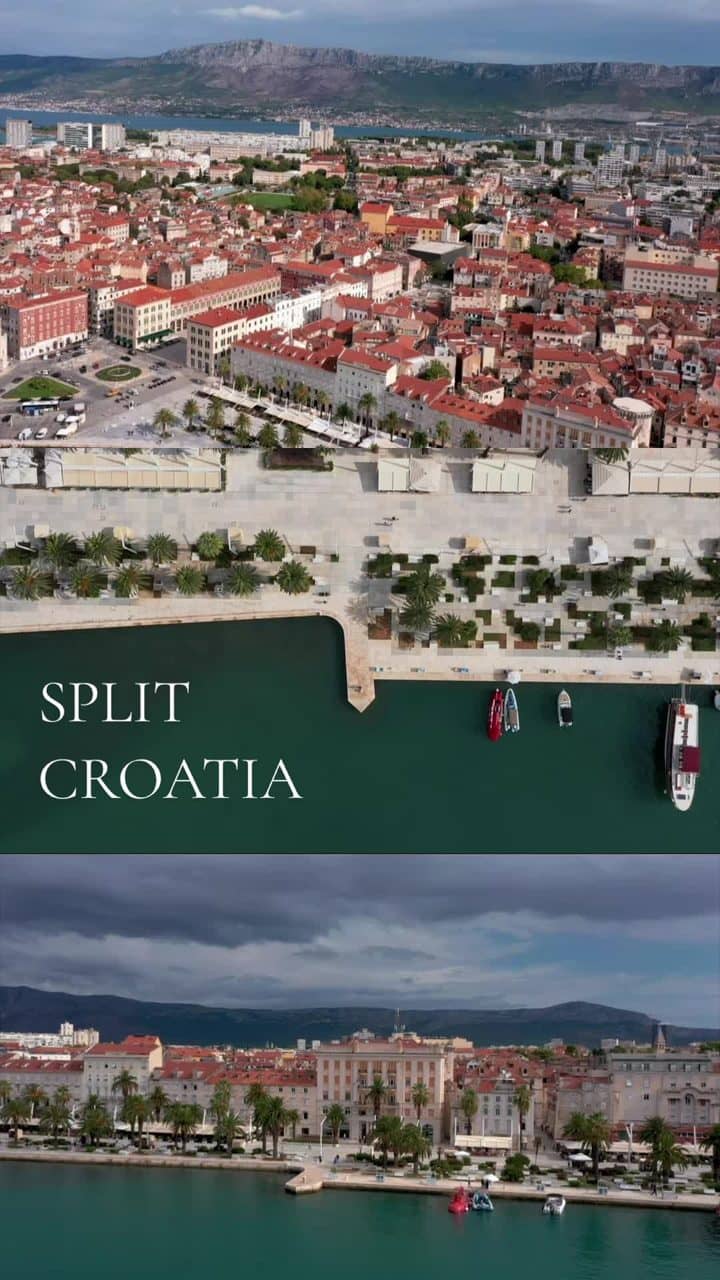
Split grew inside a building: the retirement palace emperor Diocletian finished in 305 became the city, and today washing lines hang between Roman columns while his mausoleum serves as the cathedral of the man who persecuted its saint. The palace quarter is not a site with opening hours but a lived-in square kilometre of lanes, and that is what separates Split from every other Roman ruin on the Mediterranean.

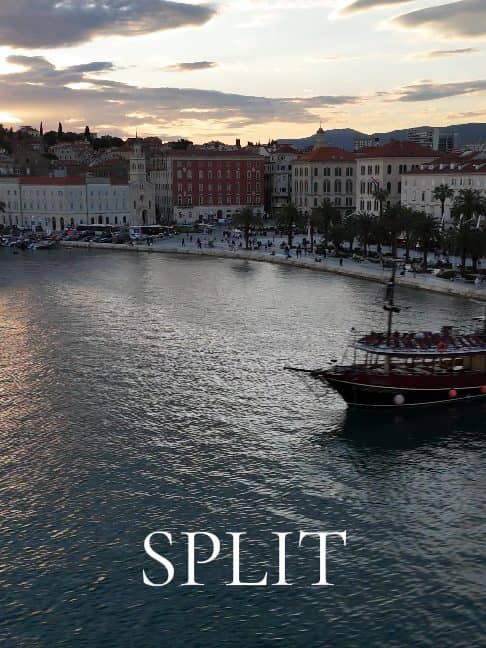
Beyond the walls, the Riva promenade runs along the harbour, the Marjan forest hill closes the peninsula to the west, and the port is the busiest island gateway in Croatia, with ferries and catamarans to Brač, Hvar, Vis and Šolta.

Split: what to see in the palace that became a city

The next 7 days

Weather data by Open-Meteo.com

Opening hours and prices

The places we keep opening hours and price levels for. Times change with the season, so treat the official page as the last word.

PlaceOpening hoursPriceOfficial page
Cathedral of Saint Domnius08:00-20:00--
Temple of Jupiter09:00-19:00--
Veliki Kabal (Mosor)Always open; check access, weather, park rules and daylight before hiking.--
Perun RidgeAlways open; check access, weather, park rules and daylight before hiking.--

Climate month by month

Ten-year averages for Split, so you can see what a month usually looks like rather than what this week happens to do.

MonthDay °CNight °CRain daysSea °C
January1141115
February1351014
March1571014
April1810916
May22151219
June2819623
July3122326
August3122427
September2618824
October2114922
November16101320
December1361117

Air 2015 to 2024, sea 2022 to 2024. A rain day is 1 mm or more. Data by Open-Meteo.com

Beaches in Split

Bačvice Beach
Activity

Bačvice Beach

Sandy city beach and the home of barefoot picigin.

Photo: dronepicr / CC BY 2.0
Bačvice Beach
Activity

Bačvice Beach

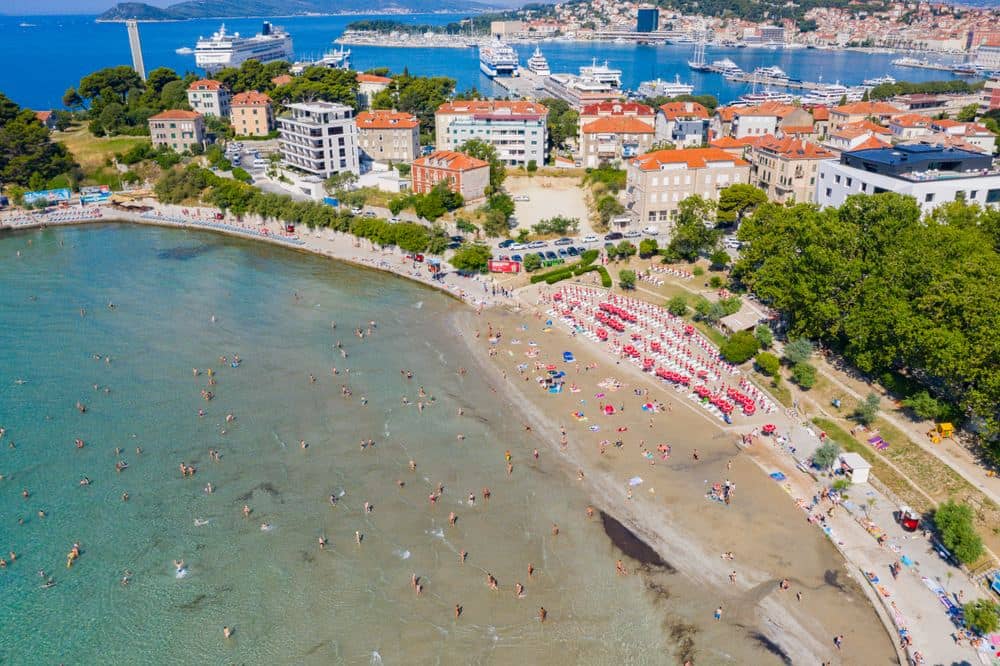
Bačvice is a Split institution: the town beach five minutes from the Riva, a shallow sandy cove where knee-deep sea stretches for dozens of metres, and the birthplace of picigin, a game played properly only here. The rules are simple: five players, a small ball, the shallows, and one single goal, that the ball must not fall into the sea, for which one flies horizontally amid geysers of drops; picigin is protected as intangible cultural heritage of Croatia, and at Bačvice it is played every day of the year, New Year's Day included, when people leap into a sea of fifteen degrees. The beach has everything urban: showers, cabins, lifeguards in summer, cafés and nightlife in the Secession bathing building, so a Bačvice day easily runs from morning swim to midnight cocktail. Thanks to the shallows the sea is warmer than elsewhere and ideal for small children, the summer crowd is honest, but that is part of the folklore. The tourist task reads: towel on the sand, an hour of watching picigin, then an attempt. After five minutes it will be clear why Split people claim it is the most serious sport in the world.

Insider tip

Watch the locals play picigin in the shallows, they are here even in the middle of winter.

Photo: dronepicr / CC BY 2.0

Kašjuni Beach
Activity

Kašjuni Beach

Long pebble cove under Marjan, made for golden sunsets.

Photo: Marjanko1103 / CC BY-SA 4.0
Kašjuni Beach
Activity

Kašjuni Beach

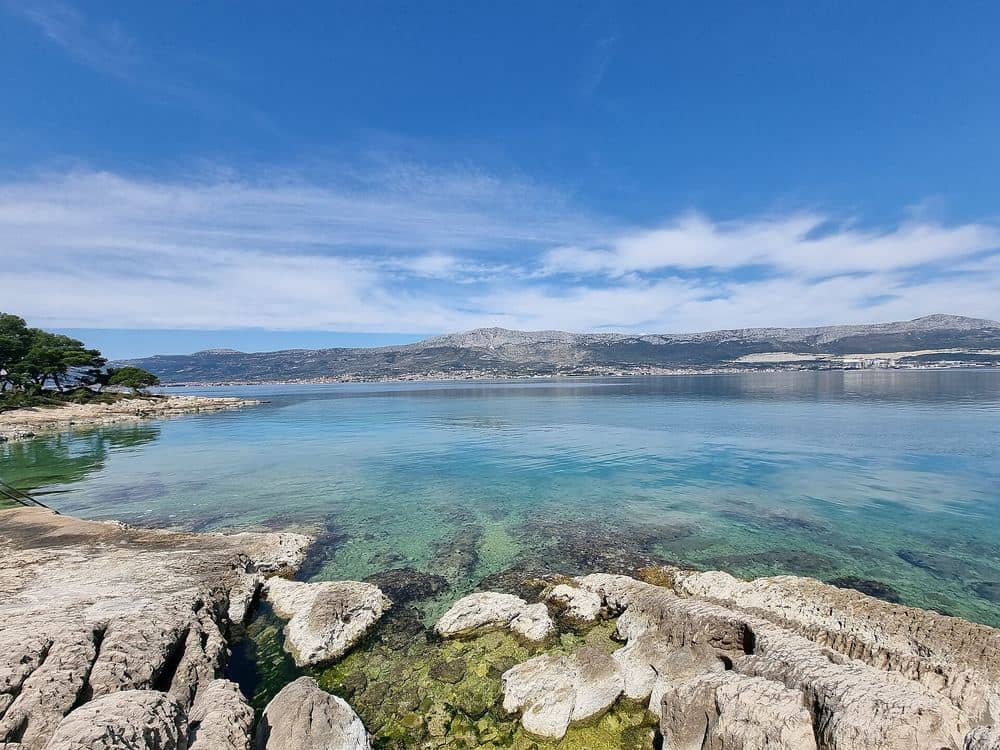
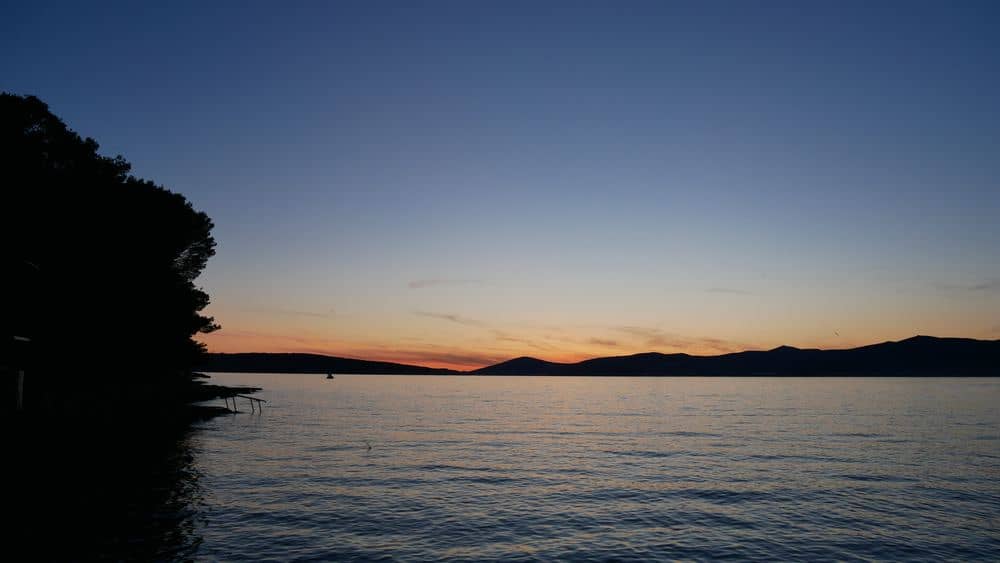
Kašjuni is Split's sunset beach: a long shingle cove on Marjan's southern side, angled to look straight at the open sea and the evening sun, with pine forest tumbling toward the water and not a single building in the frame except the distant silhouette of Šolta. Half-hidden and half-wild for decades, the beach gained through its refurbishment what it lacked and kept what one comes for: fine shingle, clean and quickly deep sea, sunbeds and a beach bar at the western end, showers and lifeguards in summer. The public is a mixture only Split can compose: families on towels, the young on sunbeds with music, swimmers cutting the cove in a straight line. Kašjuni is reached by the coastal road below Marjan, by car with scarce parking, by city bus or, loveliest, on foot by the forest path from Marjan, so that swimming naturally ties into a walk. Shade exists along the forest's edge before noon, in the afternoon the beach lies in full sun. Come around six in the evening: the heat lets go, the light softens, and when the sun sinks behind Šolta, half the beach applauds. Literally.

Insider tip

Arrive mid-afternoon, claim a spot near the water and stay for the sunset.

Photo: Marjanko1103 / CC BY-SA 4.0

Bene Beach
Activity

Bene Beach

A car-free, pine-shaded cove on Marjan's northern shore.

Photo: Zvone00 / CC BY-SA 4.0
Bene Beach
Activity

Bene Beach

Bene is the family end of Marjan: a bathing place on the peninsula's northern side, where the forest literally enters the sea, so towels are spread on pine needles in the shade while one steps into the water from stone slabs and small concrete platforms. This is Split's greenest beach and its recreational base: beside the bathing area work tennis courts and a sports centre, trim trails lead through the woods, and the shore path ties Bene to the rest of Marjan, so half the visitors arrive running or by bicycle. The sea is clean and calm, the bay looks toward Kaštela and Čiovo, the depth grows quickly off the slabs while shallows for children hide in the small coves; in summer showers, cabins, a lifeguard service and a café in the shade all work. Bene is also the easiest proof of why Marjan is protected: nowhere else in the city can you go from towel to pine and from pine to sea in five steps. One arrives by city bus, by bicycle or on foot through the forest from Vidilica in some forty minutes. Ideal with children and for days when the jugo raises waves on the southern beaches: the northern side then stays calm.

Insider tip

Walk or cycle in along the Marjan park paths, the approach is part of the experience.

Photo: Zvone00 / CC BY-SA 4.0

Žnjan Beach
Activity

Žnjan Beach

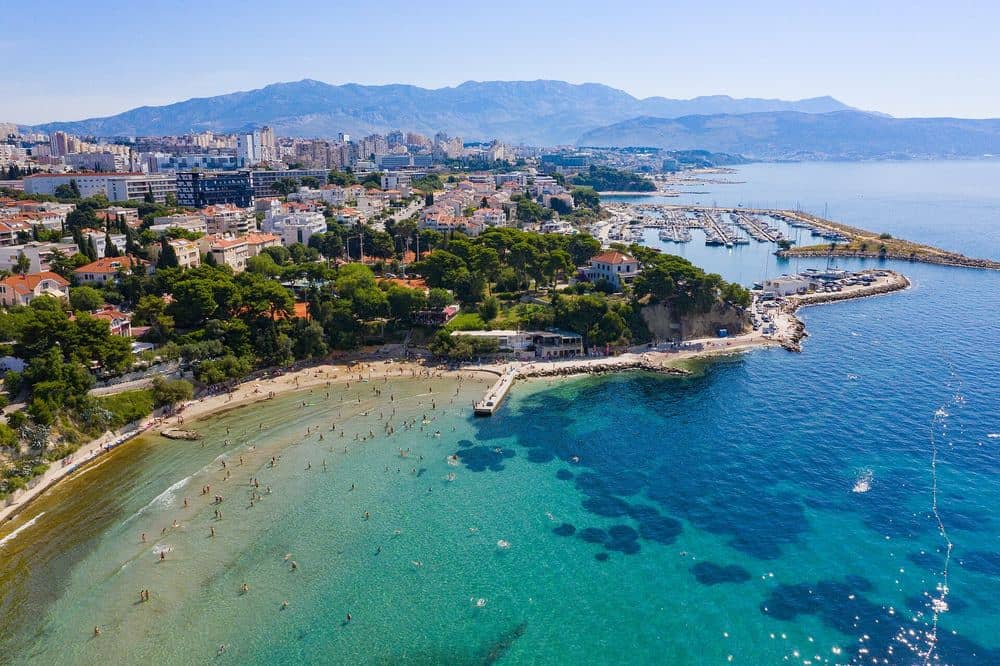
Split's biggest beach: a long pebble strip, bars and sport.

Photo: Klapi / CC BY-SA 4.0
Žnjan Beach
Activity

Žnjan Beach

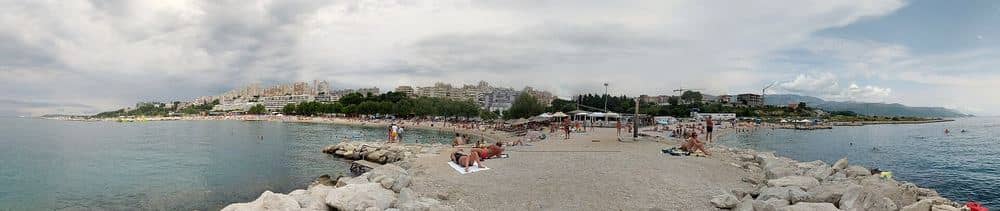
Žnjan is Split's largest bathing ground and its new living room by the sea: a kilometre of shingle beaches beneath a spacious plateau in the city's east, opened after years of remaking as a modern coastal quarter with promenades, greenery, fountains and playgrounds. Here Split shows its contemporary face: broad stretches for towels, separated zones for sunbeds, ramps and pram-friendly accesses, showers and cabins in the rhythm a great bathing operation demands, and along the promenade cafés and restaurants for the whole day. The sea is typically Splitian, clean and quickly deep, with shallows at the stretch's northern ends where the families with small children are; lifeguards work in summer. Žnjan is also the start of the long shore promenade toward Bačvice in one direction and Stobreč in the other, so a day composes itself easily: morning swim, walk by the sea, a bite, then one more swim. From the centre you are ten minutes by car or city bus; parking exists, but in summer come early. For big bathing days with the whole family, Žnjan is the city's simplest answer.

Insider tip

Best for sport and beach bars; pick a smaller cove if you want quiet.

Photo: Klapi / CC BY-SA 4.0

Firule Beach
Activity

Firule Beach

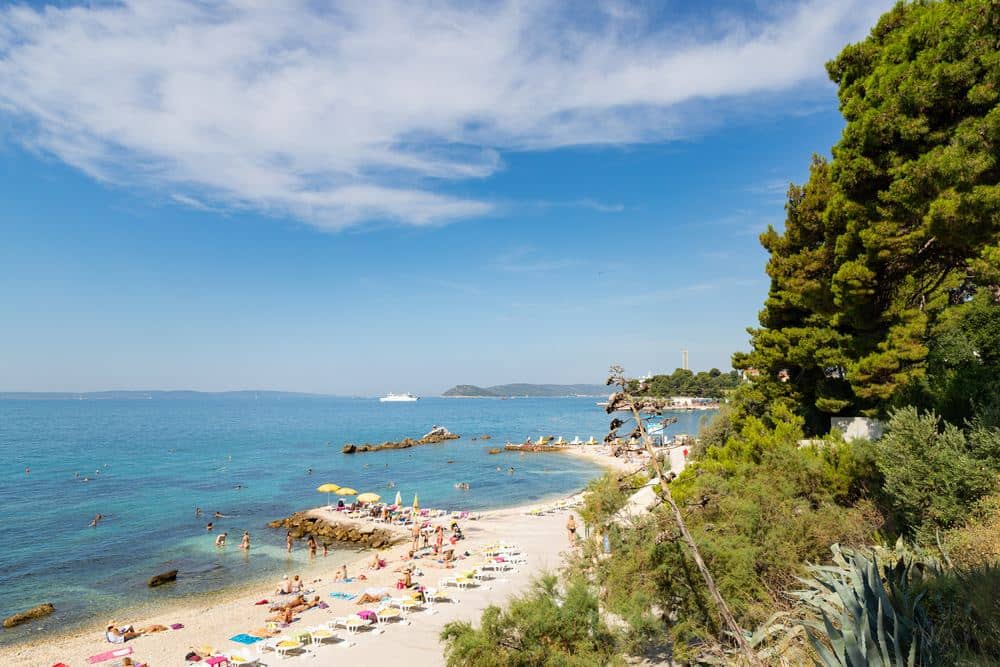
A sandy, shallow bay east of Bačvice, calmer and family-friendly.

Photo: dronepicr / CC BY 2.0
Firule Beach
Activity

Firule Beach

Firule is a small beach with a great pedigree: a sandy cove east of Bačvice, shallow and calm, around which gather the families with the smallest children, for here one can stand in the sea farther out than anywhere in town. But Firule entered Split mythology not for the sand but for tennis: on the courts beside the beach, in the legendary club, grew up Croatia's greatest tennis masters, among them the Wimbledon champion Goran Ivanišević, so beside the sound of the sea one hears here, morning to dark, the sound of tennis balls. That combination gives Firule its particular neighbourhood tone: the beach is a spontaneous playground, half the bathers know each other, and the café on the edge works as an extension of the living room. The infrastructure is simple and sufficient: a shower, cabins, the odd sunbed, shade under the pines at the back. If you travel with small children, Firule is the safest choice in town: shallow, sandy, sheltered from waves. And if you love tennis, come toward evening to the court fence: you may be watching some future champion, for this quarter produces them with inexplicable regularity.

Insider tip

Same shallow water as Bačvice, far fewer people.

Photo: dronepicr / CC BY 2.0

Ovčice Beach
Activity

Ovčice Beach

A small pebble cove with a little sand and a laid-back beach bar.

Photo: dronepicr / CC BY 2.0

Ovčice Beach
Activity

Ovčice Beach

Ovčice is the first cove east of Bačvice and its calmer sister: a shingle beach in the same bay, separated only by a small headland, with the same shallow, warm sea, but half the crowd and without the night part of the programme. Whoever finds no towel space at Bačvice crosses two minutes along the promenade and finds it here; whoever flees the bar music receives at Ovčice a swim to the sound of sea and children's chatter. The beach has all a town beach needs: showers, cabins, lifeguards in summer, a café with a view and a line of tamarisks giving natural shade, rare on Split beaches. The shingle is fine and pleasant, the entry gentle, the shallows sufficient for the youngest; a little deeper, at the cove's edge, water polo players train regularly, for this too, like everything on this stretch, is a quarter that lives off sport. Ovčice is also the start of a pleasant promenade toward Firule and on to Zenta, so a swim easily lengthens into a shore walk. The formula is simple: the atmosphere of Bačvice minus the crowd of Bačvice. For many, Split's best town beach.

Insider tip

A good middle ground: calmer than the big neighbouring beaches, but with a bar.

Photo: dronepicr / CC BY 2.0

Plan your visit

Split in a nutshell

59 places, 4 routes.

What is actually worth your time in Split?

Start with Diocletian's Palace, Cathedral of Saint Domnius, and Klis Fortress. After that it depends on what you enjoy: the guide holds 59 places in Split, sorted into sights, activities, food and shopping, so you can skip whole categories that bore you.
Diocletian's PalaceDiocletian's Palace

How do you get away from the crowds in Split?

Follow the hidden gems: 17 places that rarely make the guidebooks, most of them a few streets off the main drag. Diocletian's Palace, Cathedral of Saint Domnius, and Klis Fortress are good ones to start with.
Cathedral of Saint DomniusCathedral of Saint Domnius

No time to plan? Just follow a route.

Pick one of Inside Diocletian's Palace, Split by the Sea, Beyond the Palace, and Hidden Split. Each walk runs stop by stop in a fixed order, so the only decision left is where to have lunch.
Klis FortressKlis Fortress
Our tips

What we would do around Split

Day trips within reach of Split, plus the routes and quiet corners our editors keep coming back to.

  • 8 km awayStobrečA headland beach with soft sand in the shallows and crystal-clear sea, pines, a campsite vibe. Very family-friendly and calmer than the city beaches.
  • 12 km awayPodstranaA long pebble coast southeast of Split with views back to the city and Marjan, beach bars, water sports and a fine cycling promenade.
  • 15 km awayKaštelaSeven old coastal towns between Split and Trogir, each around a Venetian castle: palm promenades, small beaches, few tourists. Kaštel Gomilica is 'Braavos' from Game of Thrones.
  • 20 km awayMosorRocky ridge above Split: demanding trails, viewpoints over the Adriatic and a mountain hut for a break.
  • 25 km awayOmišA town where the Cetina river breaks through a 300 m gorge to the sea: once a pirates' lair. Two clifftop fortresses, rafting, ziplining and long sandy beaches.
  • 25 km awayŠoltaThe closest, quietest island: olive groves, silent coves, almost no crowds. Dalmatia the way it used to be.

Split itineraries

  • 7 stops

    Inside Diocletian's Palace

    Discover the heart of the ancient palace

    1. Diocletian's Palace
    2. Peristyle
    3. Vestibule
    4. Temple of Jupiter
    5. Cathedral of Saint Domnius
    6. Diocletian's Palace Substructures
    7. Golden Gate
  • 4 stops

    Split by the Sea

    Follow the waterfront

    1. Riva Promenade
    2. Matejuška
    3. Bačvice Beach
    4. Prokurative (Republic Square)
  • 3 stops

    Beyond the Palace

    A fortress, a gallery and the city's story

    1. Klis Fortress
    2. Meštrović Gallery
    3. Split City Museum
  • 3 stops

    Hidden Split

    Ancient and lesser-known corners of the city

    1. Rimsko kazalište
    2. Nadbiskupska palača
    3. Muzej vode u Splitu

Hidden gems in Split

Diocletian's Palace
Legendary
Sight

Diocletian's Palace

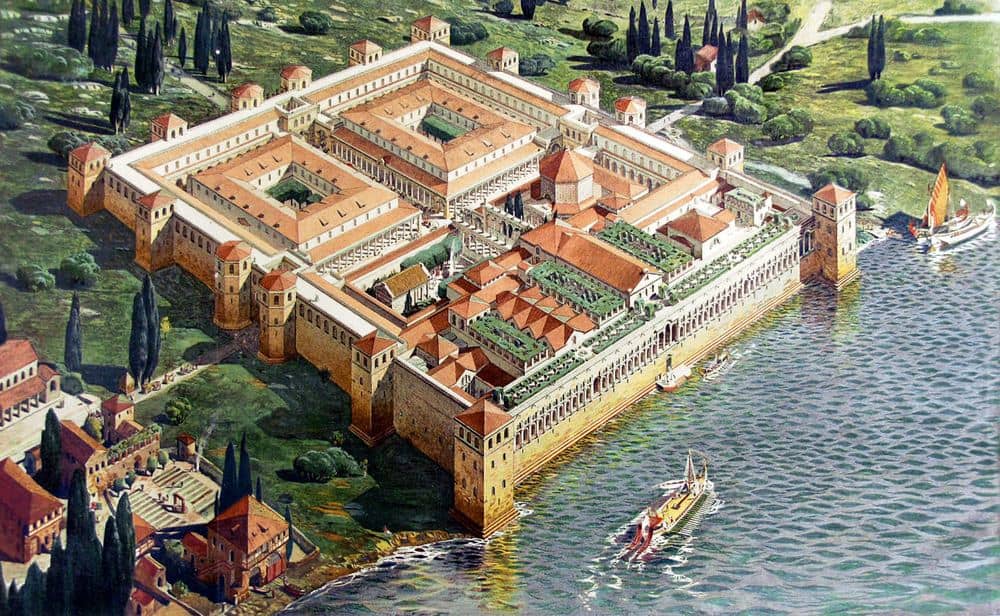
A 4th-century Roman palace at the heart of Split.

Photo: Ernest Hébrard (recoloured by DIREKTOR) / Public domain

Diocletian's Palace
Sight Legendary

Diocletian's Palace

Diocletian's Palace is not a monument beside the city, it is the city: the emperor Diocletian had it built around the year 300 as a retirement residence with a military plan, a square fortress of some thirty thousand square metres with four gates and towers, and Split came into being when people moved in and never moved out. That is why there is no ticket and no opening hours here: through the Golden, Silver, Iron and Bronze gates one enters a living core in which some three thousand people still dwell, with laundry in the windows of ancient walls and cafés in imperial corridors. UNESCO inscribed the palace as World Heritage in 1979, as the best preserved late antique palace in the world. The best way to see it is to get lost: an hour without a plan through the lanes, and only then the Peristyle, the cathedral, the cellars and the Vestibule with intent. Come before nine or after six, when the cruise groups leave and the stone regains its colour; and at night, when the lighting fires the walls, the palace shows why Split calls it not a ruin but home.

Insider tip

Enter through the cool basement halls right at opening, before the tour groups fill them.

Photo: Ernest Hébrard (recoloured by DIREKTOR) / Public domain

Cathedral of Saint Domnius
Legendary
Sight

Cathedral of Saint Domnius

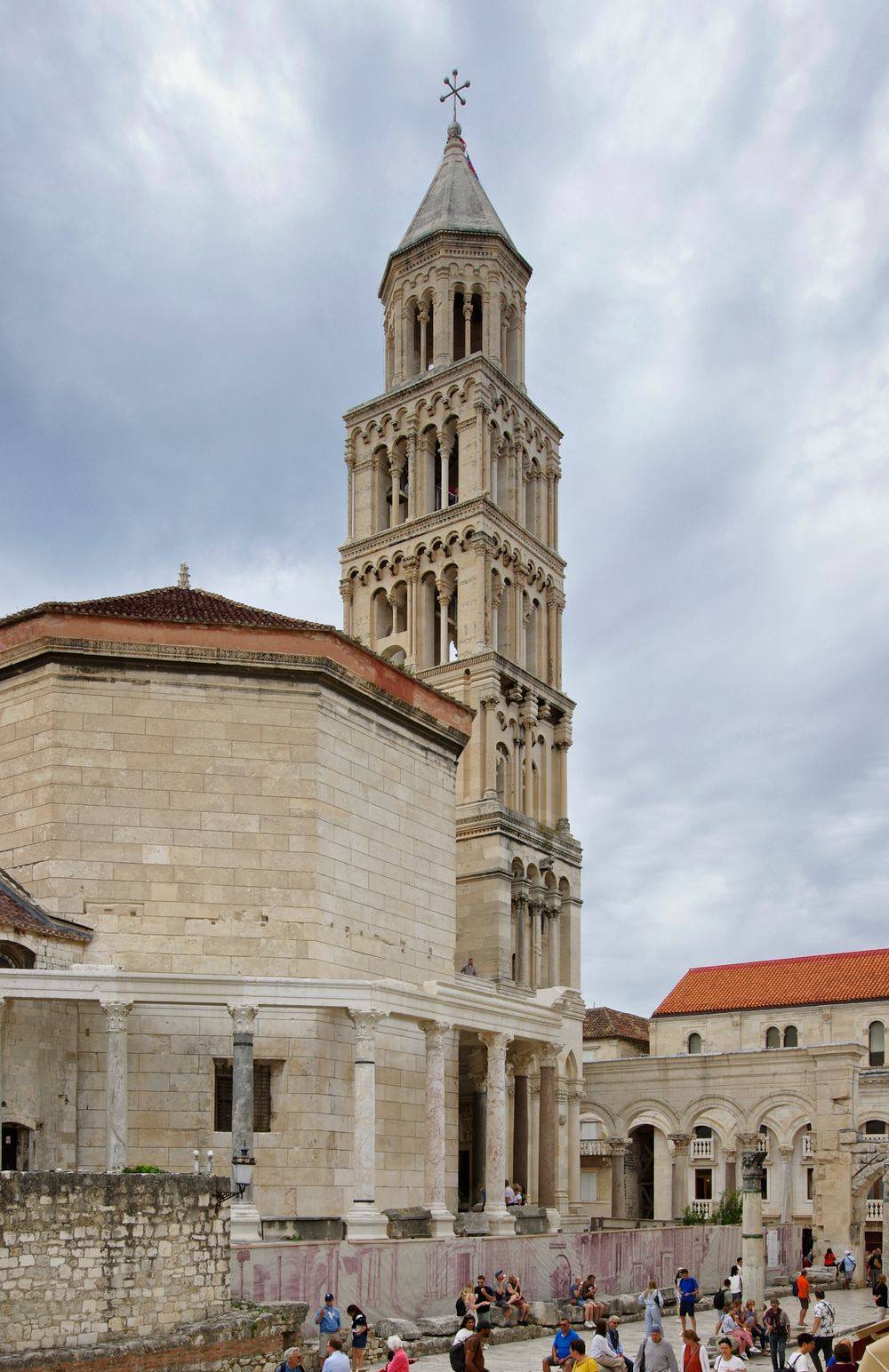
One of the oldest cathedrals in the world, with a soaring Romanesque bell tower.

Photo: Berthold Werner / CC BY-SA 4.0

Cathedral of Saint Domnius
Sight Legendary

Cathedral of Saint Domnius

The cathedral of St Domnius is history's greatest irony carved in stone: Diocletian, the last great persecutor of Christians, built himself a lavish mausoleum, and in it, for thirteen centuries now, has sat a cathedral dedicated to St Domnius, the bishop that very emperor had executed. The octagonal building with its ring of columns is the oldest cathedral structure in the world still serving its purpose: the imperial sarcophagus vanished, and around the ancient core settled a Romanesque pulpit, Gothic altars, Buvina's wooden doors of 1214 with twenty-eight scenes of Christ's life, and choir stalls among the oldest in Dalmatia. The belfry, built from the 13th to the 16th century and thoroughly restored around 1900, became Split's symbol: the climb to fifty-seven metres is by narrow stairs past open arches, but the view of palace, harbour and islands pays for every step. Tickets combine crypt, treasury and the temple of Jupiter; shoulders covered, the belfry queue is shortest in the morning. At the feast of Sudamja, around the seventh of May, the city sings to its Domnius beneath these same columns.

Insider tip

Climb the narrow bell-tower stairs early for the best rooftop view over the palace.

Opening hours
08:00-20:00

Photo: Berthold Werner / CC BY-SA 4.0

Klis Fortress
Legendary
Sight

Klis Fortress

A mountain stronghold guarding the road to Split.

Photo: Wikimedia Commons / CC BY-SA
Klis Fortress
Sight Legendary

Klis Fortress

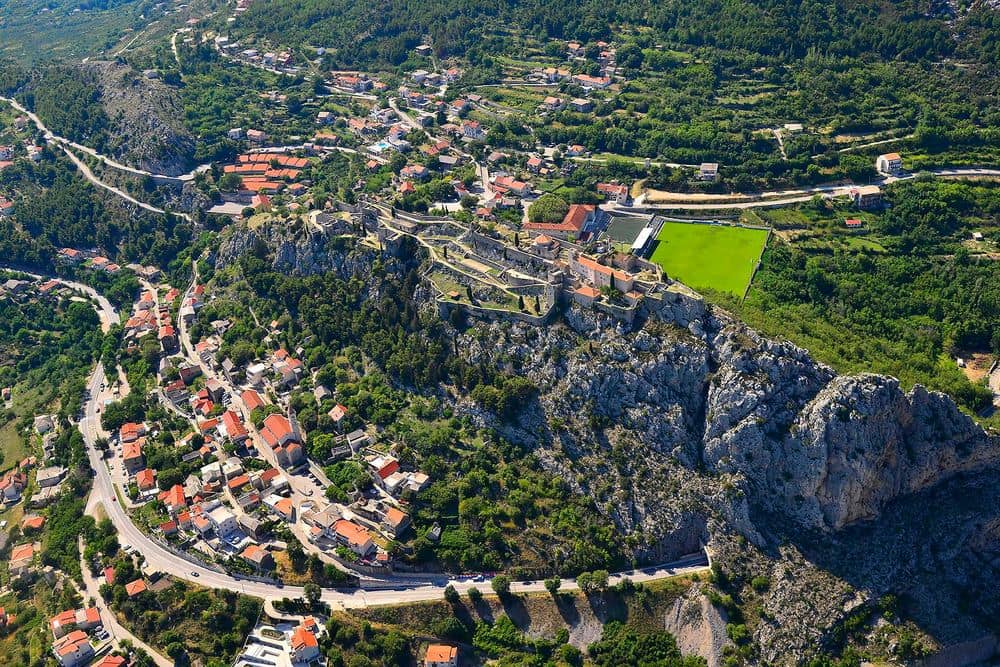
Klis is the key to Dalmatia: a fortress on bare rock in the saddle between Mosor and Kozjak, the only natural pass from the hinterland toward Split, for which this cliff was fought over for two millennia. Croatia's medieval rulers held court here, and Klis won its greatest legend in the 16th century, when captain Petar Kružić and his uskoks defied Ottoman power for decades; after the fall of 1537 the fortress was for a century the westernmost point of the Ottoman Empire, until Venice took it back in 1648. Today one climbs through three defensive rings to the top, where a view opens that explains all that blood: the whole of Split in the palm of the hand, islands to the horizon, and behind one's back the stone gate toward Bosnia. Series fans know Klis as Meereen from Game of Thrones. The fortress is reached by car or bus in some twenty minutes from the centre; count on ninety minutes of visit, firm shoes and the wind that always works here. It is loveliest before sunset, when the stone reddens and the city below begins to light up: then one best understands why nobody ever climbed down from this rock willingly.

Insider tip

Drive or bus up for sunset: the panorama over Split, the sea and the islands from the top is unmatched.

Photo: Wikimedia Commons / CC BY-SA

Explore Split by category

Sights

27
Diocletian's Palace
Legendary
Sight

Diocletian's Palace

A 4th-century Roman palace at the heart of Split.

Photo: Ernest Hébrard (recoloured by DIREKTOR) / Public domain

Diocletian's Palace
Sight Legendary

Diocletian's Palace

Diocletian's Palace is not a monument beside the city, it is the city: the emperor Diocletian had it built around the year 300 as a retirement residence with a military plan, a square fortress of some thirty thousand square metres with four gates and towers, and Split came into being when people moved in and never moved out. That is why there is no ticket and no opening hours here: through the Golden, Silver, Iron and Bronze gates one enters a living core in which some three thousand people still dwell, with laundry in the windows of ancient walls and cafés in imperial corridors. UNESCO inscribed the palace as World Heritage in 1979, as the best preserved late antique palace in the world. The best way to see it is to get lost: an hour without a plan through the lanes, and only then the Peristyle, the cathedral, the cellars and the Vestibule with intent. Come before nine or after six, when the cruise groups leave and the stone regains its colour; and at night, when the lighting fires the walls, the palace shows why Split calls it not a ruin but home.

Insider tip

Enter through the cool basement halls right at opening, before the tour groups fill them.

Photo: Ernest Hébrard (recoloured by DIREKTOR) / Public domain

Cathedral of Saint Domnius
Legendary
Sight

Cathedral of Saint Domnius

One of the oldest cathedrals in the world, with a soaring Romanesque bell tower.

Photo: Berthold Werner / CC BY-SA 4.0

Cathedral of Saint Domnius
Sight Legendary

Cathedral of Saint Domnius

The cathedral of St Domnius is history's greatest irony carved in stone: Diocletian, the last great persecutor of Christians, built himself a lavish mausoleum, and in it, for thirteen centuries now, has sat a cathedral dedicated to St Domnius, the bishop that very emperor had executed. The octagonal building with its ring of columns is the oldest cathedral structure in the world still serving its purpose: the imperial sarcophagus vanished, and around the ancient core settled a Romanesque pulpit, Gothic altars, Buvina's wooden doors of 1214 with twenty-eight scenes of Christ's life, and choir stalls among the oldest in Dalmatia. The belfry, built from the 13th to the 16th century and thoroughly restored around 1900, became Split's symbol: the climb to fifty-seven metres is by narrow stairs past open arches, but the view of palace, harbour and islands pays for every step. Tickets combine crypt, treasury and the temple of Jupiter; shoulders covered, the belfry queue is shortest in the morning. At the feast of Sudamja, around the seventh of May, the city sings to its Domnius beneath these same columns.

Insider tip

Climb the narrow bell-tower stairs early for the best rooftop view over the palace.

Opening hours
08:00-20:00

Photo: Berthold Werner / CC BY-SA 4.0

Klis Fortress
Legendary
Sight

Klis Fortress

A mountain stronghold guarding the road to Split.

Photo: Wikimedia Commons / CC BY-SA

Klis Fortress
Sight Legendary

Klis Fortress

Klis is the key to Dalmatia: a fortress on bare rock in the saddle between Mosor and Kozjak, the only natural pass from the hinterland toward Split, for which this cliff was fought over for two millennia. Croatia's medieval rulers held court here, and Klis won its greatest legend in the 16th century, when captain Petar Kružić and his uskoks defied Ottoman power for decades; after the fall of 1537 the fortress was for a century the westernmost point of the Ottoman Empire, until Venice took it back in 1648. Today one climbs through three defensive rings to the top, where a view opens that explains all that blood: the whole of Split in the palm of the hand, islands to the horizon, and behind one's back the stone gate toward Bosnia. Series fans know Klis as Meereen from Game of Thrones. The fortress is reached by car or bus in some twenty minutes from the centre; count on ninety minutes of visit, firm shoes and the wind that always works here. It is loveliest before sunset, when the stone reddens and the city below begins to light up: then one best understands why nobody ever climbed down from this rock willingly.

Insider tip

Drive or bus up for sunset: the panorama over Split, the sea and the islands from the top is unmatched.

Photo: Wikimedia Commons / CC BY-SA

Vestibule
Hidden gem
Sight

Vestibule

The domed entrance hall to the imperial apartments, famed for its acoustics.

Photo: Following Hadrian / CC BY-SA 2.0
Vestibule
Sight Hidden gem

Vestibule

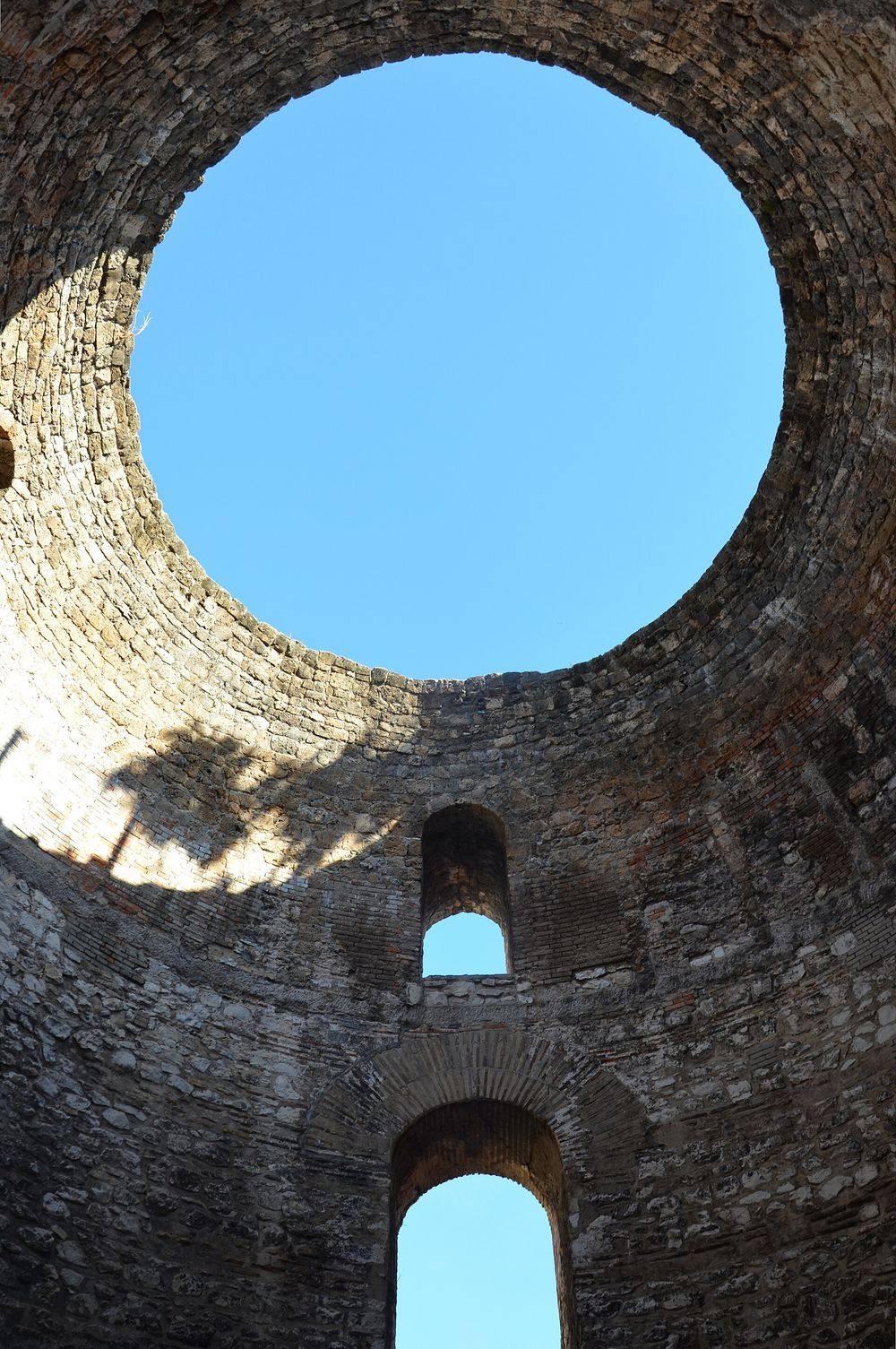
The Vestibule is the antechamber of the imperial quarters and Split's most wondrous acoustic room: a circular hall whose dome lost its vault long ago, so today it looks through a round opening straight into the sky. This was the way in to the emperor from the Peristyle: visitors awaited audience in the rotunda, once clad in marble and mosaics, whose emptiness today is its strength: bare stone, perfect geometry and a circle of blue sky at the top. Thanks to the circle and the stone the Vestibule has an echo no concert hall can match: klapa groups sing here almost daily, a cappella male ensembles whose parts climb the walls and leave through the opening toward the sky; stand by the wall, close your eyes and you have the cheapest concert of the Mediterranean, for a coin or two in the hat. Through the Vestibule one passes toward the imperial apartments and the ethnographic museum, and every camera in town hunts the view through the opening: the cathedral's belfry peeks exactly through the circle's rim. It is quietest early in the morning, when slanted light enters through the opening and for a moment the hall looks as the emperor imagined it.

Insider tip

Step inside and look up: locals know the domed acoustics are perfect for a single voice.

Photo: Following Hadrian / CC BY-SA 2.0

Varoš Quarter
Hidden gem
Sight

Varoš Quarter

An old fishermen's and labourers' quarter of narrow stone lanes.

Photo: Kaiser87 / CC BY-SA 3.0
Varoš Quarter
Sight Hidden gem

Varoš Quarter

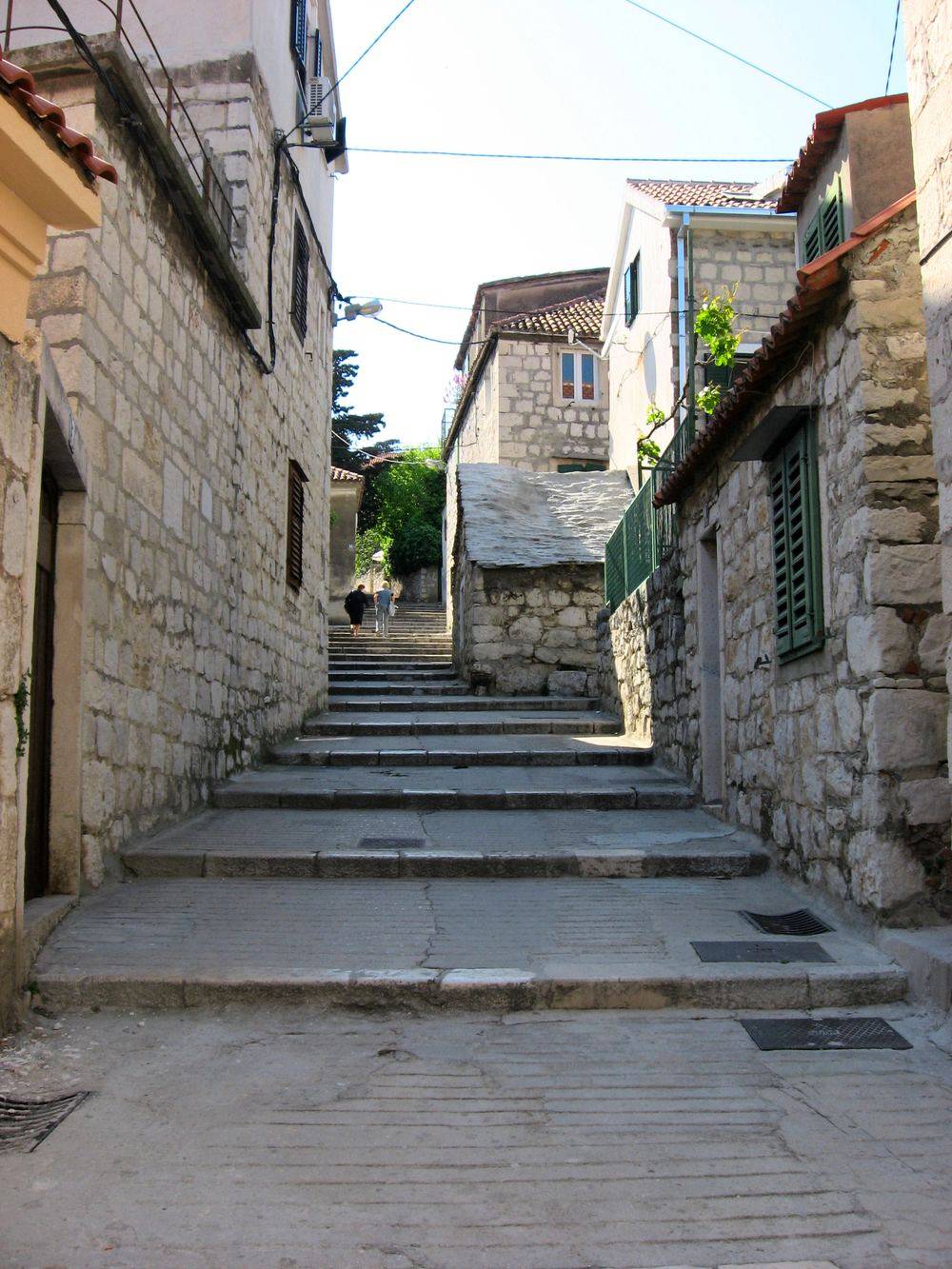
Varoš is Split before tourism: the old labourers' and fishermen's quarter climbing from the palace's western edge toward Marjan, a tangle of steep lanes, small stone houses with green shutters and courtyards where the vine makes the shade. Here lived those who fed the city, the fishermen of Matejuška and the field workers, and that modesty still reads in the scale: the houses are small, the streets as wide as a donkey needs, and the biggest buildings are chapels, among them St Nicholas, a Romanesque miniature of the 12th century hidden among the yards. Today Varoš is half living quarter, half stage set: beside grandmothers in the windows multiply apartments and konobas, but the spirit holds, especially in the morning, when the quarter smells of coffee and fried fish, and at evening, when the runners come back down from Marjan. Walk without a goal: from Šperun upward, then left and right as the lanes pull, to the first Marjan steps with the view of roofs and belfry. Ten minutes from the Riva, and another world: quieter, slower and much closer to the Split that once was.

Insider tip

Get lost in the steep stone lanes: washing lines, cats, and not a souvenir shop in sight.

Photo: Kaiser87 / CC BY-SA 3.0

Kaštilac (Kaštel Gomilica)
Hidden gem
Sight

Kaštilac (Kaštel Gomilica)

A fortified castle of the Split Benedictine nuns from 1529, set on the sea.

Photo: Ivan T. / CC BY-SA 3.0
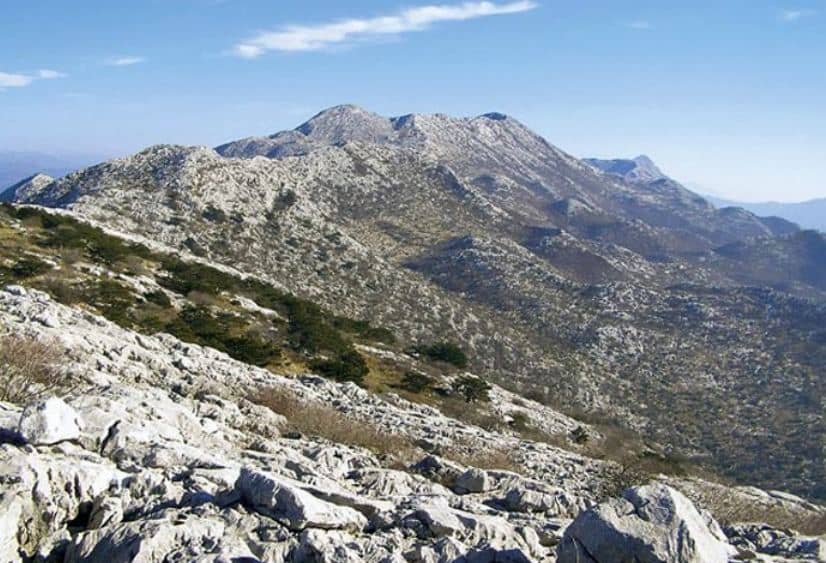
Kaštilac (Kaštel Gomilica)
Sight Hidden gem

Kaštilac (Kaštel Gomilica)

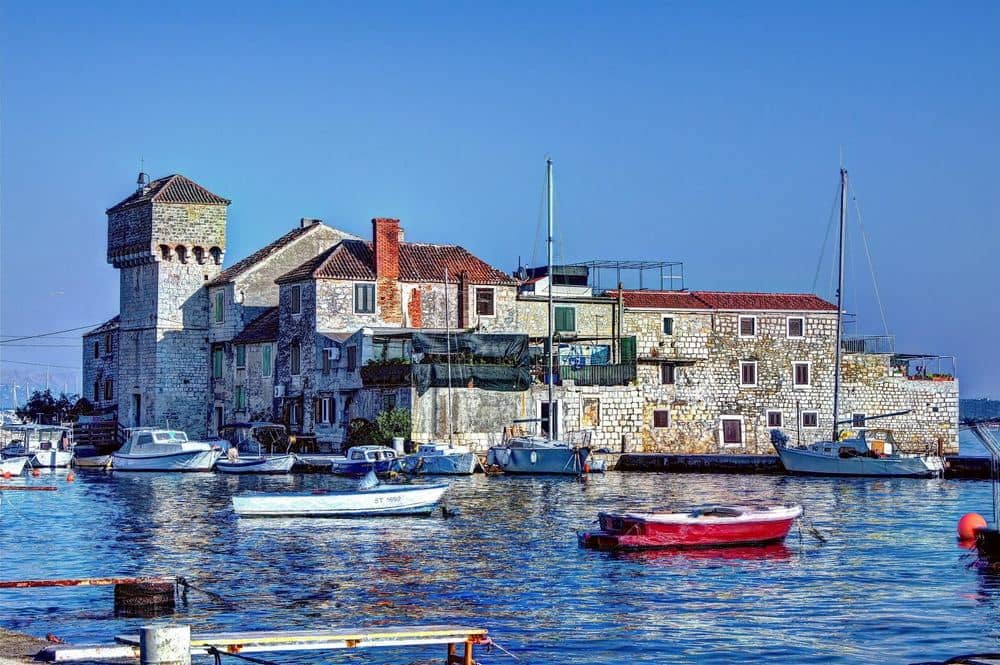
The Kaštilac is the reason Kaštel Gomilica bears its name: a fortress on a rock in the sea that the Benedictine nuns of Split raised in 1529 to protect their field workers and their families from Ottoman raids. The nuns, who had owned land in the Kaštela field since the Middle Ages, built a square tower with a defensive wall on an islet joined to the mainland by a small stone bridge; within the walls a whole little settlement grew over time, house by house, which lives its calm life to this day. That makes the Kaštilac the most picturesque of all the castles of Kaštela: from the shore it reads like a stone ship anchored before the town, with washing stones and boats in the foreground, and through the gate on the bridge one enters courtyards where laundry dries and lunches perfume the air. Series fans will recognise the sets of Braavos from Game of Thrones. From Split you are some fifteen minutes by car or suburban bus; the visit takes half an hour, but the mood asks for at least an hour, with a swim by the bridge and a coffee on the little quay. Combine it with a walk along the Kaštela shore: seven towns, seven castles, and this one is the most photogenic.

Insider tip

Kaštilac is known as a Game of Thrones filming spot; come early to enjoy it without the crowds.

Photo: Ivan T. / CC BY-SA 3.0

21 more places
  • Kuparić Castle
  • Svjetionik Pomorac
  • Rimsko kazalište
  • Nadbiskupska palača
  • Muzej vode u Splitu
  • Diocletian's Aqueduct
  • Salona Amphitheatre
  • Zenta Lighthouse
  • Peristyle
  • Statue of Gregory of Nin
  • Diocletian's Palace Substructures
  • Temple of Jupiter
  • Prokurative (Republic Square)
  • Golden Gate
  • People's Square (Pjaca)
  • Poljud Stadium (Hajduk)
  • Salona (Solin)
  • Silver Gate
  • Iron Gate
  • Brass Gate
  • Fruit Square

Activities

27
Veliki Kabal (Mosor)
Legendary
Activity

Veliki Kabal (Mosor)

Mosor's highest summit, with views over coast and islands.

Photo: Moson81 / CC BY-SA 4.0
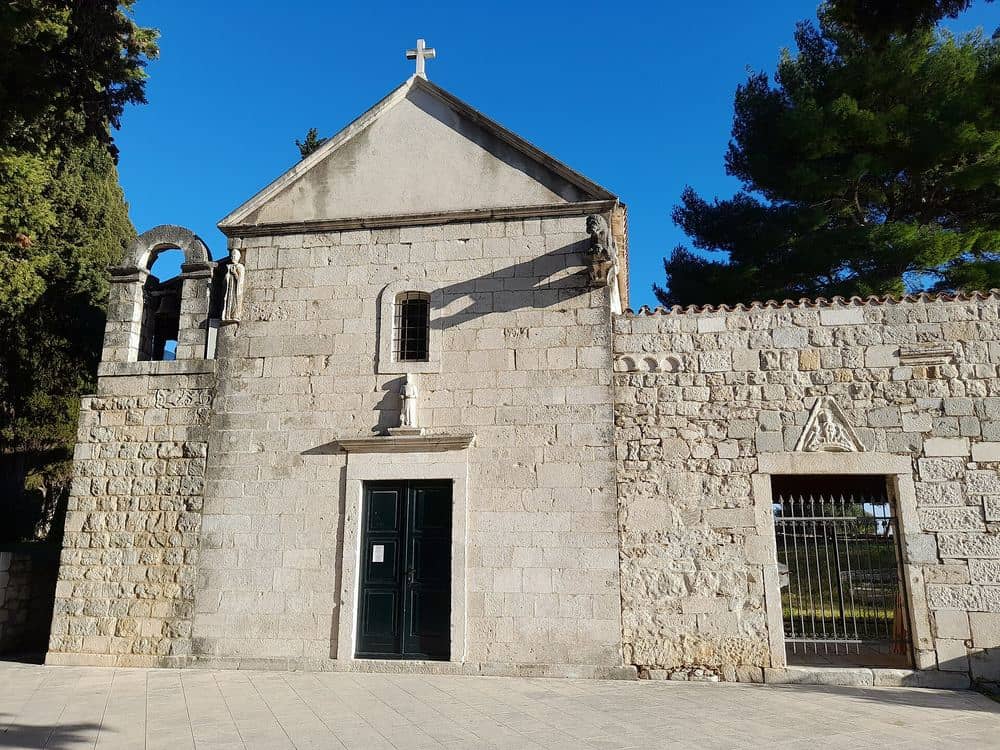
Veliki Kabal (Mosor)
Activity Legendary

Veliki Kabal (Mosor)

Veliki Kabal is the roof of Mosor and the highest summit in Split's immediate hinterland: one thousand three hundred and thirty-nine metres of bare karst rising right behind the city quarters, close enough to be seen from the Riva, wild enough to make one forget on it that the sea exists. The ascent is a proper mountain tour: the classic starts from the village of Sitno Gornje via the Umberto Girometta mountain hut, on a marked path through maquis and then over stone slabs and karren, with four to five hours' walking both ways and a thousand metres of climb. The reward grows with every metre: underfoot the whole Split agglomeration and the islands from Šolta to Hvar, behind one's back the stone sea of the Zagora, and on the summit a wind which here, as local mountaineers say, never takes a day off. Mosor is karst without springs: carry three litres of water per person in summer, firm boots for the sharp stone and a checked forecast, for in bura or fog the ridge does not forgive. The loveliest seasons are spring and autumn; in summer start at dawn. For the fit, this is the greatest natural adventure Split offers without car or ferry.

Insider tip

Start early in the morning and carry plenty of water, there is almost no shade on the bare karst ridge.

Opening hours
Always open; check access, weather, park rules and daylight before hiking.

Photo: Moson81 / CC BY-SA 4.0

Sustipan
Hidden gem
Activity

Sustipan

A hushed clifftop park of cypresses above the sea.

Photo: Argo Navis / CC BY-SA 4.0
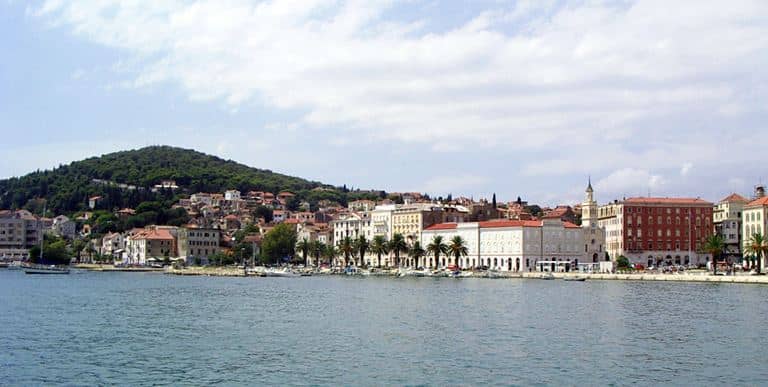
Sustipan
Activity Hidden gem

Sustipan

Sustipan is Split's most elegant silence: a small peninsula high above the entrance to the city harbour, a park of cypresses and pines on the site of the early medieval Benedictine monastery of St Stephen, after which the cape is named. In the 19th century the city cemetery was laid out here with a neoclassical pavilion; in the fifties the cemetery was removed, and what remained is a park in which the plan of the alleys and the odd preserved slab still keep a ceremonial tone. Today Sustipan is the place to rest from the city: benches on the cliff with a view running from Marjan across the islands to the harbour, sailboats entering the ACI marina right below one's feet, newlyweds at their photographs, readers in the shade. The remains of the monastery and the small church of St Stephen stand in a corner of the park as a reminder of how old the place is. Come at sunset: the sun drops exactly into the passage between Čiovo and Šolta, the boats return to harbour, and the city behind slowly turns on its lights. Ten minutes' walk from the Riva, and the quietest ten minutes you will find in Split.

Insider tip

One of the calmest sunset spots in Split, minutes from the Riva but a world away from its crowds.

Photo: Argo Navis / CC BY-SA 4.0

Marjan Hill
Activity

Marjan Hill

Pine-covered hill above Split with island views from the top.

Photo: Airin / CC BY-SA 1.0

Marjan Hill
Activity

Marjan Hill

Marjan is the lungs of Split and its promise that the city will never be only stone: a hilly peninsular forest of three and a half kilometres closing the western horizon, with pines down to the sea, a way-of-the-cross of chapels along the southern cliffs and the Telegrin summit at a hundred and seventy-eight metres. Split people call it simply the hill, and half the city's sporting life happens on it: morning runners at the First Vidilica, cyclists on the forest roads, climbers on the crags above Kašjuni, swimmers on the beaches below the woods. Marjan is protected as a park forest and nothing is built on it, so today, as a hundred years ago, it is the place to flee the city without leaving it: ten minutes up the steps from Varoš and the noise of the Riva is exchanged for crickets. For a first meeting take the classic: the steps to Vidilica, coffee with a view, then the southern path past chapels and hermit caves to Bene and back along the shore. That is two to three hours' walk with swimming at will; whoever wants the summit turns off to Telegrin. Carry water and start before the heat: Marjan is loveliest while the city is still waking.

Insider tip

Climb to Telegrin for sunset; locals jog the pine paths once the day cools.

Photo: Airin / CC BY-SA 1.0

Riva Promenade
Activity

Riva Promenade

Split's palm-lined seafront, the city's open-air living room.

Photo: dronepicr / CC BY 2.0
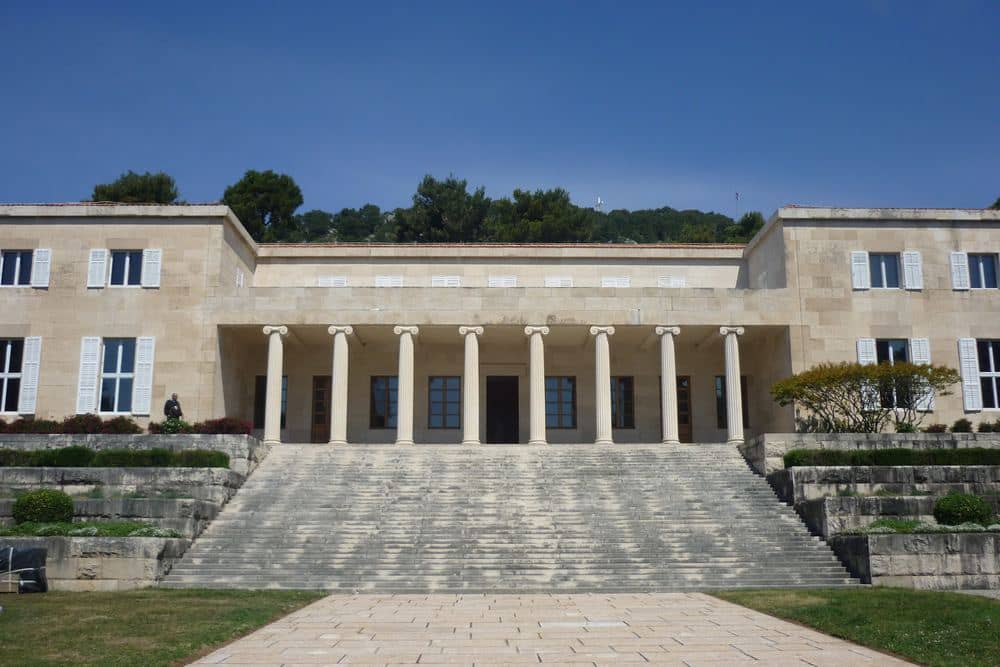
Riva Promenade
Activity

Riva Promenade

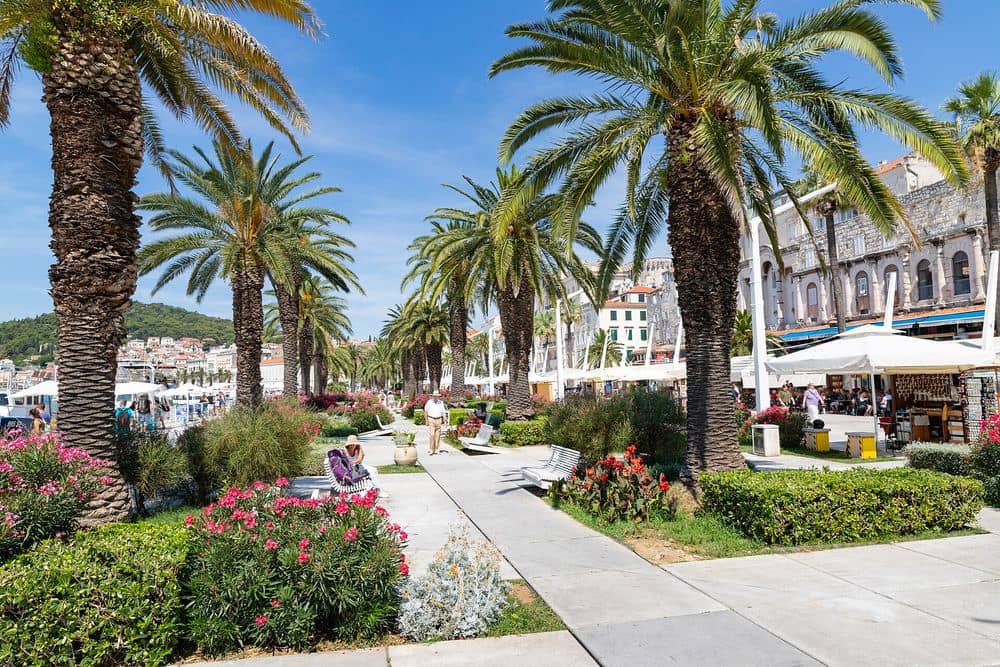
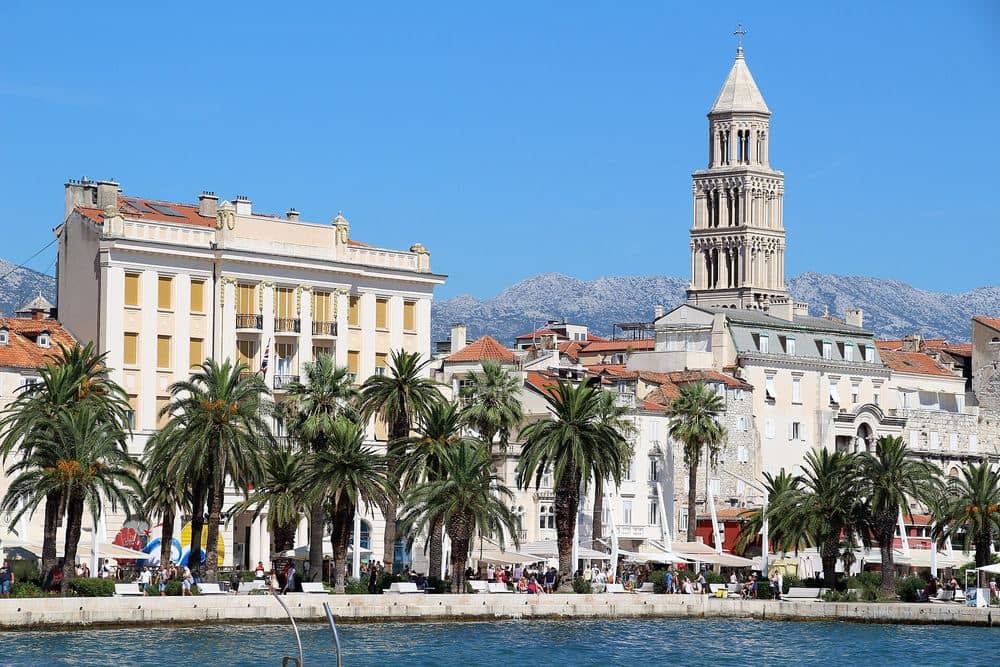
The Riva is Split's living room and the city's most important chamber, though it has neither walls nor roof: two hundred and fifty metres of promenade between the southern wall of Diocletian's Palace and the sea, with a double line of palms and sun falling on it from morning to dark. Its present shape came at the start of the 19th century under the French administration, which banked up a walk along the ancient wall; the white pergolas and the paving arrived with the great renewal of 2007, over which the city quarrelled as passionately as it only quarrels about the Riva. For the Riva is no ordinary promenade: one comes here to see and be seen, for the morning coffee that lasts till noon, for the evening stroll that is an institution, for welcoming athletes, for celebrations and protests. Cafés hold the whole line, prices run higher than one street deeper, but the payment is for the stage, since the chairs face the passers-by as if facing a play. The tourist advice is simple: one coffee on the Riva is as obligatory as the cathedral, best in the morning before ten, when the light falls on the palace and the city is only gathering speed. Everything else in Split begins and ends here.

Insider tip

Come on Saturday late morning for 'špica', when all of Split dresses up for coffee on the Riva.

Photo: dronepicr / CC BY 2.0

Meštrović Gallery
Activity

Meštrović Gallery

The sculptor's seaside villa, full of his masterworks.

Photo: Wikimedia Commons / CC BY-SA
Meštrović Gallery
Activity

The Meštrović Gallery is the house the greatest Croatian sculptor built for himself and then gave to everyone: a lavish villa with a garden on the southern slopes of Marjan, which Ivan Meštrović designed in the thirties as a family home and studio, with a view over the palms straight to the sea. History willed that he spend only a few years in it; he left into emigration, and donated the villa with hundreds of works to the people. Today it is the finest possible frame for his opus: marble and bronze figures in light-filled halls, monumental sculptures around the garden among the olives, drawings and family portraits in the more intimate rooms. Meštrović reads here chronologically and emotionally, from Viennese Secession to the religious cycles, and the space itself shows how the sculptor thought: house, garden and view are composed as one sculpture. The ticket also covers the Kaštelet a hundred metres on, the chapel with his wooden reliefs of the life of Christ, which many consider the peak of the opus. Count on ninety minutes for both, in the afternoon for the light in the garden; from the Riva it is half an hour's walk along the shore or a short drive.

Insider tip

Keep your ticket and walk to the nearby Kaštelet: its wooden Life of Christ reliefs are the real highlight.

Photo: Wikimedia Commons / CC BY-SA

Matejuška
Activity

Matejuška

Old fishing harbour where Split gathers for sunset drinks.

Photo: Fred Romero from Paris, France / CC BY 2.0
Matejuška
Activity

Matejuška

Matejuška is the fishing soul of Split: a small harbour at the western end of the Riva, where Varoš touches the sea, with gajeta boats at their moorings, nets over the railings and huts where fishermen still keep their gear. For centuries those who fed the city with sardines set out from here, and Matejuška carries that working pedigree with pride: the monument to the fisherman on the pier is no tourist decoration but a thank-you. Today the little harbour lives a double life. By day it is a fishing port: nets are mended, boats are rummaged, the morning catch is sold. By evening it becomes the most democratic gathering place in town: on the big concrete pier that everyone calls the breakwater sit students, workers, tourists and guitars, with shop beer and legs over the sea, for Matejuška has long been Split's unofficial answer to expensive bars, the place where sunset and company cost nothing. Buy a beer or a juice, sit on the concrete among the others and watch the sun drop behind Marjan while the lights of the Riva come on one by one. If you want to understand how Split breathes when it is selling nothing to anyone, you will see it here.

Insider tip

Grab a drink from a nearby kiosk and take your spot on the pier before sunset, like the locals do.

Photo: Fred Romero from Paris, France / CC BY 2.0

21 more places
  • Bačvice Beach
  • Split City Museum
  • Froggyland
  • Vidilica Viewpoint (Marjan)
  • Kašjuni Beach
  • Bene Beach
  • Žnjan Beach
  • Firule Beach
  • Ovčice Beach
  • Trstenik Beach
  • Kaštelet (Ježinac) Beach
  • Croatian National Theatre Split
  • Archaeological Museum Split
  • Croatian Maritime Museum
  • Gallery of Fine Arts
  • Ethnographic Museum Split
  • Telegrin Peak
  • Obojena Svjetlost Beach
  • Ježinac Beach
  • Perun Ridge
  • Museum of Illusions

Shopping

5
Fish Market
Hidden gem
Shopping

Fish Market

The art-nouveau fish hall off Marmontova: the morning catch on marble, a scene more than a century old.

Photo: Argo Navis / CC BY-SA 4.0
Fish Market
Shopping Hidden gem

Fish Market

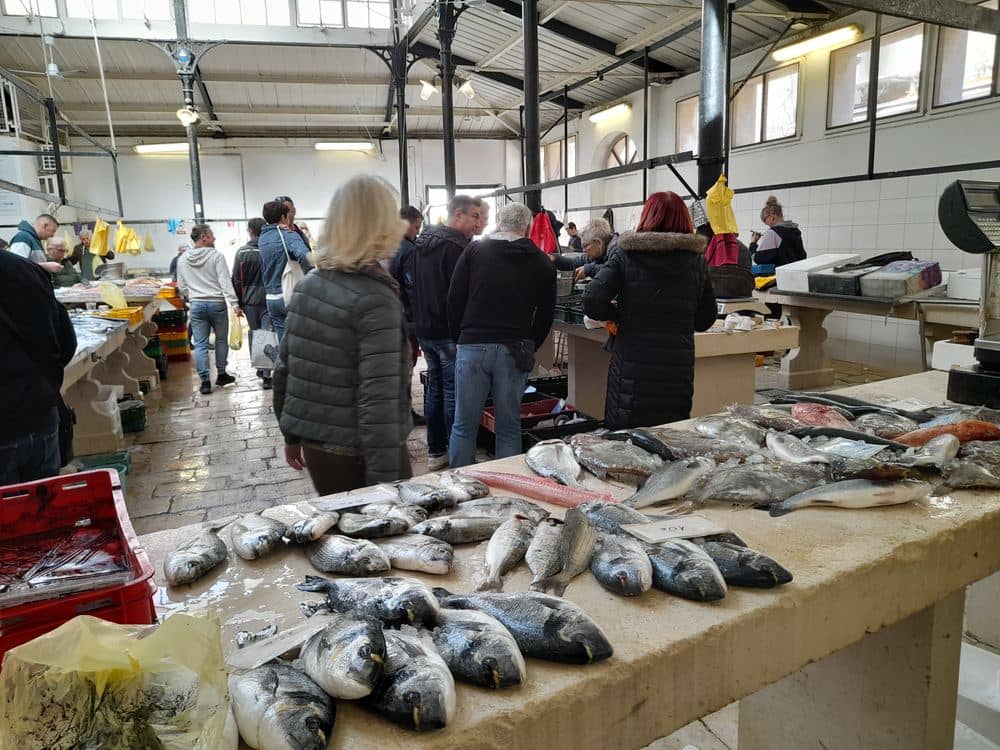
The Ribarnica is Split's morning opera: a Secession hall by Marmontova from the 1890s, in which every morning the catch is laid out on marble counters, sardines and anchovies in silver heaps, gilthead and sea bass, squid, scampi, sometimes a tuna around which half the market gathers. The saleswomen call out, buyers check gills, prices are written in chalk and change as the morning advances; the folklore is loud, honest and entirely unacted, for this is no attraction for tourists but the service of a city that eats fish daily. The most famous chronicle of the Ribarnica are its flies, more precisely their absence: sulphurous thermal waters spring up beside the hall, whose smell, as Split people love to say, drives flies away better than any chemistry. The best time is from seven to ten, when the choice is complete; on Mondays the catch is thinnest, for the fleet rests on Sunday. If you have a kitchen, buy sardines and ask advice on preparation, you will receive it in three voices; if you have none, come just to watch. Half an hour of the Ribarnica counts as a lesson in Mediterranean eating, free of charge and scented with the sea.

Insider tip

Come before 9: that is when the waiters of Split's best konobas do their picking.

Photo: Argo Navis / CC BY-SA 4.0

Marmont Street
Shopping

Marmont Street

Split's polished shopping mile on gleaming white stone.

Photo: Mark Ahsmann / CC BY-SA 3.0
Marmont Street
Shopping

Marmont Street

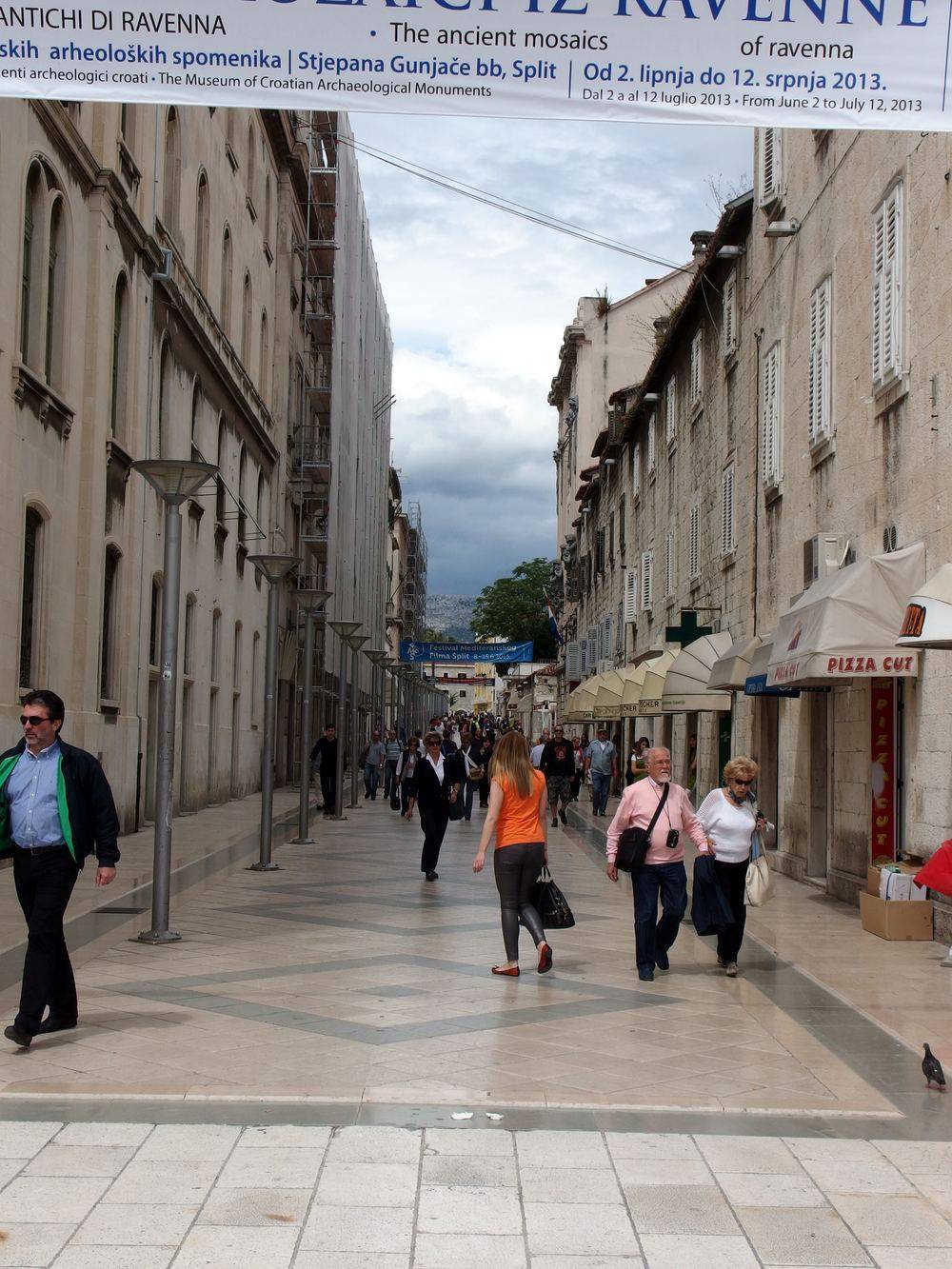
Marmontova is Split's fashion runway: a straight pedestrian street leading north from the Riva, broad, paved and framed by shop windows, the only street in old Split built to a plan and a rule. It bears the name of the French marshal Marmont, governor of Dalmatia under Napoleon, who at the start of the 19th century left the city more good than many before him: he tore down the ramparts that were choking the town, built roads and introduced urbanism, so Split, a rarity for an occupier, left his name on its finest street. Today Marmontova is border and connector at once: east of it begins the stone labyrinth of the old town, west of it the bourgeois Split of the 19th century with the Prokurative. One strolls the street as one strolls the Riva, the windows hold local and world brands, and at its northern end the street exits at the fish market, where the fashion runway ends with the most honest content possible: fresh fish on ice. Walk Marmontova in the evening, when the windows light up and the stone shines: this is Split in its bourgeois edition, tidy, bright and proud of the line that keeps it straight.

Insider tip

The fish market sits just off the street: liveliest in the morning.

Photo: Mark Ahsmann / CC BY-SA 3.0

Mall of Split
Shopping

Mall of Split

A big modern mall for shopping sprees and rainy days.

Photo: Uspjeh je ključ života / CC BY-SA 4.0
Mall of Split
Shopping

Mall of Split

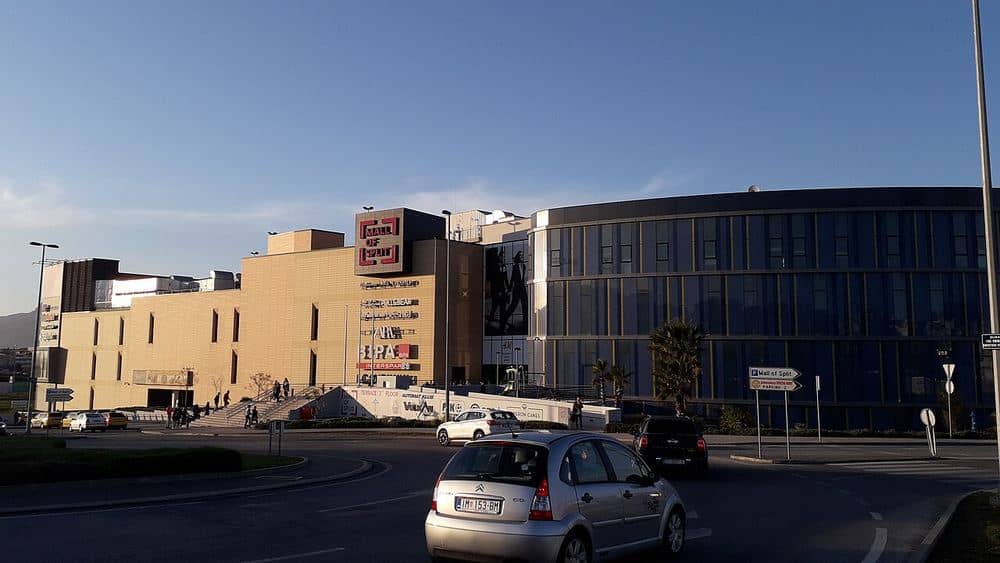
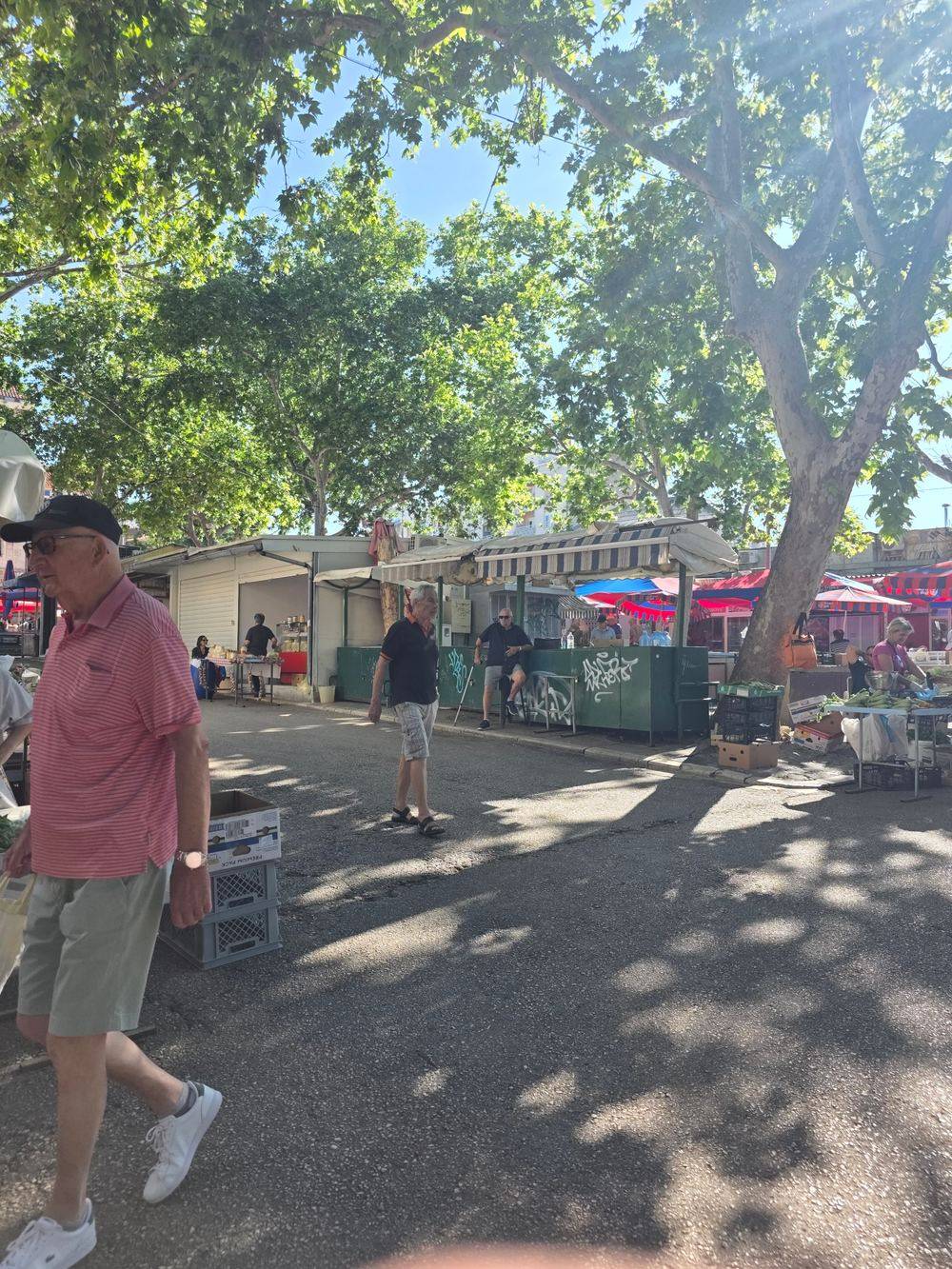
The Mall of Split is the city's largest shopping centre: a bright house in Split's north with international fashion chains, a large supermarket, a food court and cinema halls under one roof. This is the address for days when a holiday needs the city instead of the beach: when the bura upends ferry times, when rain cancels swimming, when children need an hour of air-conditioning and pizza, or when the big pre-departure shop is done, for prices are the same as in the rest of the country, without island surcharges. The layout is simple and clear: wide corridors, lifts and ramps for prams, hundreds of free parking places, so even with a full car and children everything is managed without stress. The cinema in the evening shows films mostly in the original with subtitles, which makes it usable for guests too. From the centre you are ten minutes by car or city bus; on foot it does not pay, this is a ride. The tourist role of the Mall of Split is clear and honourable: the backup plan that always works, with hours into the late evening and Sundays in season.

Photo: Uspjeh je ključ života / CC BY-SA 4.0

Pazar Green Market
Shopping

Pazar Green Market

The city market against the palace's east wall: fruit, vegetables and happy noise from dawn, Split at its purest.

Photo: Frombowen / CC BY-SA 4.0
Pazar Green Market
Shopping

Pazar Green Market

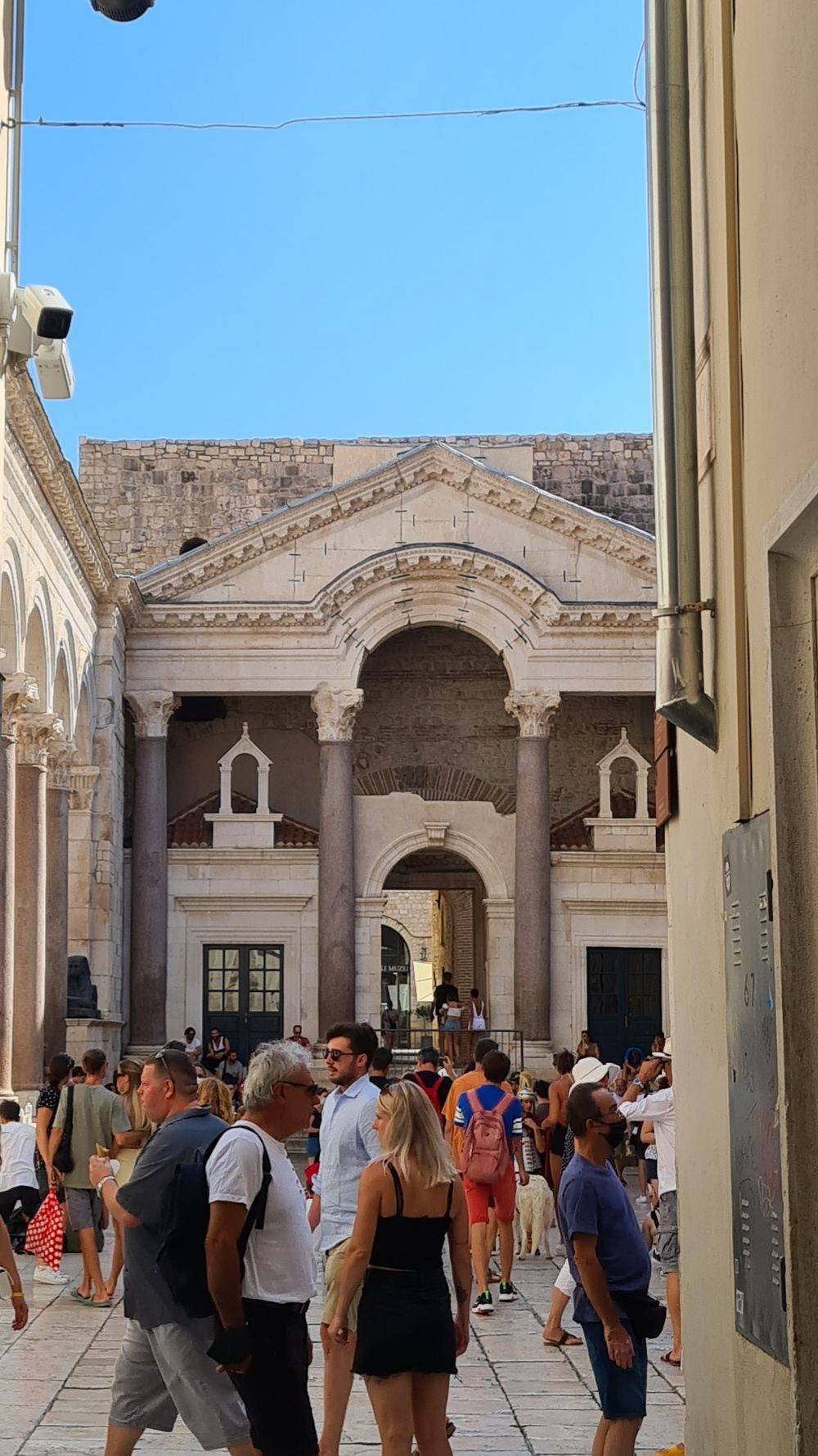
The Pazar is the belly of Split: the green market that spreads every morning along the eastern wall of Diocletian's Palace, around the Silver Gate, on ground where trade has run for as long as the city has stood. The stalls compose into rows of fruit, vegetables, cheese, prosciutto, olives and flowers, along the edges also clothes, bags and all that indescribable rest that makes a real market a market; above everything the gulls, keeping order in their own way. This is the exchange of the Dalmatian season: cherries and apricots in June, tomatoes that perfume half the square in July, figs, grapes and the first mandarins from the Neretva valley in autumn. Bargaining is moderately allowed, tasting offers itself, and cash remains the main language. The Pazar is liveliest from seven to eleven; around noon the stalls slowly fold, and by two only the skeleton remains. Come with an empty bag and a beach plan: figs, cheese, tomatoes and bread from the nearby bakery compose into a lunch worthy of a konoba. And watch: at the Pazar, half an hour shows how Split truly lives, who with whom, what is eaten and what is talked about.

Insider tip

Look for figs and sour cherries at the grandmothers' stalls right against the wall: garden to hand, no middleman.

Photo: Frombowen / CC BY-SA 4.0

1 more places
  • Joker Mall

Split guides

Mediterranean Book Festival Split 2026: 23–27 Sep, Gripe, free entry
Culture

Mediterranean Book Festival Split 2026: 23–27 Sep, Gripe, free entry

The 9th Mediterranean Book Festival (MFK) runs from 23 to 27 September 2026 at Gripe (Osječka 11), with free entry and Jo Nesbø as special…
24 September 2026Split5 min
Split's best beaches: Bačvice, Kašjuni, Žnjan, the Marjan coves
Guide

Split's best beaches: Bačvice, Kašjuni, Žnjan, the Marjan coves

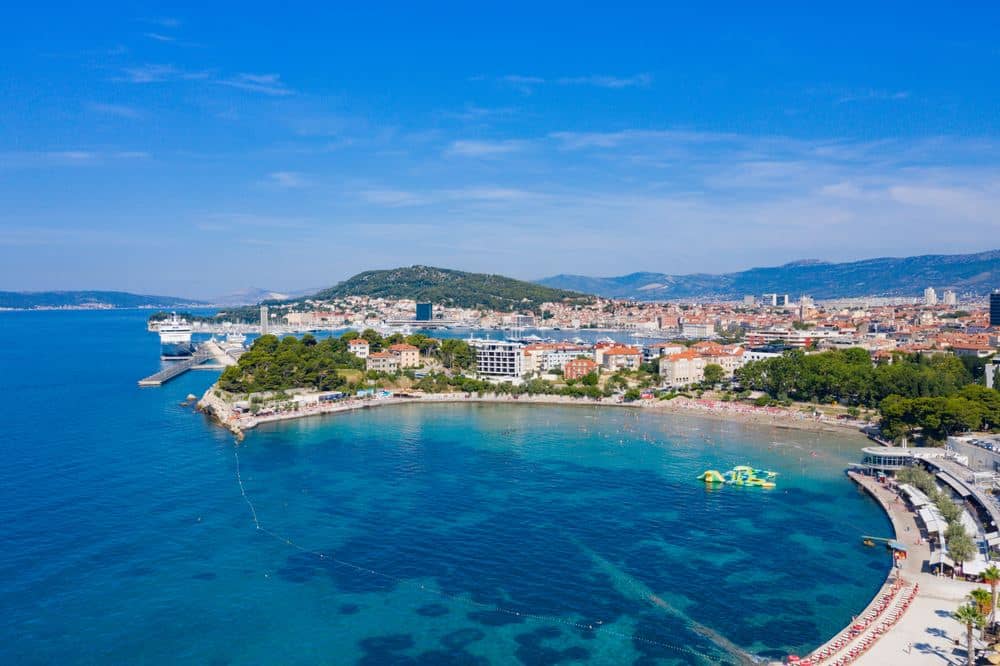
Sand ten minutes from the palace at Bačvice, the cleanest water and the island view at Kašjuni, shade at Bene, families at Žnjan and Firule…
15 September 2026Split15 min
Split to Dubrovnik: catamaran, bus, car or flight compared
Guide

Split to Dubrovnik: catamaran, bus, car or flight compared

The Krilo catamaran takes four and a half hours for 45 to 55 euro until 31 October, the bus three hours 45 for 12 to…
15 September 2026Split11 min
Croatia island hopping: how the ferries work, four routes, prices
Guide

Croatia island hopping: how the ferries work, four routes, prices

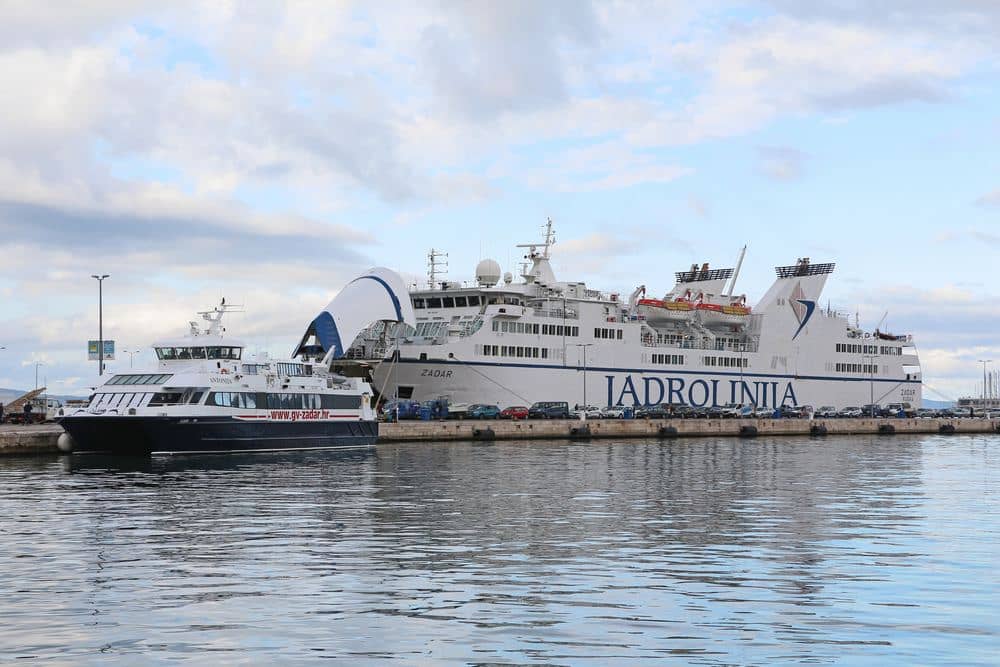
Jadrolinija car ferries run all year from the mainland hubs, catamarans link the islands from May to October and sell out in August.
15 September 2026Split11 min
Blue Cave and Blue Lagoon tours from Split, Hvar and Dubrovnik
Guide

Blue Cave and Blue Lagoon tours from Split, Hvar and Dubrovnik

The Blue Cave on Biševo costs 18 euro in cash at the pier, 24 in high season, on top of a 120 to 150 euro…
15 September 2026Split11 min
7 days in Split without changing hotel: Brač, Hvar, Trogir, Krka
Itinerary

7 days in Split without changing hotel: Brač, Hvar, Trogir, Krka

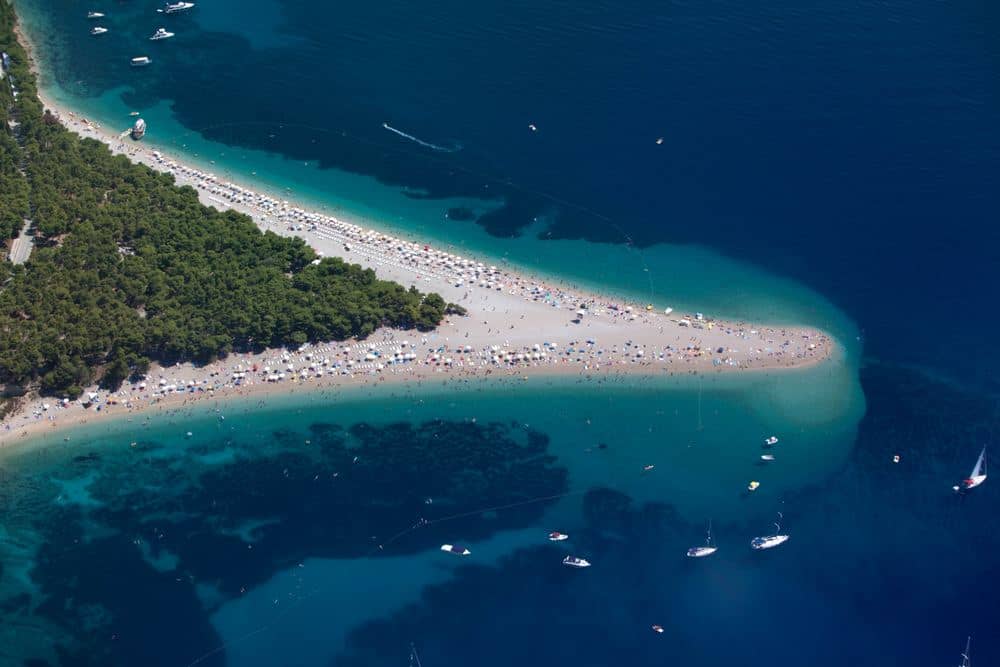
One base, seven very different days. Split's palace and Marjan hill, the ferry to Brač for 8 euro, the catamaran to Hvar, Trogir by bus…
15 September 2026Split10 min
Split flooded on 11 September 2026: what visitors need to know
News

Split flooded on 11 September 2026: what visitors need to know

Between 9 and 10 on Friday morning a storm line coming in from the sea dropped 77 litres of rain per square metre on Split…
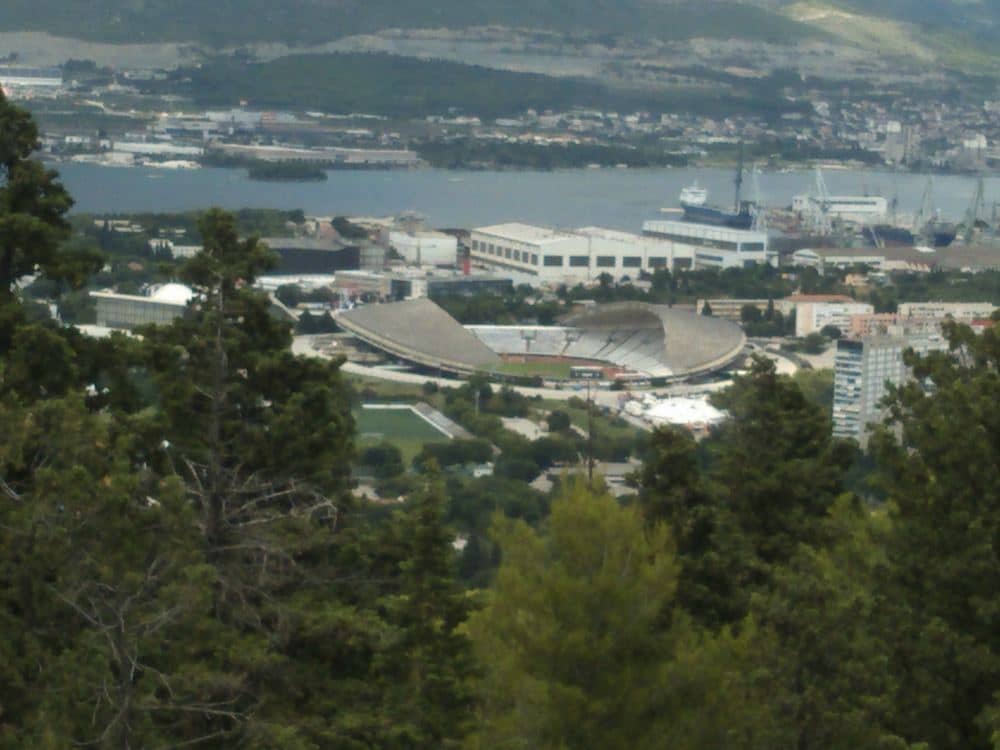
12 September 2026Split10 min
Croatia v Spain, Poljud, 6 October 2026: tickets sold out, prices
News

Croatia v Spain, Poljud, 6 October 2026: tickets sold out, prices

Croatia v Spain kicks off on Tuesday 6 October 2026 at 20:45 at Poljud in Split.

12 September 2026Split18 min
Advent in Split 2026: the Riva in December
Culture

Advent in Split 2026: the Riva in December

Ten to fifteen degrees, an evening outdoors that needs a jacket and not a coat, and a Roman old town with no cruise ships in…

30 August 2026Split10 min
Split: what to see in the palace that became a city
Guide

Split: what to see in the palace that became a city

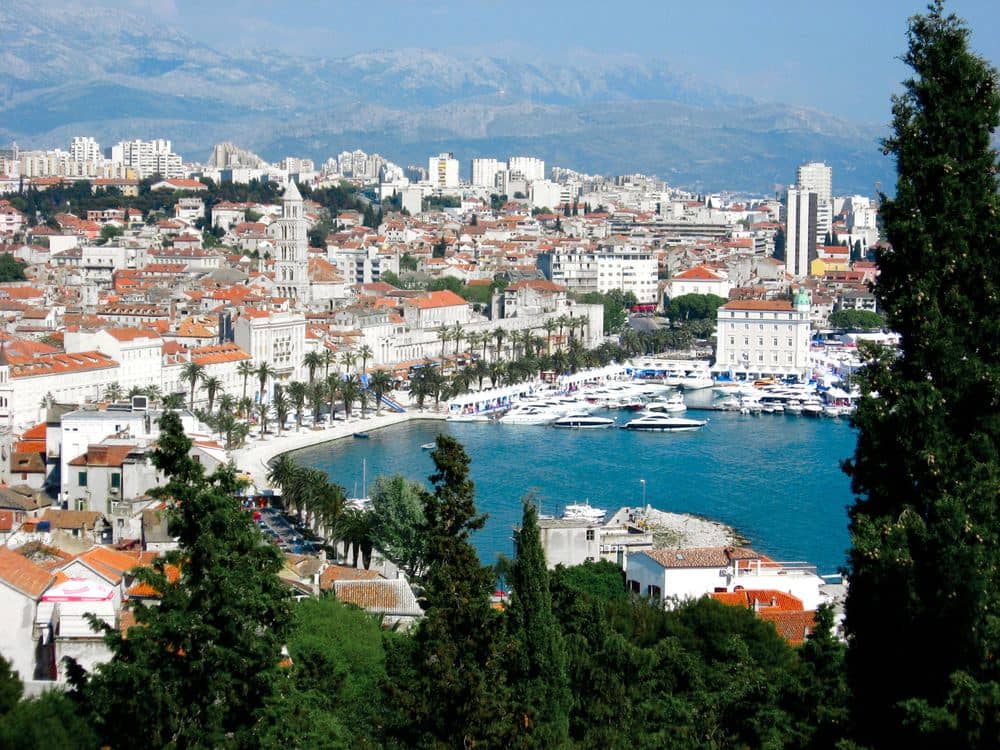
Split's old town is a Roman emperor's palace, lived in for 1,700 years. What to see, in what order, and when to go up Marjan.

28 August 2026Split22 min
Mrdujska regata 2026: 3 October, and the whole city watches
Guide

Mrdujska regata 2026: 3 October, and the whole city watches

The 95th edition of one of Europe's oldest regattas: from Split around a bare islet and back, 22 nautical miles, everyone starting together at eleven.

25 August 2026Split3 min
Marjan Forest Park: a practical walking route from Split
Itinerary

Marjan Forest Park: a practical walking route from Split

Walk from central Split into Marjan Forest Park on a flexible route linking viewpoints, shaded paths and cultural landmarks, with the access notice to check…

13 August 2026Split4 min
Split Pazar: a practical market breakfast and picnic guide
Food & drink

Split Pazar: a practical market breakfast and picnic guide

Use Split's market beside the east wall of Diocletian's Palace for a simple breakfast now and a heat-smart picnic later, without relying on one vendor…
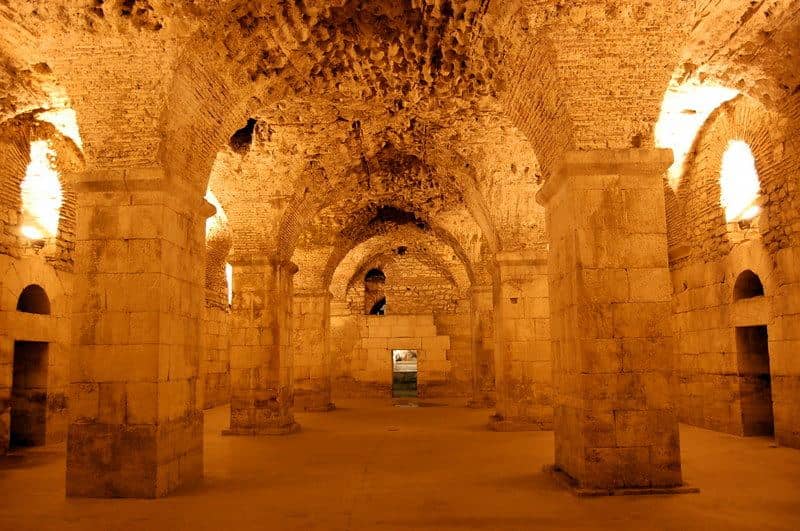
12 August 2026Split4 min
Split palace guide: the corners most first-timers miss
Guide

Split palace guide: the corners most first-timers miss

Diocletian's Palace is not a museum district, it is a living old town.

6 July 2026Split6 min
One perfect day in Split, inside and beyond the palace walls
Itinerary

One perfect day in Split, inside and beyond the palace walls

Coffee in the palace, Roman stone, market energy, a Marjan walk and a swim. This is the Split day that feels full without becoming frantic.

21 June 2026Split14 min

Split: quick answers

How do I get from Split airport to the centre?
The airport is at Kaštela, about twenty kilometres out. The airport shuttle and city bus 37 run to the main bus station by the port; the shuttle takes about thirty minutes. A taxi or ride app costs several times the bus fare but door to door.
Does the palace cost anything?
The palace quarter itself is free at any hour, it is simply the old town. Tickets apply only to individual monuments inside: the cathedral with its bell tower, the baptistery and the substructures on the south side.
Which island is the best day trip from Split?
Brač, for the frequent Supetar ferry that makes timing easy, with a bus or transfer on to Bol and the Zlatni rat beach. Hvar town is the glamour option by fast catamaran; Šolta is the quiet one closest to the city.

CroVenture App

Explore Split with CroVenture

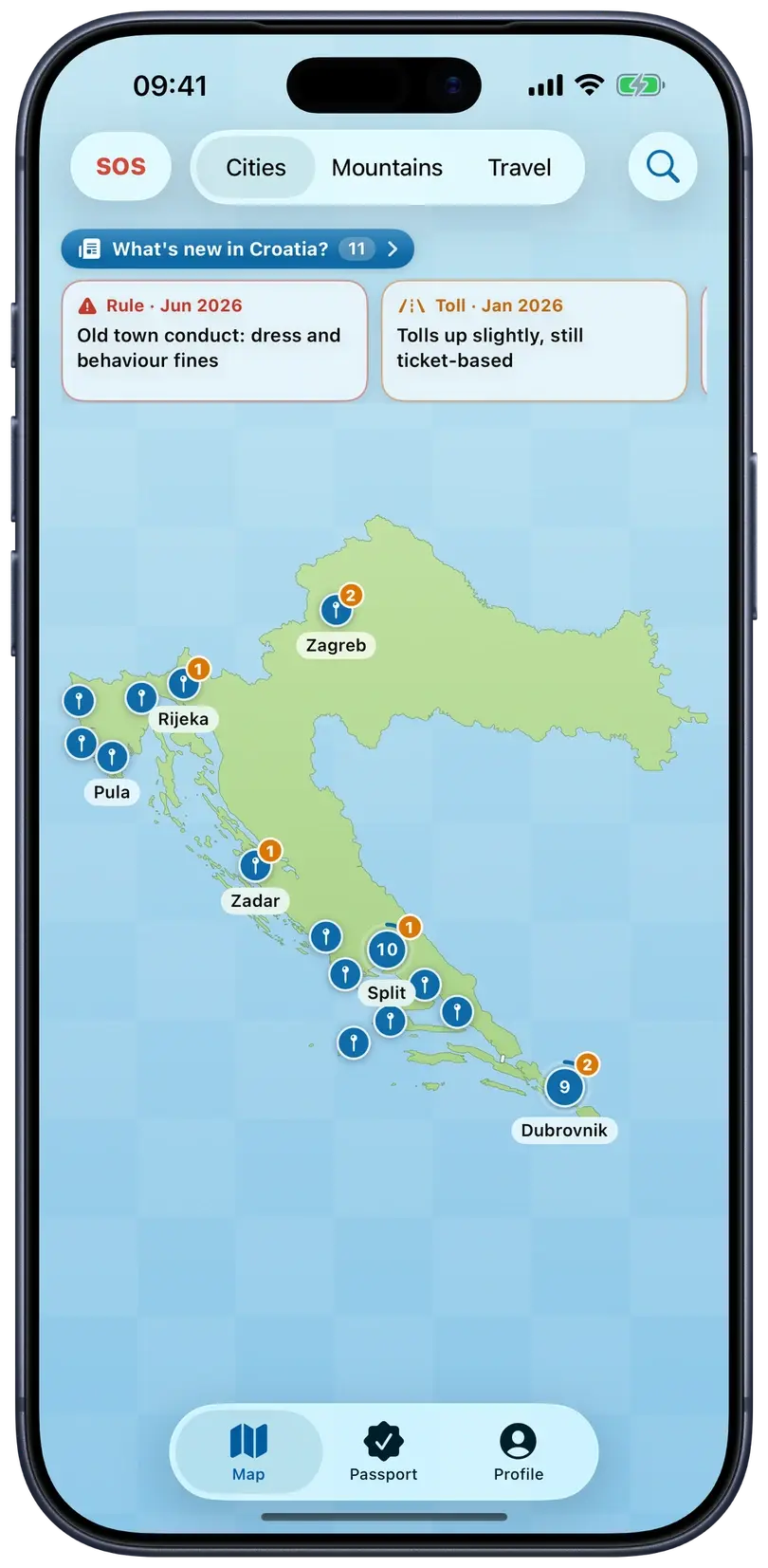
Places unlock as you reach them, with a passport that fills up as you explore.