Split's old town is a Roman emperor's palace, lived in for 1,700 years. What to see, in what order, and when to go up Marjan.
Checked: 17 October 2026, 20:00
Split lives inside a palace. Around the year 300 the emperor Diocletian built his retirement residence on this bay, and when the empire crumbled, the people of the ruined town of Salona moved inside its walls and never left. For 1,700 years every generation has built into the Roman shell: a cathedral into the emperor's mausoleum, shops into the guard walks, bedrooms into the towers. That is why the old town, a UNESCO site since 1979, is a monument people live in, with laundry drying between Corinthian columns.
The palace, room by room
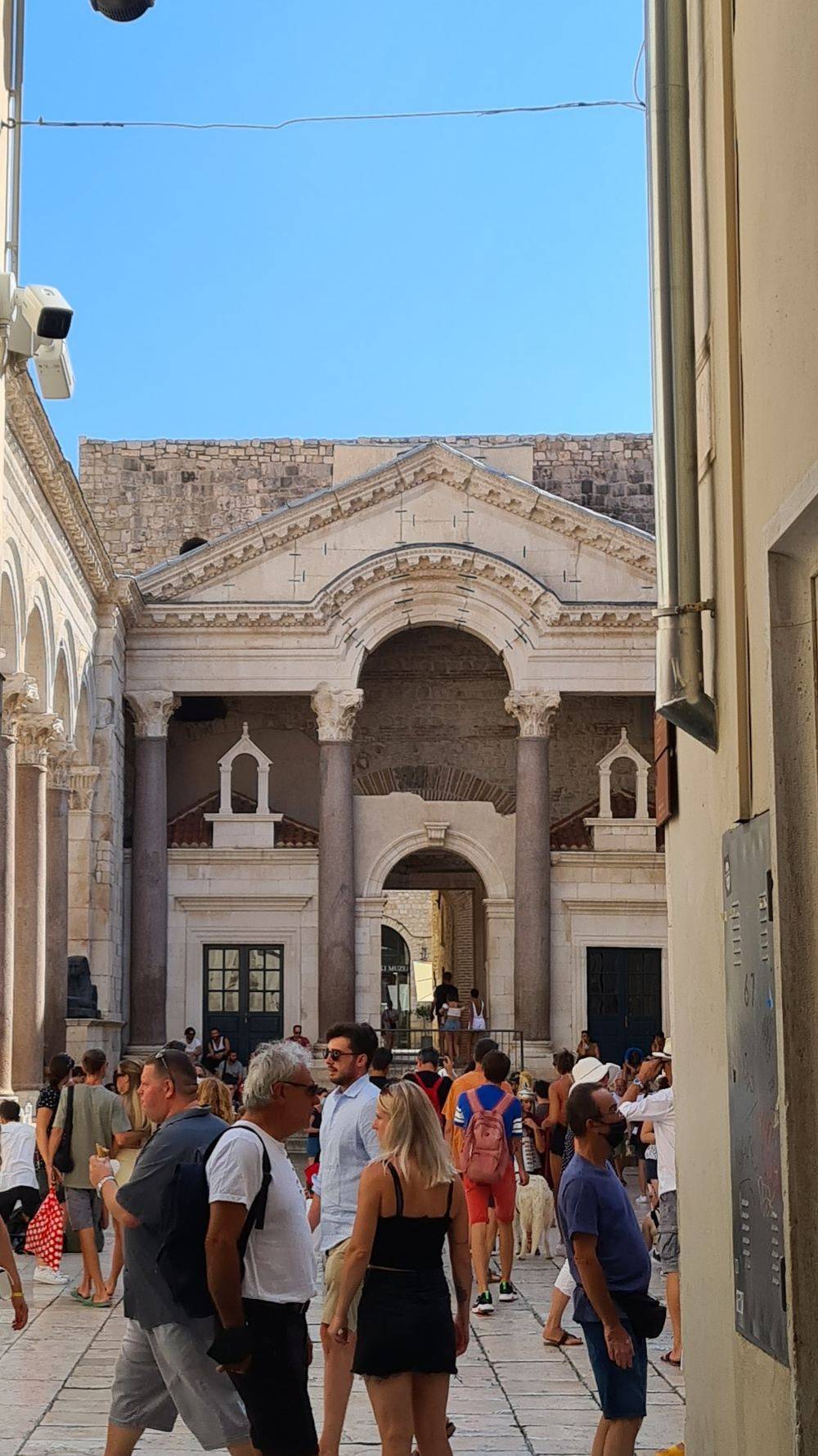
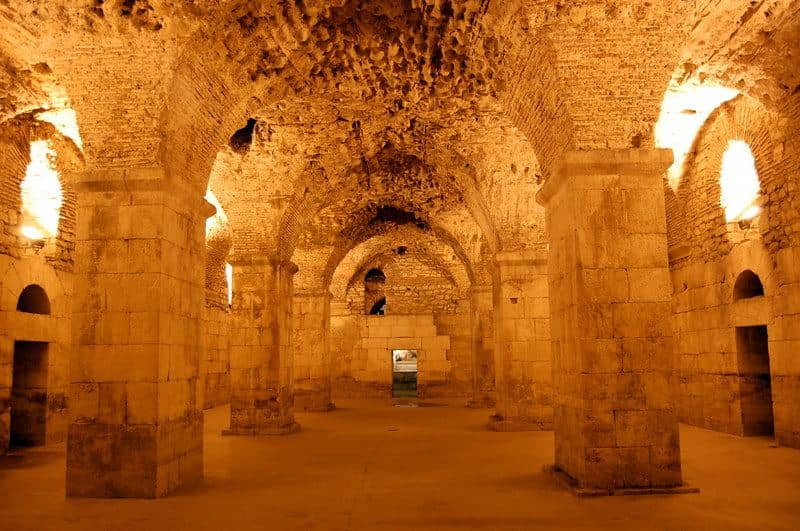
Start at the Peristyle, the emperor's ceremonial court, where morning coffee is served on Roman steps between a black Egyptian sphinx and the cathedral. The cathedral of St Domnius was Diocletian's mausoleum; its bell tower is the best viewpoint in the old town, if you trust your legs on the open steps. Below the palace run the Podrumi, the substructure halls whose floor plan mirrors the vanished imperial apartments above. Leave through the Golden Gate and rub the big toe of Meštrović's giant Grgur Ninski statue, polished bright by decades of luck-seeking hands.
Beyond the walls
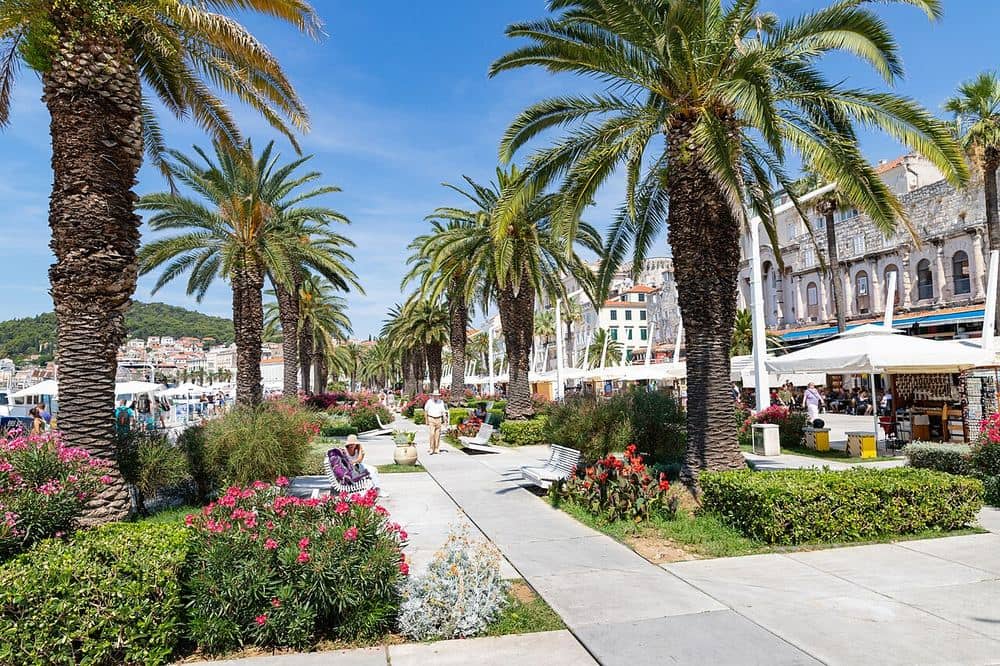
- Riva: the palm-lined waterfront, Split's living room from first coffee to last stroll
- Marjan: the green hill above town, 178 m, pine paths, viewpoints and rock-cut hermit chapels
- Bačvice: the sandy city beach where locals play picigin, a ball game in ankle-deep water
- Pazar and the fish market: the morning markets hard against the palace wall
How to do it right
Enter the palace before nine, when the lanes belong to bakers and cats; by noon the cruise groups arrive. The lanes are free, tickets are only for the cathedral, tower and Podrumi. Climb Marjan for sunset, from the Riva it is twenty minutes up the stone steps of Veli Varoš. Ferries to Brač, Hvar and Vis leave from the harbour right beside the old town, and Trogir, another UNESCO town, is half an hour away. One full day covers palace and Marjan; with beaches and Trogir, give Split two.
Getting to Split
Split airport lies about 20 km west of the centre, on the Kaštela shore near Trogir. A shuttle bus runs to the main bus station, which stands beside the ferry port and the railway station at the eastern end of the Riva, so bus, train and boat all arrive a few minutes' walk from the palace. City bus 37 also stops at the airport on its way between Trogir and Split, slower and cheaper. From Zagreb the A1 motorway brings buses and cars in about 5 hours. If you drive, leave the motorway at Dugopolje and come down into the city from the north. The old town is car-free and the streets around it are paid zones, so book accommodation with parking or use a garage and forget the car until a day trip.
| From | How | Journey |
|---|---|---|
| Split airport | Shuttle bus, bus 37 or taxi | About 30 minutes to the bus station by the port |
| Zagreb | Bus or car on the A1 | About 5 hours |
| Zadar | Bus or car on the A1 | About 2 hours |
| Dubrovnik | Bus on the coast road | About 4 hours |
| Ancona, Italy | Overnight ferry in season | Around 10 hours, ferry port by the old town |
| Brač, Hvar, Vis, Šolta | Jadrolinija ferry or catamaran | 50 minutes to Supetar, about 60 minutes to Hvar town |
Getting around
You will walk most of Split. The Riva to Bačvice is 10 minutes, to Vidilica 15 minutes up the Varoš steps, to the Meštrović Gallery 30 minutes along the shore road. For anything further the city buses of Promet Split do the job: bus 12 leaves the Riva for the southern side of Marjan, with a stop above Kašjuni and a short walk to Bene from the last stop, buses 8 and 17 run east along the shore to Trstenik and Žnjan, and bus 37 leaves the Sukoišan station every half hour along the Kaštela coast to Trogir. Tickets come from kiosks or the driver. A taxi or ride app makes sense for Klis at sunset or an early ferry with luggage.
Where to stay
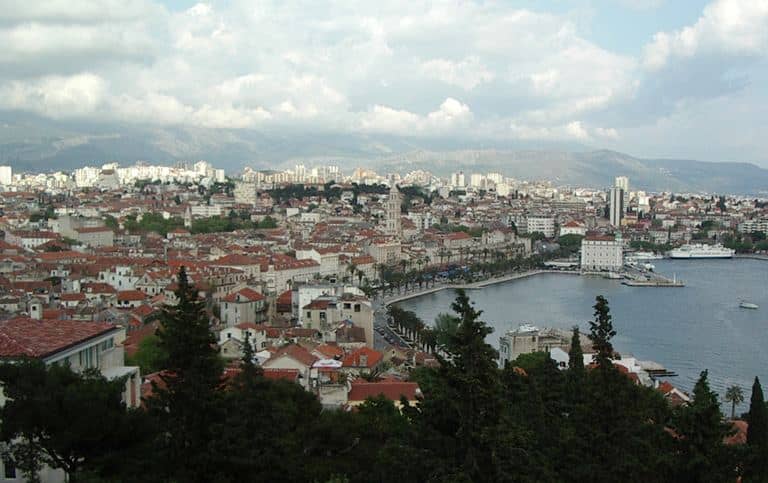
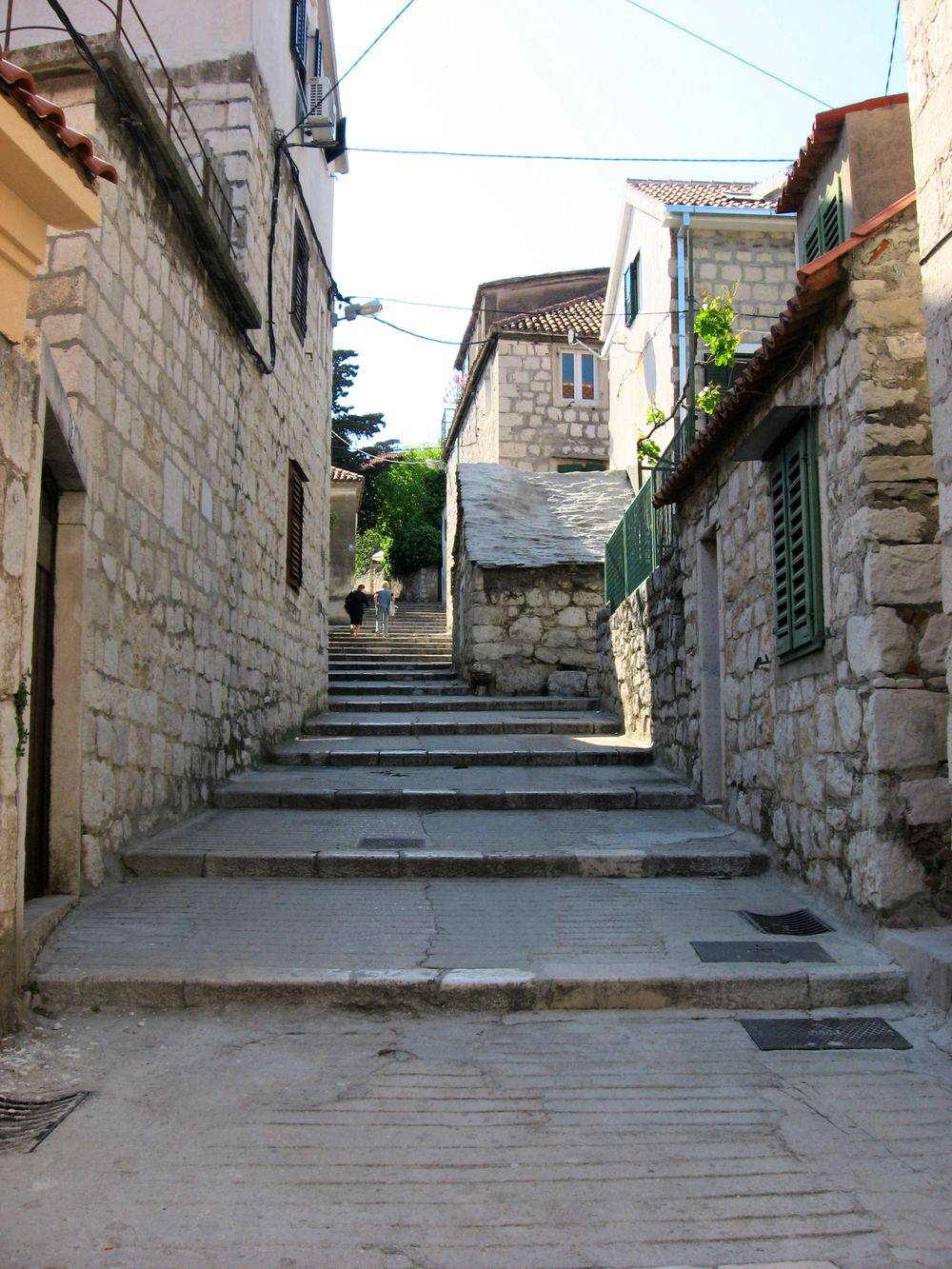
Every quarter within 20 minutes of the Riva works as a base, so choose by the days you plan. Inside the palace you sleep in Roman walls and step out onto the Peristyle, at the price of stairs, no car access and voices in the lanes late into the night. Varoš, the fishermen's quarter below Marjan, is 10 minutes from the Riva and much quieter, with konobas and the hill steps at the door. Bačvice and Firule suit beach mornings and families, though the clubs above Bačvice play until late. Meje, the villa quarter on the coast road towards the Meštrović Gallery, is the calmest choice, and Žnjan suits families with a car who want the big beach and will ride the bus into town.
When to go
June and September are the months to aim for. In June the sea has warmed enough for most people, the Pazar is full of cherries and apricots, and the cruise crowds have not reached their July level. September keeps the warmest sea of the year and the crowds fall away after the first week, though from 28 September the catamaran from Split to Bol and Jelsa runs to its winter timetable. July and August are hot, full and expensive: this is when the Split Summer festival puts opera on the Peristyle, and when you want the cellars at noon and Marjan before the heat. Book beds and island boats ahead in July and August.
Outside those months Split still works. In October the city averages 17.2 degrees and 199 hours of sun, according to DHMZ, and on 17 October 2026 DHMZ measured the sea at 20.5 to 21 degrees. In the first days of the month the Mrdujska regata fills the channel between Split and Brač with sails. Early May has the Sudamja feast around 7 May, when the city sings to its patron under the cathedral columns. From November to March expect rain in spells, the jugo wind from the south, short days and a city that belongs to its residents: the picigin players are in the water on New Year's Day, the museums are empty, and in December the Riva holds an Advent market in 10 to 15 degrees. Some island boats then run only a few times a day.
Split with children
Split is an easy city with children because the sea is 10 minutes from any museum. Bačvice and Firule have sand and water that stays knee-deep far out, Bene on the north side of Marjan adds pine shade over the towels, and the rebuilt Žnjan has playgrounds and ramps for prams. For the hottest hours or a wet afternoon, Froggyland's 507 stuffed frogs in tiny human scenes and the tilted rooms of the Museum of Illusions both sit within 10 minutes of the palace, both air-conditioned. The cellars are cool at noon, and the roof terrace of the Ethnographic Museum, included in its ticket, gives a gull's view of the belfry without the tower stairs. Klis fortress works for older children who know Game of Thrones.
Common mistakes
Most of Split's frustrations come from timing and from treating a living town like a museum. The palace lanes are people's front doors, the market runs on cash and morning hours, and the hill and the ruins outside town have almost no shade. The heat between noon and 17:00 in summer is real, and the cruise ships put several thousand people into the lanes at once on port days. None of the mistakes below ruin a day, all of them waste an hour, and an hour in Split is a swim you did not have.
- Arriving at the cathedral in beachwear: shoulders must be covered, and the bell tower queue is shortest early in the morning.
- Buying fish on a Monday: the fleet rests on Sunday, so the Ribarnica counters are thinnest at the start of the week.
- Walking Marjan or Salona at midday without water: shade is scarce on both, carry a bottle and a hat and start early.
- Paying by card at the Pazar: the stalls run on cash, bring small notes and come before 11:00 while the choice is full.
- Driving to Kašjuni in July: parking on the coast road is scarce, take bus 12 or walk the shore path from the Riva.
- Skipping the Temple of Jupiter: it is on the cathedral ticket, takes 10 minutes, and has a 3,500-year-old sphinx at its door.
The places, one by one
| Place | What it is | Time needed |
|---|---|---|
| Vestibule | Domed antechamber of the imperial quarters | 15 minutes |
| Split City Museum | City history in the Gothic Papalić palace | 1 hour |
| Iron Gate | Western palace gate with a 24-field clock | 10 minutes |
| People's Square (Pjaca) | Medieval main square outside the palace | 30 minutes |
| Prokurative (Republic Square) | Arcaded 19th-century square by the sea | 30 minutes |
| Matejuška | Fishing harbour and sunset pier | 1 hour |
| Svjetionik Pomorac | Breakwater walk to the harbour light | 30 minutes |
| Sustipan | Park on a cliff above the harbour entrance | 30 minutes to 1 hour |
| Meštrović Gallery | Sculptor's villa, garden and Kaštelet chapel | 1 to 2 hours |
| Telegrin Peak | Summit of Marjan with island panorama | 1 to 2 hours |
| Ovčice Beach | Shingle cove east of Bačvice | Half a day |
| Poljud Stadium (Hajduk) | Home ground of Hajduk Split | 30 minutes, or a match evening |
| Kaštilac (Kaštel Gomilica) | Island fortress of 1529 in Kaštela | Half a day |
Vestibule
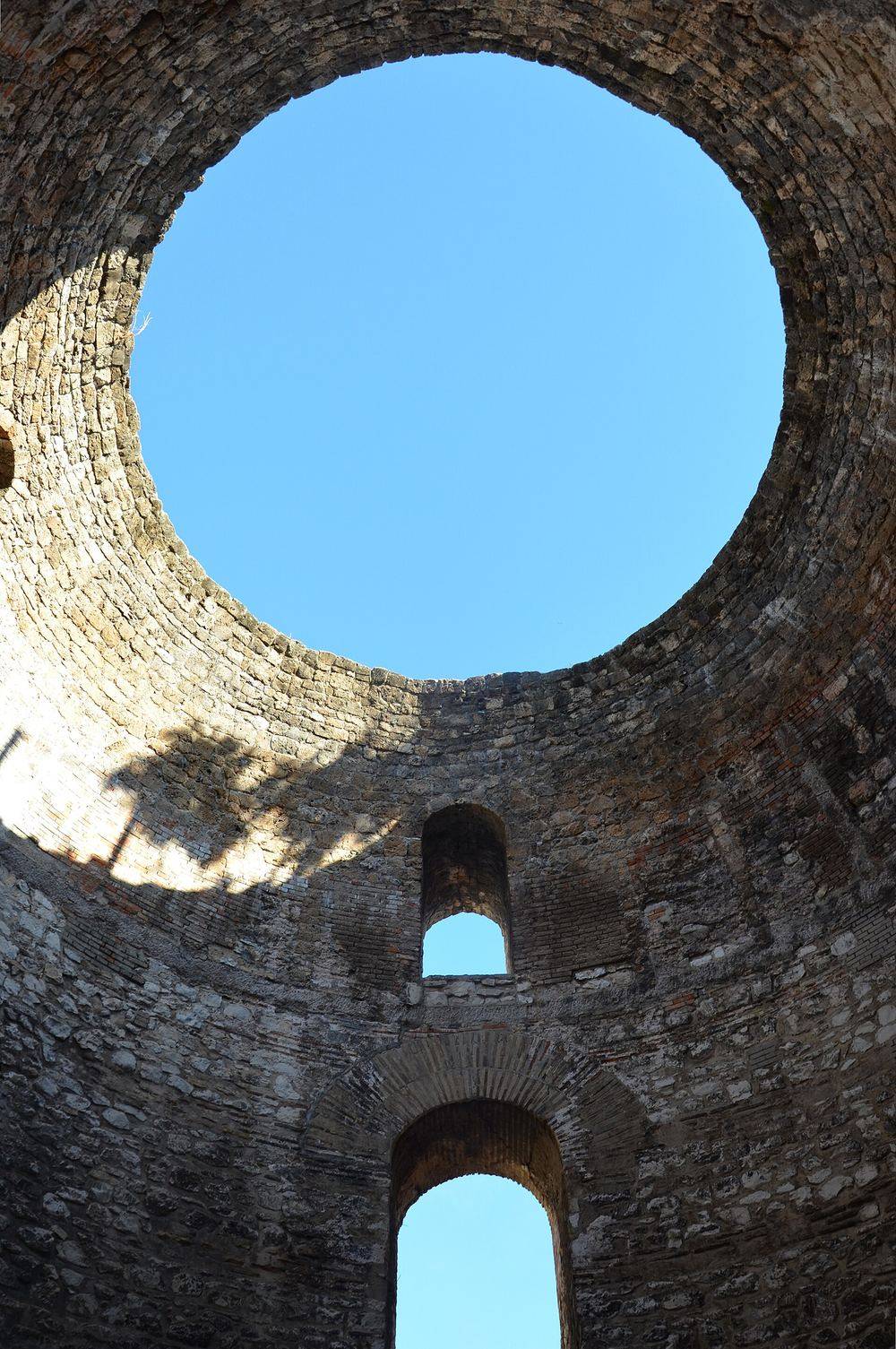
From the Peristyle a few steps lead south into the Vestibule, the round hall where visitors once waited for an audience with the emperor. The dome lost its vault long ago, so you stand under a circle of open sky. The marble and mosaics are gone and bare stone remains. The shape gives the room an echo that klapa groups use almost daily: male a cappella ensembles sing here for a coin or two in the hat. Look up and the cathedral belfry appears through the rim of the opening. Come early in the morning for slanted light and an empty room, then continue through to the imperial apartments and the Ethnographic Museum.
Split City Museum
The City Museum occupies the Papalić palace, in a lane off the street between the Peristyle and the Golden Gate. Juraj the Dalmatian built this Gothic town house in the 15th century for one of Split's leading families, and the floral windows are by the same hand that carved the cathedral of Šibenik. The courtyard, with its outer staircase and carved portal, is open without a ticket and is the finest Gothic corner in the old town. Inside, the rooms follow the city after antiquity: how the palace became a medieval commune, how judges were elected and statutes written, what the weapons and chests of noble houses looked like. An hour is enough, best after you have walked the lanes.
Iron Gate
Leave the palace westward through the Iron Gate, the one entrance that has stayed in use since the palace was built. Above the passage sits the small chapel of Our Lady of the Belfry, and its Romanesque bell tower from the 11th century is the oldest in Dalmatia. On the outer face hangs a Renaissance clock with a dial of 24 fields instead of 12. Inside the passage the Roman sentry corridor survives, and the main pedestrian stream of the old town flows through it between People's Square and the Peristyle. Stop in the half-dark, let the crowd pass and look up. The best view of the clock and the tower is from the square outside.
People's Square (Pjaca)
Step out of the Iron Gate and you are on People's Square, which everyone calls the Pjaca. This was the first square the town built outside the Roman walls, in the 13th century, when the city outgrew the palace. The Gothic Town Hall with its 3 arches on the ground floor holds the north side and is the only building left from the old seat of government. Around it stand fronts from every century since, and the marble paving has been polished to a shine by centuries of feet. Split's oldest bookshop works at one edge. The square fills around 10:00 for morning coffee and after 18:00 for the evening walk. Take a chair and watch.
Prokurative (Republic Square)
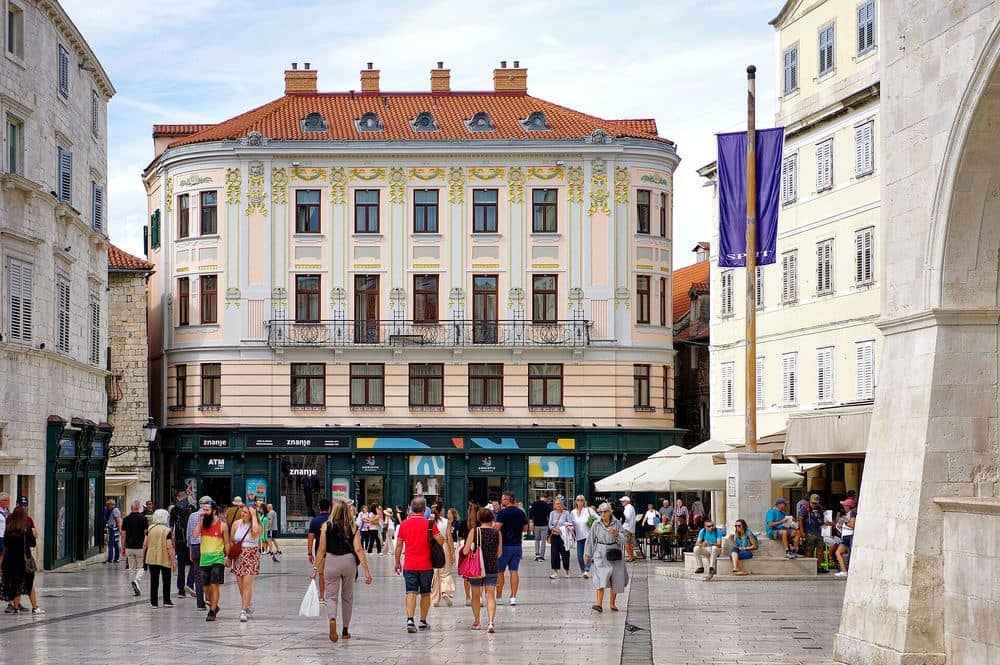
At the western end of the Riva the Prokurative open towards the sea: Republic Square, closed on 3 sides by neo-Renaissance arcades modelled on St Mark's in Venice. The mayor Antonio Bajamonti had it built in the second half of the 19th century as a civic hall under the open sky. The red façades and white arches are Split's most formal stage. The festival of popular song takes place here, along with summer concerts and open-air cinema, and in winter the square fills with Advent huts. Cafés under the arcades look through the arches to the harbour. The sun leaves the square late, so it suits a first coffee and the last one of the afternoon.
Matejuška
A little further west, where Varoš meets the water, the small harbour of Matejuška still works as a fishing port. Gajeta boats sit at their moorings, nets hang over the railings and the fishermen keep their gear in huts. For centuries the boats that fed the city with sardines left from here, and the monument to the fisherman on the pier is the town's thanks. In the evening the big concrete pier turns into the cheapest bar in Split: students, workers and visitors sit with legs over the sea and a drink from the kiosk. Arrive before sunset and watch the sun go down behind Marjan as the Riva's lights come on.
Svjetionik Pomorac
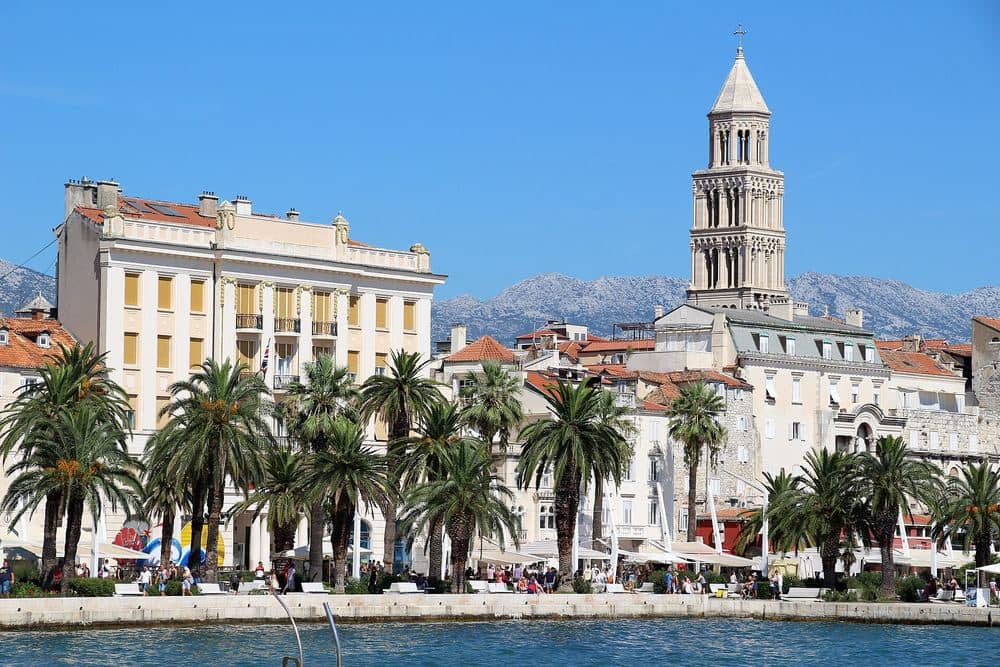
From Matejuška the harbour breakwater runs out into the bay, a stone and concrete mole with a red light at its end. Most visitors never walk it. From the far end you see Split whole for the first time: the palace and belfry in the middle, Marjan on the left, Mosor rising above the roofs. Ferries enter and leave a few metres from you, so time your walk for a big arrival and let the ship slide past. Anglers hold their spots all year, runners take the morning and at dusk the mole becomes the city's longest bench. There is no café and no shade, so bring water and a hat. The walk to the light and back takes about 30 minutes.
Sustipan
Sustipan is the small headland above the harbour entrance, 10 minutes on foot from the Riva. The name comes from the early medieval Benedictine monastery of St Stephen that stood here, and remains of the monastery and its little church survive in one corner of the park. In the 19th century the city laid out its cemetery on the cape, with a neoclassical pavilion. The graves were cleared after 1950, but the plan of the alleys and the odd surviving slab keep a ceremonial calm under the cypresses and pines. Benches on the cliff look from Marjan across the islands to the harbour, with sailboats entering the ACI marina below. Come at sunset: the sun drops into the gap between Čiovo and Šolta.
Meštrović Gallery
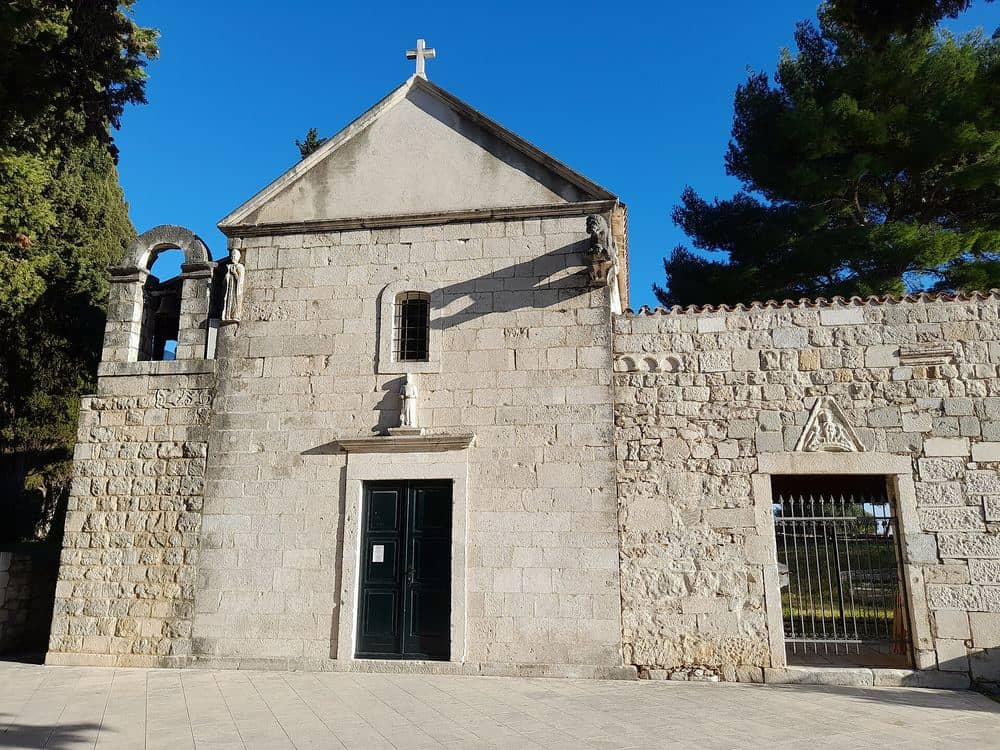
Ivan Meštrović, Croatia's best-known sculptor, designed this villa on the southern slope of Marjan between 1930 and 1940 as a family home and studio. He lived in it only a few years before leaving for exile, and later gave the house and hundreds of works to the nation. Marble and bronze figures fill the light halls and monumental pieces stand among the olives in the garden. Your ticket also covers the Kaštelet 100 m further along the coast road, a fortified 16th-century summer house of the Capogrosso family that Meštrović bought in 1939. In its courtyard chapel hang 28 walnut panels of the life of Christ, which many consider his finest work. Allow 90 minutes for both, in the afternoon for the garden light.
Telegrin Peak
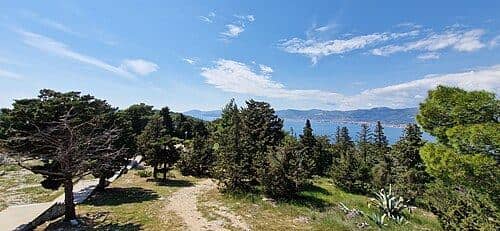
Telegrin is the summit of Marjan, a stone terrace with a large Croatian flag visible from half the city. From the First Vidilica broad paths lead through the pine wood, the last stretch is steps, and the whole ascent takes about 30 minutes. Starting from Varoš adds 10 minutes. From the top you see Split from the palace to Poljud, the bay of Kaštela and Trogir on the left, the harbour and Žnjan on the right, and across the water Šolta, Brač, Hvar and, on a clear day, Vis. A plaque on the terrace names the islands. The clearest air is before 09:00 and the best colour comes in the hour before sunset. There is nothing up here except benches and the view, so carry water.
Ovčice Beach
Ovčice is the first cove east of Bačvice, 2 minutes along the promenade and separated from it by a small headland. The sea is the same, shallow and warm, but the crowd is about half and there is no nightlife. The beach is fine shingle with a gentle entry and enough shallows for small children. A line of tamarisks gives natural shade, rare on Split's beaches. Showers, cabins and a café with a view work in summer, when lifeguards are on duty. At the deeper edge of the cove water polo players train. From Ovčice the promenade continues east to Firule and Zenta, so a swim becomes a walk. If Bačvice is full or too loud, this is where locals go.
Poljud Stadium (Hajduk)
Poljud is the home ground of Hajduk Split and the best-looking stadium on the Adriatic. The architect Boris Magaš designed it for the 1979 Mediterranean Games as an open shell, with a roof that seems to float over stands for about 30,000 people. Hajduk was founded in 1911 and means more to Split than sport. Its supporters' group, the Torcida, dates from 1950 and is the oldest in Europe, and its north-stand choreography is worth the ticket alone. Seats for most home matches are easy to get, the derby against Dinamo Zagreb excepted. On non-match days you can walk round the shell, see the club museum with its trophies or book a stadium tour. It is about 30 minutes on foot north of the old town, past the Archaeological Museum.
Kaštilac (Kaštel Gomilica)
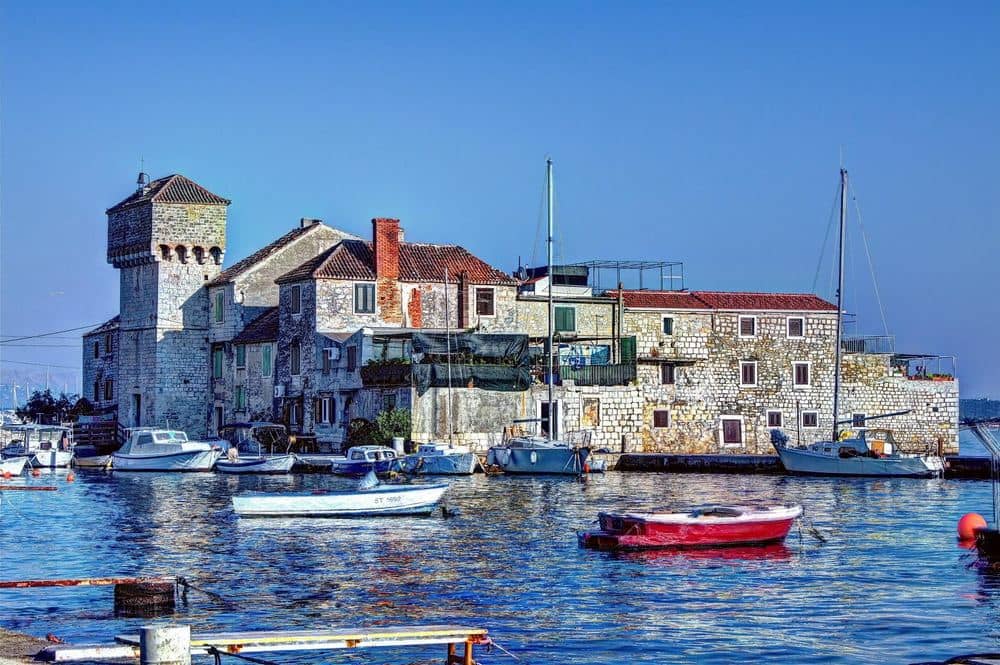
Kaštel Gomilica is one of the 7 towns along the Kaštela shore between Split and Trogir, each with its own castle. The Kaštilac is the most picturesque. The Benedictine nuns of Split built it in 1529 to shelter their field workers from Ottoman raids: a square tower and a defensive wall on a rock in the sea, joined to the shore by a stone bridge. A settlement later grew inside the walls, and people still live there. Cross the bridge and you are in courtyards where washing dries. Game of Thrones used it as a set for Braavos. From Split it is 15 minutes by car or suburban bus. The visit takes half an hour, so add a swim beside the bridge and a coffee on the quay.
Frequently asked questions
- How much time do you need for Split?
- One full day for the palace, the Riva and Marjan. Two days if you add Bačvice, the markets and a half-day trip to Trogir.
- Does Diocletian's Palace charge entry?
- No. The palace is Split's old town and its lanes are open around the clock. Tickets exist only for the cathedral, the bell tower and the Podrumi cellars.
- Is Split a good base for day trips?
- The best on the coast: ferries to Brač, Hvar and Vis from the town harbour, Trogir in 30 minutes, Omiš and the Cetina canyon in 40, Krka and Plitvice as day trips.
Official sources
Share this guide
Questions about your trip?