Skip to content

Beaches

148 beaches in Croatia

Orientation, wind and distance. For every one.

148 beaches · 20 towns
Photo: Kristijan Bezjak / Croatia Atlas

How the categories work

Open to the west means sun until it goes down. Bura at its back means flat water. Under a kilometre means you walk. All of it comes from the coastline, not from a score.

Beach against beach

Tap the one you would rather be on right now. Every vote counts into the ranking.

Tap a beach to vote

Beaches enter the board after five duels.

Measured by the Croatian meteorological service at the station nearest each town.

Loading readings

Which beach is nearest to you

Share your position or pick a town, and the list sorts itself by distance.

or pick a town

Your position stays in this browser. Nothing is sent anywhere.

By what the day should be

Five ways through 148 beaches

The strongest handful in each.

Sun until the end of the day

Open to the west, so the light stays on the water until it drops behind it.

Pasjača Beach
Legendary
Activity

Pasjača Beach

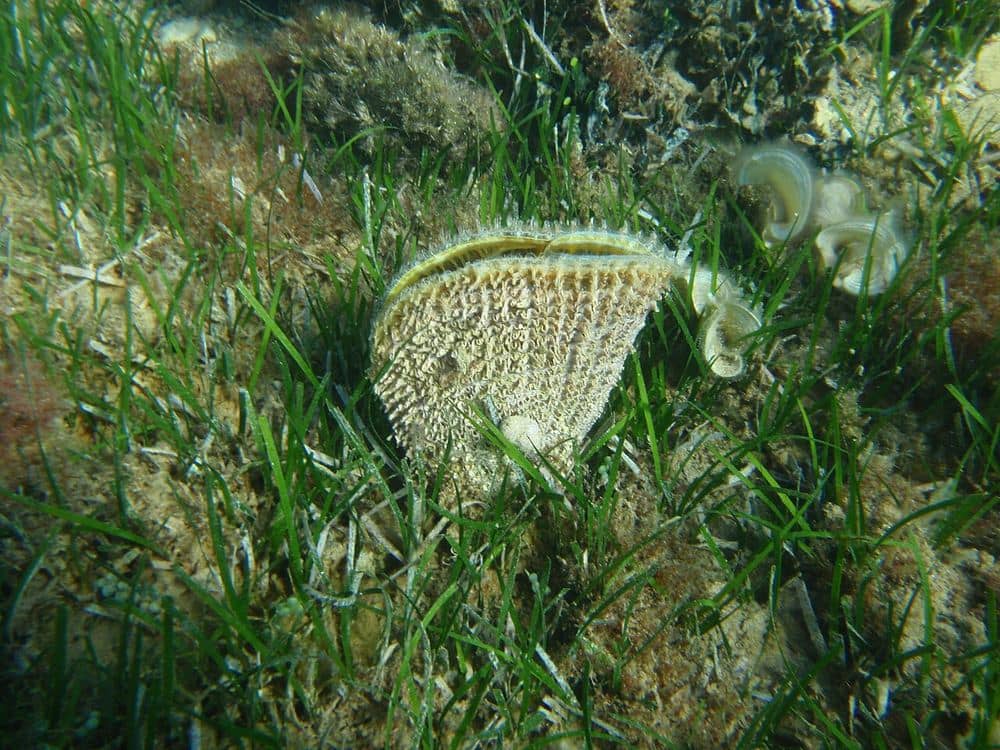
Pasjača Beach is a remote beach at the far southern end of the Konavle coast.

Photo: Croq / CC BY-SA 3.0
Pasjača Beach
Activity Legendary

Pasjača Beach

Pasjaca Beach lies beneath cliffs a hundred metres high at the far south of Konavle and is one of the Adriatic's most unusual beaches, because it came about by accident: shingle that fell from the cliff while a tunnel for irrigating the Konavle field was being dug in the 1950s created a narrow strand where none had been before. A steep path leads to the beach from the top, through the tunnel and down steps cut into the rock, and the descent takes fifteen minutes; the return is uphill and demands fitness. The reward is a cove closed on three sides by vertical cliffs, with sea so clear the bottom is seen several metres down and with the feeling of being at the world's end rather than half an hour from Dubrovnik. There are no facilities at all, so bring water and everything else. The beach has several times been chosen among Europe's loveliest; in summer come early, for there is room for about thirty people.

Photo: Croq / CC BY-SA 3.0

Cavtat
Zambratija bay
Hidden gem
Activity

Zambratija bay

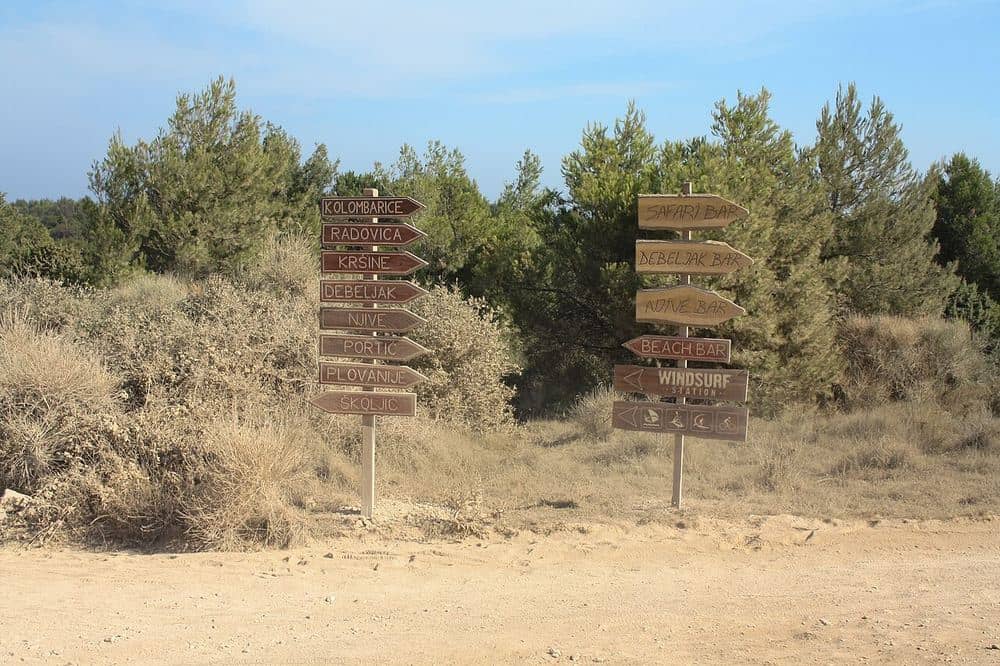
A quiet bay north of Katoro, above the oldest sewn boat in the Mediterranean.

Photo: Ato 01 / CC BY-SA 4.0
Zambratija bay
Activity Hidden gem

Zambratija bay

Zambratija Bay is a quiet bay north of Katoro that hides a find of world importance: in its shallows in 2008 the remains of a wooden boat sewn with rope were found, dated to the Bronze Age, about three and a half thousand years old, and thus the oldest known boat of its kind in the Mediterranean. The find stayed underwater, protected and supervised, and research continues to this day; it is not visible from the surface, but boards along the shore explain what lies below. The bay itself is what it always was: shallow sea, concrete platforms, fishing boats and a small marina, without hotels and without music. Bathing is calm and warm, and the bottom is sandy in several places. By the bay work two taverns with fish from these waters, and to Sipar the coastal path is a ten-minute walk. For a day that joins quiet bathing with the feeling of being above three thousand years of history, Zambratija is the best choice of the Umag region.

Photo: Ato 01 / CC BY-SA 4.0

Umag
Munte beach
Hidden gem
Activity

Munte beach

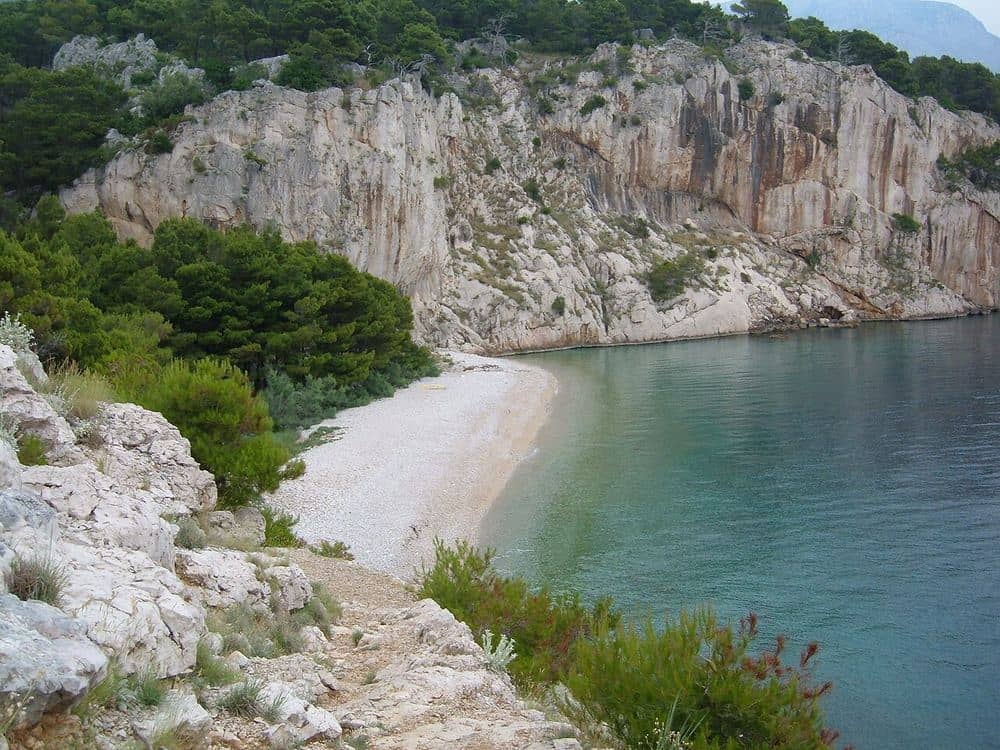
A shingle cove between Medulin and Premantura, with pine shade.

Photo: Marco Usan / CC BY 3.0
Munte beach
Activity Hidden gem

Munte beach

Munte Beach is a shingle cove on the road between Medulin and Premantura and the best compromise for those who want the Kamenjak sea without driving on gravel: white shingle, a pine wood descending to the very strand and a sea that, being open to the south, is fresher and clearer than in the Medulin bay. Shade is the main card here: the pines stand so close to the water that a towel can be placed in the shade and stay there all day, which is not usual on the beaches of southern Istria. There are few facilities, a seasonal bar, showers and a few loungers; bring everything else. The sea deepens moderately, the bottom is clean, and on the cove's right side are rocks to jump from. Munte is reached by car in five minutes from Medulin, and the car park above the beach fills up by ten in summer. For a day that joins calm, shade and clean sea without demanding a full-day outing, this is the best choice in the area.

Insider tip

There is no sign from the road: look for the break in the pines after the last campsite.

Photo: Marco Usan / CC BY 3.0

Medulin
Nugal Beach
Activity

Nugal Beach

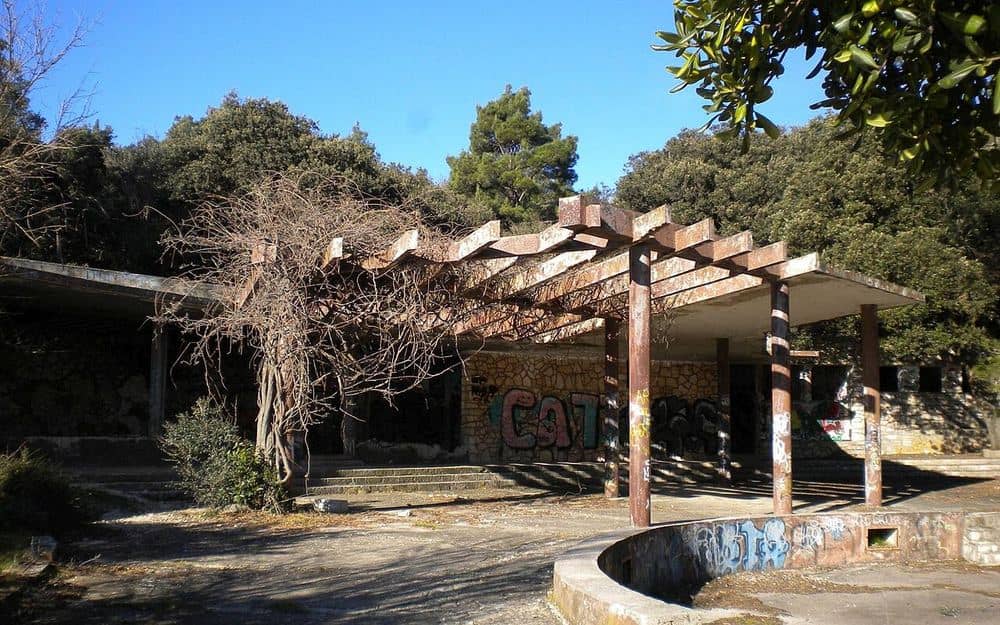
A wild hidden cove reached only by a path through the forest.

Photo: Tengilorg / CC BY 3.0
Nugal Beach
Activity

Nugal Beach

Nugal is the wildest beach of the Makarska riviera and the only one that cannot be reached by car: a shingle cove cut between vertical cliffs east of the town, to which only a path through the Osejava pine wood leads, some twenty minutes' walk from the last houses. That very access keeps the cove half empty even in August, and gives those who come a feeling arranged beaches lack: white shingle, turquoise sea and cliffs on three sides, without a single building in the frame. Nugal is traditionally a naturist beach, though today it is mixed, and that is part of its reputation. There are no facilities at all: no showers, bars or shade except along the edge, so bring water, food and a parasol. The path is marked and passable but stony, so wear something firm. For a day that joins a walk through pinewood, a swim in the cleanest sea of the area and the feeling of having found something of your own, Nugal is the riviera's best choice.

Photo: Tengilorg / CC BY 3.0

Makarska
Škaraba Beach
Activity

Škaraba Beach

A low-key rocky beach along the Rovinj coastline.

Photo: Zoran Kurelić Rabko / CC BY-SA 3.0
Škaraba Beach
Activity

Škaraba Beach

Škaraba is the last cape of the town's swimming and the first cape of the wild: the rocky end of the Zlatni rt forest, where groomed paths turn to trails and beaches to a row of stone shelves above deep water. One comes here for three things the northern part of the park does not offer: solitude even on a working summer day, rock jumps of two to six metres as you choose, and a seabed that plunges steeply into blue, the favourite spot of the town's mask-and-snorkel divers. Shade comes from pines leaning over the very edge, and towel space is never short, for bathers scatter across the shelves instead of lining up beside each other. There are no facilities at all, no kiosk, no shower, so the rucksack must carry everything, water first. Škaraba is reached by a walk through the park, some twenty minutes from the entrance, or from the sea, by kayak along the shore, which is also the loveliest approach. Mind the children, the shelves stand high above the water and without rails. The reward for the small effort is a sea as it was before tourism: deep, cold at entry and entirely yours.

Photo: Zoran Kurelić Rabko / CC BY-SA 3.0

Rovinj
Cisterna Beach
Activity

Cisterna Beach

A small bathing spot on the rocks along the Rovinj shore.

Photo: H. Zell / CC BY-SA 3.0
Cisterna Beach
Activity

Cisterna Beach

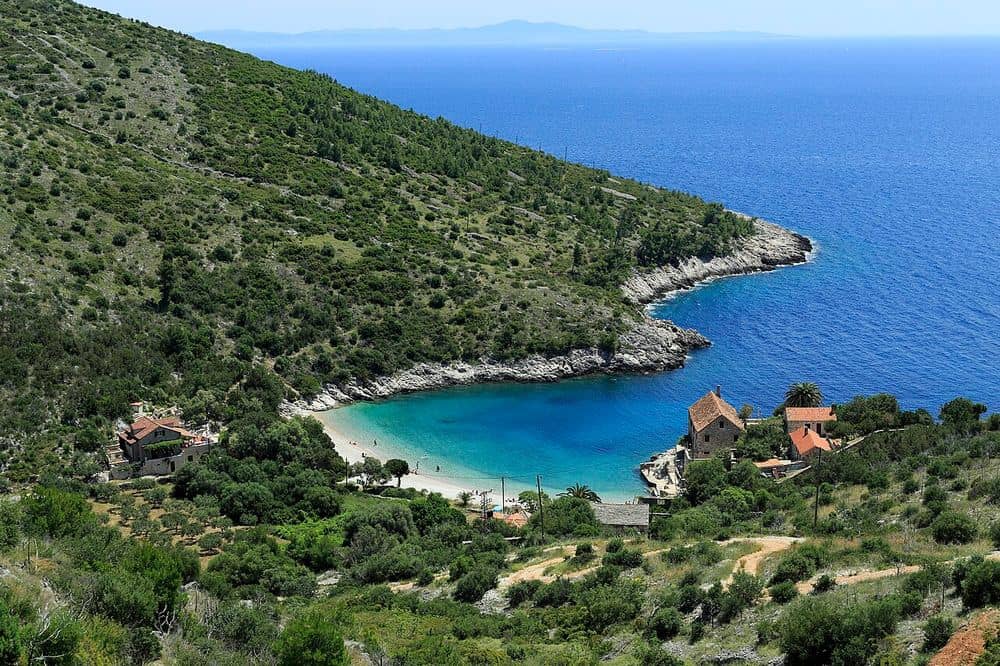
Cisterna is a cove in the southern part of the Zlatni rt forest, named after the old stone cistern in its hinterland that once watered the park: the smaller, quieter sister of Lone, with a mix of fine pebble and stone slabs and a sea that deepens slowly enough for families yet quickly enough for swimmers. Pines embrace the cove from both sides, so natural shade lasts into the afternoon; there are no sunbeds and no music, which is exactly why it is chosen by those who find Mulini too loud and Škaraba too demanding. The bottom is mostly rocky with sandy pockets, the water, thanks to the park location, ranks among the cleanest in town, and a mask along the edge rocks always shows something. Cisterna is reached by the park path on foot or by bicycle, some twenty minutes from the Zlatni rt entrance; a drinking fountain and benches wait along the way. There are no facilities, so bring all your own and take all of it back. Cisterna is a cove for a whole day with a book: close enough to town to come without a plan, far enough to forget what time it is.

Photo: H. Zell / CC BY-SA 3.0

Rovinj

Flat water when the Bura blows

The Bura comes from behind these, and the Jugo does not run straight in either.

Least Bura on the beach:PulaMakarskaZadarRijekaUmagPoreč

It hits hardest below the Velebit, around Senj and the Maslenica bridge.

Dubovica Beach
Legendary
Activity

Dubovica Beach

A quiet cove on Hvar's south coast with clear, calm water for a swim.

Photo: Falk2 / CC BY-SA 3.0 de

Dubovica Beach
Activity Legendary

Dubovica Beach

Dubovica is a cove on the southern shore of the island, about eight kilometres east of the town of Hvar, along the old road toward Stari Grad. Two headlands close the cove, and at its head lies a pebble beach with larger stones and very clear water that deepens quickly. Right by the beach stands a 19th-century stone house with dry-stone terraces, one of the most photographed buildings on the island. From the road a steep path leads down to the beach in some ten minutes, and the parking by the road is small and full before noon in summer. There are no showers and no shade apart from a few trees, so it is worth bringing water and a parasol.

Photo: Falk2 / CC BY-SA 3.0 de

Hvar
Pasjača Beach
Legendary
Activity

Pasjača Beach

Pasjača Beach is a remote beach at the far southern end of the Konavle coast.

Photo: Croq / CC BY-SA 3.0

Pasjača Beach
Activity Legendary

Pasjača Beach

Pasjaca Beach lies beneath cliffs a hundred metres high at the far south of Konavle and is one of the Adriatic's most unusual beaches, because it came about by accident: shingle that fell from the cliff while a tunnel for irrigating the Konavle field was being dug in the 1950s created a narrow strand where none had been before. A steep path leads to the beach from the top, through the tunnel and down steps cut into the rock, and the descent takes fifteen minutes; the return is uphill and demands fitness. The reward is a cove closed on three sides by vertical cliffs, with sea so clear the bottom is seen several metres down and with the feeling of being at the world's end rather than half an hour from Dubrovnik. There are no facilities at all, so bring water and everything else. The beach has several times been chosen among Europe's loveliest; in summer come early, for there is room for about thirty people.

Photo: Croq / CC BY-SA 3.0

Cavtat
Zambratija bay
Hidden gem
Activity

Zambratija bay

A quiet bay north of Katoro, above the oldest sewn boat in the Mediterranean.

Photo: Ato 01 / CC BY-SA 4.0

Zambratija bay
Activity Hidden gem

Zambratija bay

Zambratija Bay is a quiet bay north of Katoro that hides a find of world importance: in its shallows in 2008 the remains of a wooden boat sewn with rope were found, dated to the Bronze Age, about three and a half thousand years old, and thus the oldest known boat of its kind in the Mediterranean. The find stayed underwater, protected and supervised, and research continues to this day; it is not visible from the surface, but boards along the shore explain what lies below. The bay itself is what it always was: shallow sea, concrete platforms, fishing boats and a small marina, without hotels and without music. Bathing is calm and warm, and the bottom is sandy in several places. By the bay work two taverns with fish from these waters, and to Sipar the coastal path is a ten-minute walk. For a day that joins quiet bathing with the feeling of being above three thousand years of history, Zambratija is the best choice of the Umag region.

Photo: Ato 01 / CC BY-SA 4.0

Umag
Munte beach
Hidden gem
Activity

Munte beach

A shingle cove between Medulin and Premantura, with pine shade.

Photo: Marco Usan / CC BY 3.0

Munte beach
Activity Hidden gem

Munte beach

Munte Beach is a shingle cove on the road between Medulin and Premantura and the best compromise for those who want the Kamenjak sea without driving on gravel: white shingle, a pine wood descending to the very strand and a sea that, being open to the south, is fresher and clearer than in the Medulin bay. Shade is the main card here: the pines stand so close to the water that a towel can be placed in the shade and stay there all day, which is not usual on the beaches of southern Istria. There are few facilities, a seasonal bar, showers and a few loungers; bring everything else. The sea deepens moderately, the bottom is clean, and on the cove's right side are rocks to jump from. Munte is reached by car in five minutes from Medulin, and the car park above the beach fills up by ten in summer. For a day that joins calm, shade and clean sea without demanding a full-day outing, this is the best choice in the area.

Insider tip

There is no sign from the road: look for the break in the pines after the last campsite.

Photo: Marco Usan / CC BY 3.0

Medulin
Nugal Beach
Activity

Nugal Beach

A wild hidden cove reached only by a path through the forest.

Photo: Tengilorg / CC BY 3.0
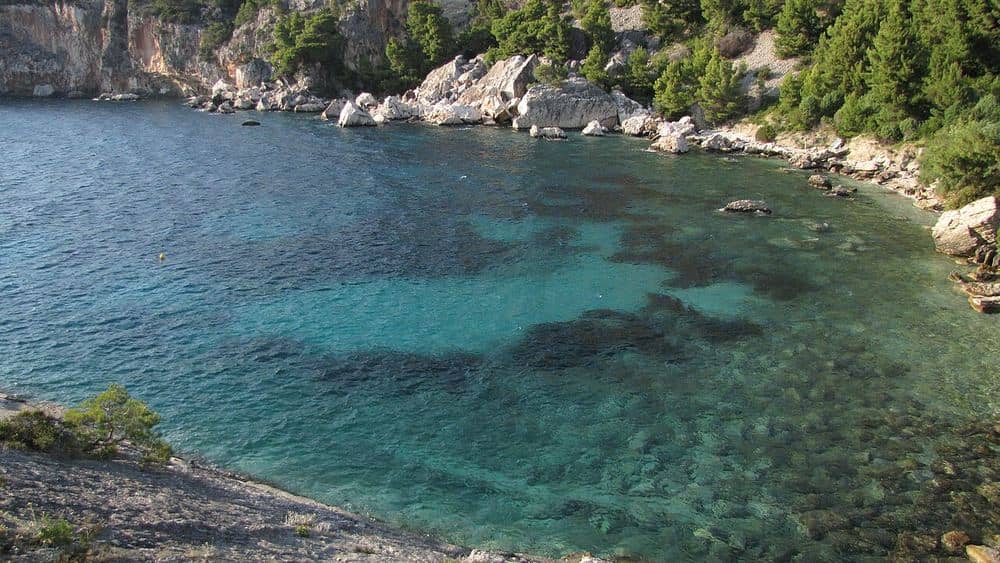
Nugal Beach
Activity

Nugal Beach

Nugal is the wildest beach of the Makarska riviera and the only one that cannot be reached by car: a shingle cove cut between vertical cliffs east of the town, to which only a path through the Osejava pine wood leads, some twenty minutes' walk from the last houses. That very access keeps the cove half empty even in August, and gives those who come a feeling arranged beaches lack: white shingle, turquoise sea and cliffs on three sides, without a single building in the frame. Nugal is traditionally a naturist beach, though today it is mixed, and that is part of its reputation. There are no facilities at all: no showers, bars or shade except along the edge, so bring water, food and a parasol. The path is marked and passable but stony, so wear something firm. For a day that joins a walk through pinewood, a swim in the cleanest sea of the area and the feeling of having found something of your own, Nugal is the riviera's best choice.

Photo: Tengilorg / CC BY 3.0

Makarska
Zaraće Beach
Activity

Zaraće Beach

A secluded bay on Hvar's south coast, worth the detour for a quiet swim.

Photo: Dejan Sekuloski / CC BY 3.0

Zaraće Beach
Activity

Zaraće Beach

Zarace are two neighbouring coves on the southern side of the island, Malo and Velo Zarace, divided by a rocky ridge pierced by a low natural passage through which one can swim from one to the other. The beaches are pebbly and narrow, ringed by white rock and pines, and the sea, exposed to the open water, is colder and clearer than in sheltered bays. The coves are reached by turning off the main road through the village of the same name, then by a steep track whose last two hundred metres become steps. There is no catering apart from a small tavern in season, so bring your own water. In a strong southerly the sea throws in waves and swimming is then unpleasant.

Photo: Dejan Sekuloski / CC BY 3.0

Hvar

On foot from the centre

Under a kilometre from the middle of town, no car and no bus needed.

The Blue Beach
Legendary
Activity

The Blue Beach

The main town beach west of the centre: pebbles, concrete platforms and a shallow entry.

Photo: Adam Zivner / CC BY 2.5
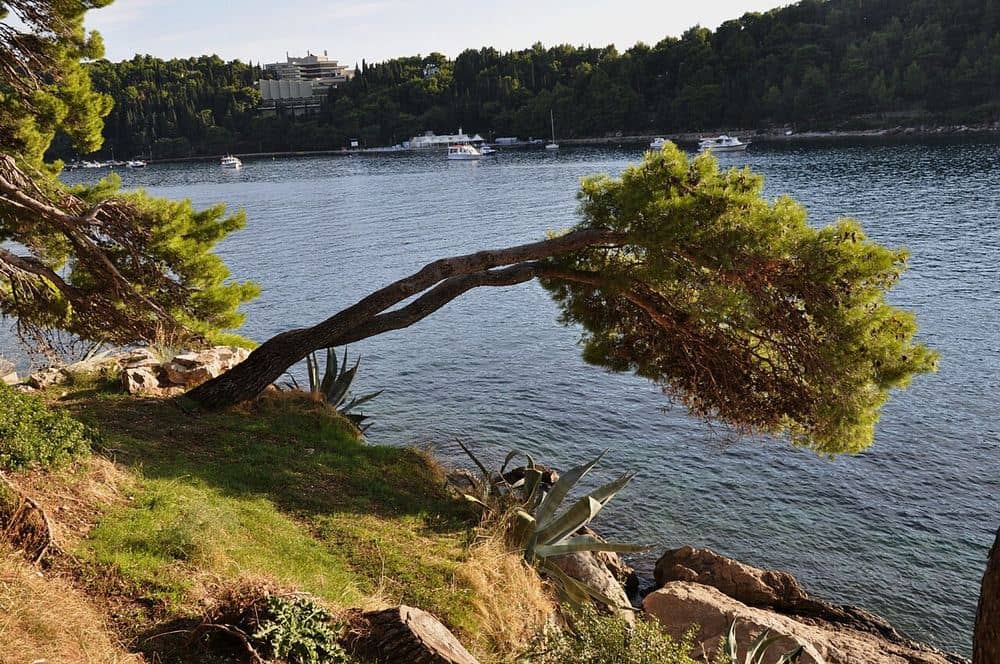
The Blue Beach
Activity Legendary

The Blue Beach

The Blue Beach is what Vodice offers instead of sand, and it is worth knowing exactly what you get. The shore is a run of pebbles broken up by concrete platforms, with showers, cabins, bars and sunbeds for hire, and the sea drops away gradually so children can stand a long way out. Behind the beach runs a belt of pines, the only real shade nearby and the reason the first morning spots are taken there.

The beach flies a Blue Flag, the international mark for water quality and facilities, and that shows in the upkeep. It also shows in the crowds. In mid July and August, between 11:00 and 16:00, there is effectively no free space, and parking on the road above fills by nine in the morning. Come before ten or after five and you get the same beach without a queue at the shower. The water is warmest in August and stays comfortable into mid September, when the beach loosens up and becomes what it was before tourism: an ordinary town shore.

Insider tip

The shade under the pines behind the beach is free and goes first; the sunbeds out in the sun stay available all day.

Photo: Adam Zivner / CC BY 2.5

Vodice
Ključice Beach
Activity

Ključice Beach

Ključice Beach is a small cove on the northern edge of Cavtat.

Photo: Eddy Genne / CC BY 3.0
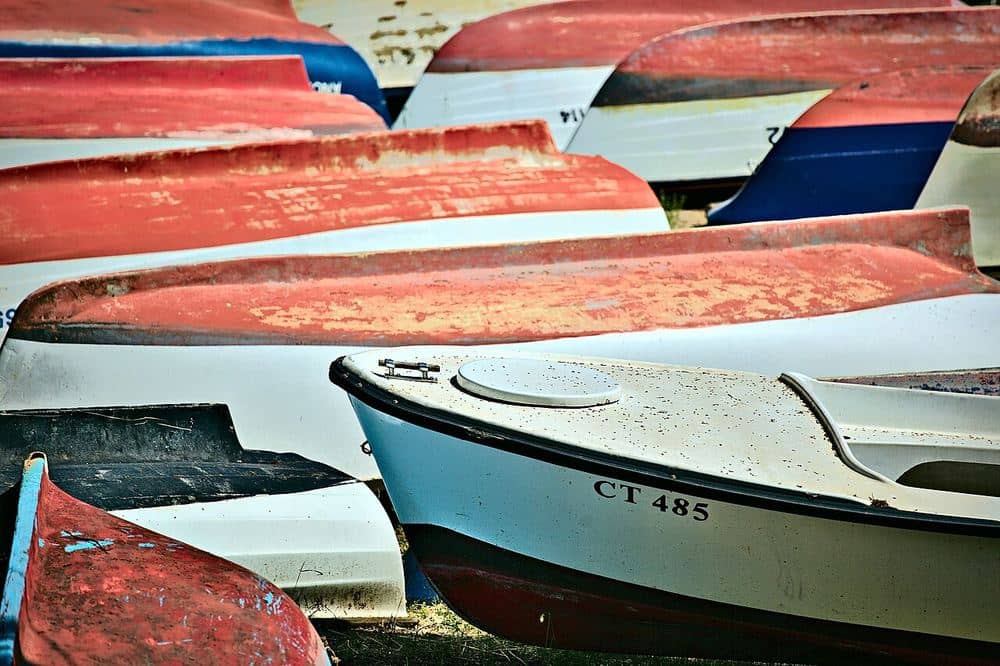
Ključice Beach
Activity

Ključice Beach

Kljucice cove is a small inlet on the northern edge of Cavtat, where the town passes into the coast toward Mlini: a shingle strand between low rocks, with pines above and a sea that deepens moderately. The cove is smaller than the town beach and therefore quieter, and since no road leads to it but only the coastal path, those who come are mostly people staying nearby or who know it exists. There are few facilities: a shower, a few loungers and a bar in season, bring the rest. The sea is clean and sheltered, and the bottom is shingle without sharp stones, so entry is pleasant for children too, though because of its size the cove is better for couples and small groups. From the Cavtat waterfront Kljucice is a fifteen-minute walk by the coastal promenade northward. Toward evening, when the town beach empties, only the sea and the pinewood remain here.

Photo: Eddy Genne / CC BY 3.0

Cavtat
Pinija Beach
Activity

Pinija Beach

Pinija Beach is a pine-shaded swimming spot close to the old town.

Photo: Filip Bunkens pitslamp / CC0
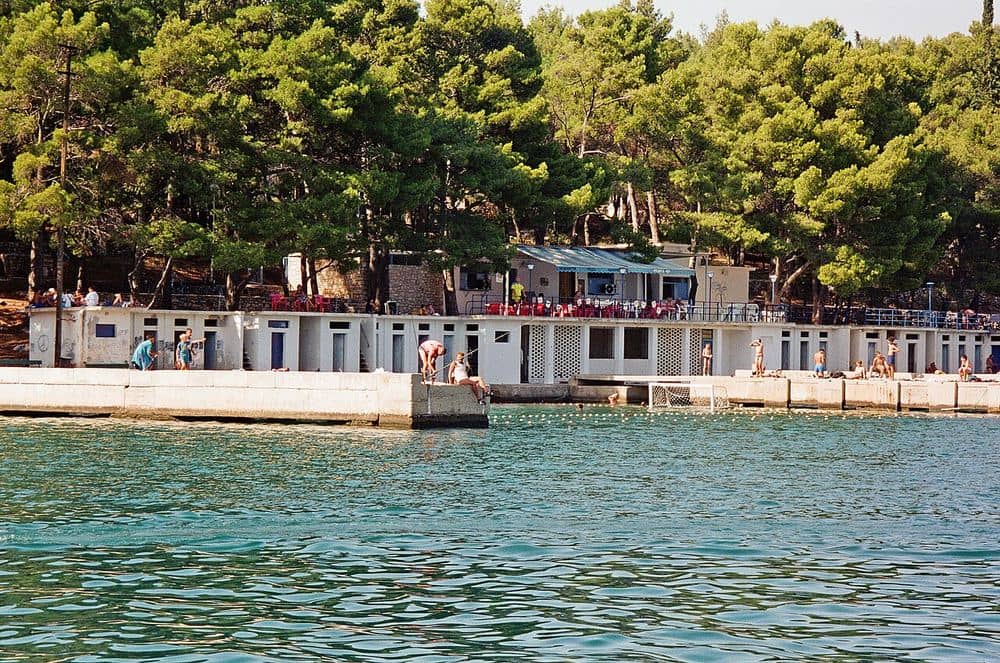
Pinija Beach
Activity

Pinija Beach

Pinija Beach lies along the northern edge of Cavtat harbour, right beside the promenade, and is the easiest bathing place in town to reach: a few steps from the waterfront, with pines growing to the very edge of the sea and holding shade all afternoon. It is a beach for guests who do not want to plan a day but simply go down to the water between coffee and lunch. The shore is a mix of concrete platforms and fine shingle, entry is gentle, and the sea calm because the harbour breaks the waves; depth grows gradually, so it suits children too. Because of its central position Pinija is the busiest beach in Cavtat, and in July and August it fills to the last lounger by afternoon. Showers, a bar and lounger hire run in season. It is at its best early in the morning, before nine, when the sea is still smooth and the pine shade falls across the whole platform.

Photo: Filip Bunkens pitslamp / CC0

Cavtat
Bonj Beach
Activity

Bonj Beach

A beach right at the edge of Hvar's old town, made for a quick swim between sights.

Photo: Herbert wie / CC BY-SA 4.0
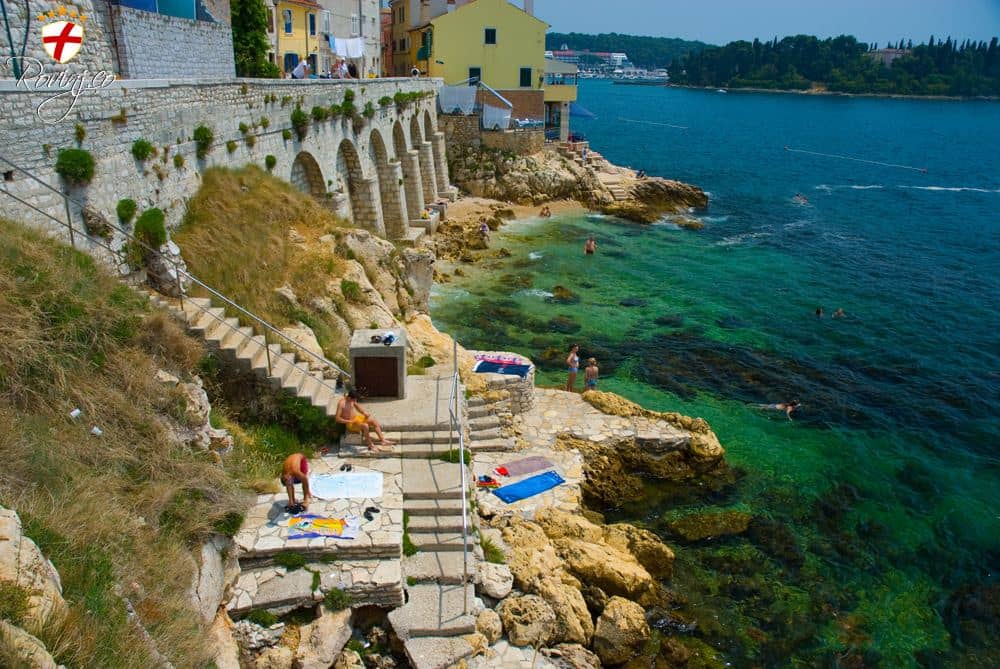
Bonj Beach
Activity

Bonj Beach

Bonj is a beach west of Hvar harbour, the first larger cove outside the old core, a ten-minute walk from the square along the sea. It is recognised by the row of stone arcades along the shore, built in the 1920s when Hvar got its first hotels and bathing places were built as architecture, with cabins, covered rest areas and a made approach to the water. The arcades still stand and there is shade under them. The beach is pebbly with concrete platforms, and the sea is calm as the cove faces north-west. Part of the beach belongs to a hotel and has loungers for a fee, part is free. In the afternoon it stays sunny until late.

Photo: Herbert wie / CC BY-SA 4.0

Hvar
Monte Beach
Activity

Monte Beach

A bathing spot along Rovinj's rocky coastline.

Photo: Visitrovinj / CC BY-SA 3.0

Monte Beach
Activity

Monte Beach

Monte is the beach you know from postcards before ever visiting Rovinj: stone slabs and concrete terraces directly beneath the bell tower of St Euphemia, where you descend from the old town into the sea by ladder and by leap. This is Istria's most urban swim, the swimsuit goes on three minutes from the cathedral, and between two strokes you look straight at facades growing out of the water. The bottom is immediately deep and rocky, which is why Monte has been adopted by swimmers, jumpers and everyone who needs no sunbed for happiness; families with small children will be happier at Lone or Porton Biondi. Space is scarce and fills by ten in summer, but turnover is constant, so the patient always inherit a slab in the pine shade. Bring rock shoes, a mask, for the sea life along the stones is lively, and water, since apart from one bar there are no facilities. Sunset is the moment people come for: the sun drops straight ahead, the sea turns gold, and the evening bells ring out overhead. A better combination of swim and stage set the Adriatic hardly offers.

Photo: Visitrovinj / CC BY-SA 3.0

Rovinj
Baluota Beach
Activity

Baluota Beach

A quiet bathing cove close to Rovinj's old town.

Photo: Visitrovinj / CC BY-SA 3.0

Baluota Beach
Activity

Baluota Beach

Baluota is the southern continuation of swimming beneath the old town: a belt of rocks and stone slabs from Monte toward Zlatni rt, where Rovinj families have each held their own slab for generations, known by name and inherited like a vineyard. One does not come here for facilities, for there are none, but for the ritual: towel on the same stone, two jumps from the same rock, coffee at the bar above and conversation with the same neighbours as always. The sea is deep, clean and transparent to the bottom, and the life along the rocks makes a mask more worthwhile than anywhere else in town. Tourists at Baluota are guests in the best sense: welcome as long as they honour the unwritten rules, do not take another's stone if a towel marks it, play no music and leave nothing behind. Entry is over the rocks, so water shoes and a little agility come with the package. Come on a weekday before noon or at dusk: then Baluota shows why the locals would not trade it for any groomed beach, calm, depth and a view of the open sea without a single parasol.

Photo: Visitrovinj / CC BY-SA 3.0

Rovinj

Worth the drive

The furthest from any centre, which is usually why they stay quiet in August.
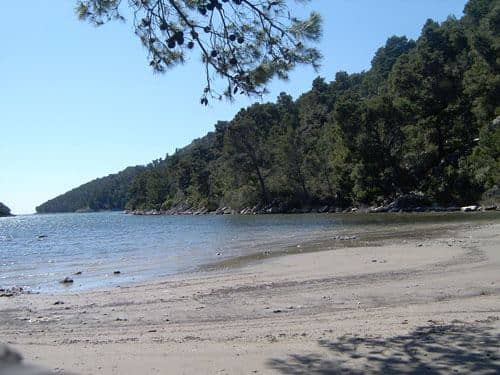
Istruga Beach
Activity

Istruga Beach

A quieter beach on Korčula, a step away from the busier stretches of coast.

Photo: Muleni at English Wikipedia / Public domain
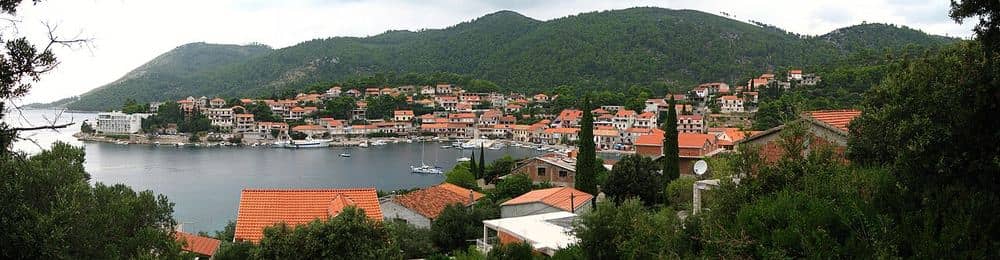
Istruga Beach
Activity

Istruga Beach

Istruga is a shallow cove west of Brna, known for the medicinal mud that settles on its bottom. The cove is almost cut off from the open sea by a low belt of sand and shingle, so the water in it warms faster than elsewhere, and the mineral silt, peloid, forms through the breakdown of marine organisms in that warm, still environment. Locals have used it for centuries to coat aching joints and skin complaints, and in summer bathers are seen here smeared with a grey layer that dries in the sun before they rinse it off in the sea. The sea is very shallow, you wade far out and the bottom is soft, so the cove suits small children too. There are no facilities, no shower and no bar, and the nearest shop is in Brna, a kilometre and a half along the coast.

Photo: Muleni at English Wikipedia / Public domain

Korčula
Brna Bay
Activity

Brna Bay

A deep, sheltered bay on Korčula, calm water well protected from wind.

Photo: Photograph by Greg O'Beirne / CC BY 2.5
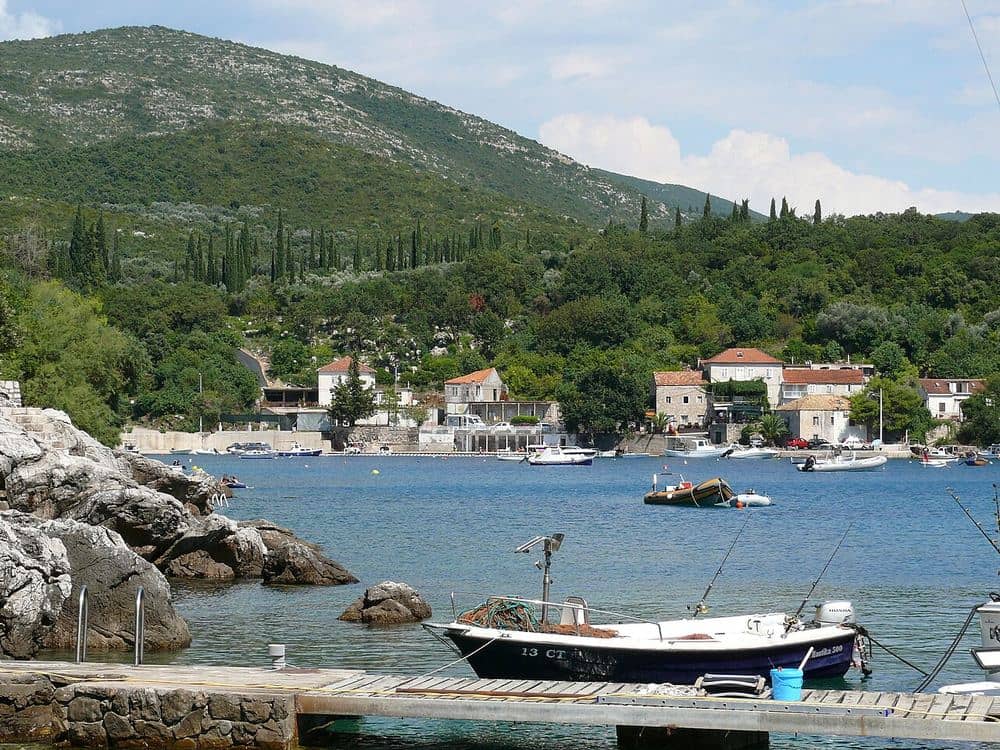
Brna Bay
Activity

Brna Bay

Brna is a deep bay on the southern coast of the island, the harbour of the village of Smokvica, which lies five kilometres higher up the slope. The bay is narrow and drawn in, so it is sheltered both from the bora and from most sirocco, and that is why families from Smokvica kept boats here for centuries and shipped out wine; today Brna is a small resort with a few hotels, a marina and a waterfront to stroll along. The sea is calm almost all summer, the depth grows slowly, and the shore is arranged with concrete platforms and a few shingle coves. Next to Brna is the Istruga cove with its medicinal mud. Facilities are modest but sufficient: a shop, several restaurants and boat hire. For guests looking for a quiet place with the sea at the door this is a better choice than the town of Korcula.

Photo: Photograph by Greg O'Beirne / CC BY 2.5

Korčula
Molunat Bay
Activity

Molunat Bay

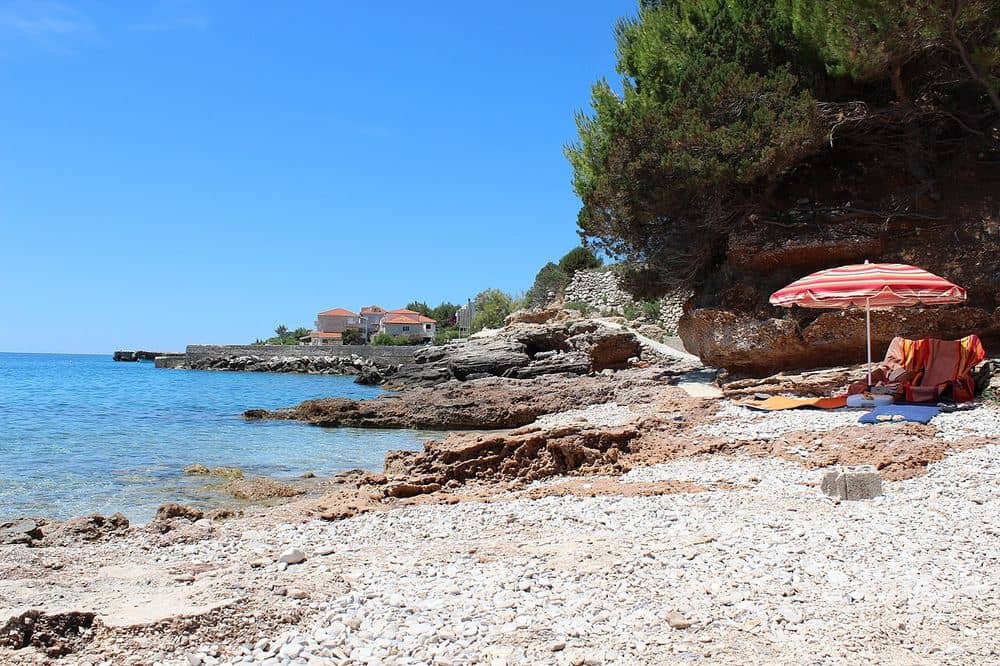
Molunat Bay is a secluded cove at the far southern end of Konavle.

Photo: Fridolin freudenfett (Peter Kuley) / CC BY-SA 3.0
Molunat Bay
Activity

Molunat Bay

Molunat is the last place on the Croatian coast before the Montenegrin border and one of the few that remained as coastal places were before tourism: two bays, a fishing harbour with a dozen boats, a few taverns and houses climbing the hill, without hotels and without concrete zones. The sea here is exceptionally clear because there is neither traffic nor industry, and the beaches are shingle and sand, with a shallow entry that suits children. The Velji Molunat bay faces south and is sunny all day, Mali Molunat is more sheltered and quieter. In the village one eats what was caught that morning, at prices lower than anywhere closer to Dubrovnik. From Cavtat the drive to Molunat takes half an hour, and the visit joins easily with Prevlaka, which is ten minutes further south. For a day without a single crowd this is Croatia's southernmost address.

Photo: Fridolin freudenfett (Peter Kuley) / CC BY-SA 3.0

Cavtat
Zavala Beach
Activity

Zavala Beach

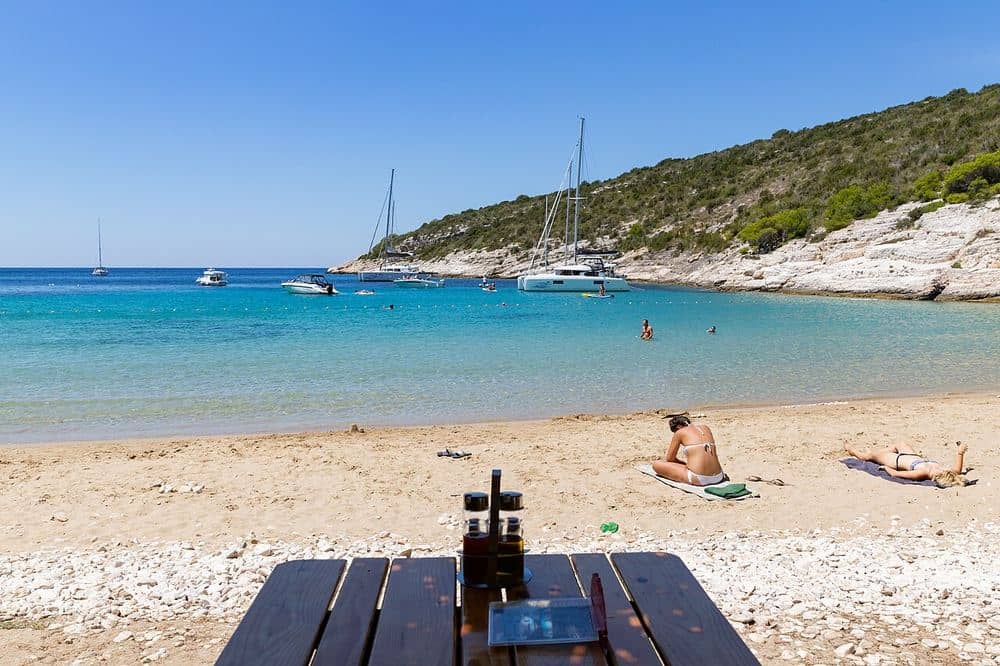
A stretch of coast on Hvar's south side, open and easy for an unhurried swim.

Photo: Topalaska / CC BY-SA 4.0
Zavala Beach
Activity

Zavala Beach

Zavala is a village on the southern shore of Hvar, facing Korcula and the open sea, and it is reached through the Pitve to Zavala tunnel, a narrow one-way cut about a kilometre and a half long that was made in the 1960s out of a water-supply gallery. The tunnel has neither lighting nor pavement and takes only one vehicle, so before entering you wait for oncoming traffic to clear; it is precisely because of the tunnel that the southern shore long stayed thinly settled. The beach is pebbly and narrow, with very clear water that deepens quickly, and the slopes around are terraced with vineyards of plavac mali. Several taverns work in the village. The sun stays on the beach until late in the afternoon.

Photo: Topalaska / CC BY-SA 4.0

Hvar
Porat Beach Biševo
Activity

Porat Beach Biševo

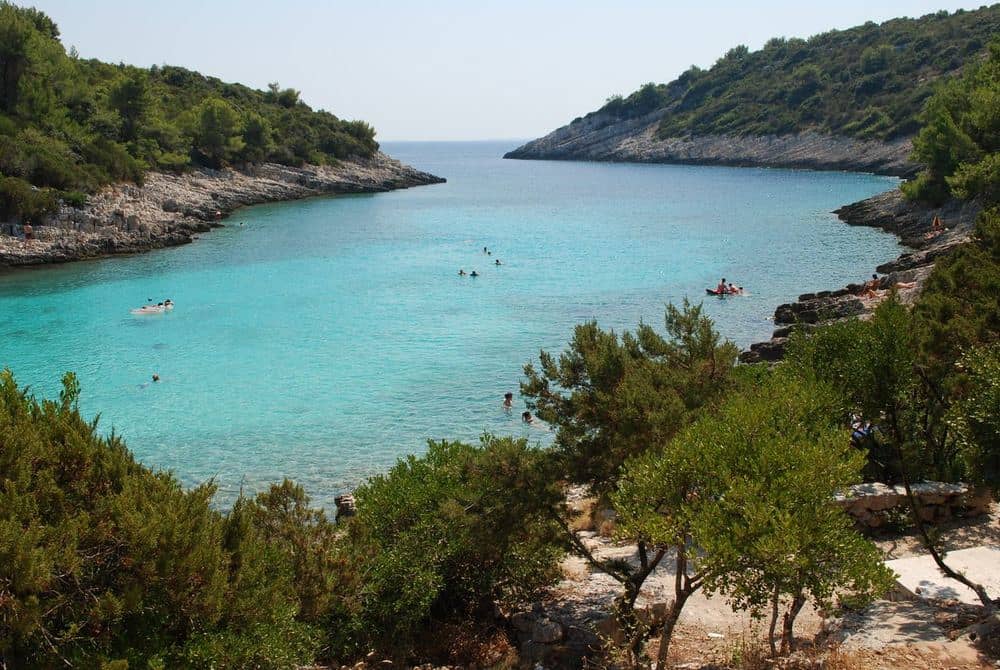
The beach beside Biševo Island's small harbour village of Porat.

Photo: dronepicr / CC BY 2.0
Porat Beach Biševo
Activity

Porat Beach Biševo

Porat is a bay on the south-western side of Bisevo and the only true sandy beach on the island. The bottom is sandy and shallow, you wade far into the sea, and the bay is sheltered on both sides, so the water is calm and warmer than elsewhere on this part of the open sea. By the beach stand a few stone houses and a tavern that works in season; above them are vineyards and dry-stone walls, because vines were grown here for centuries and fed Komiza. Porat is less visited than the Blue Cave, which is on the other side of the island, so the afternoon here is quiet even when there are queues at the cave. The bay is reached by the boat line from Komiza and then some fifteen minutes on foot across the island, or by excursion boat directly.

Photo: dronepicr / CC BY 2.0

Vis
Žitna Beach
Activity

Žitna Beach

A relaxed beach on Korčula, easy to reach and easy to settle into.

Photo: Kris Sliver / CC BY-SA 3.0

Žitna Beach
Activity

Žitna Beach

Zitna is a bay on the southern coast of the island below the village of Cara, with two beaches divided by a cape: a larger shingle one, with a car park and a seasonal bar, and a smaller one reached by a path along the rocks. The sea here is open to the south and therefore clear, and the depth grows moderately, so swimming is pleasant even for those who dislike deep water right away. Behind the beach are vineyards where posip is grown, a white variety originating precisely in Cara and neighbouring Smokvica and today the best-known Korcula wine. Zitna is reached from the main road by an asphalt road, about four kilometres from Cara, and the car park is small. There is little shade, so a parasol is not a bad idea; the best time is late afternoon, when the rocks have cooled.

Photo: Kris Sliver / CC BY-SA 3.0

Korčula

Wind in the afternoon

The Maestral runs straight in from early afternoon, which surfers look for and readers do not.

Zambratija bay
Hidden gem
Activity

Zambratija bay

A quiet bay north of Katoro, above the oldest sewn boat in the Mediterranean.

Photo: Ato 01 / CC BY-SA 4.0

Zambratija bay
Activity Hidden gem

Zambratija bay

Zambratija Bay is a quiet bay north of Katoro that hides a find of world importance: in its shallows in 2008 the remains of a wooden boat sewn with rope were found, dated to the Bronze Age, about three and a half thousand years old, and thus the oldest known boat of its kind in the Mediterranean. The find stayed underwater, protected and supervised, and research continues to this day; it is not visible from the surface, but boards along the shore explain what lies below. The bay itself is what it always was: shallow sea, concrete platforms, fishing boats and a small marina, without hotels and without music. Bathing is calm and warm, and the bottom is sandy in several places. By the bay work two taverns with fish from these waters, and to Sipar the coastal path is a ten-minute walk. For a day that joins quiet bathing with the feeling of being above three thousand years of history, Zambratija is the best choice of the Umag region.

Photo: Ato 01 / CC BY-SA 4.0

Umag
Munte beach
Hidden gem
Activity

Munte beach

A shingle cove between Medulin and Premantura, with pine shade.

Photo: Marco Usan / CC BY 3.0

Munte beach
Activity Hidden gem

Munte beach

Munte Beach is a shingle cove on the road between Medulin and Premantura and the best compromise for those who want the Kamenjak sea without driving on gravel: white shingle, a pine wood descending to the very strand and a sea that, being open to the south, is fresher and clearer than in the Medulin bay. Shade is the main card here: the pines stand so close to the water that a towel can be placed in the shade and stay there all day, which is not usual on the beaches of southern Istria. There are few facilities, a seasonal bar, showers and a few loungers; bring everything else. The sea deepens moderately, the bottom is clean, and on the cove's right side are rocks to jump from. Munte is reached by car in five minutes from Medulin, and the car park above the beach fills up by ten in summer. For a day that joins calm, shade and clean sea without demanding a full-day outing, this is the best choice in the area.

Insider tip

There is no sign from the road: look for the break in the pines after the last campsite.

Photo: Marco Usan / CC BY 3.0

Medulin
Škaraba Beach
Activity

Škaraba Beach

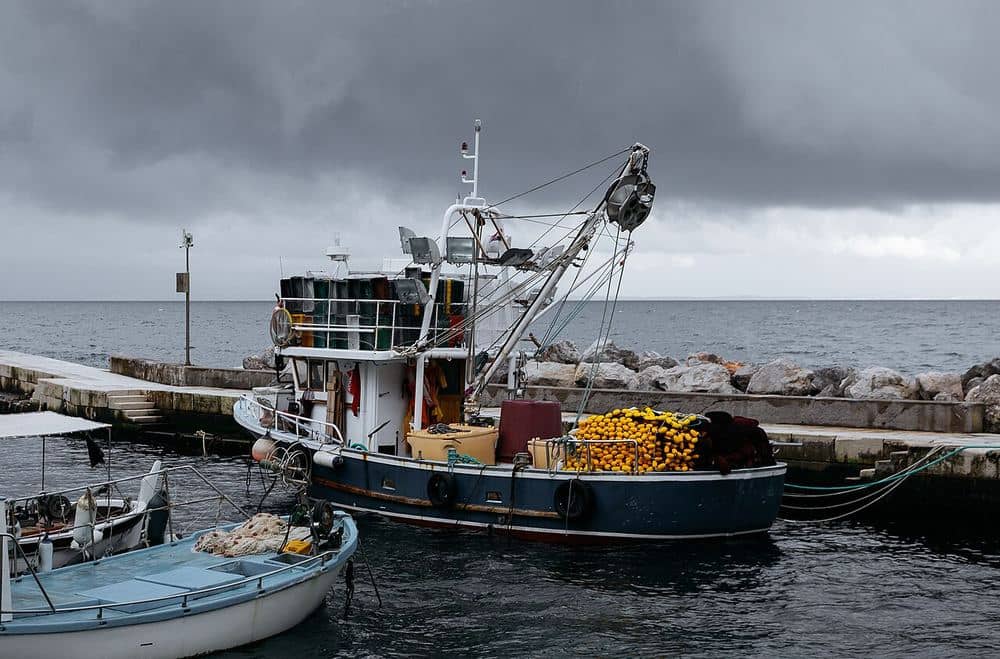
A low-key rocky beach along the Rovinj coastline.

Photo: Zoran Kurelić Rabko / CC BY-SA 3.0
Škaraba Beach
Activity

Škaraba Beach

Škaraba is the last cape of the town's swimming and the first cape of the wild: the rocky end of the Zlatni rt forest, where groomed paths turn to trails and beaches to a row of stone shelves above deep water. One comes here for three things the northern part of the park does not offer: solitude even on a working summer day, rock jumps of two to six metres as you choose, and a seabed that plunges steeply into blue, the favourite spot of the town's mask-and-snorkel divers. Shade comes from pines leaning over the very edge, and towel space is never short, for bathers scatter across the shelves instead of lining up beside each other. There are no facilities at all, no kiosk, no shower, so the rucksack must carry everything, water first. Škaraba is reached by a walk through the park, some twenty minutes from the entrance, or from the sea, by kayak along the shore, which is also the loveliest approach. Mind the children, the shelves stand high above the water and without rails. The reward for the small effort is a sea as it was before tourism: deep, cold at entry and entirely yours.

Photo: Zoran Kurelić Rabko / CC BY-SA 3.0

Rovinj
Mošćenička Draga Beach
Activity

Mošćenička Draga Beach

A beach resort further south along the coast, beyond Medveja.

Photo: Jernej Furman from Slovenia / CC BY 2.0

Mošćenička Draga Beach
Activity

Mošćenička Draga Beach

Moscenicka Draga lies at the head of a deep bay fifteen kilometres south of Opatija and has what this coast mostly lacks: a long shingle beach with a gradual entry rather than concrete platforms. The Sipar beach runs the whole length of the bay, with fine white shingle and clear sea, and around it pinewoods that give shade. The place arose as the harbour of the village of Moscenice, which stands on the hill a hundred metres higher and is several centuries old; a long stone stairway leads up to it in half an hour, and above are narrow streets, a defensive wall and an old tos, a hand-driven oil press. Draga has a few hotels, restaurants and a campsite. From Opatija you come by bus in half an hour or by the coast road by car.

Photo: Jernej Furman from Slovenia / CC BY 2.0

Opatija
Porat Beach Biševo
Activity

Porat Beach Biševo

The beach beside Biševo Island's small harbour village of Porat.

Photo: dronepicr / CC BY 2.0

Porat Beach Biševo
Activity

Porat Beach Biševo

Porat is a bay on the south-western side of Bisevo and the only true sandy beach on the island. The bottom is sandy and shallow, you wade far into the sea, and the bay is sheltered on both sides, so the water is calm and warmer than elsewhere on this part of the open sea. By the beach stand a few stone houses and a tavern that works in season; above them are vineyards and dry-stone walls, because vines were grown here for centuries and fed Komiza. Porat is less visited than the Blue Cave, which is on the other side of the island, so the afternoon here is quiet even when there are queues at the cave. The bay is reached by the boat line from Komiza and then some fifteen minutes on foot across the island, or by excursion boat directly.

Photo: dronepicr / CC BY 2.0

Vis
Monte Beach
Activity

Monte Beach

A bathing spot along Rovinj's rocky coastline.

Photo: Visitrovinj / CC BY-SA 3.0

Monte Beach
Activity

Monte Beach

Monte is the beach you know from postcards before ever visiting Rovinj: stone slabs and concrete terraces directly beneath the bell tower of St Euphemia, where you descend from the old town into the sea by ladder and by leap. This is Istria's most urban swim, the swimsuit goes on three minutes from the cathedral, and between two strokes you look straight at facades growing out of the water. The bottom is immediately deep and rocky, which is why Monte has been adopted by swimmers, jumpers and everyone who needs no sunbed for happiness; families with small children will be happier at Lone or Porton Biondi. Space is scarce and fills by ten in summer, but turnover is constant, so the patient always inherit a slab in the pine shade. Bring rock shoes, a mask, for the sea life along the stones is lively, and water, since apart from one bar there are no facilities. Sunset is the moment people come for: the sun drops straight ahead, the sea turns gold, and the evening bells ring out overhead. A better combination of swim and stage set the Adriatic hardly offers.

Photo: Visitrovinj / CC BY-SA 3.0

Rovinj
All beaches

All 148 beaches, by town

Open any one for its orientation, wind, distance and the nearest alternatives.

Vis

13 beaches
Stiniva CoveSmokova BeachPorat Beach BiševoBarjoška CoveMamma Mia Beach BarjoškaStončica BeachSrebrna BeachZaglav BeachGrandovac BeachTepluš BeachMilna BeachRukavac BayZmorac Beach

Rovinj

11 beaches
Škaraba BeachCisterna BeachMonte BeachBaluota BeachMulini BeachCuvi BeachVeštar BayAmarin BeachPorton Biondi BeachBorik BeachLone Bay

Trogir

11 beaches
Kava BeachLabadusa BeachDuga BayCava BeachPantan BeachOkrug Gornji Copacabana BeachMedena BeachSlatine BeachRožac BeachSaldun BayMiševac Beach

Omiš

11 beaches
Mala Luka BeachLokva Rogoznica BeachPisak BeachDuce BeachNemira BeachBrzet BeachČelina BeachRuskamen BeachGaleb Beach CampDugi Rat BeachOmiš Town Beach (Velika plaža)

Cavtat

11 beaches
Pasjača BeachKljučice BeachPinija BeachMolunat BayKupari BayRat BeachSustjepan BeachTiha BayObod BeachSrebreno BeachŽal Beach

Split

10 beaches
Bačvice BeachKašjuni BeachBene BeachŽnjan BeachFirule BeachOvčice BeachTrstenik BeachKaštelet (Ježinac) BeachObojena Svjetlost BeachJežinac Beach

Poreč

9 beaches
Saladinka BeachOliva BeachPoreč City BeachBrulo BeachŠpadići BeachMaterada BeachPical BeachLanterna BeachParentino Beach

Hvar

8 beaches
Dubovica BeachZaraće BeachMekićevica BeachLučišća BeachPokonji Dol BeachZavala BeachIvan Dolac BeachBonj Beach

Korčula

8 beaches
Pupnatska Luka BeachBačva BeachŽitna BeachVaja BayBilin Žal Beach, LumbardaVela Pržina BeachBrna BayIstruga Beach

Opatija

8 beaches
Mošćenička Draga BeachLido BeachTomaševac BeachVolosko BeachČrnikovica BeachIčići BeachMedveja BeachSlatina Beach

Dubrovnik

7 beaches
Banje BeachŠulić BeachDanče BeachBellevue BeachSveti Jakov BeachCopacabana BeachLapad Bay

Pula

7 beaches
Hawaii Beach (Verudela)Ambrela BeachValkane BeachGortanova Uvala BeachValsaline BeachSaccorgiana BeachStoja Beach

Makarska

7 beaches
Nugal BeachMakarska Main BeachBuba BeachCvitačka BeachRamova BeachRatac BeachGarma Beach

Zadar

6 beaches
Kolovare BeachBorik BeachPuntamika BeachUskok BeachKarma BeachDiklo Beach

Rijeka

5 beaches
Sablićevo BeachGlavanovo BeachGrčevo BeachPloče BeachŽurkovo Bay

Vodice

5 beaches
The Blue BeachZamalin beachMulo Dvorine beach, SrimaTrstevica beachPlitka punta beach

Umag

4 beaches
Zambratija bayStella Maris beachPozioi town beachPolynesia beach, Katoro

Šibenik

3 beaches
Banj BeachJadrija BeachSolaris Beach

Medulin

3 beaches
Munte beachThe islets of Medulin bayBijeca beach

Karlovac

1 beach
Foginovo Beach

CroVenture App

Take the beaches with you

CroVenture has the same places on a map that works without signal.