Skip to content
All cities

Omiš. Things to do, map and hidden gems

41 curated places· 2 hidden gems
Omiš
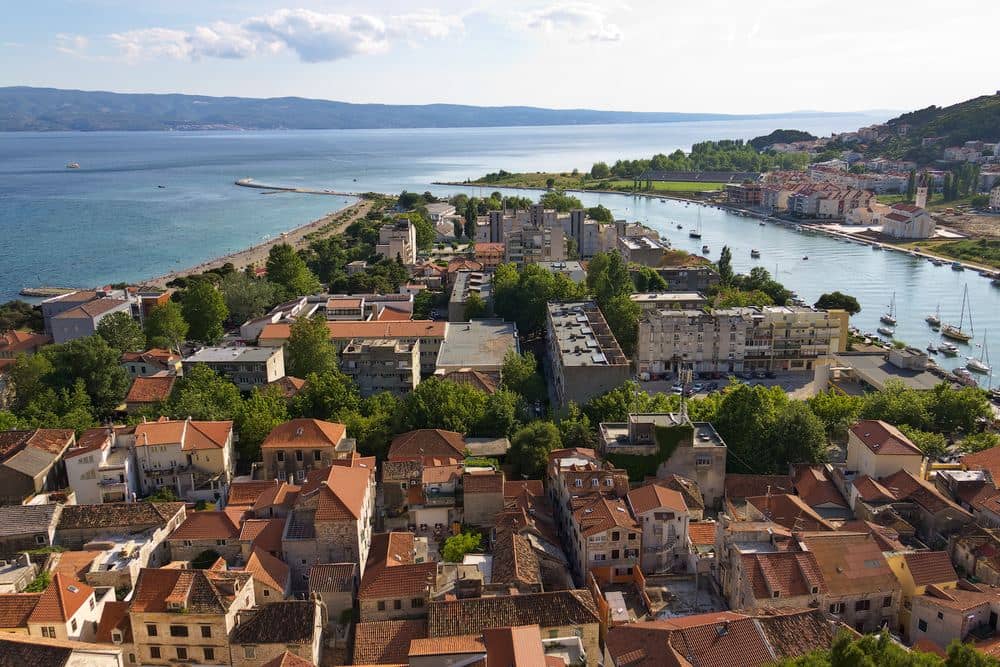
Photo: Silverije / CC BY-SA 3.0

Omiš sits where the Cetina river cuts through the coastal mountains to the sea, and the town has always lived off that gorge: first as the lair of pirates who retreated upriver where galleys could not follow, today as the adrenaline capital of the Split region. Two fortresses, Mirabela above the roofs and Starigrad high on the cliff, remain from the pirate centuries.

The canyon carries the offer: rafting and canyoning on the Cetina, one of Europe's longest ziplines across it, and a sandy town beach at the river mouth that families get as the calm counterpart.

Omiš: what to see between the cliffs and the Cetina

The next 7 days

Weather data by Open-Meteo.com

Opening hours and prices

The places we keep opening hours and price levels for. Times change with the season, so treat the official page as the last word.

PlaceOpening hoursPriceOfficial page
Omiška DinaraAlways open; check access, weather, park rules and daylight before hiking.--

Climate month by month

Ten-year averages for Omiš, so you can see what a month usually looks like rather than what this week happens to do.

MonthDay °CNight °CRain daysSea °C
January911115
February1131015
March1351114
April1781016
May21131319
June2717724
July3120327
August3120527
September2516825
October2011922
November1581320
December1141117

Air 2015 to 2024, sea 2022 to 2024. A rain day is 1 mm or more. Data by Open-Meteo.com

Omiš on video

Omiš: try it all or just relax

YouTubeOmiš3:17

Beaches in Omiš

Mala Luka Beach
Activity

Mala Luka Beach

A cove whose name literally means 'small harbor', further along the coast toward Pisak.

Photo: Karlo Kovacic / CC BY-SA 3.0
Mala Luka Beach
Activity

Mala Luka Beach

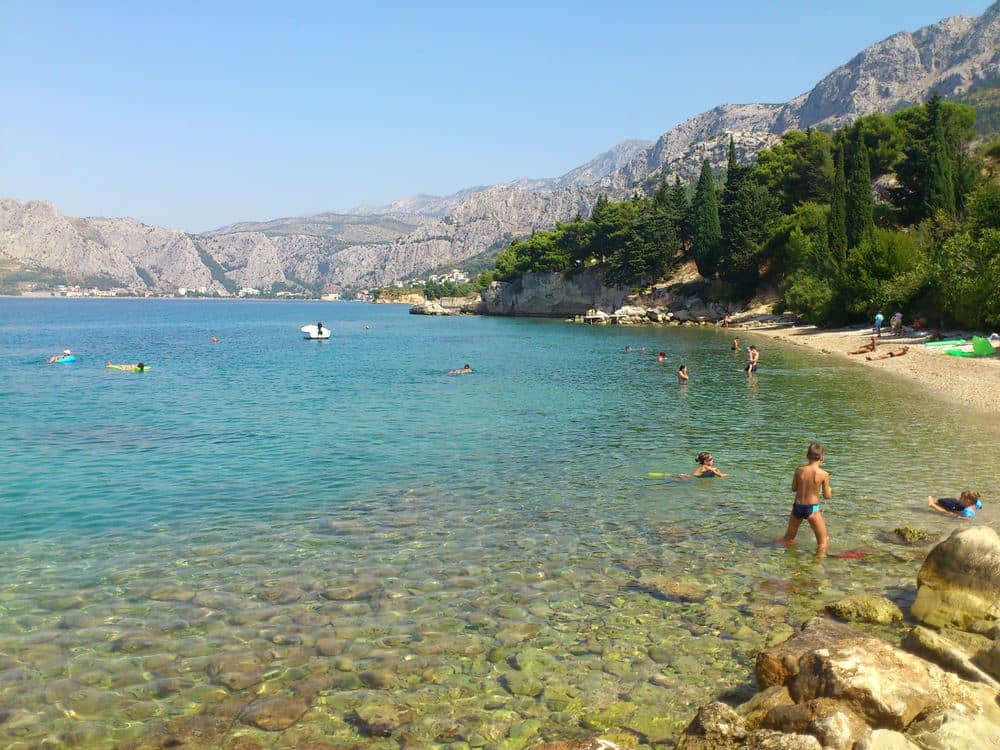
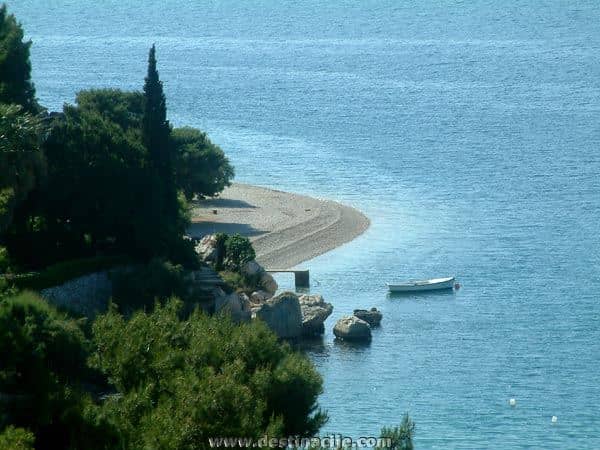
Mala Luka is the secret the people of Omiš share reluctantly: a tiny cove squeezed between Brzet and Nemira, reachable only on foot along the coastal path or from the sea. Twenty metres of pebbles, two or three rocks for jumping, pines leaning down to the waterline and sea that, thanks to depth and currents, stays glass-clear even at the peak of August. There are no facilities at all, no shower, no café, no sunbeds, and precisely for that reason it draws those who want the sea as it was before tourism: towel on a stone, mask in hand, book in the shade. The water deepens fast, so the cove suits swimmers better than families with toddlers; the rocks on the southern side hide the best snorkelling in the town's immediate surroundings. Come in the morning while the cove lies in shade, or late afternoon when the sun drops low; bring water, fruit and shoes for the rock, and carry your rubbish back, for there is no bin here. Fifteen minutes' walk from town, and the feeling of the world's end: that is Mala Luka.

Photo: Karlo Kovacic / CC BY-SA 3.0

Pisak Beach
Activity

Pisak Beach

A beach in Pisak, at the far eastern end of the Omiš riviera.

Photo: Bori / CC BY 3.0

Pisak Beach
Activity

Pisak Beach

Pisak is the last settlement of the Omiš Riviera before the Makarska boundary and its quietest corner: a handful of stone houses around a cove, two hundred inhabitants in winter and not even ten times that in summer, because big hotels never came here and never will. The beach is light pebble, the sea open toward Brač and Hvar and therefore strikingly clean, and above everything rises the wall of the Omiška Dinara, which in the afternoon throws a long shadow like a natural parasol. Life happens at three points: on the beach, in the konoba above the sea and on the pier from which children jump from morning till dark. Pisak is loved by divers for its seabed rich in drop-offs, and by those who literally want only sea and quiet; for everything else, shops, cash machines, a choice of restaurants, you drive twenty minutes to Omiš along a coastal road that is an attraction in itself. Arriving by bus is possible but rare, so a car is practical; park right at the entrance to the village, the lanes toward the sea are not for turning. Whoever seeks the end of the riviera in both senses has found it.

Photo: Bori / CC BY 3.0

Nemira Beach
Activity

Nemira Beach

A cove east of Omiš, the first along the road toward Pisak.

Photo: Sztudva Gyöngyi / CC BY-SA 3.0

Nemira Beach
Activity

Nemira Beach

Nemira is a small bathing settlement two kilometres south of Omiš, with a long shingle beach many locals consider the finest around: far enough to shake off day-trippers, close enough to reach on foot along the coastal path. The sea is deep blue and gains depth quickly, the pebbles are small and kind to the feet, and the hinterland is held by olives, pines and a scattering of apartments; the facilities are showers, two or three cafés and a seasonal restaurant, and that is deliberately all. The crowd is families who return year after year and swimmers doing their stretches toward the neighbouring coves. The western exposure means sun into late afternoon and sunsets straight into the channel toward Brač, while the rocks at the ends of the beach hide the best spots for mask and snorkel. Parking is scarce and gone by ten in summer, so come early, by bus or on foot; the path from Omiš runs through pines and is half the experience in itself. Bring water and something for shade, as natural shadow on the beach itself exists only at the edges.

Photo: Sztudva Gyöngyi / CC BY-SA 3.0

Brzet Beach
Activity

Brzet Beach

A small cove just east of Omiš, the first stop along the way to Pisak.

Photo: ANDREJ NEUHERZ / CC BY-SA 3.0

Brzet Beach
Activity

Brzet Beach

Brzet is the first cove south of town and the favourite alternative for everyone who finds Velika plaža too lively: ten minutes along the coastal path, and sand gives way to pebbles, crowds to pine shade. The cove is really a string of small shingle beaches separated by rocks, with sea that is noticeably warmer, saltier and clearer here, away from the Cetina's mouth; the entry is steeper in places, so in summer the shaded edges are claimed first. Above the beach stand a hotel terrace and a couple of cafés, enough for a coffee and a sandwich, too little to break the calm. Brzet is also the nearest snorkelling spot: along the rocks at the southern end you meet sea urchins, small fish and the odd octopus. The path continues toward Mala Luka and Nemira, so an afternoon of three swims on three beaches is easily arranged. Bring water shoes for the pebbles and urchins, and stay for sunset: the sun sinks exactly into the channel between the mainland and Brač, and the way back follows the promenade under the town lights.

Photo: ANDREJ NEUHERZ / CC BY-SA 3.0

Čelina Beach
Activity

Čelina Beach

An open cove further east, along the way to Pisak.

Photo: Karlo Kovacic / CC BY-SA 3.0

Čelina Beach
Activity

Čelina Beach

Čelina is the first of the low coves of the Omiš Riviera going south, where the coastal road begins to run high above the sea and you descend to the water by steps through olives and pines. The beach is of coarser pebble, the sea almost immediately deep and, thanks to its exposure to the open water, among the cleanest on the riviera; the currents literally stir the water afresh every day. The cove belongs to the hamlet of Čelina near Stanići, with a few family apartments, one konoba on the rock and that is all: the crowd is regulars who have been returning for decades and know exactly which rock gives shade at which hour. The western sunsets here are a spectacle without a ticket, Brač as the backdrop and fishing lights coming on in the first dark. You park on widenings along the coastal road, the descent takes five minutes, and the return up the steps counts as a small workout. Bring everything you need, including water and shoes for the stones; the reward is a sea that looks private even in August.

Photo: Karlo Kovacic / CC BY-SA 3.0

Galeb Beach Camp
Activity

Galeb Beach Camp

A laid-back seaside camp west of the center of Omiš.

Photo: Sztudva Gyöngyi / CC BY-SA 3.0

Galeb Beach Camp
Activity

Galeb Beach Camp

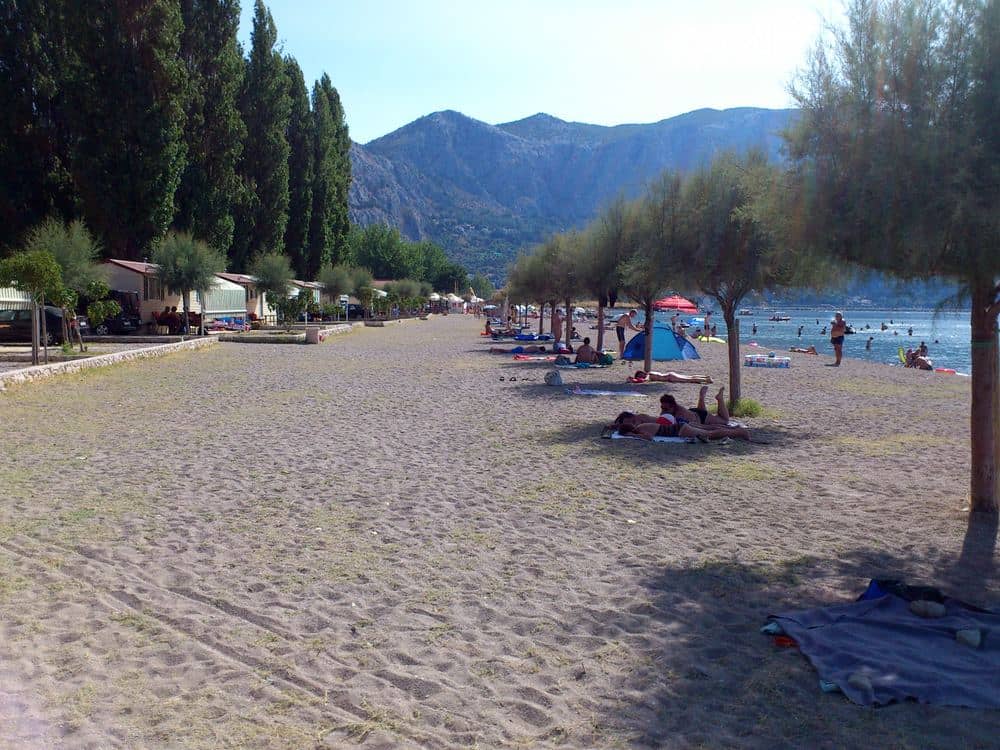
Galeb is an Omiš institution on the sandy western end of Velika plaža: a campsite and holiday settlement under pines where the same German, Czech and Slovenian licence plates have been appearing every July for decades. The reason is simple and rare: the pitches and mobile homes stand on the sand itself, it is twenty steps from towel to sea, and the shallow water in front is perfect for children just learning to swim. The camp has all the technology of modern camping, sanitary blocks, power, a restaurant, a shop and sports courts, but its real trump is the location: you walk to the old town in ten minutes, yet sleep to the sound of the sea. For outside guests the beach bar at the entrance is worth knowing, as is the rental of paddleboards and pedalos; the beach in front of the camp is public like any other. In summer Galeb fills up months ahead, so booking is not a recommendation but a condition. If you do not camp, remember just one thing: the western end of Velika plaža by Galeb is the calmest part of the town's sand, with a view straight into the mouth of the Cetina.

Photo: Sztudva Gyöngyi / CC BY-SA 3.0

Plan your visit

Omiš in a nutshell

41 places, 1 routes.

What is actually worth your time in Omiš?

Start with Mirabela Fortress (Peovica), Church of St Peter on Prik, and Starigrad Fortress (Fortica). After that it depends on what you enjoy: the guide holds 41 places in Omiš, sorted into sights, activities, food and shopping, so you can skip whole categories that bore you.

Mirabela Fortress (Peovica)Mirabela Fortress (Peovica)

How do you get away from the crowds in Omiš?

Follow the hidden gems: 2 places that rarely make the guidebooks, most of them a few streets off the main drag. Mirabela Fortress (Peovica) and Church of St Peter on Prik are good ones to start with.

Church of St Peter on PrikChurch of St Peter on Prik

No time to plan? Just follow a route.

Pick one of Pirate Omiš. Each walk runs stop by stop in a fixed order, so the only decision left is where to have lunch.

Starigrad Fortress (Fortica)Starigrad Fortress (Fortica)
Our tips

What we would do around Omiš

Day trips within reach of Omiš, plus the routes and quiet corners our editors keep coming back to.

Omiš itineraries

  • 7 stops

    Pirate Omiš

    From the old town up to two fortresses

    1. Omiš Old Town
    2. Church of St Michael
    3. Church of the Holy Spirit
    4. Mirabela Fortress (Peovica)
    5. Cetina Canyon
    6. Planovo Viewpoint
    7. Starigrad Fortress (Fortica)

Hidden gems in Omiš

Mirabela Fortress (Peovica)
Legendary
Sight

Mirabela Fortress (Peovica)

A 13th-century pirate tower set into the cliff above the old town.

Photo: Silverije / CC BY-SA 3.0

Mirabela Fortress (Peovica)
Sight Legendary

Mirabela Fortress (Peovica)

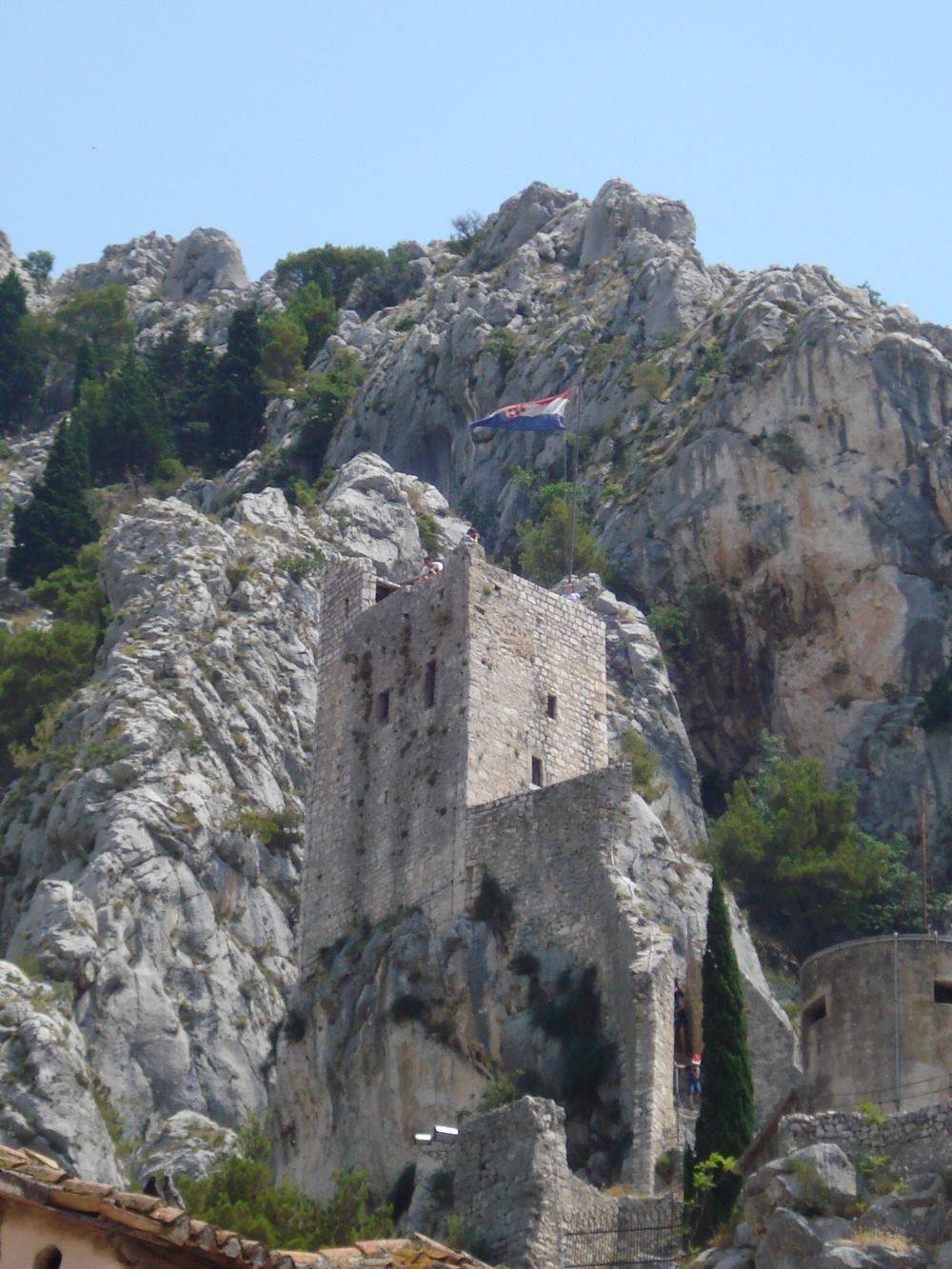
Mirabela, also called Peovica, is the smaller of the two Omiš fortresses, built in the 13th century on a crag right above the old town. From here the pirates of Omiš watched the channel toward Brač and the mouth of the Cetina: when a Venetian or Ragusan sail appeared on the horizon, a signal fire on the tower roused the whole town. Their fast, shallow boats, the sagittae or arrow ships, could then slip up the river where tall ships could not follow. The climb from the old town takes about ten minutes up narrow stone steps; at the top are four levels of tower and a lookout over the roofs of Omiš, the Cetina canyon and the open sea. The fortress was damaged in the 1988 earthquake and restored, and in summer people climb it as much for the sunset as for the history. Bring water and grippy shoes, as centuries of feet have polished the steps smooth. A small entrance fee is charged at the top of the stairway, and the finest light comes an hour before sunset, when the stone glows orange and Brač darkens across the water.

Photo: Silverije / CC BY-SA 3.0

Church of St Peter on Prik
Hidden gem
Sight

Church of St Peter on Prik

An Old Croatian church from the 9th or 10th century on the right bank of the Cetina.

Photo: Martin Brož / CC BY 3.0

Church of St Peter on Prik
Sight Hidden gem

Church of St Peter on Prik

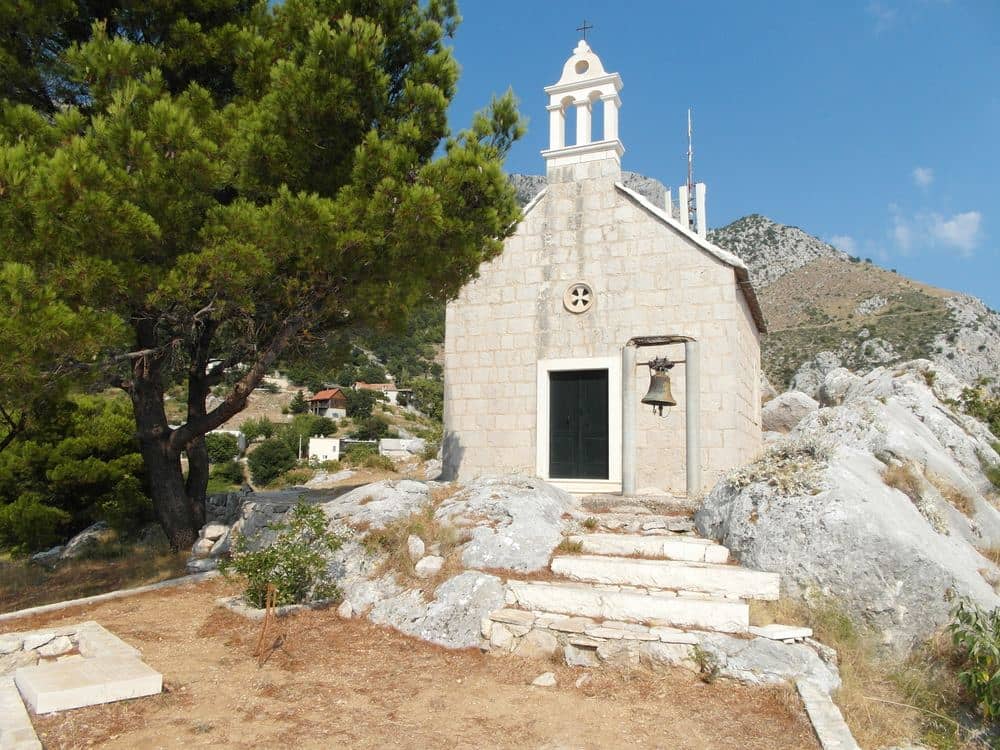
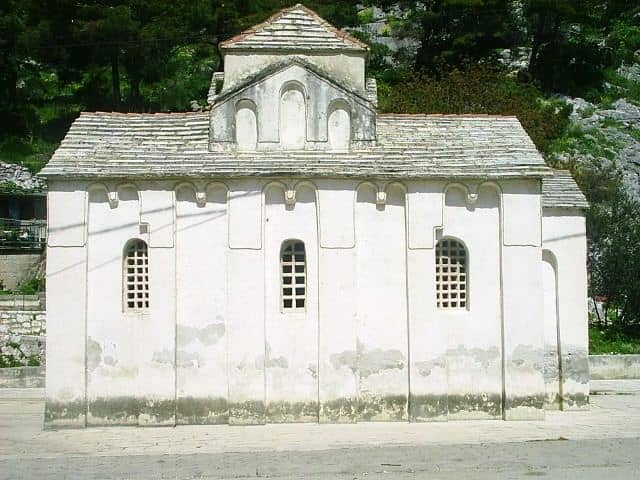
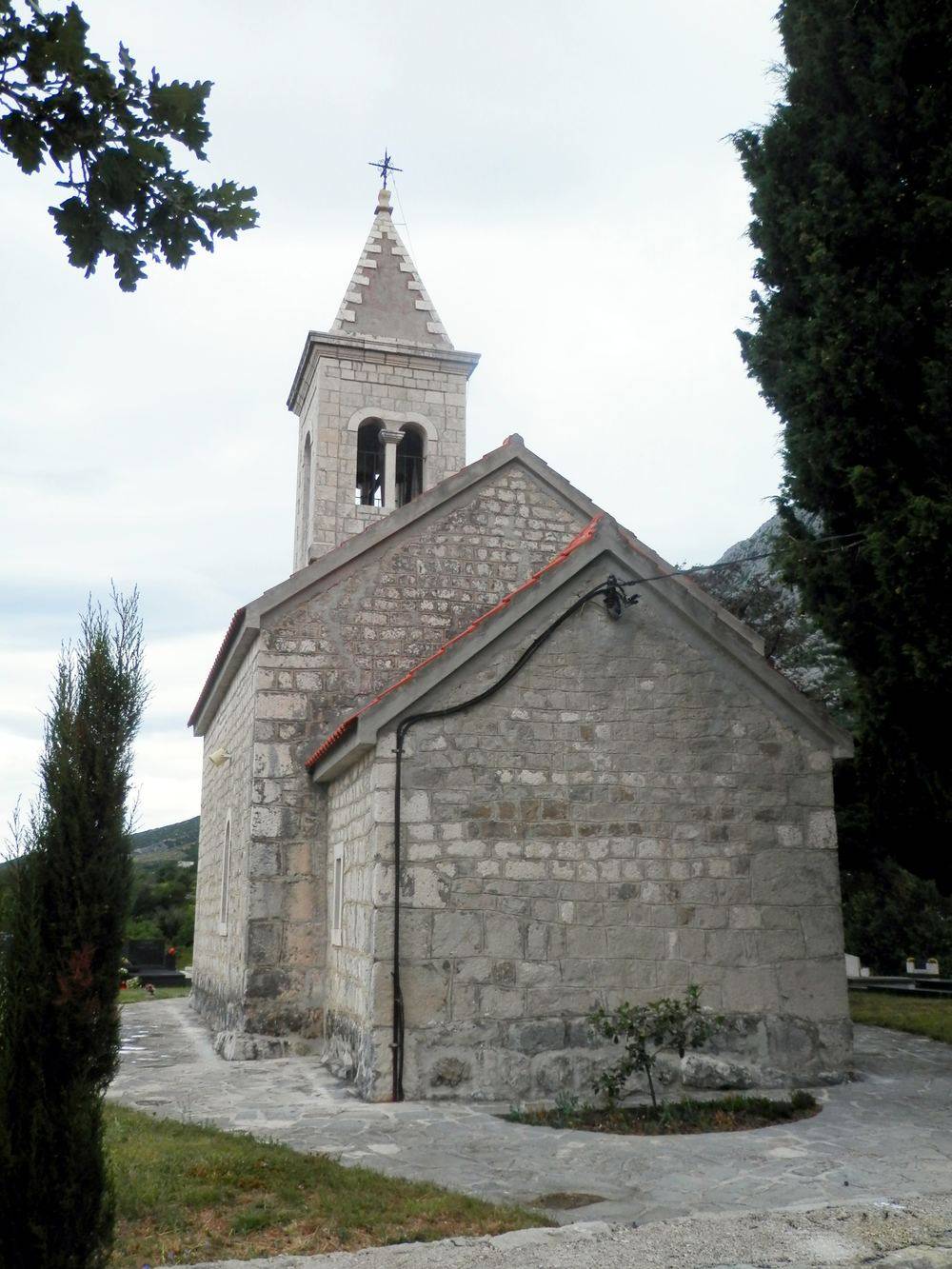
On the right bank of the Cetina, in the Priko quarter, stands the oldest and most important building of Omiš: the little church of St Peter from the 10th century, one of the best preserved monuments of early Croatian architecture on the entire coast. It is small enough to fit in the palm of a glance, single-naved, with a barrel vault and a dome over the middle, built of roughly dressed stone in the age of the Croatian native rulers, when Omiš was the border between coastal Croatia and the princes of the Neretva. In the 18th century a Glagolitic seminary worked beside it, a school where priests learned to say mass in Old Church Slavonic and to write the Glagolitic script; that quiet classroom by the river educated generations of the Poljica clergy. The church opens occasionally, for feasts and announcements, but the greater part of its power is outside anyway: a cube, a dome and a thousand years, all within twenty paces. Come across the bridge from the old town, a five-minute walk, and look at it in late afternoon, when the low sun draws every mason's stroke out of the stone.

Insider tip

The church is small and often closed; it is loveliest from outside, on a walk along the Cetina's right bank.

Photo: Martin Brož / CC BY 3.0

Explore Omiš by category

Sights

12
Mirabela Fortress (Peovica)
Legendary
Sight

Mirabela Fortress (Peovica)

A 13th-century pirate tower set into the cliff above the old town.

Photo: Silverije / CC BY-SA 3.0

Mirabela Fortress (Peovica)
Sight Legendary

Mirabela Fortress (Peovica)

Mirabela, also called Peovica, is the smaller of the two Omiš fortresses, built in the 13th century on a crag right above the old town. From here the pirates of Omiš watched the channel toward Brač and the mouth of the Cetina: when a Venetian or Ragusan sail appeared on the horizon, a signal fire on the tower roused the whole town. Their fast, shallow boats, the sagittae or arrow ships, could then slip up the river where tall ships could not follow. The climb from the old town takes about ten minutes up narrow stone steps; at the top are four levels of tower and a lookout over the roofs of Omiš, the Cetina canyon and the open sea. The fortress was damaged in the 1988 earthquake and restored, and in summer people climb it as much for the sunset as for the history. Bring water and grippy shoes, as centuries of feet have polished the steps smooth. A small entrance fee is charged at the top of the stairway, and the finest light comes an hour before sunset, when the stone glows orange and Brač darkens across the water.

Photo: Silverije / CC BY-SA 3.0

Church of St Peter on Prik
Hidden gem
Sight

Church of St Peter on Prik

An Old Croatian church from the 9th or 10th century on the right bank of the Cetina.

Photo: Martin Brož / CC BY 3.0

Church of St Peter on Prik
Sight Hidden gem

Church of St Peter on Prik

On the right bank of the Cetina, in the Priko quarter, stands the oldest and most important building of Omiš: the little church of St Peter from the 10th century, one of the best preserved monuments of early Croatian architecture on the entire coast. It is small enough to fit in the palm of a glance, single-naved, with a barrel vault and a dome over the middle, built of roughly dressed stone in the age of the Croatian native rulers, when Omiš was the border between coastal Croatia and the princes of the Neretva. In the 18th century a Glagolitic seminary worked beside it, a school where priests learned to say mass in Old Church Slavonic and to write the Glagolitic script; that quiet classroom by the river educated generations of the Poljica clergy. The church opens occasionally, for feasts and announcements, but the greater part of its power is outside anyway: a cube, a dome and a thousand years, all within twenty paces. Come across the bridge from the old town, a five-minute walk, and look at it in late afternoon, when the low sun draws every mason's stroke out of the stone.

Insider tip

The church is small and often closed; it is loveliest from outside, on a walk along the Cetina's right bank.

Photo: Martin Brož / CC BY 3.0

Starigrad Fortress (Fortica)
Sight

Starigrad Fortress (Fortica)

A 15th-century fortress high above town, with a panorama of the canyon and the sea.

Photo: Silverije / CC BY-SA 3.0

Starigrad Fortress (Fortica)
Sight

Starigrad Fortress (Fortica)

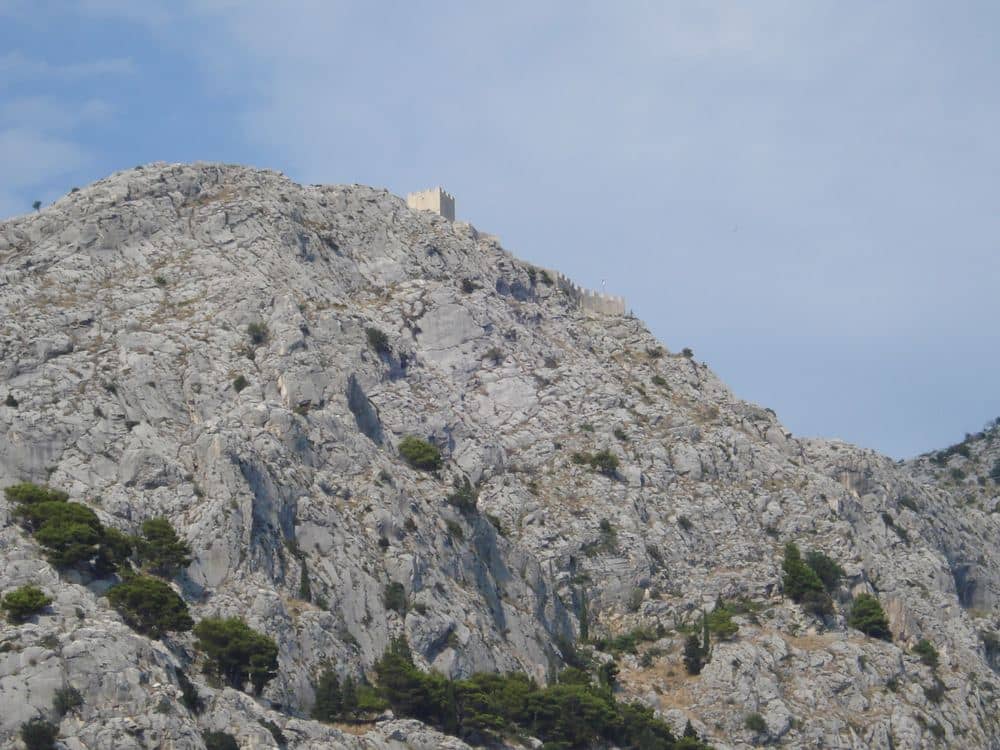
Fortica, known locally as Starigrad, sits on a 262-metre ridge of the Omiška Dinara and guards the biggest view in central Dalmatia: the mouth of the Cetina, the roofs of Omiš, the Poljica hinterland, and across the channel Brač, Hvar and on a clear day Šolta. It was built in the 15th century, when the Ottoman threat pushed the town's defences from the shore up into the hills, and from this height no army could approach unseen. A marked trail leads up from Omiš through the hamlet of Baučići: allow one hour to ninety minutes, in summer strictly early morning or evening, with at least a litre of water per person. Hikers can take a steeper variant straight up the rock. At the top wait restored ramparts and a small tower; the entrance fee is symbolic and the view, as they say in Omiš, is charged by no one. Pack a windbreaker, the ridge is almost always breezy. If you would rather not hike, drive to the village of Stanići and walk an easier half hour from there. Sunset from Fortica is among the finest on the Adriatic, just bring a headlamp for the way down.

Photo: Silverije / CC BY-SA 3.0

Cetina Canyon
Sight

Cetina Canyon

A dramatic river gorge that cuts through the cliffs to the sea at Omiš.

Photo: Modzzak / Public domain

Cetina Canyon
Sight

Cetina Canyon

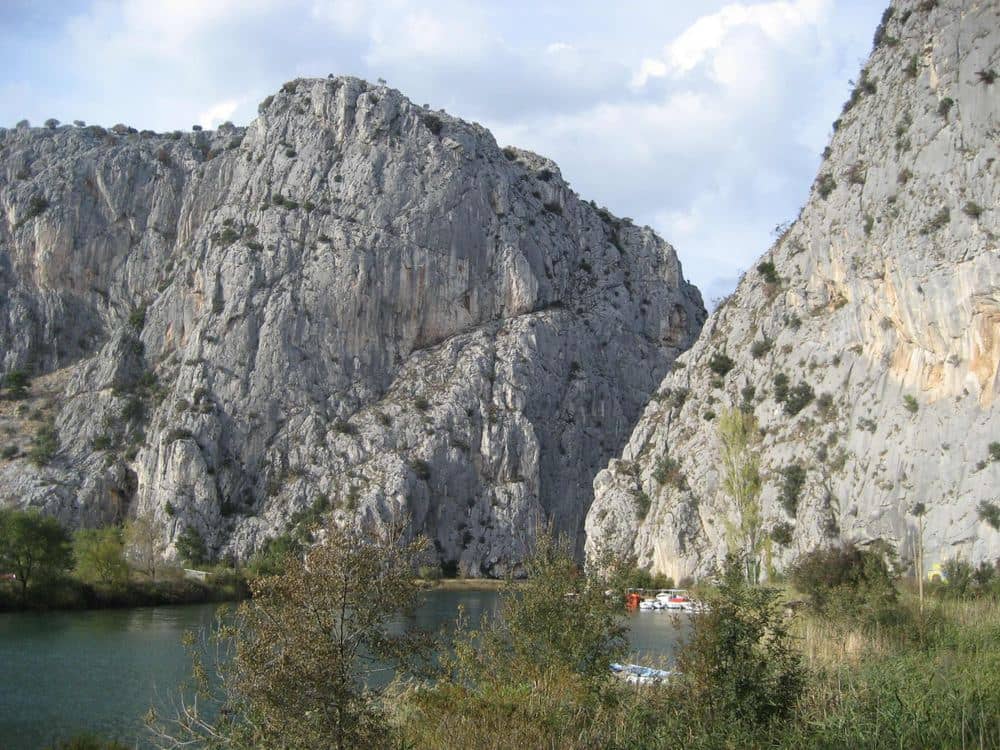
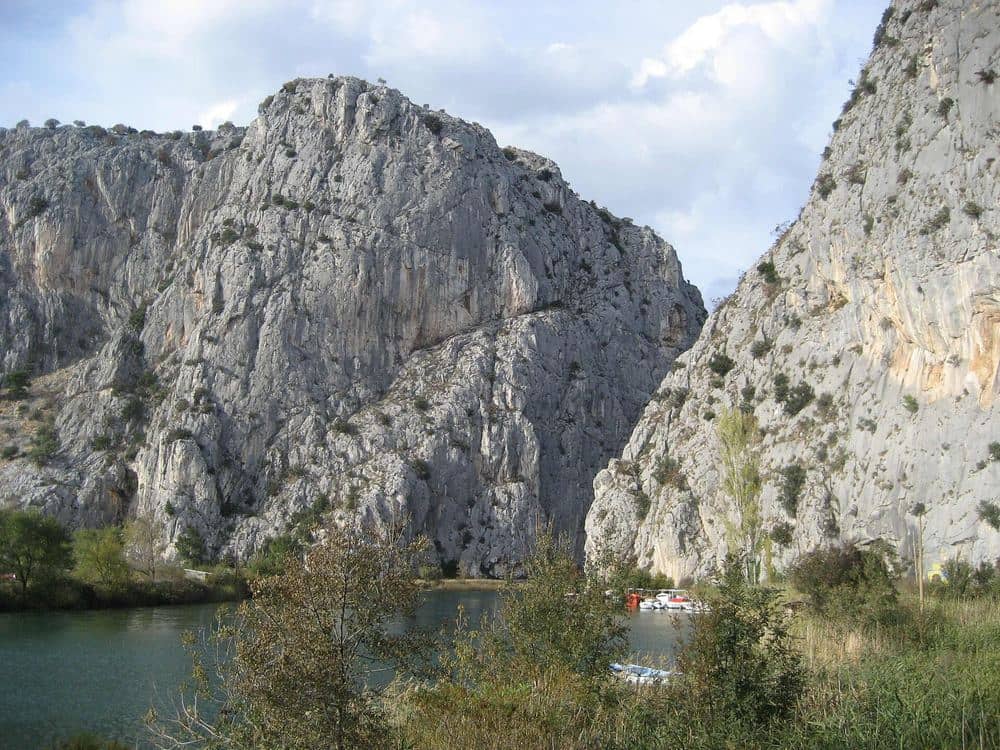
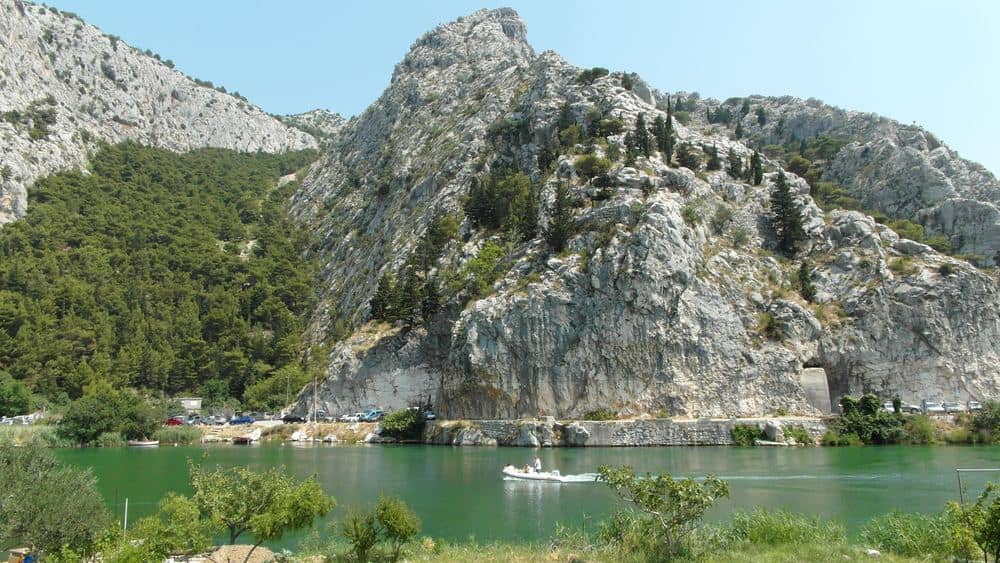
In its final kilometres the Cetina cuts through the Dinara massif and enters the sea in the middle of town: few European rivers end so dramatically. The canyon behind Omiš is squeezed between cliffs more than a hundred metres high, and the water runs emerald and cold, because the river rises beneath the Dinara at 385 metres and travels 101 kilometres to the sea. The easiest way to feel it is from the riverside promenade in town, where the cliffs open like a gate; the deepest is from the water, by raft, kayak or the excursion boats that run upstream to Radmanove Mlinice, an old watermill in the greenery. Golden eagles and the odd griffon vulture circle above the gorge, and fig trees grow straight out of the rock along the banks. Walkers can follow the trail toward the village of Slime to a lookout above a bend of the river. Early morning is the calmest hour, when the water turns to a mirror; on summer afternoons the maestral wind arrives, bringing cool air and sailboats to the river mouth.

Photo: Modzzak / Public domain

Church of the Holy Spirit
Sight

Church of the Holy Spirit

A modest stone church folded into the lanes of Omiš's old town.

Photo: Argo Navis / CC BY-SA 4.0

Church of the Holy Spirit
Sight

Church of the Holy Spirit

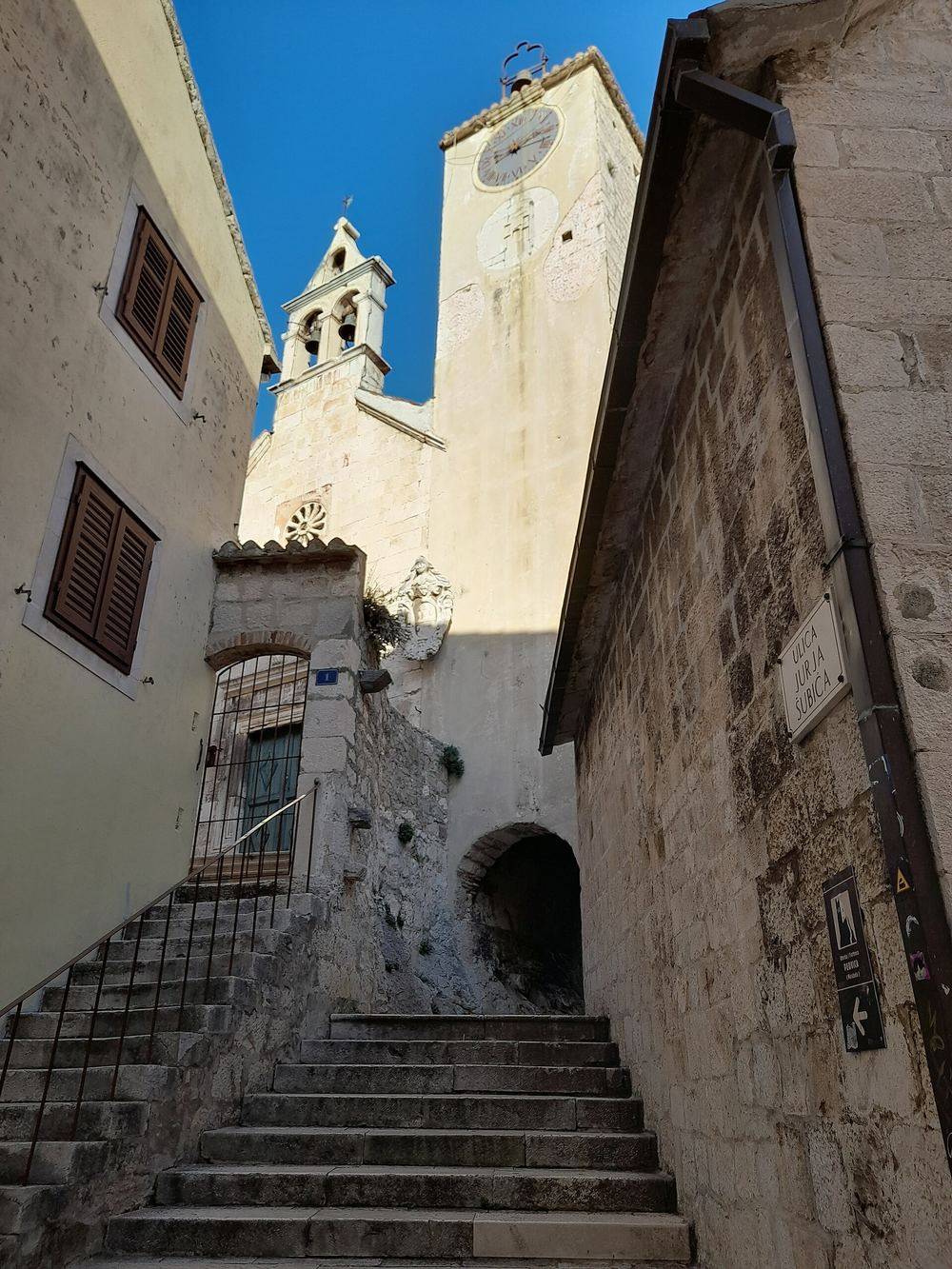
The little church of the Holy Spirit is one of those small rooms where a town's history is felt more strongly than in the great ones: a single-nave Renaissance building of the 16th century, it stands beside the former town hall and for centuries belonged to the confraternity that cared for the poor and buried the dead. The plain facade with its bell gable and modest portal is easy to walk past, but the interior surprises with its calm: white walls, a wooden altar and light falling through narrow windows onto stone worn smooth by generations of knees. Today the church lives a second life as a space for exhibitions, small concerts and summer evenings of chamber music, when barely fifty people fit inside and every note has its place. If the door is open, step in even for a minute; if not, look up at the old inscriptions built into the facade. It lies on the way of every old-town stroll, twenty paces from the main lane, and it shows the scale of old Omiš best: a town where even the most solemn space was small, stone upon stone, pressed against the cliff.

Photo: Argo Navis / CC BY-SA 4.0

Gata Village
Sight

Gata Village

A stone village in the hills above Omiš, far from the crowds on the coast.

Photo: Ing.Mgr.Jozef Kotulič / CC BY-SA 4.0

Gata Village
Sight

Gata Village

Gata is the heart of Poljica: a village on a terrace above the Cetina canyon, some fifteen minutes' drive from Omiš, which for centuries was the centre of the Republic of Poljica, a peasant state with its own statute of 1440 and a duke elected every year. Today Gata is a quiet place of stone houses, olive groves and a church, but history reads on every step: beside the parish church stands the memorial to the victims of 1942, when Italian fascists killed more than a hundred villagers in a single day, and from the village edge opens a view of the canyon worth the trip even without a single story. From Gata a ten-minute walk leads to the monument of Mila Gojsalić, the Poljica heroine carved by Ivan Meštrović; her silhouette above the abyss is the most photographed motif of the whole hinterland. Come toward evening, when the stone glows, and join the visit with dinner in one of the Poljica konobas along the road: lamb and soparnik, the Poljica chard pie protected at European level, are homemade here, not touristic.

Photo: Ing.Mgr.Jozef Kotulič / CC BY-SA 4.0

6 more places
  • Franciscan Monastery Omiš
  • Mila Gojsalić Statue
  • Omiš Old Town
  • Church of St Michael
  • Poljički Square
  • King Tomislav Square

Activities

24
Rafting on the Cetina
Activity

Rafting on the Cetina

A ride through rapids and past waterfalls in the green Cetina canyon.

Photo: Cookies4ever / CC0

Rafting on the Cetina
Activity

Rafting on the Cetina

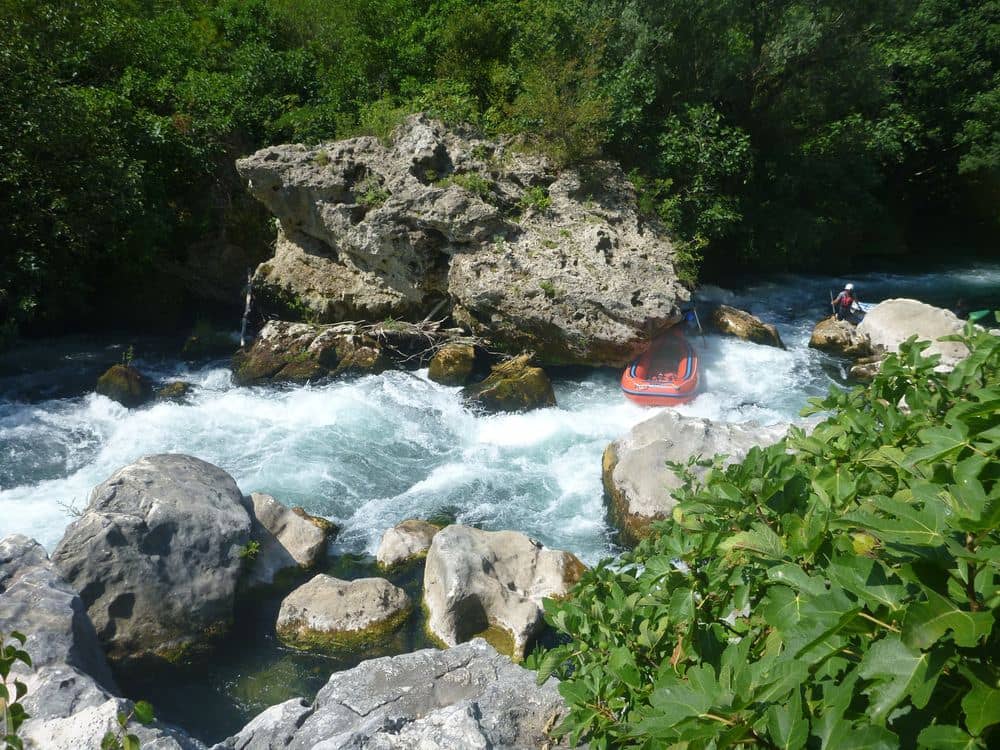
Rafting on the Cetina is the gentlest way into the canyon, which is why families love it: the rapids are class two to three, lively enough for laughter and spray, mild enough that children from about five or six can ride along. The standard trip starts upstream near Penšići or Zadvarje and runs three to four hours down to Radmanove Mlinice or all the way to town, depending on the water level. Calm pools for swimming alternate with short staircases of rapids and passages beneath dripping cliffs; along the way the guides point out a cave you enter by swimming and rocks to jump from, for those who want to. Even in mid August the water is fresh, around 15 to 18 degrees, so the wetsuits the operators provide are welcome. Bring swimwear, sandals that stay on your feet and a dry shirt for afterwards; phones travel in a waterproof barrel. Departures run in the morning and early afternoon, booking a day ahead is enough, and the finest months are June and September, when the river is generous and the crowds are gone.

Photo: Cookies4ever / CC0

Omiš Zipline
Activity

Omiš Zipline

A flight on steel cables high above the Cetina canyon.

Photo: Modzzak / Public domain

Omiš Zipline
Activity

Omiš Zipline

The zipline above the Cetina canyon is among the best known in Croatia: eight steel cables totalling about 2,100 metres, with the longest run over 700 metres and heights up to 150 metres above the river. The adventure begins with a short drive and walk from Omiš to the launch point above the gorge, where instructors demonstrate braking and body position on two short practice cables; then come three hours of crossing from one side of the canyon to the other, the emerald Cetina far below your feet and eagles at eye level. Speeds reach around fifty kilometres per hour, yet the feeling is strangely calm: wind, the hum of the trolley, and the sheer breadth of the landscape. You need closed shoes and a little fitness for the short walks between cables; children can usually ride from age ten with an adult. Tours run from spring to autumn, and in summer the morning departures before the heat are the most pleasant. A camera may come along only if firmly strapped, and you will remember the views better than any footage anyway.

Photo: Modzzak / Public domain

Planovo Viewpoint
Activity

Planovo Viewpoint

A viewpoint above Omiš looking over the Cetina's mouth and the red rooftops.

Photo: ANDREJ NEUHERZ / CC BY-SA 3.0

Planovo Viewpoint
Activity

Planovo Viewpoint

Planovo is the viewpoint for those who want the postcard view but do not have a whole morning for Fortica: a grassy, rocky shelf on the slope of the Omiška Dinara above town, reached by a marked trail from the centre in twenty to thirty minutes of climbing. From up here Omiš is seen whole for the first time: red roofs squeezed between cliff and sea, the green snake of the Cetina sliding out of its canyon, Velika plaža like a pale crescent and Brač across the channel. The trail starts behind the old town and climbs through maquis and pines; the ground is stony, so even this short walk wants closed shoes and water, and in summer the hour you choose means everything: morning before eight or early evening. Planovo is also the first station on the way to Fortica, so you can decide on the spot whether to continue higher. Photographers love the blue hour after sunset most, when the town lights come on and the sky above Brač still smoulders; a headlamp for the descent is then not a luxury but a condition.

Photo: ANDREJ NEUHERZ / CC BY-SA 3.0

Via Ferrata Fortica
Activity

Via Ferrata Fortica

A secured climbing route up the rock face below Fortica fortress.

Photo: ahenobarbus from Russia / CC BY 2.0

Via Ferrata Fortica
Activity

Via Ferrata Fortica

The Fortica via ferrata turns the cliff above Omiš into a path: steel cable, rungs and pegs lead across vertical slabs and ledges up to the Starigrad fortress, with the town, the mouth of the Cetina and the channel toward Brač under your heels the whole way. The route is of middling difficulty, passable for anyone free of vertigo who can work arms and legs for two to three hours; no technical climbing skill is needed, as you are clipped to the cable throughout with a ferrata set and two carabiners. It is done in guided tours that provide harness, helmet and instructions, setting out early in the morning or later in the afternoon, because the rock faces south and in summer heats like a stove. You need closed sports shoes, a litre and a half of water and gloves if you have them; the rest is in your head. The reward is double: the feel of the rock under your fingers where pirate lookouts once kept watch, and entering Fortica from its wild side, with a view ordinary visitors never see. The descent is by walking trail, and your knees will thank you for poles.

Photo: ahenobarbus from Russia / CC BY 2.0

Canyoning on the Cetina
Activity

Canyoning on the Cetina

A descent through the Cetina canyon by jumping, swimming and sliding over rock.

Photo: Modzzak / Public domain

Canyoning on the Cetina
Activity

Canyoning on the Cetina

Canyoning on the Cetina begins where the trails end: in the upper canyon near Zadvarje, below the Gubavica falls, where the river forces its way through a bed you can only enter by jumping, swimming and roping down. In wetsuit and helmet you follow the guide downstream for three to four hours: sliding down chutes the water has polished for millennia, jumps of two to eight metres into green pools, each one optional, swims through narrows where the sky shrinks to a blue line, and at the end, in the harder variant, an abseil beside the waterfall itself. The basic tour asks only sound fitness and confident swimming, no climbing skills; every jump can be walked around. Even in summer the water sits around fifteen degrees, which is why the operators provide the suit, and you bring swimwear, sturdy shoes that may get wet and dry clothes for afterwards. Whoever has passed through this stretch of the Cetina never again looks at the river from a bridge but from within: as a living thing that carved the whole landscape around Omiš.

Photo: Modzzak / Public domain

Mala Luka Beach
Activity

Mala Luka Beach

A cove whose name literally means 'small harbor', further along the coast toward Pisak.

Photo: Karlo Kovacic / CC BY-SA 3.0
Mala Luka Beach
Activity

Mala Luka Beach

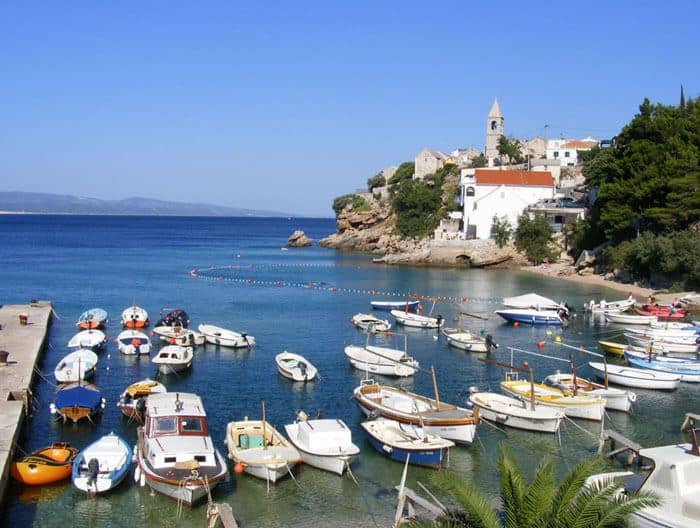
Mala Luka is the secret the people of Omiš share reluctantly: a tiny cove squeezed between Brzet and Nemira, reachable only on foot along the coastal path or from the sea. Twenty metres of pebbles, two or three rocks for jumping, pines leaning down to the waterline and sea that, thanks to depth and currents, stays glass-clear even at the peak of August. There are no facilities at all, no shower, no café, no sunbeds, and precisely for that reason it draws those who want the sea as it was before tourism: towel on a stone, mask in hand, book in the shade. The water deepens fast, so the cove suits swimmers better than families with toddlers; the rocks on the southern side hide the best snorkelling in the town's immediate surroundings. Come in the morning while the cove lies in shade, or late afternoon when the sun drops low; bring water, fruit and shoes for the rock, and carry your rubbish back, for there is no bin here. Fifteen minutes' walk from town, and the feeling of the world's end: that is Mala Luka.

Photo: Karlo Kovacic / CC BY-SA 3.0

18 more places
  • Lokva Rogoznica Beach
  • Pisak Beach
  • Zakučac Hydroelectric Plant View
  • Cetina River Mouth
  • Cetina Boat Dock
  • Kayaking on the Cetina
  • Duce Beach
  • Nemira Beach
  • Brzet Beach
  • Čelina Beach
  • Ruskamen Beach
  • Omiš Harbour
  • Omiš Semi-Submarine Dock
  • Galeb Beach Camp
  • Dugi Rat Beach
  • Jesenice Coast
  • Omiš Town Beach (Velika plaža)
  • Omiška Dinara

Shopping

5
5 more places
  • Zadvarje Market
  • Omiš City Market
  • Omiš Fish Market
  • Studenac Omiš Center
  • Omiš Bus Station

Omiš: quick answers

How far is Omiš from Split?
About twenty-five kilometres south along the coast road; buses run frequently and take forty to fifty minutes depending on summer traffic. That makes Omiš both a day trip from Split and a cheaper base for it.
Do rafting trips suit children?
The standard Cetina run is calm white water, mostly grade two, and operators typically take children from around six or eight with the trip lasting three to four hours. Canyoning and the zipline carry higher age and height limits.
Which fortress should I climb?
Mirabela is the short climb from the old town with the harbour view. Starigrad, an hour up a stony path, earns the full panorama over the river mouth, the channel and Brač; go early or late in summer, there is no shade.

CroVenture App

Explore Omiš with CroVenture

Places unlock as you reach them, with a passport that fills up as you explore.