Skip to content
All cities

Rab. Things to do, map and hidden gems

11 curated places· 7 hidden gems
Rab
Photo: BiljanaST / CC BY-SA 4.0

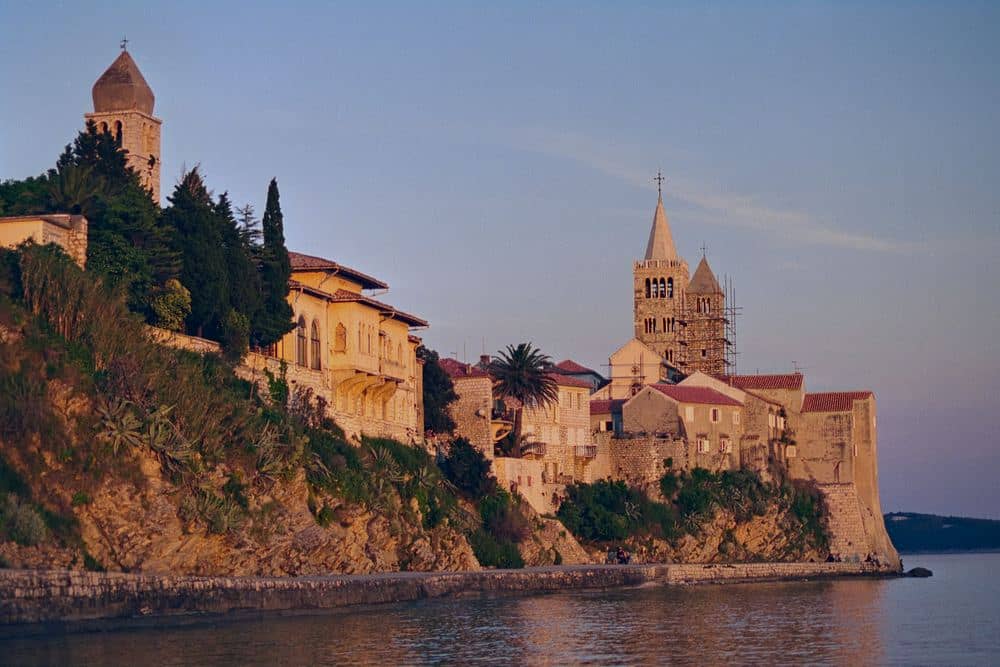
Rab town announces itself with four bell towers in a row on a narrow peninsula, the skyline that has stood for its island since the Middle Ages. Three parallel streets, Lower, Middle and Upper, thread the stone core past palaces and the park forest of Komrčar. In late July the Rapska fjera turns the whole town into a medieval crafts festival with crossbowmen.

The island's north answers with something Dalmatia rarely offers: the Lopar peninsula and its Paradise Beach, real sand shallow enough for toddlers.

Rab: four bell towers, the sandy beaches of Lopar and Goli otok
Our tips

What we would do around Rab

Day trips within reach of Rab, plus the routes and quiet corners our editors keep coming back to.

Hidden gems in Rab

Great Bell Tower
Legendary
Sight

Great Bell Tower

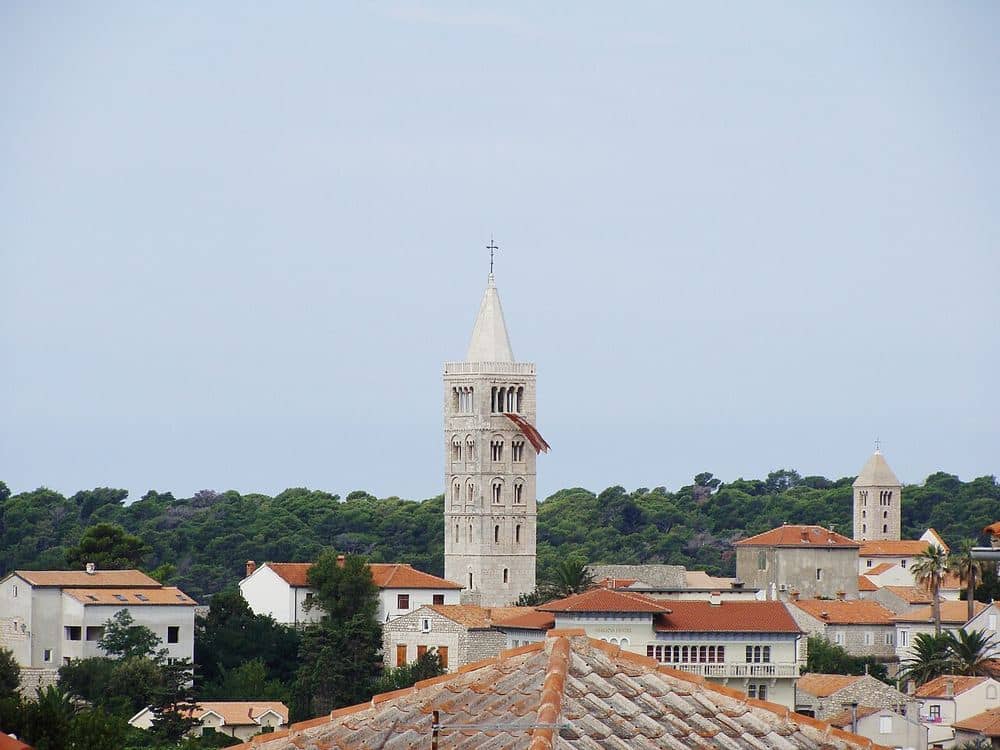
A 12th-century bell tower, at 26 metres the finest on the Adriatic; the climb leads to a lookout over Rab's roofs.

Photo: BiljanaST / CC BY-SA 4.0
Great Bell Tower
Sight Legendary

Great Bell Tower

The Great Bell Tower is the most celebrated silhouette of the island of Rab and by many counts the finest campanile on the Adriatic: 26 metres of Romanesque perfection from the 12th century, a free-standing tower rising from the narrowest point of the old town through four storeys of biforas and triforas, ever airier toward the top, until a pyramid and cross close it. The builders knew their craft: storey by storey the openings grow wider and lighter, so the tower seems to lift itself toward the sky. The climb up wooden stairs through the tower's inside is part of the experience, creak, half-dark and bells overhead, and the reward is a view no photograph carries honestly: Rab's four bell towers in a row, red roofs on a narrow tongue of land, Kalifront on one side and the Velebit on the other. In summer one climbs in short waves, for the top is small; patience pays. The tower stands beside the former cathedral at the town's most solemn end, so the ascent comes naturally as the crown of a walk along the Upper Street. The ticket is symbolic and the hours follow the season: check the board by the entrance.

Photo: BiljanaST / CC BY-SA 4.0

Paradise Beach
Legendary
Activity

Paradise Beach

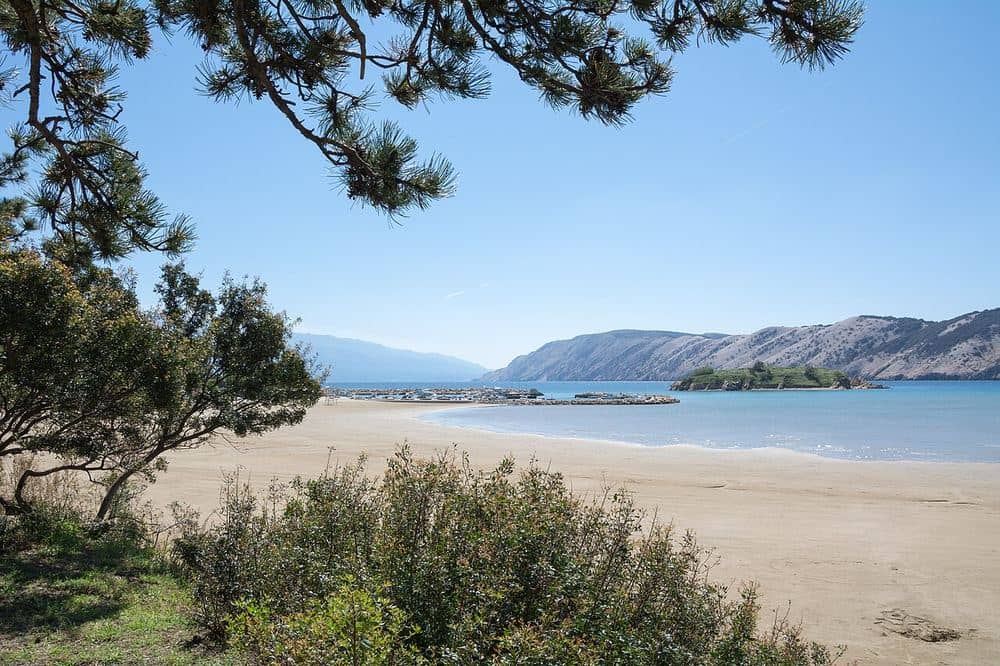
A mile of sand at Lopar with knee-deep sea for hundreds of metres, the Adriatic's most famous sandy beach.

Photo: Isiwal / CC BY-SA 3.0
Paradise Beach
Activity Legendary

Paradise Beach

Paradise Beach at Lopar is the reason half of Europe knows of Rab: a mile of true sand in a shallow bay, with sea that for hundreds of metres does not pass the knees, so in summer the bay is warm as a tub and safe as a paddling pool. On the Adriatic, where sand is the exception and shingle the rule, such a beach is a geological gift: the Lopar peninsula is built of sandstone, so all its bays, some twenty of them, are dusted with sand. Paradise is the largest and best equipped: loungers, showers, cafés, waterslides, sports courts and a lifeguard service make it a machine for family days, with everything ten steps away. The price of comfort is the crowd, the July and August beach can hold thousands; whoever seeks calm should take the sandy paths across the point to the neighbouring bays, where empty sand remains even at peak. The water warms faster than anywhere on the island and bathing lasts into October. From the Stinica-Misnjak ferry line one reaches Lopar in some twenty minutes' drive, from Rab town in fifteen.

Photo: Isiwal / CC BY-SA 3.0

Goli Otok
Hidden gem
Activity

Goli Otok

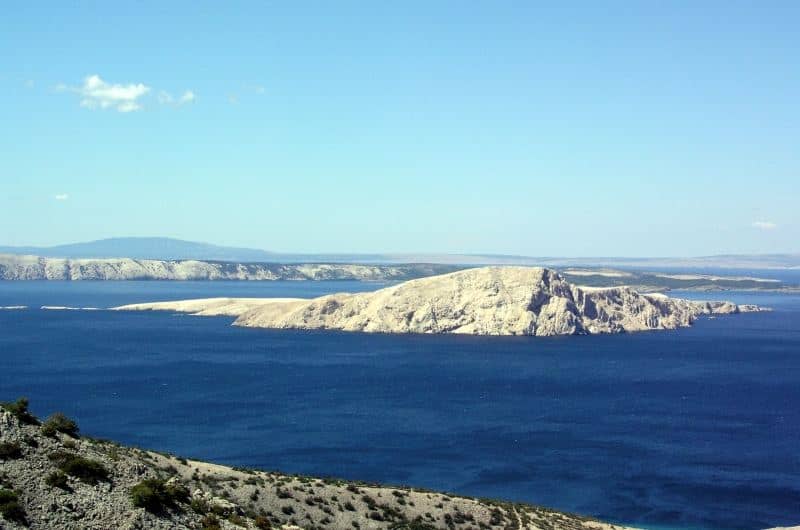
A former political prison camp on a bare island opposite Rab, today a haunting excursion among abandoned buildings.

Photo: Roberta F. / CC BY-SA 3.0

Goli Otok
Activity Hidden gem

Goli Otok

Goli Otok is the hardest and most important story an outing from Rab can tell: a stone desert across the Barbat channel on which from 1949 worked a political prison camp for those condemned in Yugoslavia's clash with Stalin, later a prison, closed only in 1988. Thousands passed through the camp, and what they built stands to this day: workshops, dormitories, administration, a power plant and a cinema, now empty shells through which walk the bora and the odd sheep. Precisely that combination, blue bathing sea by the piers and the ghostly silence of the buildings, makes the visit an experience not forgotten. From Rab town and Lopar excursion boats run in summer, and smaller boats from Barbat cross the channel in a quarter-hour; on the island a tourist train rounds the main points, and one may also walk on one's own. Bring water, a hat and firm shoes, shade is nearly none, catering is reduced to one seasonal point. Walk the cells and workshops slowly and read the boards: this is no stage set but a memorial, a place that explains half a century of history better than textbooks.

Photo: Roberta F. / CC BY-SA 3.0

Explore Rab by category

Sights

6
Great Bell Tower
Legendary
Sight

Great Bell Tower

A 12th-century bell tower, at 26 metres the finest on the Adriatic; the climb leads to a lookout over Rab's roofs.

Photo: BiljanaST / CC BY-SA 4.0

Great Bell Tower
Sight Legendary

Great Bell Tower

The Great Bell Tower is the most celebrated silhouette of the island of Rab and by many counts the finest campanile on the Adriatic: 26 metres of Romanesque perfection from the 12th century, a free-standing tower rising from the narrowest point of the old town through four storeys of biforas and triforas, ever airier toward the top, until a pyramid and cross close it. The builders knew their craft: storey by storey the openings grow wider and lighter, so the tower seems to lift itself toward the sky. The climb up wooden stairs through the tower's inside is part of the experience, creak, half-dark and bells overhead, and the reward is a view no photograph carries honestly: Rab's four bell towers in a row, red roofs on a narrow tongue of land, Kalifront on one side and the Velebit on the other. In summer one climbs in short waves, for the top is small; patience pays. The tower stands beside the former cathedral at the town's most solemn end, so the ascent comes naturally as the crown of a walk along the Upper Street. The ticket is symbolic and the hours follow the season: check the board by the entrance.

Photo: BiljanaST / CC BY-SA 4.0

5 more places
  • Church of St Justine
  • St John's Ruins
  • Church of St Mary the Great
  • Middle Street
  • Prince's Palace

Activities

5
Paradise Beach
Legendary
Activity

Paradise Beach

A mile of sand at Lopar with knee-deep sea for hundreds of metres, the Adriatic's most famous sandy beach.

Photo: Isiwal / CC BY-SA 3.0

Paradise Beach
Activity Legendary

Paradise Beach

Paradise Beach at Lopar is the reason half of Europe knows of Rab: a mile of true sand in a shallow bay, with sea that for hundreds of metres does not pass the knees, so in summer the bay is warm as a tub and safe as a paddling pool. On the Adriatic, where sand is the exception and shingle the rule, such a beach is a geological gift: the Lopar peninsula is built of sandstone, so all its bays, some twenty of them, are dusted with sand. Paradise is the largest and best equipped: loungers, showers, cafés, waterslides, sports courts and a lifeguard service make it a machine for family days, with everything ten steps away. The price of comfort is the crowd, the July and August beach can hold thousands; whoever seeks calm should take the sandy paths across the point to the neighbouring bays, where empty sand remains even at peak. The water warms faster than anywhere on the island and bathing lasts into October. From the Stinica-Misnjak ferry line one reaches Lopar in some twenty minutes' drive, from Rab town in fifteen.

Photo: Isiwal / CC BY-SA 3.0

Goli Otok
Hidden gem
Activity

Goli Otok

A former political prison camp on a bare island opposite Rab, today a haunting excursion among abandoned buildings.

Photo: Roberta F. / CC BY-SA 3.0

Goli Otok
Activity Hidden gem

Goli Otok

Goli Otok is the hardest and most important story an outing from Rab can tell: a stone desert across the Barbat channel on which from 1949 worked a political prison camp for those condemned in Yugoslavia's clash with Stalin, later a prison, closed only in 1988. Thousands passed through the camp, and what they built stands to this day: workshops, dormitories, administration, a power plant and a cinema, now empty shells through which walk the bora and the odd sheep. Precisely that combination, blue bathing sea by the piers and the ghostly silence of the buildings, makes the visit an experience not forgotten. From Rab town and Lopar excursion boats run in summer, and smaller boats from Barbat cross the channel in a quarter-hour; on the island a tourist train rounds the main points, and one may also walk on one's own. Bring water, a hat and firm shoes, shade is nearly none, catering is reduced to one seasonal point. Walk the cells and workshops slowly and read the boards: this is no stage set but a memorial, a place that explains half a century of history better than textbooks.

Photo: Roberta F. / CC BY-SA 3.0

3 more places
  • Kalifront Peninsula
  • Sahara Beach
  • Komrčar Park

Rab: quick answers

How do I get to Rab?
By the short Stinica to Mišnjak ferry from the mainland coast road, fifteen minutes and frequent, or the catamaran from Rijeka in season. The drive from Zagreb takes about three hours including the crossing. A second car ferry links Valbiska on Krk with Lopar in the north of Rab, useful for combining the two islands. In Rab town, the four bell towers belong to the cathedral of the Assumption and the churches of St John the Evangelist, St Andrew and St Justine, and together they give the town its outline of a ship with four masts.
Is Paradise Beach really sand?
Yes, one and a half kilometres of it, with water that stays waist-deep for a long way out, which is why Lopar fills with families. Around the peninsula, footpaths reach quieter sandy coves, some naturist. Paradise Beach is 1.5 kilometres long and has held the Blue Flag since 2003. Ramps lead into the sea for people with reduced mobility, and dogs have a spot at the southern end. Nudism is allowed at Sahara and Ciganka, and Stolac is a naturist beach only. Lopar also has a geological garden with 50 marked points as part of the Rab island geopark project, with free guided tours in season.
What is the Rab crossbow tradition?
The tournaments of the Rab crossbowmen in historic dress go back to 1364, the year of the first knights' games, and are held on St Christopher's Square several times a year, most grandly at the end of July. The Rapska fjera itself recalls 21 July 1364, when the town council decided to honour King Louis the Great for freeing Rab from Venetian rule. Today it runs from 25 to 27 July, the feast days of St James, St Anne and St Christopher, with craft workshops in the lanes and a fishing village built on the beach. The crossbowmen's association was revived in 1995 and also competes on 9 May, the Day of the Town of Rab, on 30 May, Statehood Day, and on 15 August.

CroVenture App

Explore Rab with CroVenture

Places unlock as you reach them, with a passport that fills up as you explore.