Skip to content
All cities

Varaždin. Things to do, map and hidden gems

11 curated places
Varaždin
Photo: Ex13 / CC BY-SA 3.0

Varaždin is Croatia's baroque parlour: for a decade in the 18th century it was the capital, until the 1776 fire sent the government back to Zagreb, and the palaces, churches and the moated white Stari grad castle from that golden age still make up the walkable core. The town cemetery, clipped into green architecture a century ago, is a sight in its own right.

The calendar carries the fame: Špancirfest fills ten late-August days with street art and music, and the baroque evenings follow in autumn.

Advent in Varaždin 2026: a baroque centre, walked in an hour
Our tips

What we would do around Varaždin

Day trips within reach of Varaždin, plus the routes and quiet corners our editors keep coming back to.

Explore Varaždin by category

Sights

10
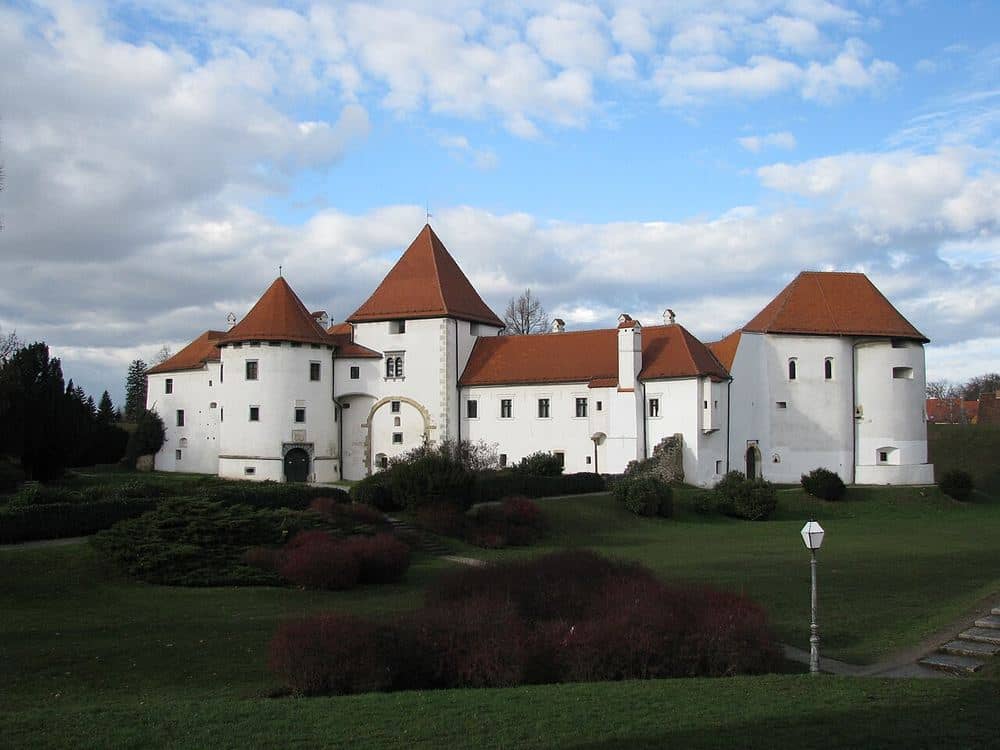
Stari grad castle
Sight

Stari grad castle

The white castle behind its moat, begun in the 14th century, home of the city museum, currently closed for renovation.

Photo: Ex13 / CC BY-SA 3.0
Stari grad castle
Sight

Stari grad castle

The Stari grad of Varazdin is the best-preserved late medieval stronghold of continental Croatia and the city's symbol: a white fortress with a defensive moat and earthen bastions, which from the 14th century developed from a feudal tower into a Renaissance fortress of the water-castle type, adapted to cannon. The greatest changes were brought by the Erdody family, who held the castle for more than three centuries and turned it into a residence with an arcaded courtyard on three levels, one of the loveliest in the country's north. Today the fortress holds the Varazdin City Museum with a display across the centuries: arms, furniture, clocks, ceramics, guild objects and rooms arranged by epoch, from Gothic to Biedermeier. The castle is currently closed to visitors because of energy renovation works. Around the fortress spreads a park with the moat turned into lawn, a favourite place for a walk.

Photo: Ex13 / CC BY-SA 3.0

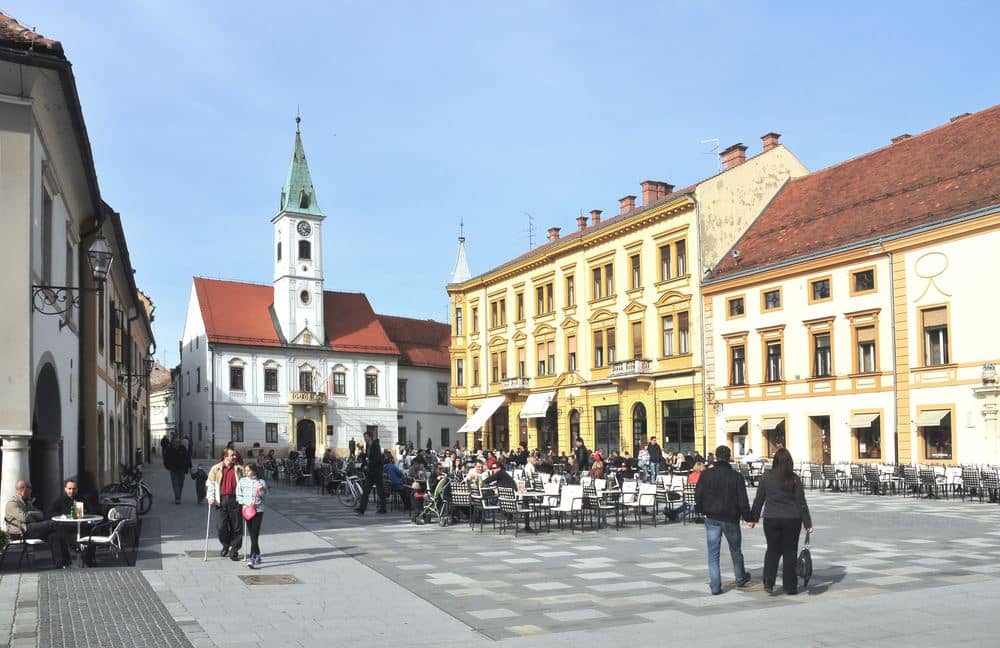
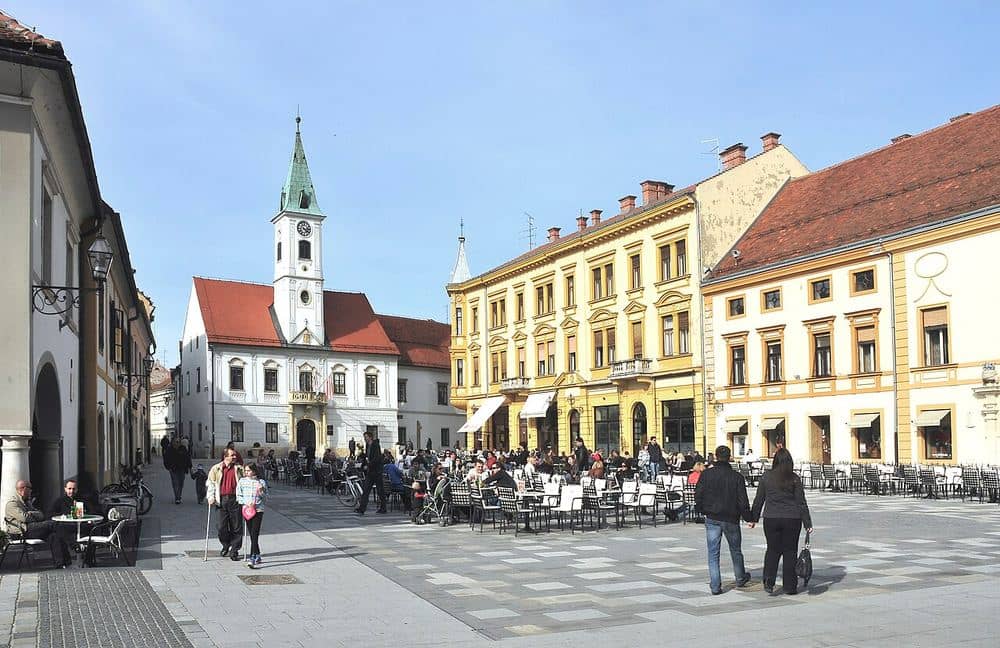
King Tomislav Square and the town hall
Sight

King Tomislav Square and the town hall

The main square, ringed by baroque façades, with a town hall in use since 1523.

Photo: LBM1948 / CC BY-SA 4.0
King Tomislav Square and the town hall
Sight

King Tomislav Square and the town hall

King Tomislav Square is the main city square and the best proof of why Varazdin is called Croatia's baroque capital: a rectangular space surrounded by facades in pastel colours, with the town hall on the northern side, one of the oldest in Europe that has continuously served its purpose, for the city administration has sat in it since 1523. The town hall is recognisable by its clock tower and by its guard: from April to September, every Saturday from 11:00 to 11:45, the Purgar Guard steps out before the building in blue uniforms of the 18th century and performs the changing, a custom the city keeps as its trademark. The square is pedestrian and full of cafés with terraces, and in winter it carries an ice rink and an advent market, in summer the Spancirfest stage. Everything worth seeing in Varazdin is at most a five-minute walk from here: the Stari grad, the cathedral, the palaces, the museums. Sit with a coffee opposite the town hall and look at the facades: each carries a different detail, and none is out of tune.

Photo: LBM1948 / CC BY-SA 4.0

City cemetery, Haller's park
Sight

City cemetery, Haller's park

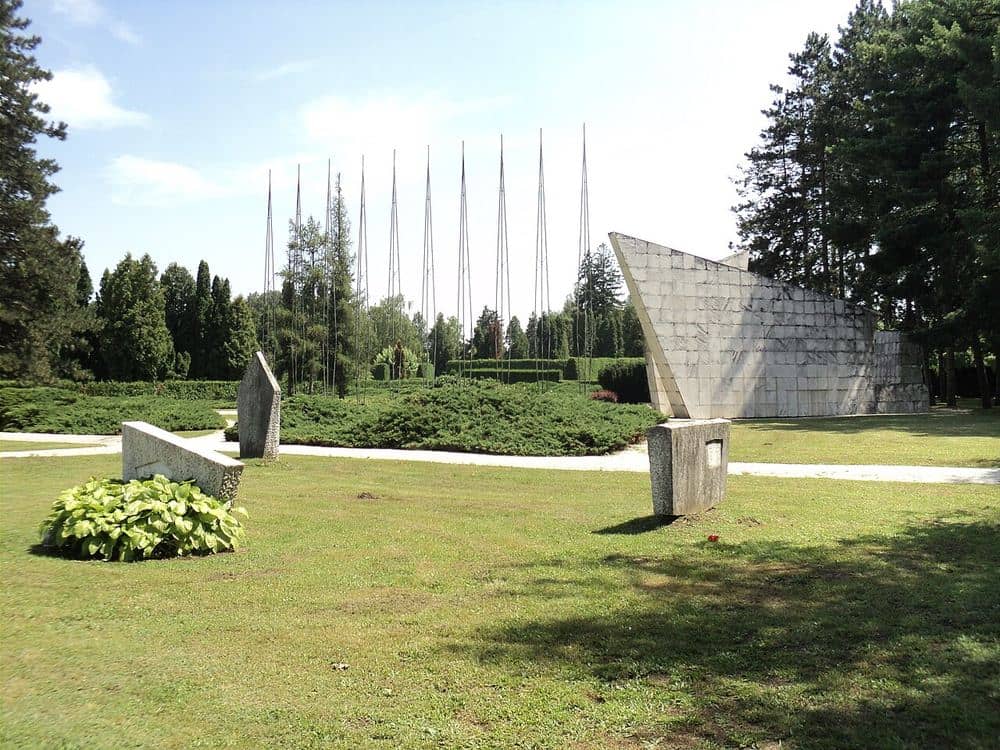
A cemetery designed as a park: kilometres of clipped thuja avenues, planned by Herman Haller from 1905.

Photo: Plamen / CC0
City cemetery, Haller's park
Sight

City cemetery, Haller's park

The Varazdin city cemetery is one of Europe's loveliest park cemeteries and a place visited as a garden, not as a necropolis: the credit belongs to Herman Haller, who from 1905 turned the cemetery into a garden, planting yews, cypresses and thujas and shaping them into kilometres of tall green walls, corridors and niches. The result is a space in which the gravestones stand between living architectural surfaces, and the paths lead through the alleys as through rooms without ceilings. Haller did the work for forty years and personally oversaw every cutting; his plan is preserved and the cemetery is maintained by it to this day, with thousands of trees trimmed every year. Entry is free, and the visit goes best in the morning, when the light is slanted and the corridors empty. This is not a usual tourist point, but for many visitors it is the strongest impression of Varazdin; behave as in a cemetery, because that is what it is, despite the look of a garden.

Photo: Plamen / CC0

Cathedral of the Assumption
Sight

Cathedral of the Assumption

A 17th-century Jesuit church, cathedral since 1997, with a gilded altar wall.

Photo: Krzysztof Golik / CC BY-SA 4.0
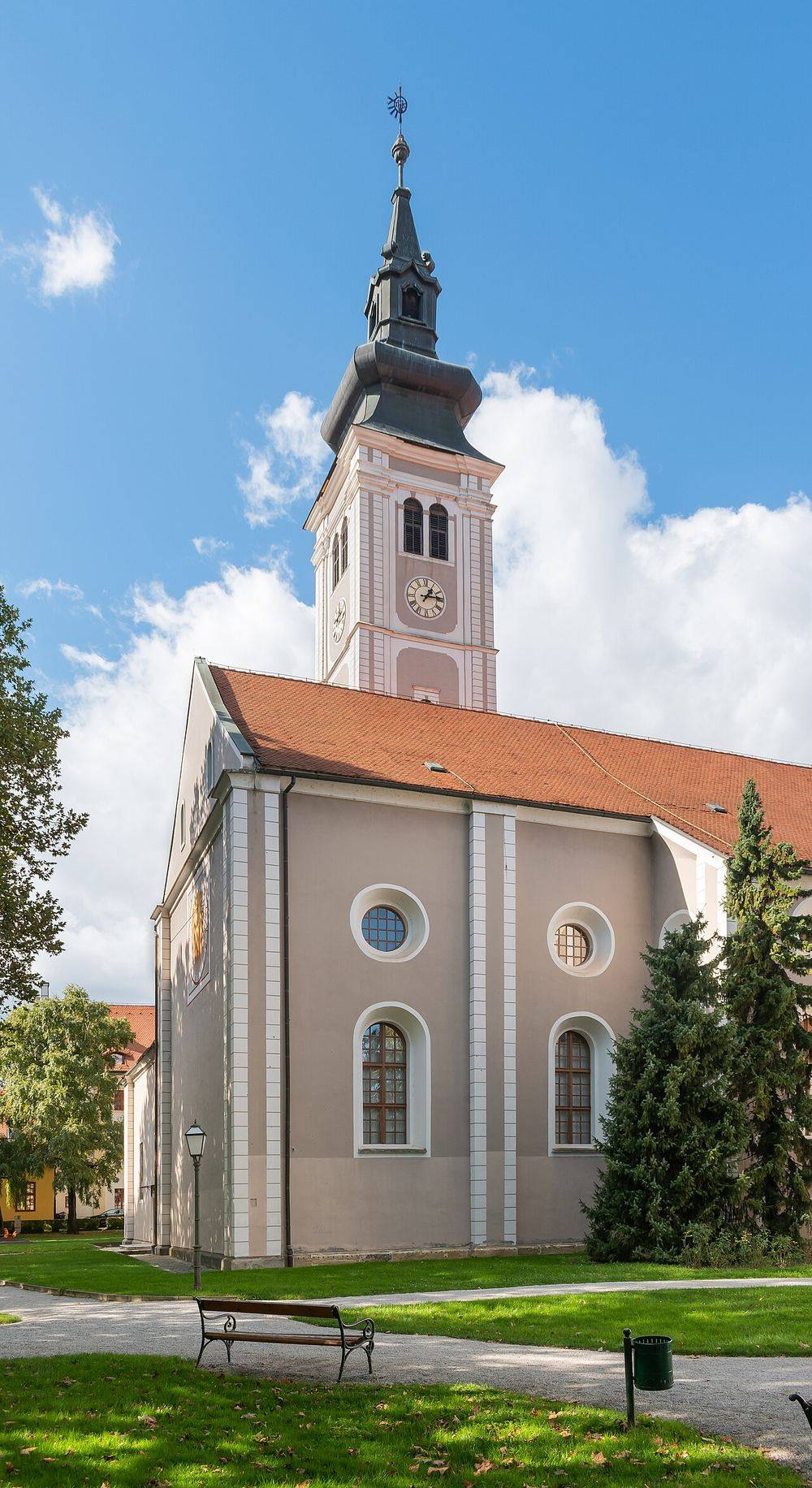
Cathedral of the Assumption
Sight

Cathedral of the Assumption

The Cathedral of the Assumption of the Blessed Virgin Mary was raised as a Jesuit church in the middle of the 17th century, at a time when Varazdin was the richest city of northern Croatia, and it received cathedral status only in 1997, with the founding of the Varazdin diocese. The facade is early baroque with a triumphal arch as its entrance, and the interior belongs among those one remembers: the high altar, almost twenty metres tall, gilded and full of statues, is one of the largest baroque altars in Croatia and fills the entire sanctuary wall. Beside it are side altars, a pulpit and the organ played during the Varazdin Baroque Evenings, a festival that every autumn brings early music ensembles from across Europe; the church's acoustics are the reason the festival's central hall is here. The cathedral stands a few steps from the main square, entry is free, and the best moment to visit is the morning, when light enters through the southern windows and the gilding flares.

Photo: Krzysztof Golik / CC BY-SA 4.0

World of Insects, Herzer palace
Sight

World of Insects, Herzer palace

An entomology collection of 4,500 exhibits in a classicist palace, built from one teacher's life work.

Photo: Krzysztof Golik / CC BY-SA 4.0
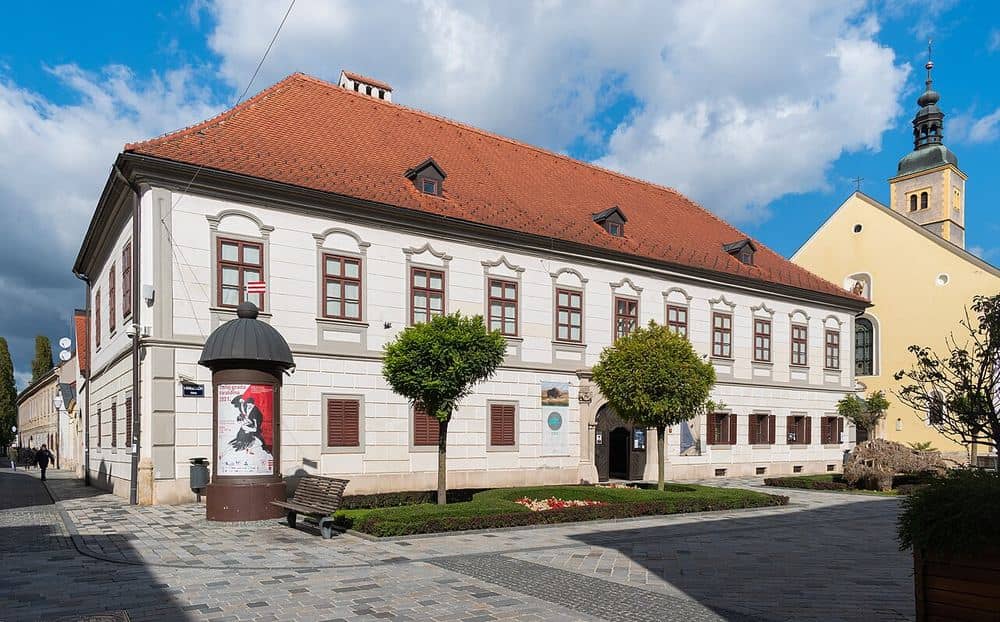
World of Insects, Herzer palace
Sight

World of Insects, Herzer palace

The World of Insects is set in the Herzer Palace and is one of Croatia's most unusual museums: a collection of some 4,500 insect specimens gathered over half a century by Franjo Koscec, a Varazdin professor of natural history, and given to the city in 1954. Koscec not only collected but also made the dioramas himself: he reconstructed habitats, built backgrounds and branches, and set the insects into scenes showing how they live, not only how they look. It is precisely that authored display that makes the museum special; it is preserved almost untouched and is today considered a monument of museum presentation, and the whole collection is protected cultural property. The Herzer Palace is a classicist building of 1791–1795 with a courtyard, and the visit takes some forty minutes and works equally well for children and adults. It is five minutes from the main square, the ticket is modest and valid in combination with the other city museums.

Photo: Krzysztof Golik / CC BY-SA 4.0

Croatian National Theatre
Sight

Croatian National Theatre

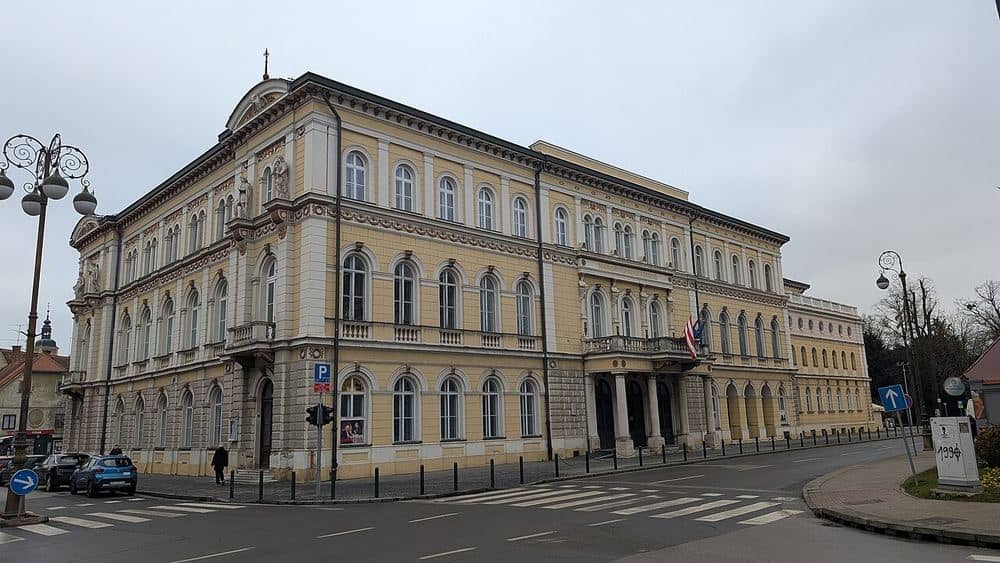
An 1873 theatre by the Viennese architect Hermann Helmer, still playing a full season.

Photo: Stephen Colebourne / CC BY 2.0

Croatian National Theatre
Sight

Croatian National Theatre

The Croatian National Theatre in Varazdin opened in 1873 and is one of the oldest theatres in Croatia in continuous operation: the building was designed by the Viennese architect Hermann Helmer as his first theatre project, echoed in the theatres he later built across Central Europe, so Varazdin has a hall with horseshoe balconies and acoustics to the same recipe as Vienna, Budapest or Zagreb. The city raised it with its own money, gathered among the citizens, at a time when Varazdin had fewer than ten thousand inhabitants, which says how much the theatre meant here. Today the HNK has its own drama ensemble and plays a full season, from classics to contemporary titles, and the autumn festival of the Varazdin Baroque Evenings uses the hall for concerts. The building stands by the Jagic Promenade, and tickets are considerably cheaper than in Zagreb. If you are in town off-season, an evening at the HNK is the best way to see how Varazdin lives when there are no tourists.

Photo: Stephen Colebourne / CC BY 2.0

4 more places
  • Gallery of Old and New Masters
  • Angel Museum
  • Church of St Nicholas
  • Lisak tower

Activities

1
1 more places
  • Vatroslav Jagić promenade

Varaždin: quick answers

How do I get to Varaždin?
From Zagreb it is about eighty kilometres north: an hour by car on the A4, a little over ninety minutes by frequent bus, longer by train. Day trip logistics are simple in both directions. Varaždin lies on the Drava in north-western Croatia, on the edge of the Pannonian plain, 169 to 173 metres above sea level. The city gives Graz as 140 kilometres away and Ljubljana as 180, so it also works as a stop on the drive between Austria or Slovenia and the coast. The town is old: its first written mention dates from a charter of King Béla III in 1181, and King Andrew II made it a free royal town in 1209. Inside the centre everything is walkable. The castle, King Tomislav Square, which locals call Korzo, and the cemetery are a few minutes apart.
What is Špancirfest?
Ten days of street festival at the end of August: performers, concerts, crafts and food stands across the baroque squares, free to walk into. The town books out for it, so a day trip from Zagreb is the easy way in. It runs over the last ten days of August, across two weekends and the week between them. Many shows use the baroque core, built up when Varaždin was the seat of the Croatian ban and the Royal Council from 1767 to 1776. The great fire of 25 April 1776 burned two thirds of the town and ended that period. In early autumn the Varaždin Baroque Evenings follow, which the tourist board calls the oldest classical music festival in Croatia, and Advent fills the same squares in December.
Why visit the cemetery?
Because gardener Herman Haller spent decades from 1905 shaping its thuja hedges into green walls and avenues, turning the grounds into a park that reads as architecture. It is free, quiet and ten minutes from the castle. The cemetery itself was founded in 1773, and Haller began the redesign in 1905. Look for the Angel of Death by the sculptor Robert Frangeš Mihanović and the tomb of the linguist Vatroslav Jagić, which gets fresh flowers every day. The gates open daily at 7:00 and close at 17:00 from November to January and at 21:00 from May to August. Back in the centre, the Stari grad castle houses the oldest department of the City Museum, with guild objects, weapons, clocks and furniture in about 40 rooms. Restoration work paused visits until autumn 2026, so check with the museum before you go.

CroVenture App

Explore Varaždin with CroVenture

Places unlock as you reach them, with a passport that fills up as you explore.