Skip to content
All cities

Cavtat. Things to do, map and hidden gems

38 curated places· 4 hidden gems
Cavtat
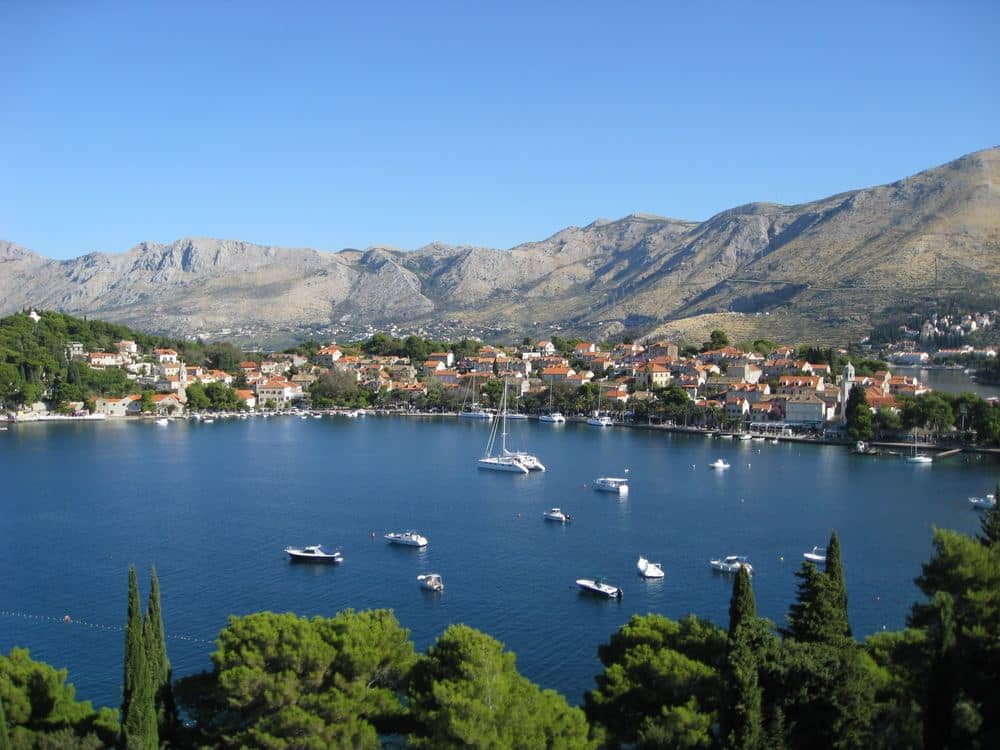
Photo: Miroslav.vajdic / CC BY-SA 4.0

Cavtat curls around two wooded peninsulas at the southern end of the Dubrovnik riviera, a harbour promenade of palms and cafes with none of the crush twenty minutes up the coast. The town stands on Greek and Roman Epidaurum, and its two walks, around Rat and Sustjepan, count among the gentlest on this coast. On the cemetery hill, the Račić mausoleum by Ivan Meštrović is the quiet masterpiece.

Boats shuttle to Dubrovnik's old harbour all day in season, which makes Cavtat the calm base with the famous neighbour.

What to see in Cavtat: Meštrović's mausoleum, Bukovac and Konavle

The next 7 days

Weather data by Open-Meteo.com

Opening hours and prices

The places we keep opening hours and price levels for. Times change with the season, so treat the official page as the last word.

PlaceOpening hoursPriceOfficial page
Sniježnica KonavleAlways open; check access, weather, park rules and daylight before hiking.--

Climate month by month

Ten-year averages for Cavtat, so you can see what a month usually looks like rather than what this week happens to do.

MonthDay °CNight °CRain daysSea °C
January1141316
February1351015
March1471215
April1710916
May21141019
June2619524
July3021227
August3022427
September2518725
October21141023
November17101420
December1361217

Air 2015 to 2024, sea 2022 to 2024. A rain day is 1 mm or more. Data by Open-Meteo.com

Beaches in Cavtat

Pasjača Beach
Legendary
Activity

Pasjača Beach

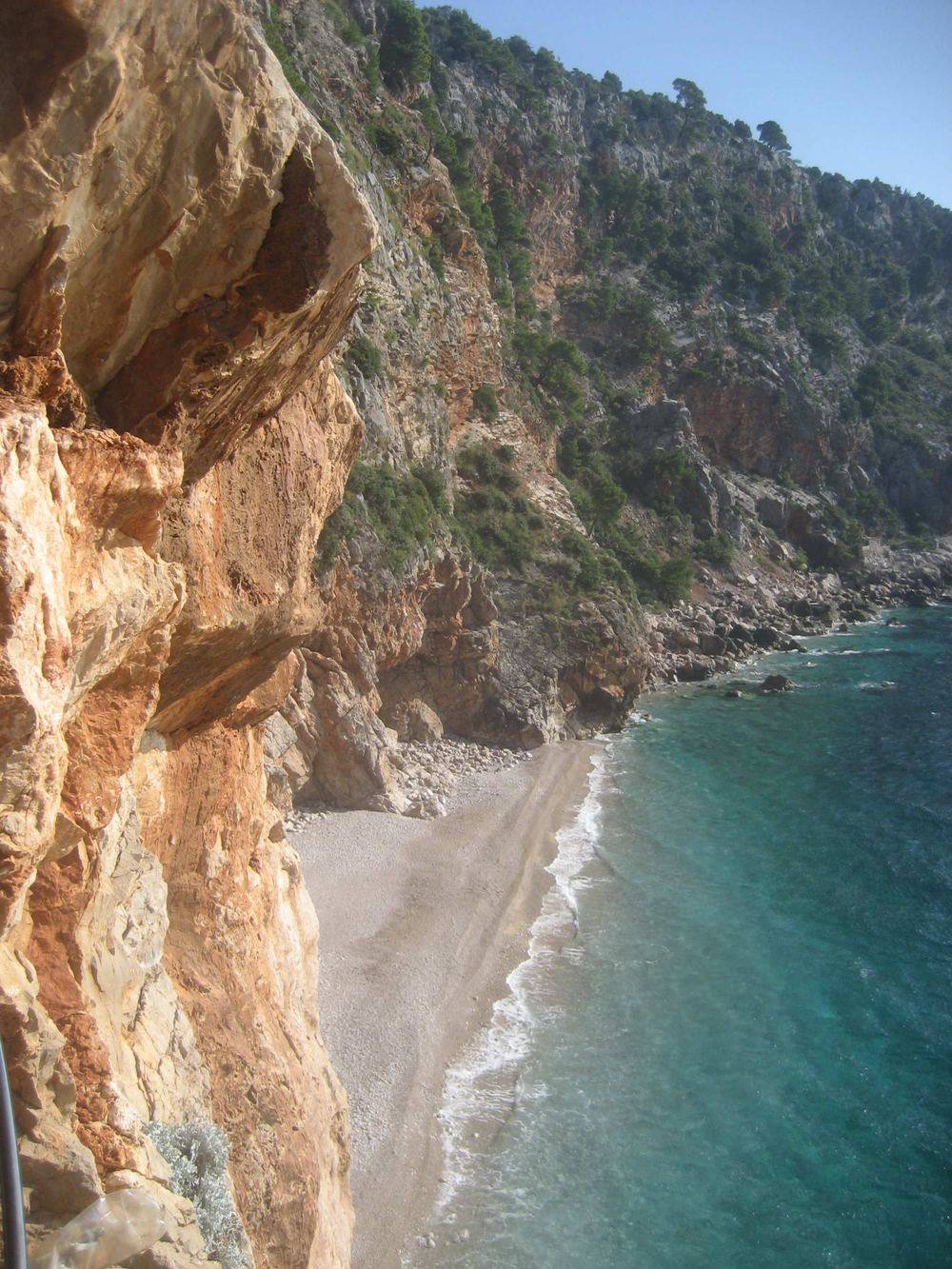
Pasjača Beach is a remote beach at the far southern end of the Konavle coast.

Photo: Croq / CC BY-SA 3.0
Pasjača Beach
Activity Legendary

Pasjača Beach

Pasjaca Beach lies beneath cliffs a hundred metres high at the far south of Konavle and is one of the Adriatic's most unusual beaches, because it came about by accident: shingle that fell from the cliff while a tunnel for irrigating the Konavle field was being dug in the 1950s created a narrow strand where none had been before. A steep path leads to the beach from the top, through the tunnel and down steps cut into the rock, and the descent takes fifteen minutes; the return is uphill and demands fitness. The reward is a cove closed on three sides by vertical cliffs, with sea so clear the bottom is seen several metres down and with the feeling of being at the world's end rather than half an hour from Dubrovnik. There are no facilities at all, so bring water and everything else. The beach has several times been chosen among Europe's loveliest; in summer come early, for there is room for about thirty people.

Photo: Croq / CC BY-SA 3.0

Ključice Beach
Activity

Ključice Beach

Ključice Beach is a small cove on the northern edge of Cavtat.

Photo: Eddy Genne / CC BY 3.0

Ključice Beach
Activity

Ključice Beach

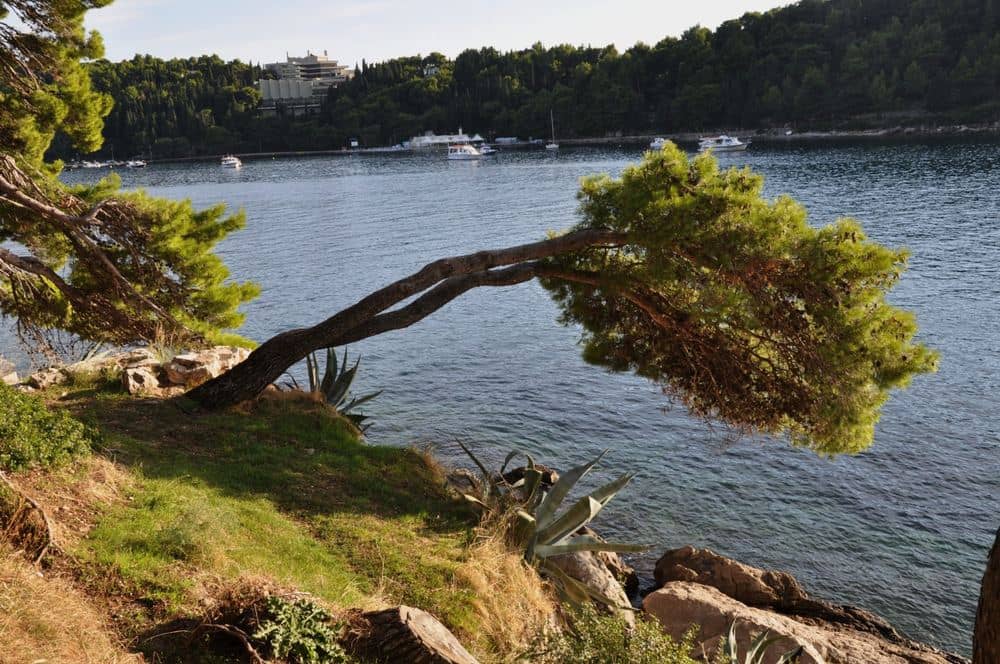
Kljucice cove is a small inlet on the northern edge of Cavtat, where the town passes into the coast toward Mlini: a shingle strand between low rocks, with pines above and a sea that deepens moderately. The cove is smaller than the town beach and therefore quieter, and since no road leads to it but only the coastal path, those who come are mostly people staying nearby or who know it exists. There are few facilities: a shower, a few loungers and a bar in season, bring the rest. The sea is clean and sheltered, and the bottom is shingle without sharp stones, so entry is pleasant for children too, though because of its size the cove is better for couples and small groups. From the Cavtat waterfront Kljucice is a fifteen-minute walk by the coastal promenade northward. Toward evening, when the town beach empties, only the sea and the pinewood remain here.

Photo: Eddy Genne / CC BY 3.0

Pinija Beach
Activity

Pinija Beach

Pinija Beach is a pine-shaded swimming spot close to the old town.

Photo: Filip Bunkens pitslamp / CC0

Pinija Beach
Activity

Pinija Beach

Pinija Beach lies along the northern edge of Cavtat harbour, right beside the promenade, and is the easiest bathing place in town to reach: a few steps from the waterfront, with pines growing to the very edge of the sea and holding shade all afternoon. It is a beach for guests who do not want to plan a day but simply go down to the water between coffee and lunch. The shore is a mix of concrete platforms and fine shingle, entry is gentle, and the sea calm because the harbour breaks the waves; depth grows gradually, so it suits children too. Because of its central position Pinija is the busiest beach in Cavtat, and in July and August it fills to the last lounger by afternoon. Showers, a bar and lounger hire run in season. It is at its best early in the morning, before nine, when the sea is still smooth and the pine shade falls across the whole platform.

Photo: Filip Bunkens pitslamp / CC0

Molunat Bay
Activity

Molunat Bay

Molunat Bay is a secluded cove at the far southern end of Konavle.

Photo: Fridolin freudenfett (Peter Kuley) / CC BY-SA 3.0

Molunat Bay
Activity

Molunat Bay

Molunat is the last place on the Croatian coast before the Montenegrin border and one of the few that remained as coastal places were before tourism: two bays, a fishing harbour with a dozen boats, a few taverns and houses climbing the hill, without hotels and without concrete zones. The sea here is exceptionally clear because there is neither traffic nor industry, and the beaches are shingle and sand, with a shallow entry that suits children. The Velji Molunat bay faces south and is sunny all day, Mali Molunat is more sheltered and quieter. In the village one eats what was caught that morning, at prices lower than anywhere closer to Dubrovnik. From Cavtat the drive to Molunat takes half an hour, and the visit joins easily with Prevlaka, which is ten minutes further south. For a day without a single crowd this is Croatia's southernmost address.

Photo: Fridolin freudenfett (Peter Kuley) / CC BY-SA 3.0

Kupari Bay
Activity

Kupari Bay

Kupari Bay is a bay on the coast north of Cavtat, toward Dubrovnik.

Photo: Gzzz / CC BY-SA 4.0

Kupari Bay
Activity

Kupari Bay

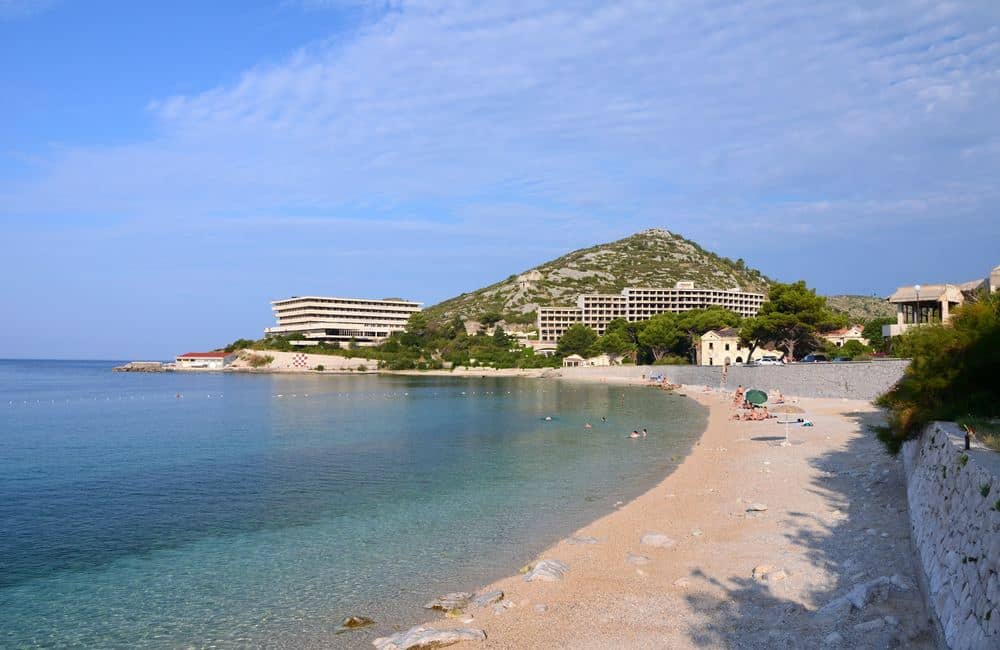
Kupari Bay is one of the most unusual places on the Croatian coast: a sandy bay north of Cavtat which from the 1930s was a military resort, first for the Yugoslav royal army and after the war for JNA officers, with five large hotels built right by the beach. In the war of 1991 the complex was burned and looted, and it stayed abandoned for decades: the concrete skeletons of the hotels with empty windows are overgrown with maquis, and before them lies one of the best sandy beaches of the south. Precisely that contrast draws visitors: bathing on a perfect beach beside ruins that look like a film set. Part of the complex is now being restored, and the beach is arranged, with showers and a bar. Entering the abandoned buildings is not permitted and is not safe. From Cavtat the drive to Kupari takes ten minutes, and the beach is one of the few sandy ones in the Dubrovnik area.

Photo: Gzzz / CC BY-SA 4.0

Rat Beach
Activity

Rat Beach

Rat Beach is a swimming spot on the Rat peninsula, away from the town bustle.

Photo: Ole Husby / CC BY-SA 2.0

Rat Beach
Activity

Rat Beach

The bathing area on the Rat peninsula is not a beach in the usual sense but a series of spots along the circular path through the pine wood: flat rocks, concrete platforms and ladders into the sea, spread so that one always finds a free metre, even when the town beach Zal is full. The sea here is deep right by the shore and clear because there is no sand to cloud it, so this is a favourite address of swimmers and of those who snorkel. The pinewood holds shade all day, which on this stretch of coast is not self-evident, and benches along the path give a place to rest. There are almost no facilities: a few showers and a bar by the path, bring the rest. From the waterfront the bathing area is five to fifteen minutes' walk, depending on how far you go; the farther, the emptier. For a morning swim before breakfast this is the best address in Cavtat.

Photo: Ole Husby / CC BY-SA 2.0

Plan your visit

Cavtat in a nutshell

38 places, 1 routes.

What is actually worth your time in Cavtat?

Start with Sokol Grad, Pasjača Beach, and Račić Family Mausoleum. After that it depends on what you enjoy: the guide holds 38 places in Cavtat, sorted into sights, activities, food and shopping, so you can skip whole categories that bore you.

Sokol GradSokol Grad

How do you get away from the crowds in Cavtat?

Follow the hidden gems: 4 places that rarely make the guidebooks, most of them a few streets off the main drag. Sokol Grad, Pasjača Beach, and Račić Family Mausoleum are good ones to start with.

Pasjača BeachPasjača Beach

No time to plan? Just follow a route.

Pick one of The Cavtat Point. Each walk runs stop by stop in a fixed order, so the only decision left is where to have lunch.

Račić Family MausoleumRačić Family Mausoleum
Our tips

What we would do around Cavtat

Day trips within reach of Cavtat, plus the routes and quiet corners our editors keep coming back to.

Cavtat itineraries

  • 8 stops

    The Cavtat Point

    A painter, a rector and a mausoleum above the sea

    1. Our Lady of the Snow Church
    2. Franciscan Monastery of Our Lady of the Snow
    3. Bukovac House
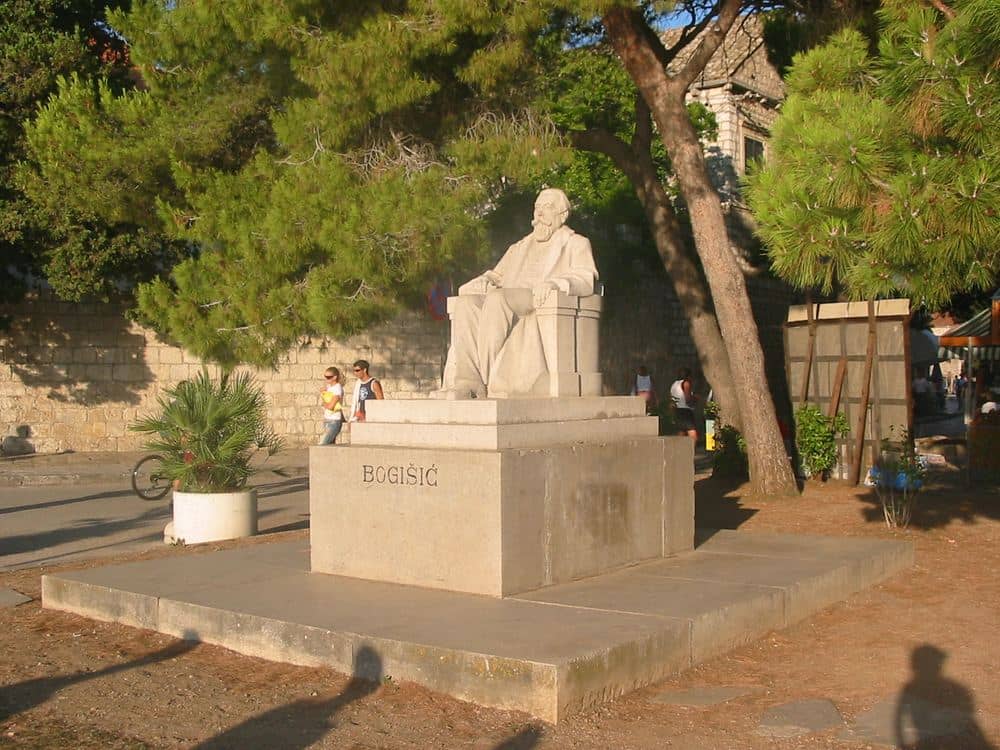
    4. Rector's Palace & Bogišić Collection
    5. Rat Peninsula Walk
    6. Cavtat Cemetery
    7. Račić Family Mausoleum
    8. Cavtat Waterfront Promenade

Hidden gems in Cavtat

Sokol Grad
Legendary
Sight

Sokol Grad

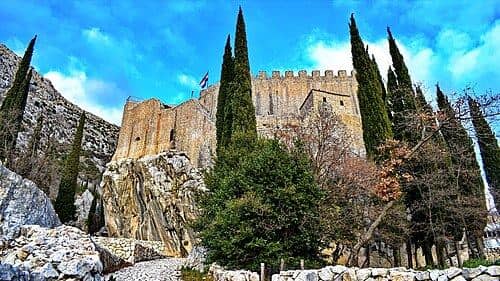
Sokol Grad is a fortress on a ridge above Konavle, with a view reaching to the sea.

Photo: Miroslav.vajdic / CC BY-SA 4.0

Sokol Grad
Sight Legendary

Sokol Grad

Sokol Grad is a fortress that looks as though it grew out of the rock, because it is literally grafted onto it: a stronghold on a vertical crag above Konavle, whose walls begin where the natural rock ceases to suffice, and whose towers follow the ridge's shape. The place was fortified as far back as Illyrian and Roman times, and it received its present form under the Republic of Ragusa, which from the 15th century held it as a key point in the defence of the fertile Konavle field, the city's source of food. After the danger passed the fortress was abandoned and decayed for centuries, and it was thoroughly restored and opened to visitors in 2013. Today one climbs through several levels, with a display on the garrison's life, weapons and a view taking in all of Konavle to the sea. The ticket is moderate, the visit takes an hour, and the road from Cavtat leads some twenty minutes through villages.

Photo: Miroslav.vajdic / CC BY-SA 4.0

Pasjača Beach
Legendary
Activity

Pasjača Beach

Pasjača Beach is a remote beach at the far southern end of the Konavle coast.

Photo: Croq / CC BY-SA 3.0
Pasjača Beach
Activity Legendary

Pasjača Beach

Pasjaca Beach lies beneath cliffs a hundred metres high at the far south of Konavle and is one of the Adriatic's most unusual beaches, because it came about by accident: shingle that fell from the cliff while a tunnel for irrigating the Konavle field was being dug in the 1950s created a narrow strand where none had been before. A steep path leads to the beach from the top, through the tunnel and down steps cut into the rock, and the descent takes fifteen minutes; the return is uphill and demands fitness. The reward is a cove closed on three sides by vertical cliffs, with sea so clear the bottom is seen several metres down and with the feeling of being at the world's end rather than half an hour from Dubrovnik. There are no facilities at all, so bring water and everything else. The beach has several times been chosen among Europe's loveliest; in summer come early, for there is room for about thirty people.

Photo: Croq / CC BY-SA 3.0

Račić Family Mausoleum
Legendary
Sight

Račić Family Mausoleum

Ivan Meštrović's white-stone mausoleum on the cemetery hill.

Photo: Erud / CC BY 3.0

Račić Family Mausoleum
Sight Legendary

Račić Family Mausoleum

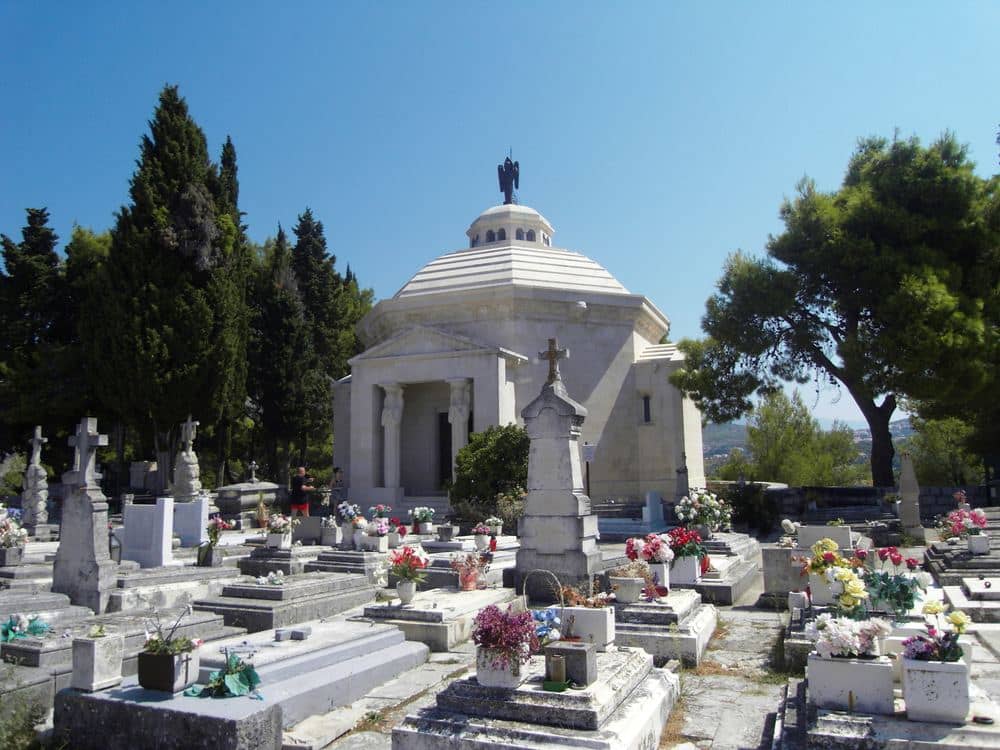
The Racic family mausoleum in the Cavtat cemetery is one of Ivan Mestrovic's most important works and probably the loveliest tomb on the Adriatic: a white domed building of Brac stone, raised between 1920 and 1922 on the commission of Marija Racic, of a shipowning family that the Spanish flu cut down within a few years. Mestrovic executed everything: the architecture, the reliefs, the door, the bell and the eight angels that carry the dome from within, so the mausoleum is a unique example of a work in which one artist controlled every detail. The motif is Christian, but the treatment is secessionist and personal: the angels are female figures from Mestrovic's world, and the inscription above the entrance speaks of hope in the afterlife. The cemetery lies at the top of the Rat peninsula, with a view of the whole bay; the climb takes fifteen minutes. The ticket is modest, and the interior is visited in limited slots, so check the schedule.

Photo: Erud / CC BY 3.0

Explore Cavtat by category

Sights

14
Sokol Grad
Legendary
Sight

Sokol Grad

Sokol Grad is a fortress on a ridge above Konavle, with a view reaching to the sea.

Photo: Miroslav.vajdic / CC BY-SA 4.0

Sokol Grad
Sight Legendary

Sokol Grad

Sokol Grad is a fortress that looks as though it grew out of the rock, because it is literally grafted onto it: a stronghold on a vertical crag above Konavle, whose walls begin where the natural rock ceases to suffice, and whose towers follow the ridge's shape. The place was fortified as far back as Illyrian and Roman times, and it received its present form under the Republic of Ragusa, which from the 15th century held it as a key point in the defence of the fertile Konavle field, the city's source of food. After the danger passed the fortress was abandoned and decayed for centuries, and it was thoroughly restored and opened to visitors in 2013. Today one climbs through several levels, with a display on the garrison's life, weapons and a view taking in all of Konavle to the sea. The ticket is moderate, the visit takes an hour, and the road from Cavtat leads some twenty minutes through villages.

Photo: Miroslav.vajdic / CC BY-SA 4.0

Račić Family Mausoleum
Legendary
Sight

Račić Family Mausoleum

Ivan Meštrović's white-stone mausoleum on the cemetery hill.

Photo: Erud / CC BY 3.0

Račić Family Mausoleum
Sight Legendary

Račić Family Mausoleum

The Racic family mausoleum in the Cavtat cemetery is one of Ivan Mestrovic's most important works and probably the loveliest tomb on the Adriatic: a white domed building of Brac stone, raised between 1920 and 1922 on the commission of Marija Racic, of a shipowning family that the Spanish flu cut down within a few years. Mestrovic executed everything: the architecture, the reliefs, the door, the bell and the eight angels that carry the dome from within, so the mausoleum is a unique example of a work in which one artist controlled every detail. The motif is Christian, but the treatment is secessionist and personal: the angels are female figures from Mestrovic's world, and the inscription above the entrance speaks of hope in the afterlife. The cemetery lies at the top of the Rat peninsula, with a view of the whole bay; the climb takes fifteen minutes. The ticket is modest, and the interior is visited in limited slots, so check the schedule.

Photo: Erud / CC BY 3.0

Cavtat Cemetery
Sight

Cavtat Cemetery

Cavtat Cemetery is a quiet hillside cemetery above town, with a view over the sea.

Photo: Erud / CC BY 3.0

Cavtat Cemetery
Sight

Cavtat Cemetery

The Cavtat cemetery lies at the top of the Rat peninsula, among cypresses, and is one of the Adriatic's loveliest cemeteries, for a simple reason: on it stands the Racic family mausoleum, Ivan Mestrovic's work of 1922, which alone is worth the climb. The cemetery is laid out in rows along the slope, with stone headstones of the families that built Cavtat, many of them seafaring, with ships and captains' names carved into them. Beside the mausoleum is also the small church of St Roch from the 16th century, raised as a vow against the plague. From the platform before the cemetery opens a view of the whole bay, the waterfront and the open sea toward Dubrovnik, which is the best viewpoint in town. One climbs to the cemetery through the peninsula's pine wood, fifteen minutes of easy walking from the waterfront. Behave as in a cemetery: this is to this day the place where Cavtat buries its own.

Photo: Erud / CC BY 3.0

Our Lady of the Snow Church
Sight

Our Lady of the Snow Church

Our Lady of the Snow Church is a church within Cavtat's Franciscan monastery complex.

Photo: JERRYE AND ROY KLOTZ MD / CC BY-SA 3.0

Our Lady of the Snow Church
Sight

Our Lady of the Snow Church

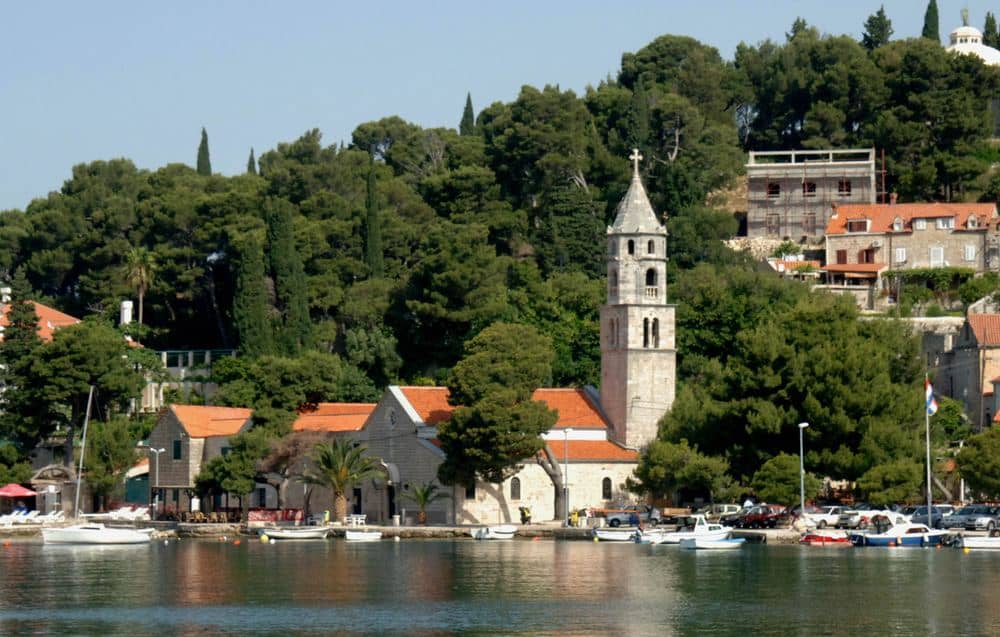
The Church of Our Lady of the Snow is part of the Franciscan monastery on the Cavtat waterfront and the only church in town that kept its original Gothic form: it was raised at the end of the 15th century together with the monastery, with a simple single nave, a wooden ceiling and a portal whose stone frame carries the marks of the passage from Gothic to Renaissance. The name comes from the Roman legend of snow that fell in August on the spot where a church to the Virgin was to be raised; the feast is celebrated on 5 August. The interior keeps works of the Dubrovnik painting school, among them a 16th-century polyptych, and votive paintings donated by Cavtat seafarers after safe voyages. Beside the church is the Gothic cloister with a cistern and a garden, the quietest space in town. Entry is free around the masses or with a symbolic contribution; visit in the morning, when the cloister is in full light.

Photo: JERRYE AND ROY KLOTZ MD / CC BY-SA 3.0

Bukovac House
Sight

Bukovac House

The birthplace of painter Vlaho Bukovac, now an intimate museum.

Photo: Jerrye and Roy Klotz / CC BY-SA 3.0

Bukovac House
Sight

Bukovac House

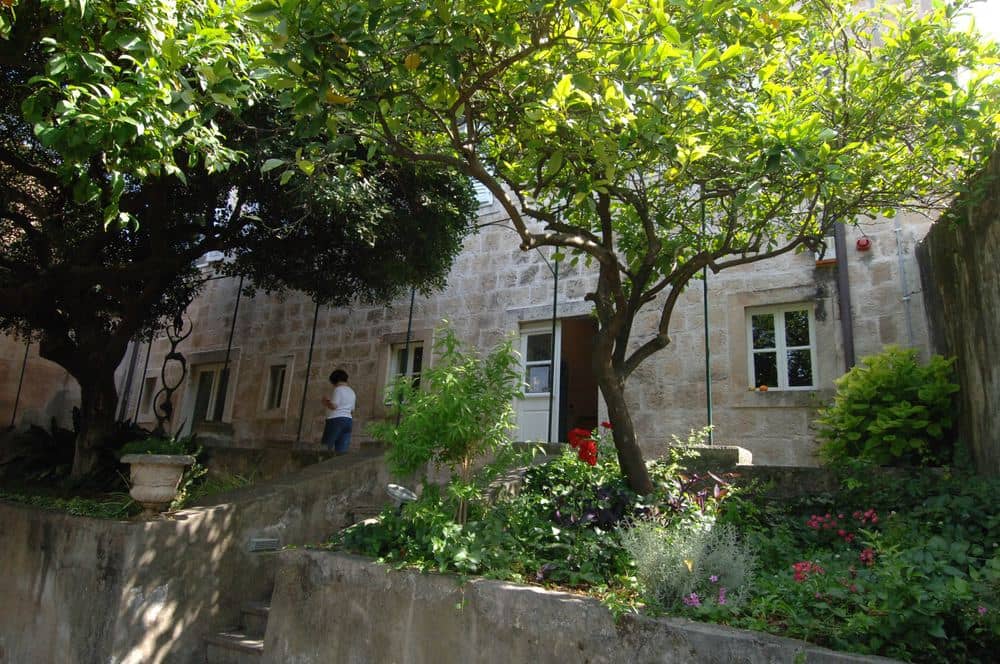
The Bukovac House is the birthplace of Vlaho Bukovac, the most important Croatian painter of the 19th century, and one of the best-arranged small museums on the Adriatic: a family stone house in the Cavtat core, restored and set up so that both the paintings and the life that produced them can be seen in it. Bukovac was born in 1855, studied in Paris, exhibited at the Salon, painted portraits of European aristocracy and taught at the academy in Prague, and returned here all his life. In the house are displayed his works from all periods, from the early Parisian to the late pointillist, alongside personal objects, letters and wall paintings he made as a young man directly on the walls of a room. The display is clear, the captions in several languages, the visit takes an hour. The house lies in a narrow street two minutes from the waterfront; the ticket is modest, and for visitors who do not know Bukovac this is the best introduction.

Photo: Jerrye and Roy Klotz / CC BY-SA 3.0

Rector's Palace & Bogišić Collection
Sight

Rector's Palace & Bogišić Collection

A Renaissance palace by the sea holding Baltazar Bogišić's treasures.

Photo: Andreas Lauterer / CC BY-SA 3.0

Rector's Palace & Bogišić Collection
Sight

Rector's Palace & Bogišić Collection

The Rector's Palace in Cavtat is a Renaissance palace right on the waterfront, in which the local administration of the Republic of Ragusa once sat, and where today the Baltazar Bogisic collection is kept, one of the most important private bequests in Croatia. Bogisic was a jurist of world renown, author of Montenegro's General Property Code, professor in Odesa and Paris, and a man who collected all his life: a library of over twenty thousand volumes, manuscripts, coins, arms, paintings and prints, among them the largest print collection in Croatia. He left it all by will to his native Cavtat, so the palace became a museum in which the library is kept exactly as he arranged it. The collection also holds a famous drawing by Vlaho Bukovac. The ticket is modest, the visit takes an hour, and the space is cool and quiet in the middle of the waterfront. For a visitor who has seen the Bukovac House, this is the logical continuation.

Photo: Andreas Lauterer / CC BY-SA 3.0

8 more places
  • Konavle Homeland Museum
  • Ancient Epidaurum Site
  • Chapel of St Roch
  • Konavle County Museum
  • Franciscan Monastery of Our Lady of the Snow
  • Čilipi Village
  • Gruda Village
  • Church of St Nicholas

Activities

20
Pasjača Beach
Legendary
Activity

Pasjača Beach

Pasjača Beach is a remote beach at the far southern end of the Konavle coast.

Photo: Croq / CC BY-SA 3.0

Pasjača Beach
Activity Legendary

Pasjača Beach

Pasjaca Beach lies beneath cliffs a hundred metres high at the far south of Konavle and is one of the Adriatic's most unusual beaches, because it came about by accident: shingle that fell from the cliff while a tunnel for irrigating the Konavle field was being dug in the 1950s created a narrow strand where none had been before. A steep path leads to the beach from the top, through the tunnel and down steps cut into the rock, and the descent takes fifteen minutes; the return is uphill and demands fitness. The reward is a cove closed on three sides by vertical cliffs, with sea so clear the bottom is seen several metres down and with the feeling of being at the world's end rather than half an hour from Dubrovnik. There are no facilities at all, so bring water and everything else. The beach has several times been chosen among Europe's loveliest; in summer come early, for there is room for about thirty people.

Photo: Croq / CC BY-SA 3.0

Ključice Beach
Activity

Ključice Beach

Ključice Beach is a small cove on the northern edge of Cavtat.

Photo: Eddy Genne / CC BY 3.0
Ključice Beach
Activity

Ključice Beach

Kljucice cove is a small inlet on the northern edge of Cavtat, where the town passes into the coast toward Mlini: a shingle strand between low rocks, with pines above and a sea that deepens moderately. The cove is smaller than the town beach and therefore quieter, and since no road leads to it but only the coastal path, those who come are mostly people staying nearby or who know it exists. There are few facilities: a shower, a few loungers and a bar in season, bring the rest. The sea is clean and sheltered, and the bottom is shingle without sharp stones, so entry is pleasant for children too, though because of its size the cove is better for couples and small groups. From the Cavtat waterfront Kljucice is a fifteen-minute walk by the coastal promenade northward. Toward evening, when the town beach empties, only the sea and the pinewood remain here.

Photo: Eddy Genne / CC BY 3.0

Pinija Beach
Activity

Pinija Beach

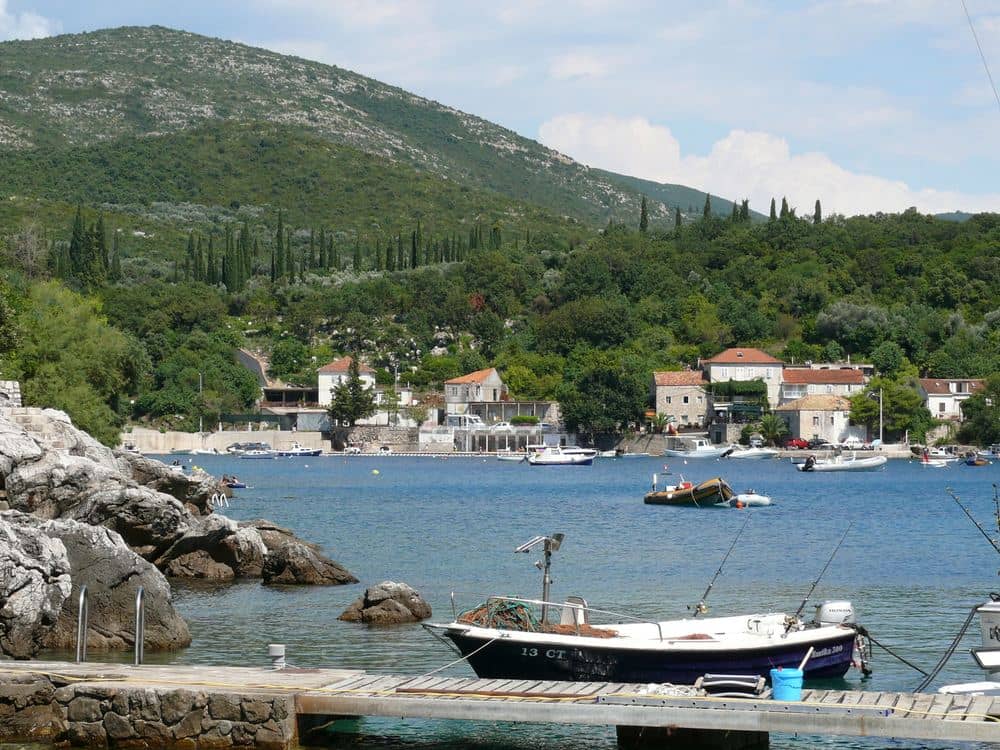
Pinija Beach is a pine-shaded swimming spot close to the old town.

Photo: Filip Bunkens pitslamp / CC0
Pinija Beach
Activity

Pinija Beach

Pinija Beach lies along the northern edge of Cavtat harbour, right beside the promenade, and is the easiest bathing place in town to reach: a few steps from the waterfront, with pines growing to the very edge of the sea and holding shade all afternoon. It is a beach for guests who do not want to plan a day but simply go down to the water between coffee and lunch. The shore is a mix of concrete platforms and fine shingle, entry is gentle, and the sea calm because the harbour breaks the waves; depth grows gradually, so it suits children too. Because of its central position Pinija is the busiest beach in Cavtat, and in July and August it fills to the last lounger by afternoon. Showers, a bar and lounger hire run in season. It is at its best early in the morning, before nine, when the sea is still smooth and the pine shade falls across the whole platform.

Photo: Filip Bunkens pitslamp / CC0

Hotel Croatia Viewpoint
Activity

Hotel Croatia Viewpoint

Hotel Croatia Viewpoint is a lookout beside the hotel of the same name, facing the bay and old town.

Photo: Ketone16 / CC BY-SA 3.0

Hotel Croatia Viewpoint
Activity

Hotel Croatia Viewpoint

The lookout by the Hotel Croatia lies on the southern side of the Rat peninsula, on a height above the Tiha bay, and gives what cannot be seen from the town: a view of the open sea to the south, the Konavle coast and, on clear days, the mountains of Montenegro beyond Prevlaka. The hotel was built in the seventies in the best possible spot, fitted into the slope so that from the sea it looks like a terraced row, and the platform before it stayed publicly accessible, so one comes here without any obligation. A promenade leads to the lookout from the Cavtat waterfront across the peninsula, some twenty minutes' walk through pinewood, or a road if one comes by car. The benches face south, and in the early evening this is the best sunset in the area, because the sun falls into open sea without a single island in the frame. Combine it with a swim in the Tiha bay below.

Photo: Ketone16 / CC BY-SA 3.0

Ljuta River
Activity

Ljuta River

Ljuta River is a short river that rises in the heart of Konavle.

Photo: Jorge Franganillo / CC BY 2.0

Ljuta River
Activity

Ljuta River

The Ljuta river is a short karst river that rises in the heart of Konavle and after a few kilometres enters the sea, and its cold, abundant water drove mills and fulling houses in the valley for centuries: there were a dozen along its course, and several have been restored and work today as restaurants, with terraces above the water itself and mill wheels that still turn. The water is so cold that wine is chilled in it, and in summer the temperature by the river drops several degrees compared with the surrounding field, which explains why people come here precisely in August. In the restaurants one eats trout from their own pools, lamb and Konavle specialities, with local wine from the surrounding vineyards. Ljuta is some twenty minutes' drive from Cavtat across the Konavle field, and the outing joins easily with Sokol Grad and Cilipi into one half-day circuit.

Photo: Jorge Franganillo / CC BY 2.0

Molunat Bay
Activity

Molunat Bay

Molunat Bay is a secluded cove at the far southern end of Konavle.

Photo: Fridolin freudenfett (Peter Kuley) / CC BY-SA 3.0
Molunat Bay
Activity

Molunat Bay

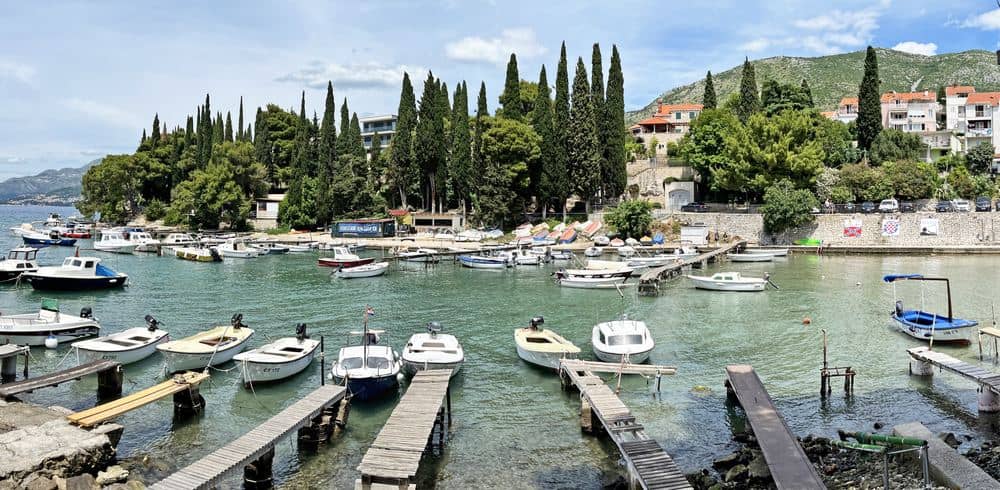
Molunat is the last place on the Croatian coast before the Montenegrin border and one of the few that remained as coastal places were before tourism: two bays, a fishing harbour with a dozen boats, a few taverns and houses climbing the hill, without hotels and without concrete zones. The sea here is exceptionally clear because there is neither traffic nor industry, and the beaches are shingle and sand, with a shallow entry that suits children. The Velji Molunat bay faces south and is sunny all day, Mali Molunat is more sheltered and quieter. In the village one eats what was caught that morning, at prices lower than anywhere closer to Dubrovnik. From Cavtat the drive to Molunat takes half an hour, and the visit joins easily with Prevlaka, which is ten minutes further south. For a day without a single crowd this is Croatia's southernmost address.

Photo: Fridolin freudenfett (Peter Kuley) / CC BY-SA 3.0
14 more places
  • Rat Peninsula Walk
  • Prevlaka Peninsula
  • Kupari Bay
  • Cavtat Waterfront Promenade
  • Cavtat Harbour
  • Rat Beach
  • Sustjepan Beach
  • Tiha Bay
  • Obod Beach
  • Cavtat Boat Pier
  • Srebreno Beach
  • Mlini Waterfront
  • Žal Beach
  • Sniježnica Konavle

Shopping

4
4 more places
  • Cavtat Market
  • Cavtat Fish Market
  • Konzum Cavtat
  • Cavtat Bus Station

Cavtat: quick answers

How do I get from Cavtat to Dubrovnik?
By boat from the harbour straight into Dubrovnik's old port, about forty-five minutes with departures all day in season, or by bus number 10 in roughly half an hour. The boat in, bus back combination is the local habit.
Why stay in Cavtat instead of Dubrovnik?
Lower prices, flat walking, swimmable water off the promenade and evenings that stay calm even in August, with the old city still forty-five boat minutes away. The airport is also closer: ten minutes against thirty.
What should I not miss in Cavtat itself?
The Rat peninsula loop at sunset, the Račić mausoleum on the cemetery hill, and the house of painter Vlaho Bukovac, Cavtat's own, in the lane above the harbour.

CroVenture App

Explore Cavtat with CroVenture

Places unlock as you reach them, with a passport that fills up as you explore.