Skip to content
All cities

Vodice. Things to do, map and hidden gems

19 curated places· 8 hidden gems
Photo: Kristijan Bezjak / Croatia Atlas

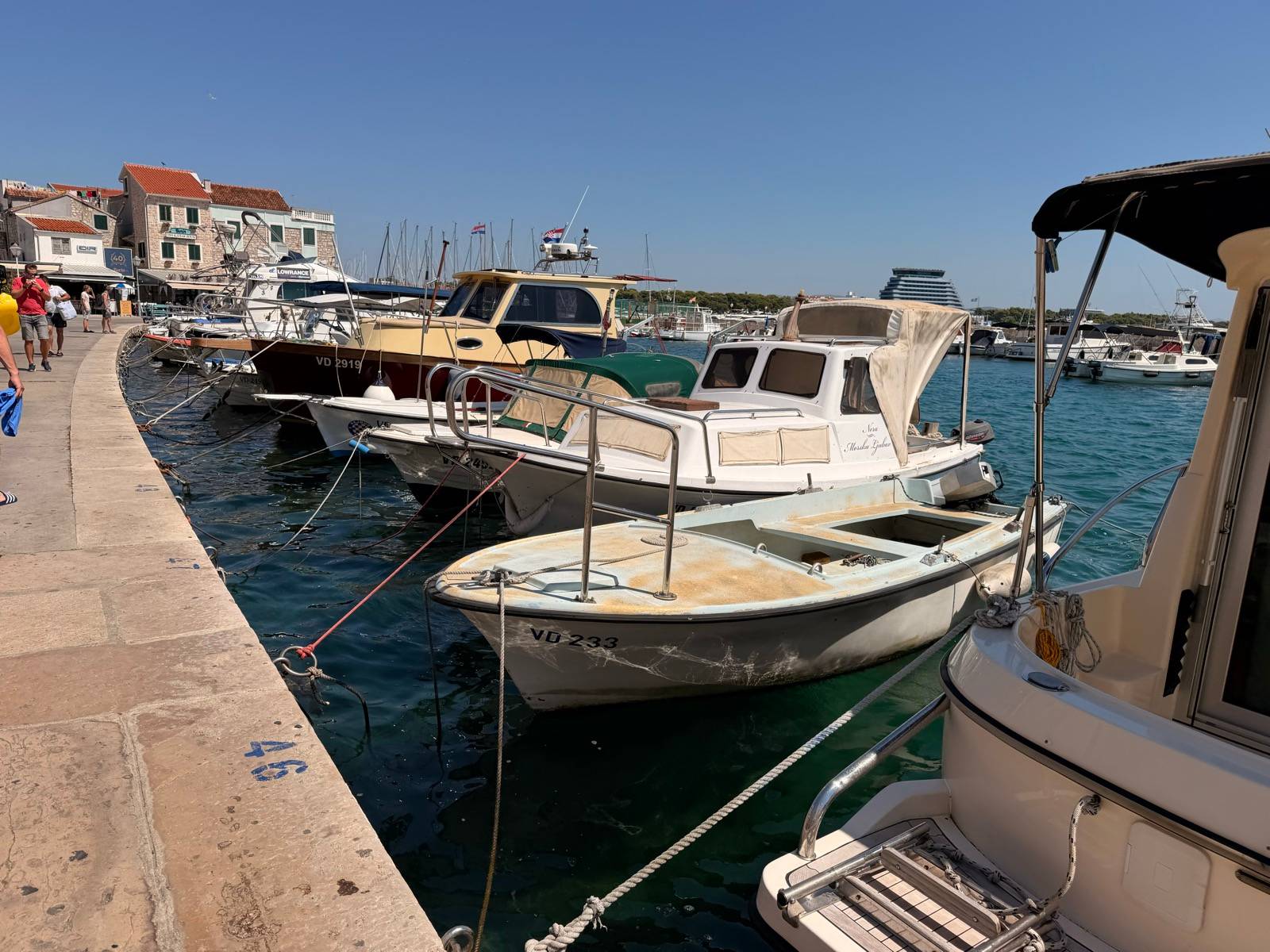
Vodice is the honest beach town of the Šibenik riviera: a harbour village that grew into a resort and never pretended otherwise, with a long promenade of cafes, family pebble beaches on both sides of the marina and a summer evening scene that fills the waterfront without needing a festival. The name comes from the freshwater springs that once supplied ships.

Its real card is position: Šibenik and its cathedral are fifteen minutes away, Krka's waterfalls half an hour, and boat lines fan out to Prvić and the nearby islands from the town quay.

Vodice: what to see, and what it is actually for

Vodice on video

A concert on the waterfront

Croatia AtlasVodice

Waves along the Vodice waterfront

Croatia AtlasVodice

The sea against the quay wall

Croatia AtlasVodice

The mole and the marina

Croatia AtlasVodice

The palm-lined walk

Croatia AtlasVodice

Parrots on the promenade

Croatia AtlasVodice

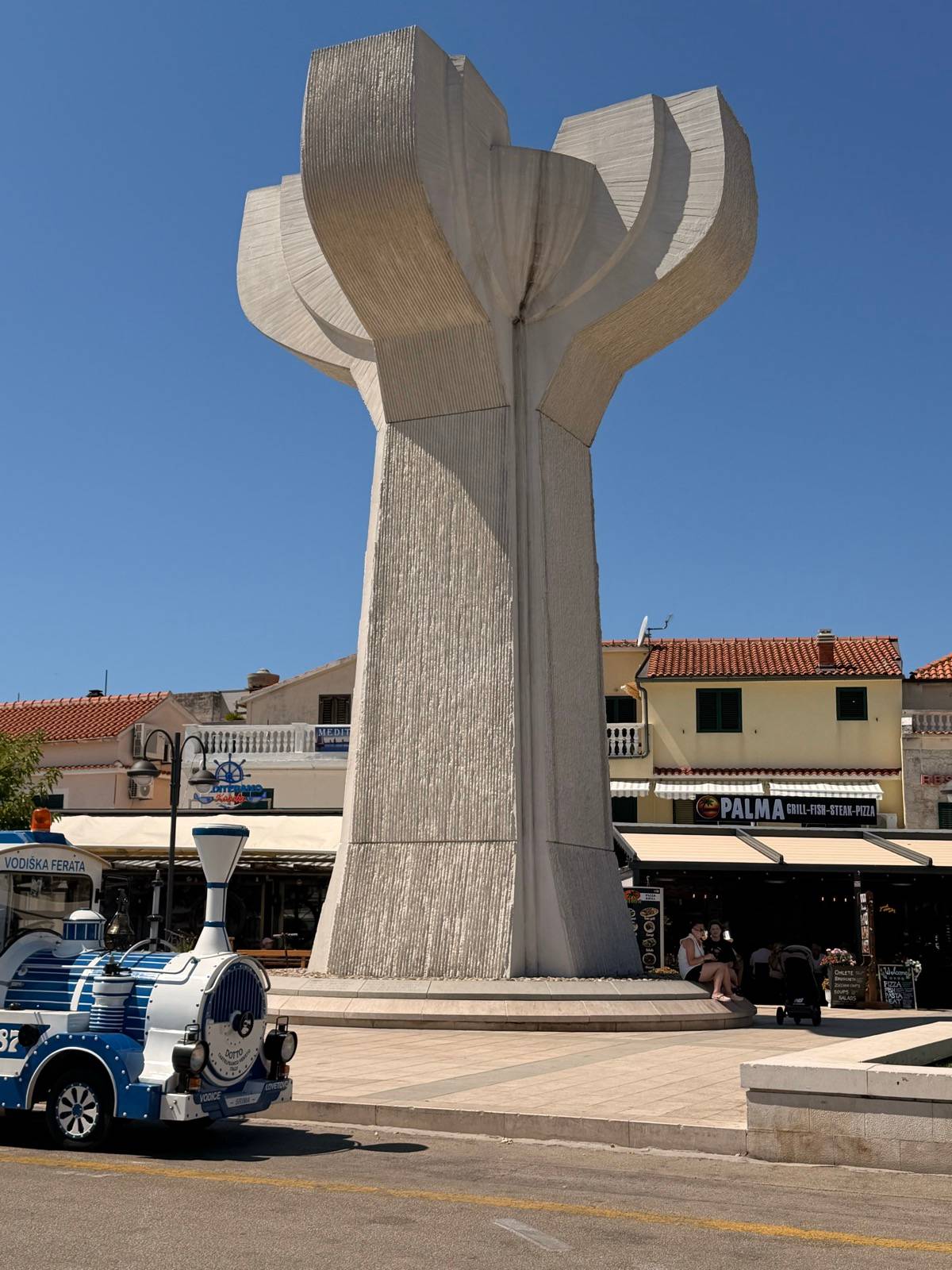
The main square at midday

Croatia AtlasVodice

Beaches in Vodice

The Blue Beach
Legendary
Activity

The Blue Beach

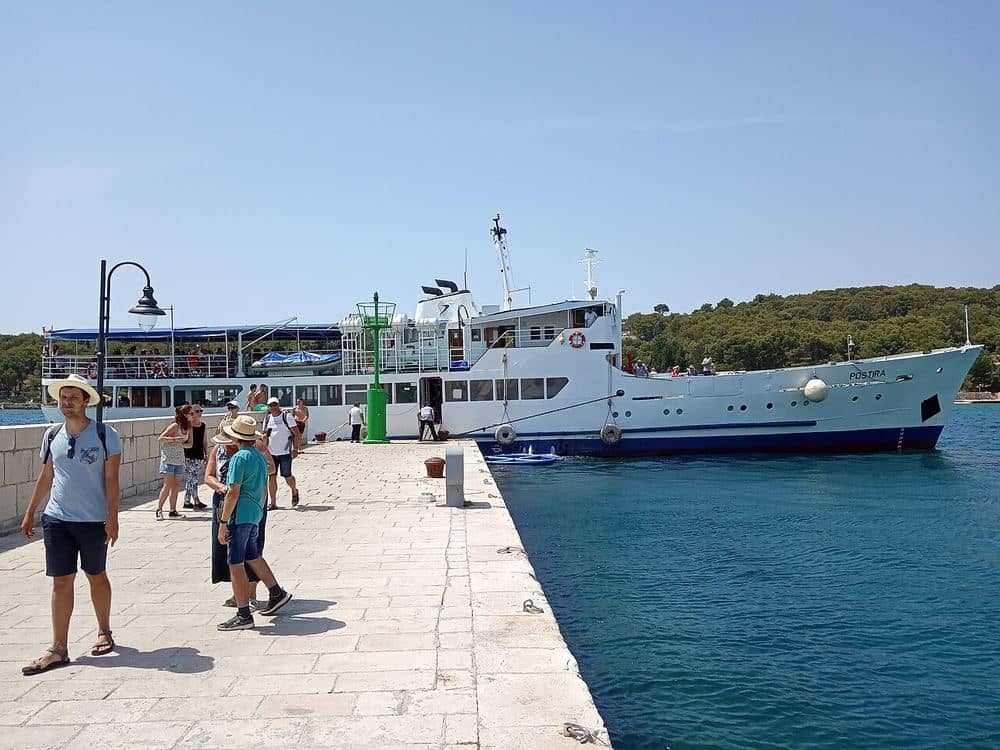
The main town beach west of the centre: pebbles, concrete platforms and a shallow entry.

Photo: Adam Zivner / CC BY 2.5
The Blue Beach
Activity Legendary

The Blue Beach

The Blue Beach is what Vodice offers instead of sand, and it is worth knowing exactly what you get. The shore is a run of pebbles broken up by concrete platforms, with showers, cabins, bars and sunbeds for hire, and the sea drops away gradually so children can stand a long way out. Behind the beach runs a belt of pines, the only real shade nearby and the reason the first morning spots are taken there.

The beach flies a Blue Flag, the international mark for water quality and facilities, and that shows in the upkeep. It also shows in the crowds. In mid July and August, between 11:00 and 16:00, there is effectively no free space, and parking on the road above fills by nine in the morning. Come before ten or after five and you get the same beach without a queue at the shower. The water is warmest in August and stays comfortable into mid September, when the beach loosens up and becomes what it was before tourism: an ordinary town shore.

Insider tip

The shade under the pines behind the beach is free and goes first; the sunbeds out in the sun stay available all day.

Photo: Adam Zivner / CC BY 2.5

Our tips

What we would do around Vodice

Day trips within reach of Vodice, plus the routes and quiet corners our editors keep coming back to.

Hidden gems in Vodice

The Blue Beach
Legendary
Activity

The Blue Beach

The main town beach west of the centre: pebbles, concrete platforms and a shallow entry.

Photo: Adam Zivner / CC BY 2.5

The Blue Beach
Activity Legendary

The Blue Beach

The Blue Beach is what Vodice offers instead of sand, and it is worth knowing exactly what you get. The shore is a run of pebbles broken up by concrete platforms, with showers, cabins, bars and sunbeds for hire, and the sea drops away gradually so children can stand a long way out. Behind the beach runs a belt of pines, the only real shade nearby and the reason the first morning spots are taken there.

The beach flies a Blue Flag, the international mark for water quality and facilities, and that shows in the upkeep. It also shows in the crowds. In mid July and August, between 11:00 and 16:00, there is effectively no free space, and parking on the road above fills by nine in the morning. Come before ten or after five and you get the same beach without a queue at the shower. The water is warmest in August and stays comfortable into mid September, when the beach loosens up and becomes what it was before tourism: an ordinary town shore.

Insider tip

The shade under the pines behind the beach is free and goes first; the sunbeds out in the sun stay available all day.

Photo: Adam Zivner / CC BY 2.5

Prvić Luka and Faust Vrančić
Legendary
Sight

Prvić Luka and Faust Vrančić

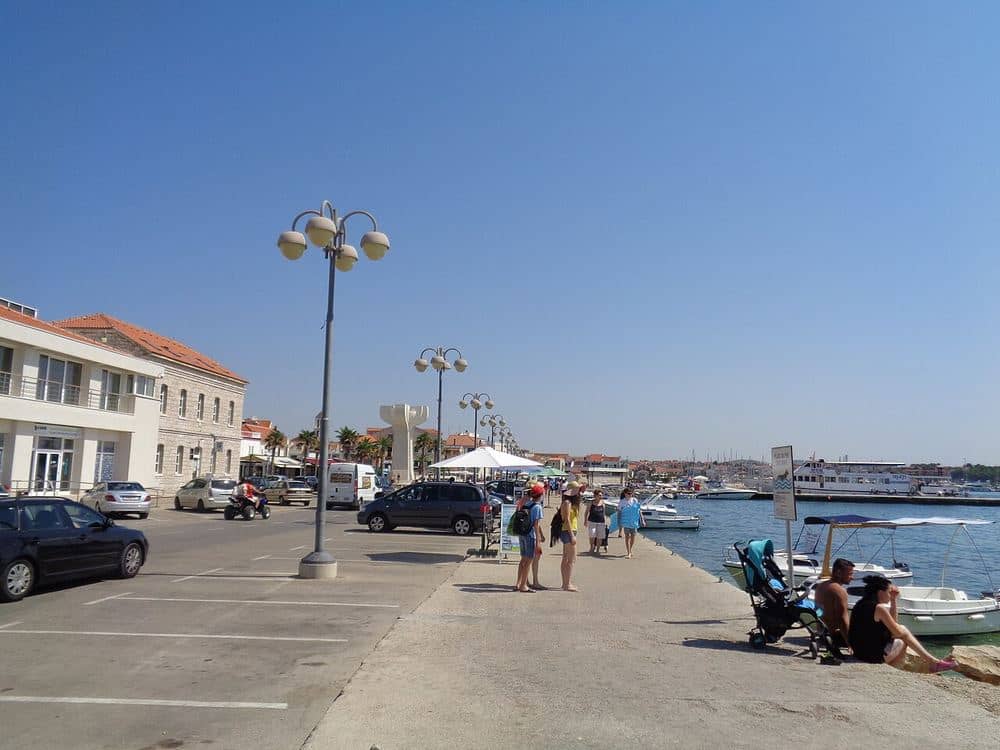
A car-free island village about twenty minutes by boat, with the grave of the man who drew the parachute.

Photo: JiriMatejicek / CC BY-SA 4.0
Prvić Luka and Faust Vrančić
Sight Legendary

Prvić Luka and Faust Vrančić

Prvić Luka is the smaller of the two villages on the island of Prvić, and the whole island has not a single car. Boats from Vodice call several times a day and the crossing takes about twenty minutes, which makes this the easiest island trip on this stretch of coast: no ferry, no booking, just a ticket at the landing.

In the church of Our Lady of Mercy lies Faust Vrančić, the 16th-century polymath from Šibenik. His book Machinae Novae of 1615 shows some fifty machines, among them a man descending from a tower on cloth stretched over a frame: that drawing, called Homo Volans, is one of the earliest depictions of a parachute. Vrančić was also a bishop and secretary to Emperor Rudolf II, and the dictionary he compiled is among the first for Croatian.

The village takes half an hour to see: the landing, the church, a handful of konobas and a narrow path that crosses the hill to Šepurine. A memorial centre devoted to Vrančić shows models of his machines and is the only real museum on the island.

Insider tip

Check the last boat back before you set out: outside the season the gap can be several hours, and the island has no accommodation at short notice.

Photo: JiriMatejicek / CC BY-SA 4.0

The riva
Legendary
Sight

The riva

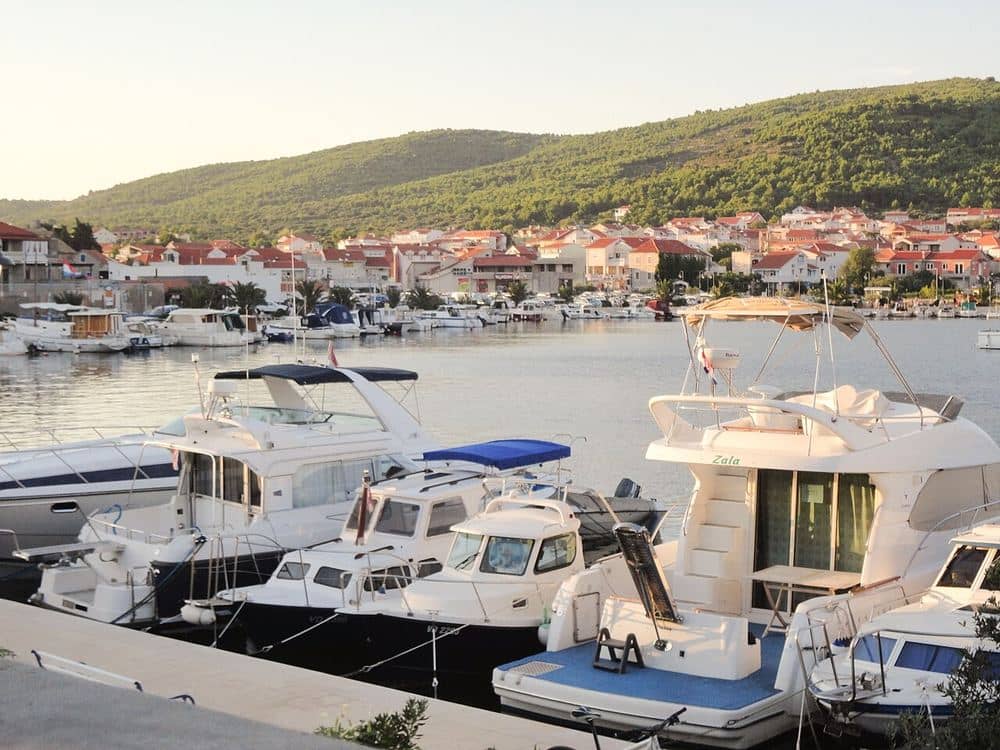
The seafront promenade that doubles as the town's main square, market and meeting point.

Photo: Silverije / CC BY-SA 4.0
The riva
Sight Legendary

The riva

The Vodice riva runs for about a kilometre, from the landing where the boats for Prvić leave to the entrance of the ACI marina, and the whole town faces it. The day on it has a clear rhythm. In the morning it is a workplace: fishermen unload the night's catch, the market opens, delivery vans are allowed in only until nine. Around midday it empties because everyone is on the beaches west of the centre. Towards evening it fills again and turns into what Dalmatians call the šetnja: you walk slowly, from one end to the other and back, meet people you know and stop every fifty metres.

The stone houses behind the riva are lower and plainer than in Šibenik fifteen kilometres east, and that is no accident. Vodice was never an episcopal or noble seat but a fishing and farming village that serious tourism only found in the 1950s. So the old core has no palaces, just rows of two-storey houses with outside stairs and balconies, and the oldest part gives itself away only by the width of the streets: the narrower they are, the older.

Insider tip

For a quieter walk head west towards Plitka punta: the eastern end by the marina is always busier, and the western one leads straight to the beaches.

Photo: Silverije / CC BY-SA 4.0

Explore Vodice by category

Sights

10
Prvić Luka and Faust Vrančić
Legendary
Sight

Prvić Luka and Faust Vrančić

A car-free island village about twenty minutes by boat, with the grave of the man who drew the parachute.

Photo: JiriMatejicek / CC BY-SA 4.0

Prvić Luka and Faust Vrančić
Sight Legendary

Prvić Luka and Faust Vrančić

Prvić Luka is the smaller of the two villages on the island of Prvić, and the whole island has not a single car. Boats from Vodice call several times a day and the crossing takes about twenty minutes, which makes this the easiest island trip on this stretch of coast: no ferry, no booking, just a ticket at the landing.

In the church of Our Lady of Mercy lies Faust Vrančić, the 16th-century polymath from Šibenik. His book Machinae Novae of 1615 shows some fifty machines, among them a man descending from a tower on cloth stretched over a frame: that drawing, called Homo Volans, is one of the earliest depictions of a parachute. Vrančić was also a bishop and secretary to Emperor Rudolf II, and the dictionary he compiled is among the first for Croatian.

The village takes half an hour to see: the landing, the church, a handful of konobas and a narrow path that crosses the hill to Šepurine. A memorial centre devoted to Vrančić shows models of his machines and is the only real museum on the island.

Insider tip

Check the last boat back before you set out: outside the season the gap can be several hours, and the island has no accommodation at short notice.

Photo: JiriMatejicek / CC BY-SA 4.0

The riva
Legendary
Sight

The riva

The seafront promenade that doubles as the town's main square, market and meeting point.

Photo: Silverije / CC BY-SA 4.0

The riva
Sight Legendary

The riva

The Vodice riva runs for about a kilometre, from the landing where the boats for Prvić leave to the entrance of the ACI marina, and the whole town faces it. The day on it has a clear rhythm. In the morning it is a workplace: fishermen unload the night's catch, the market opens, delivery vans are allowed in only until nine. Around midday it empties because everyone is on the beaches west of the centre. Towards evening it fills again and turns into what Dalmatians call the šetnja: you walk slowly, from one end to the other and back, meet people you know and stop every fifty metres.

The stone houses behind the riva are lower and plainer than in Šibenik fifteen kilometres east, and that is no accident. Vodice was never an episcopal or noble seat but a fishing and farming village that serious tourism only found in the 1950s. So the old core has no palaces, just rows of two-storey houses with outside stairs and balconies, and the oldest part gives itself away only by the width of the streets: the narrower they are, the older.

Insider tip

For a quieter walk head west towards Plitka punta: the eastern end by the marina is always busier, and the western one leads straight to the beaches.

Photo: Silverije / CC BY-SA 4.0

Tribunj
Legendary
Sight

Tribunj

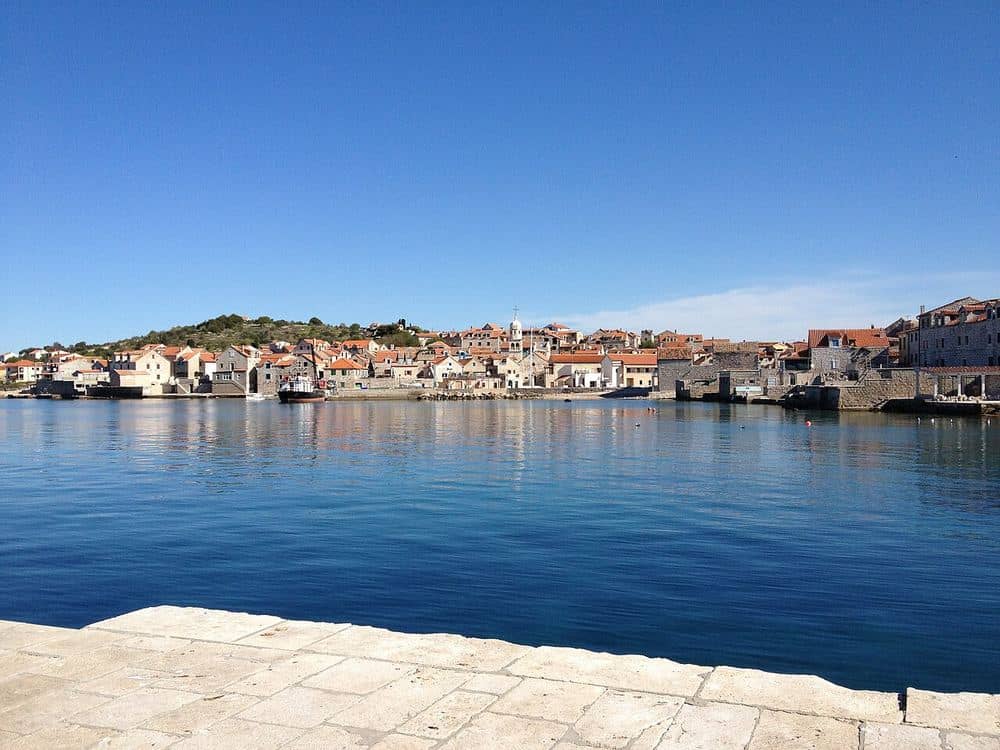
The neighbouring fishing village on an islet, its old core walkable in half an hour.

Photo: Gsdocent1 / CC BY-SA 4.0
Tribunj
Sight Legendary

Tribunj

Tribunj lies three kilometres west of Vodice and looks like what Vodice no longer is. The old core sits on an islet joined to the mainland by a stone bridge, the streets are too narrow for a car and everything spirals up towards the top, where the church of St Nicholas looks out over the channel and the islands. Below, along the riva, runs a row of konobas where fish is still grilled in front of the guest.

The village is known for its donkey race, held every August since 1972 and lasting one afternoon. Donkeys once carried loads up to the vineyards on the surrounding hills, and when tractors replaced them they were out of work; the race began as a joke and turned into the main annual event, filling the place to the last corner.

Unlike Vodice, Tribunj has few beaches and almost no tourist infrastructure beyond the waterfront, so this is somewhere you come for two hours rather than a day.

Insider tip

Park on the mainland before the bridge: there is no space inside the old core and getting back out in season takes a while.

Photo: Gsdocent1 / CC BY-SA 4.0

Prvić Šepurine
Hidden gem
Sight

Prvić Šepurine

The second village on Prvić, with a long pebble shore and not a single car.

Photo: Hschermer / CC BY-SA 4.0
Prvić Šepurine
Sight Hidden gem

Prvić Šepurine

Sepurine is the second of two settlements on the island of Prvic and the one that has kept more of everyday life: a row of stone houses along a long shore, with the church of the Assumption on a rise, narrow streets without a single car and about a hundred residents who stay through winter. On Prvic there are no roads or vehicles, everything is carried by hand or by cart, and precisely that makes the place what it is: quiet in a way hard to find elsewhere on the Adriatic. The shore is long and accessible, with concrete platforms and shingle, and the sea here is clean because there is neither a harbour nor traffic. Sepurine is reached by boat from Vodice or Sibenik in some twenty minutes, and to neighbouring Prvic Luka one walks across the peninsula in half an hour through olives and dry-stone walls. In the village work two taverns and a shop, bring the rest. For a day of escape from the Vodice bustle this is the nearest address: boat, bathing, lunch by the sea and a return on the afternoon line.

Insider tip

Bring water and cash: there is no cash machine, and in summer the konobas fill the moment a boat arrives.

Photo: Hschermer / CC BY-SA 4.0

Church of the Finding of the Holy Cross
Sight

Church of the Finding of the Holy Cross

The 18th-century parish church in the old core, the largest building in it.

Photo: Adam Zivner / CC BY 2.5
Church of the Finding of the Holy Cross
Sight

Church of the Finding of the Holy Cross

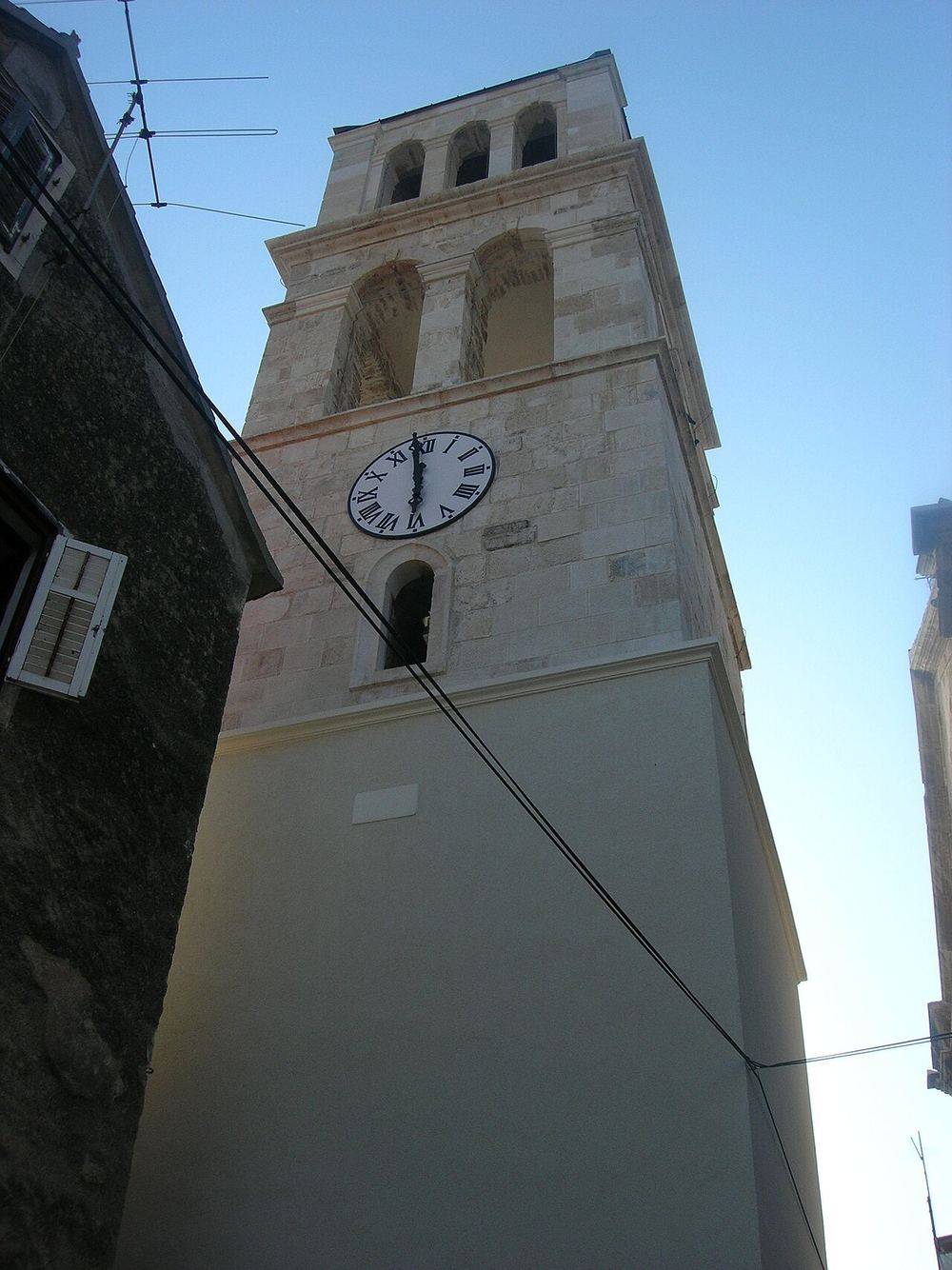
The parish church of the Finding of the Holy Cross was built in the mid 18th century on the site of an older church and is the largest building in the old core. The front is plain and baroque, without the ornament of the Šibenik churches, because a fishing parish built it from its own means. The interior follows the same logic: marble altars, a wooden choir and little that is surplus.

The bell tower is visible from the whole riva and is the most useful landmark in town: the narrow streets of the old part all lead towards it, so the way back is never lost. The church still holds the local calendar. On the Assumption in mid August a procession moves through the core, and on the feast of the Holy Cross in September the whole town gathers, including those who moved to Šibenik and Zagreb long ago.

Insider tip

The interior is mostly open around mass times; the morning mass is the safest bet for a quiet look.

Photo: Adam Zivner / CC BY 2.5

Aquarium and maritime heritage museum
Sight

Aquarium and maritime heritage museum

A small collection of Adriatic species and fishing gear, steps from the riva.

Photo: Kristijan Bezjak / Croatia Atlas

Aquarium and maritime heritage museum
Sight

Aquarium and maritime heritage museum

The aquarium and museum of maritime tradition is a small house by the waterfront that joins two stories of Vodice in one space: the sea as it is beneath the surface and the sea as it once was a livelihood. In the aquarium part are tanks with Adriatic species, octopuses, morays, scorpionfish, crabs and shells, all from the nearby coves, with captions explaining where each species lives and how it is caught. In the museum part are displayed the tools of the Vodice fishermen and sponge divers: nets, tridents, lanterns for night fishing, a compass, diving equipment from the time when sponges were brought up on a held breath, and photographs of the town before tourism. The display is small and toured in half an hour, which makes it ideal for families with children and for a rainy hour. It lies right by the waterfront, the ticket is modest, and it works through the season. For a child who spent the morning on the beach, this is the best way to connect what they saw with a mask to what the sea actually is.

Insider tip

Opening hours shift outside the season; in September check at the door before planning around it.

Photo: Kristijan Bezjak / Croatia Atlas

4 more places
  • Okit hill and Our Lady of Carmel
  • The Čorić tower
  • Memorial to the victims of Communist Yugoslavia
  • Memorial to the defenders of the Homeland War

Activities

8
The Blue Beach
Legendary
Activity

The Blue Beach

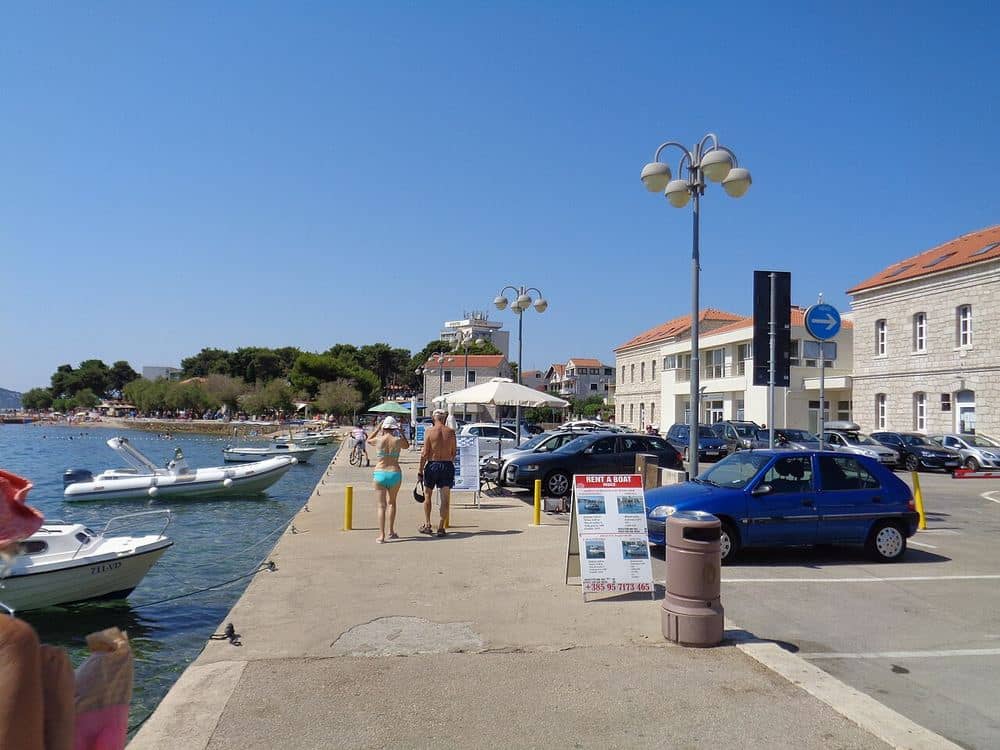
The main town beach west of the centre: pebbles, concrete platforms and a shallow entry.

Photo: Adam Zivner / CC BY 2.5
The Blue Beach
Activity Legendary

The Blue Beach

The Blue Beach is what Vodice offers instead of sand, and it is worth knowing exactly what you get. The shore is a run of pebbles broken up by concrete platforms, with showers, cabins, bars and sunbeds for hire, and the sea drops away gradually so children can stand a long way out. Behind the beach runs a belt of pines, the only real shade nearby and the reason the first morning spots are taken there.

The beach flies a Blue Flag, the international mark for water quality and facilities, and that shows in the upkeep. It also shows in the crowds. In mid July and August, between 11:00 and 16:00, there is effectively no free space, and parking on the road above fills by nine in the morning. Come before ten or after five and you get the same beach without a queue at the shower. The water is warmest in August and stays comfortable into mid September, when the beach loosens up and becomes what it was before tourism: an ordinary town shore.

Insider tip

The shade under the pines behind the beach is free and goes first; the sunbeds out in the sun stay available all day.

Photo: Adam Zivner / CC BY 2.5

The western seafront path
Hidden gem
Activity

The western seafront path

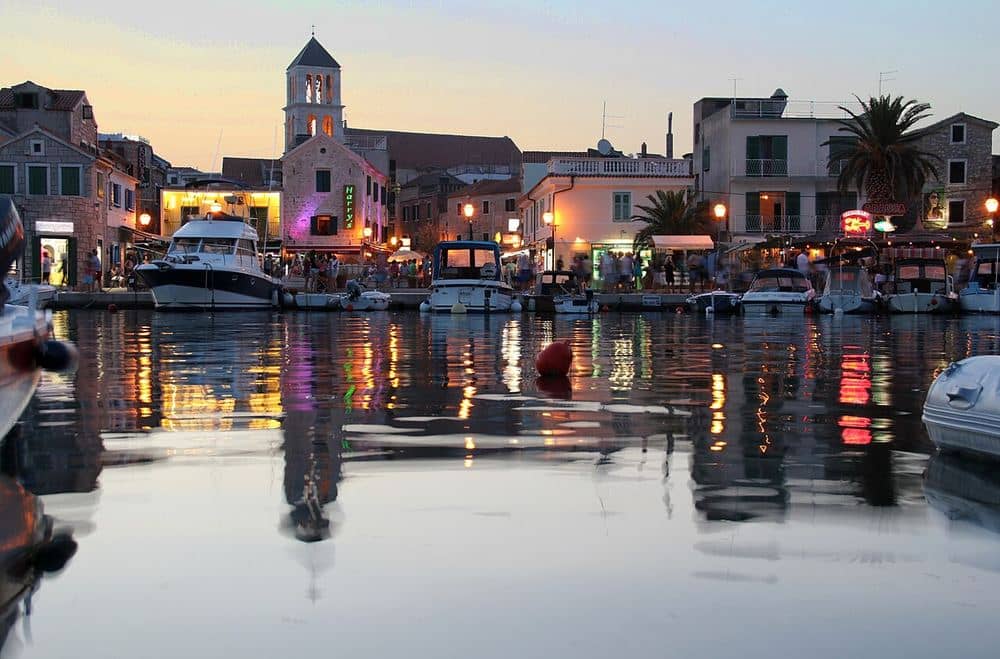
A concrete path along the water linking every town beach without a single car.

Photo: Silverije / CC BY-SA 4.0
The western seafront path
Activity Hidden gem

The western seafront path

The western coastal path binds all of Vodice's town beaches into one line: a concrete track by the very sea that leads from the waterfront westward, past the Blue Beach, Plitka punta and on toward Zamalin and Tribunj, without a single step and without traffic. That is precisely its greatest value: the path is level along its whole length, so it is passable with a pram, a bicycle and for people who walk with difficulty, which is rarely found on the Adriatic. Along the path are entries into the sea every fifty metres or so, showers, benches and bars, and pines give shade in places. In the morning this is the locals' running and cycling route, by day the way to the beaches, and in the evening a promenade on which the whole town is met. To Tribunj it is about an hour's walk, and on the way you can drop into the sea as often as you wish. For families it is the easiest way to organise a day without a car: everything needed is along the path.

Insider tip

The whole western stretch to Plitka punta takes about twenty minutes one way and is flat the entire distance.

Photo: Silverije / CC BY-SA 4.0

ACI marina Vodice
Activity

ACI marina Vodice

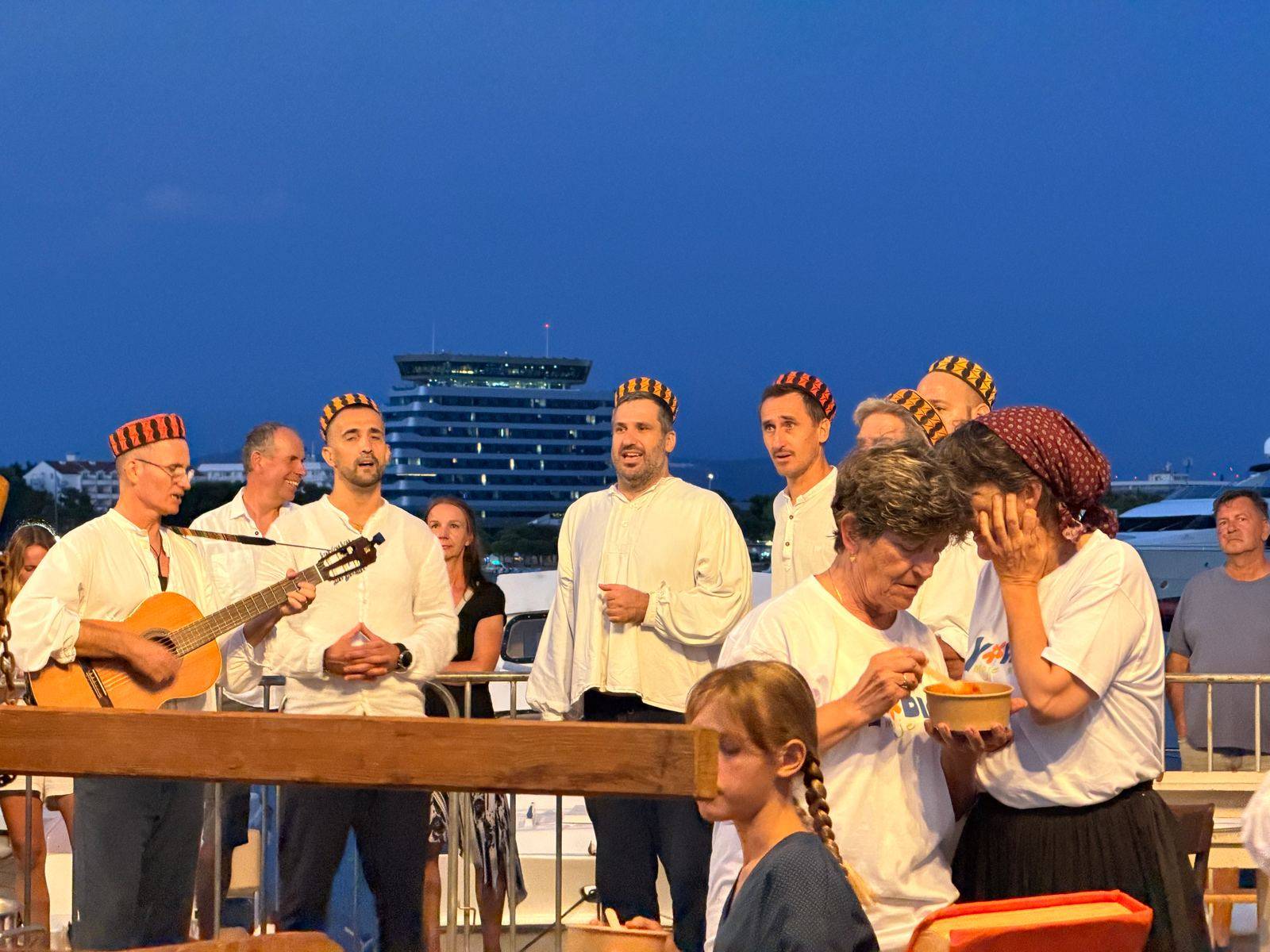
One of the larger marinas on the Adriatic, at the eastern end of the town's riva.

Photo: Tadam / CC BY-SA 3.0
ACI marina Vodice
Activity

ACI marina Vodice

The ACI marina Vodice is one of the largest marinas of the Croatian Adriatic and the reason the town does not empty out in winter: nearly four hundred berths in the water and dry berths for several hundred vessels, with a crane, a service yard, a fuel station and staff who work all year. The marina lies at the eastern end of the waterfront, sheltered by a breakwater, and from its piers departs much of the charter fleet that sails toward the Kornati in summer; Vodice is for many crews the first and last harbour of the journey. For the visitor without a boat the marina is a pleasant walk: the piers are passable to a certain point, the masts in a row give the town's best frame, and the restaurant and cafés by the marina work off-season too, often with better prices than on the waterfront. From here one also boards excursions toward the Kornati, the Krka and the islets of Prvic and Zlarin; tickets are bought on the pier or in the agencies along the waterfront. In the evening, when the lights come on in the water, the marina is the most photogenic part of Vodice.

Insider tip

From the end of the pontoon the view back at the town is best at sunset, with no ticket and no crowd.

Photo: Tadam / CC BY-SA 3.0

5 more places
  • Zamalin beach
  • Mulo Dvorine beach, Srima
  • Trstevica beach
  • Plitka punta beach
  • Srima

Food & drink

1
1 more places
  • Fish market and green market

Vodice: quick answers

Who is Vodice for?
Families and anyone who wants a lively but uncomplicated beach week with day trips: flat promenade, gradual pebble entries, plenty of apartments, and Šibenik, Krka and the islands within half an hour. The town grew up around freshwater springs, and two wells once stood on the square below the parish church of the Holy Cross. The baroque master Ivan Skok worked on the church from 1725, and it was consecrated in 1760. Čorić's tower, a defensive tower linked to a building contract of 1533, still stands in the centre.
Which beach should I pick?
The Blue Flag town beaches by the hotels for facilities and shallow water; the Srima side for more room and a quieter afternoon. Everything is walkable along the shore path.
Is Vodice loud in summer?
The harbour front is lively until late in July and August, with bars and one well-known club; three streets back it is family-quiet. If silence matters, choose the Srima end or come in June or September. Srima, which has long grown together with Vodice, has the remains of a late antique double basilica at Prižba. Boats from the town quay run to the island of Prvić. In Prvić Luka, a memorial centre opened in 2012 is dedicated to Faust Vrančić, the Šibenik-born inventor best known for his parachute design and author of the first printed Croatian dictionary, who is buried in the local church of Our Lady of Mercy.

CroVenture App

Explore Vodice with CroVenture

Places unlock as you reach them, with a passport that fills up as you explore.