Skip to content
All cities

Motovun. Things to do, map and hidden gems

39 curated places· 5 hidden gems
Motovun
Photo: Arne Müseler / CC BY-SA 3.0 de

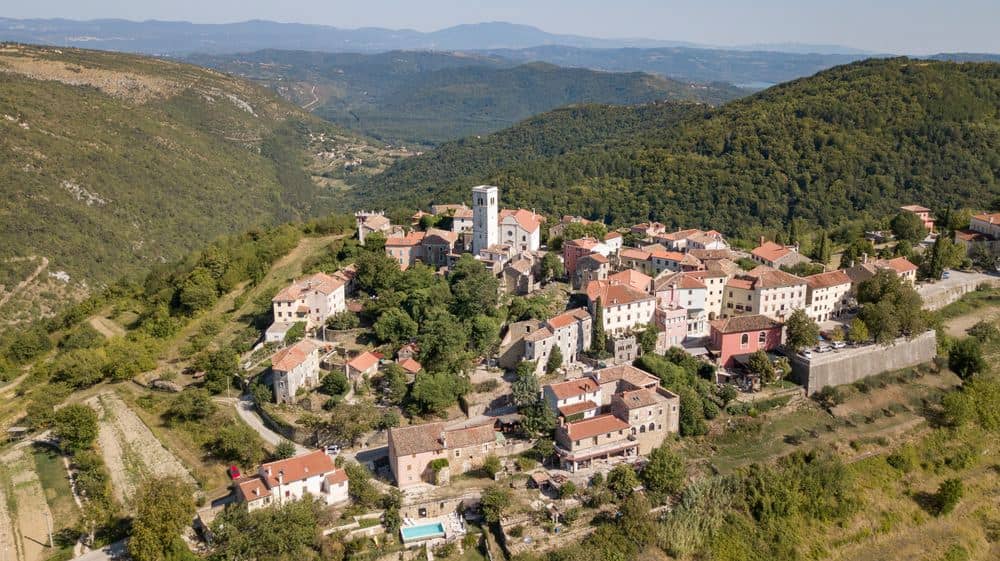
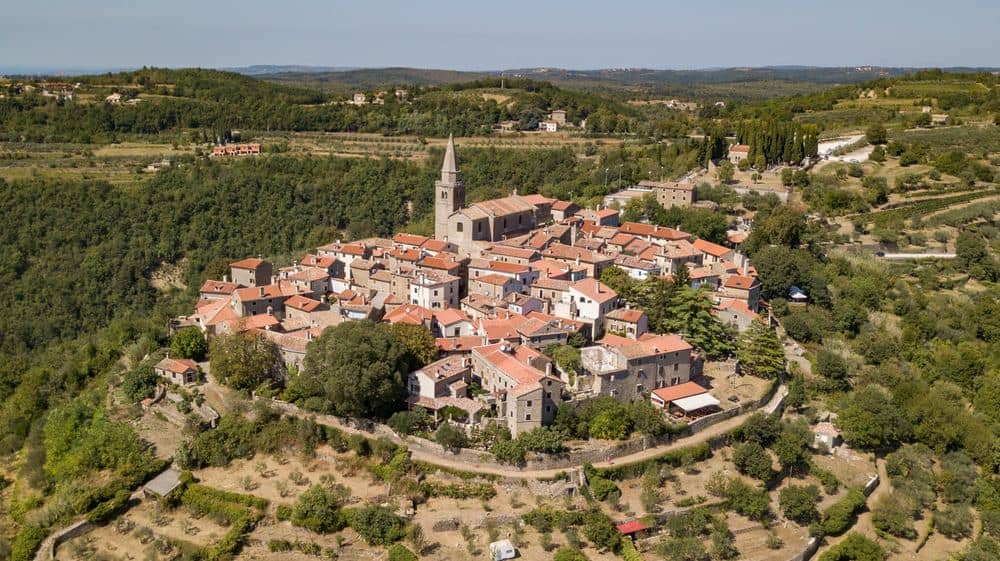
Motovun is the hill town that stands for all of inland Istria: a walled acropolis of stone above the Mirna valley, reached by a steep lane and 1,052 steps if you take them all, with a rampart walk that surveys vineyards in every direction. Below it grows the Motovun forest, home of the white and black truffles that built the region's kitchen.

In late July the Motovun Film Festival turns the whole hilltop into an open-air cinema, the one week when the village of a few hundred people hosts tens of thousands.

What to see in Motovun: ramparts, truffle forest and the Parenzana

The next 7 days

Weather data by Open-Meteo.com

Opening hours and prices

The places we keep opening hours and price levels for. Times change with the season, so treat the official page as the last word.

PlaceOpening hoursPriceOfficial page
Žbevnica (Ćićarija)Always open; check access, weather, park rules and daylight before hiking.--

Climate month by month

Ten-year averages for Motovun, so you can see what a month usually looks like rather than what this week happens to do.

MonthDay °CNight °CRain days
January909
February11210
March14410
April17710
May211216
June271710
July30199
August30198
September241410
October191111
November14611
December10210

Air 2015 to 2024, sea 2022 to 2024. A rain day is 1 mm or more. Data by Open-Meteo.com

Plan your visit

Motovun in a nutshell

39 places, 1 routes.

What is actually worth your time in Motovun?

Start with Grožnjan Old Town, Town Walls & Rampart Walk, and Pietrapelosa. After that it depends on what you enjoy: the guide holds 39 places in Motovun, sorted into sights, activities, food and shopping, so you can skip whole categories that bore you.

Grožnjan Old TownGrožnjan Old Town

How do you get away from the crowds in Motovun?

Follow the hidden gems: 5 places that rarely make the guidebooks, most of them a few streets off the main drag. Grožnjan Old Town, Town Walls & Rampart Walk, and Pietrapelosa are good ones to start with.

PietrapelosaPietrapelosa

No time to plan? Just follow a route.

Pick one of The Motovun Ramparts. Each walk runs stop by stop in a fixed order, so the only decision left is where to have lunch.

mini Parenzana museummini Parenzana museum
Our tips

What we would do around Motovun

Day trips within reach of Motovun, plus the routes and quiet corners our editors keep coming back to.

Motovun itineraries

  • 8 stops

    The Motovun Ramparts

    A loop on the walls above the Mirna valley

    1. Town Gate with the Venetian Lion
    2. New Gate
    3. Communal Palace
    4. Church of St. Stephen
    5. Town Walls & Rampart Walk
    6. Sunset Rampart Corner
    7. Mirna Valley Panorama
    8. Motovun Cemetery Viewpoint

Hidden gems in Motovun

Grožnjan Old Town
Legendary
Sight

Grožnjan Old Town

A hilltop old town rated among the more memorable stops to seek out in the wider Motovun area.

Photo: Arne Müseler / CC BY-SA 3.0 de

Grožnjan Old Town
Sight Legendary

Grožnjan Old Town

Groznjan is a hill town west of Motovun that after the Second World War almost emptied out: emigration reduced the population to a few dozen and the houses were left vacant. In 1965 the place was declared a town of artists and the abandoned houses were given over to painters and sculptors, and since 1969 Music Youth of Croatia has summered here with international courses, so in summer practising is heard from open windows. Today some twenty galleries and studios work in the narrow streets, and the calendar is held by a jazz festival and students' concerts. The core is small and entirely pedestrian, with the church of Saints Vitus, Modestus and Crescentia, a loggia and a lookout toward the sea. From Motovun it is nineteen kilometres; come in the afternoon and stay for a concert.

Photo: Arne Müseler / CC BY-SA 3.0 de

Pietrapelosa
Hidden gem
Sight

Pietrapelosa

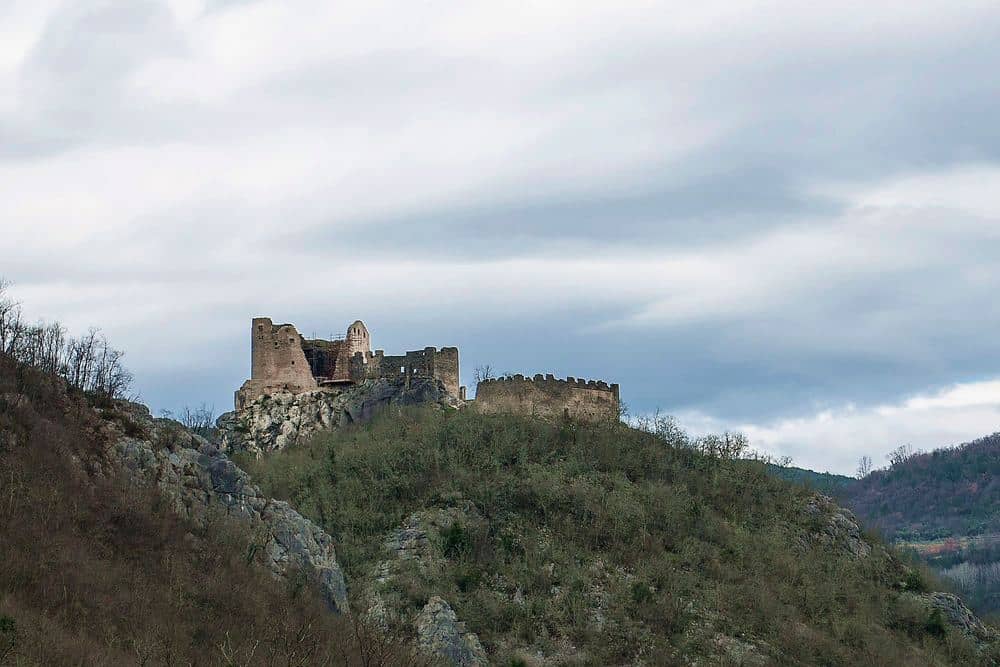
A medieval castle in the Istrian hinterland, now in ruins.

Photo: Dinko Gubic / CC BY-SA 3.0

Pietrapelosa
Sight Hidden gem

Pietrapelosa

Pietrapelosa is the ruin of a medieval castle on a rocky ridge above the Bracana canyon, north-east of Motovun, and the name in Italian means hairy stone, after the vegetation covering the white rocks around the fortress. The castle is mentioned as early as the beginning of the 12th century and through the whole Middle Ages was the centre of a lordship on the border between the Patriarchate of Aquileia and Venetian territory, so it changed masters several times; from the 15th century the Gravisi family held it. It was abandoned in the 18th century and has decayed since, yet the walls, a tower and part of the defensive ring still stand on the rock that drops vertically toward the river. A marked path leads to the ruin from the road near Sovinjak, a climb of some twenty minutes. The walls are unsafe and are not to be climbed; the view of the canyon is reason enough to come.

Insider tip

A forest path leads up; wear good shoes and bring water for the climb to the ruins.

Photo: Dinko Gubic / CC BY-SA 3.0

mini Parenzana museum
Hidden gem
Sight

mini Parenzana museum

A museum in Motovun with a local collection, good even on a rainy day.

Photo: Walter Della Schiava / CC BY-SA 3.0

mini Parenzana museum
Sight Hidden gem

mini Parenzana museum

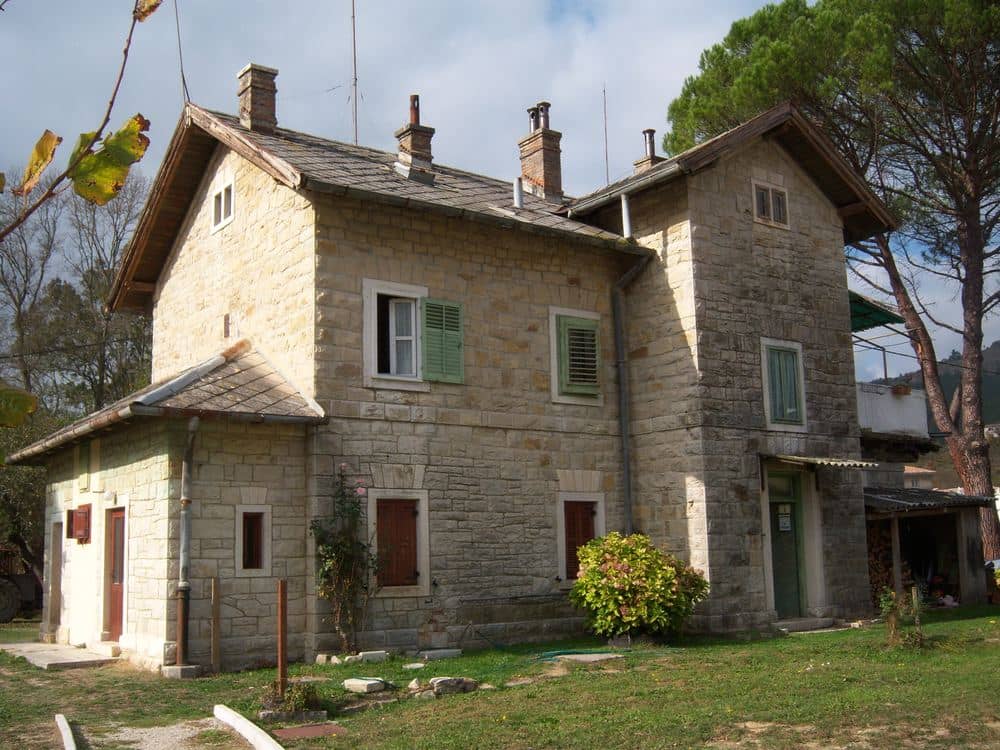
The small Parenzana museum in Livade, on the valley floor below Motovun, keeps what remained of the narrow-gauge railway after the rails were carried off: photographs of stations and trains, timetables, tickets, tools, signalling devices, name boards and models showing the route from Trieste to Porec. The collection arose from private initiative, out of objects people kept in their houses for decades, and that is precisely what gives it value: most of this did not end up in state museums but in drawers. Alongside the exhibits it is explained why the line was closed in 1935, how goods were transhipped and how long the journey really took. The museum is small and the visit takes half an hour, and it stands right by the cycle trail, so it is a logical break in the middle of a ride. It works seasonally, out of season announce your arrival.

Insider tip

Check the opening hours ahead; small museums keep short hours off-season.

Photo: Walter Della Schiava / CC BY-SA 3.0

Explore Motovun by category

Sights

19
Grožnjan Old Town
Legendary
Sight

Grožnjan Old Town

A hilltop old town rated among the more memorable stops to seek out in the wider Motovun area.

Photo: Arne Müseler / CC BY-SA 3.0 de

Grožnjan Old Town
Sight Legendary

Grožnjan Old Town

Groznjan is a hill town west of Motovun that after the Second World War almost emptied out: emigration reduced the population to a few dozen and the houses were left vacant. In 1965 the place was declared a town of artists and the abandoned houses were given over to painters and sculptors, and since 1969 Music Youth of Croatia has summered here with international courses, so in summer practising is heard from open windows. Today some twenty galleries and studios work in the narrow streets, and the calendar is held by a jazz festival and students' concerts. The core is small and entirely pedestrian, with the church of Saints Vitus, Modestus and Crescentia, a loggia and a lookout toward the sea. From Motovun it is nineteen kilometres; come in the afternoon and stay for a concert.

Photo: Arne Müseler / CC BY-SA 3.0 de

Pietrapelosa
Hidden gem
Sight

Pietrapelosa

A medieval castle in the Istrian hinterland, now in ruins.

Photo: Dinko Gubic / CC BY-SA 3.0

Pietrapelosa
Sight Hidden gem

Pietrapelosa

Pietrapelosa is the ruin of a medieval castle on a rocky ridge above the Bracana canyon, north-east of Motovun, and the name in Italian means hairy stone, after the vegetation covering the white rocks around the fortress. The castle is mentioned as early as the beginning of the 12th century and through the whole Middle Ages was the centre of a lordship on the border between the Patriarchate of Aquileia and Venetian territory, so it changed masters several times; from the 15th century the Gravisi family held it. It was abandoned in the 18th century and has decayed since, yet the walls, a tower and part of the defensive ring still stand on the rock that drops vertically toward the river. A marked path leads to the ruin from the road near Sovinjak, a climb of some twenty minutes. The walls are unsafe and are not to be climbed; the view of the canyon is reason enough to come.

Insider tip

A forest path leads up; wear good shoes and bring water for the climb to the ruins.

Photo: Dinko Gubic / CC BY-SA 3.0

mini Parenzana museum
Hidden gem
Sight

mini Parenzana museum

A museum in Motovun with a local collection, good even on a rainy day.

Photo: Walter Della Schiava / CC BY-SA 3.0

mini Parenzana museum
Sight Hidden gem

mini Parenzana museum

The small Parenzana museum in Livade, on the valley floor below Motovun, keeps what remained of the narrow-gauge railway after the rails were carried off: photographs of stations and trains, timetables, tickets, tools, signalling devices, name boards and models showing the route from Trieste to Porec. The collection arose from private initiative, out of objects people kept in their houses for decades, and that is precisely what gives it value: most of this did not end up in state museums but in drawers. Alongside the exhibits it is explained why the line was closed in 1935, how goods were transhipped and how long the journey really took. The museum is small and the visit takes half an hour, and it stands right by the cycle trail, so it is a logical break in the middle of a ride. It works seasonally, out of season announce your arrival.

Insider tip

Check the opening hours ahead; small museums keep short hours off-season.

Photo: Walter Della Schiava / CC BY-SA 3.0

New Gate
Sight

New Gate

A stone gateway through Motovun's walls, the threshold between the outer slope and the old town.

Photo: Maesi64 / CC0

New Gate
Sight

New Gate

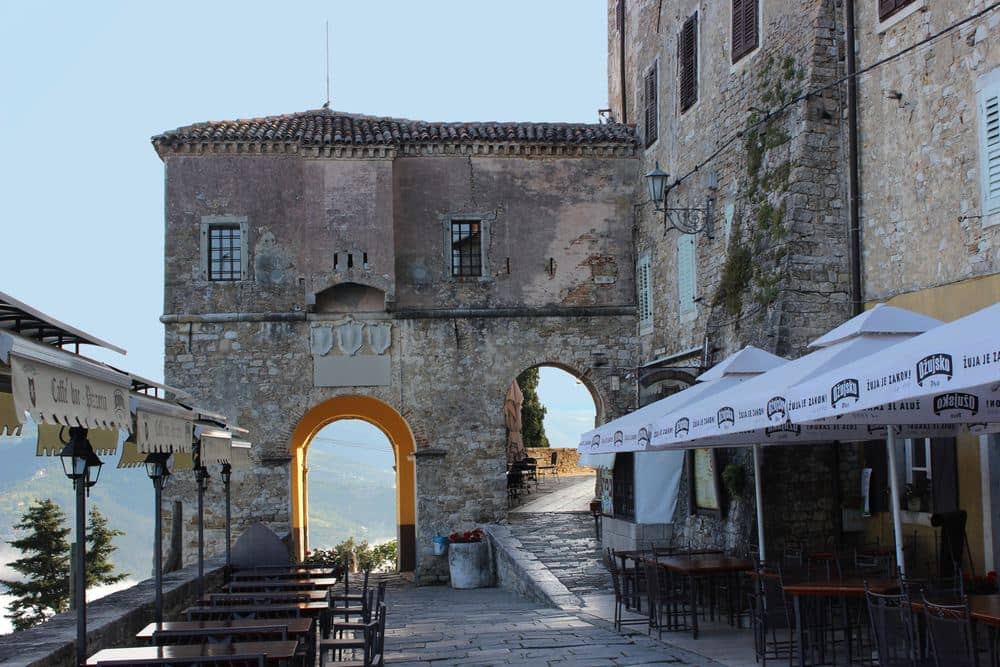
The New Gate is the second town gate of Motovun, cut through the inner defensive ring where the steep approach path breaks toward the square. It is called new because it is younger than the main gate, from the time when the town outgrew its original ring and needed an extra passage to the lower town, and on the outer side it once had a drawbridge over a ditch, of which only the seatings in the stone are visible today. The passage is narrow, roofed and winding, a form that is no accident: an attacker who broke through the first gate had to slow down and lose his interval. From inside the gate opens a view toward the bell tower, from outside toward the vineyard slope. It is reached by the rampart walk or by a side path along the houses, and in the shade of the passage almost every climb pauses in summer.

Photo: Maesi64 / CC0

Church of St John the Baptist
Sight

Church of St John the Baptist

A small church dedicated to St John the Baptist, one of the quiet religious stops in the old town.

Photo: Maesi64 / CC0

Church of St John the Baptist
Sight

Church of St John the Baptist

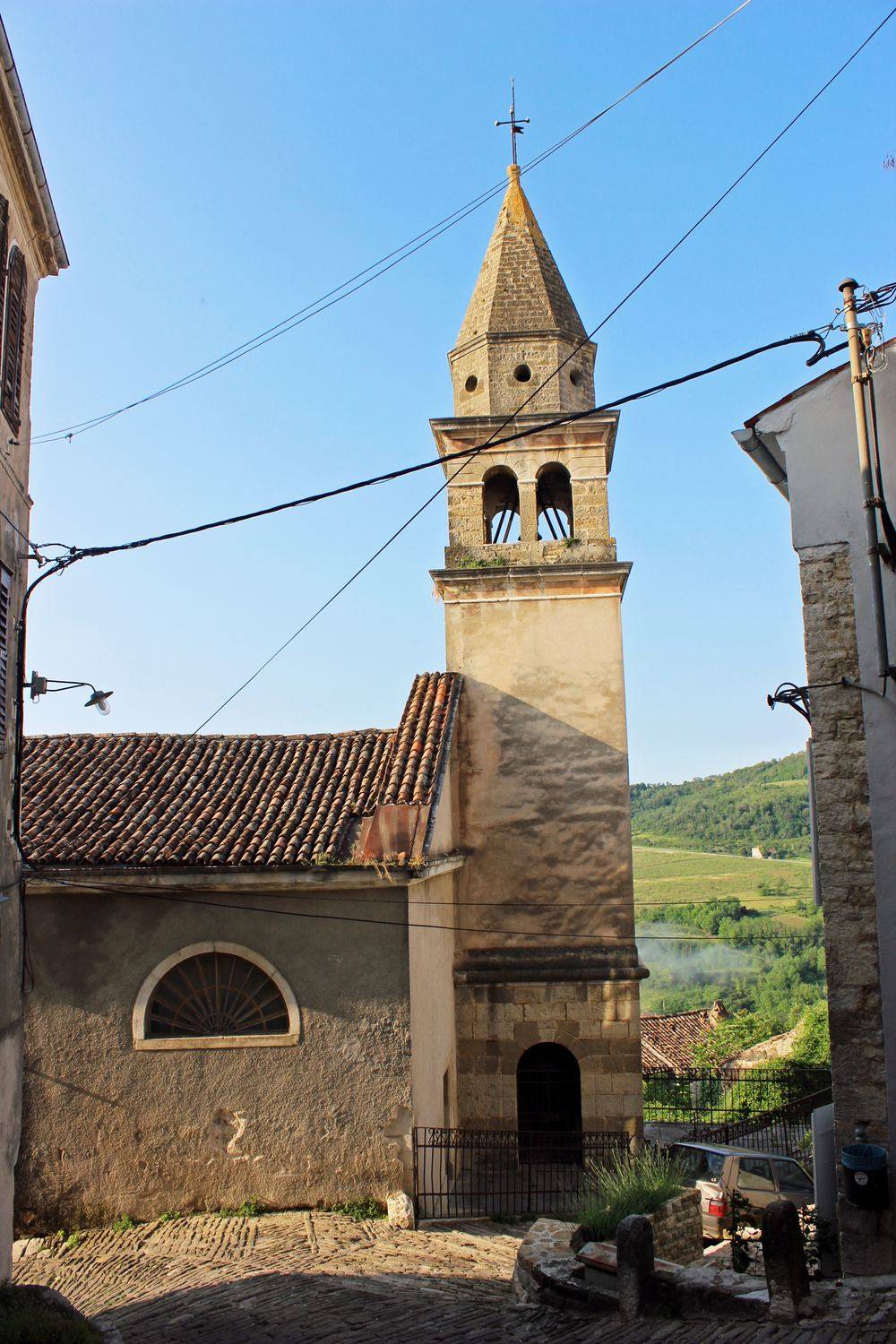
The Church of St John the Baptist stands in the lower part of Motovun, in the Gradiziol quarter that descended the slope outside the old walls, and belongs to that series of small churches built in Istrian settlements for quarters far from the parish church. The building is simple: a rectangular nave, a stone facade, a bell gable with one bell and a small square before the entrance where residents sit in the shade. John the Baptist is a frequent titular in Istria, and his feast is celebrated on 24 June, at the time when midsummer bonfires are lit in this region, a custom older than the church calendar. The church opens rarely, mainly on the feast day itself. From the main square it is a five-minute descent, and on the way you see houses that show what Motovun looked like before it became a destination.

Photo: Maesi64 / CC0

Oprtalj Old Town
Sight

Oprtalj Old Town

A hilltop old town in the Istrian interior, with its own quiet ring of stone lanes.

Photo: Arne Müseler / CC BY-SA 3.0 de

Oprtalj Old Town
Sight

Oprtalj Old Town

Oprtalj stands on a ridge north of the Mirna valley, at about three hundred and seventy metres, and from the Motovun ramparts it appears as a second town on a second hill. The settlement is medieval, with remains of walls and a gate, and at the entrance an open loggia of the 16th century receives you, with Roman and medieval stone fragments built into it, a practice common in Istria, where old stone was set into new buildings. The parish church of St George has a tall bell tower with a view, and in the surroundings stand several small churches with Gothic frescoes, among them St Roch and St John. Oprtalj is smaller and quieter than Motovun, with few shops and a handful of taverns; you come by the road along the forest, fourteen kilometres from Motovun. For a half-day trip out of the valley this is the nearest other heap of stone worth the climb.

Photo: Arne Müseler / CC BY-SA 3.0 de

13 more places
  • Town Walls & Rampart Walk
  • Muzej narodnih instrumenata
  • Communal Palace
  • Church of Our Lady of the Servites
  • Rakotule Village
  • Buzet Old Town
  • Hum Old Town
  • Town Gate with the Venetian Lion
  • Church of St. Stephen
  • Andrea Antico Square
  • Motovun Loggia
  • Kaldir Village
  • Brkač Village

Activities

15
Mirna Valley Panorama
Activity

Mirna Valley Panorama

A sweeping view over the green Mirna valley and its patchwork of fields.

Photo: Dguendel / CC BY 3.0

Mirna Valley Panorama
Activity

Mirna Valley Panorama

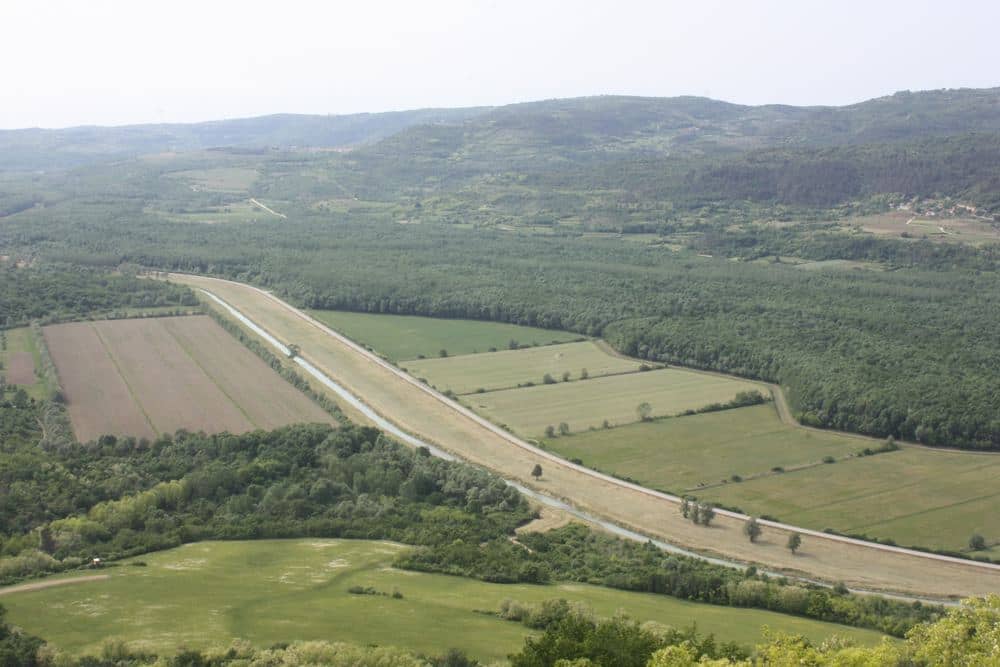
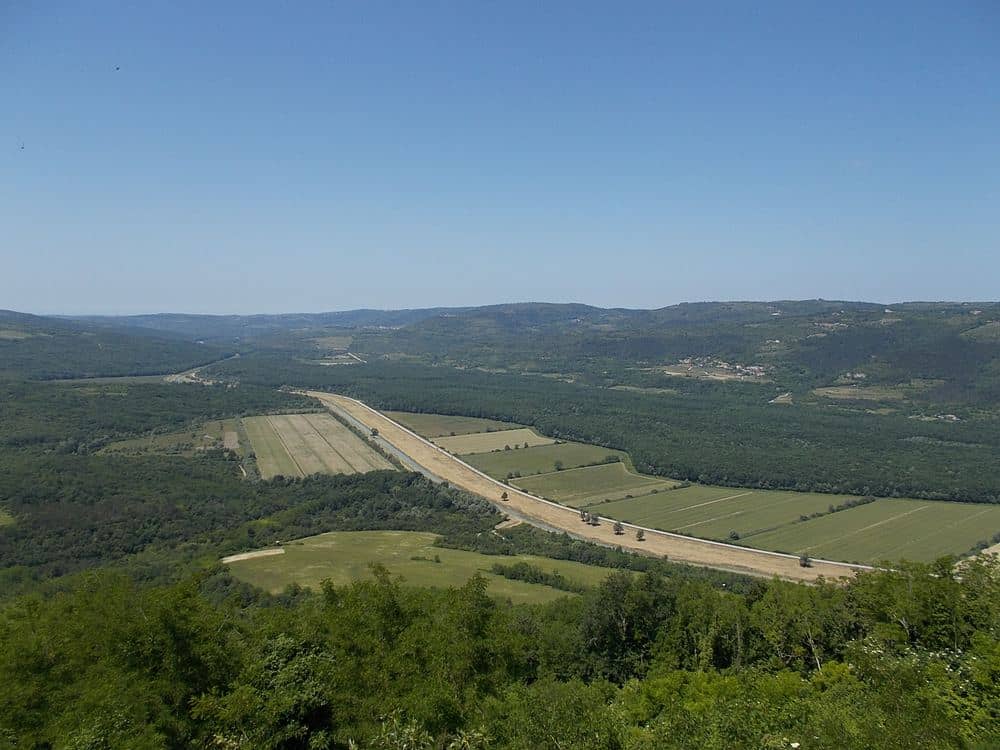
The view from the Motovun hill into the Mirna valley is one of those sights that explain why the town was raised precisely here: from the ramparts you see the flat valley floor where fields, vineyards and the dark mass of the oak forest alternate, and through it all winds the Mirna, the longest Istrian river at fifty-three kilometres. The valley was once marshy and malarial, so people lived up here, safe and dry; it was drained only in the 20th century and is today the most fertile soil in Istria. In the morning it is almost regularly covered in fog from which only the tops of neighbouring hills with the villages of Oprtalj, Vrh and Brkac protrude, a sight photographers wait for from dawn. The best place to look from is the north-western corner of the ramparts, and the best time early autumn, when fog comes more often than in summer.

Photo: Dguendel / CC BY 3.0

Motovun Forest & Truffle Hunting
Activity

Motovun Forest & Truffle Hunting

Ancient oak forest on the valley floor, famed for its prized white truffles.

Photo: lienyuan lee / CC BY 3.0

Motovun Forest & Truffle Hunting
Activity

Motovun Forest & Truffle Hunting

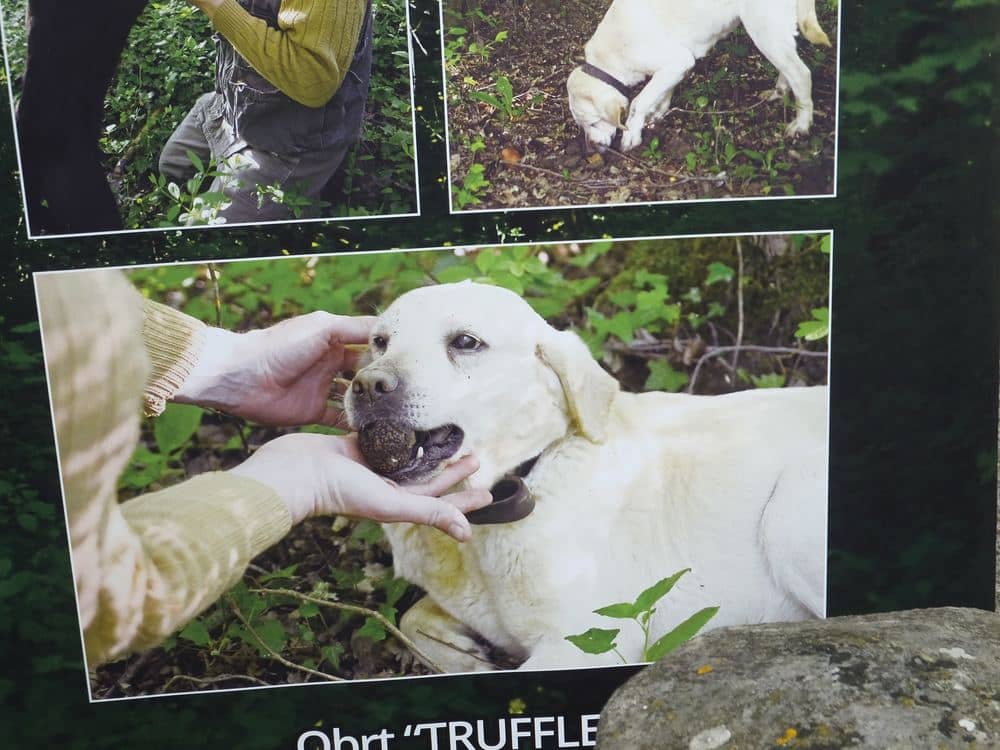
The Motovun forest spreads across the floor of the Mirna valley, north below the town, and covers some ten square kilometres of damp oak stand in which grows the thing Istria is known for today: the white truffle, Tuber magnatum, a fungus that is not cultivated but only found. The moist, permeable river alluvium and the pedunculate oak give exactly the conditions the white truffle demands, conditions met in Europe by only a few other areas, among them Alba in Piedmont. In 1999 Giancarlo Zigante from Livade dug up a specimen of 1.31 kilograms with his dog, then the largest recorded in the world. The white truffle season runs from September to January, the black is found for most of the year. The forest is not searched on your own: harvesting is regulated, and local agencies take guests hunting with dogs, usually in the morning and in boots.

Photo: lienyuan lee / CC BY 3.0

Kotli Watermills
Activity

Kotli Watermills

A streamside spot named for its cauldron-shaped pools, once home to working watermills.

Photo: Vid Pogacnik / CC BY-SA 4.0

Kotli Watermills
Activity

Kotli Watermills

Kotli is a hamlet on the upper course of the Mirna below Hum, and it takes its name from the kettles, the round hollows the water has scoured in the limestone bed. The river here falls over steps and fills those basins, and it once drove mills of which the hamlet had several; part has been restored, the stone houses are partly empty, and the place was all but abandoned by 1965 when people left for the cities. Today one comes to bathe in the kettles, which are cold even in summer, and for a short walk along the stream under the trees. Access is on foot from the car park above the hamlet, the descent takes some ten minutes, and the path is steep and slippery after rain, so footwear with a good sole is a real need. From Motovun it is about thirty kilometres, best combined with a visit to Hum.

Photo: Vid Pogacnik / CC BY-SA 4.0

Sunset Rampart Corner
Activity

Sunset Rampart Corner

A corner of Motovun's ramparts known as a good spot to watch the sunset.

Photo: Szeder László / CC BY-SA 4.0

Sunset Rampart Corner
Activity

Sunset Rampart Corner

The western corner of the Motovun ramparts is the place where in summer months some thirty people gather every evening with the same aim: to watch the sun drop behind the hills toward the sea. The reason is not only the height but the shape of the valley; westward it opens straight toward Novigrad and the sea, so the sun descends into a wide, unobstructed space, and the fields and vineyards below change colour from green to copper in about ten minutes. In late autumn and winter, when fog holds in the valley, the sight is different: the sun sets into a white plain from which only the tops of the neighbouring hills protrude. The spot is part of the free rampart walk, without a rail on the outer side, so mind the edge and the children. Come some twenty minutes before sunset, because the best places at the corner itself fill quickly.

Photo: Szeder László / CC BY-SA 4.0

Parenzana Trail
Activity

Parenzana Trail

A former narrow-gauge railway, now a scenic cycling and walking trail.

Photo: Kiki273 / CC BY-SA 3.0

Parenzana Trail
Activity

Parenzana Trail

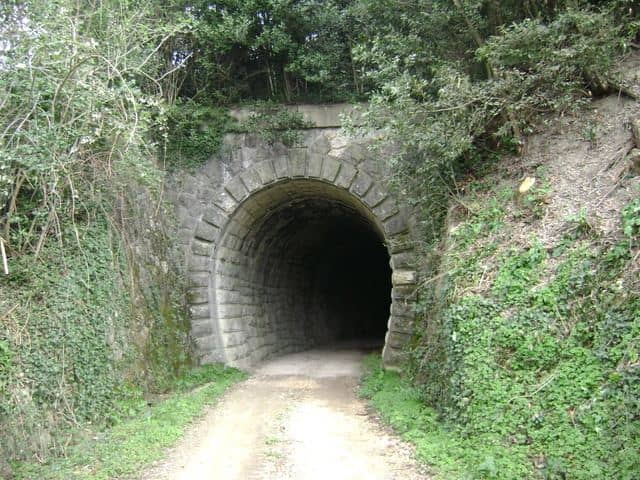
The Parenzana is a former narrow-gauge railway that from 1902 to 1935 linked Trieste with Porec, one hundred and twenty-three kilometres of track seven hundred and sixty millimetres wide through today's Italy, Slovenia and Croatia. The train ran slowly, needing almost eight hours for the whole route, and carried wine, oil, stone and people until maintenance stopped paying for itself; the line was dismantled and the rails carried off. After 2000 the route was restored as a cycling and walking trail, and today it is the best-known Istrian cycle-tourism path. The section by Motovun runs along the valley floor at the forest edge, gentle and without climbs, because the railway had to respect a gradient of at most two per cent. Bicycles are hired in Motovun and Livade; to Vizinada it is about fifteen kilometres, with tunnels and viaducts along the way.

Photo: Kiki273 / CC BY-SA 3.0

Istarske Toplice
Activity

Istarske Toplice

A thermal spring in the valley, its name simply meaning Istrian hot springs.

Photo: Dguendel / CC BY 3.0

Istarske Toplice
Activity

Istarske Toplice

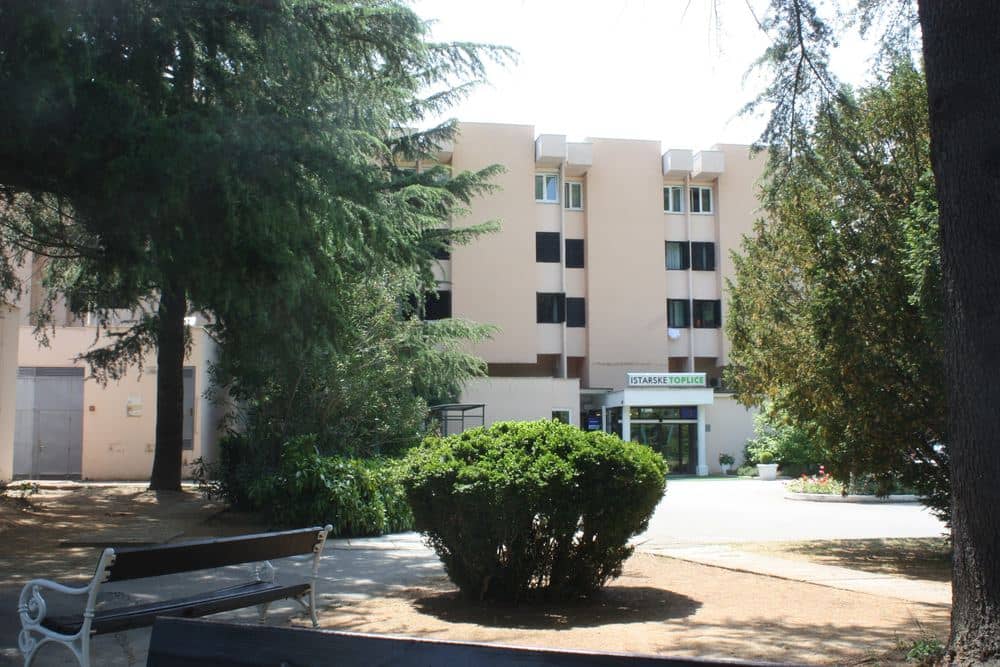
Istarske Toplice lies on the floor of the Mirna valley, beneath a vertical cliff some eighty metres high, and is one of the oldest bathing places in this part of Europe: the warm sulphur spring that surfaces here at about thirty-five degrees was used as far back as Roman times, and the spa was laid out in the 19th century under Austrian administration. The water is rich in sulphur and minerals and was traditionally used for skin and rheumatic complaints, and its characteristic smell is noticed before the building is seen. In recent years the complex has been without regular hotel operation and plans keep changing, so check before coming whether anything is open. The location itself is worth passing: the cliff, the spring and the valley, along the road that leads toward Oprtalj, some ten kilometres from Motovun.

Photo: Dguendel / CC BY 3.0

9 more places
  • Motovun Cemetery Viewpoint
  • Parenzana Viaduct
  • Parenzana Tunnel
  • Vrh Viewpoint
  • Motovun Forest Trail
  • Sovišćina Viewpoint
  • Mirna River Bridge
  • Parenzana Bike Stop
  • Žbevnica (Ćićarija)

Shopping

5
5 more places
  • Gallery Pet Kula
  • Montona Gallery
  • Motovun Local Market
  • Motovun Artisan Shops
  • Motovun Hilltop Parking

Motovun: quick answers

Can you drive up to Motovun?
Not to the top: visitors park on the signed lots below the town, and a shuttle minibus or a steep fifteen-minute walk covers the rest. Guests with hotel bookings inside the walls get separate arrangements.
When is truffle season?
Black truffles are found most of the year, but the prized white truffle season runs roughly September to January, peaking in October and November, when the surrounding villages hold truffle days and menus change accordingly.
Is Motovun worth an overnight stay?
Yes, for the hours the day-trippers miss: the valley fog at sunrise from the ramparts is the region's signature image, and the lanes empty completely after dinner. One night turns a photo stop into the actual experience.

CroVenture App

Explore Motovun with CroVenture

Places unlock as you reach them, with a passport that fills up as you explore.