Skip to content
All cities

Primošten. Things to do, map and hidden gems

10 curated places· 5 hidden gems
Primošten
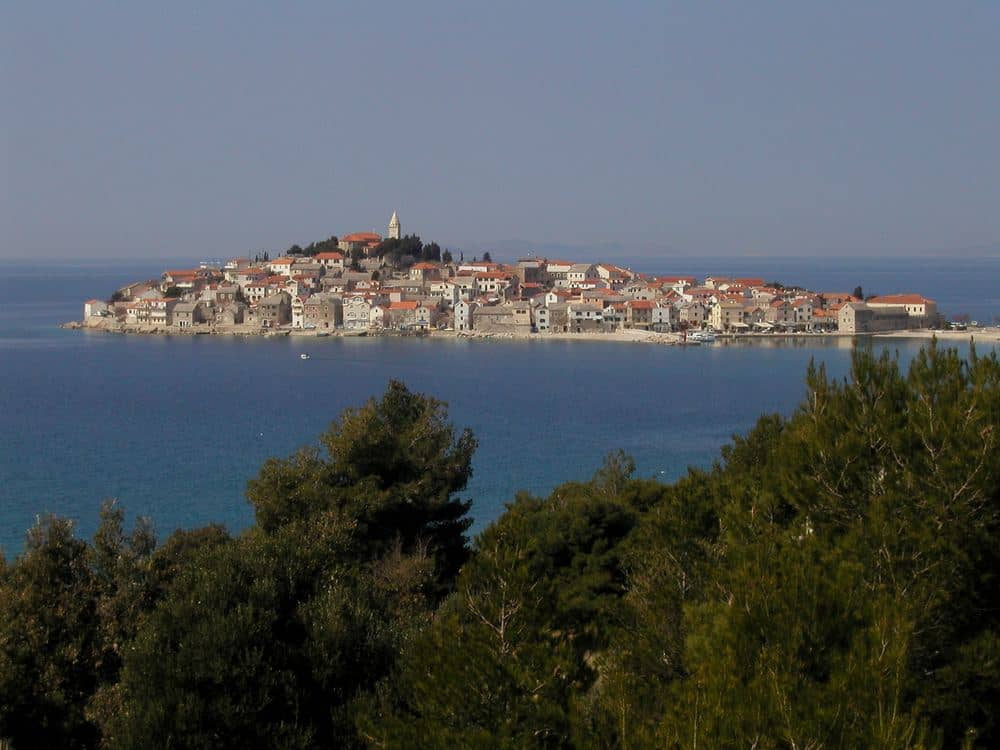
Photo: rene boulay / CC BY-SA 3.0

Primošten is the postcard that turns out to be real: an old town cone on a former islet, joined to the coast by a causeway in the 16th century, ringed by a promenade and crowned by the church of St George. Across the bay, the Raduča pines shade the main beaches.

The second landmark is agricultural: the Bucavac vineyards, a lace of tiny dry-stone plots on bare karst where Babić wine grows, an image of labour so striking it hangs in the UN building in New York.

Primošten: the islet town, Raduča beach and the Babić vineyards
Our tips

What we would do around Primošten

Day trips within reach of Primošten, plus the routes and quiet corners our editors keep coming back to.

Explore Primošten by category

Sights

6
Old Town on the Islet
Sight

Old Town on the Islet

A former islet joined to the mainland by a causeway: a ball of stone lanes spiralling up to the church on top.

Photo: rene boulay / CC BY-SA 3.0
Old Town on the Islet
Sight

Old Town on the Islet

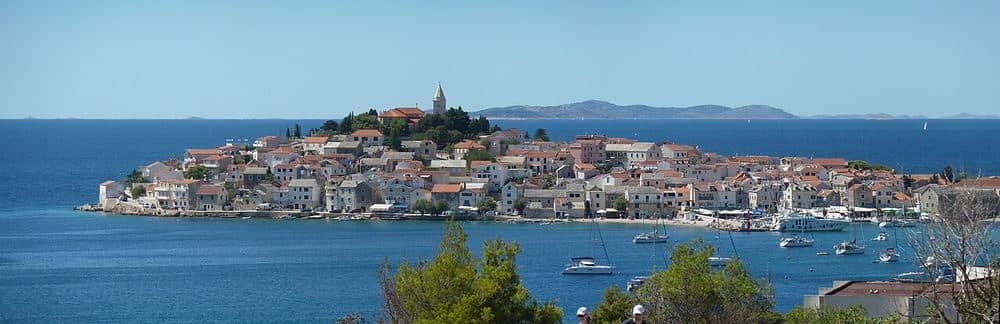
Primosten's old town is one of the Adriatic's most photogenic silhouettes: a round islet studded with stone houses spiralling up to the church on top, joined to the mainland by the causeway from which the place took its name, from the verb primostiti, to bridge over. The islet was settled in the 16th century, before the Ottoman advances, by refugees from the hinterland; the bridge was raised at night, and towers and walls guarded what could be defended. Today the defensive logic reads in the plan: lanes narrow so they were easier to defend, houses pressed one against another, and every passage leads either to the church or to the sea. The walk is simple and precisely for that perfect: enter through the town gate, let the climb itself lead you in a spiral to St George, then descend the other side to the waterfront; half an hour suffices for the loop, but the pauses stretch it into a whole early evening. The loveliest view of the islet is not from it but from Raduca beach or the Gaj hill, when at dusk the lights come on and the town sets sail. The taverns in the stone ground floors are the reason to return after sunset.

Photo: rene boulay / CC BY-SA 3.0

Primošten Waterfront
Sight

Primošten Waterfront

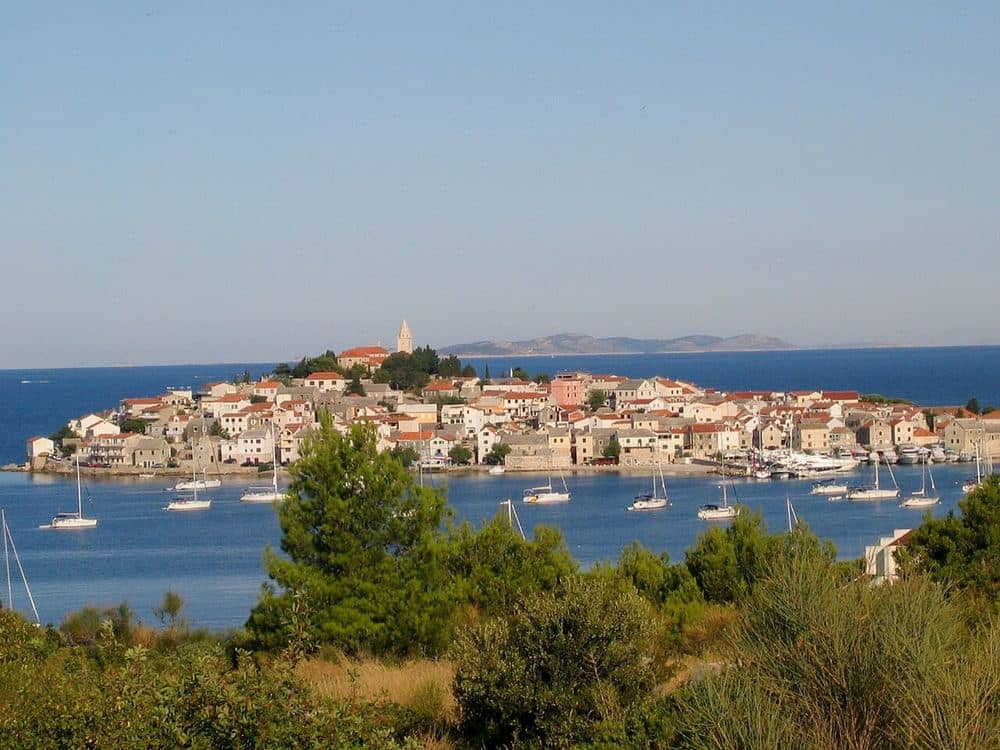
The harbour promenade beneath the old town, with taverns, boats and the evening corso.

Photo: enonim / CC BY-SA 3.0

Primošten Waterfront
Sight

Primošten Waterfront

Primosten's riva works as the old town's forecourt: a promenade along the harbour in the causeway's lee, where fishing boats and excursion boats rock at the stone piers, and a row of tavern and café terraces follows the sea line all the way to the town gate. Here the place breathes its real rhythm: fishermen and coffee in the morning, fruit and souvenir stalls before noon, the return from the beaches in the afternoon, and in the evening the corso in which locals and guests mingle while behind them the old town lights up. From the riva the excursion boats leave for the Krknjasi lagoon, Sibenik and hidden coves, so this is also the holiday's logistics centre; tickets are bought directly on the pier, best a day ahead. The gastronomy runs from ice cream to taverns with fish and Primosten Babic, poured here with a view of the vineyards it came from. The riva's loveliest hour is the blue one, between sunset and night, when the stone cools, the boats settle and the bell tower of St George shines above the roofs: then one sees why the same guests return to Primosten for decades.

Photo: enonim / CC BY-SA 3.0

4 more places
  • Bucavac Babić Vineyards
  • Our Lady of Loreto on Gaj
  • Town Gate
  • Church of St George

Activities

4
4 more places
  • Mala Raduča Beach
  • Kremik Marina
  • Velika Raduča Beach
  • Old Town Seaside Walk

Primošten: quick answers

How far is Primošten from Šibenik and Split?
Twenty minutes south of Šibenik and about forty-five north of Split on the coastal road, with buses on the Šibenik line. Split airport sits in between, roughly half an hour away. The old town stands on what was once an islet called Capocesto. In the second half of the 15th century, people from the inland parish of Prhovo fled Ottoman raids and settled there, and in 1485 they built the first church on the hilltop. The present church of St George, of white stone with three naves, was built in 1760 and is listed in the Register of Cultural Heritage of Croatia.
What is Babić wine?
A red variety native to this stretch of coast, at its best from the stone-walled Bucavac plots where vines fight the karst for every root hold. Local konobas pour it as the house standard; tastings run in the village cellars. The Bucavac vineyard lies on a hill about three kilometres south of the town. Its plots are so small and walled in that they can only be worked by hand, which keeps the yield low. For the wide view over the town and the Šibenik islands, climb Gaj hill. A 17-metre statue of Our Lady of Loreto, covered in gold, silver and coloured glass mosaic, stands there on a lookout with a café, and concerts take place there in summer. Primošten honours Our Lady of Loreto because a painting of her, brought from Loreto in Italy, was carried in procession during a cholera outbreak on 10 May 1835.
Is Primošten good without a car?
Yes: intercity buses stop on the main road, the old town and the Raduča beaches are all within a fifteen-minute walk, and Šibenik with Krka connections is a short bus hop away. A car only adds the vineyard hinterland. Velika Raduča lies on the east side of the Raduča headland, about 300 metres from the centre, with deep pine shade, a kids' club and rentals for SUP boards, deck chairs and umbrellas. Mala Raduča faces the old town and is the favourite spot for sunsets. The tourist board also lists Popožo and Mara among the local beaches. On a walk through the old town, look for the statues of local peasants and of a fisherman with a harpoon, and for Primošten lace, which the Pekljica lacemakers' association keeps alive.

CroVenture App

Explore Primošten with CroVenture

Places unlock as you reach them, with a passport that fills up as you explore.