Skip to content
All cities

Krk. Things to do, map and hidden gems

12 curated places· 7 hidden gems
Krk
Photo: Olgierd Rudak / CC BY-SA 4.0

Krk town gives its name to the island that the ancients simply called golden, and both work as the easy option: the island has been wired to the mainland by bridge since 1980, and the town keeps a compact walled core of Roman and Frankopan layers around the cathedral. Vrbnik across the island grows Žlahtina wine on its cliff; Baška holds the famous long pebble bay in the south.

Ease is the theme: an airport on the island itself, no ferry needed, and half the Kvarner within an hour.

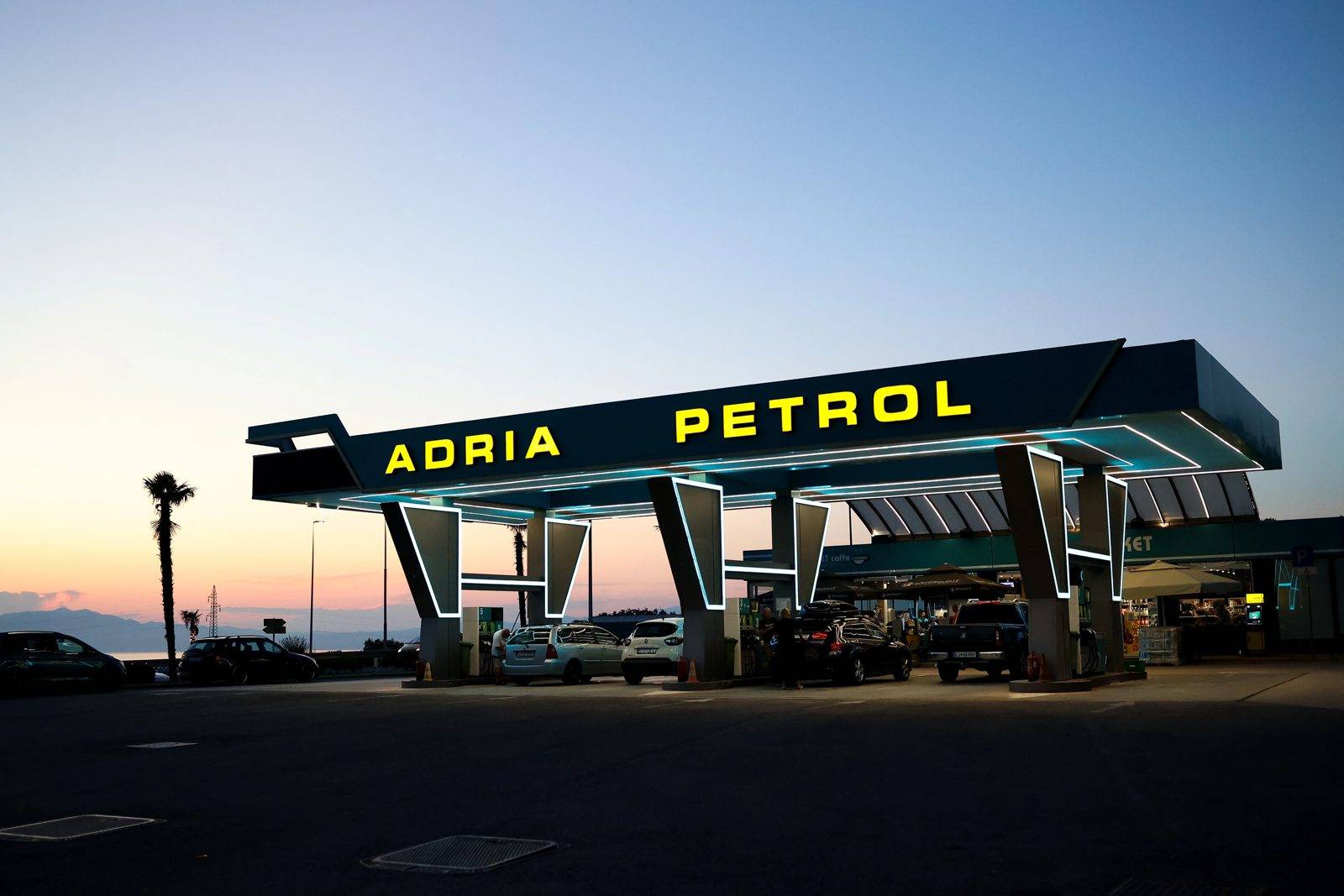
Adria Petrol Krk: the neon petrol station above Malinska
Our tips

What we would do around Krk

Day trips within reach of Krk, plus the routes and quiet corners our editors keep coming back to.

Hidden gems in Krk

Krk Cathedral
Legendary
Sight

Krk Cathedral

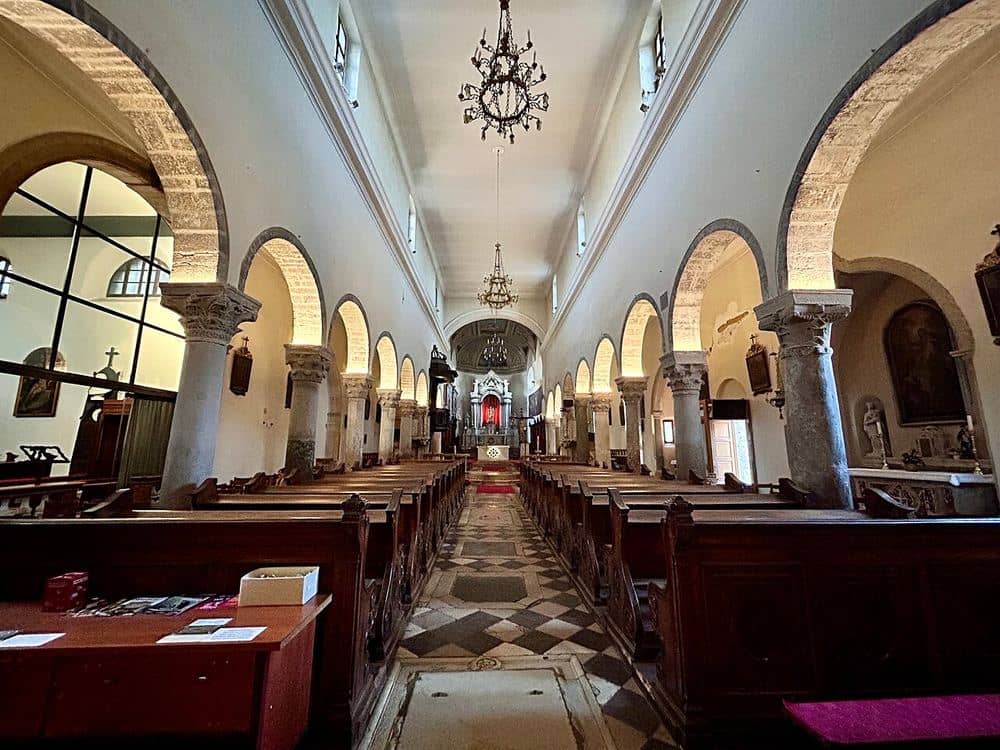
A 12th-century Romanesque basilica grown together with St Quirinus church into one complex above the harbour.

Photo: Olgierd Rudak / CC BY-SA 4.0
Krk Cathedral
Sight Legendary

Krk Cathedral

The cathedral of the Assumption of Mary is the heart of Krk's millennial story: a three-nave Romanesque basilica of the 12th century, raised on the site of an early Christian church and Roman baths whose traces still read in the foundations. Grown onto it is the older church of St Quirinus, the town's protector, so two churches share a wall and a belfry in a complex the Adriatic has nowhere else; the belfry with the angel on its top became Krk's trademark. The interior carries the layers of every century: ancient columns with early Christian capitals, the Gothic chapel of the Frankopan counts, Baroque altars and a pulpit, with the odd Roman tombstone built into the walls. The cathedral is the seat of the diocese of Krk, one of the oldest on the Croatian coast, and a living parish church: masses keep their order and sightseeing adapts. Come through the door from the waterfront an hour before evening mass, when the sun gilds the stone through the windows; half an hour suffices for the whole, and the belfry with the angel photographs best from the pier in the harbour.

Photo: Olgierd Rudak / CC BY-SA 4.0

Vela Beach, Baška
Legendary
Activity

Vela Beach, Baška

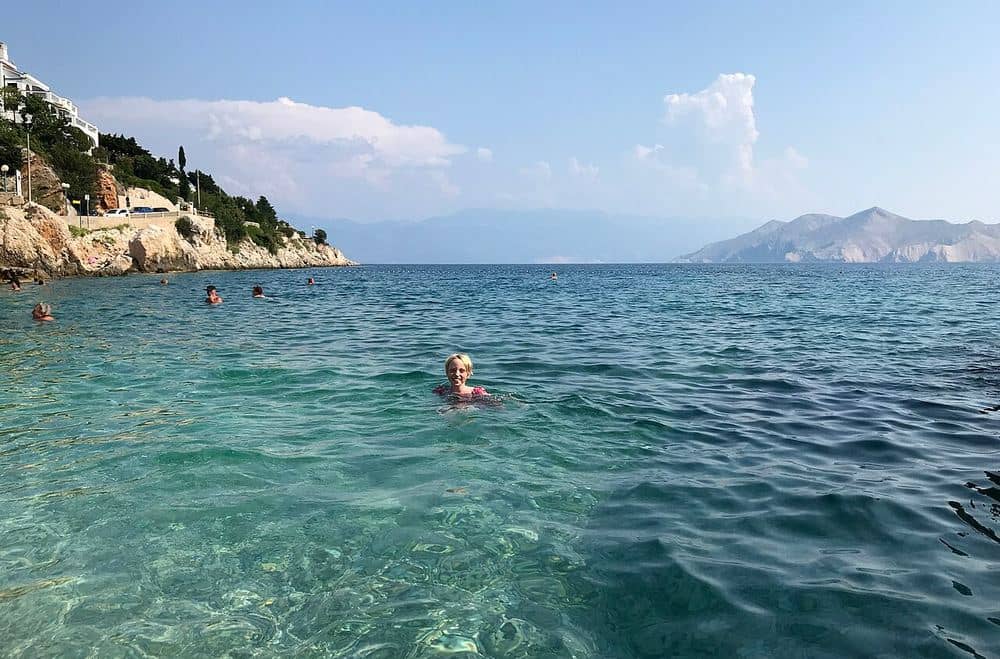
Almost two kilometres of pebbles in a great arc beneath bare hills, the island's most celebrated beach.

Photo: Allie Caulfield / CC BY 2.0
Vela Beach, Baška
Activity Legendary

Vela Beach, Baška

Vela beach in Baška is the reason many first came to Krk: an arc of almost two kilometres of fine pebble at the island's southern end, laid between sea the colour of glass and the bare, lunar slopes of the Velebit channel. The beach is a natural phenomenon: the pebble is fine and pleasant, the sea entry gentle for dozens of metres, so bathing suits children and swimmers equally; the Blue Flag flies regularly. The facilities follow the fame: sunbeds and parasols, showers, lifeguards, schools of water sports, cafés and restaurants along the promenade tracing the whole arc. The August crowd ranks among the Adriatic's biggest, but the beach is large enough to swallow thousands; most peace is at the eastern end toward the arc's close. Baška is some twenty minutes' drive from Krk town across the pass, and itself worth half a day: an old village of narrow lanes, the promenade, the Glagolitic path. Come in the morning, park in time and let the beach keep you until sunset: Vela plaža is not a station but a destination.

Photo: Allie Caulfield / CC BY 2.0

Explore Krk by category

Sights

7
Krk Cathedral
Legendary
Sight

Krk Cathedral

A 12th-century Romanesque basilica grown together with St Quirinus church into one complex above the harbour.

Photo: Olgierd Rudak / CC BY-SA 4.0

Krk Cathedral
Sight Legendary

Krk Cathedral

The cathedral of the Assumption of Mary is the heart of Krk's millennial story: a three-nave Romanesque basilica of the 12th century, raised on the site of an early Christian church and Roman baths whose traces still read in the foundations. Grown onto it is the older church of St Quirinus, the town's protector, so two churches share a wall and a belfry in a complex the Adriatic has nowhere else; the belfry with the angel on its top became Krk's trademark. The interior carries the layers of every century: ancient columns with early Christian capitals, the Gothic chapel of the Frankopan counts, Baroque altars and a pulpit, with the odd Roman tombstone built into the walls. The cathedral is the seat of the diocese of Krk, one of the oldest on the Croatian coast, and a living parish church: masses keep their order and sightseeing adapts. Come through the door from the waterfront an hour before evening mass, when the sun gilds the stone through the windows; half an hour suffices for the whole, and the belfry with the angel photographs best from the pier in the harbour.

Photo: Olgierd Rudak / CC BY-SA 4.0

6 more places
  • Frankopan Castle
  • Vrbnik
  • Košljun Islet
  • Krk Bridge
  • City Walls and Gates
  • Vela Placa Square

Activities

5
Vela Beach, Baška
Legendary
Activity

Vela Beach, Baška

Almost two kilometres of pebbles in a great arc beneath bare hills, the island's most celebrated beach.

Photo: Allie Caulfield / CC BY 2.0

Vela Beach, Baška
Activity Legendary

Vela Beach, Baška

Vela beach in Baška is the reason many first came to Krk: an arc of almost two kilometres of fine pebble at the island's southern end, laid between sea the colour of glass and the bare, lunar slopes of the Velebit channel. The beach is a natural phenomenon: the pebble is fine and pleasant, the sea entry gentle for dozens of metres, so bathing suits children and swimmers equally; the Blue Flag flies regularly. The facilities follow the fame: sunbeds and parasols, showers, lifeguards, schools of water sports, cafés and restaurants along the promenade tracing the whole arc. The August crowd ranks among the Adriatic's biggest, but the beach is large enough to swallow thousands; most peace is at the eastern end toward the arc's close. Baška is some twenty minutes' drive from Krk town across the pass, and itself worth half a day: an old village of narrow lanes, the promenade, the Glagolitic path. Come in the morning, park in time and let the beach keep you until sunset: Vela plaža is not a station but a destination.

Photo: Allie Caulfield / CC BY 2.0

Krk Waterfront
Activity

Krk Waterfront

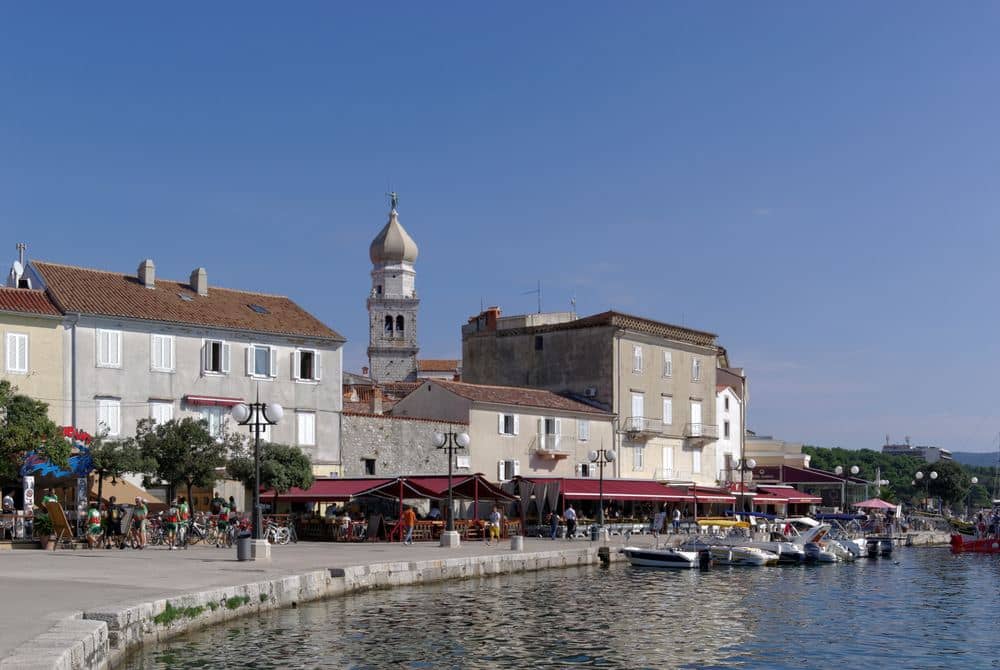
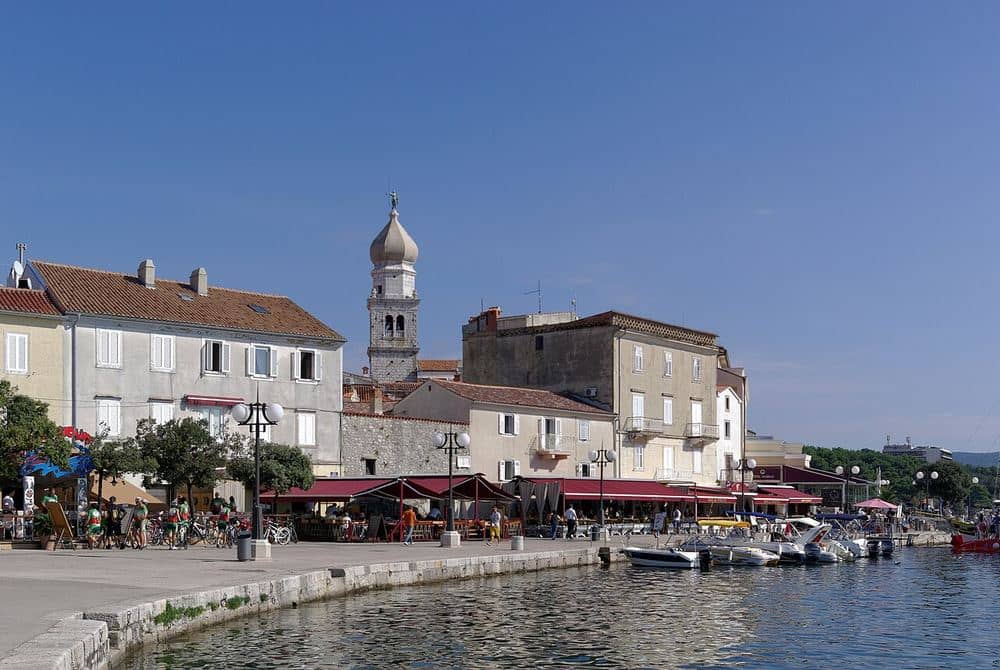
The promenade along the town harbour, with boats, cafés and the evening stroll beneath the walls.

Photo: Berthold Werner / CC BY-SA 3.0
Krk Waterfront
Activity

Krk Waterfront

Krk's waterfront is where the town breathes: a promenade along the harbour beneath the walls, with boats at their moorings, sailboat masts and a line of cafés whose terraces look straight into the sunset. The riva was always the town's entrance, Roman traders moored here, Venetian galleys and the steamers of Austrian lines, and today the small coastal ferries, excursion boats for Plavnik and Cres and yachts in transit. A day on the riva keeps its order: morning belongs to the fishermen shaking out nets and to the first coffees, noon to bathers passing toward Dražica, afternoon to ice cream, and evening to the stroll, an institution the whole town obeys. From the pier at the riva's end opens Krk's best frame: walls, the belfry with the angel and the castle in one line above the sea. Everything you need in town is three minutes from the riva; but the best the riva offers is free: to sit on the edge, let your legs over the stone and watch the light change the harbour's colour. If the Placa is the town's living room, the riva is its balcony.

Photo: Berthold Werner / CC BY-SA 3.0

3 more places
  • Biserujka Cave
  • Dražica Beach
  • Ježevac Beach

Krk: quick answers

Do I need a ferry to reach Krk?
No, the Krk bridge has linked the island to the mainland since 1980, toll-free since 2020. Rijeka's airport actually stands on Krk, twenty-five minutes from the town, with seasonal flights from across Europe. After the bridge it is a short drive to Krk town, which sits in a wide bay on the island's south-west coast. Car ferries also link the island with Cres, from Merag to Valbiska, and with Lopar on Rab, from Lopar to Valbiska. The town harbour takes boats up to 15 metres long.
Krk town or Baška as a base?
Krk town for the historic core, restaurants and central position; Baška for the two-kilometre pebble bay and hiking trails, at the price of a longer drive to everything else. Couples split the difference with Punat by the marina. The old town still follows its Roman grid, with two main streets, Kardo and Galija, laid out as cardo and decumanus. The Frankopan castle recalls the Princes of Krk, later known as the Frankopans, who shaped the island for more than 350 years from the early 12th century. The scops owl on the town's coat of arms dates from Venetian rule and plays on the Italian name Veglia, from vigilia, meaning watch. The town beaches are mostly pebble. Dražica and Porporela are adapted for people with disabilities, Tomaževo is naturist, and Redagara and Galapagos are set aside for dogs.
What is Vrbnik known for?
For Žlahtina, the island's own white wine grown on the Vrbnik field, and for a medieval town on a fifty-metre cliff that contains one of the world's narrowest streets. Tastings in the village cellars pair both. Back in Krk town, the Lovrečeva fair fills the old town around the feast of St Lawrence on 10 August. It lasts three days and is free. Records show it was approved again in 1524, and the programme includes a Frankopan procession, folk dancing, craft workshops and stalls with honey, olive oil and local cakes.

CroVenture App

Explore Krk with CroVenture

Places unlock as you reach them, with a passport that fills up as you explore.