Skip to content
All cities

Trogir. Things to do, map and hidden gems

43 curated places· 2 hidden gems
Trogir
Photo: Bernard Gagnon / CC BY-SA 4.0

Trogir is a complete medieval town on an islet, bridged to the mainland on one side and to Čiovo island on the other, and small enough that the UNESCO listing covers simply everything. The cathedral of St Lawrence holds the 1240 Radovan portal, the finest piece of Romanesque carving on this coast, and the Kamerlengo fortress closes the seafront promenade.

The practical surprise is the location: Split airport is five kilometres away, closer to Trogir than to Split itself, which makes the town a smart first or last night of any Dalmatian trip.

What to see in Trogir: Radovan's portal, Kamerlengo and Čiovo

The next 7 days

Weather data by Open-Meteo.com

Opening hours and prices

The places we keep opening hours and price levels for. Times change with the season, so treat the official page as the last word.

PlaceOpening hoursPriceOfficial page
Malačka Pass (Kozjak)Always open; check access, weather, park rules and daylight before hiking.--

Climate month by month

Ten-year averages for Trogir, so you can see what a month usually looks like rather than what this week happens to do.

MonthDay °CNight °CRain daysSea °C
January1141114
February136914
March157914
April18101016
May22151119
June2819624
July3222327
August3123527
September2618824
October21141022
November16101419
December1361216

Air 2015 to 2024, sea 2022 to 2024. A rain day is 1 mm or more. Data by Open-Meteo.com

Beaches in Trogir

Labadusa Beach
Activity

Labadusa Beach

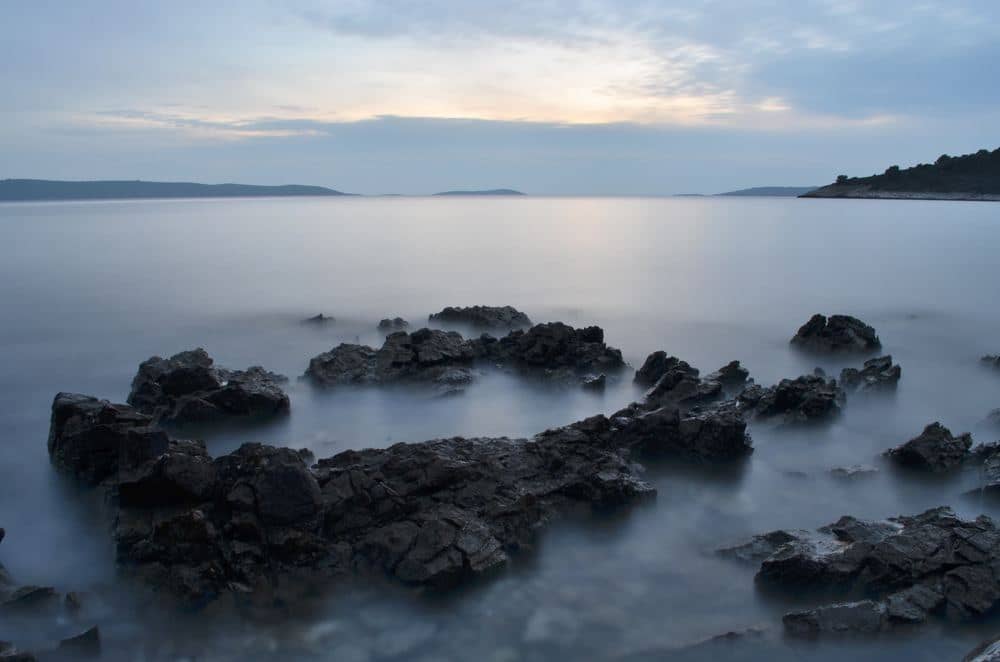
A low-key beach on Čiovo's southern shore, away from the main crowds.

Photo: Paško Tomić from Zagreb, Croatia / CC BY 2.0
Labadusa Beach
Activity

Labadusa Beach

Labadusa is a cove on the southern shore of Ciovo, near Cape Okrug, and one of those reached through pinewood. The beach is shingle, with flat rocks at the sides and pines growing to the very edge of the water, so there is shade all day, which on the southern shore is a rarity. The sea is open toward the offing and therefore clearer and fresher than in coves facing the mainland; when the sirocco blows the swell comes straight in, and then one chooses the other side of the island. By the beach is a bar in season, otherwise there are no facilities. Labadusa is a twenty-minute drive from Trogir, and the last part is gravel; the car park is small, so it is better to come before noon.

Photo: Paško Tomić from Zagreb, Croatia / CC BY 2.0

Okrug Gornji Copacabana Beach
Activity

Okrug Gornji Copacabana Beach

A lively Čiovo beach that has borrowed its buzz along with its nickname.

Photo: Michel Langeveld / CC BY 4.0

Okrug Gornji Copacabana Beach
Activity

Okrug Gornji Copacabana Beach

The beach at Okrug Gornji on Ciovo runs almost two kilometres along the shore and is the largest developed beach near Trogir; it earned the nickname Copacabana for its length and bustle, not for sand, since the surface is fine shingle. Along the whole stretch are bars, showers, loungers, slides and water sports, and in the hinterland apartments and restaurants, so a day is spent here without going elsewhere. The sea is shallow by the shore and warms quickly, which suits families. In summer the crowd is large, especially in the afternoon; the morning is quieter. From Trogir, Okrug is a ten-minute drive over the bridge to Ciovo, and in summer a boat line runs as well; the car park is paid and fills early.

Photo: Michel Langeveld / CC BY 4.0

Medena Beach
Activity

Medena Beach

A long stretch of mainland beach west of the old town.

Photo: Andrea Albini / CC BY-SA 3.0

Medena Beach
Activity

Medena Beach

Medena beach runs along the shore west of Trogir, on the stretch toward Seget, and is almost two kilometres long. The shore is arranged as a series of shingle coves and concrete platforms, with a gradual entry into the sea; the surface is fine shingle and the bottom clean. By the beach is a hotel complex built in the 1970s, at the time when this part of the coast was developed as a tourist zone; behind it is a pinewood that gives shade, which on this stretch is an advantage, because the surrounding shore mostly lacks tall growth. There are showers, bars, loungers and sports facilities. From Trogir, Medena is a half-hour walk by the coastal path or a five-minute drive; the car park is by the road and charged in season.

Photo: Andrea Albini / CC BY-SA 3.0

Rožac Beach
Activity

Rožac Beach

A relaxed beach on Čiovo, easy to fold into a day away from the old town.

Photo: Apartments in Trogir… / CC BY-SA 3.0

Rožac Beach
Activity

Rožac Beach

Rozac cove lies on the northern shore of Ciovo, by the road toward Okrug, and is laid out as a bathing place beside the campsite that has worked here for decades. The shore is shingle and partly concreted, with a gradual entry into the sea; behind the beach is a pinewood planted when the campsite opened, so there is shade enough even at midday, which on Ciovo is an advantage. The sea is sheltered by the mainland across the channel and calm almost all summer. By the beach are showers, a bar and lounger hire, and in the campsite a shop. The cove is popular with families because the sea is shallow by the shore. From Trogir, Rozac is a ten-minute drive over the bridge; the car park is by the road and fills before noon in summer.

Photo: Apartments in Trogir… / CC BY-SA 3.0

Saldun Bay
Activity

Saldun Bay

A bay on Čiovo close enough to the old town for a spontaneous swim.

Photo: Apartments in Trogir… / CC BY-SA 3.0

Saldun Bay
Activity

Saldun Bay

Saldun cove is drawn into the northern shore of Ciovo, between Rozac and Okrug, and is one of the more sheltered coves on the island: it is narrow and deep, so no swell enters it even when the wind blows. For that reason boats are kept in it, and the sea is warmer than on open beaches. The shore is laid out as a bathing place with shingle and concrete platforms, alongside a few trees that give shade. By the cove are apartments and a few taverns, but no large facilities, so it is quieter here than in Okrug, which is a ten-minute walk away. Saldun is the choice for those who want the bustle nearby but not the bustle itself. From Trogir the cove is a ten-minute drive over the bridge to Ciovo.

Photo: Apartments in Trogir… / CC BY-SA 3.0

Plan your visit

Trogir in a nutshell

43 places, 1 routes.

What is actually worth your time in Trogir?

Start with Blue Lagoon Krknjaši, Cathedral of St Lawrence, and Trogir Riva. After that it depends on what you enjoy: the guide holds 43 places in Trogir, sorted into sights, activities, food and shopping, so you can skip whole categories that bore you.

Cathedral of St LawrenceCathedral of St Lawrence

How do you get away from the crowds in Trogir?

Follow the hidden gems: 2 places that rarely make the guidebooks, most of them a few streets off the main drag. Blue Lagoon Krknjaši and Cathedral of St Lawrence are good ones to start with.

Trogir RivaTrogir Riva

No time to plan? Just follow a route.

Pick one of Trogir in Stone. Each walk runs stop by stop in a fixed order, so the only decision left is where to have lunch.

Church and Monastery of St DominicChurch and Monastery of St Dominic
Our tips

What we would do around Trogir

Day trips within reach of Trogir, plus the routes and quiet corners our editors keep coming back to.

Trogir itineraries

  • 8 stops

    Trogir in Stone

    From Radovan's portal to the Kamerlengo

    1. John Paul II Square
    2. Cathedral of St Lawrence
    3. Trogir City Hall
    4. Cipiko Palace
    5. Benedictine Monastery of St Nicholas
    6. Trogir Riva
    7. Kamerlengo Fortress
    8. Marmont Gloriette

Hidden gems in Trogir

Cathedral of St Lawrence
Legendary
Sight

Cathedral of St Lawrence

Trogir's masterpiece, crowned by Master Radovan's carved Romanesque portal.

Photo: Bernard Gagnon / CC BY-SA 4.0

Cathedral of St Lawrence
Sight Legendary

Cathedral of St Lawrence

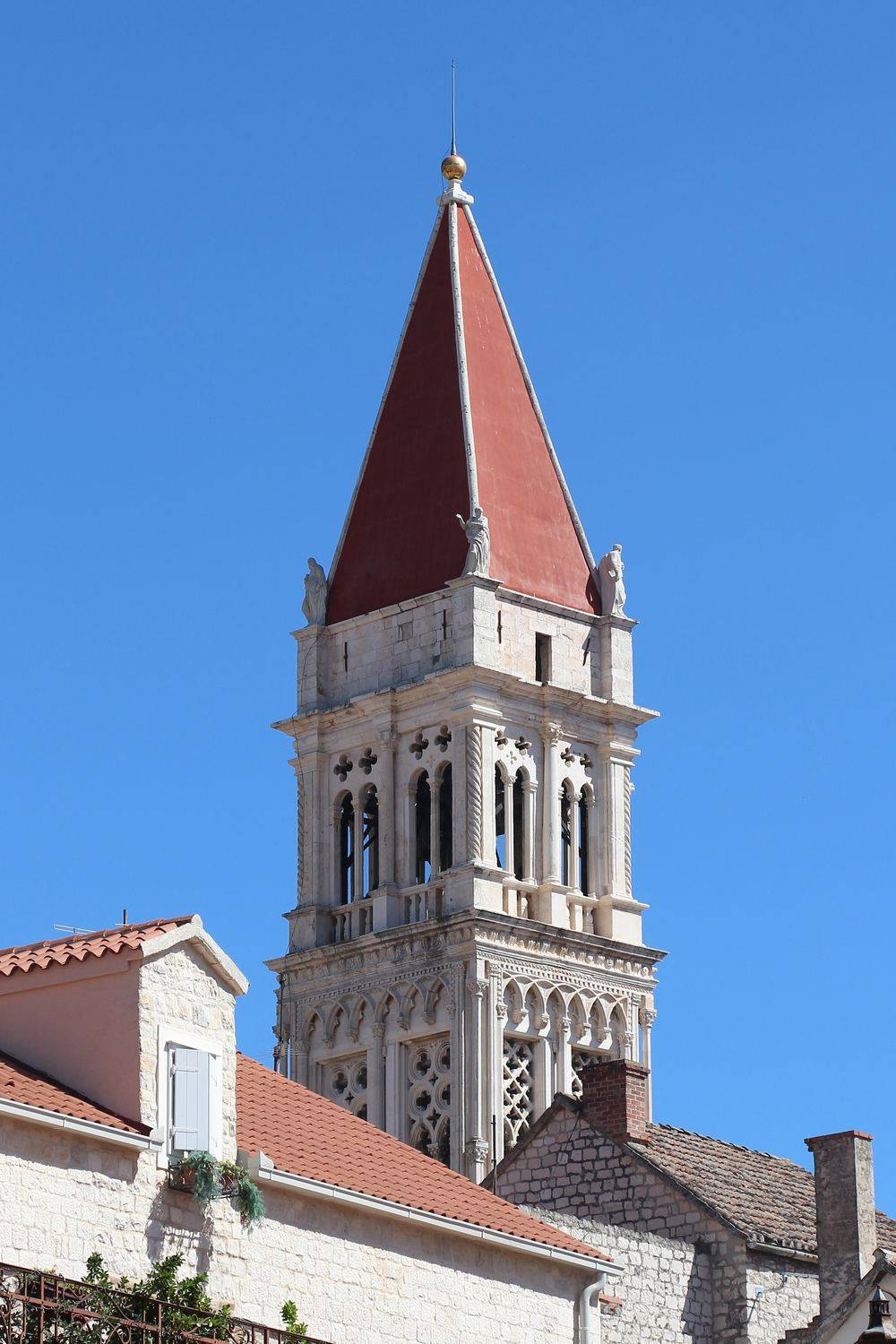
The Cathedral of St Lawrence was built from the 13th to the 17th century and is the most important building in Trogir, a town on the UNESCO world heritage list since 1997. Its best-known part is the west portal, carved in 1240 by master Radovan, who signed it; the portal shows scenes from the life of Christ, the months of the year and the labours that go with them, and by the jambs stand lions with figures of Adam and Eve. It is the most complete Romanesque portal work on the eastern Adriatic. Inside is the chapel of Blessed John of Trogir of the 15th century, the work of Nikola Firentinac, with a series of statues in niches. The bell tower, forty-seven metres high, was built over centuries and is climbed by narrow steps; the view takes in the whole island.

Photo: Bernard Gagnon / CC BY-SA 4.0

Explore Trogir by category

Sights

17
Cathedral of St Lawrence
Legendary
Sight

Cathedral of St Lawrence

Trogir's masterpiece, crowned by Master Radovan's carved Romanesque portal.

Photo: Bernard Gagnon / CC BY-SA 4.0

Cathedral of St Lawrence
Sight Legendary

Cathedral of St Lawrence

The Cathedral of St Lawrence was built from the 13th to the 17th century and is the most important building in Trogir, a town on the UNESCO world heritage list since 1997. Its best-known part is the west portal, carved in 1240 by master Radovan, who signed it; the portal shows scenes from the life of Christ, the months of the year and the labours that go with them, and by the jambs stand lions with figures of Adam and Eve. It is the most complete Romanesque portal work on the eastern Adriatic. Inside is the chapel of Blessed John of Trogir of the 15th century, the work of Nikola Firentinac, with a series of statues in niches. The bell tower, forty-seven metres high, was built over centuries and is climbed by narrow steps; the view takes in the whole island.

Photo: Bernard Gagnon / CC BY-SA 4.0

Church and Monastery of St Dominic
Sight

Church and Monastery of St Dominic

A quiet church and monastery complex tucked into the old town's back streets.

Photo: Fred Romero from Paris, France / CC BY 2.0

Church and Monastery of St Dominic
Sight

Church and Monastery of St Dominic

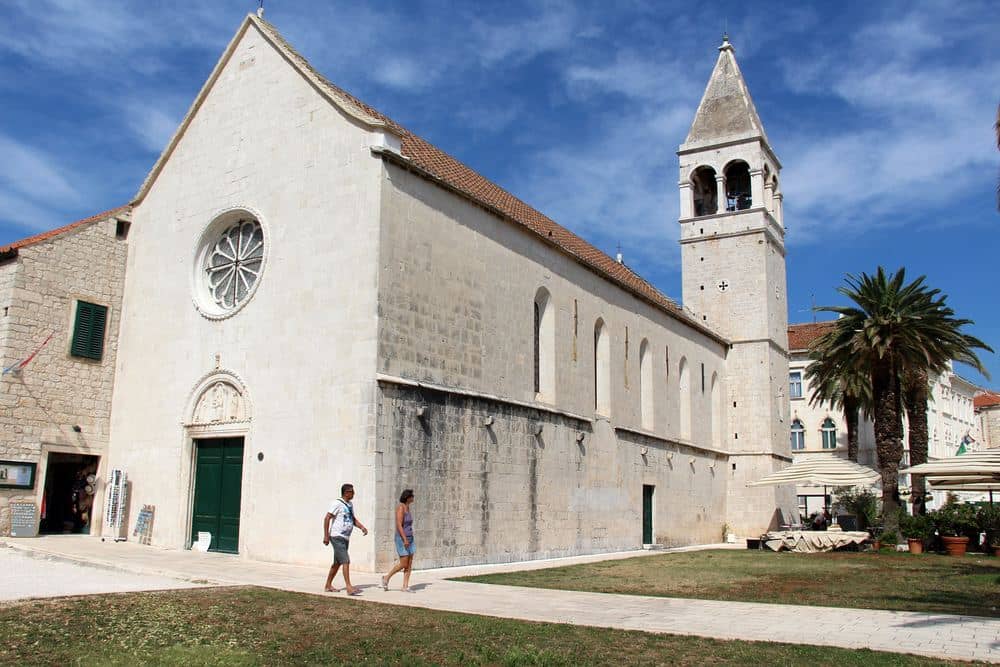
The church and monastery of St Dominic stand at the southern edge of the core, by the shore, and were raised in the 14th century, when the Dominicans received land beside the walls. The church is single-naved and tall, with an open roof structure and the plain interior the mendicant orders required; above the portal is a relief showing the Virgin and saints, the work of master Nikola Firentinac in the 15th century. Inside is the tomb of the Sobota family with Renaissance ornament and altar paintings by Venetian masters. Beside the church is a cloister with a cistern. The complex was for centuries a place of education as well, because the Dominicans kept a school. The church opens around masses and during the day in season; it stands a few steps from the waterfront.

Photo: Fred Romero from Paris, France / CC BY 2.0

Church of St Peter
Sight

Church of St Peter

A small parish church folded into the quiet streets of the old town.

Photo: Argo Navis / CC BY-SA 4.0

Church of St Peter
Sight

Church of St Peter

The Church of St Peter stands in the interior of the Trogir core, in a series of narrow streets north of the cathedral, and belongs to the complex of a Benedictine convent that worked here for centuries. The building is small and simple, with a stone facade and a bell gable, and above the portal is a relief of St Peter attributed to the circle of masters who worked in Trogir in the 15th century. The interior is Baroque, with wooden altars and paintings. Such small churches were not parish churches but conventual or confraternity ones; there are several in town and all are built into rows of houses, so they are easily overlooked. The church opens rarely, mainly on feast days. For a visitor the walk through this part of the core is worthwhile in itself, because it is the quietest in town.

Photo: Argo Navis / CC BY-SA 4.0

Benedictine Monastery of St Nicholas
Sight

Benedictine Monastery of St Nicholas

A Benedictine monastery holding onto a quieter, devotional side of the old town.

Photo: Fred Romero from Paris, France / CC BY 2.0

Benedictine Monastery of St Nicholas
Sight

Benedictine Monastery of St Nicholas

The Benedictine convent of St Nicholas was founded in 1064 and is the oldest community in Trogir to have remained in the same place to this day. It was raised on the foundations of ancient buildings, which later led to the town's most famous find: during works in 1928 a Greek relief of Kairos was discovered in a wall, where it had been built in for centuries as an ordinary stone. The convent is still in use, and the community of sisters runs a collection of sacral art open to visitors. In it, alongside Kairos, are medieval manuscripts, liturgical vessels, paintings and stone fragments from the period when the convent was built. Entry requires a ticket and modest dress; the space is quiet, and the visit takes half an hour.

Photo: Fred Romero from Paris, France / CC BY 2.0

Kairos Collection
Sight

Kairos Collection

A small old-town collection worth a quiet, curious look.

Photo: Fred Romero from Paris, France / CC BY 2.0

Kairos Collection
Sight

Kairos Collection

Kairos is a Greek relief found in 1928 in a wall of the Benedictine convent of St Nicholas in Trogir, where it had stood built in for centuries as an ordinary stone slab. It shows Kairos, the Greek god of the favourable moment: a youth with wings on his back and heels, a lock of hair on his forehead and a shaven nape, in mid-run. The message is clear and was known to everyone in antiquity: an opportunity can be seized only as it comes, because once it has passed there is nothing left to grasp. The relief dates from the Hellenistic period and is held to be one of the most valuable ancient finds in Croatia. It is kept in the convent's collection of sacral art, alongside manuscripts and liturgical vessels; the ticket is cheap, and the visit takes half an hour.

Photo: Fred Romero from Paris, France / CC BY 2.0

Vitturi Tower
Sight

Vitturi Tower

A modest stone tower carrying the old Vitturi family name.

Photo: Fred Romero from Paris, France / CC BY 2.0

Vitturi Tower
Sight

Vitturi Tower

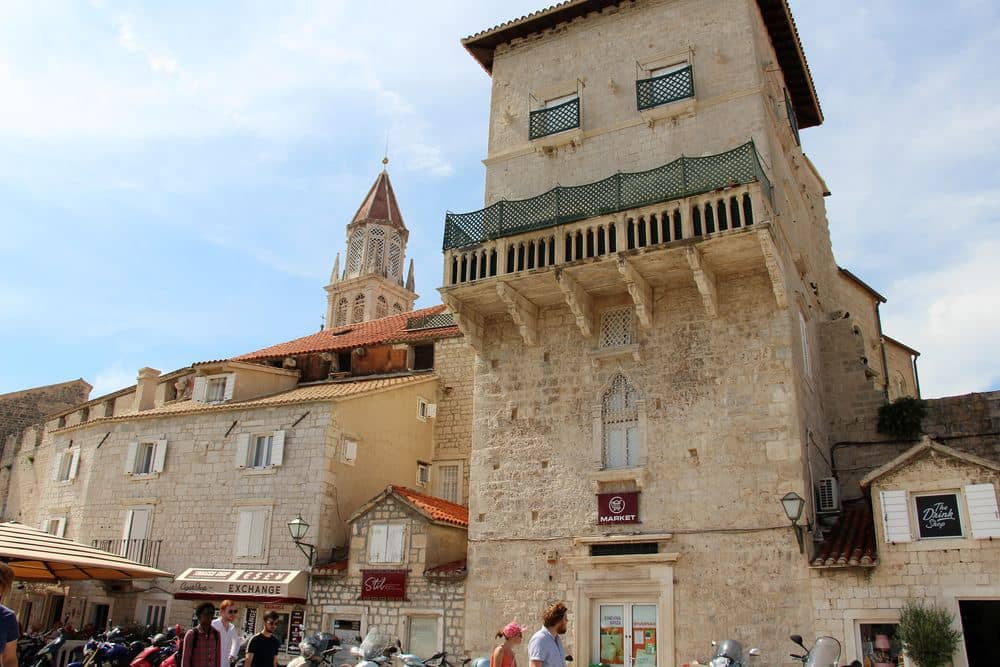
The Vitturi tower is a stone tower in the southern part of the Trogir core and the remnant of the residential complex of the noble Vitturi family, one of the oldest in town. In medieval Dalmatian towns such towers were part of the family house: the ground floor served as a store, the upper floors for living, and the height was a mark of standing, because the right to build upward was granted only to noble families. The tower is simple, with small windows and a narrow entrance, built of regularly cut blocks. Today it is embedded in a row of houses and easily overlooked, although it is one of the oldest preserved parts of town. It is seen from outside in passing; it stands a few steps from the waterfront, in the street leading toward the south-western corner of the core.

Photo: Fred Romero from Paris, France / CC BY 2.0

11 more places
  • Marmont Gloriette
  • Kamerlengo Fortress
  • Cipiko Palace
  • Church of St Sebastian
  • Trogir City Hall
  • John Paul II Square
  • South Town Gate
  • Town Loggia
  • North Town Gate
  • Garagnin-Fanfogna Palace (Town Museum)
  • St Mark's Tower

Activities

20
Trogir Riva
Activity

Trogir Riva

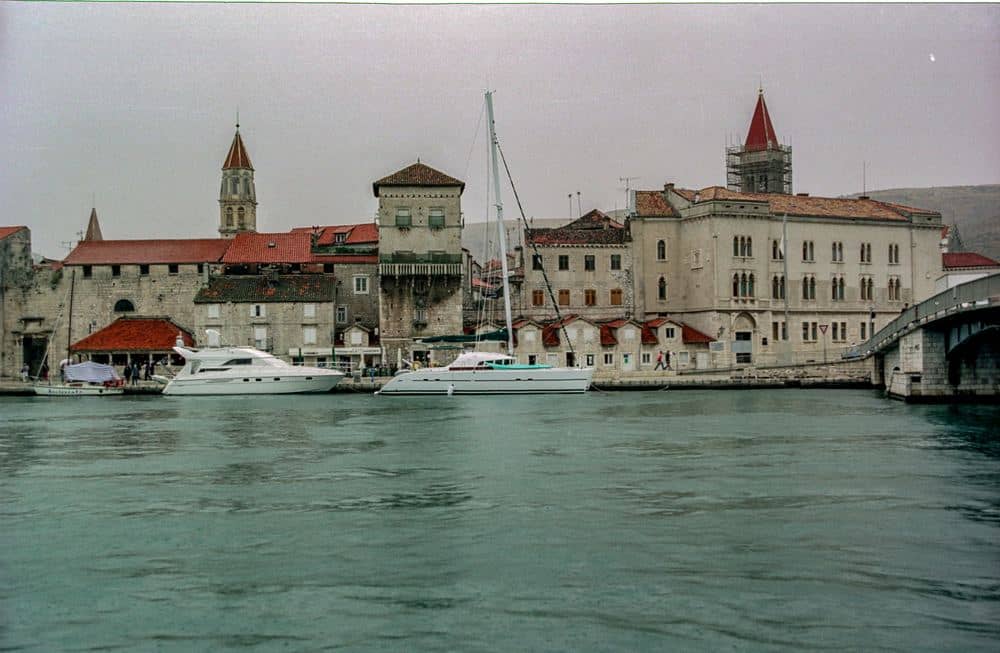
The palm-lined waterfront promenade along the southern walls of the UNESCO island.

Photo: Jerzy Strzelecki / CC BY-SA 3.0

Trogir Riva
Activity

Trogir Riva

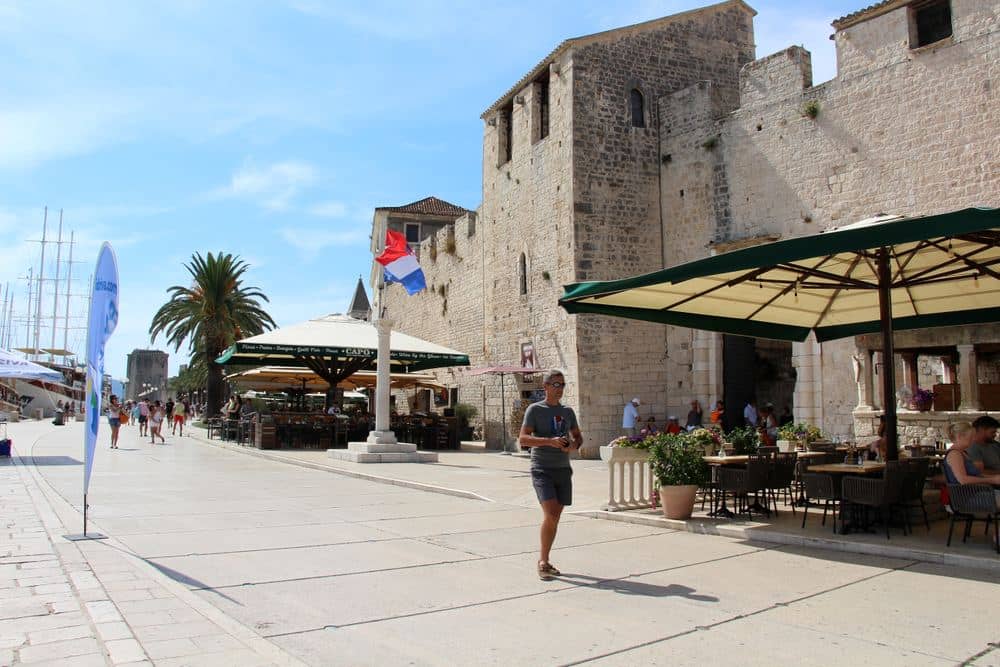
The Trogir waterfront runs along the southern edge of the island, beneath the town walls, and is the busiest part of town: here people stroll, boats dock and cafes fill. The palms along the shore were planted at the end of the 19th and the beginning of the 20th century, at the time when the Austrian administration was laying out coastal towns for guests. From the waterfront you see the channel dividing the island from Ciovo, and at the end of the stretch stands the Kamerlengo fortress. Along the shore are berths for yachts, so in summer the waterfront is a nautical sight as well. The walk from the bridge to the fortress takes fifteen minutes. The best moment is early morning, before the excursion groups arrive from Split, or toward evening, when the stone of the walls warms and takes on colour.

Photo: Jerzy Strzelecki / CC BY-SA 3.0

Labadusa Beach
Activity

Labadusa Beach

A low-key beach on Čiovo's southern shore, away from the main crowds.

Photo: Paško Tomić from Zagreb, Croatia / CC BY 2.0
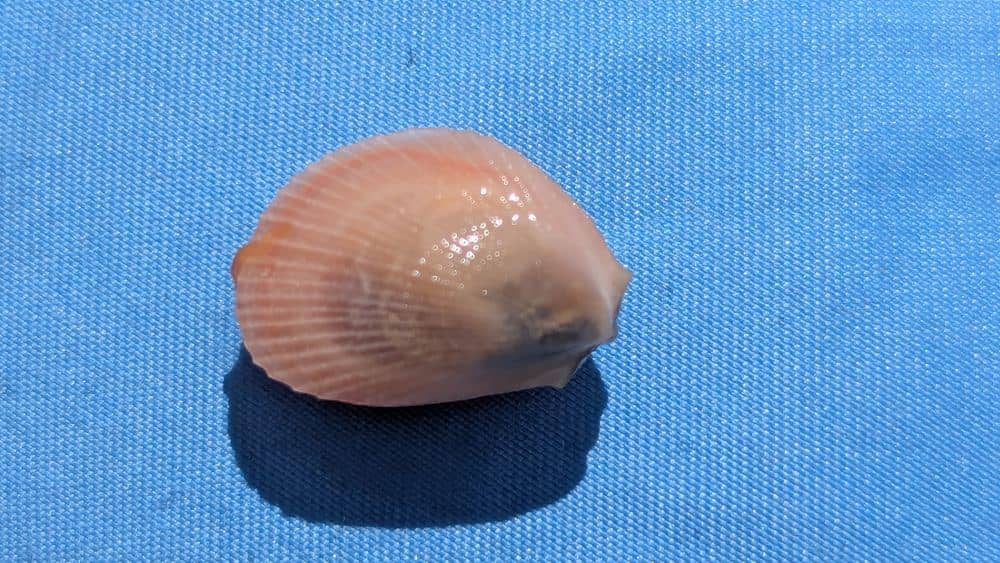
Labadusa Beach
Activity

Labadusa Beach

Labadusa is a cove on the southern shore of Ciovo, near Cape Okrug, and one of those reached through pinewood. The beach is shingle, with flat rocks at the sides and pines growing to the very edge of the water, so there is shade all day, which on the southern shore is a rarity. The sea is open toward the offing and therefore clearer and fresher than in coves facing the mainland; when the sirocco blows the swell comes straight in, and then one chooses the other side of the island. By the beach is a bar in season, otherwise there are no facilities. Labadusa is a twenty-minute drive from Trogir, and the last part is gravel; the car park is small, so it is better to come before noon.

Photo: Paško Tomić from Zagreb, Croatia / CC BY 2.0

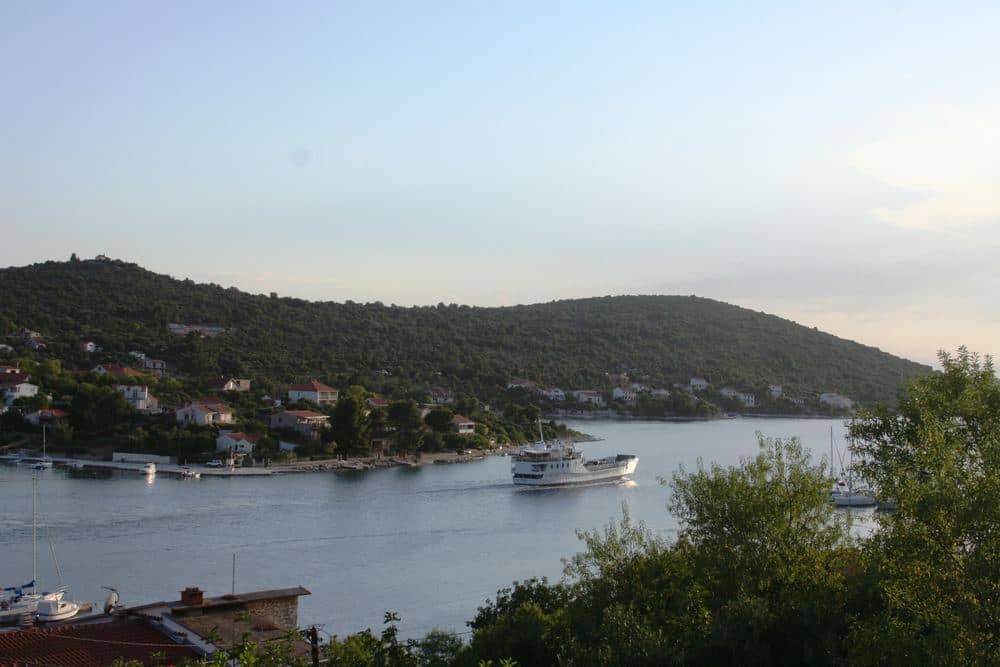
Drvenik Veli
Activity

Drvenik Veli

An island off Trogir with a noticeably slower pace than the mainland.

Photo: b.roveran / CC BY 2.0

Drvenik Veli
Activity

Drvenik Veli

Drvenik Veli is an island west of Trogir, about twelve square kilometres in area, with a hundred or so permanent inhabitants who mostly live in the village of the same name in a sheltered bay. The island has no spring of drinking water, so for centuries people lived from cisterns, olives and fish; that is also why the population was always small. The coast is indented, with a series of coves of which the best known is the Blue Lagoon by Krknjasi. In the village are a shop, a few taverns and a small harbour, and the houses are of stone and clustered around the shore. A ferry runs from Seget Donji and the crossing takes about forty minutes; in summer excursion boats run as well. For a day without a car and without crowds the island is the nearest choice from Trogir.

Photo: b.roveran / CC BY 2.0

Okrug Gornji Copacabana Beach
Activity

Okrug Gornji Copacabana Beach

A lively Čiovo beach that has borrowed its buzz along with its nickname.

Photo: Michel Langeveld / CC BY 4.0
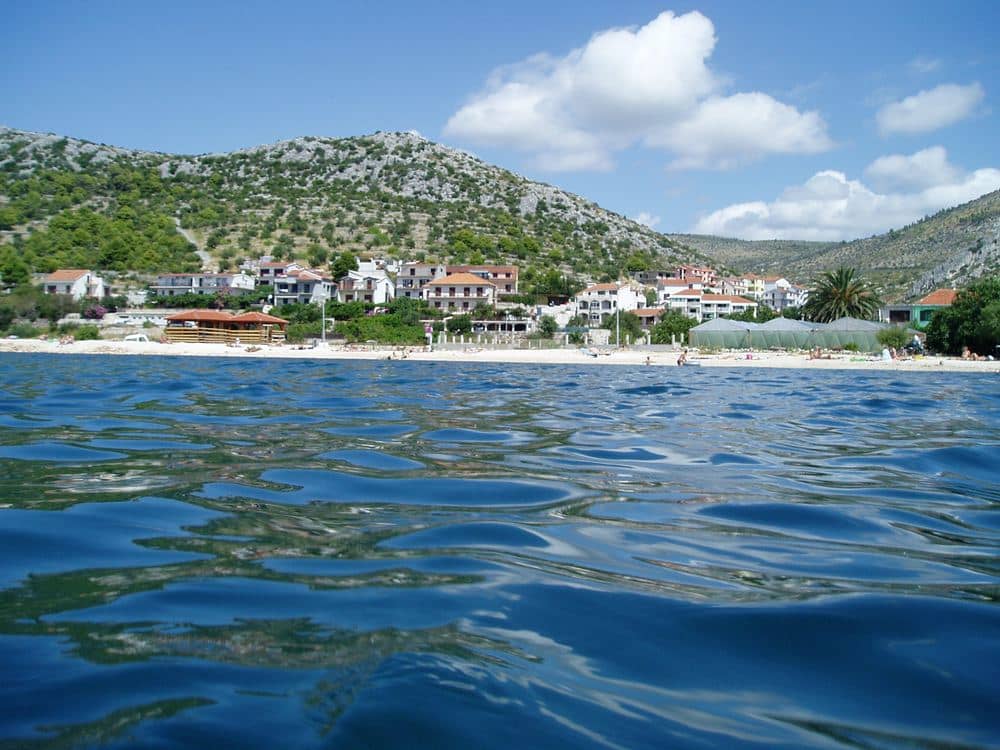
Okrug Gornji Copacabana Beach
Activity

Okrug Gornji Copacabana Beach

The beach at Okrug Gornji on Ciovo runs almost two kilometres along the shore and is the largest developed beach near Trogir; it earned the nickname Copacabana for its length and bustle, not for sand, since the surface is fine shingle. Along the whole stretch are bars, showers, loungers, slides and water sports, and in the hinterland apartments and restaurants, so a day is spent here without going elsewhere. The sea is shallow by the shore and warms quickly, which suits families. In summer the crowd is large, especially in the afternoon; the morning is quieter. From Trogir, Okrug is a ten-minute drive over the bridge to Ciovo, and in summer a boat line runs as well; the car park is paid and fills early.

Photo: Michel Langeveld / CC BY 4.0

Medena Beach
Activity

Medena Beach

A long stretch of mainland beach west of the old town.

Photo: Andrea Albini / CC BY-SA 3.0
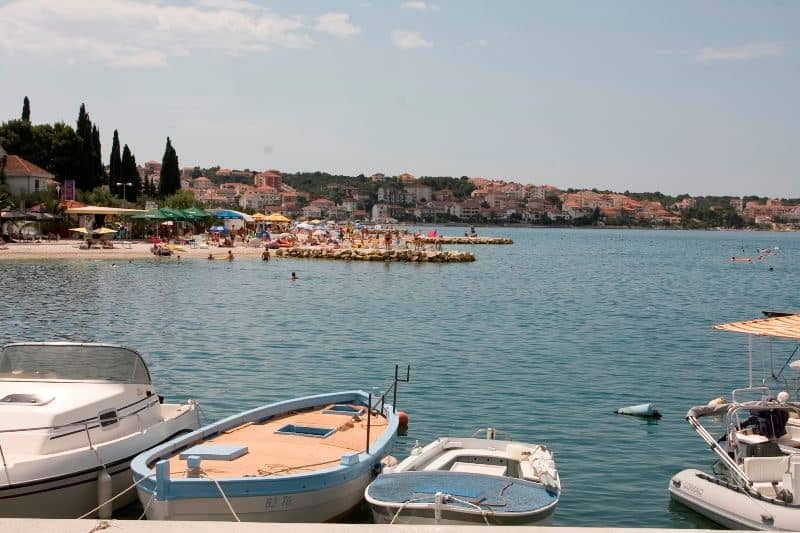
Medena Beach
Activity

Medena Beach

Medena beach runs along the shore west of Trogir, on the stretch toward Seget, and is almost two kilometres long. The shore is arranged as a series of shingle coves and concrete platforms, with a gradual entry into the sea; the surface is fine shingle and the bottom clean. By the beach is a hotel complex built in the 1970s, at the time when this part of the coast was developed as a tourist zone; behind it is a pinewood that gives shade, which on this stretch is an advantage, because the surrounding shore mostly lacks tall growth. There are showers, bars, loungers and sports facilities. From Trogir, Medena is a half-hour walk by the coastal path or a five-minute drive; the car park is by the road and charged in season.

Photo: Andrea Albini / CC BY-SA 3.0

Arbanija Waterfront
Activity

Arbanija Waterfront

A quiet waterfront village stretch on Čiovo, a short ride from the old town.

Photo: RudiK at German Wikipedia / CC BY-SA 3.0

Arbanija Waterfront
Activity

Arbanija Waterfront

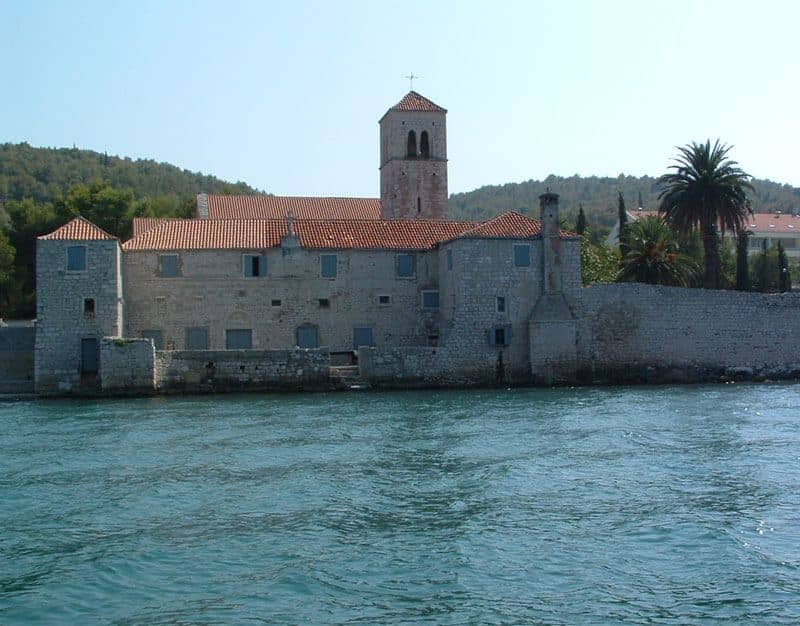
Arbanija is a village on the northern shore of Ciovo, three kilometres from Trogir, and its name tells of its origin: it was settled in the 15th century by newcomers from Albania fleeing the Ottoman conquest. With them came the Dominican order, which raised the monastery of the Holy Cross here in 1432; the complex with church and cloister stands right by the shore and is the oldest building in the village. The shore is laid out as a promenade with concrete platforms and a few shingle coves, and the sea is calm because the channel is narrow. In the village are taverns and a small shop, while the crowds stay in other parts of the island. From Trogir, Arbanija is a ten-minute drive or an hour's walk along the shore.

Photo: RudiK at German Wikipedia / CC BY-SA 3.0

14 more places
  • Blue Lagoon Krknjaši
  • Kava Beach
  • Duga Bay
  • Cava Beach
  • Pantan Beach
  • Slatine Beach
  • Mastrinka Waterfront
  • Seget Donji Promenade
  • Marina Baotić
  • Rožac Beach
  • Saldun Bay
  • Miševac Beach
  • Čiovo Bridge
  • Malačka Pass (Kozjak)

Shopping

6
Trogir Souvenir Market
Shopping

Trogir Souvenir Market

A cluster of stalls in the old town selling souvenirs and gifts.

Photo: Fred Romero from Paris, France / CC BY 2.0
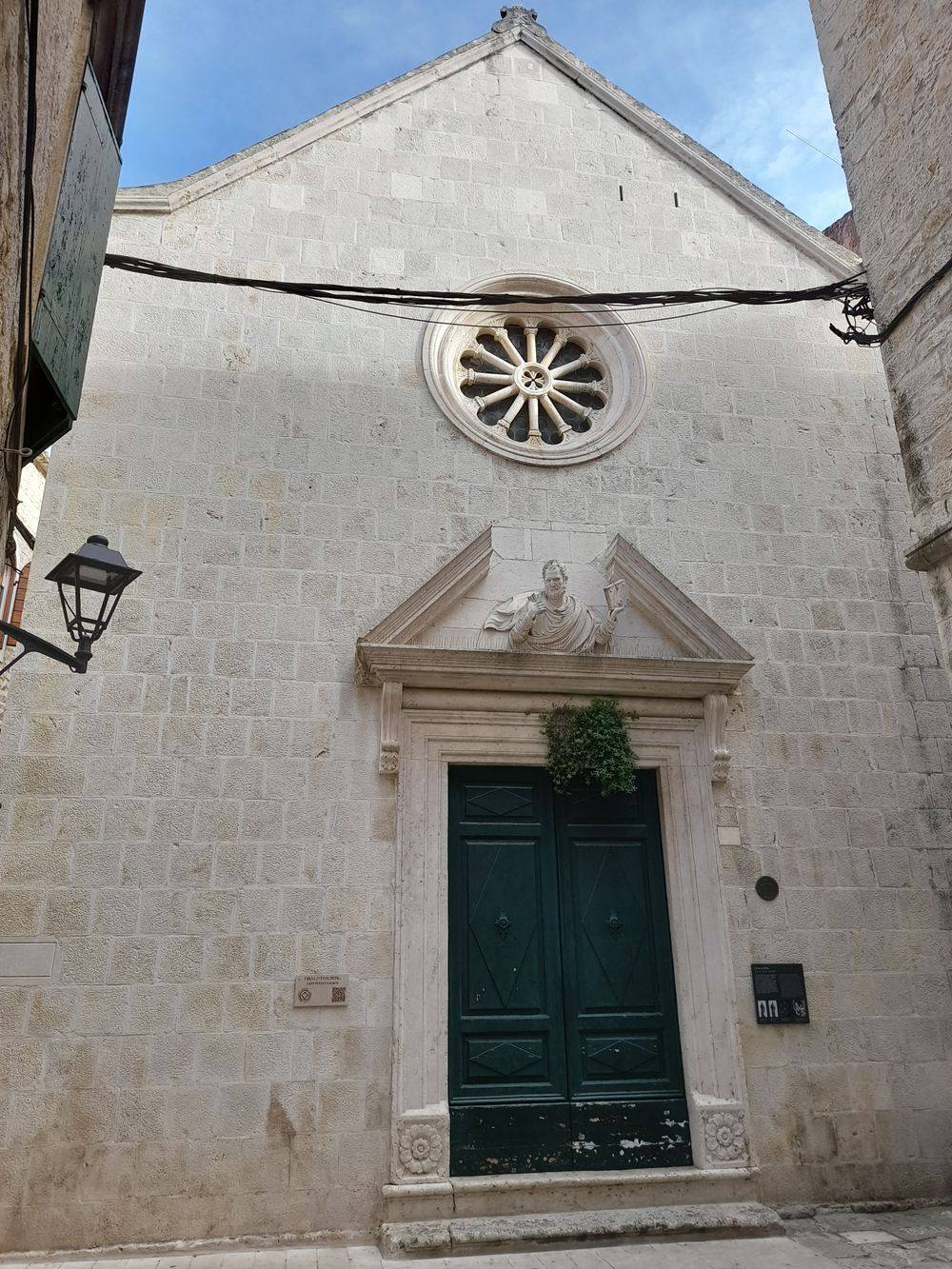
Trogir Souvenir Market
Shopping

Trogir Souvenir Market

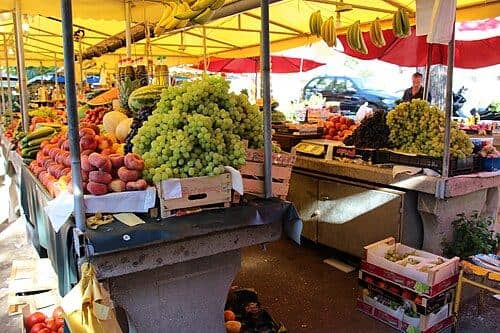
The souvenir shops and stalls in Trogir are gathered by the north town gate and along the stretch toward the market, where most visitors enter. The offer is the usual one for Dalmatian towns: magnets, postcards, T-shirts, sea salt, lavender, soaps, jewellery and textiles. What really comes from this region and is worth taking home is olive oil from the surrounding fields, honey, herbs, and in the stonemasons' workshops objects of Brac stone, because stonecutting in Trogir is a tradition going back to the masters who worked on the cathedral. If you buy oil, ask for the mill and the harvest; with stone, ask who made it. Prices are higher than in the hinterland; browsing is best toward evening.

Photo: Fred Romero from Paris, France / CC BY 2.0
Trogir Fish Market
Shopping

Trogir Fish Market

A small fish market in the old town selling the day's catch.

Photo: thomas / CC BY-SA 2.0

Trogir Fish Market
Shopping

Trogir Fish Market

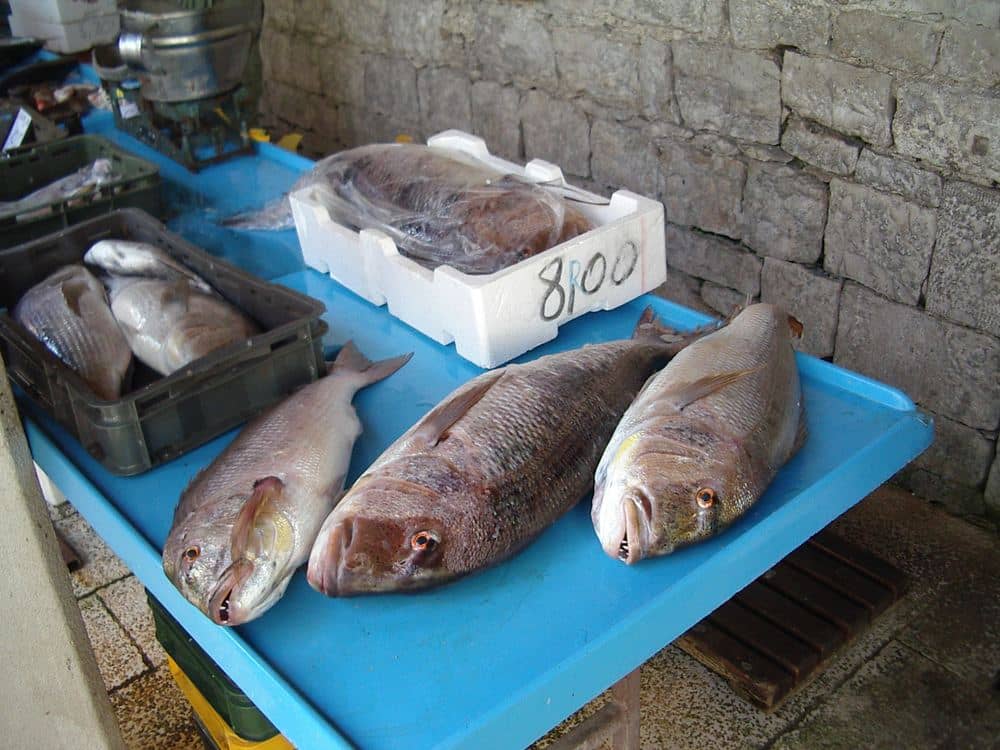
The fish market in Trogir works in a covered stone hall north of the core, beside the town market, and lasts from early morning until what was caught that night is sold. The building is old and purpose-built: stone counters, open sides for the draught and drainage for water, because fish demanded shade and running water before there were refrigerators. The catch comes from the Kastela and Split bays and from the open sea around Solta and Drvenik: sardine, anchovy, hake, sea bream, sea bass, scorpionfish and squid, and now and then langoustines. Prices depend on the day; on Mondays the choice is smaller. The sellers clean the fish on request. It works in the morning, and the best choice is right after opening.

Photo: thomas / CC BY-SA 2.0

4 more places
  • Goja Gallery
  • Trogir City Mall
  • Ribola Market Trogir
  • Trogir Bus Station

Trogir: quick answers

How close is Trogir to Split airport?
Five kilometres, ten minutes by local bus 37 or taxi. That is closer than Split itself, so a late arrival or early departure is easier from Trogir.
Trogir or Split as a base?
Trogir for calm evenings, the airport and day trips by car; Split for ferries, nightlife and city energy. The two are forty minutes apart by bus, and boat lines link them in summer, so mixing is easy.
Where do you park for the old town?
On the mainland side just before the bridge, on the big signed lots; the old town itself is car-free. In July and August come before ten or use the Čiovo side, where spaces last longer.

CroVenture App

Explore Trogir with CroVenture

Places unlock as you reach them, with a passport that fills up as you explore.