Skip to content
All cities

Vis. Things to do, map and hidden gems

42 curated places· 7 hidden gems
Vis
Photo: Dejan Sekuloski / CC BY 3.0

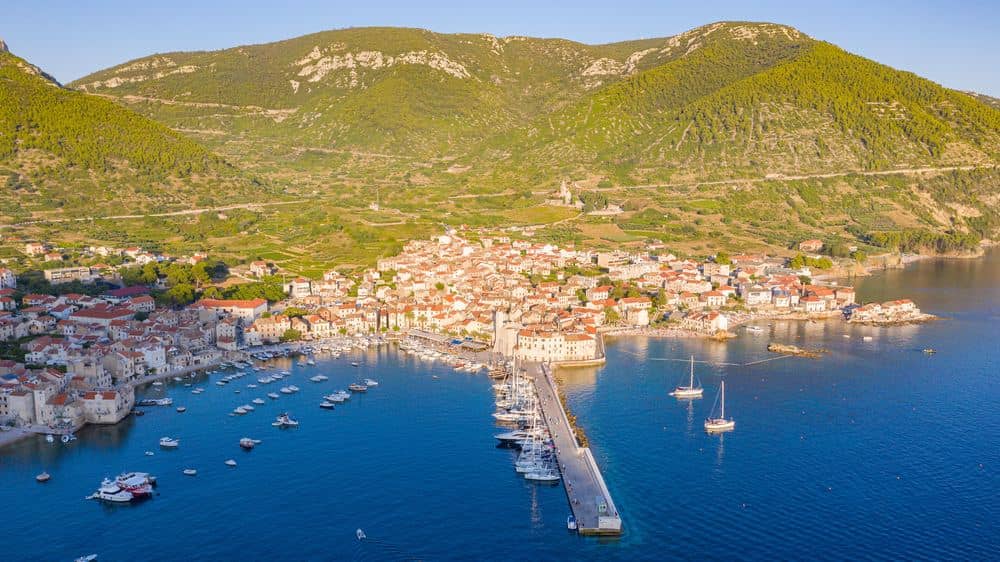
Vis is the far island, the last stop before open sea, and its twentieth century explains its charm: a Yugoslav military zone closed to foreigners until 1989, it missed the hotel boom entirely and kept its two stone towns, Vis and Komiža, its vineyards and its slow rhythm. The film Mamma Mia 2 found its untouched Greece here, which says everything.

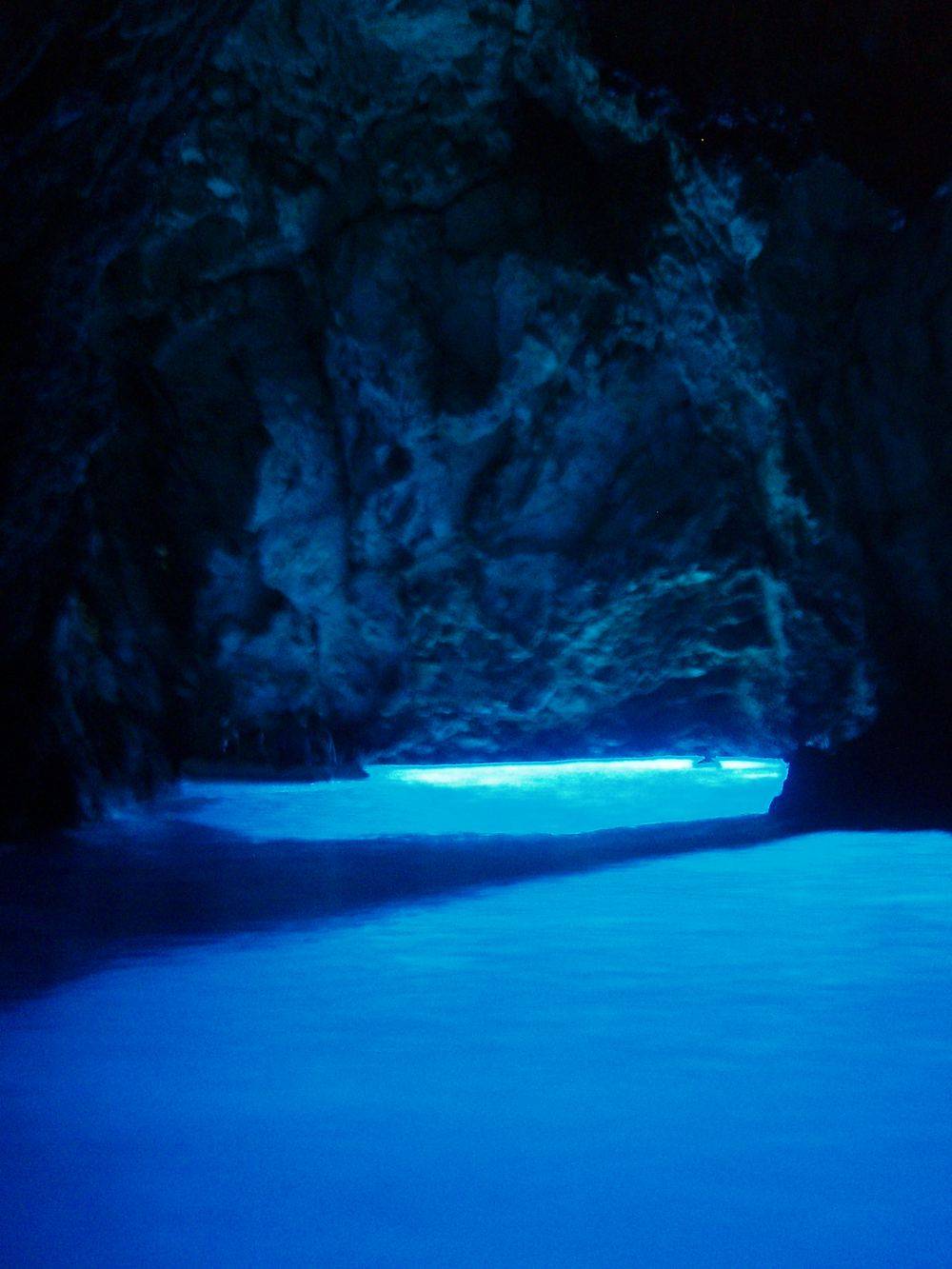
From Komiža, boats run to Biševo islet and the Blue Cave, whose flooded chamber glows silver-blue in late morning light.

What to see on Vis: Issa, Fort George, Komiža and the coves

The next 7 days

Weather data by Open-Meteo.com

Climate month by month

Ten-year averages for Vis, so you can see what a month usually looks like rather than what this week happens to do.

MonthDay °CNight °CRain daysSea °C
January1171116
February1381015
March1491015
April1712916
May22161019
June2721423
July3023226
August3024426
September2520725
October2116922
November17121420
December1391017

No land-resolution reanalysis covers this island, so air values come from the nearest covered point, about 22 km away. Air 2015 to 2024, sea 2022 to 2024. A rain day is 1 mm or more. Data by Open-Meteo.com

Beaches in Vis

Stiniva Cove
Activity

Stiniva Cove

A pebbly beach hidden behind towering cliffs that almost meet.

Photo: Ante Perkovic / CC BY-SA 3.0
Stiniva Cove
Activity

Stiniva Cove

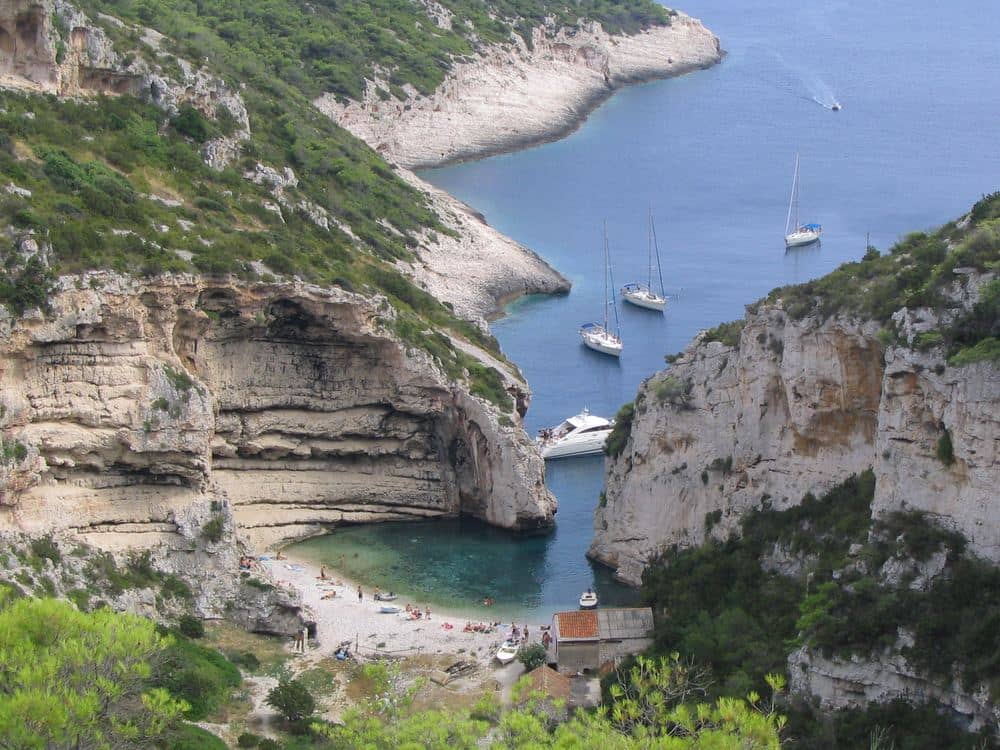
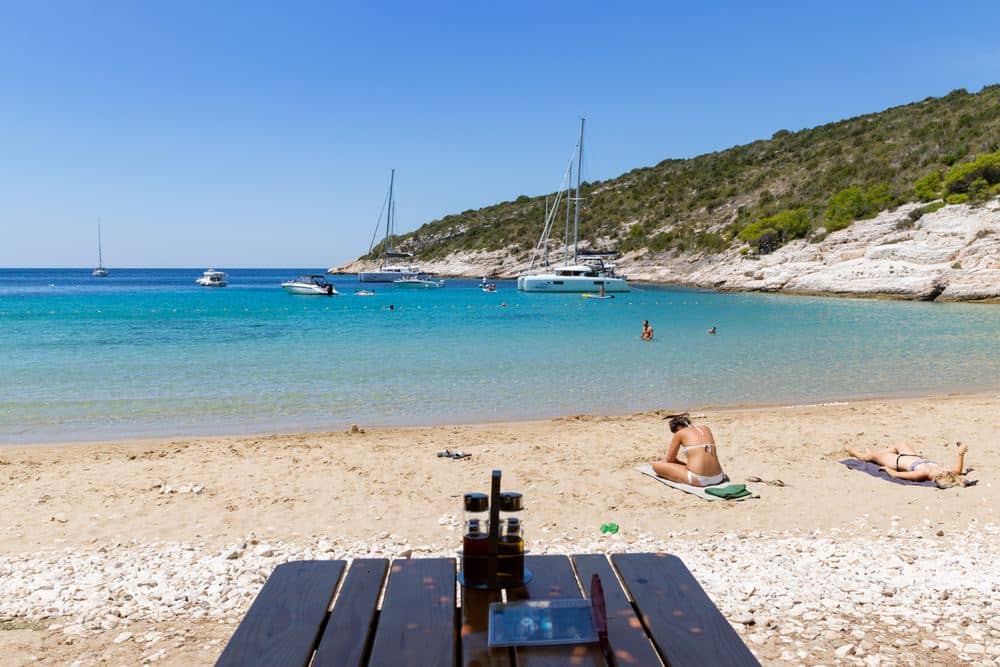
Stiniva is a cove on the southern coast of Vis that looks as if it arose by mistake: steep cliffs on both sides almost meet and leave a passage a few metres wide, through which you enter a small shingle strand closed on every side. The cove is in fact a former cave whose vault collapsed, leaving only the opening toward the sea. In 2016 it was declared the finest beach in Europe and has been a regular stop for excursion boats since. You come by boat from Vis and Komiza or on foot by a path from the road above the cove, with a steep descent of some twenty minutes; the return uphill demands footwear and water. In the afternoon the cove is in shade, because the sun goes behind the cliffs, and it is quietest early in the morning, before the boats arrive.

Photo: Ante Perkovic / CC BY-SA 3.0

Porat Beach Biševo
Activity

Porat Beach Biševo

The beach beside Biševo Island's small harbour village of Porat.

Photo: dronepicr / CC BY 2.0

Porat Beach Biševo
Activity

Porat Beach Biševo

Porat is a bay on the south-western side of Bisevo and the only true sandy beach on the island. The bottom is sandy and shallow, you wade far into the sea, and the bay is sheltered on both sides, so the water is calm and warmer than elsewhere on this part of the open sea. By the beach stand a few stone houses and a tavern that works in season; above them are vineyards and dry-stone walls, because vines were grown here for centuries and fed Komiza. Porat is less visited than the Blue Cave, which is on the other side of the island, so the afternoon here is quiet even when there are queues at the cave. The bay is reached by the boat line from Komiza and then some fifteen minutes on foot across the island, or by excursion boat directly.

Photo: dronepicr / CC BY 2.0

Stončica Beach
Activity

Stončica Beach

A rare sandy bay with shallow, child-friendly water and a lighthouse.

Photo: dronepicr / CC BY 2.0

Stončica Beach
Activity

Stončica Beach

Stoncica is a bay at the north-eastern end of Vis and one of the few sandy beaches on the island. The bottom is sandy and shallow, you wade far into the sea and it warms quickly, so the bay is among the best in the central Adriatic for families with small children. The bay is drawn deep in and sheltered on both sides, so the sea is calm almost always, even when it blows outside. Above the beach is a pinewood, and on the cape beyond the bay stands a 19th-century lighthouse. A tavern serving fish works in the bay, and the beach is reached by taxi boat from Vis in about fifteen minutes or by car and then ten minutes on foot by a path. Parking is limited, and in July and August the afternoon is crowded; in the morning the bay is empty and the sea like glass.

Photo: dronepicr / CC BY 2.0

Srebrna Beach
Activity

Srebrna Beach

A quiet pebble beach on the southern coast of Vis Island.

Photo: sanja mm / CC BY 3.0

Srebrna Beach
Activity

Srebrna Beach

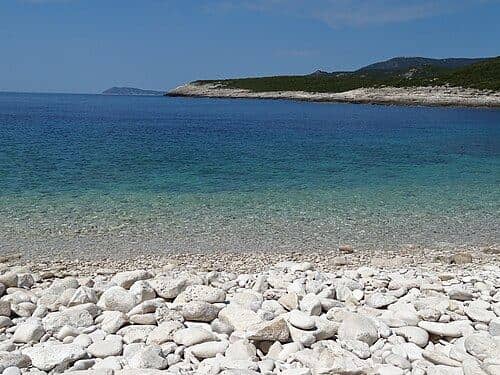
Srebrna is a beach on the southern coast of Vis, west of Rukavac, and it takes its name from the white smooth pebbles that look silvery in the sun. The pebbles are large and rounded, and the bottom drops away quickly, so this is a beach for swimmers; children with less experience in the water are better suited by the shallow bays on the eastern side of the island. The sea is markedly clear because there is no sand or river silt, and the surrounding rocks and pines give shade only in the late afternoon hours. Srebrna is reached by a gravel track from the main road and the last few hundred metres on foot, or by boat from Rukavac and Vis. There are almost no facilities, a small bar works in season; bring water, food and water shoes.

Photo: sanja mm / CC BY 3.0

Zaglav Beach
Activity

Zaglav Beach

A pebble beach on the eastern coast of Vis Island.

Photo: Falk2 / CC BY-SA 4.0

Zaglav Beach
Activity

Zaglav Beach

Zaglav is a bay on the eastern coast of Vis, between Milna and Stoncica, and belongs to that series of bays you do not reach by accident. The beach is shingle, with larger pebbles at the edge and finer ones in the water, and the sea is sheltered by capes on both sides, so it is calm even when it blows. Behind the beach are pines and maquis that hold shade for part of the day. A tavern works in the bay that grew out of a fisherman's house and serves what is caught; it is reached by boat, which for many is the main reason for the visit. By land you come on a gravel track and then some ten minutes on foot. There are no showers or loungers, so bring what you need. The bay also suits anchoring smaller craft; the shelter holds for all winds except the easterly.

Photo: Falk2 / CC BY-SA 4.0

Grandovac Beach
Activity

Grandovac Beach

One of Vis Island's most popular pebble beaches, shaded by pines.

Photo: August Dominus / CC BY-SA 4.0

Grandovac Beach
Activity

Grandovac Beach

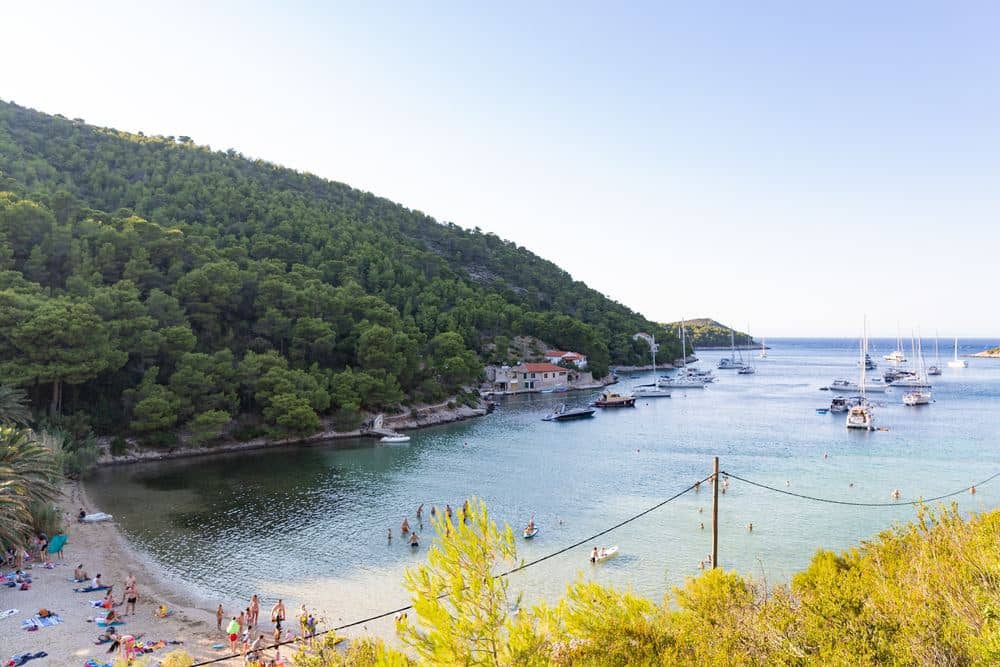
Grandovac is a bay a few hundred metres east of Kut, a part of the town of Vis, and it is the nearest real beach for those staying in town. The shore is shingle, with larger pebbles, and in the hinterland is a pinewood that gives shade almost all day, which here is a rarity; it is precisely for that shade that the beach is the most popular in this part of the island on summer afternoons. The sea is clear and the depth grows moderately, and the bay is sheltered from westerly winds. A bar works by the beach, there is a shower and a section arranged with loungers, and the rest of the shore has stayed natural. From Kut, Grandovac is a fifteen-minute walk by the coastal path, and by car you reach a car park above the bay. In the morning it is almost empty, in the afternoon lively.

Photo: August Dominus / CC BY-SA 4.0

Plan your visit

Vis in a nutshell

42 places, 1 routes.

What is actually worth your time in Vis?

Start with Green Cave, Budikovac Island, and Hum Viewpoint. After that it depends on what you enjoy: the guide holds 42 places in Vis, sorted into sights, activities, food and shopping, so you can skip whole categories that bore you.

Green CaveGreen Cave

How do you get away from the crowds in Vis?

Follow the hidden gems: 7 places that rarely make the guidebooks, most of them a few streets off the main drag. Green Cave, Budikovac Island, and Hum Viewpoint are good ones to start with.

Budikovac IslandBudikovac Island

No time to plan? Just follow a route.

Pick one of From Luka to Kut. Each walk runs stop by stop in a fixed order, so the only decision left is where to have lunch.

Blue CaveBlue Cave
Our tips

What we would do around Vis

Day trips within reach of Vis, plus the routes and quiet corners our editors keep coming back to.

Vis itineraries

  • 6 stops

    From Luka to Kut

    Ancient Issa and the town's two old quarters

    1. Vis Harbour
    2. Gospina Batarija Archaeological Museum
    3. Ancient Issa
    4. Prirovo Peninsula
    5. Church of St Jerome
    6. Kut Old Quarter

Hidden gems in Vis

Green Cave
Legendary
Activity

Green Cave

A sea cave near Ravnik Island where the water glows with an emerald light.

Photo: Dejan Sekuloski / CC BY 3.0

Green Cave
Activity Legendary

Green Cave

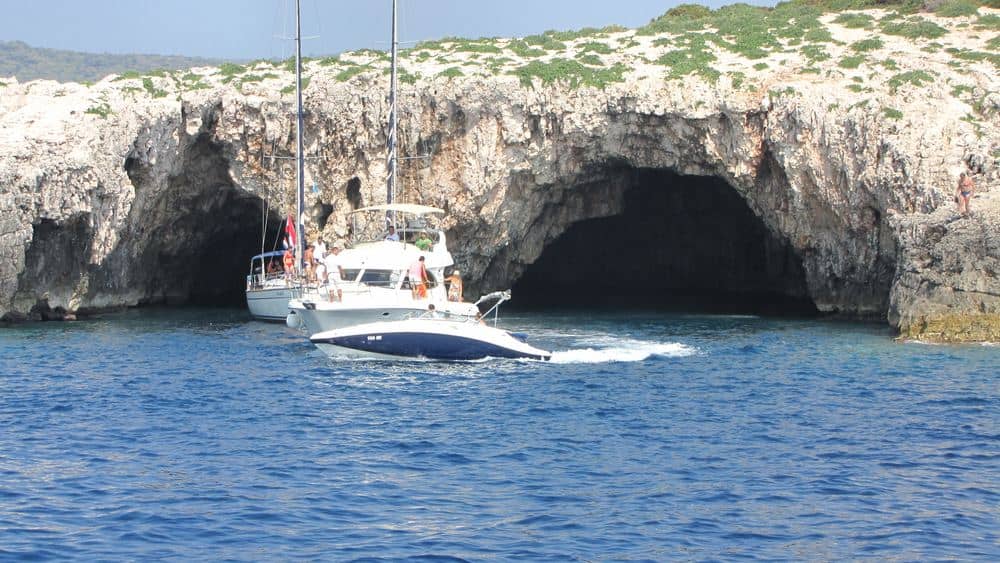
The Green Cave lies on the islet of Ravnik, east of Vis, and in the way it is lit it differs from the better-known Blue Cave on Bisevo: here light enters through an opening in the ceiling, falls vertically onto the water and gives it a greenish tone, and at noon a bright column reaching to the bottom is visible in the chamber. The cave has two entrances large enough for a small boat to enter, so people also come in by kayak; unlike the Blue Cave, swimming is allowed here and that is the main reason for coming. The bottom is shingle and shallow at the edge. You come by excursion boat from Vis and Komiza, usually as part of a tour of the southern coast, or in your own craft. The best time is around noon, when the sun is highest.

Photo: Dejan Sekuloski / CC BY 3.0

Budikovac Island
Legendary
Activity

Budikovac Island

A tiny island off Vis famous for its shallow turquoise lagoon.

Photo: Dejan Sekuloski / CC BY 3.0

Budikovac Island
Activity Legendary

Budikovac Island

Budikovac is an islet off the south-eastern coast of Vis, known for the shallow lagoon that forms between it and the neighbouring islet of Mali Budikovac: the strip of sea between them is only waist deep, the bottom is pale and sandy, so the water takes on a markedly light colour rarely seen in this part of the Adriatic. For that reason the lagoon is often called blue. The islet is almost uninhabited; one family lives there, keeping a tavern in season and growing a garden, and the rest is maquis and dry-stone walls from the time when vines were planted here. You come by excursion boat from Vis, Komiza or Rukavac, or in your own craft. The anchorage is sheltered; bring water shoes because of the shells on the bottom.

Photo: Dejan Sekuloski / CC BY 3.0

Blue Cave
Legendary
Activity

Blue Cave

A sea cave on Biševo that glows electric blue at midday.

Photo: japus / CC BY 2.5

Blue Cave
Activity Legendary

Blue Cave

The Blue Cave lies in Balun bay on the islet of Bisevo, south-west of Vis, and is known for its light: the sun's rays enter through an underwater opening on the southern side, reflect off the pale bottom and fill the chamber with a blue glow, while objects in the water take on a silvery colour. The cave is about twenty-four metres long, and the vault reaches fifteen metres in height. Until 1884 it could be entered only by diving through the underwater passage; in that year, at the urging of the Austrian explorer Eugen von Ransonnet, an artificial entrance was cut through which boats pass today. The best time is between eleven and twelve, when the sun is highest. You come on an organised excursion from Vis or Komiza; swimming inside is not permitted.

Photo: japus / CC BY 2.5

Explore Vis by category

Sights

13
Host Lighthouse
Hidden gem
Sight

Host Lighthouse

A lighthouse on the islet of Host, at the entrance to Vis bay.

Photo: Ex13 / CC BY-SA 3.0

Host Lighthouse
Sight Hidden gem

Host Lighthouse

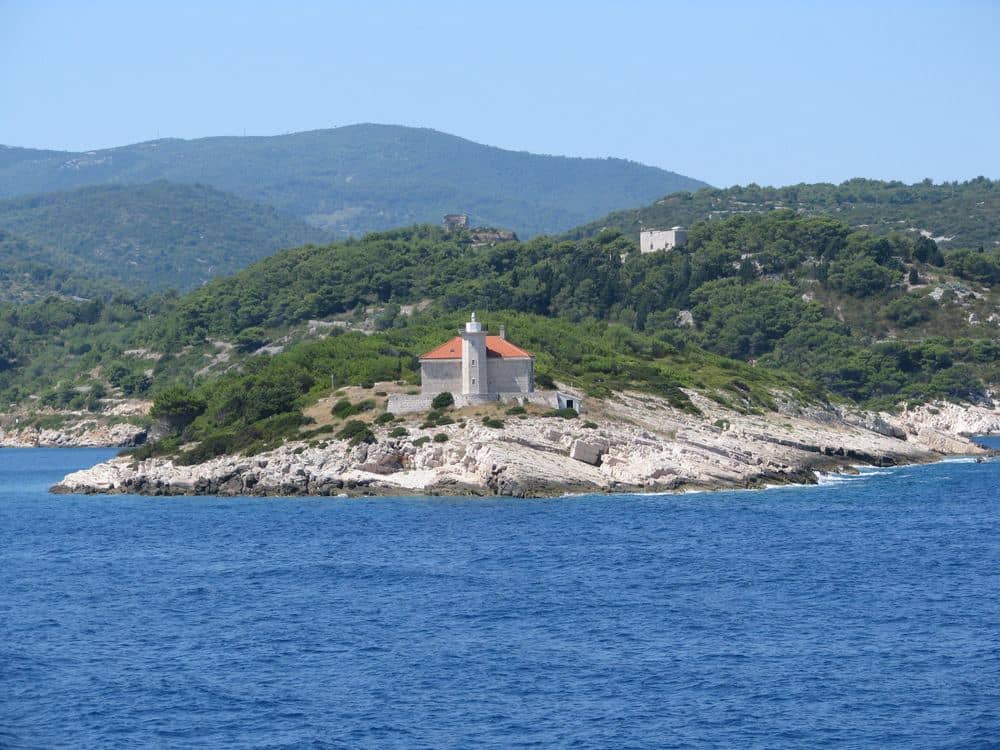
The lighthouse at the entrance to the bay of Vis marks the passage by which ships enter the best-sheltered harbour of the central Adriatic. It was set up in the 19th century, in the period when the Austrian maritime administration was equipping the eastern coast with a network of lights; until then the bay was entered by day and by the knowledge of local pilots. The mark was needed because the entrance is narrow, with the islet of Host and underwater reefs on one side, and ships came here at all hours, above all naval ones. Today the lighthouse works automatically and is visible from the whole shore of the bay. It is not arranged for visitors, but it is seen from the boat on arrival and from the shore by Fort George; toward evening, when it lights up, it is a good marker for a photograph of the bay.

Insider tip

The best view of the lighthouse is from the waterfront or from a boat entering Vis.

Photo: Ex13 / CC BY-SA 3.0

Komiža Castle
Hidden gem
Sight

Komiža Castle

A Renaissance fort on Komiža's waterfront, today a fishing museum.

Photo: August Dominus / CC BY-SA 4.0

Komiža Castle
Sight Hidden gem

Komiža Castle

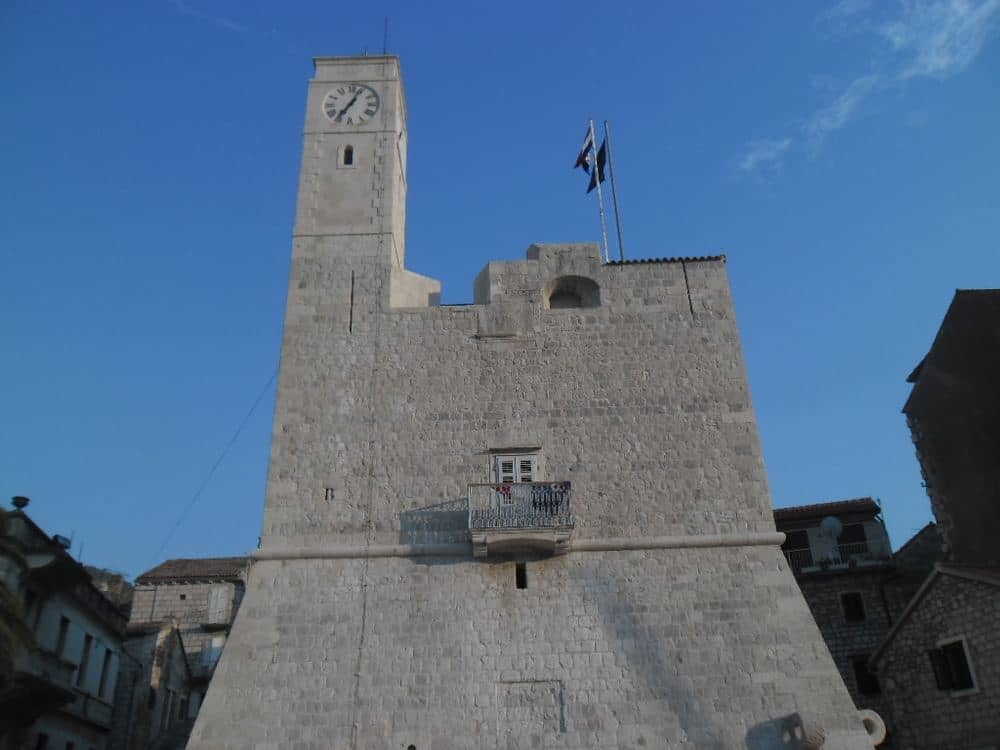
The Kastel in Komiza was raised in 1585 right on the shore, at a time when pirate attacks on this part of the Adriatic were frequent and the town was wealthy because it lived from fish. The structure is Renaissance, with a massive square body and a prominent round tower at the corner, a form suited to firearms; from the tower the entrance to the bay and the approach to the shore were watched. The townspeople took shelter in the Kastel during an attack, and the communal store was kept in it as well. After its defensive purpose ended the building changed use, and today it houses the fishing museum. The Kastel stands at the end of the waterfront, by the sea, and is seen from outside at any time; the interior is accessible with a museum ticket.

Insider tip

Look for the falkuša replica inside; it is open mainly in summer, so check the hours.

Photo: August Dominus / CC BY-SA 4.0

Komiža
Sight

Komiža

A salt-worn fishing town huddled under Hum mountain.

Photo: dronepicr / CC BY 2.0

Komiža
Sight

Komiža

Komiza lies on the western side of the island, in a bay below Mount Hum, and its whole history is one of fishing. From here for centuries people fished the open sea around Palagruza, the most distant Croatian island group, and for that voyage a special boat was developed: the falkusa, a wooden gajeta with a large lateen sail and removable side boards that were taken off when rowing. The Komiza boats went out for weeks, and the catch was salted in wooden barrels. The town is compact, with narrow streets climbing the slope, and on the shore stands the Renaissance Kastel of the 16th century, today a fishing museum. Above the town is the Benedictine monastery of St Nicholas. From Vis, Komiza is ten kilometres across the middle of the island.

Photo: dronepicr / CC BY 2.0

Prirovo Peninsula
Sight

Prirovo Peninsula

A slender peninsula that splits Vis harbour into two separate bays.

Photo: Minestrone / CC BY-SA 4.0

Prirovo Peninsula
Sight

Prirovo Peninsula

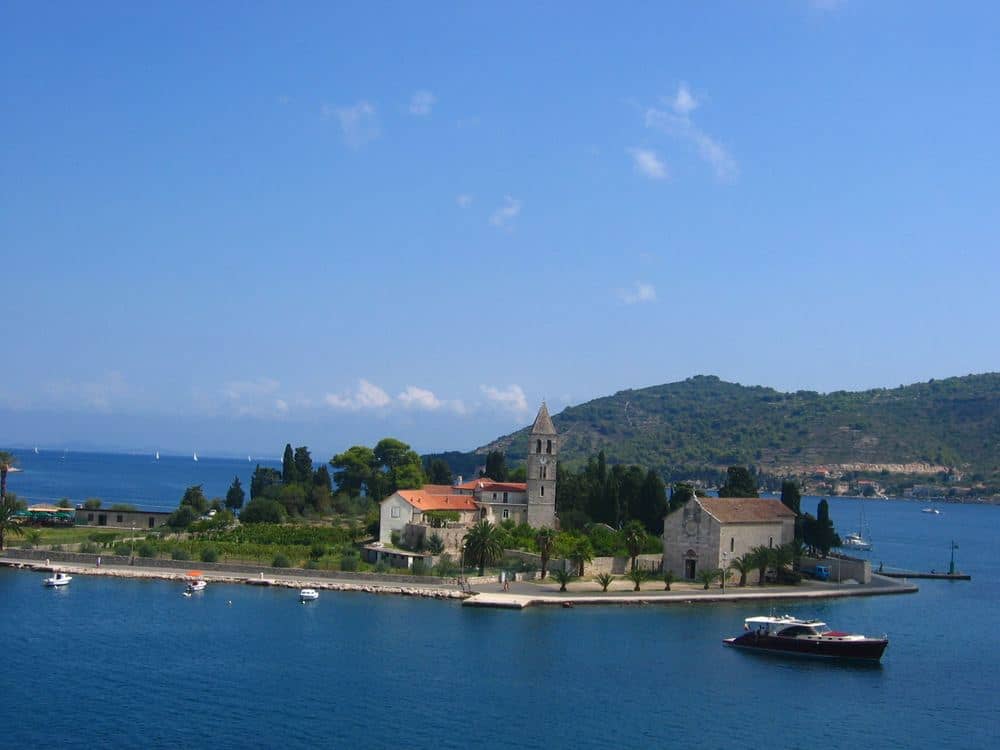
Prirovo is a narrow peninsula that enters the bay of Vis and divides it into two coves. On it stands a Franciscan monastery with the church of St Jerome, raised in the 16th century, and the interest lies in the foundations: the monastery was built directly on the ancient theatre of Greek and Roman Issa, so the houses around it are arranged in a gentle arc that follows the former auditorium. That shape is best seen from the air or from the sea, and on the ground it is recognised by the curving street. Beside the monastery is a cemetery with the tombs of seafaring families and a monument to those who fell in the naval battles off Vis. The peninsula is low and overgrown with pines, and a promenade runs around it from which the whole harbour is visible. From the centre Prirovo is a ten-minute walk.

Photo: Minestrone / CC BY-SA 4.0

Church of St Jerome
Sight

Church of St Jerome

A stone parish church standing at the very tip of the Prirovo peninsula.

Photo: Falk2 / CC BY-SA 4.0

Church of St Jerome
Sight

Church of St Jerome

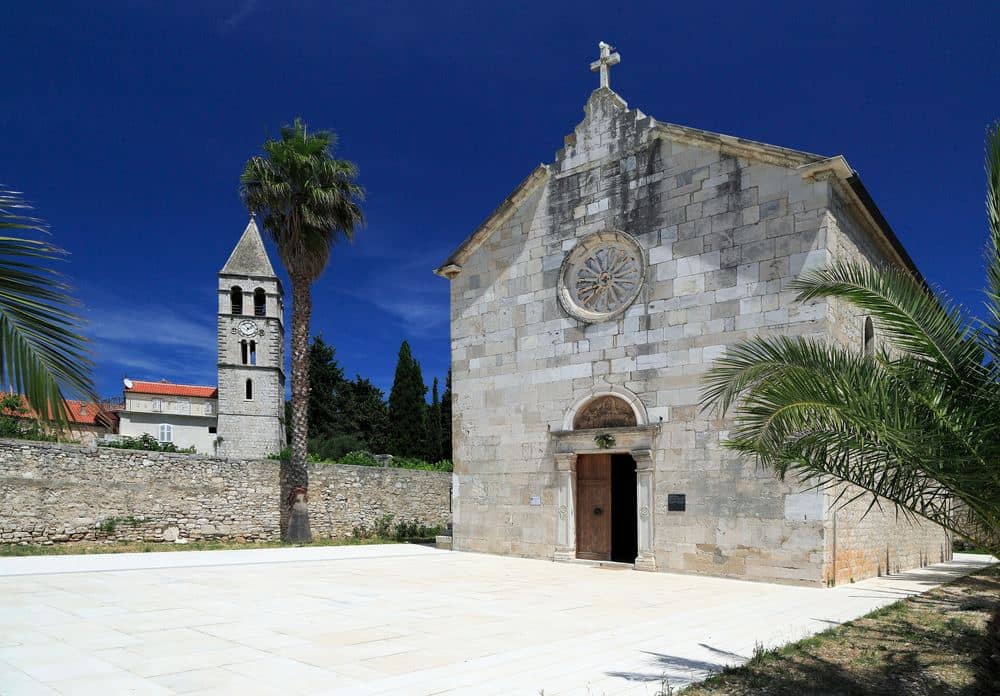
The Church of St Jerome is part of the Franciscan monastery at the tip of the Prirovo peninsula and was raised in the 16th century, at the time when the Franciscans received the plot on which the remains of the ancient theatre lay. The building is simple: a single nave, a stone facade, a bell tower and a wooden ceiling, and the interior keeps altar paintings and votive depictions of ships donated by Vis seafarers after voyages that ended well. Such vows were common on the Adriatic, because one did not always return from a long voyage. The monastery also keeps a collection of archaeological finds from Prirovo. The church opens around masses and during the day in season; entry is free. Beside it is the cemetery, and the view from the peninsula takes in the whole bay.

Photo: Falk2 / CC BY-SA 4.0

Gospina Batarija Archaeological Museum
Sight

Gospina Batarija Archaeological Museum

A former coastal battery above Vis harbour, now home to an archaeological museum.

Photo: August Dominus / CC BY-SA 4.0

Gospina Batarija Archaeological Museum
Sight

Gospina Batarija Archaeological Museum

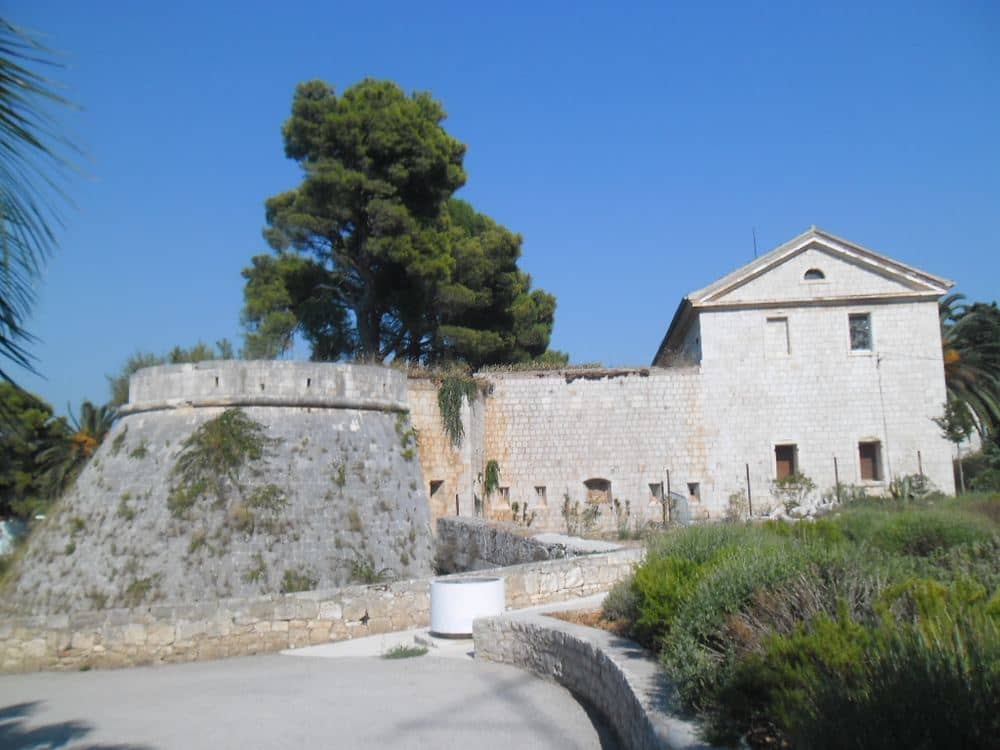
Gospina batarija is a coastal fortification above the harbour of Vis, raised in the 19th century as a gun position to control the entrance to the bay; it bears the name of a nearby church. The structure is a low stone building with an embankment toward the sea and rooms for the crew and ammunition, of the kind built along the whole Adriatic at that time. When it lost its military purpose it was restored and the Archaeological Museum of Vis was placed in it, keeping finds from Greek and Roman Issa: pottery, coins minted at Issa, jewellery, stone fragments and objects from the seabed around the island. The display explains what everyday life in the ancient town looked like and how trade moved along the Adriatic. The museum is small, the visit takes an hour, and the ticket is cheap.

Photo: August Dominus / CC BY-SA 4.0

7 more places
  • Lighthouse Stupišće
  • Komiža Fishing Museum
  • St Nicholas Monastery Komiža
  • Stončica Lighthouse
  • Fort George
  • Kut Old Quarter
  • Ancient Issa

Activities

25
Green Cave
Legendary
Activity

Green Cave

A sea cave near Ravnik Island where the water glows with an emerald light.

Photo: Dejan Sekuloski / CC BY 3.0

Green Cave
Activity Legendary

Green Cave

The Green Cave lies on the islet of Ravnik, east of Vis, and in the way it is lit it differs from the better-known Blue Cave on Bisevo: here light enters through an opening in the ceiling, falls vertically onto the water and gives it a greenish tone, and at noon a bright column reaching to the bottom is visible in the chamber. The cave has two entrances large enough for a small boat to enter, so people also come in by kayak; unlike the Blue Cave, swimming is allowed here and that is the main reason for coming. The bottom is shingle and shallow at the edge. You come by excursion boat from Vis and Komiza, usually as part of a tour of the southern coast, or in your own craft. The best time is around noon, when the sun is highest.

Photo: Dejan Sekuloski / CC BY 3.0

Budikovac Island
Legendary
Activity

Budikovac Island

A tiny island off Vis famous for its shallow turquoise lagoon.

Photo: Dejan Sekuloski / CC BY 3.0

Budikovac Island
Activity Legendary

Budikovac Island

Budikovac is an islet off the south-eastern coast of Vis, known for the shallow lagoon that forms between it and the neighbouring islet of Mali Budikovac: the strip of sea between them is only waist deep, the bottom is pale and sandy, so the water takes on a markedly light colour rarely seen in this part of the Adriatic. For that reason the lagoon is often called blue. The islet is almost uninhabited; one family lives there, keeping a tavern in season and growing a garden, and the rest is maquis and dry-stone walls from the time when vines were planted here. You come by excursion boat from Vis, Komiza or Rukavac, or in your own craft. The anchorage is sheltered; bring water shoes because of the shells on the bottom.

Photo: Dejan Sekuloski / CC BY 3.0

Blue Cave
Legendary
Activity

Blue Cave

A sea cave on Biševo that glows electric blue at midday.

Photo: japus / CC BY 2.5

Blue Cave
Activity Legendary

Blue Cave

The Blue Cave lies in Balun bay on the islet of Bisevo, south-west of Vis, and is known for its light: the sun's rays enter through an underwater opening on the southern side, reflect off the pale bottom and fill the chamber with a blue glow, while objects in the water take on a silvery colour. The cave is about twenty-four metres long, and the vault reaches fifteen metres in height. Until 1884 it could be entered only by diving through the underwater passage; in that year, at the urging of the Austrian explorer Eugen von Ransonnet, an artificial entrance was cut through which boats pass today. The best time is between eleven and twelve, when the sun is highest. You come on an organised excursion from Vis or Komiza; swimming inside is not permitted.

Photo: japus / CC BY 2.5

Stiniva Cove
Activity

Stiniva Cove

A pebbly beach hidden behind towering cliffs that almost meet.

Photo: Ante Perkovic / CC BY-SA 3.0
Stiniva Cove
Activity

Stiniva Cove

Stiniva is a cove on the southern coast of Vis that looks as if it arose by mistake: steep cliffs on both sides almost meet and leave a passage a few metres wide, through which you enter a small shingle strand closed on every side. The cove is in fact a former cave whose vault collapsed, leaving only the opening toward the sea. In 2016 it was declared the finest beach in Europe and has been a regular stop for excursion boats since. You come by boat from Vis and Komiza or on foot by a path from the road above the cove, with a steep descent of some twenty minutes; the return uphill demands footwear and water. In the afternoon the cove is in shade, because the sun goes behind the cliffs, and it is quietest early in the morning, before the boats arrive.

Photo: Ante Perkovic / CC BY-SA 3.0

Parja Submarine Tunnel
Activity

Parja Submarine Tunnel

A tunnel cut through coastal rock that once sheltered submarines.

Photo: Ex13 / CC BY-SA 3.0
Parja Submarine Tunnel
Activity

Parja Submarine Tunnel

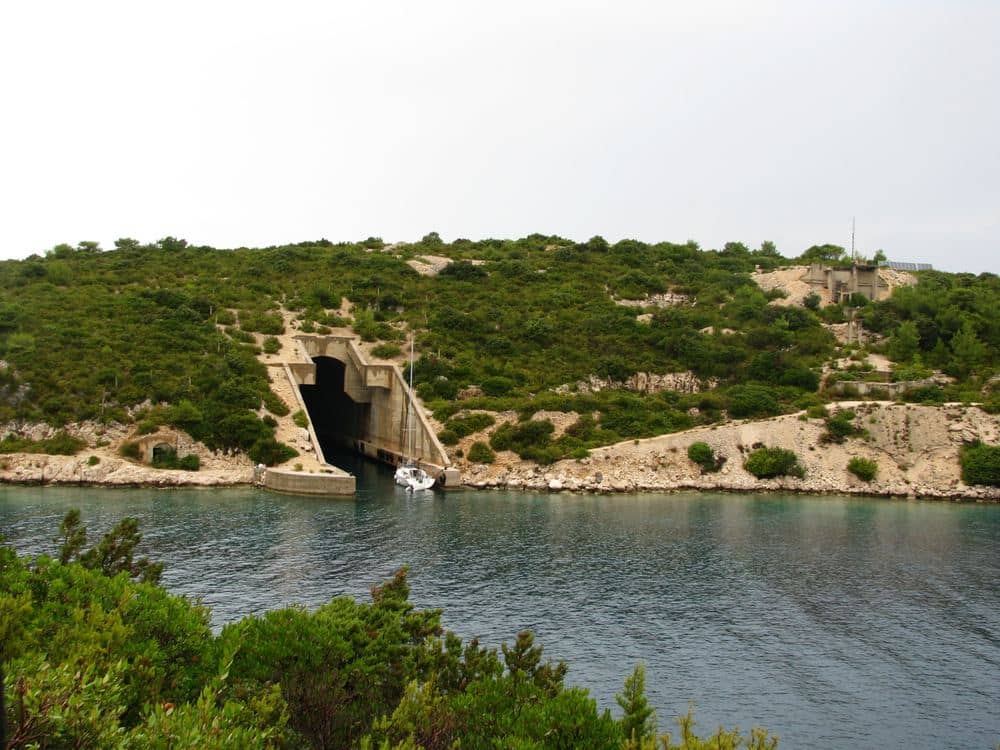
The tunnel in Parja cove is one of several submarine shelters cut into the coastal rock of Vis at the time when the island was a closed military zone. From the 1950s until 1989 Vis was a base of the Yugoslav navy and foreign visitors were not allowed on the island; in that period tunnels, shelters, gun positions and underground depots were built, scattered across the whole island. This tunnel is large enough for a small submarine or a boat to enter, and it is concreted, its far end closed within the rock. Today you enter by boat, kayak or swimming; inside it is cold, dark and quiet, and the water unusually clear. You come by excursion boat from Vis or in your own craft, with care because of the narrow entrance.

Photo: Ex13 / CC BY-SA 3.0

Host Island
Activity

Host Island

A small uninhabited islet that guards the entrance to Vis bay.

Photo: August Dominus / CC BY-SA 4.0

Host Island
Activity

Host Island

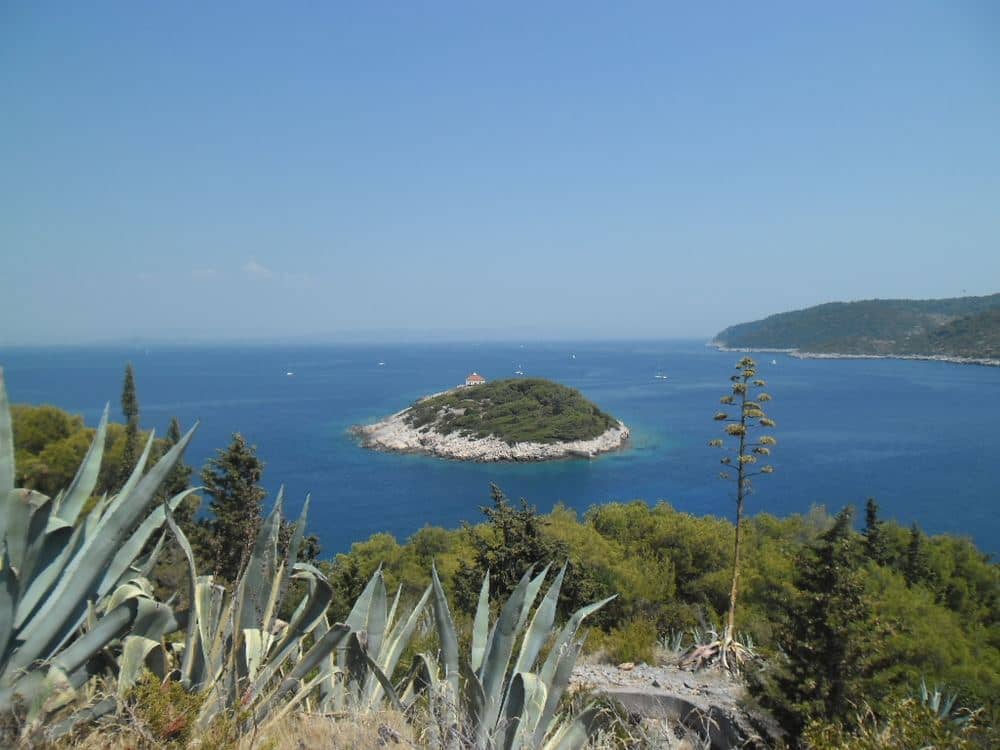
The islet of Host lies before the entrance to the bay of Vis and, although it is small and uninhabited, its name appears in naval history twice. In 1811 in the waters around it a British squadron under the command of William Hoste defeated a considerably more numerous French and Italian force, and the islet is named after him. In 1866 the battle of Vis was fought before the same island, in which the Austrian fleet under Wilhelm von Tegetthoff sank two Italian ironclads; it was the last great naval battle fought by ramming rather than by guns. Today Host is overgrown with low scrub, and a lighthouse stands on it. It is toured by boat from the harbour of Vis; bathing is possible off the rocks, and landing depends on the wind.

Photo: August Dominus / CC BY-SA 4.0

19 more places
  • Hum Viewpoint
  • Ravnik Island
  • Smokova Beach
  • Biševo Island
  • Porat Beach Biševo
  • Barjoška Cove
  • Mamma Mia Beach Barjoška
  • Stončica Beach
  • Vis Harbour
  • Vis Ferry Port
  • Srebrna Beach
  • Zaglav Beach
  • Grandovac Beach
  • Tepluš Beach
  • Milna Beach
  • Rukavac Bay
  • Komiža Waterfront
  • Zmorac Beach
  • Tito's Cave

Shopping

4
4 more places
  • Vis Market
  • Vis Fish Market
  • Komiža Market
  • Komiža Fish Market

Vis: quick answers

How do I get to Vis?
Only from Split: the car ferry takes about two hours twenty, the fast catamaran around ninety minutes into Vis town. In high summer book both ahead; the last returns leave early evening.
How does the Blue Cave visit work?
Licensed boats from Komiža take you to Biševo, where you transfer to small entry boats with a ticket for a short ride inside; the glow is best late morning on calm days. Rough sea closes the cave, so keep a flexible slot.
Do I need a car on Vis?
Vis and Komiža are linked by bus over the hill, and boat and scooter rentals cover the coves. A small car or scooter helps for Stiniva bay and the hidden southern beaches, but a base plus boat day covers the essentials.

CroVenture App

Explore Vis with CroVenture

Places unlock as you reach them, with a passport that fills up as you explore.