Skip to content
All cities

Rovinj. Things to do, map and hidden gems

45 curated places· 5 hidden gems
Rovinj
Photo: Berthold Werner / CC BY-SA 3.0

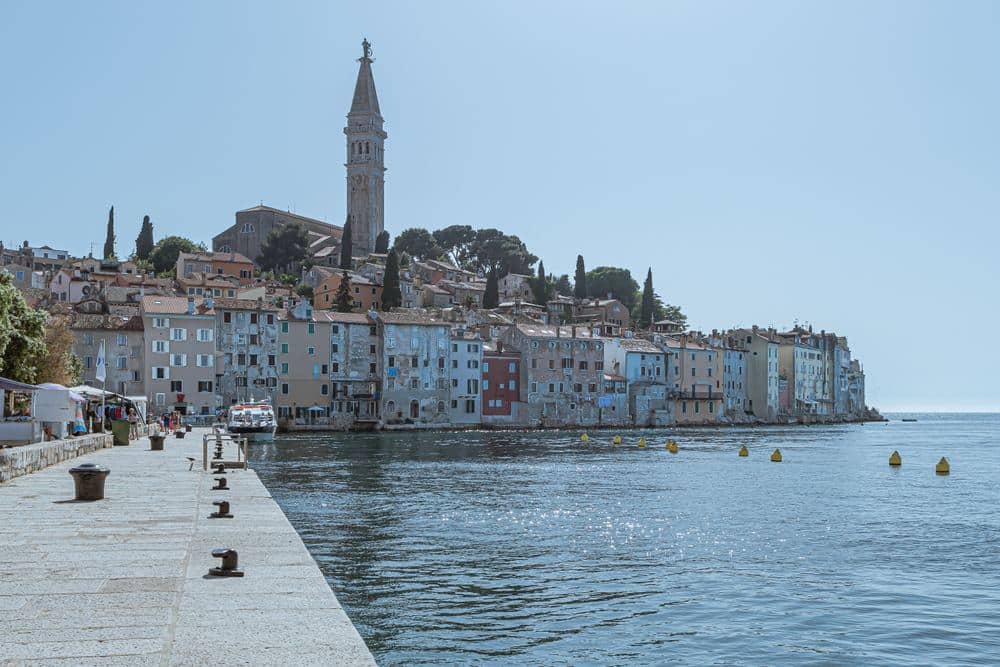
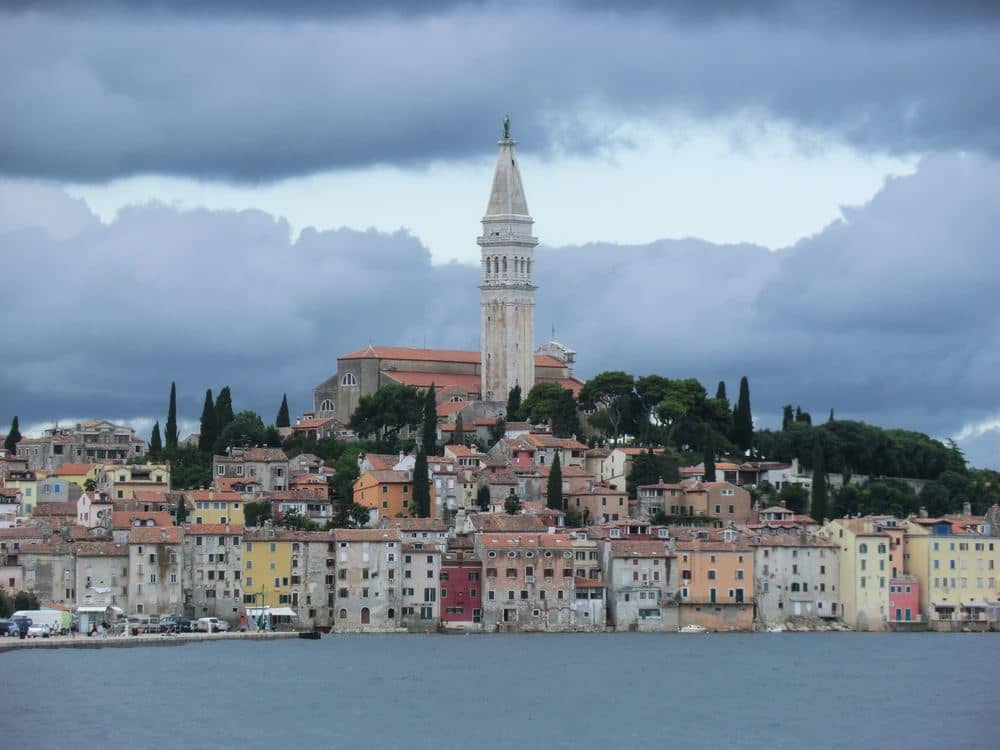
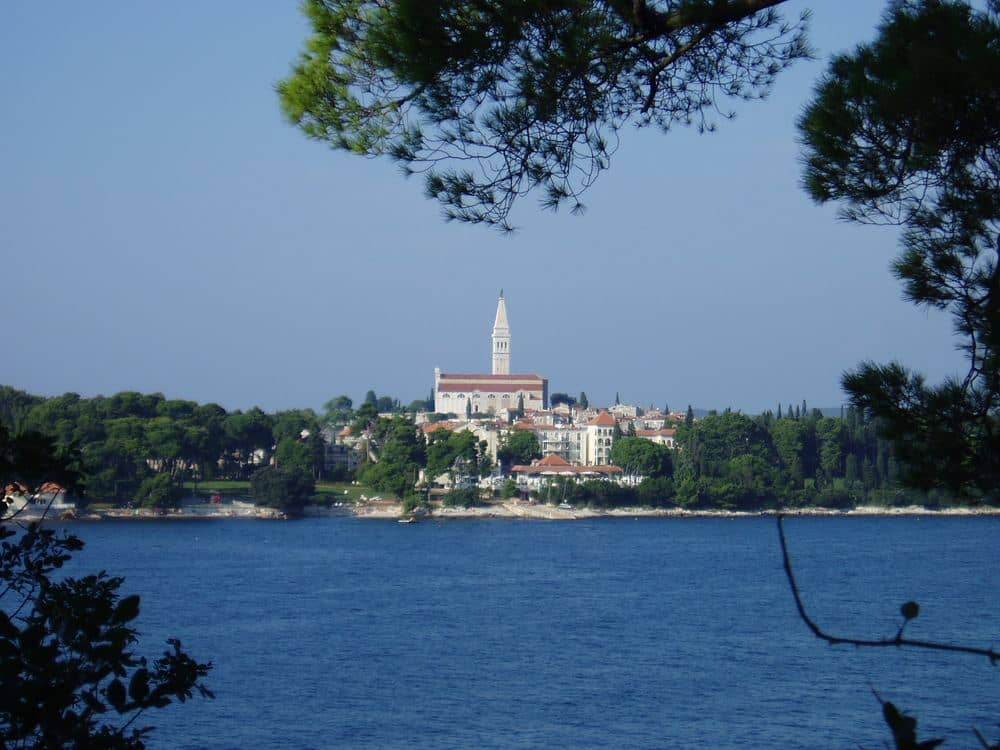
Rovinj rises straight out of the sea, a cone of ochre and rose facades stacked up to the bell tower of St Euphemia, whose copper saint turns with the wind. The old town was an island until the channel was filled in 1763, and its lanes still behave like it: they end in water, laundry lines and sudden views.

Around it, Istria at its most Italian: a bilingual town by statute, batana boats in the harbour, and the wooded Golden Cape park beginning right at the southern beaches.

Rovinj: what to see in a town that was once an island

The next 7 days

Weather data by Open-Meteo.com

Climate month by month

Ten-year averages for Rovinj, so you can see what a month usually looks like rather than what this week happens to do.

MonthDay °CNight °CRain daysSea °C
January104913
February1161012
March148912
April1711914
May21151318
June2620923
July2922827
August2922627
September24181025
October20141021
November15101118
December1261015

Air 2015 to 2024, sea 2022 to 2024. A rain day is 1 mm or more. Data by Open-Meteo.com

Beaches in Rovinj

Škaraba Beach
Activity

Škaraba Beach

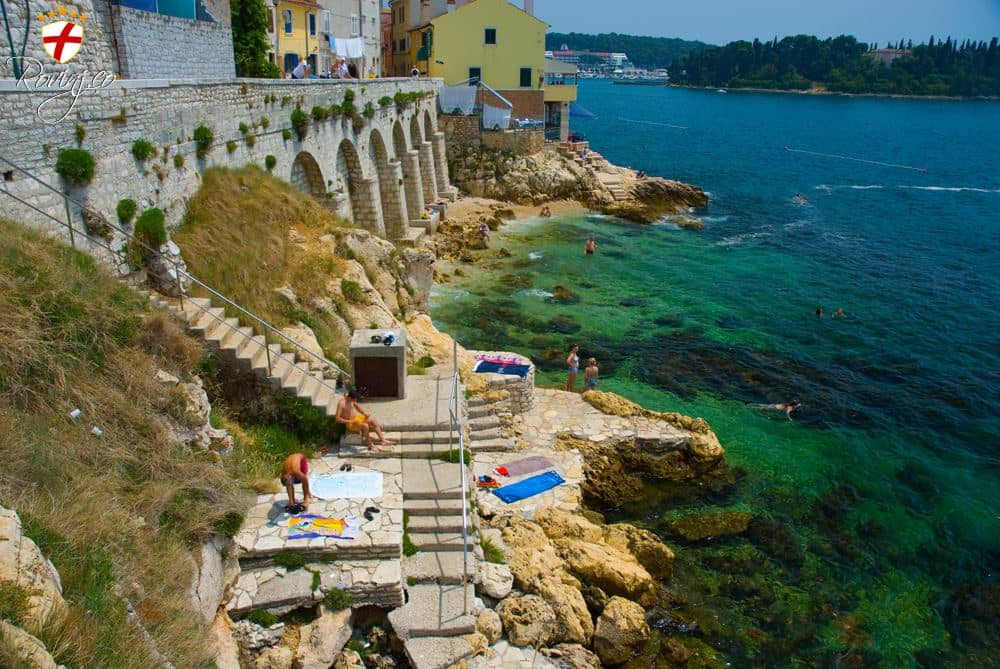
A low-key rocky beach along the Rovinj coastline.

Photo: Zoran Kurelić Rabko / CC BY-SA 3.0
Škaraba Beach
Activity

Škaraba Beach

Škaraba is the last cape of the town's swimming and the first cape of the wild: the rocky end of the Zlatni rt forest, where groomed paths turn to trails and beaches to a row of stone shelves above deep water. One comes here for three things the northern part of the park does not offer: solitude even on a working summer day, rock jumps of two to six metres as you choose, and a seabed that plunges steeply into blue, the favourite spot of the town's mask-and-snorkel divers. Shade comes from pines leaning over the very edge, and towel space is never short, for bathers scatter across the shelves instead of lining up beside each other. There are no facilities at all, no kiosk, no shower, so the rucksack must carry everything, water first. Škaraba is reached by a walk through the park, some twenty minutes from the entrance, or from the sea, by kayak along the shore, which is also the loveliest approach. Mind the children, the shelves stand high above the water and without rails. The reward for the small effort is a sea as it was before tourism: deep, cold at entry and entirely yours.

Photo: Zoran Kurelić Rabko / CC BY-SA 3.0
Cisterna Beach
Activity

Cisterna Beach

A small bathing spot on the rocks along the Rovinj shore.

Photo: H. Zell / CC BY-SA 3.0
Cisterna Beach
Activity

Cisterna Beach

Cisterna is a cove in the southern part of the Zlatni rt forest, named after the old stone cistern in its hinterland that once watered the park: the smaller, quieter sister of Lone, with a mix of fine pebble and stone slabs and a sea that deepens slowly enough for families yet quickly enough for swimmers. Pines embrace the cove from both sides, so natural shade lasts into the afternoon; there are no sunbeds and no music, which is exactly why it is chosen by those who find Mulini too loud and Škaraba too demanding. The bottom is mostly rocky with sandy pockets, the water, thanks to the park location, ranks among the cleanest in town, and a mask along the edge rocks always shows something. Cisterna is reached by the park path on foot or by bicycle, some twenty minutes from the Zlatni rt entrance; a drinking fountain and benches wait along the way. There are no facilities, so bring all your own and take all of it back. Cisterna is a cove for a whole day with a book: close enough to town to come without a plan, far enough to forget what time it is.

Photo: H. Zell / CC BY-SA 3.0

Monte Beach
Activity

Monte Beach

A bathing spot along Rovinj's rocky coastline.

Photo: Visitrovinj / CC BY-SA 3.0

Monte Beach
Activity

Monte Beach

Monte is the beach you know from postcards before ever visiting Rovinj: stone slabs and concrete terraces directly beneath the bell tower of St Euphemia, where you descend from the old town into the sea by ladder and by leap. This is Istria's most urban swim, the swimsuit goes on three minutes from the cathedral, and between two strokes you look straight at facades growing out of the water. The bottom is immediately deep and rocky, which is why Monte has been adopted by swimmers, jumpers and everyone who needs no sunbed for happiness; families with small children will be happier at Lone or Porton Biondi. Space is scarce and fills by ten in summer, but turnover is constant, so the patient always inherit a slab in the pine shade. Bring rock shoes, a mask, for the sea life along the stones is lively, and water, since apart from one bar there are no facilities. Sunset is the moment people come for: the sun drops straight ahead, the sea turns gold, and the evening bells ring out overhead. A better combination of swim and stage set the Adriatic hardly offers.

Photo: Visitrovinj / CC BY-SA 3.0

Baluota Beach
Activity

Baluota Beach

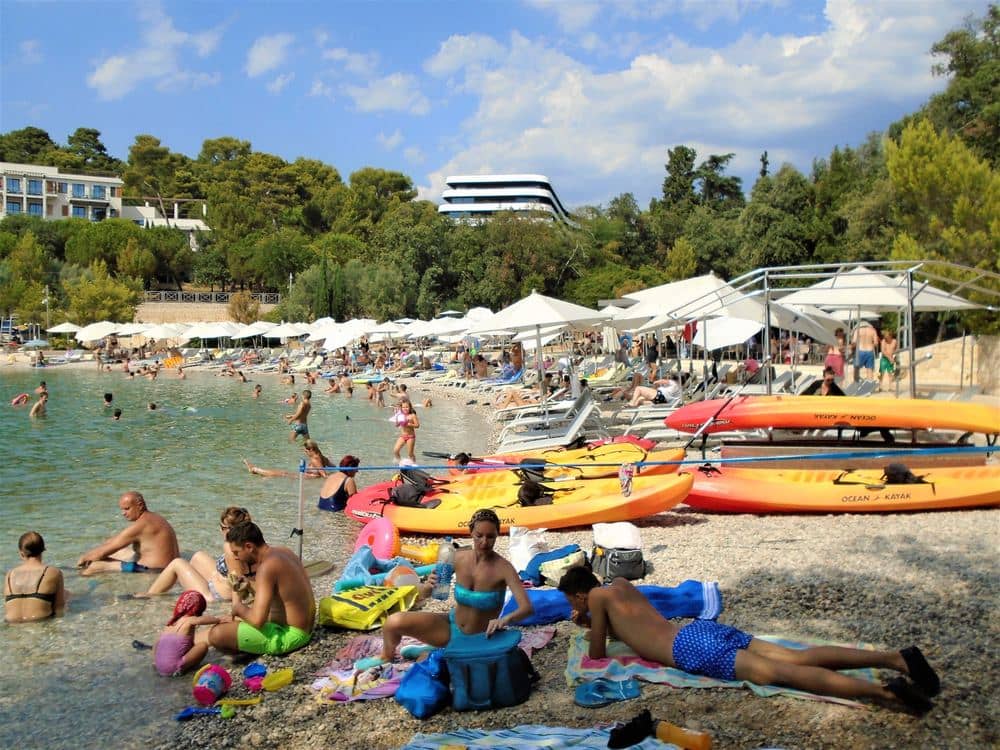
A quiet bathing cove close to Rovinj's old town.

Photo: Visitrovinj / CC BY-SA 3.0
Baluota Beach
Activity

Baluota Beach

Baluota is the southern continuation of swimming beneath the old town: a belt of rocks and stone slabs from Monte toward Zlatni rt, where Rovinj families have each held their own slab for generations, known by name and inherited like a vineyard. One does not come here for facilities, for there are none, but for the ritual: towel on the same stone, two jumps from the same rock, coffee at the bar above and conversation with the same neighbours as always. The sea is deep, clean and transparent to the bottom, and the life along the rocks makes a mask more worthwhile than anywhere else in town. Tourists at Baluota are guests in the best sense: welcome as long as they honour the unwritten rules, do not take another's stone if a towel marks it, play no music and leave nothing behind. Entry is over the rocks, so water shoes and a little agility come with the package. Come on a weekday before noon or at dusk: then Baluota shows why the locals would not trade it for any groomed beach, calm, depth and a view of the open sea without a single parasol.

Photo: Visitrovinj / CC BY-SA 3.0

Mulini Beach
Activity

Mulini Beach

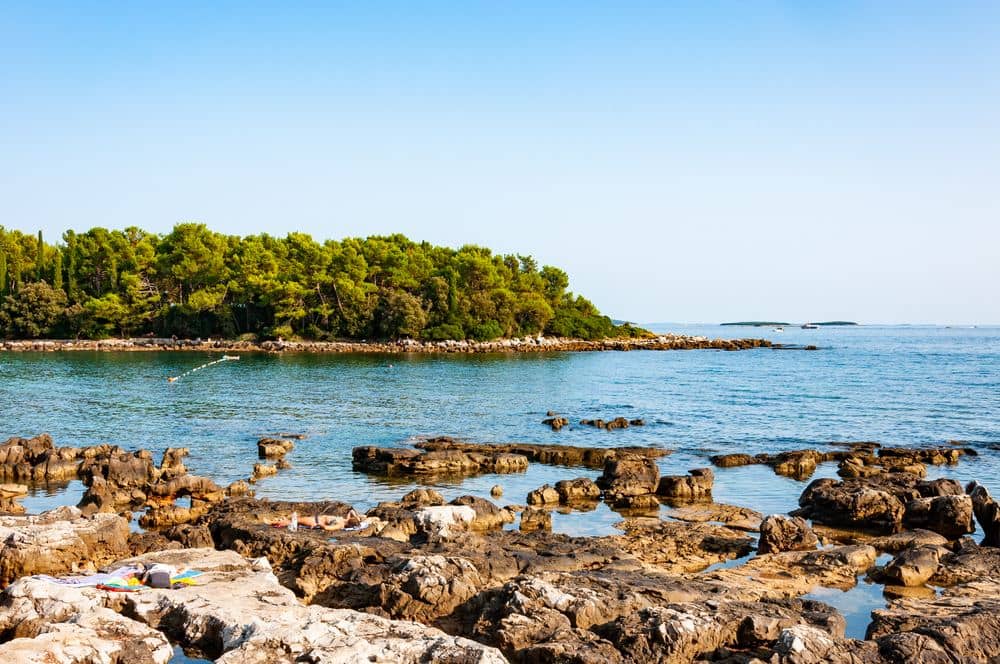
A popular swimming spot along the coast just outside Rovinj's old town.

Photo: Silverije / CC BY-SA 4.0
Mulini Beach
Activity

Mulini Beach

Mulini is Rovinj's answer to the question of how to join the designed and the public: a beach in the cove between the marina and the entrance to Zlatni rt, refurbished together with the neighbouring top hotels, with wooden decks, groomed platforms and a bar that by night is better known than many clubs. The sea here is Istrian-transparent as everywhere, the entry over pebbles and slabs, and depth arrives quickly, just right for proper swimming. Mulini is the only beach in Rovinj where the sunset cocktail and the swim need not be chosen between: many come in the afternoon, stay into the first dark and dine two steps away. Because of the hotels part of the platforms carries paid sunbeds, but the stone edges and the grassy flat stay free; a towel and Mulini are not at odds. From the centre a flat promenade along the marina brings you here in ten minutes without a single step, making this also the most accessible swim for prams and for anyone not fond of Baluota's rocks. Wifi, showers and music belong to the offer; silence is found a hundred metres on, in the park.

Photo: Silverije / CC BY-SA 4.0

Cuvi Beach
Activity

Cuvi Beach

A rocky bathing spot on the Rovinj coast, shaded by pines.

Photo: Mateusz Kamiński from Gdańsk, Poland / CC BY 2.0

Cuvi Beach
Activity

Cuvi Beach

Cuvi is the beach of Rovinj's everyday: a long stretch of pebbles and stone platforms south of Zlatni rt where the locals go when they want the sea without a performance. The pine wood falls almost to the water and divides the beach into small bays, so everyone finds their own: families the shallows with coarse pebbles, swimmers the deep clean lines toward the open sea, dogs with their people the marked western end, one of the town's official dog beaches. The facilities are measured, a shower, a cabin, a seasonal kiosk and parking by the wood, and all the rest is pine shade and a sea that spreads to the horizon without a single island: at Cuvi the sun sets into clear open water, rarer on the northern Adriatic than one thinks. A coastal path leads here from town, a pleasant half hour through the park, or three kilometres by car. In summer Cuvi breathes easiest of all the town beaches because it has the most room; in September, when the tourists leave, it becomes what it always was, a neighbourhood living room with a view of the open sea.

Photo: Mateusz Kamiński from Gdańsk, Poland / CC BY 2.0

Plan your visit

Rovinj in a nutshell

45 places, 1 routes.

What is actually worth your time in Rovinj?

Start with Lim Fjord Viewpoint, Church of St Euphemia, and Sveti Ivan na Pučini Lighthouse. After that it depends on what you enjoy: the guide holds 45 places in Rovinj, sorted into sights, activities, food and shopping, so you can skip whole categories that bore you.

Church of St EuphemiaChurch of St Euphemia

How do you get away from the crowds in Rovinj?

Follow the hidden gems: 5 places that rarely make the guidebooks, most of them a few streets off the main drag. Lim Fjord Viewpoint, Church of St Euphemia, and Sveti Ivan na Pučini Lighthouse are good ones to start with.
Sveti Ivan na Pučini LighthouseSveti Ivan na Pučini Lighthouse

No time to plan? Just follow a route.

Pick one of Up the Grisia to St Euphemia. Each walk runs stop by stop in a fixed order, so the only decision left is where to have lunch.
Aquarium Ruđer BoškovićAquarium Ruđer Bošković
Our tips

What we would do around Rovinj

Day trips within reach of Rovinj, plus the routes and quiet corners our editors keep coming back to.

Rovinj itineraries

  • 7 stops

    Up the Grisia to St Euphemia

    Through the painters' street to the top of the old town

    1. Balbi Arch
    2. Rovinj Town Clock
    3. Rovinj Heritage Museum
    4. Grisia Street
    5. Church of St Euphemia
    6. Batana Eco-Museum
    7. Rovinj Harbour

Hidden gems in Rovinj

Church of St Euphemia
Legendary
Sight

Church of St Euphemia

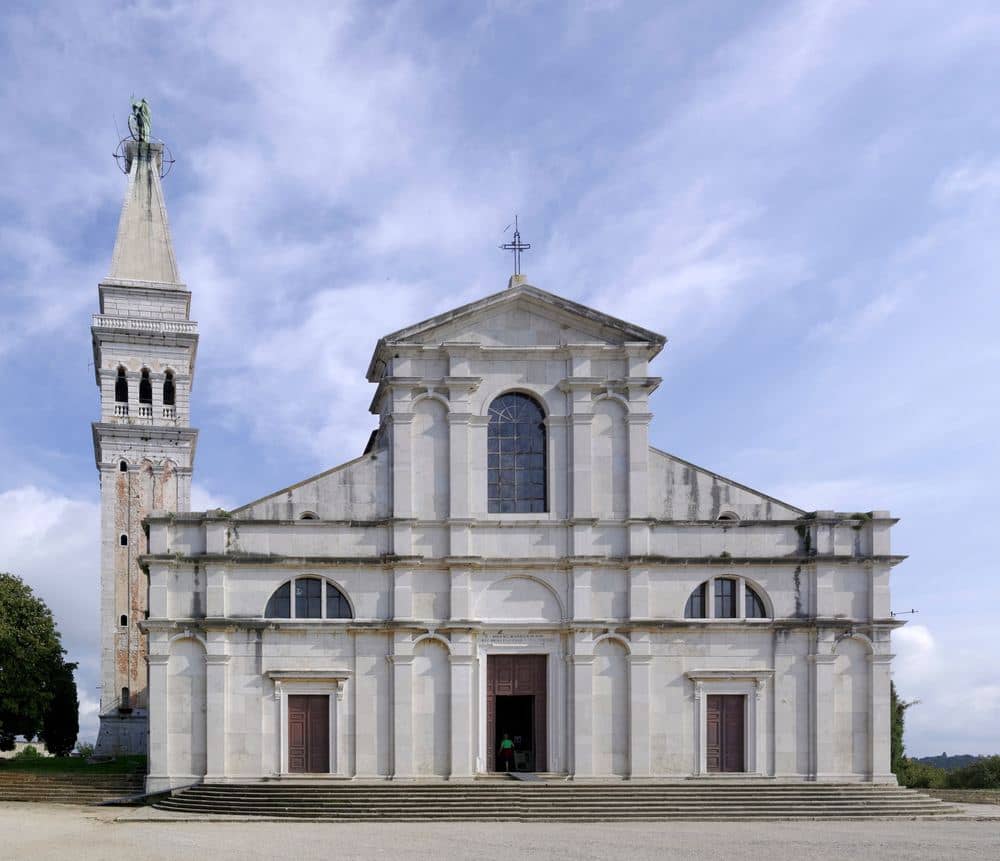
A baroque church crowning the old town, its bell tower modelled on Venice's St Mark's.

Photo: Berthold Werner / CC BY-SA 3.0

Church of St Euphemia
Sight Legendary

Church of St Euphemia

St Euphemia is Rovinj's roof and compass at once: the Baroque church completed in 1736 sits on the crown of the old-town hill, and its sixty-metre bell tower, modelled on the campanile of St Mark's in Venice, is visible from the open sea before the town itself. On its top turns a copper statue of the saint, showing fishermen the wind: when Euphemia faces inland, the jugo is coming. Inside, behind the main altar, lies her stone sarcophagus; tradition says it floated in from Constantinople in the year 800 and the townspeople hauled it up the hill with prayers. The saint's day on 16 September is still Rovinj's greatest day, drawing pilgrims from all Istria. If wooden stairs do not scare you, climb the tower: the view takes in the whole old town, the islands of Katarina and St Andrew and the coast to the Lim channel. Entry to the church is free, the tower costs a token fee; the quietest hour is early morning, before the river of visitors starts up the Grisia.

Photo: Berthold Werner / CC BY-SA 3.0

Sveti Ivan na Pučini Lighthouse
Hidden gem
Sight

Sveti Ivan na Pučini Lighthouse

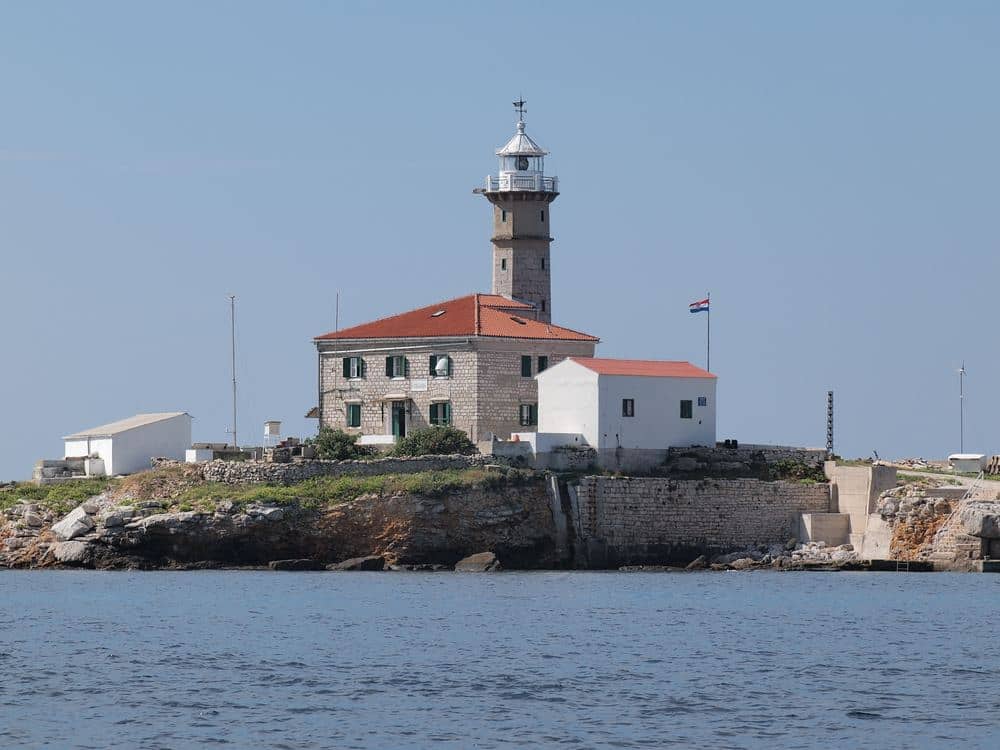
A lighthouse on a reef off Rovinj, which locals call La Lanterna.

Photo: Arnoldius / CC BY-SA 3.0

Sveti Ivan na Pučini Lighthouse
Sight Hidden gem

Sveti Ivan na Pučini Lighthouse

The St John lighthouse on the open sea stands on the outermost rock of the Rovinj archipelago, five and a half miles southwest of town: a stone tower of twenty-three metres raised in 1853, whose light still guides ships through the middle Adriatic. The rock is bare and low, waves wash over it in bad weather, so lighthouse life here meant the strictest solitude for a century and a half; with automation the crew left and the lighthouse remained, its house now offering nights in Robinson-tourism style. For the day visitor St John is the goal of a boat outing or, for the experienced, a kayak trip in calm seas: around the rock the seabed plunges steeply into blue, with schools of fish and the odd amphora in the depths, making this a divers' favourite. Landing depends on swell and the skipper's will; often one stays by the rock, swimming from the boat. In any case bring a hat and water, for on the rock there is neither shade nor spring, only the tower, the gulls and the open sea for which one comes: here you first see how large the Adriatic is.

Insider tip

The lighthouse is reached only by boat; ask about trips from Rovinj harbour.

Photo: Arnoldius / CC BY-SA 3.0

Aquarium Ruđer Bošković
Hidden gem
Sight

Aquarium Ruđer Bošković

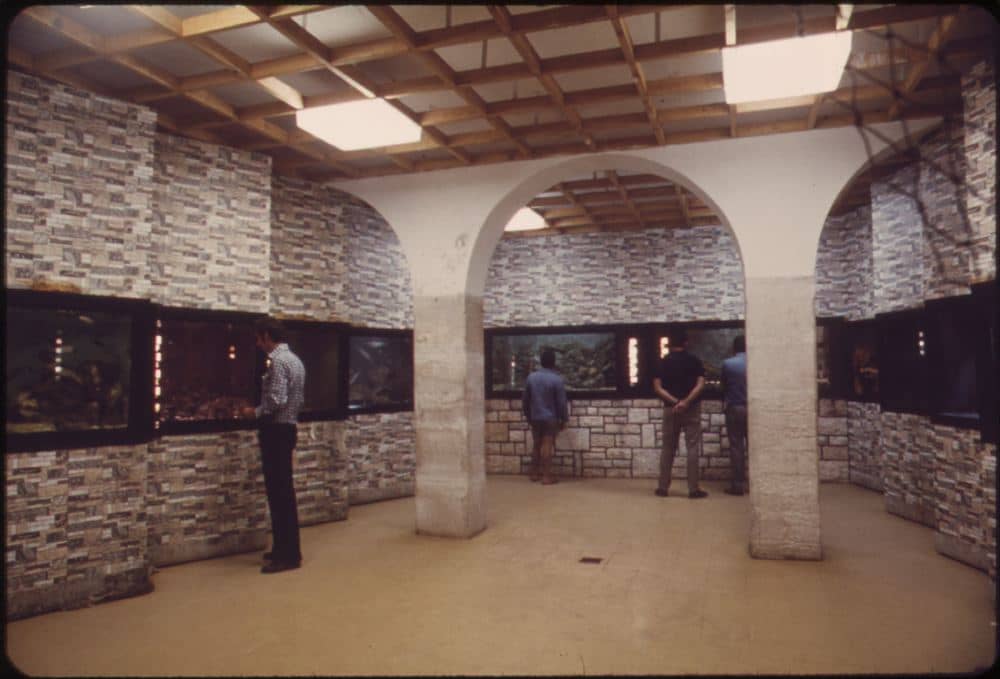
A museum in Rovinj with a local collection, good even on a rainy day.

Photo: Yoichi Okamoto / Public domain
Aquarium Ruđer Bošković
Sight Hidden gem

Aquarium Ruđer Bošković

The Centre for Marine Research of the Ruđer Bošković Institute is Rovinj's quiet scientific side: in the buildings on Valdibora, above and around the historic aquarium, biologists, chemists and oceanographers have been measuring, counting and guarding the Adriatic for more than a century. The station was founded in 1891 as a Berlin zoological station, one of Europe's first marine laboratories, and since the 1970s it belongs to Croatia's largest scientific institute; from here sails the research vessel Burin, and here the temperature, salinity and life of the northern Adriatic are tracked in data series half a century long, precious today when the sea changes faster than ever. For the visitor the centre is mostly the backdrop behind the aquarium, but it is worth knowing what one is looking at: the laboratory lights in the evening, divers with tanks on the pier, students at their practice. Occasionally, on the Institute's Day or the Night of Researchers, the doors open to the public with workshops for children; the town announces the dates. Without this centre Rovinj would merely be beautiful; with it, it is also wise, a town that does not only sell its sea but understands it.

Insider tip

Check the opening hours ahead; small museums keep short hours off-season.

Photo: Yoichi Okamoto / Public domain

Explore Rovinj by category

Sights

18
Church of St Euphemia
Legendary
Sight

Church of St Euphemia

A baroque church crowning the old town, its bell tower modelled on Venice's St Mark's.

Photo: Berthold Werner / CC BY-SA 3.0

Church of St Euphemia
Sight Legendary

Church of St Euphemia

St Euphemia is Rovinj's roof and compass at once: the Baroque church completed in 1736 sits on the crown of the old-town hill, and its sixty-metre bell tower, modelled on the campanile of St Mark's in Venice, is visible from the open sea before the town itself. On its top turns a copper statue of the saint, showing fishermen the wind: when Euphemia faces inland, the jugo is coming. Inside, behind the main altar, lies her stone sarcophagus; tradition says it floated in from Constantinople in the year 800 and the townspeople hauled it up the hill with prayers. The saint's day on 16 September is still Rovinj's greatest day, drawing pilgrims from all Istria. If wooden stairs do not scare you, climb the tower: the view takes in the whole old town, the islands of Katarina and St Andrew and the coast to the Lim channel. Entry to the church is free, the tower costs a token fee; the quietest hour is early morning, before the river of visitors starts up the Grisia.

Photo: Berthold Werner / CC BY-SA 3.0

Sveti Ivan na Pučini Lighthouse
Hidden gem
Sight

Sveti Ivan na Pučini Lighthouse

A lighthouse on a reef off Rovinj, which locals call La Lanterna.

Photo: Arnoldius / CC BY-SA 3.0

Sveti Ivan na Pučini Lighthouse
Sight Hidden gem

Sveti Ivan na Pučini Lighthouse

The St John lighthouse on the open sea stands on the outermost rock of the Rovinj archipelago, five and a half miles southwest of town: a stone tower of twenty-three metres raised in 1853, whose light still guides ships through the middle Adriatic. The rock is bare and low, waves wash over it in bad weather, so lighthouse life here meant the strictest solitude for a century and a half; with automation the crew left and the lighthouse remained, its house now offering nights in Robinson-tourism style. For the day visitor St John is the goal of a boat outing or, for the experienced, a kayak trip in calm seas: around the rock the seabed plunges steeply into blue, with schools of fish and the odd amphora in the depths, making this a divers' favourite. Landing depends on swell and the skipper's will; often one stays by the rock, swimming from the boat. In any case bring a hat and water, for on the rock there is neither shade nor spring, only the tower, the gulls and the open sea for which one comes: here you first see how large the Adriatic is.

Insider tip

The lighthouse is reached only by boat; ask about trips from Rovinj harbour.

Photo: Arnoldius / CC BY-SA 3.0

Aquarium Ruđer Bošković
Hidden gem
Sight

Aquarium Ruđer Bošković

A museum in Rovinj with a local collection, good even on a rainy day.

Photo: Yoichi Okamoto / Public domain

Aquarium Ruđer Bošković
Sight Hidden gem

Aquarium Ruđer Bošković

The Centre for Marine Research of the Ruđer Bošković Institute is Rovinj's quiet scientific side: in the buildings on Valdibora, above and around the historic aquarium, biologists, chemists and oceanographers have been measuring, counting and guarding the Adriatic for more than a century. The station was founded in 1891 as a Berlin zoological station, one of Europe's first marine laboratories, and since the 1970s it belongs to Croatia's largest scientific institute; from here sails the research vessel Burin, and here the temperature, salinity and life of the northern Adriatic are tracked in data series half a century long, precious today when the sea changes faster than ever. For the visitor the centre is mostly the backdrop behind the aquarium, but it is worth knowing what one is looking at: the laboratory lights in the evening, divers with tanks on the pier, students at their practice. Occasionally, on the Institute's Day or the Night of Researchers, the doors open to the public with workshops for children; the town announces the dates. Without this centre Rovinj would merely be beautiful; with it, it is also wise, a town that does not only sell its sea but understands it.

Insider tip

Check the opening hours ahead; small museums keep short hours off-season.

Photo: Yoichi Okamoto / Public domain

Old Town
Sight

Old Town

A former island packed with cobbled lanes and pastel houses rising from the sea.

Photo: Einaz80 / CC BY-SA 4.0
Old Town
Sight

Old Town

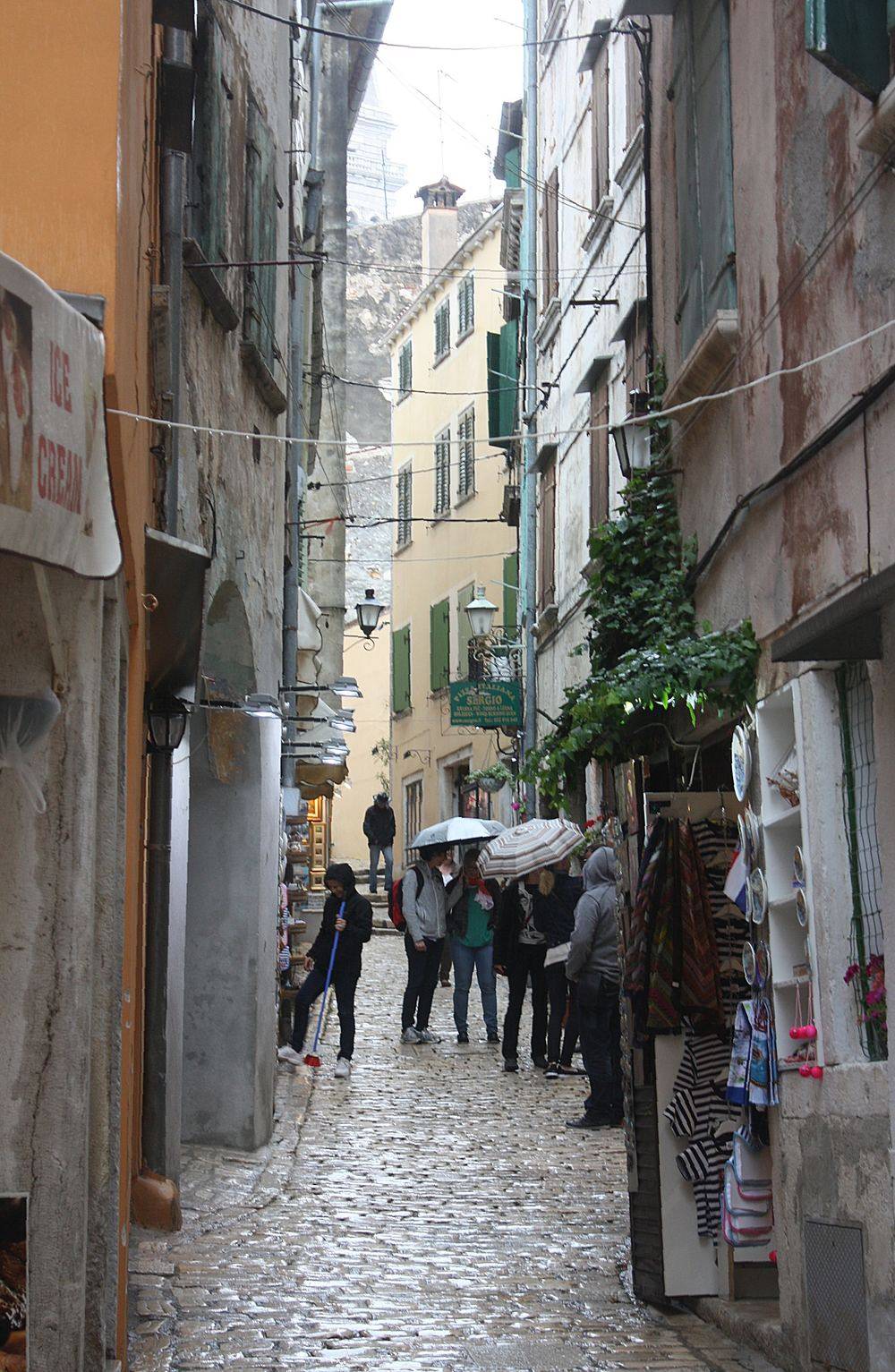
Old Rovinj was an island until 1763: then the channel to the mainland was filled in, and a town that for centuries could grow only upward and tighter on its rock remained the most densely woven seaside labyrinth of the Adriatic. Houses rise straight out of the sea, their washing hangs over the waves, and the lanes are so narrow that neighbours can shake hands across them. Venetian rule from the 13th to the 18th century left the town its language of facades, winged lions and a bell tower modelled on San Marco; the fishing everyday left the batana boats, the spacio taverns and the habit of eating dinner on the doorstep. The finest entrance is through the Balbi Arch and up the Grisia toward St Euphemia, but the real Rovinj reveals itself in the turnings: into lanes that end in the sea, courtyards with cacti in tin buckets, windows breathing out fried fish. Circle the town along the shore, then climb through its middle: half an hour of walking, two hours of stopping. Morning belongs to fishermen and bakeries, afternoon to painters, and at night, when the stone cools, the old quiet island returns.

Photo: Einaz80 / CC BY-SA 4.0

Rovinj Harbour
Sight

Rovinj Harbour

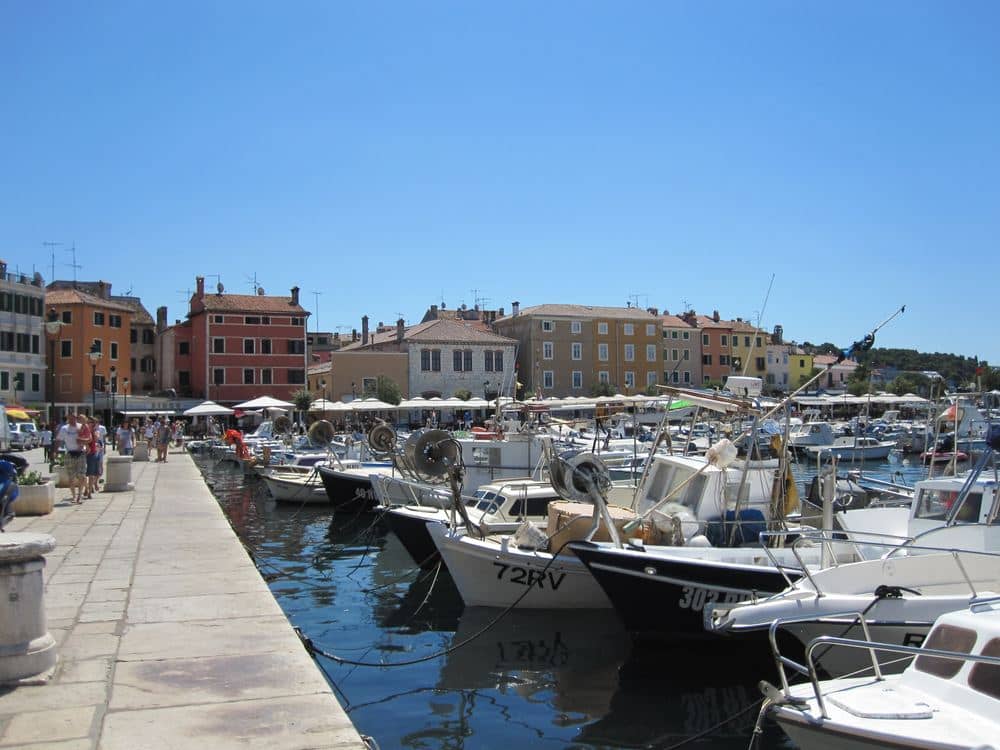
A picturesque waterfront of fishing boats below the pastel old town.

Photo: Tiefkuehlfan / CC BY-SA 4.0
Rovinj Harbour
Sight

Rovinj Harbour

Rovinj's harbour embraces the peninsula from both sides: the northern quay along Valdibora receives the fishing boats and their gajeta cousins, while the small southern harbour beneath the old town keeps the batanas, dinghies and rows of excursion boats. Here you see best that Rovinj is still a fishing town: crates are unloaded in the morning, gulls escort every move, and buyers wait for fish to pass straight from deck to the fish-market stall. By day the harbour is the departure point for the islands, the Lim channel and evening panorama cruises; price boards stand on the piers, and a deal with the boatmen is still worth a handshake. Evening belongs to strollers: the lights come on in a string, the batanas rock at their moorings, and from the waterfront terraces you watch the bell tower change colours. Round both faces of the harbour in one twenty-minute loop, then finish on the southern pier: from there opens the loveliest view of the houses growing straight out of the sea, the image that made half the world hear of Rovinj.

Photo: Tiefkuehlfan / CC BY-SA 4.0

Rovinj Heritage Museum
Sight

Rovinj Heritage Museum

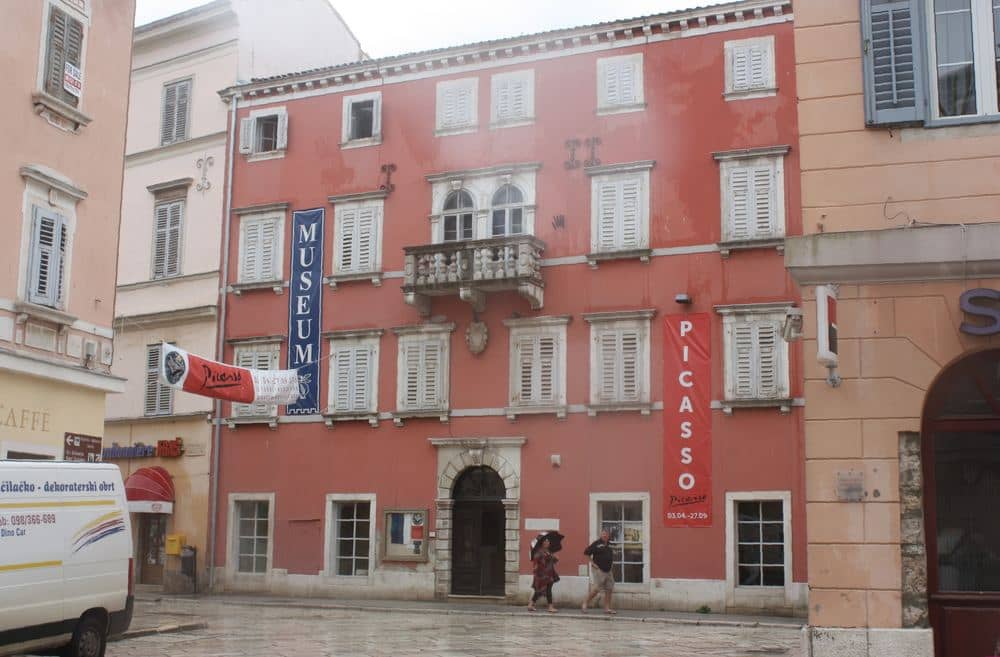
A local museum preserving the history and heritage of Rovinj.

Photo: Dguendel / CC BY 3.0
Rovinj Heritage Museum
Sight

Rovinj Heritage Museum

The Rovinj Heritage Museum lives in the Baroque palace of the Califfi family on Marshal Tito Square, two steps from the waterfront: a 17th-century noble house that has been collecting the town's memory since 1954. The display is as varied as the town itself: archaeology from Monkodonja and the surrounding hillforts, Venetian painting from the 15th to the 18th century with old masters small towns rarely own, a room of the old Rovinj kitchen, ship models and the ethnography of the fishing world. The contemporary department is special: since the sixties the museum has been buying works from the Grisia exhibition, so the history of Rovinj's painters' colony reads here too. The building is an exhibit itself, with a stone staircase, stucco and a salon view straight onto the bell tower. The museum is a pleasant counterweight to the midday heat: an hour of coolness, culture and quiet in the liveliest part of town. Summer hours cover the evening, winter ones are shorter; the ticket is of the kind paid without thinking. At the end, glance at the square: palace, clock and small fountain form Rovinj's most harmonious open-air salon.

Photo: Dguendel / CC BY 3.0

12 more places
  • Lim Hillfort
  • Church of the Holy Trinity
  • Church of St Thomas
  • Chapel of Madonna della Salute
  • Monkodonja Hillfort
  • Dvigrad Ruins
  • Adris Old Tobacco Factory
  • Grisia Street
  • Batana Eco-Museum
  • Balbi Arch
  • Rovinj Town Clock
  • Rovinj Aquarium

Activities

24
Golden Cape Forest Park (Punta Corrente)
Activity

Golden Cape Forest Park (Punta Corrente)

A seaside forest park of cypress and pine with rocky beaches and shady trails.

Photo: Neoteniyx / CC BY-SA 4.0

Golden Cape Forest Park (Punta Corrente)
Activity

Golden Cape Forest Park (Punta Corrente)

Zlatni rt, or Punta Corrente, is the noblest park of the Croatian coast: a hundred hectares of century-old forest planted from the 1890s by the Viennese industrialist Georg Hütterott, who dreamed of a climatic health resort. The resort never came, but the forest did: avenues of cypress, Himalayan cedars, pines and holm oaks now roof a web of paths strung with coves holding the cleanest sea in town. The park begins ten minutes' walk south of the centre, past the marina, and lives in the town's rhythm: morning belongs to runners and swimmers, day to bathing families, evening to dog-walkers and couples on benches. You can swim along the entire edge, from the concrete slabs by the former quarry, where climbers now scale the walls, to the pebbles of Lone bay. Entry is free, cars cannot come in, and bikes and scooters keep to the side paths. Bring a mask: the seabed off the cape is among the richest in town. The finest moment is the golden hour, when the sun lies down on the pines and the park earns its name.

Photo: Neoteniyx / CC BY-SA 4.0

Škaraba Beach
Activity

Škaraba Beach

A low-key rocky beach along the Rovinj coastline.

Photo: Zoran Kurelić Rabko / CC BY-SA 3.0

Škaraba Beach
Activity

Škaraba Beach

Škaraba is the last cape of the town's swimming and the first cape of the wild: the rocky end of the Zlatni rt forest, where groomed paths turn to trails and beaches to a row of stone shelves above deep water. One comes here for three things the northern part of the park does not offer: solitude even on a working summer day, rock jumps of two to six metres as you choose, and a seabed that plunges steeply into blue, the favourite spot of the town's mask-and-snorkel divers. Shade comes from pines leaning over the very edge, and towel space is never short, for bathers scatter across the shelves instead of lining up beside each other. There are no facilities at all, no kiosk, no shower, so the rucksack must carry everything, water first. Škaraba is reached by a walk through the park, some twenty minutes from the entrance, or from the sea, by kayak along the shore, which is also the loveliest approach. Mind the children, the shelves stand high above the water and without rails. The reward for the small effort is a sea as it was before tourism: deep, cold at entry and entirely yours.

Photo: Zoran Kurelić Rabko / CC BY-SA 3.0

Cisterna Beach
Activity

Cisterna Beach

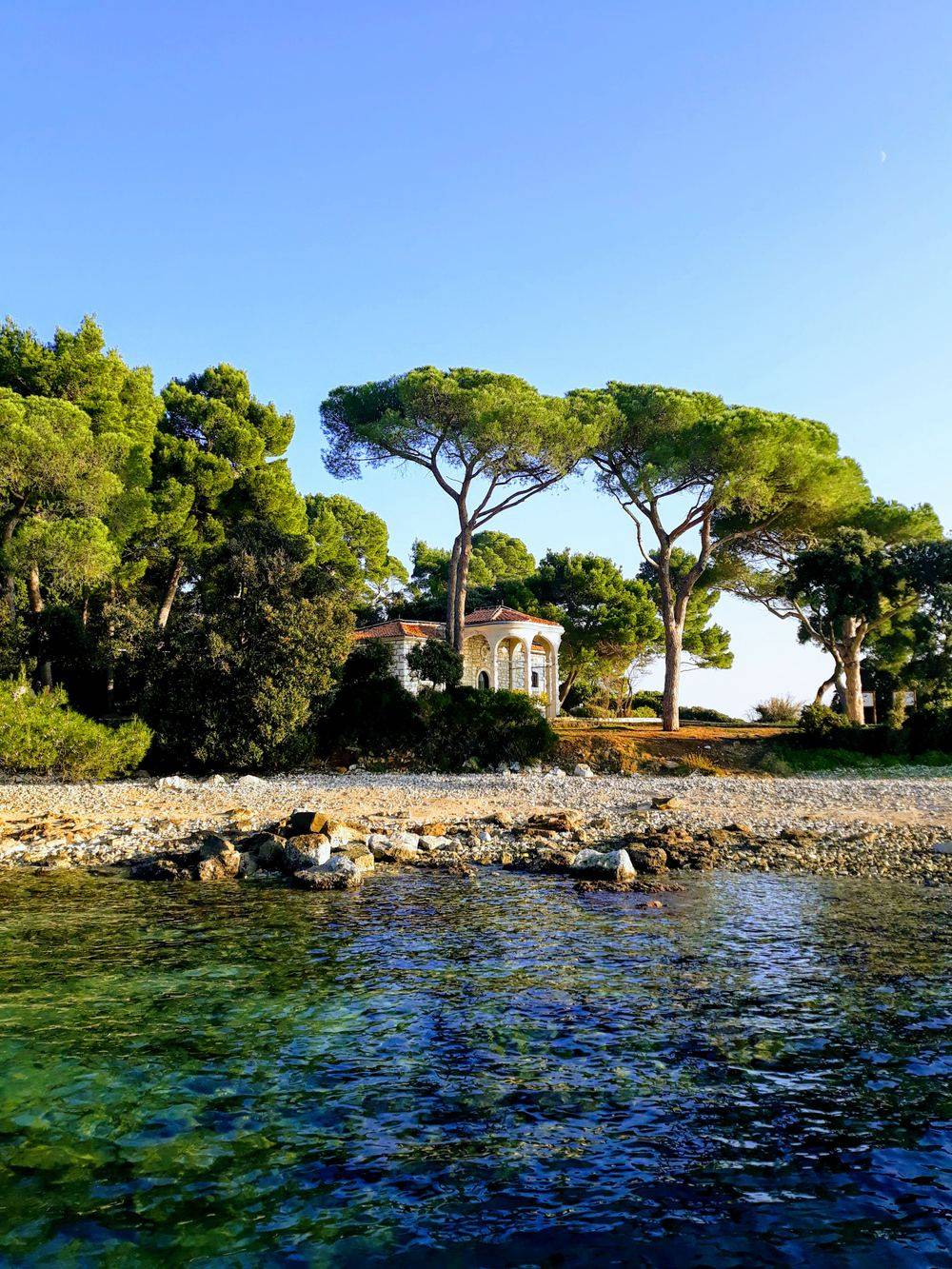
A small bathing spot on the rocks along the Rovinj shore.

Photo: H. Zell / CC BY-SA 3.0
Cisterna Beach
Activity

Cisterna Beach

Cisterna is a cove in the southern part of the Zlatni rt forest, named after the old stone cistern in its hinterland that once watered the park: the smaller, quieter sister of Lone, with a mix of fine pebble and stone slabs and a sea that deepens slowly enough for families yet quickly enough for swimmers. Pines embrace the cove from both sides, so natural shade lasts into the afternoon; there are no sunbeds and no music, which is exactly why it is chosen by those who find Mulini too loud and Škaraba too demanding. The bottom is mostly rocky with sandy pockets, the water, thanks to the park location, ranks among the cleanest in town, and a mask along the edge rocks always shows something. Cisterna is reached by the park path on foot or by bicycle, some twenty minutes from the Zlatni rt entrance; a drinking fountain and benches wait along the way. There are no facilities, so bring all your own and take all of it back. Cisterna is a cove for a whole day with a book: close enough to town to come without a plan, far enough to forget what time it is.

Photo: H. Zell / CC BY-SA 3.0

Palud Ornithological Reserve
Activity

Palud Ornithological Reserve

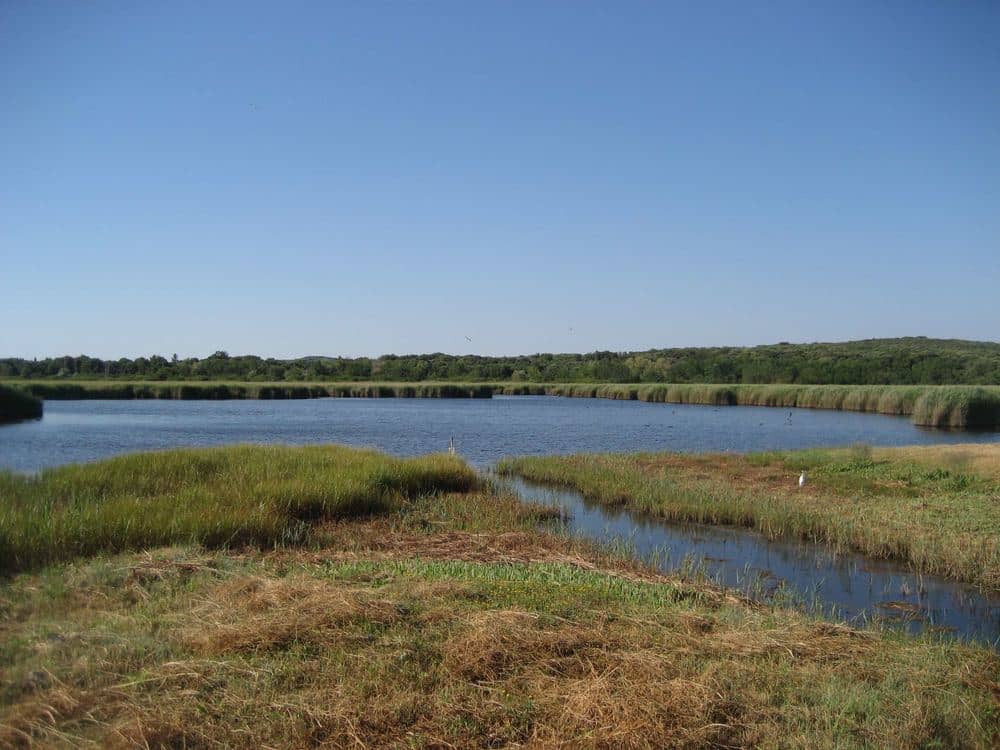
A wetland nature reserve near Rovinj set aside for birdwatching.

Photo: Croq / CC BY-SA 3.0

Palud Ornithological Reserve
Activity

Palud Ornithological Reserve

Palud is Istria's only ornithological reserve and one of those places that show how much more Rovinj is than beaches: a marsh right by the sea, eight kilometres south of town, where in the 19th century the Austrians dug a channel toward the sea hoping saltier water would drive away the mosquitoes. The mosquitoes stayed, but the brackish lagoon became a paradise for birds: more than two hundred species have been recorded in the reeds and on the open water, from herons and swans to rare raptors, most numerous in spring and autumn when migrants rest on their way across the Adriatic. The path around the marsh is an easy hour's walk, with a birdwatching tower halfway; entry costs a token fee in season, and binoculars pay off more than a camera. The sea is right there, so the visit pairs with a swim in Palud cove, shingly and calm even in August. Bring mosquito repellent, honour the silence and keep dogs on the lead. For families this is the easiest outing into the wild: half a day, zero climbing, and the children count herons instead of parasols.

Photo: Croq / CC BY-SA 3.0

Punta Corrente Quarry
Activity

Punta Corrente Quarry

The exposed rock faces of a former stone quarry inside the Punta Corrente forest park.

Photo: Zoran Kurelić Rabko / CC BY-SA 3.0
Punta Corrente Quarry
Activity

Punta Corrente Quarry

The old quarry in the heart of Zlatni rt is where Rovinj cut its stone for centuries, and today it is the park's most unexpected space: an amphitheatre of vertical rock faces some twenty metres high, open toward the sea, its floor grown over with grass and pines. From here limestone left by boat for waterfronts and palaces, and when Baron Hütterott bought the cape at the end of the 19th century, the quarry was closed and given over to the park; what remained are the flat, almost architectural planes of the cut, which now serve a new purpose. For the quarry is a natural climbing hall: several dozen routes of all grades are bolted in its walls, so in summer climbers take turns here from morning to dark while the audience watches the show from the grass. To non-climbers the space offers shade, echo and a scenography the park has nowhere else: the cypress avenue at the entrance is among Rovinj's most photographed motifs. In winter and at dusk the quarry can be utterly empty, and then it is most striking, when the stone planes read like the work of the hands that literally cut the town out of this place.

Photo: Zoran Kurelić Rabko / CC BY-SA 3.0

Figarola Island
Activity

Figarola Island

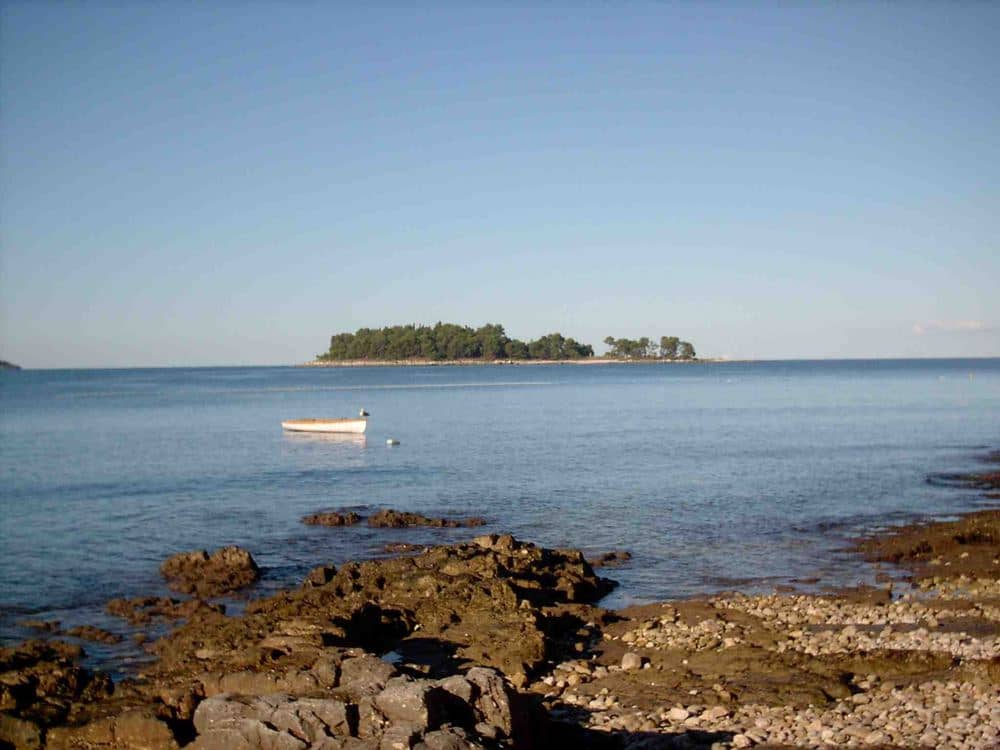
A small uninhabited island near Rovinj, visible from the coast.

Photo: Perun / CC BY-SA 3.0
Figarola Island
Activity

Figarola Island

Figarola is the small island opposite Amarin beach, one of the twenty-two islands of the Rovinj archipelago and the easiest to conquer without a boat: from the shore it is some ten minutes of calm swimming, five by paddleboard or kayak. The island is low and green, with a crown of pines, a rim of stone slabs and two small shingle coves on the lee side; there are no facilities whatsoever, and that is the point. Figarola is a half-day outing planned like a little expedition: a drybag with towel and water, shoes for the rock, a mask for the seabed which is alive and clear along the island's edges. The current in the channel can work, so the swim across is not for beginners or unaccompanied children; everyone else receives a rare feeling, an island of one's own for an hour or two, with a view of the mainland from a direction it is seldom seen. Return before the afternoon maestral ruffles the channel; and the rubbish, of course, goes back in the bag. Small islands stay beautiful only if they are borrowed, not taken.

Photo: Perun / CC BY-SA 3.0

18 more places
  • Lim Fjord Viewpoint
  • Limska Draga Trail
  • Red Island (Crveni otok)
  • Valdibora Square
  • Monte Beach
  • Baluota Beach
  • Mulini Beach
  • Cuvi Beach
  • Veštar Bay
  • St Andrew Island
  • Katarina Island
  • Amarin Beach
  • Porton Biondi Beach
  • Rovinj Marina
  • Batana Pier
  • Golden Cape Trail
  • Borik Beach
  • Lone Bay

Shopping

3
Rovinj Fish Market
Shopping

Rovinj Fish Market

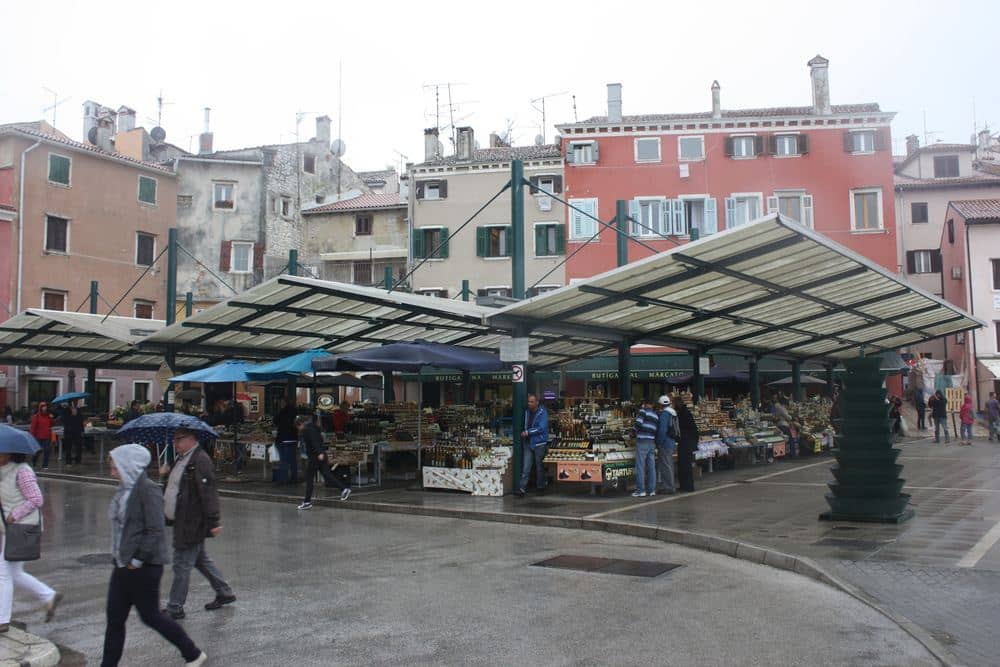
A working fish market in Rovinj selling the day's catch.

Photo: Thomas Pusch / CC BY-SA 3.0
Rovinj Fish Market
Shopping

Rovinj Fish Market

Rovinj's fish market on Valdibora is the morning stage of a town that still fishes: the stone slabs under the covered market fill from dawn with what the batanas and trawlers pulled out overnight, and by nine the best is usually sold. The offer depends on season and wind: scorpionfish, John Dory and crabs in winter, sardines, picarel and squid in summer; beside them mussels and oysters from the Lim channel, bought here fresher than in any restaurant. The fish market is also a school: the saleswomen will gladly explain the difference between catch and farm, how a cuttlefish is cleaned and how many sardines a grill for four requires. Prices are written up, cash still rules, and a bag or a box with ice is a good idea for the walk back to the apartment. If you do not cook, stroll through anyway: beside the fish market holds a small green market with Istrian vegetables, oil and truffles, so half an hour shows the whole gastronomic base of the region. Liveliest from seven to nine; Sundays are quieter, and Mondays, when the fleet rests, the most modest.

Photo: Thomas Pusch / CC BY-SA 3.0

Rovinj Green Market
Shopping

Rovinj Green Market

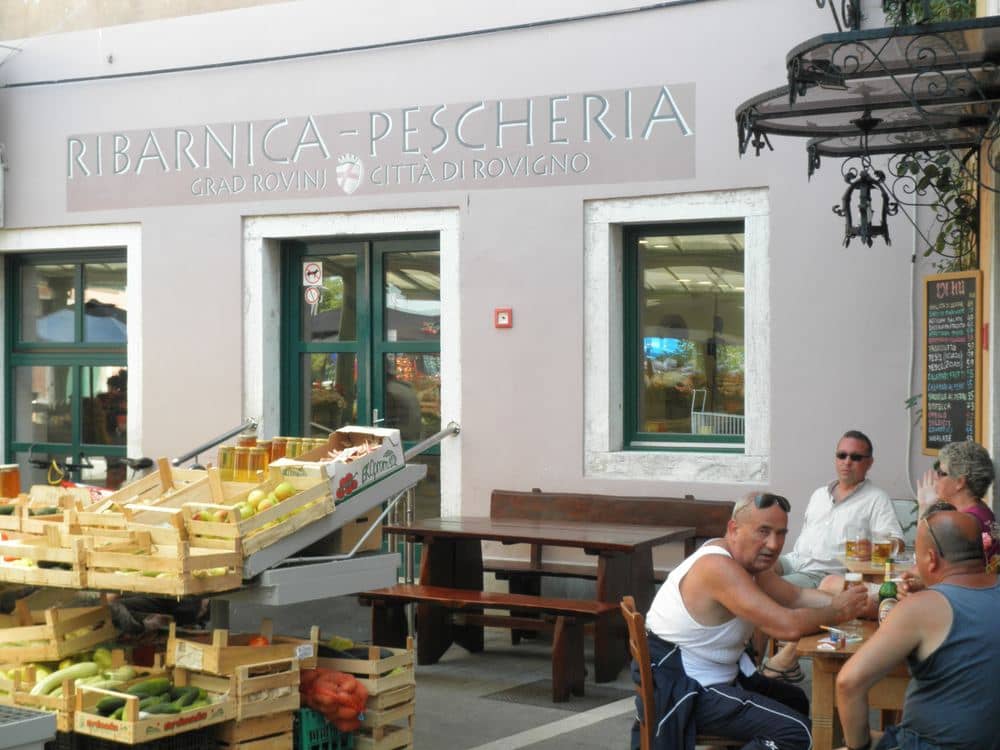
An open-air produce market in Rovinj selling local fruit, vegetables and herbs.

Photo: Dguendel / CC BY 3.0
Rovinj Green Market
Shopping

Rovinj Green Market

The green market on Valdibora is where the Istrian hinterland comes down to the sea every morning: stalls under plane trees and a canopy where countrywomen from around Rovinj, Bale and Kanfanar sell what was picked this morning or preserved yesterday. Summer brings tomatoes, peaches, figs and the first watermelons; autumn grapes, pomegranates and mushrooms; all year round there are Istrian olive oil, honey, herb rakijas, cheese, dried figs and truffles in jars, the most concentrated souvenir of Istria. The goods carry no designer label, but they have what matters more: tasting before buying and a conversation in which a recipe changes hands. Prices are honest, haggling mild and smiling, cash obligatory. The market works from early morning to early afternoon, the best choice is before ten; in summer come even earlier, before the heat and the groups. The fish market leans against the green one, so breakfast, lunch and souvenir are settled in a single pass. If you buy one thing: a small producer's oil, in a tin because of the light, and a bottle of water for the walk back.

Photo: Dguendel / CC BY 3.0

1 more places
  • Carrera Street

Rovinj: quick answers

How do I get to Rovinj?
The nearest airport is Pula, about forty kilometres away, with buses and transfers onward; Trieste and Zagreb are the bigger alternatives. In summer, fast boats connect Rovinj with Venice and Trieste across the Adriatic.
Where are the beaches in Rovinj?
South of the marina in the Golden Cape forest park: rock slabs and pebble coves under pines, a flat half-hour walk or a bike ride from the old town. The town side itself has only small bathing spots off the rocks.
Is Rovinj expensive?
It is Istria's premium address, with prices to match in July and August, especially on the harbour front. June and September soften the bill considerably, and menus two streets back from the water drop noticeably.

CroVenture App

Explore Rovinj with CroVenture

Places unlock as you reach them, with a passport that fills up as you explore.