Rovinj is built on a former island, and it still behaves like one. Here is what to see, in the order the streets actually take you.
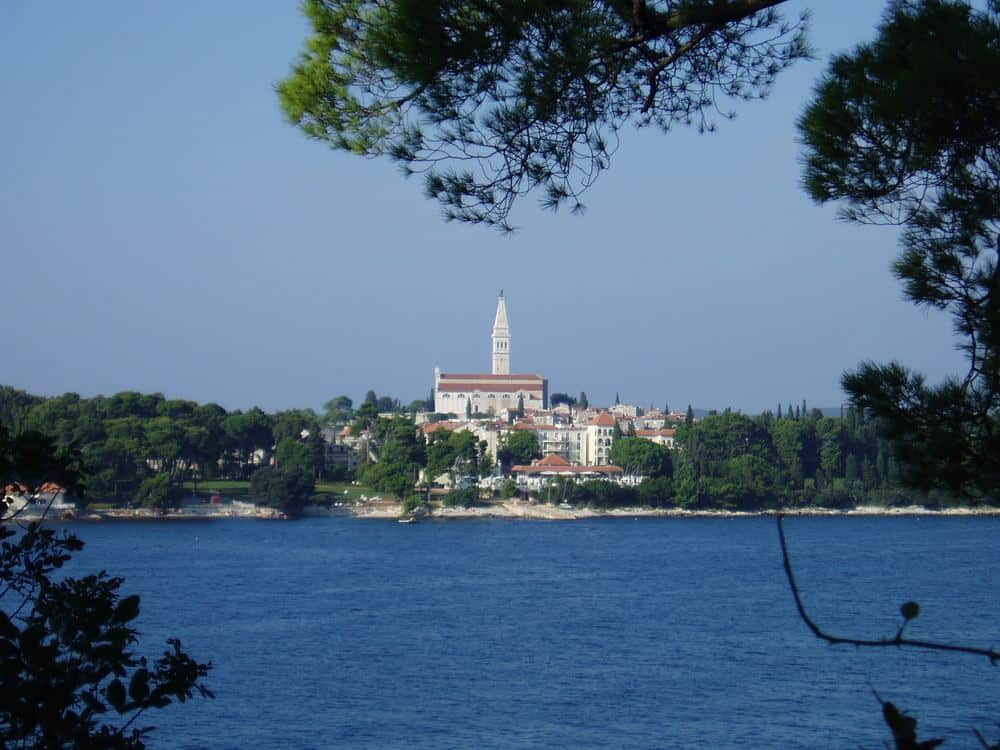
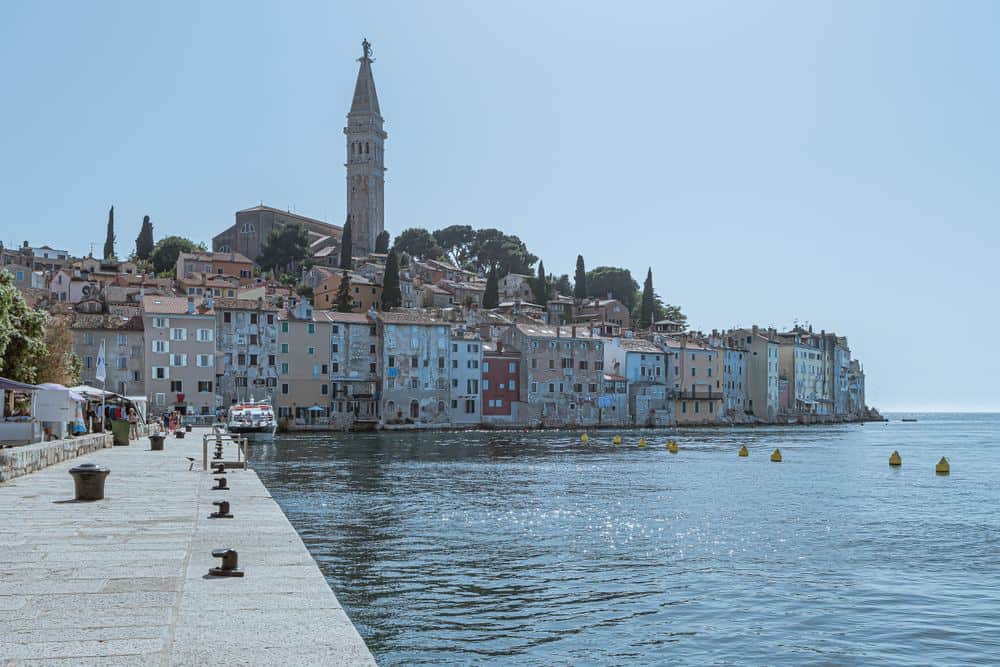
Until the eighteenth century Rovinj was an island, separated from the mainland by a narrow channel. The channel was filled in, but the shape stayed: a tight oval of stone rising to a single church tower, with the sea on three sides. That is why the town reads so clearly from a distance and confuses people once they are inside it. Every lane bends uphill toward St Euphemia, so getting lost here is temporary.
Start at the harbour, not at the top
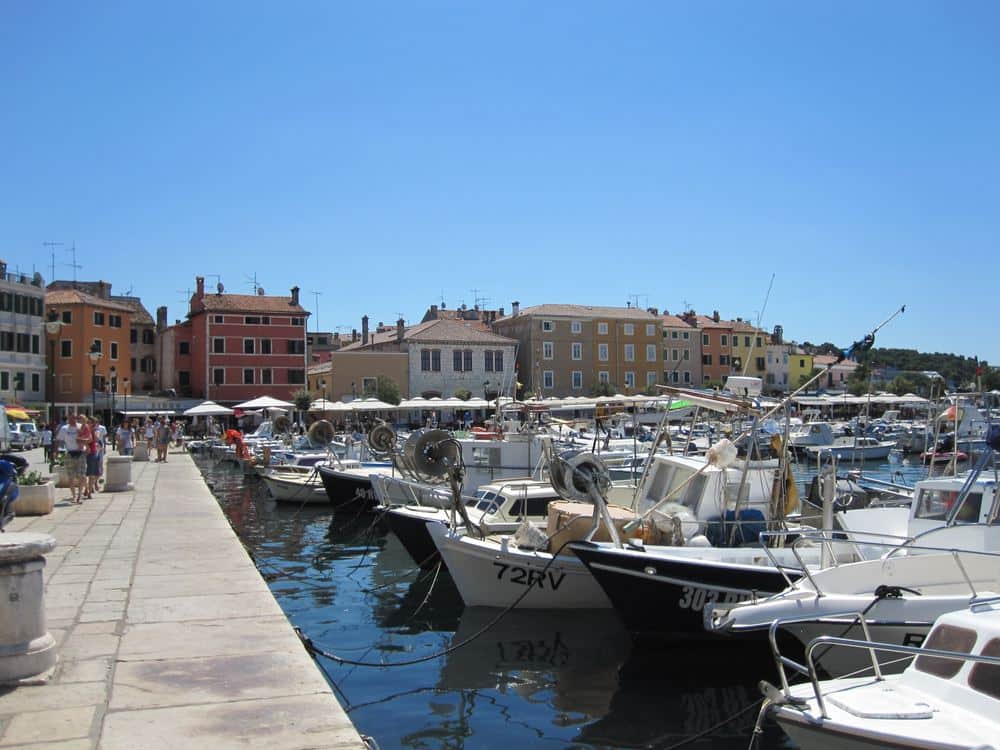
The harbour is where the town explains itself. Fishing boats sit against the same waterfront the old warehouses face, and the Batana Eco-Museum right there is the one museum in Rovinj worth planning around: the batana is the flat-bottomed local boat, and the museum exists because the tradition around it is recognised as living heritage rather than a display piece. From the harbour, Grisia Street is the obvious way up, and the Balbi Arch marks the old entrance to the town.
St Euphemia and the tower you can see from everywhere
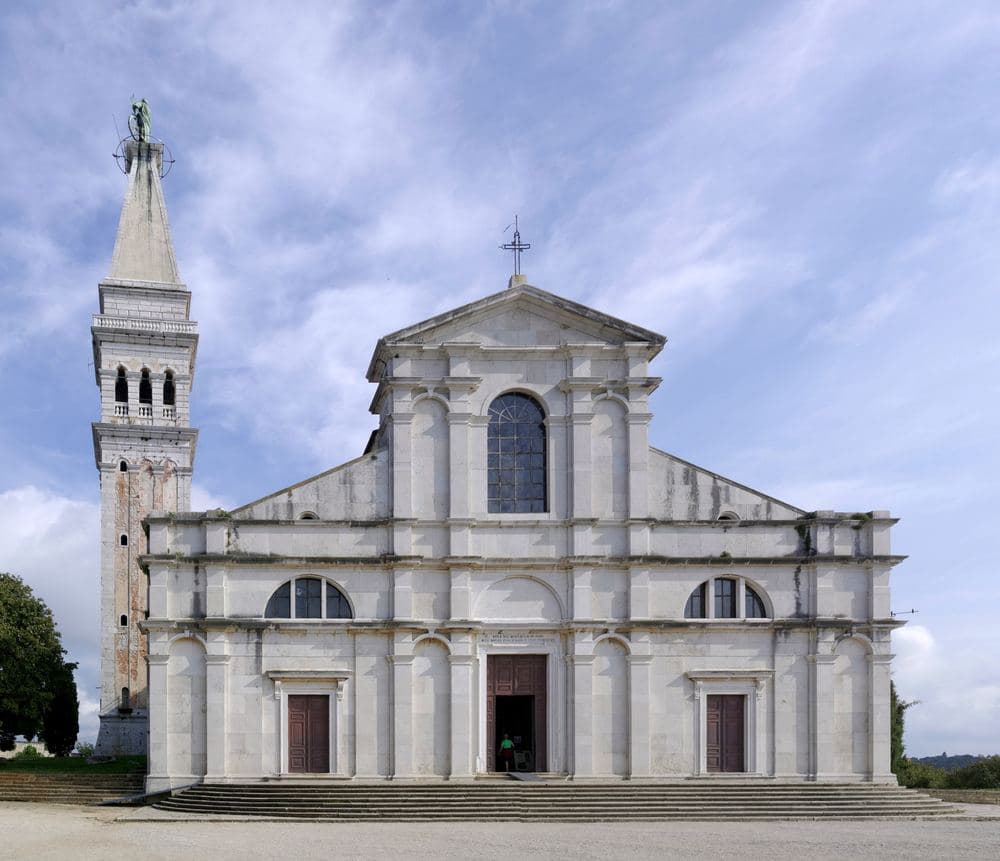
The church sits at the highest point and its bell tower is modelled on the campanile of San Marco in Venice, which tells you most of what you need to know about who built this town and why it still looks the way it does. Inside, the church holds the sarcophagus of St Euphemia. Outside, the terrace is the view everyone comes for. The climb up the tower is not for everyone: wooden stairs, steep, and worth checking before you commit if heights are an issue.
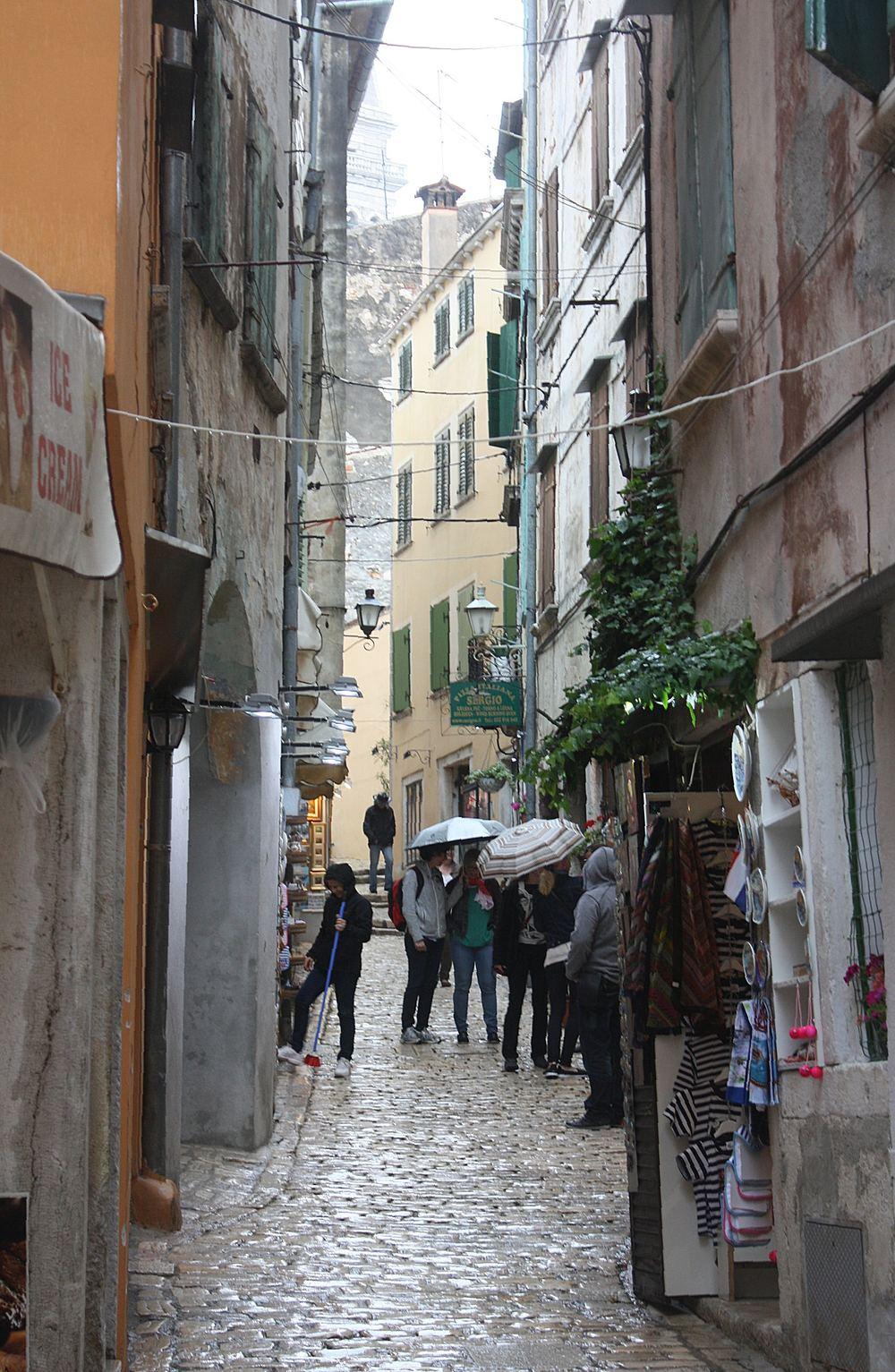
- Grisia Street: the lane of galleries and the main way up, busiest in the middle of the day.
- Balbi Arch and the town clock: the old gate and the square just inside it.
- Golden Cape (Punta Corrente): the forest park south of town, and the reason to bring shoes you can walk in.
Two names, one town
Rovinj is officially bilingual, and Rovigno is not a translation but the other local name. Street signs carry both, the Italian community here is old rather than touristic, and it shows in the food and in what people call things. If you arrive expecting a Croatian town with Italian decoration, you have it backwards: this is a place where both have been normal for centuries.
- Red Island (Crveni otok): a short boat hop from the harbour, good for a half day.
- Lone Bay and Monte Beach: the two swimming options that do not need a car.
- Rovinj Heritage Museum: small, in a baroque palace on the main square, good for a rainy hour.
“Rovinj is one of the few Adriatic old towns where the tourism came after the shape, not the other way around.”
Practically: the old town is car-free and the walk up is cobbled and uneven, so plan footwear rather than time. Mornings and late afternoons are noticeably calmer than the middle of the day. The route from harbour to St Euphemia, with the stops in order, is mapped in the CroVenture app.
Make Croatia Atlas a preferred source
One click and Google shows you our stories more often in Top Stories and in AI answers. It changes your own results only.