The largest island in Dalmatia is 50 minutes from Split by car ferry and 20 by catamaran. Zlatni rat and Bol, the 778-metre Vidova gora, the cliff monastery of Blaca, the Dragon's cave, the stone town of Pučišća and the sandy bay at Lovrečina, with 2026 ferry and bus prices, a one-day plan from Split and a three-day plan for staying.
Checked: 15 September 2026
Brač is the island you can see from the Split waterfront, the long grey ridge across the channel that turns pink at sunset. It is the largest island in Dalmatia, 40 kilometres long and 12 wide, the closest big island to the mainland and the one with the beach on every Croatian poster. It is also, for most visitors, the easiest island to get right: a 50-minute car ferry from Split that runs up to 14 times a day, a bus across the island to Bol, and enough to fill three days without ever feeling that you have to rush. This guide covers the whole island, from the ferry port at Supetar to the hermitage of Blaca, with the 2026 prices, the timetables, a one-day plan for people coming from Split and a three-day plan for people staying.
Two facts explain the island. The first is stone. Brač limestone built Diocletian's Palace in Split, the parliament in Vienna and, according to the island, the White House in Washington; the quarries above Pučišća are still working and the stonemason school in the village still takes apprentices. The second is the wind. The afternoon maestral that blows through the Hvar channel is what shaped Zlatni rat and what makes Bol the windsurfing capital of the Adriatic. Between the stone and the wind lie olive groves, dry-stone walls, a mountain that is the highest point of any Adriatic island and villages that empty in winter to a few hundred people.
Brač at a glance
| Item | Detail |
|---|---|
| Size | 395 square kilometres, 40 by 12 km, the third largest Croatian island |
| Population | about 13,000, half of them in Supetar, Bol, Pučišća and Milna |
| Highest point | Vidova gora, 778 metres, the highest peak of all Adriatic islands |
| Ferry from Split | Supetar, 50 minutes, 4.50 to 6.50 euro per person, up to 14 sailings a day |
| Fast catamaran | Split to Supetar in 20 minutes for 10 euro, foot passengers |
| Second ferry | Makarska to Sumartin, 60 minutes, for the southern coast |
| Famous beach | Zlatni rat at Bol, 20 minutes on foot from the harbour |
| Airport | Brač airport above Bol, seasonal flights from Zagreb and a few European cities |
| Best months | May, June, September, first half of October |
Getting to Brač: ferry, catamaran, airport
The Jadrolinija car ferry from Split to Supetar is line 631 and the busiest ferry route in Croatia. In the summer timetable from June to September it runs up to 14 times a day in each direction, from about 05:00 to after midnight, and in the winter timetable from 28 September still 10 to 12 times. The crossing takes 50 minutes. Foot passengers pay about 4.50 euro in the low season and 6.50 euro in the high season, a car up to 5 metres 18 to 26 euro, and tickets are sold at the Jadrolinija office in the Split port building, at the kiosks on the pier and online. Foot passengers never need to book. Cars in July and August should be in the lane an hour before departure or use the Jadrolinija app to buy a ticket for a specific sailing, because the 16:00 and 17:00 ferries out of Split fill on Friday and Saturday afternoons.
Since October 2025 Krilo runs a fast catamaran from Split's Obala Lazareta to Supetar in about 20 minutes for 10 euro, foot passengers only, several times a day in season. It is the way to do Brač as a half day from Split. In summer there are also direct catamarans from Split to Bol on the south coast, run by Jadrolinija and Krilo, which take about an hour, cost 10 to 15 euro and save the bus across the island; they run in the mornings from Split and in the late afternoons back, and they are the first boats to sell out in August. From the Makarska Riviera the Jadrolinija ferry from Makarska to Sumartin at the eastern tip takes an hour and connects to the coast road towards Bol, useful for anyone based in Brela, Tučepi or Makarska.
Brač airport, on the plateau above Bol, is the smallest commercial airport in the country. Croatia Airlines flies from Zagreb in summer and a handful of charter and private flights arrive from Germany, Austria and Switzerland. For almost everyone the airport that matters is Split, 25 kilometres west of the ferry port, with the Platanus shuttle to the bus station next to the ferries for 9 euro.
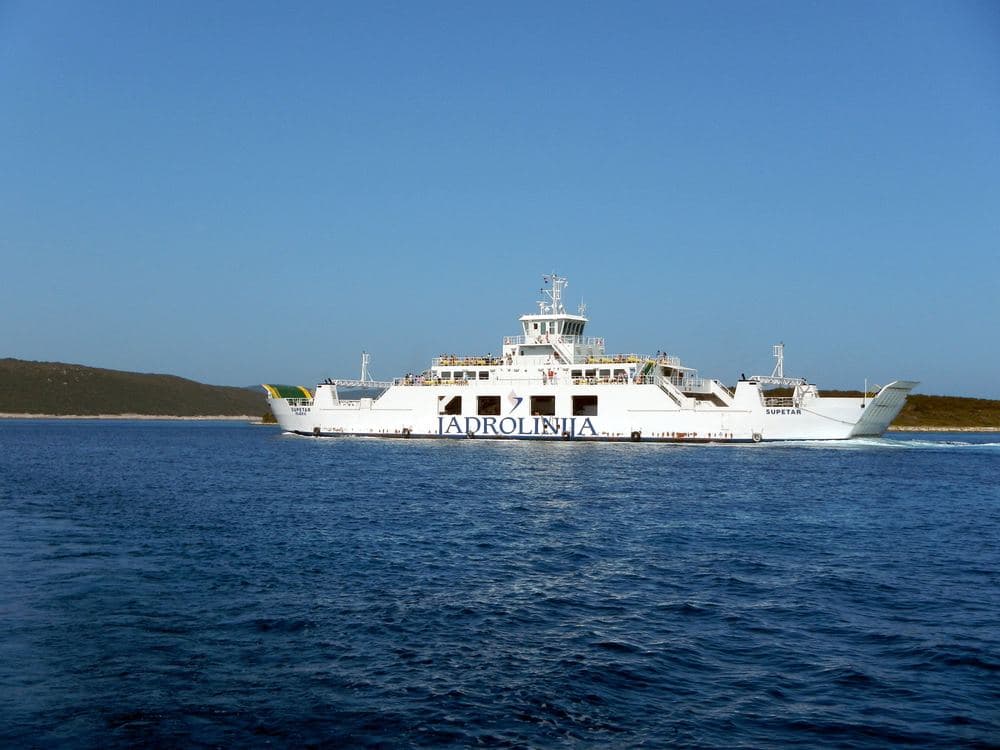
Getting around: bus, car, scooter, bike
Brač has one road that matters, from Supetar over the ridge to Bol, and the island bus runs it. Arriva's Supetar to Bol service leaves from the bus stop at the ferry pier, timed to the ferry arrivals, and takes 50 to 60 minutes for about 6 euro, six to eight times a day in summer and three or four in winter. Other lines reach Milna, Sutivan, Pučišća and Sumartin less often. The buses are the honest way to do Bol from Split without a car: ferry at nine, bus at ten, beach by eleven.
A car is the way to see the rest. Rental cars are available in Supetar and Bol from about 50 euro a day, and the car ferry means you can bring one from Split for 18 to 26 euro each way. The roads are good, narrow in the villages and empty outside July and August. Scooters at 30 to 40 euro a day are the local compromise, fine for Bol to Murvica or Supetar to Škrip and a little frightening on the ridge road with a headwind. Cyclists like the island: the loop from Supetar through Škrip, Pučišća and Pražnica is 60 kilometres of quiet road with 800 metres of climbing, and the tourist board marks a dozen routes.
Supetar: the ferry town worth an hour
Most visitors see Supetar as a place to get off the ferry, which is a pity. The town is a proper working harbour with a stone waterfront, a parish church with a 16th-century tower, a beach five minutes west of the pier and, above the cemetery on the western point, one of the strangest monuments in Dalmatia: the Petrinović mausoleum, a Secessionist tomb built between 1924 and 1927 by the sculptor Ivan Rendić for a family that made its money in Chile. The cemetery around it, with its cypresses and views back to Split, is worth the 15-minute walk from the pier. The town also has the cheapest rooms on the island and the best bus connections, which makes it a sensible base for anyone without a car who wants to move around.
Bol and Zlatni rat: the reason most people come
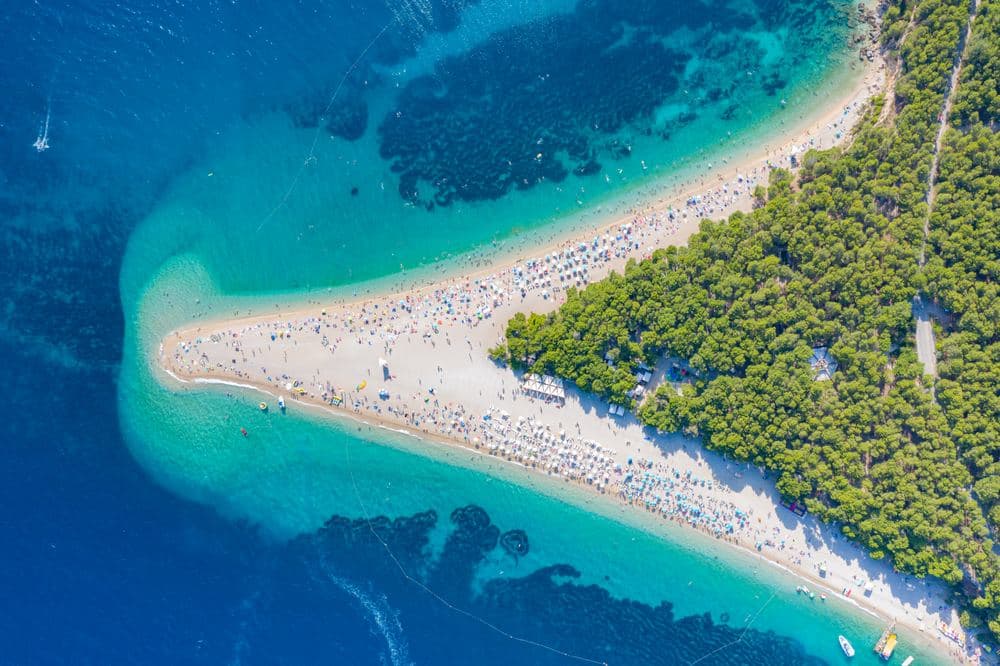
Bol is the only town on the south coast, a line of stone houses along a harbour with the mountain rising behind it. The famous beach, Zlatni rat, lies 2 kilometres west along a pine-shaded promenade, a 20-minute walk from the harbour, a 5-minute ride on the small tourist train, or a taxi boat from the pier. The beach is a spit of fine white pebbles about 500 metres long that points out into the channel, and the tip moves: after a few days of south wind it curls east, after a few of maestral it curls west. The water on both sides is deep after a few metres and clear enough to see the bottom at ten. The western side of the spit is the windsurfing and kitesurfing side in the afternoon, the eastern side is calmer. Sunbeds cost 15 to 25 euro for two, there are showers, two bars, a restaurant and a naturist section at the western end.
Zlatni rat is busy from ten to five in July and August, when 3,000 people share it, and empty before nine, when the swimmers from Bol have it to themselves. The two tricks are to come early or late, and to walk on: the promenade continues west past the spit to a string of smaller pebble coves under the pines where nobody charges for anything. Bol itself has a second beach, Potočine, in front of the hotels, with sand brought in for children, and the town's restaurants along the harbour are the island's best, with dinner for two at 60 to 80 euro. The Dominican monastery on the eastern point has a small museum with a painting attributed to Tintoretto and a garden that runs down to the sea.
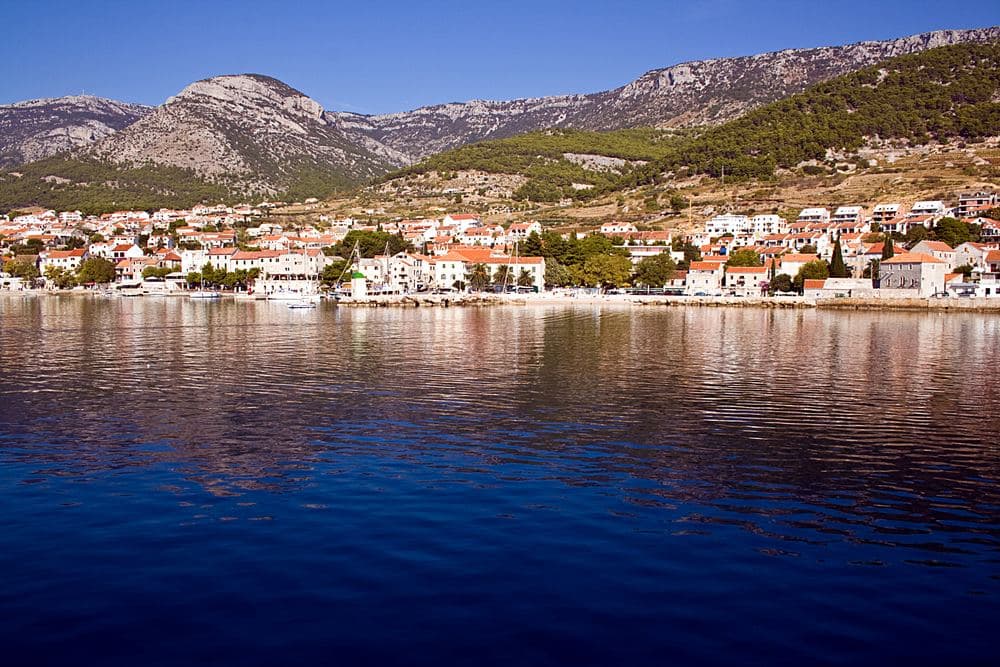
Vidova gora: the highest point on any Adriatic island
Vidova gora, 778 metres, rises directly behind Bol, and from its summit the whole of the Hvar channel is laid out below: Zlatni rat as a golden comma, Hvar town and the Pakleni islands across the water, Vis on the horizon and, on a clear day, the Italian coast as a shadow. There is a road to the top from Nerežišća, 10 kilometres of tarmac and a car park, and the summit is free with no ticket and no gate. The classic way is the walk up from Bol: a marked trail that starts behind the Dominican monastery, climbs through pine and then bare karst for 2 hours 30 minutes with 750 metres of ascent, and comes down the same way in an hour and a half. Start at seven in summer, carry two litres each, and expect no shade above 400 metres. The restaurant at the top has been closed for several years, so bring food. In spring and autumn it is one of the finest half-day walks in the country.
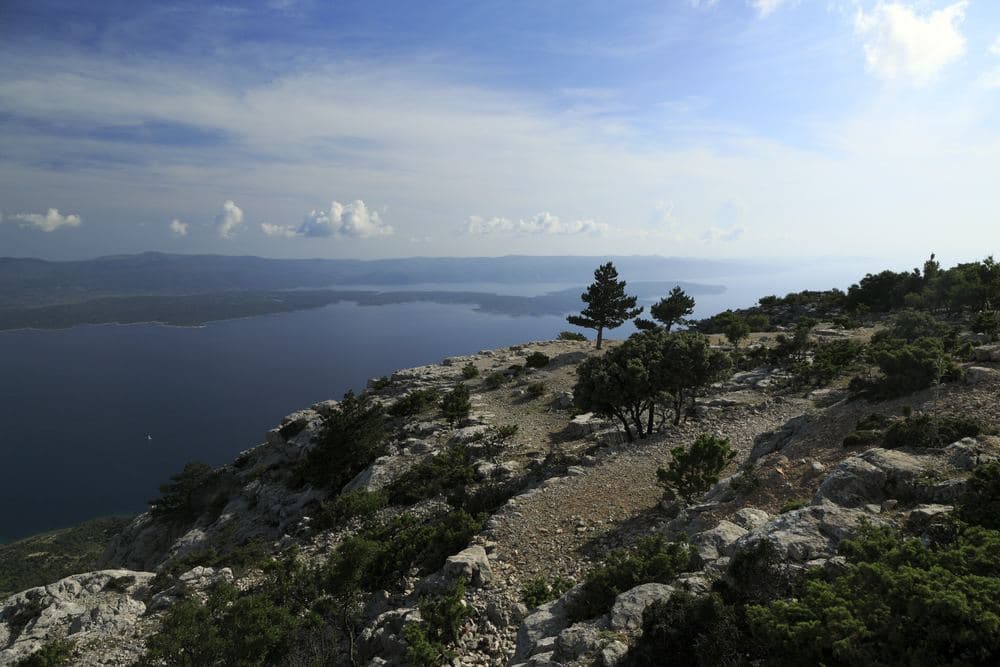
Blaca hermitage: monks, a telescope and a valley with no road
Pustinja Blaca is a monastery built into a cliff at the head of a dry valley on the south coast, founded in 1551 by Glagolitic priests fleeing the Ottomans and inhabited until 1963, when the last of them, Nikola Milićević, died and left behind a library, a printing press, a collection of clocks and one of the largest private telescopes in this part of Europe, because he was an amateur astronomer who published in Vienna. It is now a museum. Entry is 8 euro for adults, 5 for pensioners and 2 for children, and it is open every day except Monday, from 09:00 to 17:00 between 16 June and 15 September and from 09:00 to 15:00 the rest of the year, with the last admission half an hour before closing. Check the Brač cultural centre's page before you go, because the hours have changed more than once.
Getting there is the point. From the car park at the end of the road from Nerežišća, signposted Blaca, the path drops into the valley for 30 to 40 minutes through terraces and abandoned olive groves, and climbs back the same way in the heat of the afternoon. Alternatively a taxi boat from Bol lands you at Blaca bay on the south coast, from where the walk up the valley to the hermitage is 40 minutes. Bol's agencies sell the combination of boat, walk and entry for 40 to 60 euro. Either way, take water and shoes with grip.
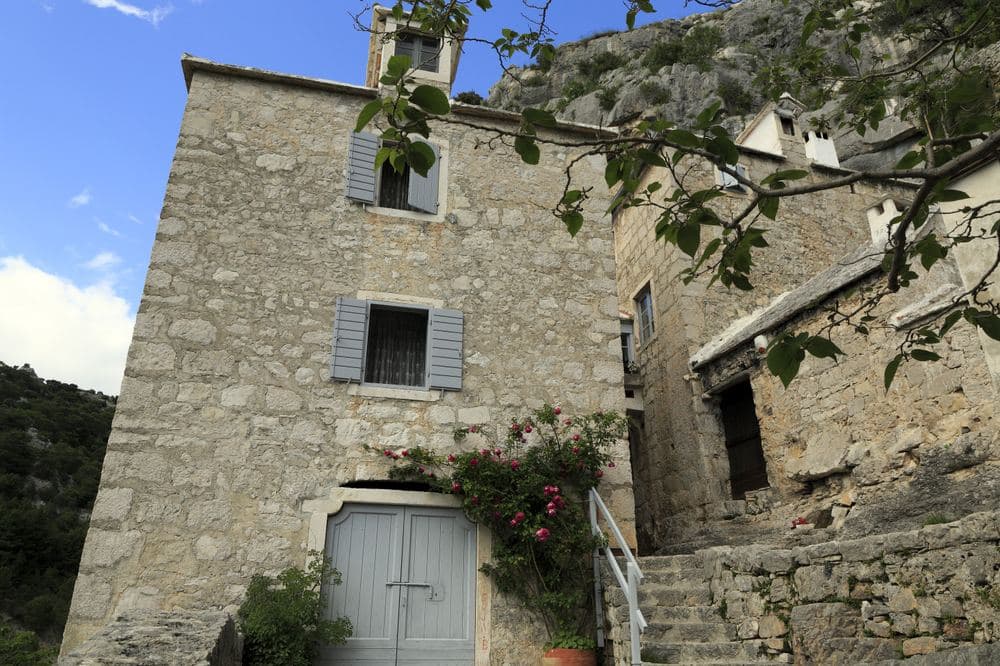
Škrip, Pučišća and the stone villages
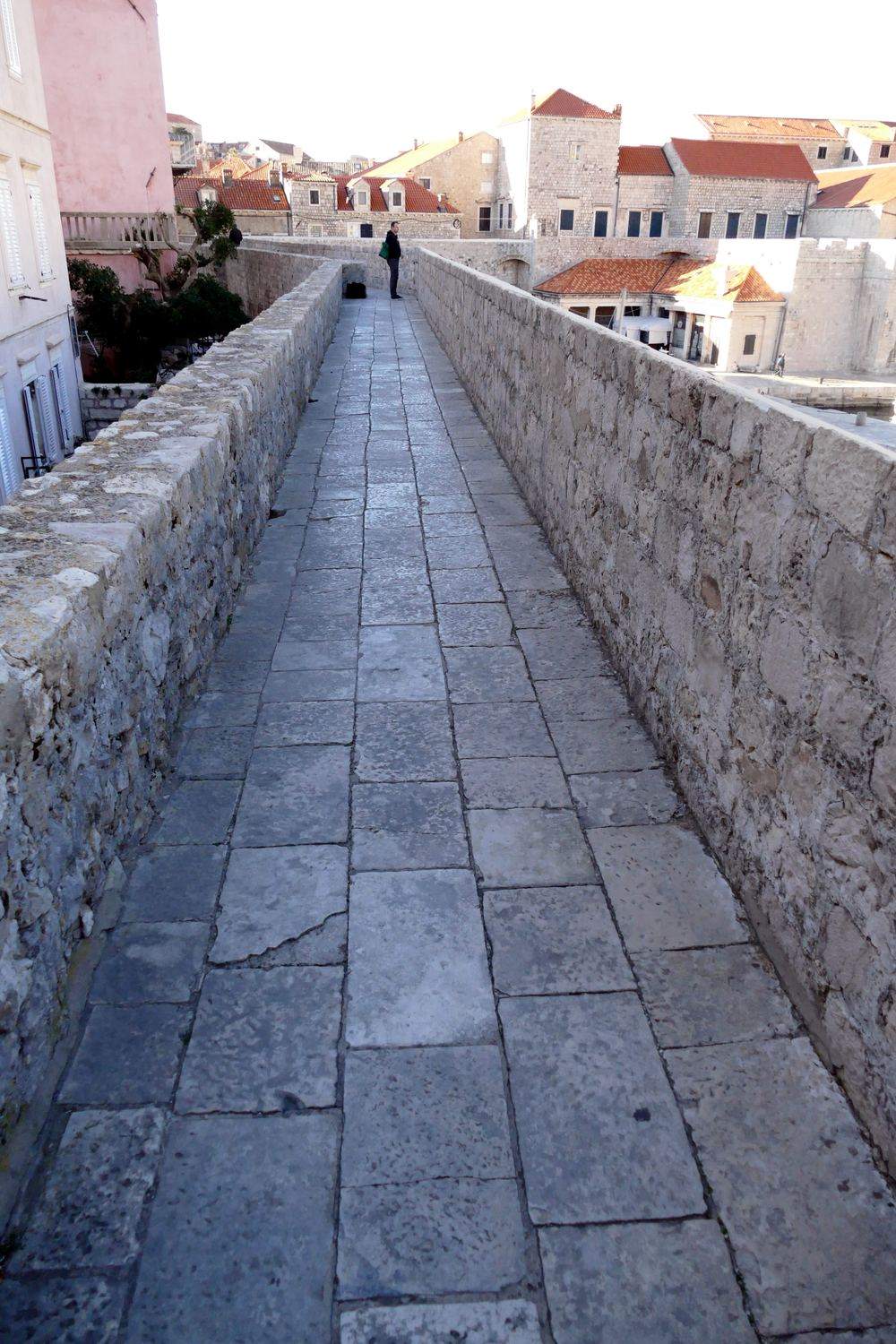
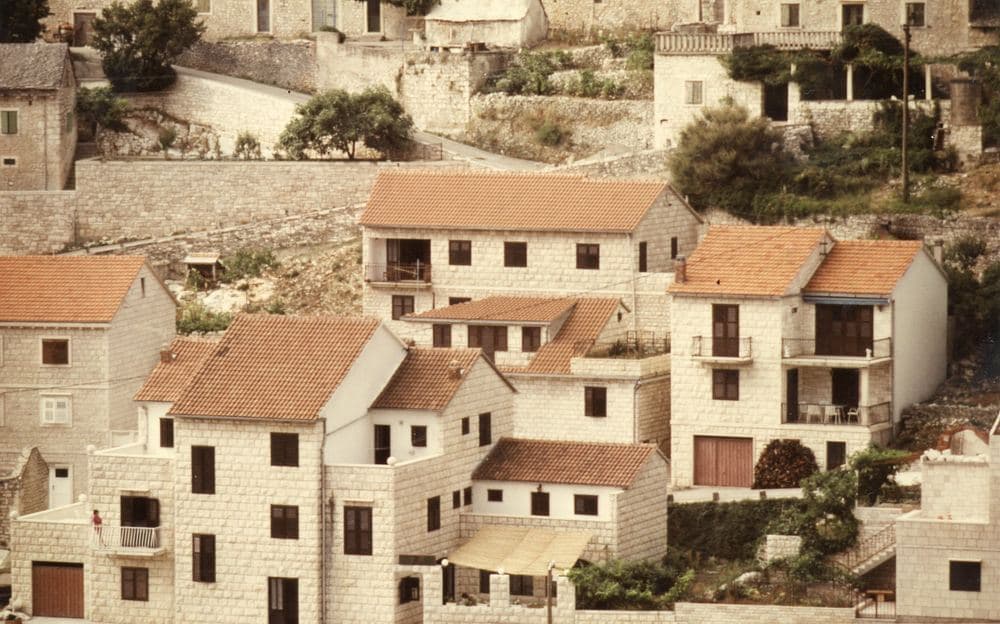
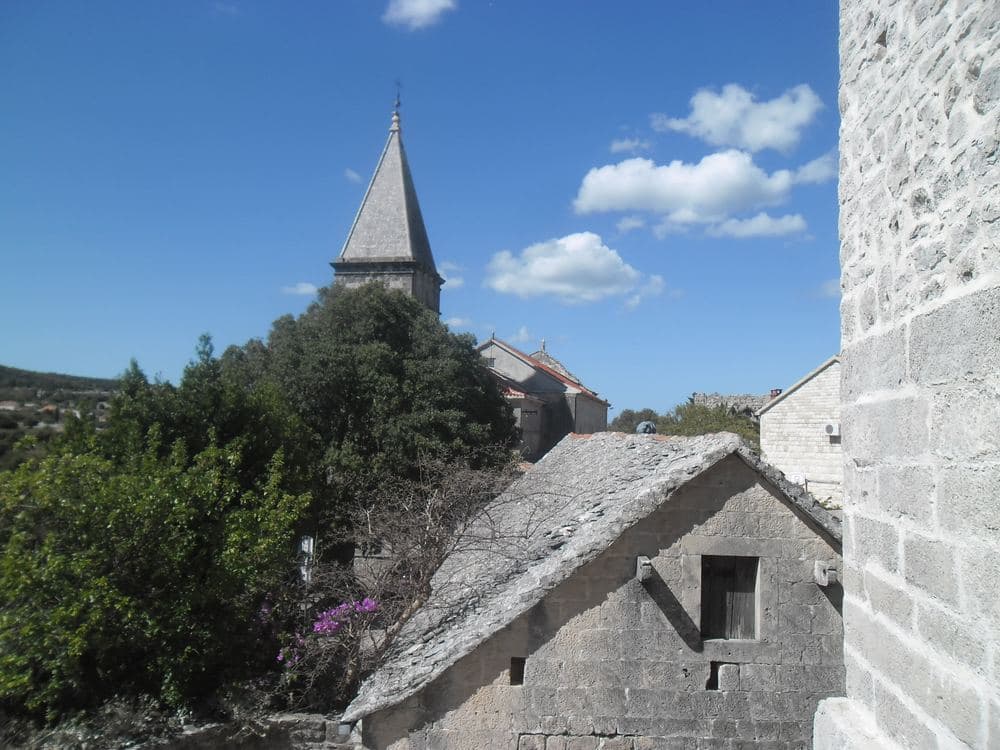
Škrip, 8 kilometres from Supetar, is the oldest settlement on the island, a hilltop village of stone houses on top of Illyrian walls, with a small island museum in a fortified tower and an olive oil museum in a family press where the owners will pour you their oil on bread for a few euro. It takes an hour and is on the way to everywhere else. Pučišća, on the north coast, is the stone town: the deep bay is lined with white houses cut from the quarries above it, and the Klesarska škola, the stonemasons' school founded in 1909, opens its workshops to visitors on weekday mornings for a small fee, where students carve capitals and window frames by hand. Milna, on the western tip, is the sailing harbour with a Venetian church and the ferry to Split in summer; Sutivan and Postira on the north coast are quiet family villages with pebble beaches; Sumartin on the eastern tip has the ferry to Makarska and the island's only fishing fleet. Inland, Nerežišća and Pražnica are villages of dry-stone walls and shepherds, and Dol has the best konoba on the island in a house with no sign.
Dragon's cave and the coves below Murvica
Six kilometres west of Bol, the village of Murvica sits above a small pebble cove, and above the village a steep trail climbs for about a kilometre and 270 metres to Zmajeva špilja, the Dragon's cave. It is a cave chapel carved in the 15th century by Glagolitic monks, with a wall of reliefs in which a dragon, a moon, angels and animals from folk belief share the rock with Christian saints. The cave can be entered only with the local guide, who has the key and takes groups up from Murvica by arrangement; the walk takes 50 minutes each way, the visit half an hour, and the price is about 10 euro per person. Call a day ahead through the Bol tourist office. The cove below Murvica, and the string of coves between it and Zlatni rat, are the quiet alternative to the famous beach.
Beaches beyond Zlatni rat
| Beach | Where | Type | Why |
|---|---|---|---|
| Zlatni rat | Bol | Pebble spit | The famous one; early or late |
| Potočine | Bol | Sand and pebble | Shallow, in front of the hotels, for children |
| Murvica | 6 km west of Bol | Pebble cove | Quiet, below the Dragon's cave village |
| Lovrečina | between Postira and Pučišća | Sand | The island's sandy bay, with a ruined basilica |
| Vela Luka | Supetar, west | Pebble | Town beach with shade, five minutes from the ferry |
| Sutivan | north coast | Pebble | Family village beaches, pine shade |
| Blaca bay | south coast | Pebble | By taxi boat, the walk to the hermitage starts here |
| Bunta | Milna | Pebble | Sailors' beach outside the harbour |
Lovrečina, on the north coast between Postira and Pučišća, deserves its own line: a bay of real sand, shallow for fifty metres, with the ruins of a 5th-century basilica in the field behind it and a single bar. It is the beach for small children and the one the island's own families use. There is parking at the road and a 10-minute walk down.
Food and wine on Brač
The island's dishes are simple and old. Vitalac, lamb offal wrapped in caul fat and roasted on a spit, is the one you will be told about; it is a spring dish and a village dish, and the konobas in Dol, Nerežišća and Škrip make it. Brač lamb from the karst pastures is the everyday luxury, roasted or under the peka, the iron bell buried in embers for three hours, which needs ordering a day ahead. The sheep's cheese from the same pastures is sold in the markets in Supetar and Bol. The wine is Plavac mali from the south-facing slopes above Bol, where the Stina winery in the old cooperative building on Bol's harbour makes the island's best reds and whites and does tastings from about 15 euro. Olive oil is everywhere, and the small producers in Škrip, Dol and Nerežišća sell it from the door at 15 to 20 euro a litre. Dinner for two in Bol runs 60 to 80 euro, in a village konoba 40 to 55.
Where to stay: Bol, Supetar or a village
Bol is the resort, with the Bluesun hotels along the promenade to Zlatni rat at 150 to 300 euro for a double in August and 90 to 160 in June, and apartments in the old town from 80 euro. It has the beach, the restaurants and the catamaran to Split, and it is the right choice for a beach week. Supetar is cheaper, 60 to 120 euro, with the ferry and the buses at the door, the sensible base for anyone without a car who wants Split within reach. Milna is for sailors and people who want a harbour view and quiet, Sutivan and Postira for families with a car and small children, Pučišća for people who want the stone and the silence. Book July and August by March; Bol's better apartments are gone by Easter.
One day on Brač from Split
- 08:00 or 09:00 ferry from Split to Supetar, 50 minutes; coffee on the Supetar waterfront while the bus fills.
- Bus to Bol, 55 minutes over the ridge, with the first view of Hvar from the top.
- Walk the promenade to Zlatni rat, swim, lunch at the beach restaurant or back in Bol at the harbour.
- Afternoon: the Dominican monastery and the Stina winery on the harbour, or a taxi boat along the coves.
- 17:00 or 18:00 summer catamaran from Bol straight to Split in an hour, or the bus back to Supetar for the evening ferry.
- Cost per person: ferry 6.50, bus 6, catamaran back 12 to 15, sunbed and lunch as you like. With a car: ferry 26 plus 6.50 per person, and you can add Vidova gora on the way back.
Three days on Brač
Day one is Bol: Zlatni rat in the morning, the town in the afternoon, dinner on the harbour. Day two is the interior with a car or a scooter: Vidova gora at eight for the light, Blaca hermitage by eleven with the walk down the valley, lunch in Nerežišća, Škrip and the olive museum in the afternoon, Pučišća's stone bay for an evening drink. Day three is the coast you choose: Lovrečina and Postira for families, Milna and a boat to the coves for couples, or the walk from Bol to Murvica and up to the Dragon's cave for people who like a trail. If the maestral is blowing, day three is a windsurfing lesson at Zlatni rat, 60 to 80 euro for two hours, or a kayak along the south coast.
When to go
June and September are the months: the sea is 23 degrees, the ferries run the summer timetable, the restaurants are open and the beach is half full. July and August are hot, 30 degrees and more, and full, with the ferries and the Bol catamaran sold out on weekends. May and early October are quiet and lovely, with the sea at 19 to 21 degrees, some restaurants closed in the villages and the hermitage on its shorter hours. From November to April the island goes to sleep: Supetar and Bol keep a few restaurants open, the ferry runs, the mountain is at its best for walking and the hotels are shut.
Practical notes
- Cash: the villages and the konobas often take only cash; the ATMs are in Supetar, Bol, Milna and Pučišća.
- Sun and wind: the south coast has little shade and the afternoon maestral is strong; secure hats and towels at Zlatni rat.
- Water shoes for the pebble beaches and sea urchins on the rocks.
- The ferry timetable changes on 28 September and again in June; check the day's timetable, not last year's.
- Fire: the island burned above Milna and Ložišća in September 2026; the paths are open again, but obey the signs in the burned zones and never light anything in the karst.
- Sunday: buses run less often and the museums have shorter hours.
Frequently asked questions
- How do I get from Split to Brač?
- The Jadrolinija car ferry from Split to Supetar takes 50 minutes, costs 4.50 to 6.50 euro per person and 18 to 26 euro per car, and runs up to 14 times a day in summer. The Krilo catamaran does Split to Supetar in 20 minutes for 10 euro, and in summer direct catamarans reach Bol in about an hour.
- How do I get to Zlatni rat from the ferry?
- From Supetar take the Arriva bus to Bol, 50 to 60 minutes for about 6 euro, timed to the ferries, then walk 20 minutes west along the pine promenade or take the tourist train. In summer the direct Split to Bol catamaran lands you 20 minutes from the beach.
- Is Brač worth a day trip from Split?
- Yes. Ferry at nine, bus to Bol by eleven, Zlatni rat, lunch on the harbour and the afternoon catamaran back gives you the beach and the town for about 25 euro in transport. With a car you can add Vidova gora.
- What is there to do on Brač besides the beach?
- Vidova gora, the highest island peak in the Adriatic at 778 metres; the Blaca hermitage in its cliff valley, 8 euro; the Dragon's cave above Murvica with a guide; the stonemasons' school in Pučišća; the olive museum in Škrip; the Stina winery in Bol; walking and cycling on 60 kilometres of quiet roads.
- How many days do you need on Brač?
- One day covers Bol and Zlatni rat from Split. Three days add the mountain, the hermitage, the stone villages and a second beach such as Lovrečina or Murvica. A week is a beach holiday with a day on Hvar by catamaran.
Official sources
Make Croatia Atlas a preferred source
One click and Google shows you our stories more often in Top Stories and in AI answers. It changes your own results only.