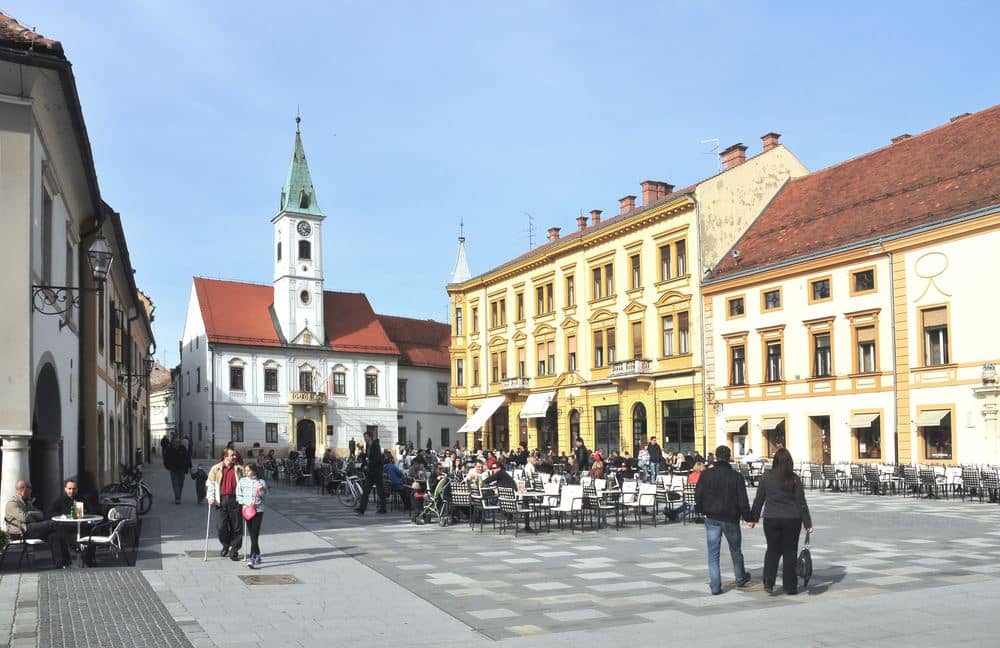
The city that fills with Špancirfest in August does the opposite in December: small, lit, walkable end to end. Why it works as a day trip from Zagreb and what to see once you are there.
Checked: 18 October 2026, 04:10
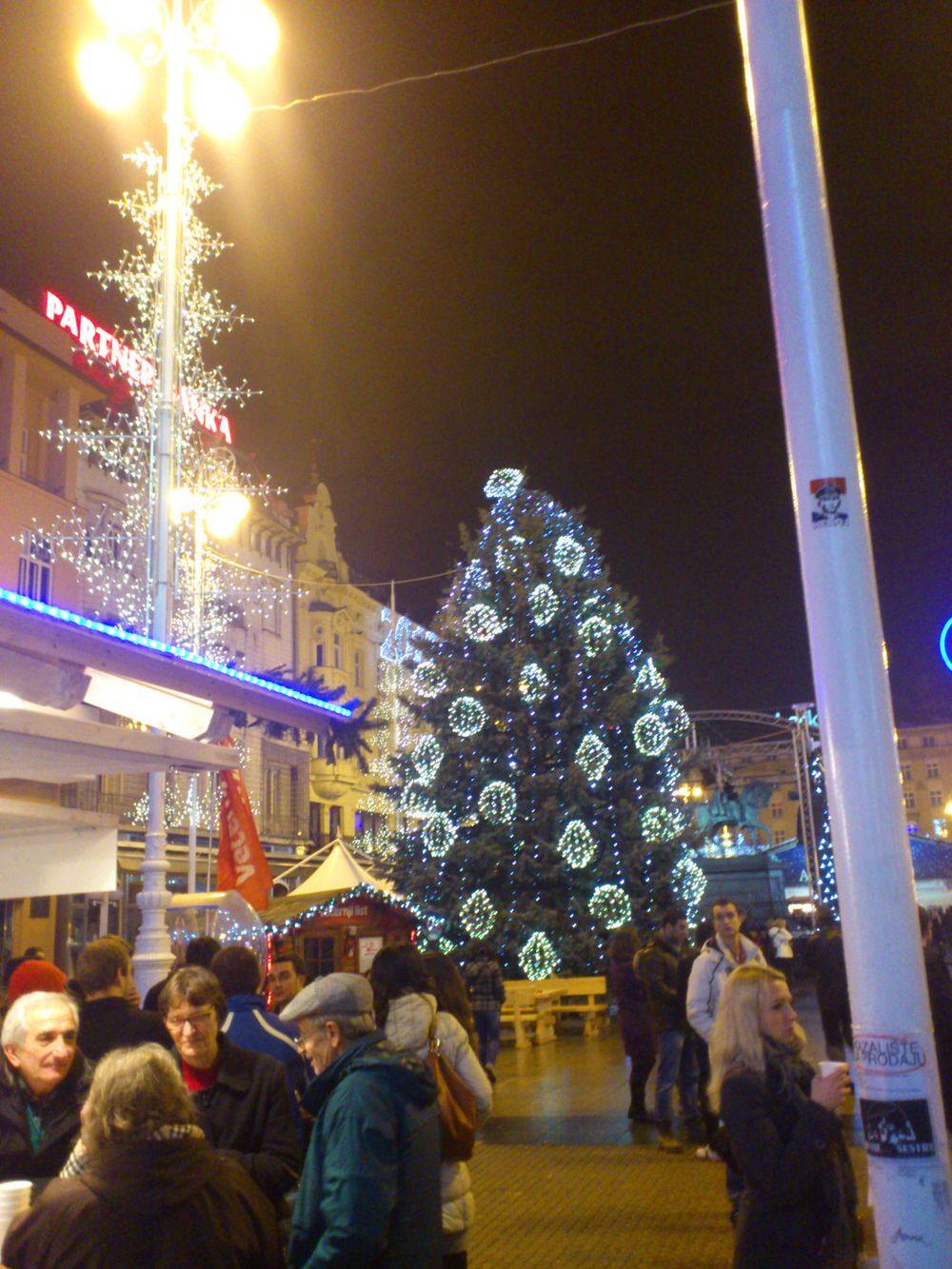
Varaždin is the one Croatian Advent that benefits from being small. The baroque centre is compact enough to cross on foot in about an hour, which means the lights work as one continuous thing rather than a set of separate locations you have to navigate between. It sits roughly eighty kilometres north of Zagreb, close enough that the whole thing works as an afternoon and evening out rather than a stay.
Advent in Varaždin 2026 runs for 41 days, from 27 November 2026 to 6 January 2027 (eVaraždin).
Getting there from Zagreb
Buses run through the day from Zagreb's main bus station and take a little over an hour and a half; trains take longer and run less often, so the bus is the default. Driving is about an hour on the A4 motorway. Whichever you take, aim to arrive in the late afternoon: the lights make the difference and they come on at dusk, which in December means shortly after four.
What to see while the lights are on
- Trg kralja Tomislava with the town hall: the centre of the centre, with food and drink stalls. The gift stalls stand on Franjevački trg and Trg slobode.
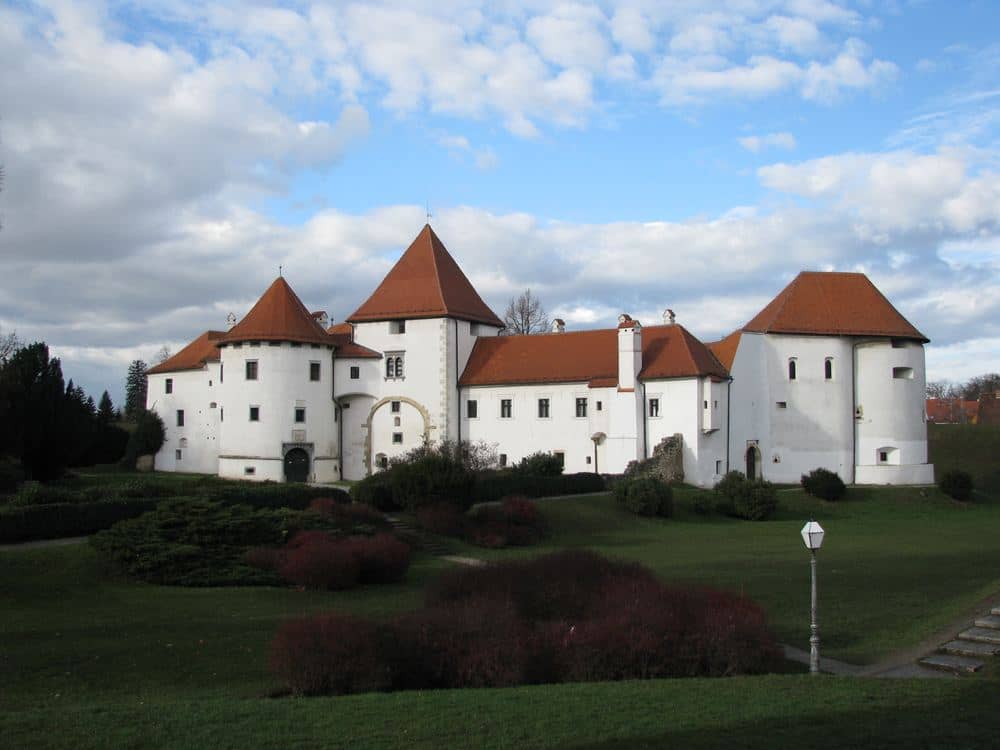
- Stari grad, the white fortress on the edge of the old town, floodlit and worth the ten-minute walk.
- The baroque churches and palaces along the pedestrian streets, which are the reason the town looks the way it does.
An afternoon that fits the bus back
Plan on about 5 hours in town. Arrive around 15:00 while there is still daylight, walk the promenade ring past the fortress, then go indoors for one museum as the light goes. By 16:30 the lights are on and the square has filled, which is the moment for the stalls and the rink. Eat around 18:00, before the evening crowd moves, and leave time for the walk to the bus station, about 10 minutes on foot south-west of the square. Check the last departure to Zagreb before you set out: evening buses are fewer than daytime ones and Sunday timetables are thinner still. The railway station is about 15 minutes east of the centre, and trains are fewer, so check those times with the same care.
| Time | Where | What |
|---|---|---|
| 15:00 | Trg kralja Tomislava | Arrive, coffee, the square in daylight |
| 15:20 | Jagić promenade and Lisak tower | The 20-minute circuit round the core |
| 15:45 | A museum | Indoors while dusk comes |
| 16:30 | The square | Lights on, stalls, ice rink |
| 17:15 | Cathedral and St Nicholas | A few minutes from the square, if the doors are open |
| 18:00 | A street off the square | Dinner before the crowd moves |
| 19:30 | Bus station | 10 minutes on foot, last departure checked |
Varaždin in short
Varaždin has about 40,000 residents and was the capital of Croatia between 1767 and 1776. Maria Theresa moved the Croatian Royal Council here, the town was then the largest in the kingdom, and a fire on 25 April 1776 destroyed most of it and sent the government to Zagreb for good. The rebuilding that followed was done in the style of the moment, which is why the centre reads as one baroque piece: pastel facades, palaces with arcaded courtyards and churches of the same century. The town hall on Trg kralja Tomislava has housed the city administration since 1523. The whole core sits inside a ring of plane trees, the Vatroslav Jagić promenade, planted where the moat and ramparts once ran. The Advent stalls, the ice rink and the lights all sit inside that ring.
Indoors when the cold sets in
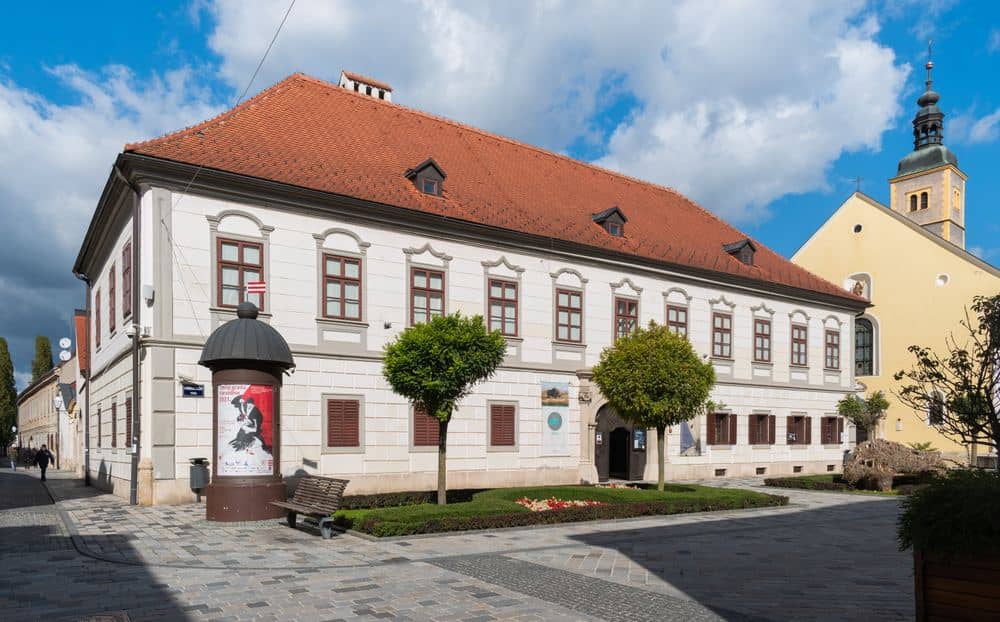
December here is a continental winter. Temperatures around freezing and fog off the Drava plain are normal, so the lights work best in short spells with warm rooms in between. Varaždin has more museums than a town of its size usually carries, and 4 of them lie within 5 minutes of the square. The Stari grad, home of the city museum's cultural history collection, is closed to visitors for energy renovation works, says the City Museum. The Gallery of Old and New Masters in the rococo Sermage palace opposite stays open. The World of Insects in the Herzer palace is the one people talk about afterwards: some 4,500 specimens in dioramas built by the professor who collected them, kept almost as he left them. The Angel Museum, a private collection in a lane off the square, keeps shorter hours, so check before you count on it.
| Museum | Building | Time needed |
|---|---|---|
| City Museum | Stari grad fortress | Closed for renovation |
| Gallery of Old and New Masters | Sermage palace, opposite the fortress | About 60 minutes |
| World of Insects | Herzer palace | About 40 minutes |
| Angel Museum | Lane by the main square | 30 to 60 minutes |
The cathedral, the bear and the tower
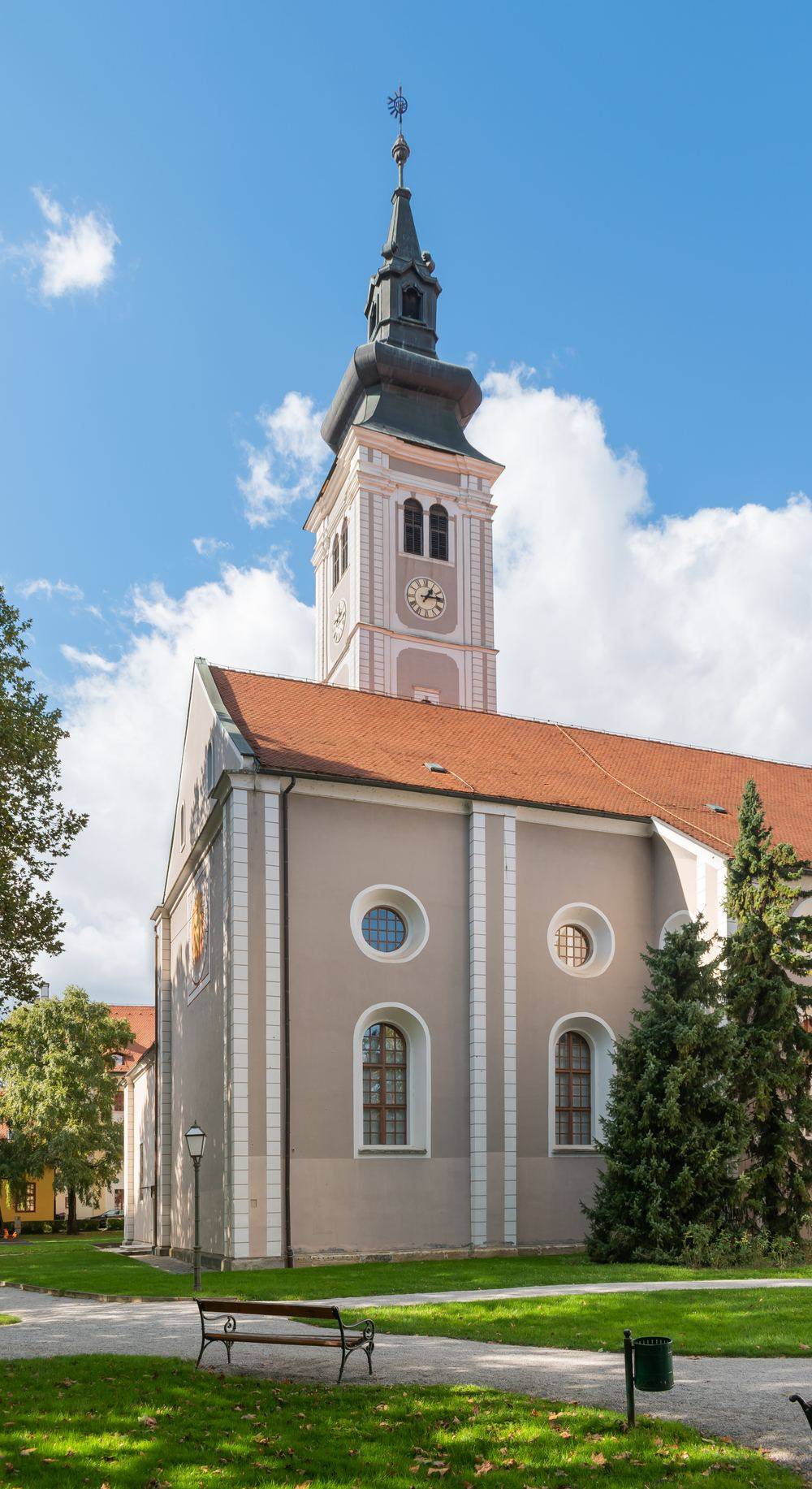
The Cathedral of the Assumption stands 2 streets east of the square. It was built as a Jesuit church in the middle of the 17th century and became a cathedral only in 1997. The high altar is nearly 20 m tall, gilded and full of statues, and fills the whole end wall of the sanctuary. Entry is free. St Nicholas, the oldest parish church, is 2 minutes from the square on the way to the fortress. Look for the stone bear at the foot of the bell tower: it is the town's medieval seal and older than every baroque facade around it. The Lisak tower on the corner by the promenade is the last piece of the town walls, a 16th century gate tower that survived because a family moved into it. You cannot go inside. The board beside it shows how the fortress once belonged to a full ring of walls around the town.
Where to eat
The cooking is that of Zagorje and the Drava plain, and the menus are honest about it: this is turkey, cheese and pastry country, with little seafood on offer. The cafés directly on Trg kralja Tomislava are the place for coffee facing the town hall. For dinner walk 1 street in any direction, where prices drop and portions grow. The Advent stalls on the square cover the rest, and they are where most people eat once the lights are on. Restaurants and cafés take cards. Carry some cash in euros for the stalls all the same.
- Štrukli: pastry rolled with cottage cheese, baked under cream or boiled and served in soup. The dish of the whole region north of Zagreb.
- Purica s mlincima: roast turkey with mlinci, thin sheets of baked dough softened in the roasting juices. The Sunday dish of Zagorje.
- Kuhano vino: mulled red wine from the stalls, the standard hand warmer on the square once the lights are on.
- Fritule: small fried dough balls dusted with sugar, sold by the paper cone at Advent stands across Croatia.
- Gemišt: white wine topped up with sparkling mineral water, what people in the north drink with dinner.
- Bučino ulje: dark green pumpkin seed oil from the fields of Varaždin and Međimurje, poured over salad or young cheese.
An evening at the theatre
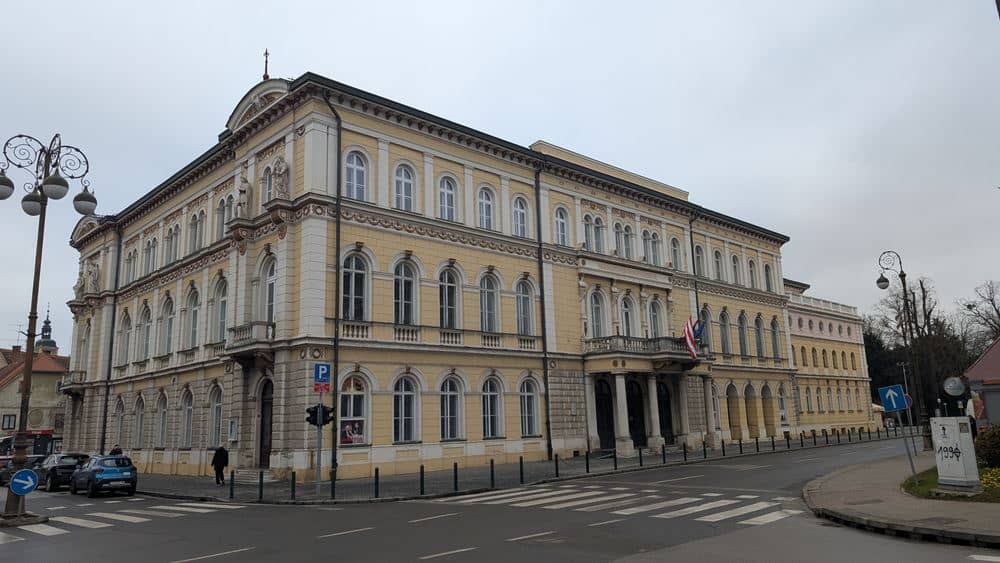
If you would rather stay past the lights, the Croatian National Theatre gives you the reason. The building opened in 1873 to a design from the Vienna office of Ferdinand Fellner, so the hall has the horseshoe balconies and acoustics of Vienna, Budapest and Zagreb, paid for by a town that then had fewer than 10,000 people. The house keeps its own drama ensemble and plays a full season through the winter, and tickets cost considerably less than in Zagreb. Most plays are in Croatian, so choose a concert or a title you already know. The theatre stands by the Jagić promenade, 5 minutes from the square. An evening performance starts around 20:00, which means a late bus or a night in town, so decide that before you buy.
Staying over and practical notes
Most visitors do this as a day trip, and this guide assumes that. Staying is easy in December: the pressure on rooms that Špancirfest brings in August, when 300,000 visitors arrive in a town of 40,000, does not exist in winter, and a hotel inside the promenade ring puts you on the square before the stalls open and back in a warm room after the theatre. Hotels sit in the centre and along the streets just outside the ring, and the bus station is close to both. Whichever you choose, a few things are worth knowing before you set out.
- The old core is car-free. The parking garages by Kapucinski trg are a 5-minute walk from the square and the easiest place to leave the car.
- The Purgar guard changes in front of the town hall only from May to October, on Saturdays at 12:00. Do not plan a December visit around it.
- The bus station is about 10 minutes on foot south-west of the square, the railway station about 15 minutes to the east.
- The combined City Museum ticket covers the Herzer, Sermage and Patačić palaces, so buy it at the first one you enter.
- Weekend afternoons before Christmas are the fullest hours on the square. A weekday gives you the same lights with fewer people.
- The Advent programme, the stalls and the rink change from year to year. Check the city's programme for the dates before you travel.
Frequently asked questions
- How far is Varaždin from Zagreb?
- About eighty kilometres north. Buses take a little over an hour and a half, driving on the A4 takes around an hour.
- Is Varaždin worth it just for Advent?
- As a half-day it does. The centre is small, so the Advent and the baroque town are the same walk rather than two separate things, and you are back in Zagreb the same evening.
- When do the lights come on?
- At dusk, which in December means shortly after four in the afternoon. Arriving before that leaves you an hour of daylight for the fortress and the churches.
Official sources
- evarazdin.hr
- Varaždin Tourist Board, 8 October 2026: Advent in Varaždin 2026 from 27 November 2026 to 6 January 2027
- Varaždin Tourist Board, 8 October 2026: food and drink at Advent 2026 on Trg kralja Tomislava, Trg Miljenka Stančića, Franjevački trg, Gajeva ulica, Trg slobode, Kapucinski trg and the Magic Town of Santa Claus
- Varaždin City Museum: Stari grad temporarily closed to visitors for energy renovation works (checked 18 October 2026)
- Varaždin City Museum price list: combined ticket for the Herzer, Sermage and Patačić palaces
Share this guide
Questions about your trip?