Zlatni rat, Stiniva, Sakarun, Punta Rata, Šunj on Lopud, Pasjača, Bačvice and Kašjuni in Split, Banje and Sveti Jakov in Dubrovnik, Rajska plaža on Rab, Kamenjak in Istria: twenty beaches chosen for the water, each with pebble or sand, bus or ferry, and the hour to arrive in August.
Checked: 15 September 2026
Croatian beaches are pebble, rock and the occasional patch of sand, set in water so clear that the sea bed is visible at ten metres. That is the deal: bring water shoes, expect a concrete platform or a stony cove rather than dunes, and get the cleanest swimming in Europe in return. This list is twenty beaches from Istria in the north to Konavle south of Dubrovnik, chosen for the water and the setting rather than the beach bar, each with the type, how to get there without a car where that is possible, and the month it is at its best. Most are free; where sunbeds cost money it says so.
| Beach | Where | Type | Get there |
|---|---|---|---|
| Zlatni rat | Bol, Brač | Pebble spit | Ferry to Supetar, bus to Bol, 20-minute walk |
| Stiniva | Vis | Pebble cove between cliffs | Ferry to Vis, scooter, 20-minute scramble down |
| Sakarun | Dugi otok | White sand and shallows | Catamaran to Božava, bus or bike |
| Punta Rata | Brela | Pebble under pines | Bus on the coast road, walk |
| Šunj | Lopud, Elafiti | Sand | Ferry from Dubrovnik, 25-minute walk |
| Pasjača | Konavle | Pebble under a cliff | Car to Popovići, steps |
| Banje | Dubrovnik | Pebble with a view | Five minutes from Ploče gate |
| Sveti Jakov | Dubrovnik | Pebble, quiet | Bus 5 or 8, steps |
| Bačvice | Split | Sand, shallow | Ten minutes from the ferry port |
| Kašjuni | Split | Pebble below Marjan | Bus 12 or a walk round Marjan |
| Dubovica | Hvar | Pebble cove | Bus or taxi, steep path |
| Milna | Hvar | Pebble, family | Bus from Hvar town |
| Stončica | Vis | Sand, shallow | Bike or scooter from Vis town |
| Lovrečina | Brač | Sand | Bus or taxi from Postira |
| Nugal | Makarska | Pebble, naturist | 40-minute walk on the coast path |
| Queen's beach | Nin | Sand and mud | Bus from Zadar, walk |
| Kolovare | Zadar | Pebble, city | Fifteen minutes from the old town |
| Rajska plaža | Lopar, Rab | Sand, 1.5 km | Bus from Rab town |
| Baška | Krk | Pebble, 2 km | Bus from Krk town |
| Kamenjak coves | Premantura, Istria | Rock and pebble | Bus 26 from Pula, bike |
The south: Brač, Hvar, Vis
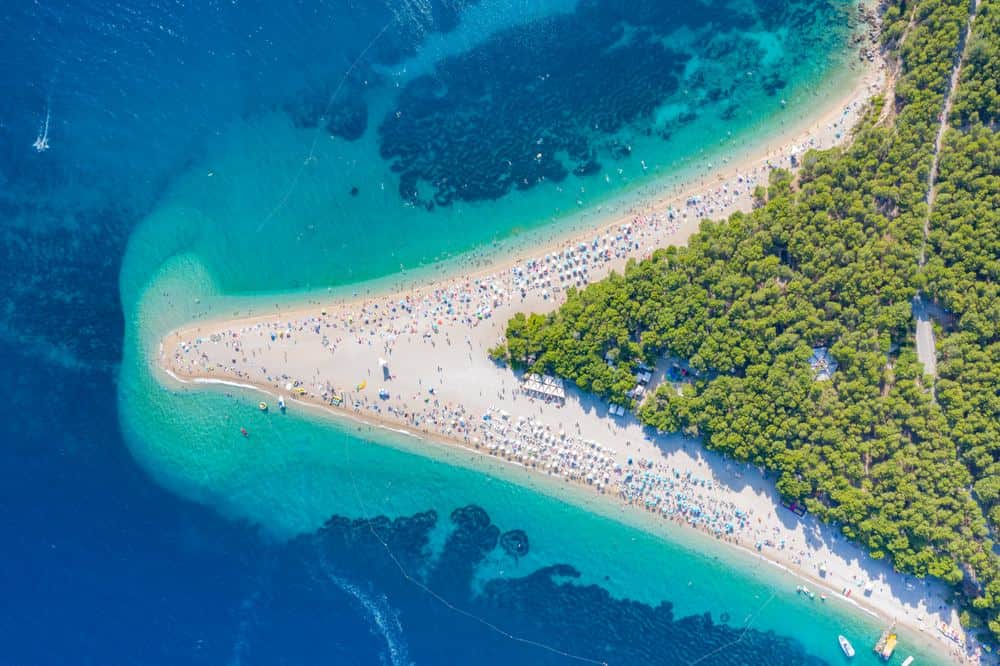
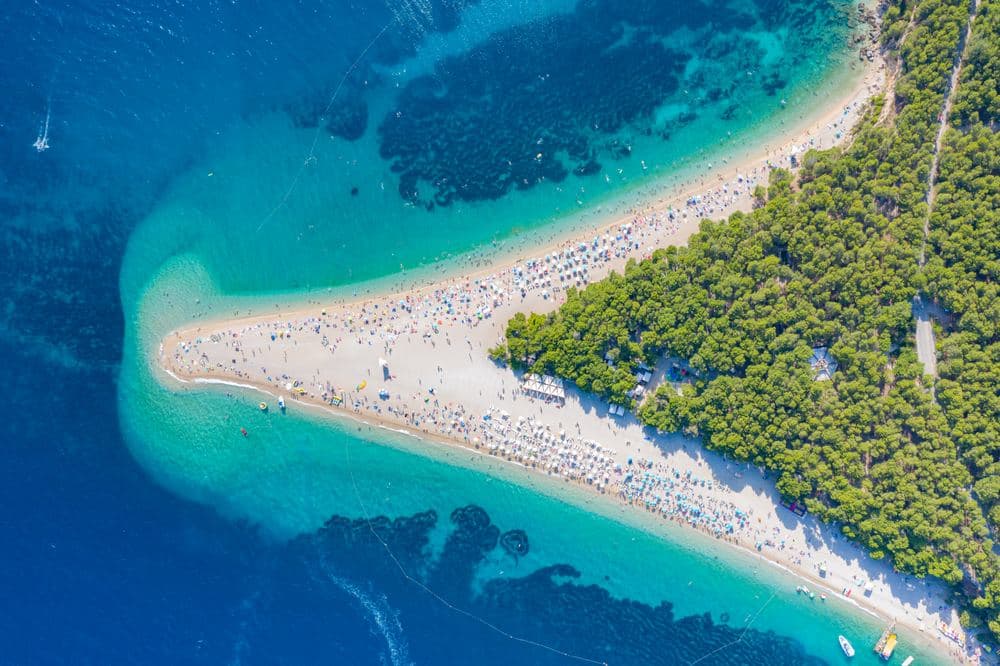
Zlatni rat in Bol is the beach on every Croatian poster, a tongue of fine white pebbles that points into the channel and turns with the current. It is busy from ten to five in July and August, and empty before nine, when the swimmers from the town have it to themselves. The walk from Bol harbour along the pine promenade is twenty minutes, the water is deep quickly on both sides, and the windsurfers use the far tip in the afternoon when the maestral blows. Sunbeds cost 15 to 25 euro for two. Ferries from Split reach Supetar in 50 minutes for 8 euro, and the island bus takes another 50 to Bol.
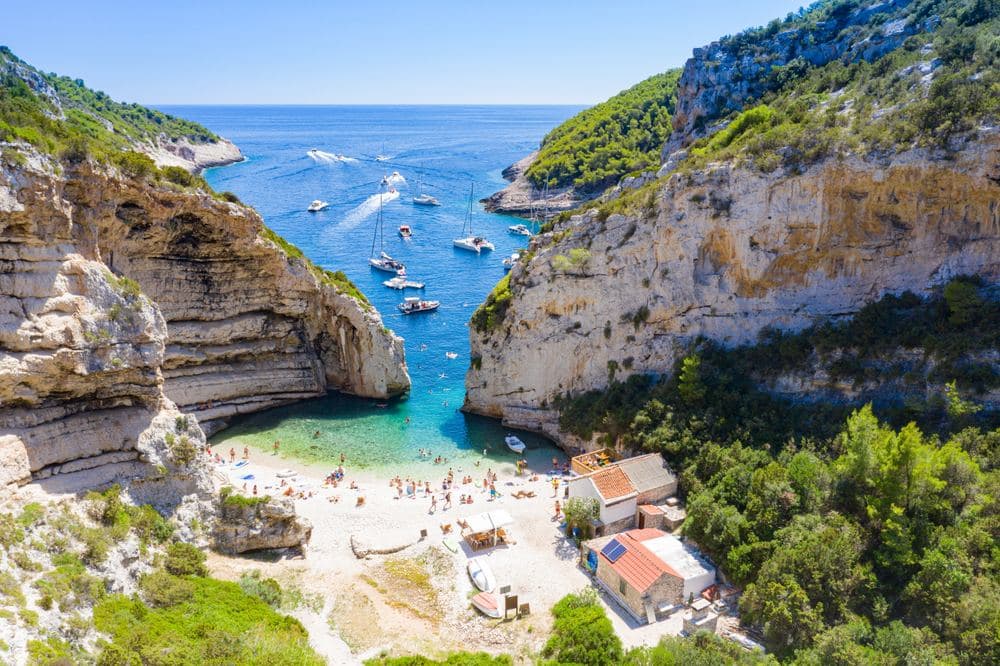
Stiniva on the south coast of Vis is the opposite: a pebble beach the size of a tennis court closed off by two cliffs that leave a gap of four metres to the open sea. It is reached by a 20-minute path down from the road, steep and loose, or by taxi boat from Rukavac for 10 to 15 euro. Go before ten or after four in summer; the cove is in shade after three. Stončica on the north coast of Vis is the family beach, shallow sand and a konoba under the tamarisks. Vis is 2 hours 20 from Split by Jadrolinija ferry, about 8 euro.
Hvar's best swimming is away from Hvar town. Dubovica, ten kilometres east on the Stari Grad road, is a pebble cove with a single stone house, reached by a steep ten-minute path from the lay-by, and it has the clearest water on the island. Milna, five kilometres from Hvar town by bus, is two coves with pebbles, shade and a restaurant, right for families. In Hvar town itself, take a taxi boat from the harbour to the Pakleni islands for 10 to 15 euro return: Palmižana has the bars, Ždrilca and Mlini have the quiet.
Split and the Makarska Riviera
Split has real beaches in the city. Bačvice, ten minutes from the ferry port, is the sandy one, shallow for a hundred metres, where the locals play picigin in the water in every season and the cafes above stay open until late; it is also the most crowded square of sand in Dalmatia at noon in August. Kašjuni on the south side of Marjan hill is the beautiful one, pebbles under the pines with a view of the islands, reached by bus 12 or a forty-minute walk around the hill, with a beach bar and sunbeds at 20 euro for two. Further west, Kaštelet and the coves along the Marjan road are free and quiet.
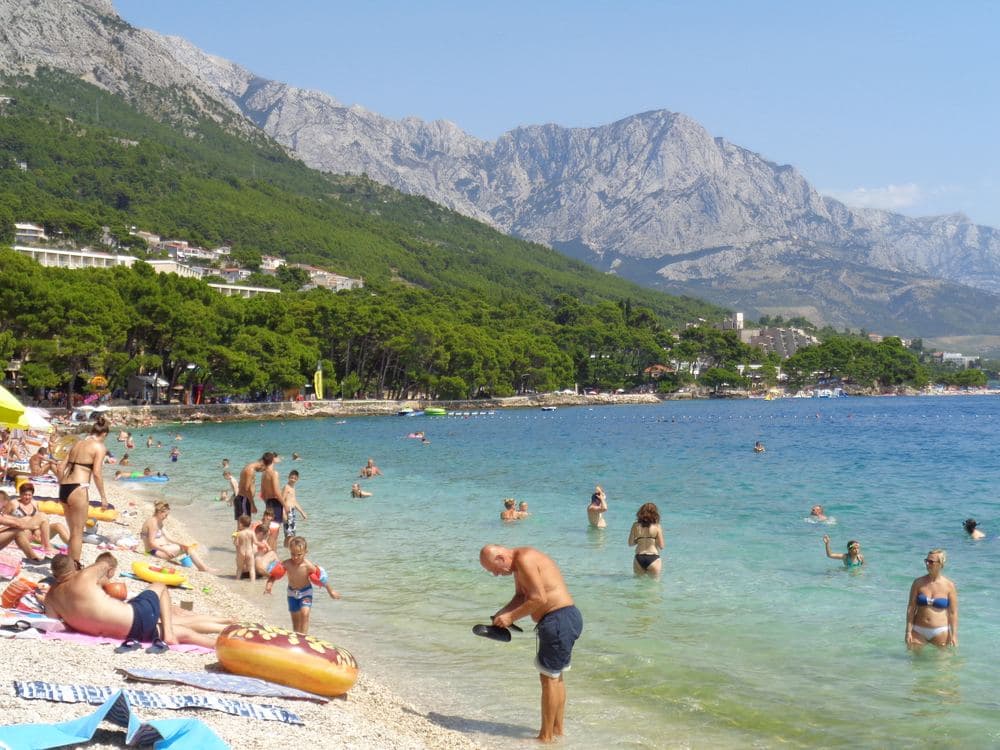
The Makarska Riviera is the mainland's best coast for beaches, sixty kilometres of pebble under the Biokovo mountain. Punta Rata in Brela, an hour south of Split by bus, is the famous one, with the rock and the pine in the water that appears on the postcards, and a promenade that runs for kilometres in both directions. Nugal, forty minutes' walk along the coast path from Makarska towards Tučepi, is a naturist cove under a white cliff, quiet even in August because of the walk. Both have water shoes as the only requirement.
Dubrovnik and the Elafiti
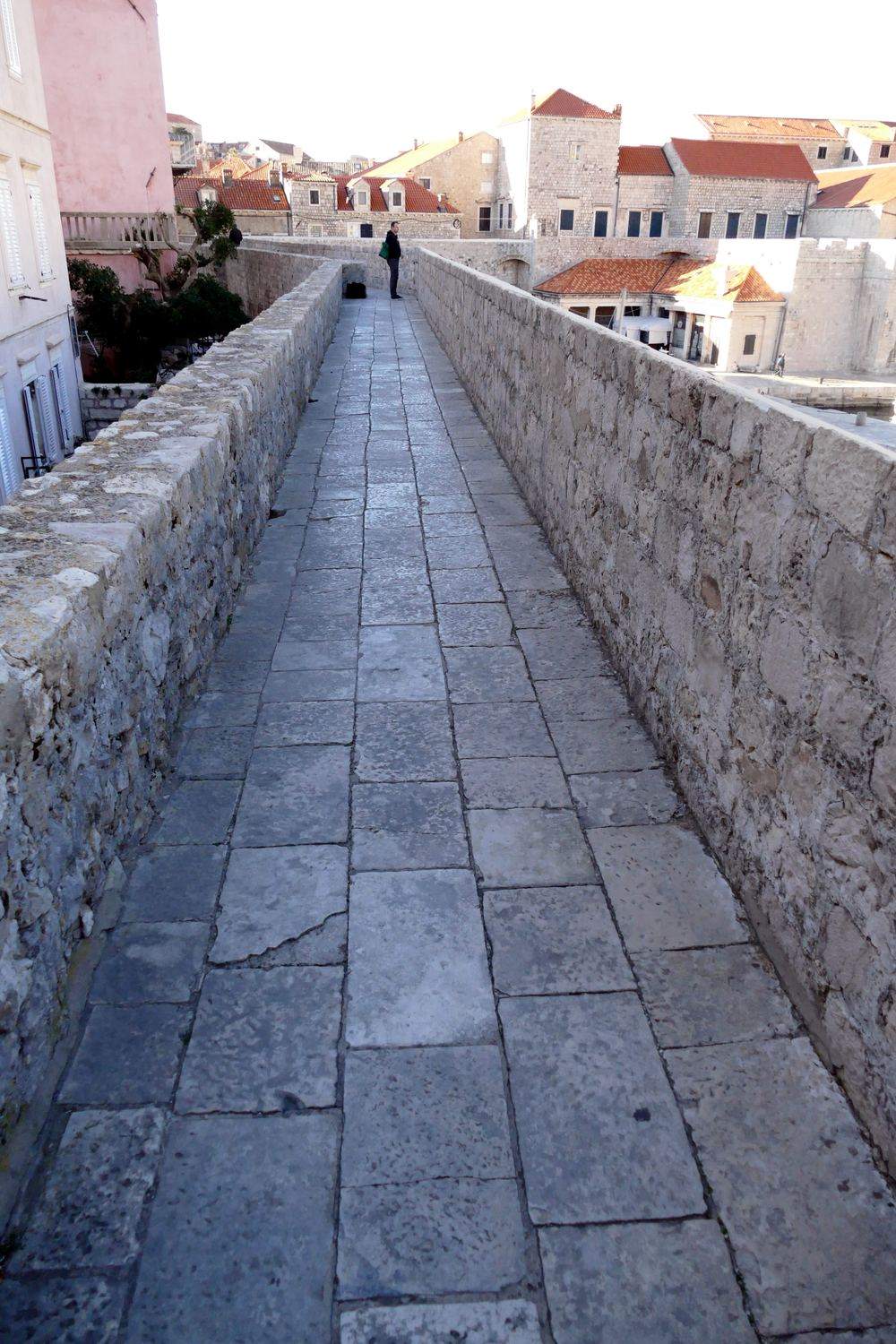
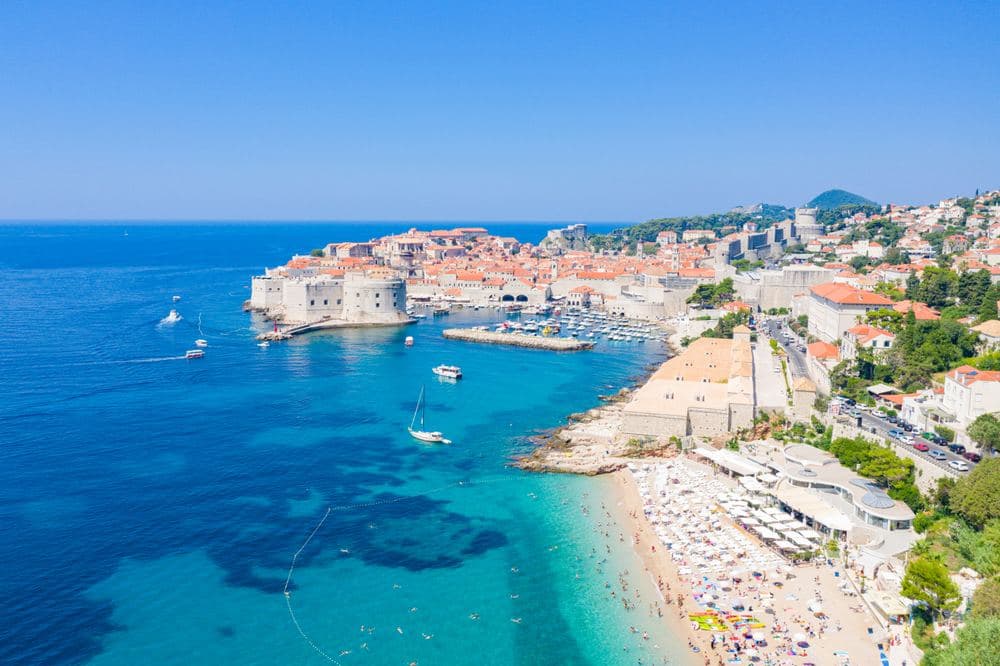
Banje, five minutes from the Ploče gate, is the city beach with the walls and Lokrum in the frame, pebbles, a sunbed concession at 30 euro and up for two, and free space at the far end. Sveti Jakov, twenty minutes further east below the church of the same name, is the quiet one, reached by a long flight of steps, with the afternoon sun until late and a small bar. The best sand near Dubrovnik is on Lopud: Šunj bay, a 25-minute walk across the island from the ferry village or a golf cart for a few euro, shallow, warm, with two bars and no cars on the whole island. The Jadrolinija ferry from Gruž takes 55 minutes and costs about 5 euro.
Pasjača in Konavle, forty minutes south of the city, was cut into the cliff by the villagers of Popovići after 1970 and is reached by a stepped path down the rock face. It is small, faces the open sea and has no facilities, which keeps it in the hands of the people willing to drive there. Waves make it unsafe on jugo days. It needs a car.
Zadar, Nin, Dugi otok, Brač's sand
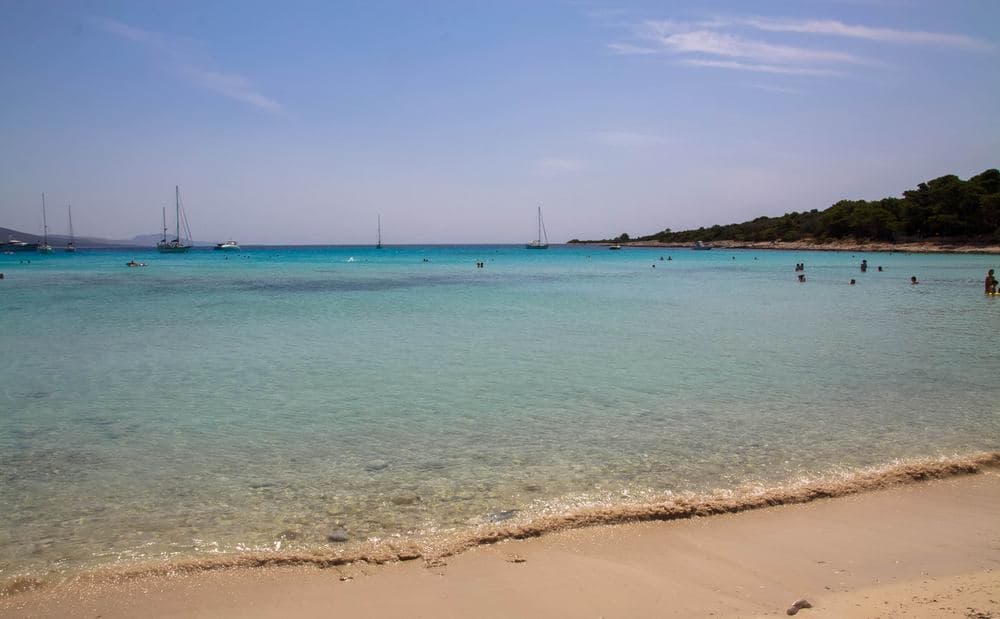
Sakarun on Dugi otok is the beach people mean when they say Croatia has no sand and then see a photograph. Half a kilometre of white sand and shallow turquoise water at the north end of the island, reached by the Jadrolinija catamaran from Zadar to Božava in an hour and a bus or a hired bike from there, or by the ferry to Brbinj and a car. There is a bar, sunbeds at 15 to 20 euro and, in July and August, day boats from Zadar for 40 to 50 euro that fill it from eleven to four. Queen's beach in Nin, twenty minutes north of Zadar, is three kilometres of sand and warm shallows with a view of the Velebit mountains, and the healing mud behind it. Kolovare is Zadar's own beach, fifteen minutes from the old town, pebble and concrete with a summer pool. On Brač, Lovrečina near Postira is the island's sandy bay, with the ruins of a basilica behind it.
The north: Rab, Krk, Istria
Rajska plaža, the Paradise beach at Lopar on Rab, is 1.5 kilometres of sand with water knee-deep for fifty metres, which makes it the best beach in the country for small children and the busiest in the Kvarner in August; the bus from Rab town takes 20 minutes. The coves around it, Sahara among them, are naturist and quieter. Baška on Krk is a two-kilometre pebble bay under the mountains at the island's southern end, with a promenade, sunbeds and the bus from Krk town. Istria's best swimming is the cape of Kamenjak at Premantura south of Pula, a nature park of rocky coves and flat stone shelves reached by bus 26 from Pula and then a bike or a long walk, with an entry fee for cars of about 10 euro and none for cyclists and walkers.
When and how
- Water shoes: almost every beach here is pebble or rock, and sea urchins live on the rocks.
- Sea temperature: 25 to 27 degrees in July and August, 23 in June and September, 20 to 21 in the first half of October.
- Sunbeds are a concession on a part of the beach; the rest is free and public by law. Bring a mat.
- The jugo wind brings waves and murky water on the coast facing south for a day or two; the bura clears it.
- Blue flags mark the beaches with tested water and facilities, but the clearest water is often at the coves without them.
- In August, be on the famous beaches before nine or after five. In June and September any hour works.
Frequently asked questions
- Does Croatia have sandy beaches?
- A few: Sakarun on Dugi otok, Šunj on Lopud, Rajska plaža on Rab, Queen's beach in Nin, Bačvice in Split, Lovrečina on Brač and Stončica on Vis. Most Croatian beaches are pebble or rock with very clear water, so bring water shoes.
- What is the most beautiful beach in Croatia?
- Zlatni rat in Bol on Brač for the setting, Stiniva on Vis for the cove between cliffs, Sakarun for white sand. All three are busiest from ten to five in July and August and empty early in the morning.
- Which beaches can I reach without a car?
- Bačvice and Kašjuni in Split, Banje and Sveti Jakov in Dubrovnik, Šunj on Lopud by ferry, Zlatni rat by ferry and bus, Punta Rata by coastal bus, Kolovare in Zadar, Rajska plaža by bus from Rab town, Baška by bus from Krk town, Kamenjak by bus 26 from Pula.
- When is the sea warm enough to swim in Croatia?
- From June to early October. The sea is 23 degrees in June and September, 25 to 27 in July and August and 20 to 21 in the first half of October.
Official sources
Make Croatia Atlas a preferred source
One click and Google shows you our stories more often in Top Stories and in AI answers. It changes your own results only.