Medulin has the one genuinely sandy beach on this coast, a protected cape with no hotels behind it, dinosaur footprints on an open slab of limestone and a lighthouse on an islet you can sleep in.
Checked: 20 August 2026
Medulin sits at the southern end of Istria, ten kilometres from Pula, on a shallow bay closed off by a line of low islets. Almost everything worth the drive lies within a radius of a few kilometres: the protected cape of Kamenjak, a Roman peninsula, a sand beach that is genuinely rare here, and a hundred-million-year-old set of footprints on the shore. The bay is shallow and warms early, which is why the season here starts before it does further north.
Kamenjak: thirty kilometres of coast without a single hotel
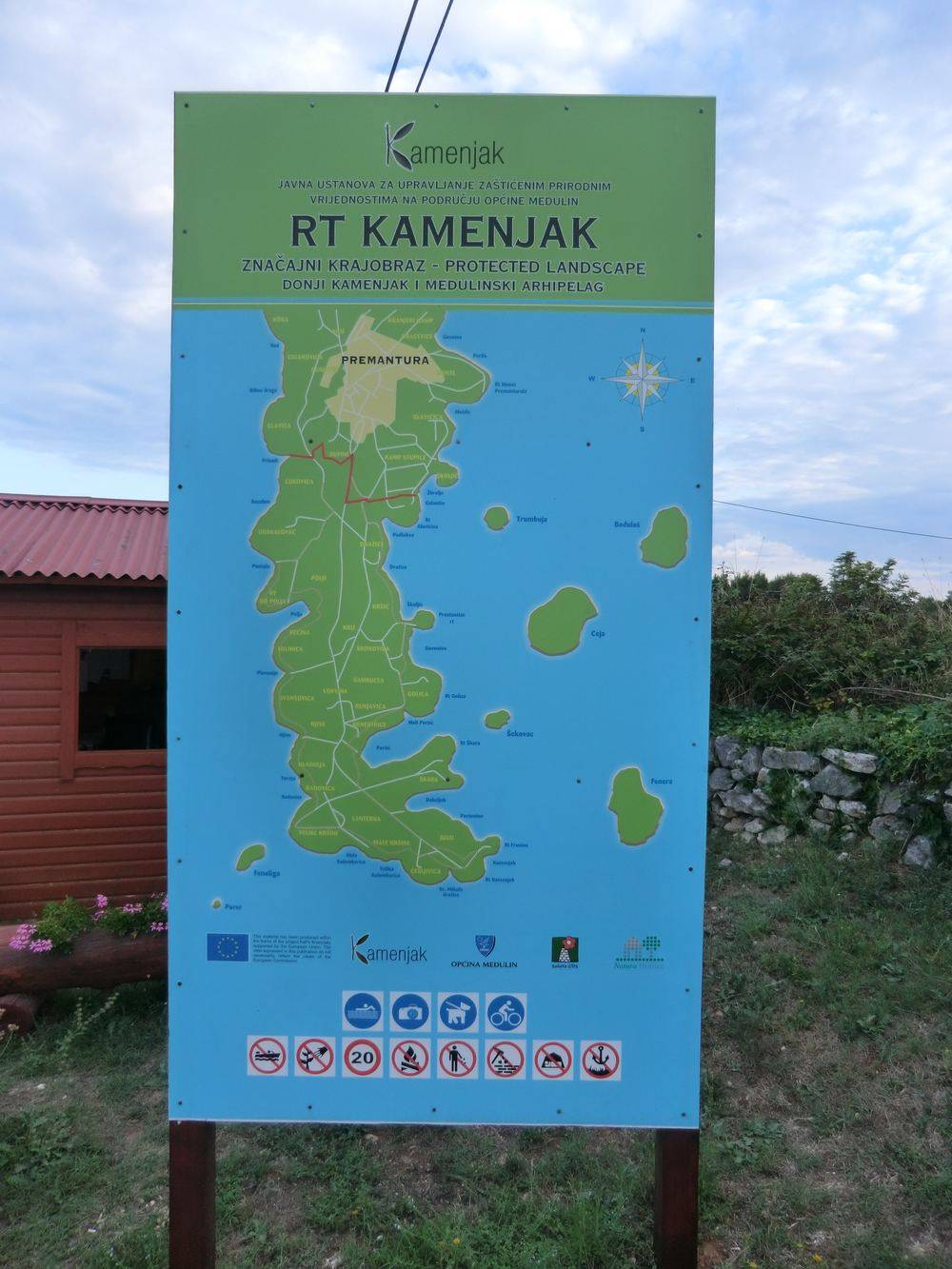
Kamenjak has been a protected landscape since 1996 and covers the entire southern tip of Istria: some thirty kilometres of broken coastline, over five hundred plant species and no buildings beyond a few seasonal bars. Entry is charged per vehicle, and inside there are gravel roads you drive slowly or cycle. A bike is the better choice, because the gravel is hard on a low car and the distances are short. The coves are small and rocky, usually reached by climbing down stone. Velika Kolombarica, on the southern edge, is the best known cliff-jumping spot in Istria, with ledges from a few metres to over ten and deep water straight off the rim. Nothing there is supervised or secured, so check the depth and the bottom before every jump, every single year.
Footprints in limestone, a hundred million years old
The limestone of southern Istria formed in a shallow Cretaceous sea, and in several places it kept the footprints of dinosaurs that walked here around a hundred million years ago. Fenoliga is the best known site: the tracks lie directly on the coastal slab, with no railing, no ticket and no attendant. They are shallow and easy to walk past. Come early or late, because in midday light the whole thing flattens into plain rock. Along one of the Kamenjak paths stand life-size dinosaur models, from a tyrannosaur to a velociraptor, and the real prints are a few hundred metres away, so model and trace fit into one afternoon. That path is flat and short with almost no shade.
Bijeca, the islets and a lighthouse to sleep in
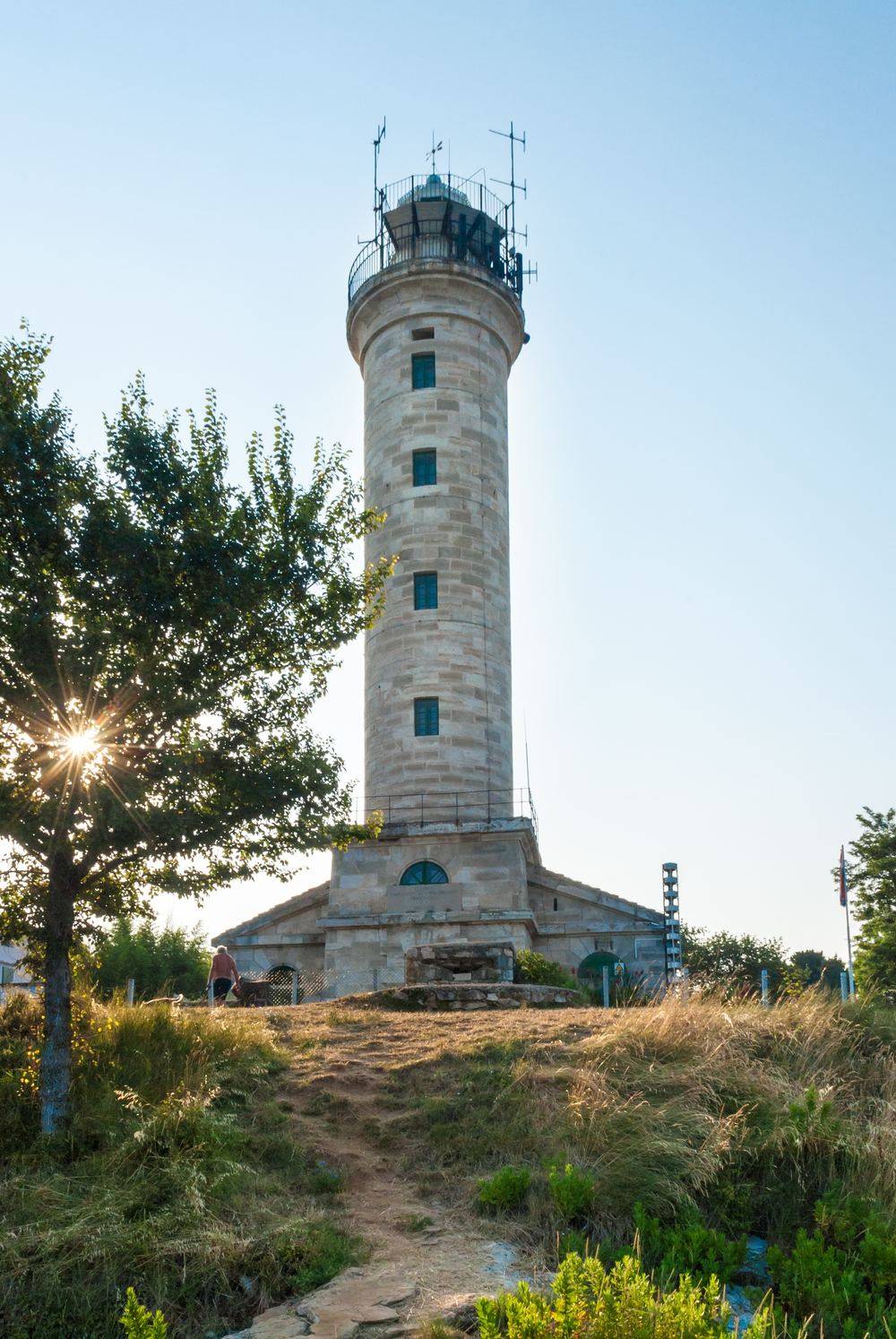
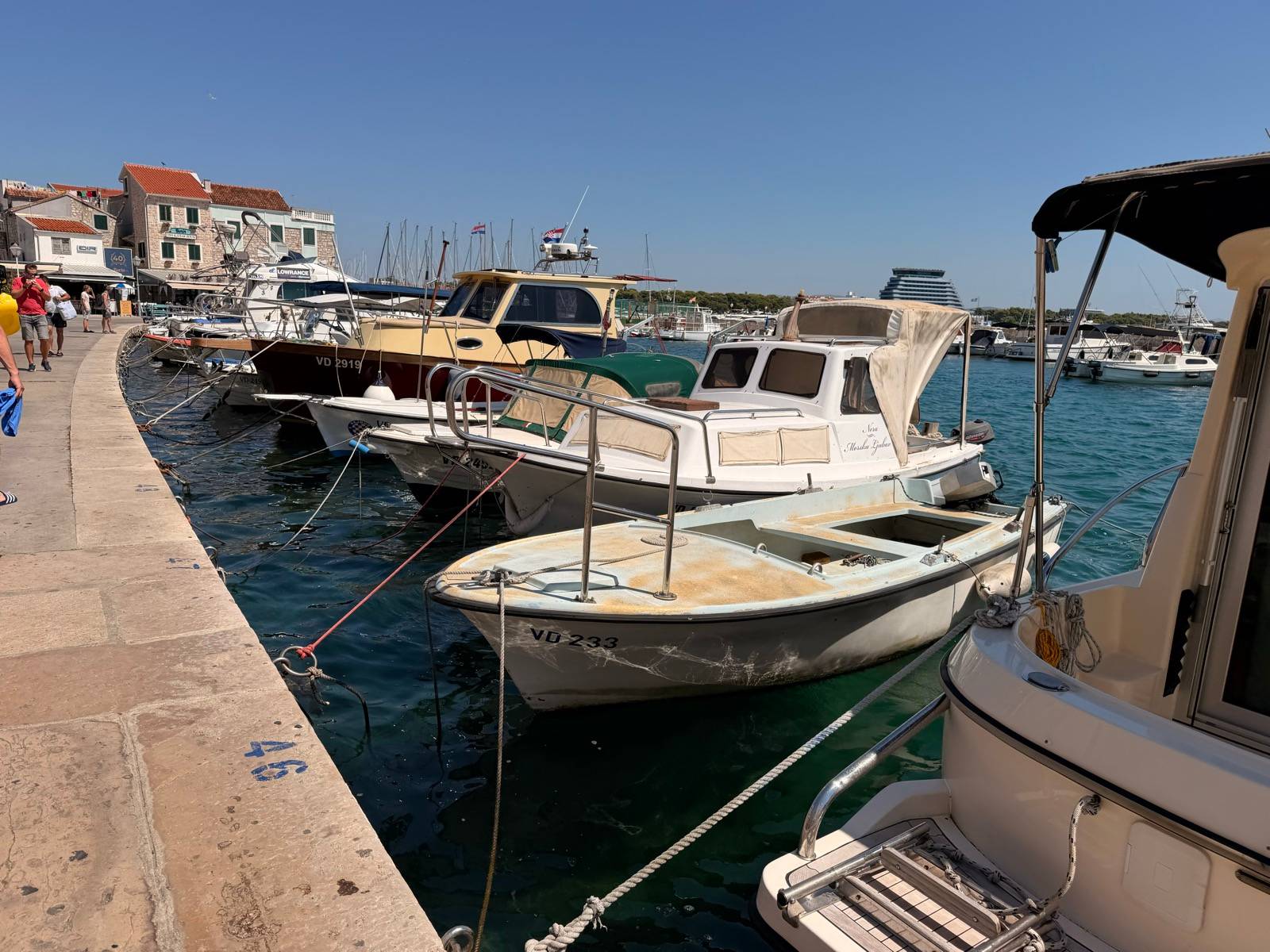
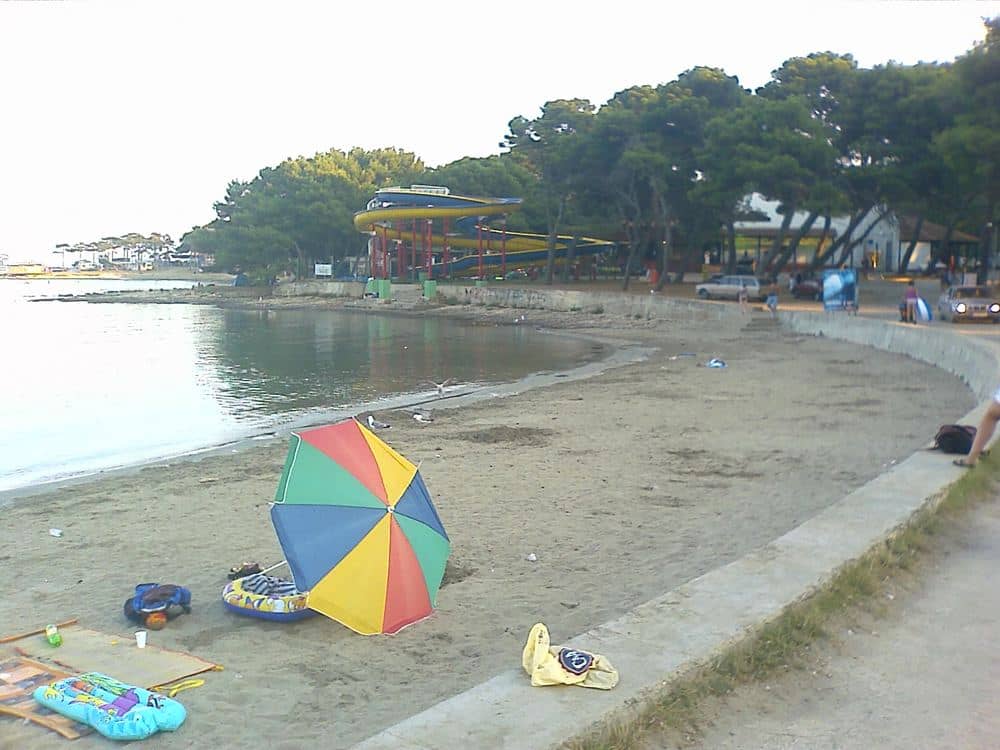
Bijeca is real sand, with water that barely deepens for a hundred metres and a bottom without sharp rock, which on a coast made of stone is the exception that fills the beach in August. A pine wood, showers and bars line it, and the bay is sheltered, so the sea stays calm and warmer than in the open. For quiet, Munte is the alternative: a small shingle cove on the road to Premantura with pines to the shore, no bars and no showers, and no sign from the road either, so look for the break in the pines after the last campsite. From the town marina, taxi boats run in ten to twenty minutes to the islets that close off the bay: Ceja with a long shallow cove, Bodulaš with a single restaurant, Levan with a campsite, Fenera with nothing at all. Porer lies further out, two and a half kilometres offshore, an islet about eighty metres across that its 1833 lighthouse almost entirely covers. The tower is 35 metres tall and still working, and two apartments in it are let by the week, with supplies delivered by boat.
Vižula, Premantura and where to start
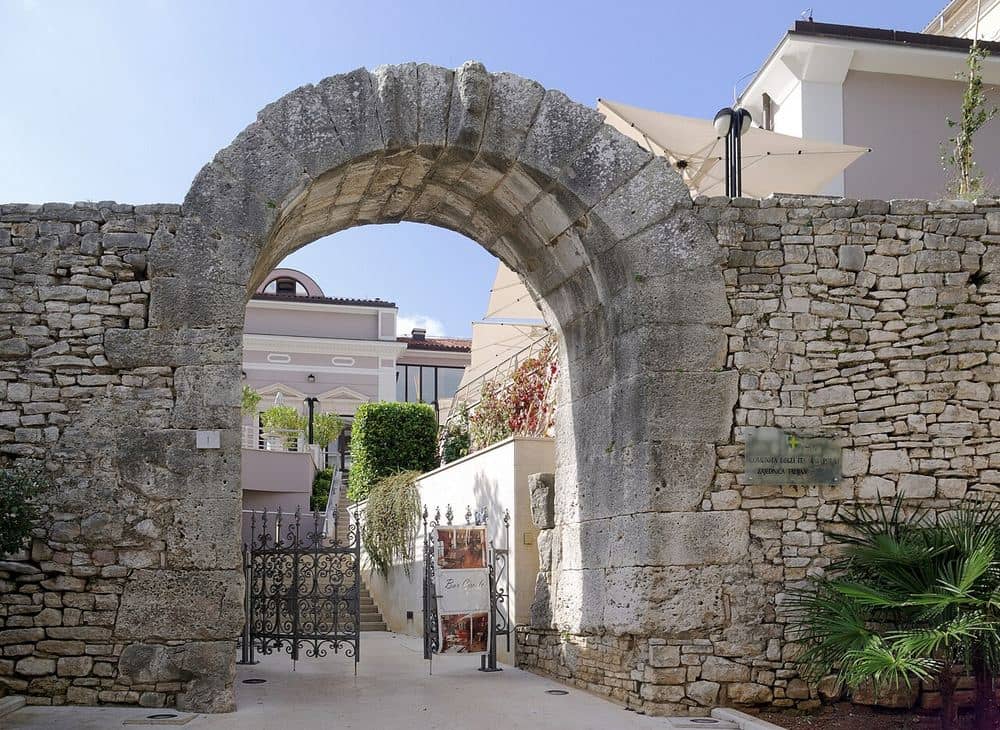
The Vižula peninsula held a large Roman residence with baths, mosaics and its own landing stage, built from the first century and used into late antiquity. It is laid out as an archaeological park with an underwater trail, and it carries a heavy story: the death of Crispus, son of Emperor Constantine, executed on his father's orders in 326, is placed here or nearby. In Premantura, the House of Nature explains what Kamenjak shows without context, from why five hundred plant species grow on such dry ground to which of the orchids are endemic. Half an hour there before the barrier is worth more than the same half hour after it. The bay between Premantura and Kamenjak is shallow, sandy-bottomed and open to the west, so the afternoon maestral turns up almost every summer day between one and five, which makes it one of the best places on the Adriatic to learn windsurfing: you fall into waist-deep water.
Frequently asked questions
- Does Cape Kamenjak cost anything to enter?
- Yes, and the charge is per vehicle rather than per person. Inside there are gravel roads and tracks. A bicycle is the better way in: the gravel is hard on a low car, the distances are short, and you can stop at coves a car has nowhere to park near.
- Where are the dinosaur tracks and when can you see them?
- On the shore by the Fenoliga islet, directly on the coastal slab, with no railing, no ticket and no attendant. The prints are shallow, so they read best in low sun, early or late in the day. At midday the light flattens them into plain rock and most people walk straight past.
- Is there a sandy beach in Medulin?
- Bijeca, and it is one of very few on the whole Istrian coast: real sand, a bottom without sharp rock and water that barely deepens for a hundred metres. That combination makes it the most popular family beach in this part of Istria and correspondingly full in July and August. Munte, a shingle cove on the road to Premantura, is where to go when Bijeca is too busy.
Share this guide
Questions about your trip?