Skip to content
All cities

Nin. Things to do, map and hidden gems

10 curated places· 6 hidden gems
Nin
Photo: Andrej Šalov / CC BY-SA 3.0

Nin is Croatia condensed to miniature: the first royal town of the medieval Croatian state sits on a tiny island in a lagoon, joined to land by two stone bridges, with the ninth-century Church of the Holy Cross, fondly called the world's smallest cathedral, alone on its lawn. Salt pans still harvest the lagoon the Roman way.

The lagoon is also the family argument: kilometres of real sand, shallow warm water, and the medicinal peloid mud that people have smeared on themselves here for generations.

Nin: the smallest cathedral, the saltworks and Queen's Beach
Our tips

What we would do around Nin

Day trips within reach of Nin, plus the routes and quiet corners our editors keep coming back to.

Hidden gems in Nin

Church of the Holy Cross
Legendary
Sight

Church of the Holy Cross

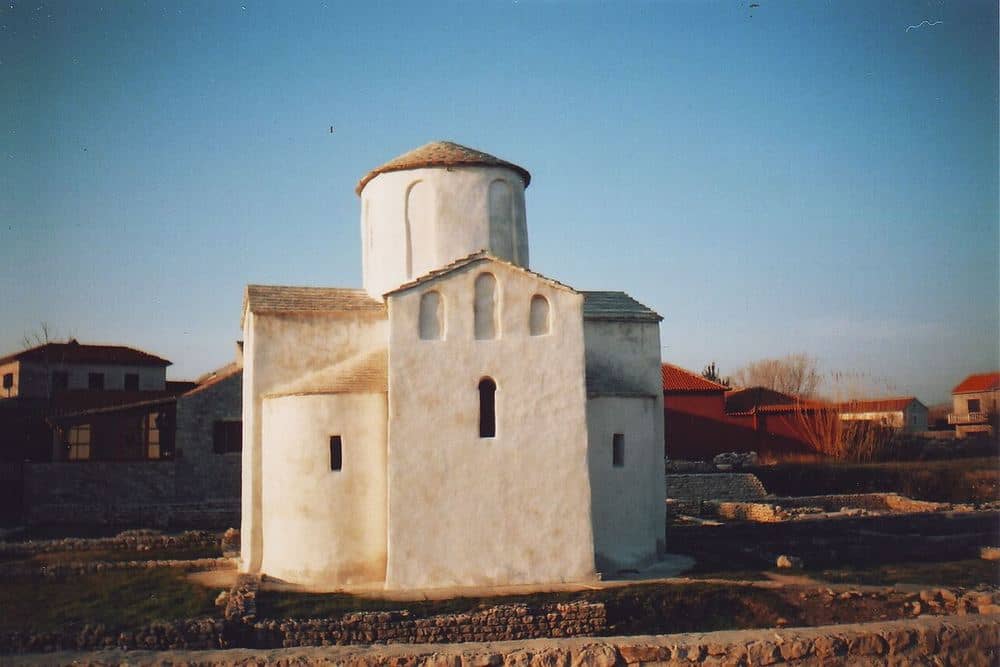
A pre-Romanesque chapel of the 9th century called the world's smallest cathedral.

Photo: Andrej Šalov / CC BY-SA 3.0
Church of the Holy Cross
Sight Legendary

Church of the Holy Cross

The Holy Cross is Croatia's most celebrated small church: a pre-Romanesque building of the 9th century on the islet of Nin's old core, which the English architect Thomas Jackson, for its perfect completeness, named the smallest cathedral in the world, and the nickname stuck forever. The chapel of cruciform plan, with a dome and a bell-gable over the entrance, was built without haste and without error: the walls are gently curved, and the openings placed so that the sun enters through them at solstices and equinoxes in exact order, so the Holy Cross reads also as a stone calendar. The lintel carries the carved name of the county prefect Godečaj, the oldest mention of a Croatian dignitary in stone. Inside there is nothing but space and light, and precisely for that the entering works: for eleven hundred years this chapel has stood in the grass, surviving everything history sent. The visit takes ten minutes, the experience longer; loveliest at dusk, when the stone glows and the last light sifts through the little windows. This is one of the places from which Nin begins to be understood: a small town, an enormous history.

Photo: Andrej Šalov / CC BY-SA 3.0

St Nicholas Chapel
Legendary
Sight

St Nicholas Chapel

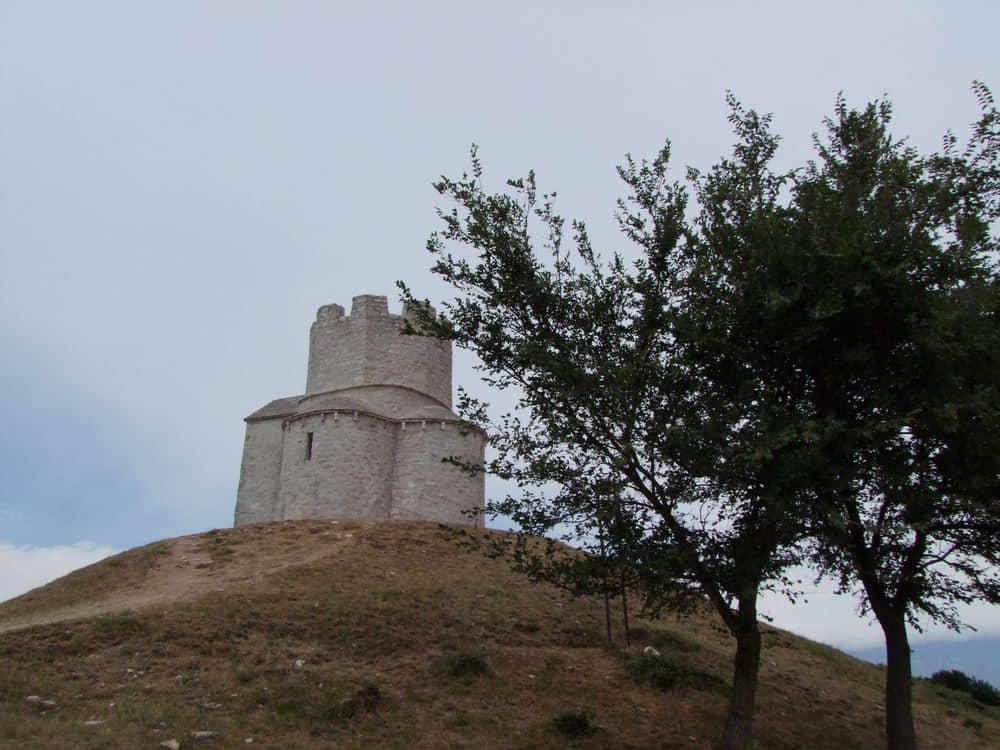
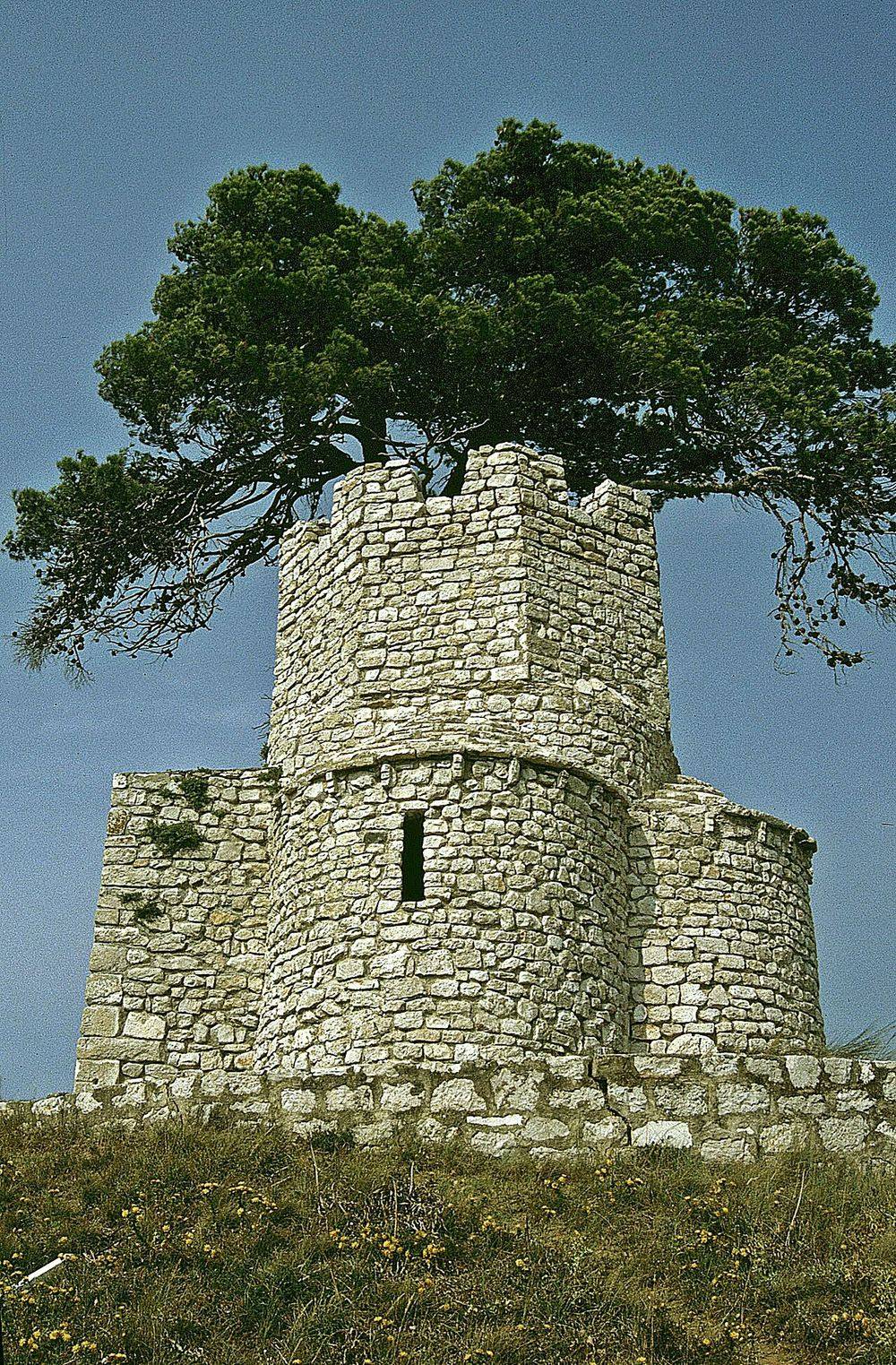
A Romanesque coronation chapel on the Prahulje mound, alone in the field before the town.

Photo: Ziegler175 / CC BY-SA 3.0

St Nicholas Chapel
Sight Legendary

St Nicholas Chapel

St Nicholas on Prahulje is the loneliest and most photogenic chapel of Dalmatia: a Romanesque building of the 11th or 12th century on a regular mound amid the fields between Nin and Zaton, with the toothed crown it received in Turkish times, when it served also as a watchpost. Tradition says that here, within sight of Nin, crowned Croatian kings showed themselves to the people after coronation, so the mound is called the coronation hill too; seven kings, says the story, seven views from the top. History and tradition cannot be separated here, and need not be: the chapel alone, in the grass, without fence or ticket booth, is one of the strongest images of the Croatian coast. One reaches it on foot from the road in five minutes; the door is often locked, but one does not come for the interior, one comes for the whole, a stone cube with a dome on a green mound, the Velebit behind it. The best light is the golden hour: then the chapel lights up like a candle above the field. Join it with Nin into one story: first the smallest cathedral, then the coronation mound, half an hour that explains why this small region is called the cradle of the Croatian state.

Photo: Ziegler175 / CC BY-SA 3.0

Explore Nin by category

Sights

5
Church of the Holy Cross
Legendary
Sight

Church of the Holy Cross

A pre-Romanesque chapel of the 9th century called the world's smallest cathedral.

Photo: Andrej Šalov / CC BY-SA 3.0

Church of the Holy Cross
Sight Legendary

Church of the Holy Cross

The Holy Cross is Croatia's most celebrated small church: a pre-Romanesque building of the 9th century on the islet of Nin's old core, which the English architect Thomas Jackson, for its perfect completeness, named the smallest cathedral in the world, and the nickname stuck forever. The chapel of cruciform plan, with a dome and a bell-gable over the entrance, was built without haste and without error: the walls are gently curved, and the openings placed so that the sun enters through them at solstices and equinoxes in exact order, so the Holy Cross reads also as a stone calendar. The lintel carries the carved name of the county prefect Godečaj, the oldest mention of a Croatian dignitary in stone. Inside there is nothing but space and light, and precisely for that the entering works: for eleven hundred years this chapel has stood in the grass, surviving everything history sent. The visit takes ten minutes, the experience longer; loveliest at dusk, when the stone glows and the last light sifts through the little windows. This is one of the places from which Nin begins to be understood: a small town, an enormous history.

Photo: Andrej Šalov / CC BY-SA 3.0

St Nicholas Chapel
Legendary
Sight

St Nicholas Chapel

A Romanesque coronation chapel on the Prahulje mound, alone in the field before the town.

Photo: Ziegler175 / CC BY-SA 3.0

St Nicholas Chapel
Sight Legendary

St Nicholas Chapel

St Nicholas on Prahulje is the loneliest and most photogenic chapel of Dalmatia: a Romanesque building of the 11th or 12th century on a regular mound amid the fields between Nin and Zaton, with the toothed crown it received in Turkish times, when it served also as a watchpost. Tradition says that here, within sight of Nin, crowned Croatian kings showed themselves to the people after coronation, so the mound is called the coronation hill too; seven kings, says the story, seven views from the top. History and tradition cannot be separated here, and need not be: the chapel alone, in the grass, without fence or ticket booth, is one of the strongest images of the Croatian coast. One reaches it on foot from the road in five minutes; the door is often locked, but one does not come for the interior, one comes for the whole, a stone cube with a dome on a green mound, the Velebit behind it. The best light is the golden hour: then the chapel lights up like a candle above the field. Join it with Nin into one story: first the smallest cathedral, then the coronation mound, half an hour that explains why this small region is called the cradle of the Croatian state.

Photo: Ziegler175 / CC BY-SA 3.0

3 more places
  • Stone Bridges and Town Gates
  • Prince Branimir Monument
  • Church of St Anselm

Activities

5
5 more places
  • Queen's Beach
  • Nin Saltworks
  • Nin Healing Mud
  • Museum of Nin Antiquities
  • Ždrijac Beach

Nin: quick answers

Where is the sandy beach?
The Queen's Beach stretches along the lagoon a short walk from the old town, real sand with knee-deep water far out and a view of Velebit across the water. More sand runs on toward Zaton and Privlaka. The tourist board gives it a length of three kilometres, which makes it the longest sandy beach in Croatia, and counts about eight kilometres of beaches around Nin, including Ždrijac, Prodorica and Bilotinjak. Biologists have identified four Natura 2000 habitats behind the sand. The steady winds over the lagoon also make it a good spot for windsurfing and kitesurfing.
What is the healing mud?
A natural peloid deposit at the Queen's Beach lagoon, traditionally used for joint and skin complaints: people coat themselves, let it dry in the sun and wash off in the shallows. In season a supervised zone marks the spot. With about 120,000 cubic metres, it is the largest known deposit of medicinal mud in Croatia, and Nin has been registered as a thalassotherapy site since 1960. The supervised treatment takes place in the mornings in July and August and usually lasts ten to twenty days. The Romans already used the mud: clay tiles from their baths are kept in the Museum of Nin Antiquities.
How much time does Nin need?
The island core is an hour's stroll: church, museum, salt shop, bridges. With the beach and the salt pans tour it becomes the classic easy day out from Zadar, fifteen kilometres away. Inside, the Church of the Holy Cross measures only 7.8 by 7.6 metres, and its windows work as a calendar: sunlight marks the solstices and equinoxes, which is why the Festival of Sun and Light starts there on the first day of summer. Near St Anselm's church stands Ivan Meštrović's bronze statue of Bishop Gregory of Nin, who led the church from Nin from 900 to 929. On a prehistoric mound outside town, the small Romanesque church of St Nicholas recalls the tradition that seven kings were crowned in Nin. The Salt Museum explains salt making since the saltworks opened in 1955 and sells the hand-harvested flower of salt.

CroVenture App

Explore Nin with CroVenture

Places unlock as you reach them, with a passport that fills up as you explore.