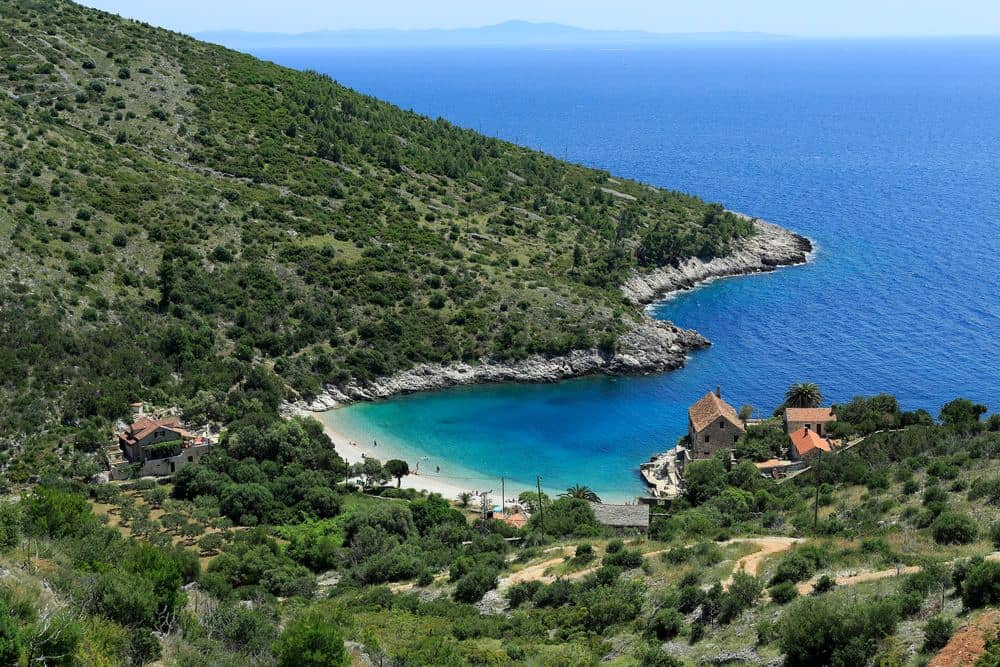
Cavtat is older than Dubrovnik and quieter than anything near it. Two peninsulas, two serious artists and a hinterland most Dubrovnik visitors never reach.
Checked: 21 September 2026
Cavtat was Epidaurum, a Greek and later Roman settlement, and when it was destroyed in the seventh century its people moved up the coast and founded what became Dubrovnik. So the small town on the bay is not a suburb of the famous one; it is the original. Today it sits between two wooded peninsulas twenty minutes from Dubrovnik airport, with a promenade instead of a queue, and it holds two things worth travelling for on their own: a Meštrović mausoleum and the house of Vlaho Bukovac.
Walk up to the Račić mausoleum first
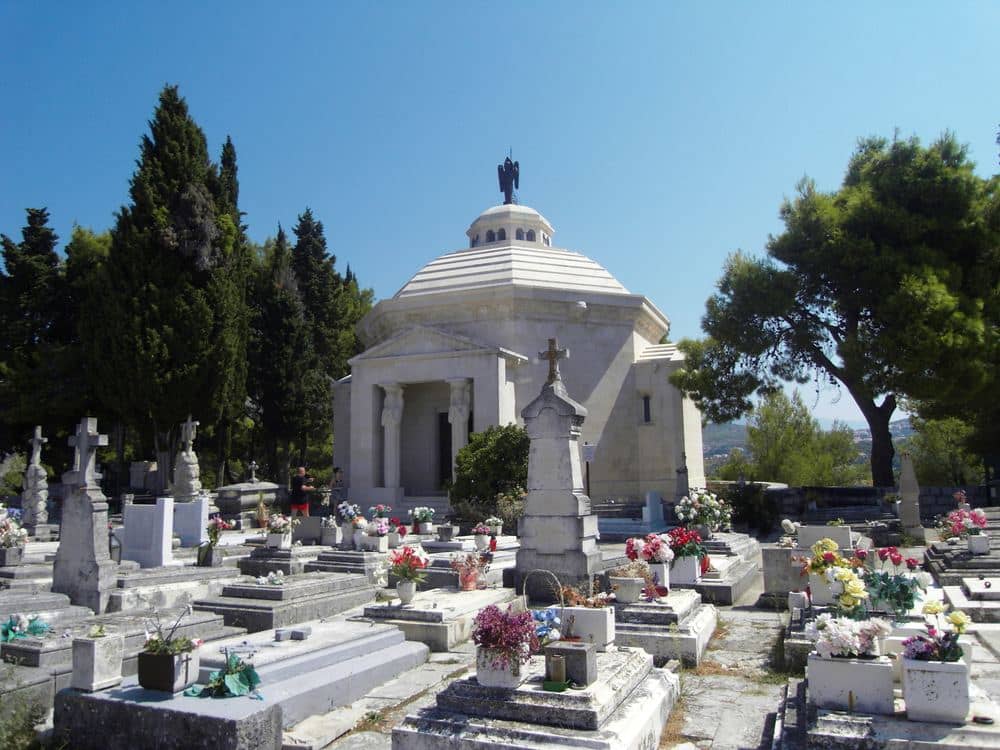
Ivan Meštrović built the Račić family mausoleum on the cemetery hill on the Rat peninsula between 1920 and 1922, in white Brač stone, for a shipowning family that was wiped out by the Spanish flu within a year. It is a single small octagonal building and one of the most concentrated works of twentieth century sculpture in the country: angels, caryatids, the family's dogs, everything carved into the same block logic. Opening hours are short and seasonal, often late morning to early afternoon. Check them before you climb, because the walk up is fifteen minutes in full sun.
- The full loop around the Rat peninsula is flat, shaded by pines and takes about forty five minutes. It is the best thing in Cavtat that costs nothing.
- Water taxis run to Dubrovnik old town through the day in season, roughly forty five minutes each way, and beat the road for both time and parking.
- Čilipi holds its folklore performance on Sunday mornings after mass. It is the one fixed date to plan the week around if you want it.
- Pasjača beach below the Konavle cliffs is reached by a steep cut staircase and has almost no shade. Bring water and do not go in flip flops.
Bukovac house and the Rector's Palace
Vlaho Bukovac was born here in 1855 and became the most important Croatian painter of his generation, working in Paris, Zagreb, Vienna and finally Prague. His birthplace is now a museum and it is unusually good, partly because the murals he painted on the walls as a young man are still in place, so you see the house as a working object rather than a display case. The Rector's Palace on the waterfront holds the Baltazar Bogišić collection, a nineteenth century legal scholar's library and prints. Between the two you get about two hours and a much better sense of the place than the promenade gives.
Konavle is the reason to stay a second day
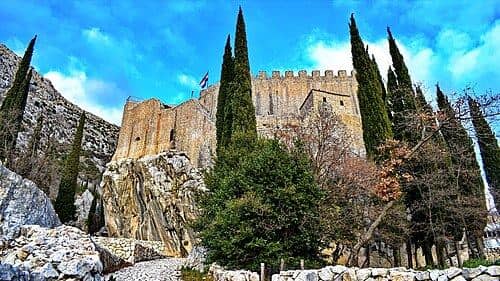
The valley behind Cavtat is farmland, watermills and stone villages, and it is where the region actually lives. Sokol Grad, the restored fortress on its rock, gives you the whole valley from the top and takes an hour including the drive. The Ljuta river runs cold enough that the old mills still sit over it. Further south the coast road ends at Molunat and the Prevlaka peninsula, the very bottom of Croatia, where an Austro-Hungarian fort looks across the bay of Kotor. None of this is crowded, even in August, because everyone else is queueing for a city wall thirty minutes north.
“Cavtat is what Dubrovnik was before it became Dubrovnik, and it is still close enough to visit the consequence in the afternoon.”
As a base it is a straightforward calculation: cheaper than Dubrovnik, twenty minutes from the airport, on the water, with a boat into the old town whenever you want one. Give the first day to the mausoleum, Bukovac and the Rat loop, the second to Konavle and a swim at Pasjača or Molunat. Keep Dubrovnik for an early morning, and come back here for dinner when the day trippers have gone.
Getting there and getting around
Dubrovnik airport is at Čilipi, about 5 km inland, so a taxi or booked transfer reaches Cavtat in under 20 minutes. From Dubrovnik the coast road is about 20 km, and city bus line 10 runs between the two through the day by way of Kupari, Srebreno and Mlini. The Cavtat stop is a turning circle at the entrance to town with a shelter and a ticket machine that often does not work, so buy your ticket from the driver. The waterfront is closed to cars: park at the entrance to town and walk down, because inside Cavtat you need nothing but your feet. The pier on the waterfront serves the Dubrovnik boat and the excursion boats to the Elaphite islands, Mljet and the Bay of Kotor.
| Route | How | Time |
|---|---|---|
| Dubrovnik airport, Čilipi | Taxi or transfer, about 5 km | Under 20 minutes |
| Dubrovnik old town by road | Bus line 10 or car, about 20 km | 30 to 45 minutes |
| Dubrovnik old port by sea | Boat from the pier, several times a day in season | 30 to 45 minutes |
| Mlini and Srebreno | Bus line 10 or the coastal path | A short bus ride |
| Sokol Grad | Car through the Konavle field | About 25 minutes |
| Pasjača and Molunat | Car only, off the Konavle road | 30 to 40 minutes |
Beaches and swimming
Cavtat has a town beach and a ring of smaller bathing spots, so you rarely need to drive to swim. Žal is the family beach: a long sand and shingle strip along the road towards Obod, with a gentle entry, pines above, showers, loungers and bars. Pinija, at the northern end of the harbour beside the promenade, is the one you use when you have 20 minutes spare, with pines to the water's edge and shade all afternoon. The rest of the swimming is off rocks and concrete platforms with ladders, so bring water shoes and expect deep water close to the shore.
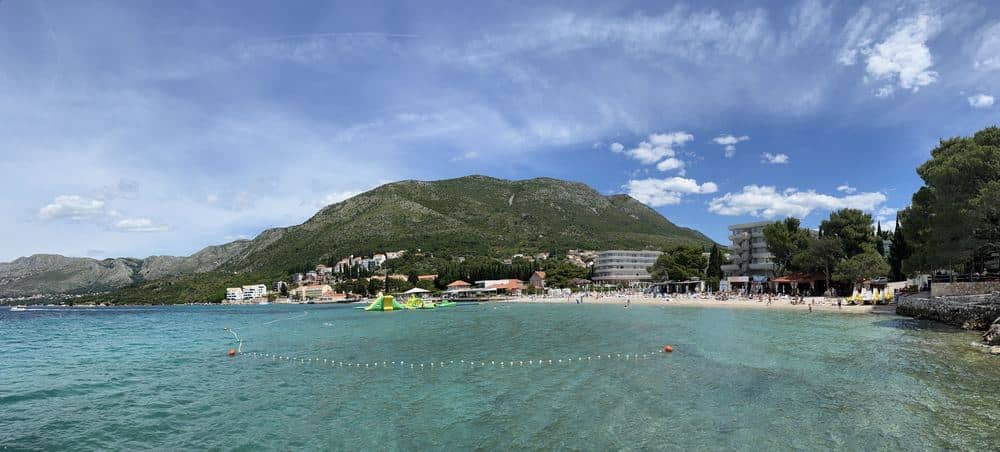
- Rat peninsula: rocks, platforms and ladders along the shaded loop, deep water close in, always a free spot when Žal is full.
- Sustjepan: on the southern side of the cape below the pines, the only place in Cavtat where you swim facing the open sea.
- Tiha Bay: behind the peninsula opposite the waterfront, closed in by pine hills, calm water in almost any weather.
- Ključice: a small shingle cove on the northern edge of town, reached only by the coastal path towards Mlini, so it stays quiet.
- Obod: shingle and concrete platforms on the eastern edge towards Konavle, facing south east, with pine shade for part of the day.
The waterfront churches and the Konavle museum
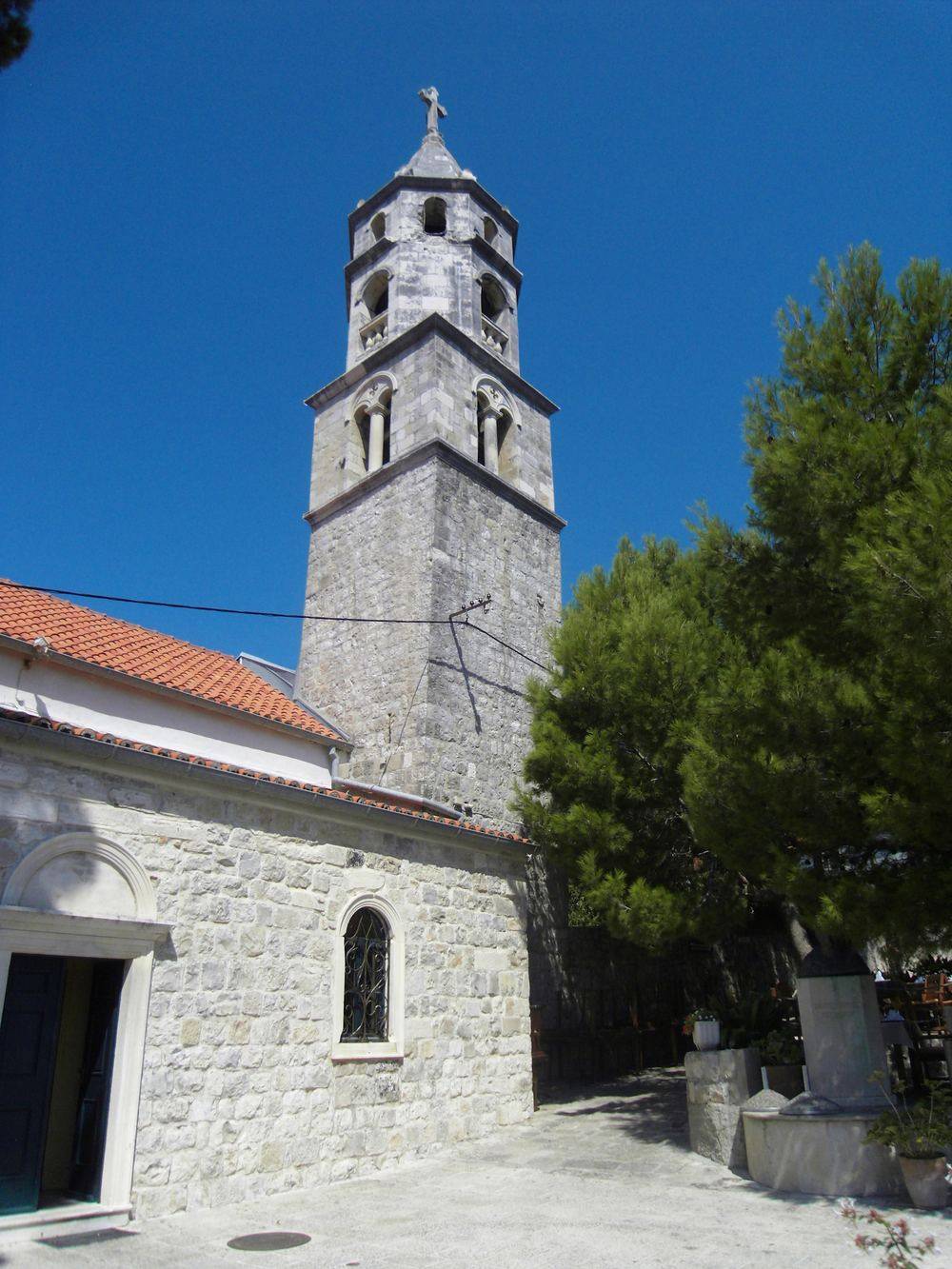
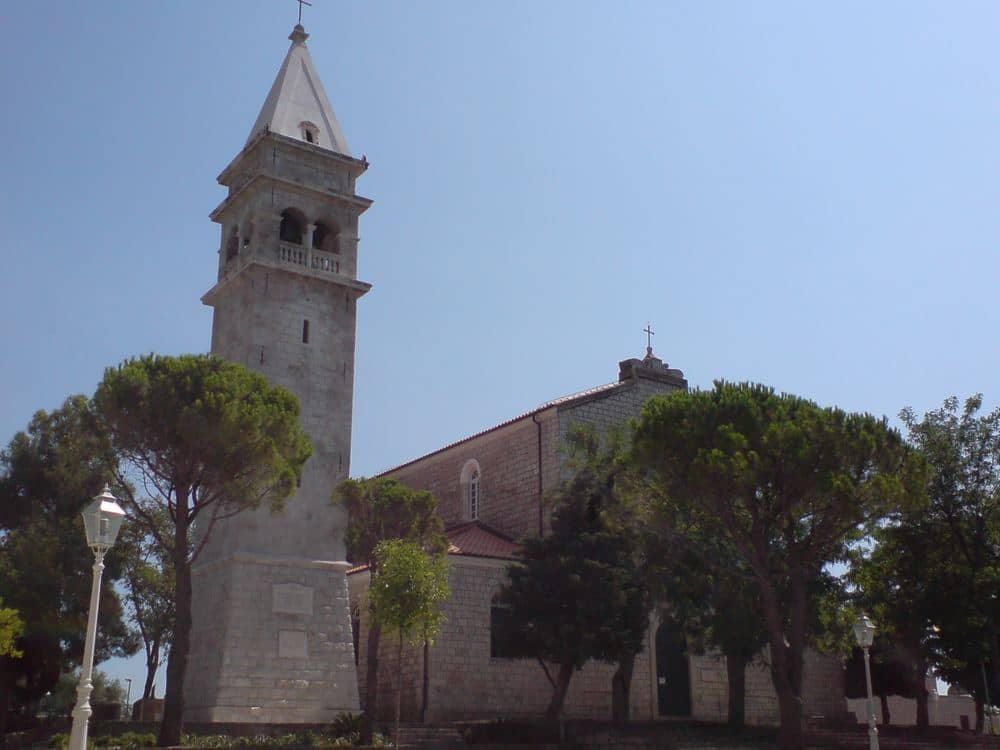
The Franciscan monastery of Our Lady of the Snow stands by the sea at the end of the waterfront and is the oldest preserved building in Cavtat, raised in 1483. The Gothic cloister and the garden running down to the shore are the reason to go in, and the church beside it is the only one in town that kept its Gothic form, with a single nave and a wooden ceiling. The parish church of St Nicholas is an 18th century baroque building and carries the name of the seafarers' patron because Cavtat gave captains and sailors to the Dubrovnik fleet. The Konavle County Museum in town shows the costumes and silk embroidery of the valley, and half an hour there makes sense of what you see in Čilipi on a Sunday.
Markets and eating in
Most visitors sleep in apartments here, so plan on some meals at home. The morning market on the waterfront runs until about 12:00 and sells what the Konavle field grows: vegetables, fruit, olive oil, honey, cheese, dried fruit and wine from the valley's vineyards. The fish market at the edge of the waterfront, under plane trees, opens around 07:00 and closes when the last crate is empty, usually before midday. For everything else there is a Konzum about 100 m behind the waterfront on the Dubrovnik road, with its own bakery and fresh counters. For a meal out of town, several restored mills on the Ljuta river in Konavle work as restaurants with terraces over the water, and the valley is cooler than the coast on an August evening.
When to go, month by month
Cavtat works from April to October and half sleeps for the rest of the year. April and May give warm days, a cold sea, open museums without queues and a green Konavle field. June is the first reliable swimming month. July and August are hot, the boats are full and Žal is crowded by late morning, though the town still feels calmer than Dubrovnik because the cruise ships stay there. September is the best month: warm sea, long evenings and thinner crowds. October still suits the Rat loop and Konavle, with swimming on the warm days. From November to March many restaurants and the smaller museums close or keep short hours, and the bura wind can stop the boats to Dubrovnik.
Where to stay
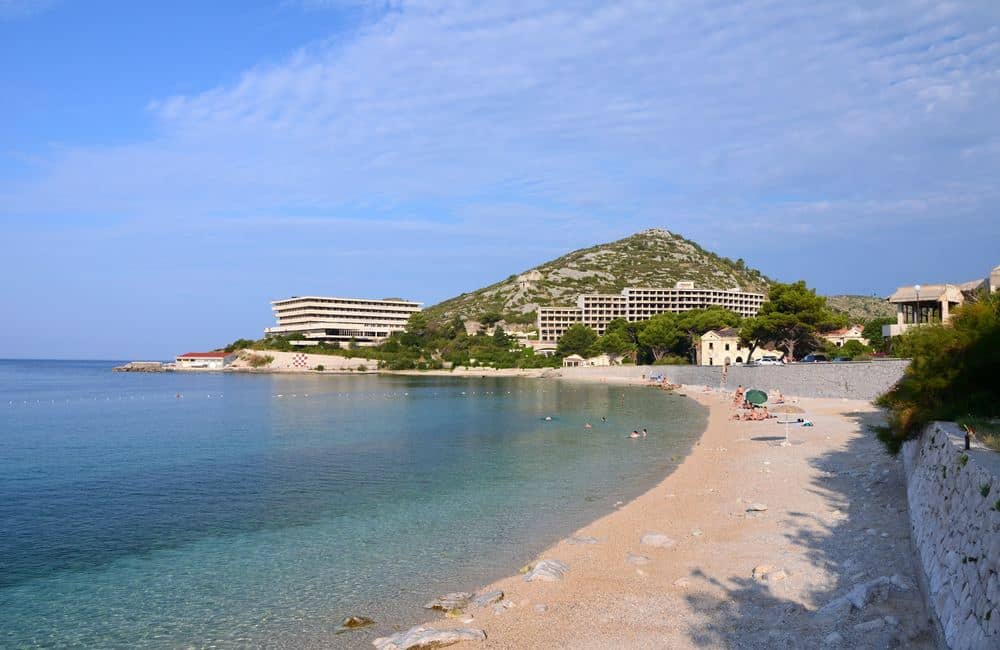
For a first visit stay in the old core or on the waterfront, where the pier, the museums and Pinija beach are a few minutes on foot. Families do better along the road towards Obod, near Žal, where apartments have parking and the beach is flat. The large hotels sit on the Tiha Bay side of the Rat peninsula, among them the Hotel Croatia, built between 1970 and 1980 on the height above the bay, with a lookout over the open sea and the Konavle coast. North along the shore, Mlini, Srebreno and Kupari are on the same bus line and closer to Dubrovnik. Srebreno has the longest beach on this stretch, and Kupari is the sandy bay of a military resort of 5 hotels, built after 1930 and burned in 1991, long slated for redevelopment.
The places, one by one
| Place | What it is | Time needed |
|---|---|---|
| Cavtat Waterfront Promenade | Harbour promenade, evening corso | 30 minutes to 1 hour |
| Rector's Palace & Bogišić Collection | Renaissance palace, library and prints | 1 hour |
| Ancient Epidaurum Site | Roman remains around the town | 30 minutes |
| Cavtat Cemetery | Hilltop cemetery, chapel and viewpoint | 45 minutes |
| Mlini Waterfront | Village of mills and streams, beaches | 2 to 3 hours |
| Gruda Village | Farming village in the Konavle field | 1 to 2 hours |
| Čilipi Village | Sunday folklore show and collection | 2 hours |
| Sokol Grad | Restored fortress on a crag | 1 hour |
| Ljuta River | Karst river with mill restaurants | 2 hours |
| Sniježnica Konavle | Mountain hike, 1,234 m | half a day |
| Pasjača Beach | Shingle cove under cliffs | half a day |
| Molunat Bay | Fishing village, 2 bays | half a day |
| Prevlaka Peninsula | Southernmost point, fortress, nature park | half a day |
Cavtat Waterfront Promenade
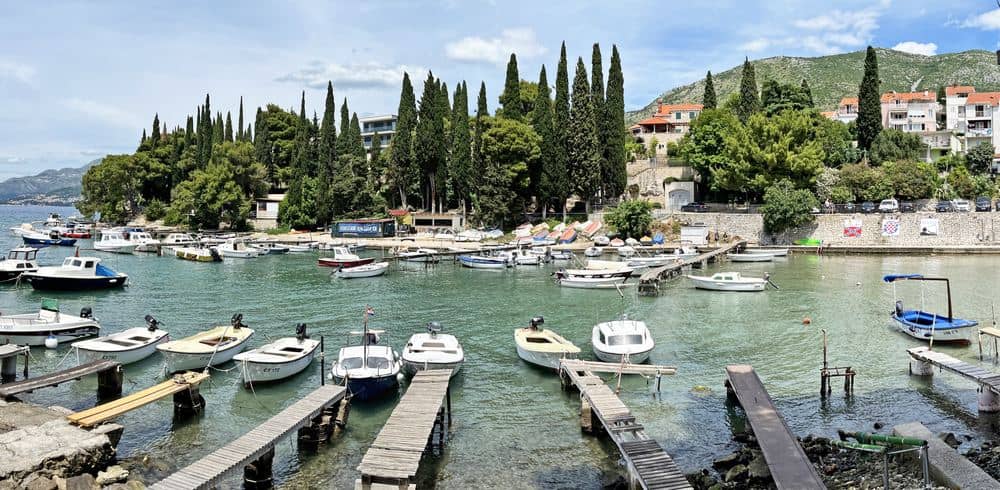
The promenade curves in a semicircle around the harbour, paved in stone and lined with palms, with cafés and restaurants on the land side and boats tied up on the sea side. In the morning it is the workplace of fishermen and delivery men. In the afternoon heat it empties. After sunset it becomes the corso, when the whole town walks its length and the lights of the boats sit in the water below the darkening Rat hill. The Dubrovnik boats leave from here and reach the old city harbour in about half an hour. Walk it once by day to get your bearings and again after dark, which is the best moment Cavtat has.
Rector's Palace & Bogišić Collection
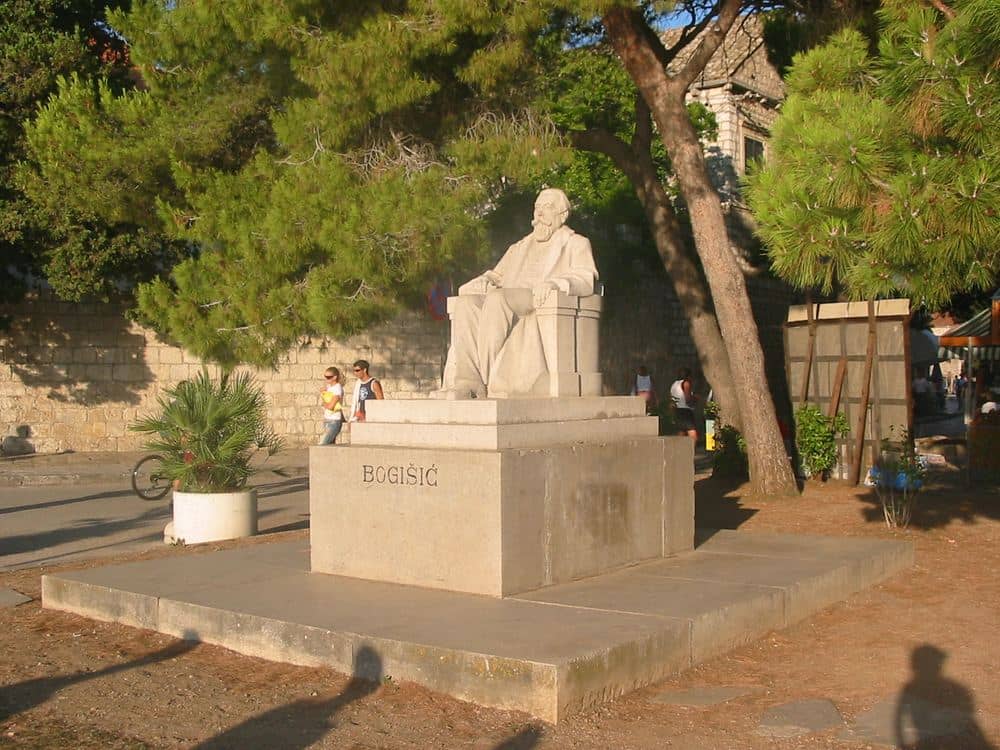
The palace is a Renaissance building on the waterfront where the local administration of the Republic of Ragusa once sat. It now holds the bequest of Baltazar Bogišić, a jurist who wrote Montenegro's General Property Code and taught in Odesa and Paris. He collected all his life and left everything to his native town by will: a library of over 20,000 volumes, manuscripts, coins, arms, paintings and the largest print collection in Croatia. The library is kept exactly as he arranged it, which is the point of the visit. The collection also holds a well known drawing by Vlaho Bukovac and the best finds from Roman Epidaurum. The ticket is modest, the rooms stay cool in the middle of the day, and an hour is enough.
Ancient Epidaurum Site
Epidaurum was a Roman colony founded in the 1st century BC on an older Greek settlement, with a harbour, a forum, baths and an aqueduct, and it controlled the sea route to the Bay of Kotor. Avars and Slavs destroyed it in the 7th century. There is no single site with a gate. The remains survive in fragments: pieces of wall and mosaic in courtyards, carved stones reused in the walls of houses, and structures under the water of the bay that you can see with a mask. Boards at each spot explain what stood where. The best finds are in the Rector's Palace collection, so look at those first and then walk the town with the boards in mind.
Cavtat Cemetery
The cemetery lies at the top of the Rat peninsula among cypresses, 15 minutes of easy walking from the waterfront. Most people climb for the mausoleum. The rest repays a slow walk too: the headstones belong to the seafaring families that built the town, and many carry carved ships and captains' names. Beside the mausoleum stands the small chapel of St Roch, raised in the 16th century as a vow against the plague. It opens rarely, mainly on its feast day, 16 August. The platform in front of the cemetery gives the best view in Cavtat, over the bay, the waterfront and the open sea towards Dubrovnik. Cavtat still buries its own here, so keep your voice down and stay off the graves.
Mlini Waterfront
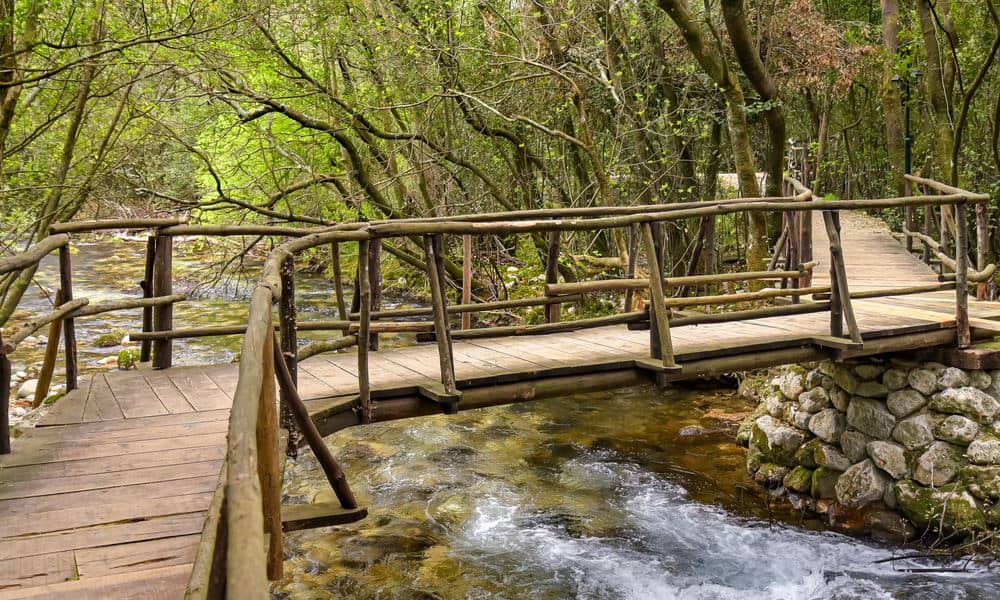
Mlini takes its name from the mills that ran for centuries on freshwater springs rising just above the shore. The streams still flow through the village, under small bridges and along the promenade, before they reach the sea, which is why Mlini is green in a way this coast usually is not: plane trees, cypresses and gardens grow here without irrigation. The promenade runs the length of the village past shingle beaches, rocky bathing spots and taverns with terraces above the water, and continues to Cavtat in the south and Srebreno in the north. Mlini is quieter and cheaper than Cavtat, and a boat from the village reaches Dubrovnik in about 20 minutes. Walk there along the shore, swim, and take the bus back.
Gruda Village
Gruda sits in the heart of the Konavle field, about 15 minutes by car from Cavtat, with no sea, no hotels and no reason to hurry. What it has is a field worked since Dubrovnik existed, stone houses with outer staircases, and a cemetery where the same surnames repeat across centuries. A weekly fair sells what the field produces: vegetables, fruit, cheese, honey, brandy and homemade wine, all from producers in the neighbouring villages. Konavle costume is still worn here on feast days, and the embroidery is made in the surrounding houses. An hour's walk through the village and lunch in a tavern looking over the field is the whole visit, and it is the easiest first step into the hinterland.
Čilipi Village
Čilipi lies in the middle of the Konavle field beside the airport, about 20 minutes by car. The folklore show in front of the church of St Nicholas runs on Sunday mornings from spring to autumn and lasts an hour. Villagers in original costume dance the linđo, a jumping dance, to the lijerica, a bowed instrument with 3 strings. The women's costume is among the most complex in Europe, with silk embroidery worked over months, and the red caps mark the unmarried women from the married ones. The ticket is modest. An ethnographic collection in the village shows how the clothing was made. Afterwards the taverns nearby serve lamb and local wine, which is how most people finish the morning.
Sokol Grad
Sokol Grad is grafted onto a vertical crag above the Konavle field, its walls starting where the natural rock stops being enough and its towers following the ridge. The site was fortified in Illyrian and Roman times, and the Republic of Ragusa gave it its present form from the 15th century as the key point in the defence of the field that fed Dubrovnik. Once the danger passed it was abandoned and decayed for centuries. It was restored and opened to visitors in 2013. You climb through several levels past a display on the garrison's life and weapons, and at the top the view takes in all of Konavle down to the sea. The ticket is moderate, and the road from Cavtat leads through the villages of the field.
Ljuta River
The Ljuta rises in the heart of Konavle and reaches the sea after only a few kilometres. Its cold, abundant water drove a dozen mills and fulling houses along its course for centuries. Several have been restored and now work as restaurants, with tables set above the stream and wheels that still turn. The water is cold enough to chill wine in, and in summer the air beside the river is several degrees cooler than the field around it. The menus are local: trout from the restaurants' own pools, lamb and Konavle dishes, with wine from the surrounding vineyards. Ljuta is about 20 minutes by car from Cavtat across the field, and it joins with Sokol Grad and Čilipi into one half day circuit.
Sniježnica Konavle
Sniježnica is the highest peak above Konavle at 1,234 m, the wall that shields the field from continental winds and keeps it green. The name comes from the snow that lies on the summit into spring, once stored in natural pits through the summer and carried down to Dubrovnik. The marked trail starts in the village of Kuna Konavoska and the climb takes about 2 hours without special equipment. At the top are a mountain hut, a small cross and a view over all of Konavle, Cavtat, the open sea, the Bay of Kotor and, on clear days, Korčula. Start early, because the upper part has no shade, carry 2 litres of water per person and a windproof layer, and skip it in heat, bura or storms.
Pasjača Beach
Pasjača sits under cliffs about 100 m high at the far south of Konavle and exists by accident. When a tunnel for irrigating the Konavle field was dug after 1950, the shingle that fell from the cliff made a strand where none had been. The way down goes through the tunnel and then over steps cut into the rock, about 15 minutes, and the way back up is the same steps in reverse, so you need reasonable fitness. The reward is a cove closed on 3 sides by vertical rock, with water so clear you see the bottom several metres down. There are no facilities. It has been named among Europe's best beaches more than once, and there is room for about 30 people, so in summer arrive early.
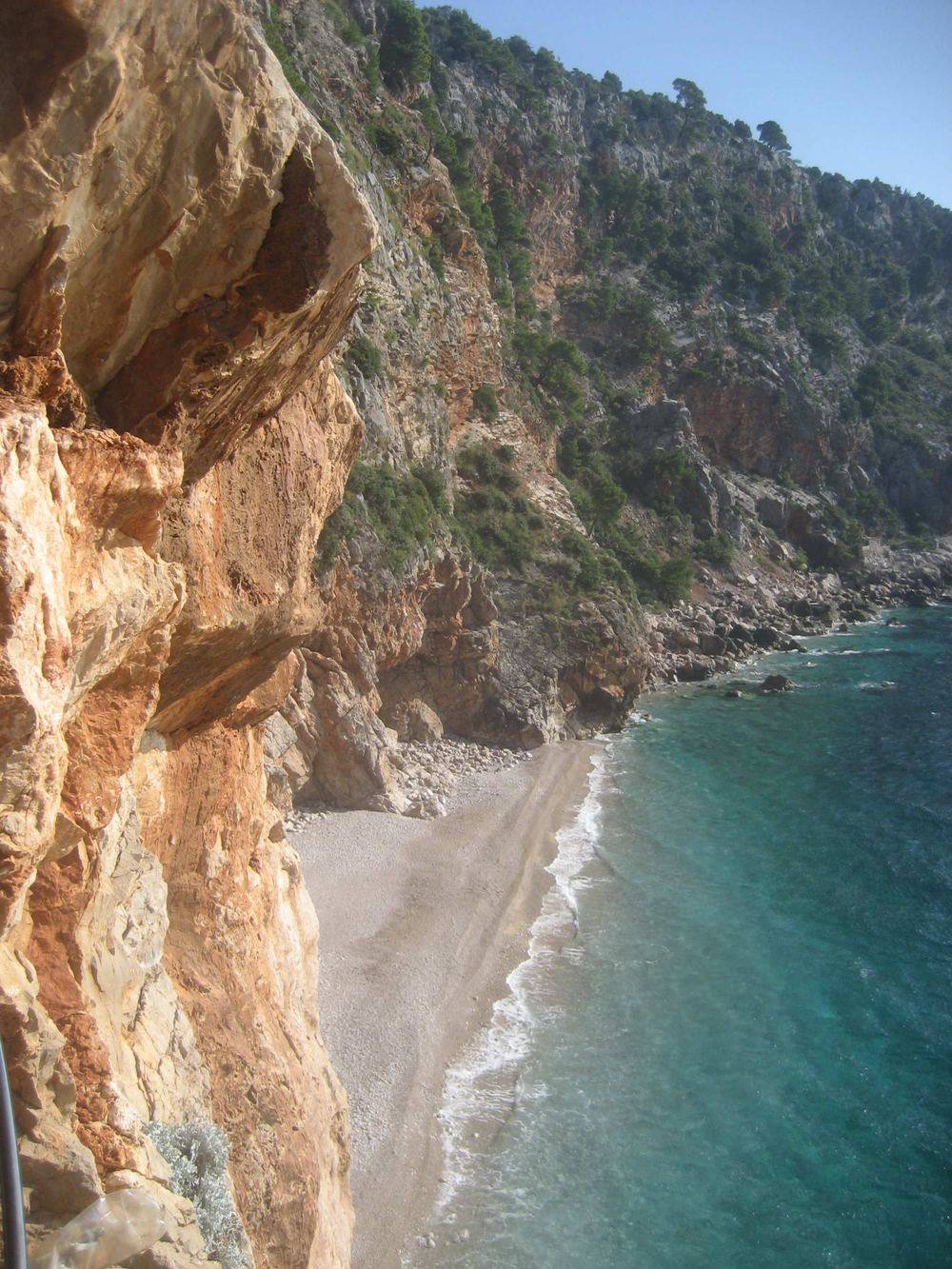
Molunat Bay
Molunat is the last village on the Croatian coast before the Montenegrin border and looks the way coastal places did before tourism: 2 bays, a fishing harbour with about a dozen boats, a few taverns and houses climbing the hill, with no hotels and no concrete. Velji Molunat faces south and has sun all day. Mali Molunat is more sheltered and quieter. The beaches are shingle and sand with a shallow entry, so they suit children, and the water is unusually clear because there is no traffic and no industry. The taverns serve what came in that morning at prices lower than anywhere nearer Dubrovnik. The drive from Cavtat takes about 30 minutes, and Prevlaka is 10 minutes further south, so the pair make a full day.
Prevlaka Peninsula
Prevlaka is the southernmost point of Croatia, a narrow cape at the entrance to the Bay of Kotor, fortified for centuries because of its position. After the war that began in 1991 it was disputed, until it was demilitarised and handed to civilian administration. At the tip stands Punta Oštro, an Austro-Hungarian fortress of the 19th century with casemates and artillery positions, and a view over the entrance to the Bay, the Montenegrin coast and the open sea. The peninsula is now a nature park with laid out paths, bathing spots on the rocks and boards explaining both the fortress and the plants the military ban left untouched. The drive from Cavtat is about 40 minutes. Bring water, as there is little shade and almost nothing to buy.
Frequently asked questions
- Is Cavtat a good base for visiting Dubrovnik?
- For most travellers, yes. Accommodation is cheaper than in Dubrovnik, the airport is twenty minutes away instead of forty, and water taxis reach the old town in about forty five minutes through the season without any parking problem. The trade off is that you need the boat or the bus every time, so plan Dubrovnik as one or two deliberate half days rather than repeated short visits.
- What is the Račić mausoleum and can you go inside?
- It is a small octagonal tomb built by the sculptor Ivan Meštrović between 1920 and 1922 in white Brač stone, on the cemetery hill of the Rat peninsula, for a shipowning family that lost its members to the Spanish flu. You can go inside, but opening hours are short and seasonal, often only late morning to early afternoon and not every day. Check locally before making the fifteen minute climb.
Share this guide
Questions about your trip?