Almost everyone drives past Karlovac on the way to the coast. It is a Renaissance fortress laid out as a six pointed star, it has four rivers inside the city, and it deserves the two hours.
Checked: 21 September 2026
Karlovac was founded in 1579 as a military answer to a specific problem: the Ottoman advance needed to be stopped somewhere south of Zagreb. So the Habsburgs did not let a town grow here, they drew one. The plan was a six pointed star with ramparts, moat and a grid inside, named after Archduke Charles of Inner Austria, and it was built from nothing on empty ground. Four and a half centuries later the star is still the shape of the city centre, which makes Karlovac one of the clearest Renaissance ideal towns anywhere in this part of Europe.
Walk the star, not the streets
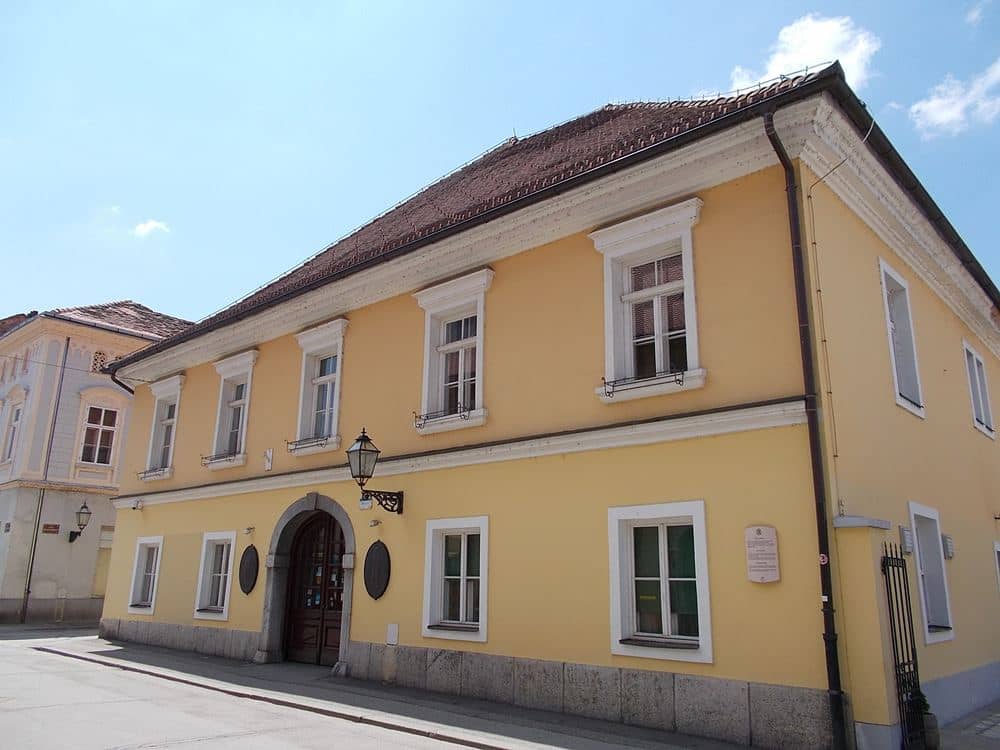
The ramparts were levelled into green promenades in the nineteenth century, so the Šanac walk now traces the outline of the old defences as a park. Do that circuit first and the grid inside makes immediate sense: Ban Jelačić Square in the middle, the Holy Trinity church, the Franciscan monastery, the music pavilion, the low baroque façades on Radićeva. It takes about an hour at a slow pace. The city museum in the Frankopan palace fills in the military frontier context, and the Karlovac milestone marks the point from which distances on the old imperial roads were measured.
- Aquatika is a freshwater aquarium, which is rare in Europe, and it is built around the fish of these four rivers. Allow an hour, more with children.
- Foginovo is a river bathing spot on the Korana with a real current, not a pool. It is free, busy on hot afternoons and genuinely cold.
- Dubovac castle sits on the hill above town and the terrace has the view over the plain. The climb on foot takes about twenty five minutes.
- The open air Homeland War museum at Turanj is on the old road south and can be seen from the car park in twenty minutes.
Four rivers, and what to do with them
Karlovac calls itself the city on four rivers and means it literally: the Kupa, Korana, Mrežnica and Dobra all run through or meet at the municipal area. This is the reason to stop here in summer rather than just look at the fortress. The Korana promenade and the Kupa bank are walkable straight from the centre, the confluence of the two is marked and reachable on foot, and the Mrežnica upstream is the one locals go to for its travertine steps and small waterfalls. Bring a towel even if you did not plan on swimming, because you will end up at the water.
“Karlovac is not on the way to the coast. It is the last place with cold rivers before the road commits to the sea.”
If you are driving from Zagreb to Dalmatia, this is the stop that costs you two hours and gives you a fortress plan, a castle terrace and a swim in a river. If you have a full day, add Aquatika and the Mrežnica. The town also gave its name to a beer brewed here since 1854, which explains a certain confidence in the local bars about what you should be drinking.
Getting to Karlovac
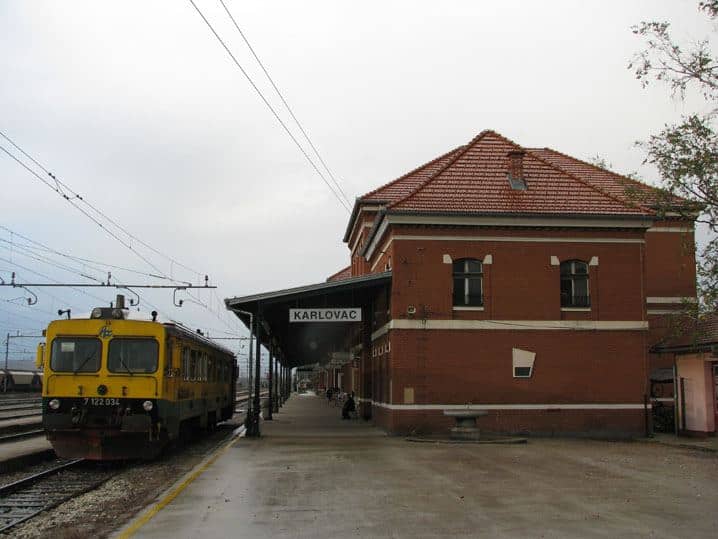
Karlovac lies about 55 km south-west of Zagreb, and the nearest airport is Zagreb Franjo Tuđman, roughly 50 km away by road. From Zagreb the A1 motorway reaches the Karlovac exit in under 1 hour, and the old D1 through Jastrebarsko runs the same way without a toll. Trains on the Zagreb to Rijeka line stop at Karlovac in about 1 hour, at the station that opened in 1865, and buses from Zagreb bus station take about as long. From Rijeka the drive is about 130 km on the A6 and A1. From Plitvice it is about 80 km north on the D1 through Slunj, which puts Karlovac directly on the road between the lakes and Zagreb.
| From | By | Journey time |
|---|---|---|
| Zagreb | Car, A1 or D1 | under 1 hour |
| Zagreb | Train, Rijeka line | about 1 hour |
| Zagreb | Bus | about 1 hour |
| Rijeka | Car, A6 and A1 | about 1 hour 30 minutes |
| Plitvice | Car, D1 through Slunj | about 1 hour 30 minutes |
| Ljubljana | Car, A2 and A1 via Bregana | about 2 hours |
Getting around and parking
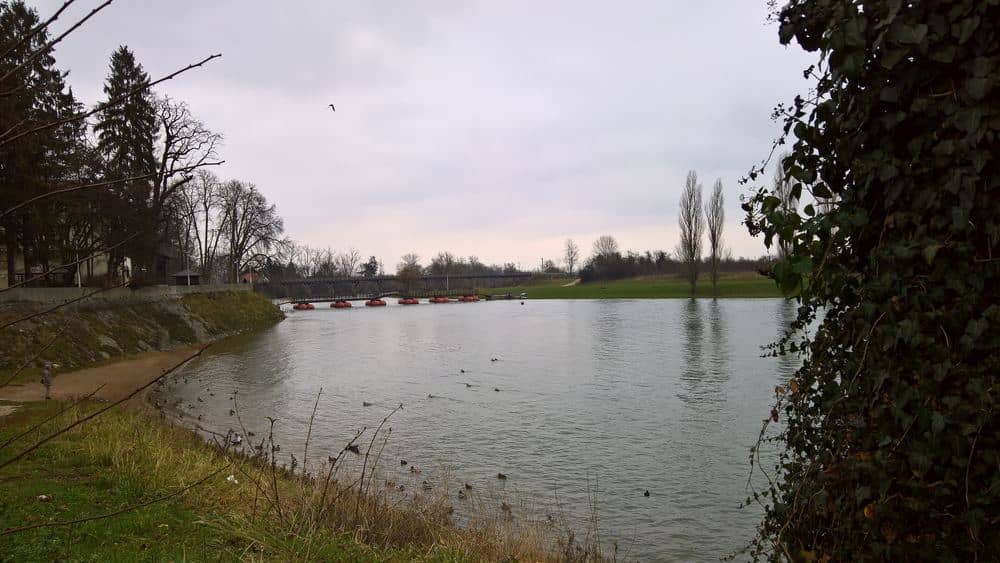
Everything inside the star is on foot. The railway station is about 20 minutes' walk from Ban Jelačić Square and the bus station is closer. Street parking around the promenade is in paid zones with ticket machines and fills on weekday mornings, because this is a working town. Dubovac has a car park by the castle if you would rather not walk up. For Foginovo walk south from the square to the Korana and follow the bank, the wooden bridge over the river is on the same stretch and is the best place for a photo of the water. Turanj is 5 km south on the D1 and easiest by car.
Market, beer and supplies
The town market works every morning, with supply from the Kupa valley, Kordun and Žumberak, so the stalls carry upland cheese and cream, eggs, honey from the chestnut forests and whatever is in season. It is a better spread than most coastal markets and worth 20 minutes before the star walk. Karlovačko is on tap in the bars around Ban Jelačić Square and along Radićeva. For supplies before the mountains or the coast, Karlovčanka is the department store in the centre, Supernova is on the northern approach road and KTC sits on the southern edge by the road to Plitvice.
Day trips from Karlovac
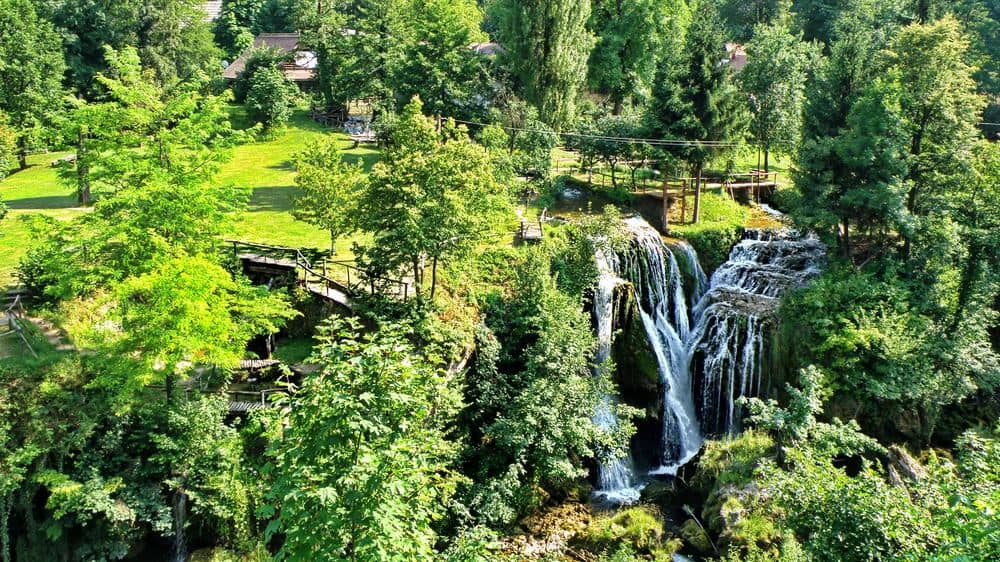
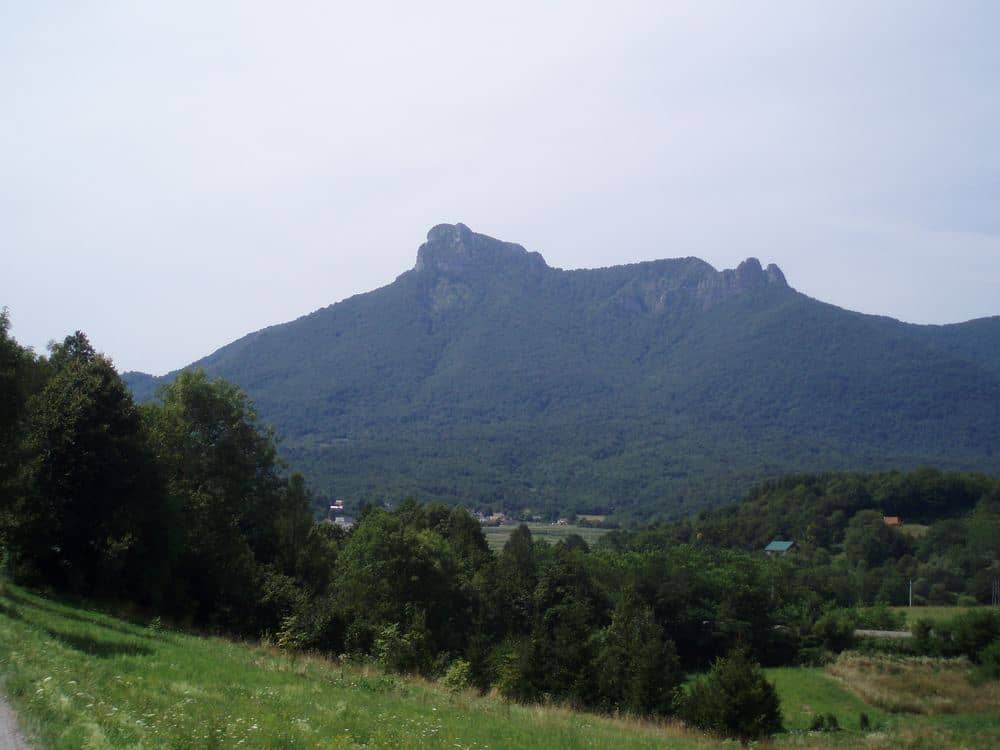
Karlovac sits where the plain meets the karst, so most day trips go south and west into water and hills. The Mrežnica upstream around Duga Resa is the nearest, about 10 km, and the bathing spots continue up the river through Mrežnički Brig and Belavići to Primišlje. Rastoke at Slunj is about 55 km south on the D1 towards Plitvice, a village built on travertine barriers with a free circular promenade. Ogulin, about 45 km south-west and a stop on the Rijeka railway, has the Đula sinkhole where the Dobra goes underground and Klek rising above the town to 1181 m.
- Duga Resa, about 10 km: the classic Mrežnica bathing spots with tufa sills and pools, outside any downstream swimming ban.
- Rastoke at Slunj, about 55 km: 23 waterfalls under the old mills, free promenade, private estates charge separately, car park 10 EUR in season.
- Plitvice Lakes, about 80 km: leave early, the entrance queues build from mid morning in summer.
- Ozalj, about 17 km north-west: a castle on a rock above the Kupa, an hour is enough.
- Stari grad Novigrad, about 10 km west: a Frankopan fortress above the Dobra, rough ground, wear firm shoes.
- Sveta Gera in Žumberak, 1178 m on the Slovenian border: beech forest and hamlets, a full day with a car.
When to go
June to September is river season. The Korana at Foginovo is cold even in August, the Mrežnica is noticeably warmer in high summer, and July and August are the busiest weeks at both, mostly with locals. The last days of August into early September belong to Dani piva, the beer festival that fills the star for 5 days with free entry and a festival train from Zagreb, and in 2026 half a litre of draught Karlovačko cost 2.50 euro. April, May, September and October suit the rampart walk, Dubovac and the forest tracks in Kozjača. November to March brings fog off the Kupa and short days, and the museums, Aquatika and the Edison cinema become the programme.
Practical notes and common mistakes
Check the city's announcements before swimming below the town. On 31 August 2026 a chemical warehouse at Mala Švarča burned and firefighting water reached the Mrežnica, so the city banned swimming on the Mrežnica downstream of Mala Švarča and on the Korana down to the Kupa, which includes Foginovo. The first samples came back clean and the ban is lifted in stages, so check the position before you go. Everything upstream, Duga Resa, Rastoke and the Korana above town, was never affected. Beyond that: wear water shoes on the tufa, keep children at the edge of the Korana because the current is real, the Turanj museum is open air with no shade, and Aquatika opens at 09:00, so start there on a hot day. Karlovac has few hotels and most visitors stay 1 night, so take a room inside or beside the star.
The places, one by one
| Place | What it is | Time needed |
|---|---|---|
| Ban Jelačić Square | Main square at the centre of the star | 20 minutes |
| Holy Trinity Church | Oldest church in town, Baroque | 15 minutes |
| Karlovac City Museum | Town museum in a Baroque palace | 1 hour |
| Karlovac Milestone | Zero point of the old roads to the sea | 10 minutes |
| Nikola Tesla Experience Center | Interactive electricity display | 1 hour |
| Zorin Dom Theatre | Theatre house of 1892 | 20 minutes, or an evening |
| Katzler Pavilion | Viewpoint on a former bastion | 15 minutes |
| Vrbanić Gardens | Largest town park | 30 minutes |
| Kupa and Korana Confluence | Meeting point of 2 rivers | 30 minutes |
| Aquatika Aquarium | Freshwater aquarium | 1 to 2 hours |
| Foginovo Beach | River bathing place on the Korana | 2 hours to half a day |
| Dubovac Castle | Castle and lookout above the Kupa | 1 to 2 hours |
| Museum of the Homeland War Turanj | Open air war museum | 30 minutes |
Ban Jelačić Square
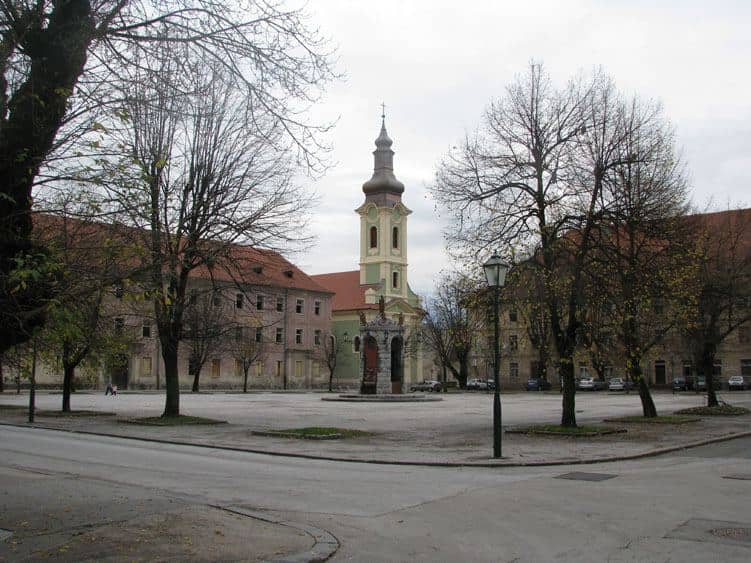
The square is rectangular and open, and all the streets of Zvijezda run toward it, which is why it feels larger than it is. You cross it in a few minutes. The houses around it are Baroque and Neoclassical and went up after Karlovac turned from a fortress into a trading town: in the 18th and 19th centuries the salt and timber route toward Rijeka passed this way, and the ground floors held trading and craft premises. In the middle stands a well, on one side the Holy Trinity church with the Franciscan monastery. The square is pedestrian today, with cafes and benches, and in summer the town uses it for events. Start here: the grid makes most sense from its middle.
Holy Trinity Church
This is the oldest church in Karlovac. It went up at the end of the 17th century beside the Franciscan monastery, at the point when the fortress began to acquire civilian life. The facade is Baroque and plain, with 2 bell towers. Inside are marble altars, a pulpit and an 18th century organ. The monastery next door keeps a library of old editions and an archive that historians of the Military Frontier rely on, because the Franciscans kept the registers for the whole area. It is still a parish church, so it is open around masses and during the day, and entry is free. Allow 10 minutes inside.
Karlovac City Museum
The town museum dates from 1904 and occupies an 18th century Baroque palace inside Zvijezda. The display runs in chronological order: archaeological finds from prehistory and the Roman period, then weapons and equipment from the Military Frontier, guild objects, furniture and portraits of Karlovac families, and ethnographic material from the Kupa valley and Kordun. One section explains how Zvijezda was built and how people lived inside a fortress that stood for centuries as the first line toward Ottoman territory. Another covers the rivers and rafting, because timber from Gorski kotar was floated down the Kupa toward Sisak. Hours are 10:00 to 18:00, the ticket is cheap and an hour covers it.
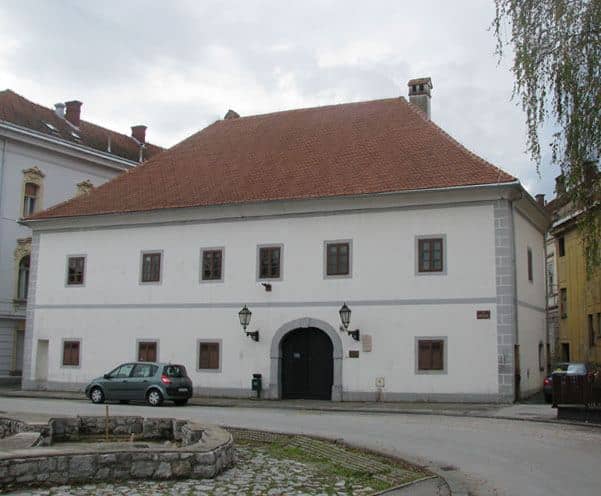
Karlovac Milestone
The stone inside Zvijezda marks the zero point of 3 roads that made Karlovac a trading hub. The Karolina, first of the roads toward Rijeka and Senj, was finished in 1728, the Jozefina followed in 1779, and the Lujzijana of 1811 was the most modern of them, with gentle gradients built for freight wagons. All 3 started here because goods arriving by river from Pannonia were unloaded in Karlovac and put onto wagons for the crossing of Gorski kotar. The town lived from that transfer trade for a century and a half, until the railway took it away. The stone carries the old distance markings and boards beside it explain the roads. It takes 5 minutes in passing.
Nikola Tesla Experience Center
Tesla spent 3 school years in Karlovac, from 1870 to 1873, at the higher real gymnasium, lodging with relatives. He later wrote that it was here he saw his first experiments with electricity, performed by the physics teacher Martin Sekulić, and that those demonstrations set the direction of his work. The centre built on that connection is interactive: a Tesla coil, alternating current, wireless transmission of energy and models of his patents, all explained through experiments you set in motion yourself. It works for adults as well as children, and an hour is the right allowance. The demonstrations run to a timetable, so check the times when you arrive and plan the rest of the walk around them.
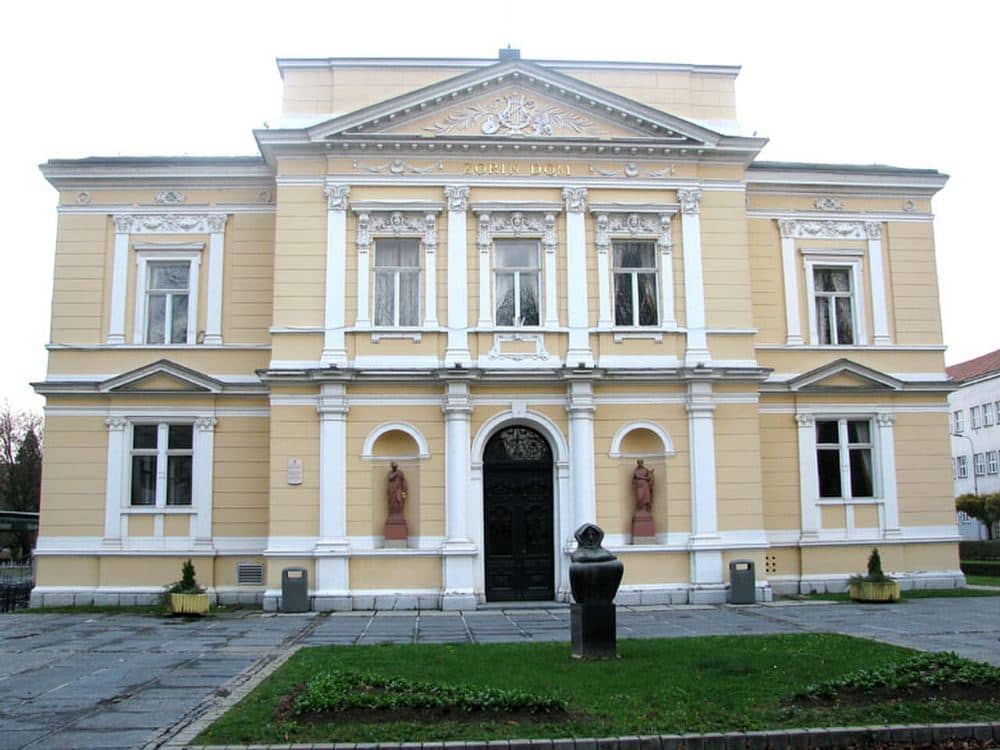
Zorin Dom Theatre
Zorin dom opened in 1892 and is one of the oldest purpose-built theatre houses in Croatia. The name comes from the singing society Zora, founded in 1858, which spent decades raising the money for it. In a military and trading town, musical and theatre societies were the main form of civic life and the way the Croatian language was kept in public use under the Habsburgs. The building is Historicist, with a horseshoe-shaped hall, galleries and boxes, and it was restored at the beginning of the 21st century. Companies from across the country perform here, alongside concerts and festivals. The programme is published by season and tickets cost considerably less than in Zagreb, so if you stay the night, check what is on.
Katzler Pavilion
The Katzler pavilion stands on one of the former bastions, on the rise that was left when the ramparts came down. It was put up at the end of the 19th century, when the belt around the fortress was being turned into a park, and it carries the name of a Karlovac citizen who helped set that work in motion. The structure is small and open, a roof on columns with benches beneath, and it was placed here because the view is the best on the ring: Zvijezda on one side, the river on the other. It is open at all hours and 10 minutes' walk from the square.
Vrbanić Gardens
Vrbanić Gardens lie south of Zvijezda, on land that Franjo Vrbanić gave to the town at the end of the 19th century, and they carry his name. The park belongs to the same wave of planting that followed the demolition of the walls, and by size it is the largest in Karlovac. The trees are more than a century old, plane trees, oaks and conifers among them, with paths, benches and a playground under the canopy. In summer it is several degrees cooler here than in the open streets. It is open and free, and a 10 minute walk from the core. Use it as the shaded pause between the museum and the river, especially with children.
Kupa and Korana Confluence
The Korana joins the Kupa north-east of Zvijezda, a 15 minute walk from the core, and this is where the town's claim to 4 rivers becomes visible. The Korana comes off the karst, greenish and clear, while the Kupa arrives darker with silt from the mountains, so the line between them can be followed downstream for a while before it fades. The Kupa is the largest of the 4 rivers, 296 km long from its source in Risnjak National Park to the Sava at Sisak. The confluence was one reason for founding the town, because several routes could be watched from this point. The bank has paths and benches and no building around it. Come at low water, when the colours are clearest.
Aquatika Aquarium
Aquatika opened in 2016 and is the only aquarium of its kind in Croatia: it shows the fish and water systems of Croatian rivers and karst. The display follows water from source to mouth. Upper courses come first, with trout and huchen, then the karst sinkholes and underground waters with the olm, then lowland rivers with catfish, pike and carp, and finally ponds and marshes. The tanks are large and clearly laid out, with explanations and a section for children. It stands by the Korana, 15 minutes' walk from Zvijezda, and the hours are 09:00 to 18:00. Allow 1 hour to 1 hour 30 minutes. It is the obvious choice on a rainy day, and the karst section explains what you will see at the Mrežnica later.
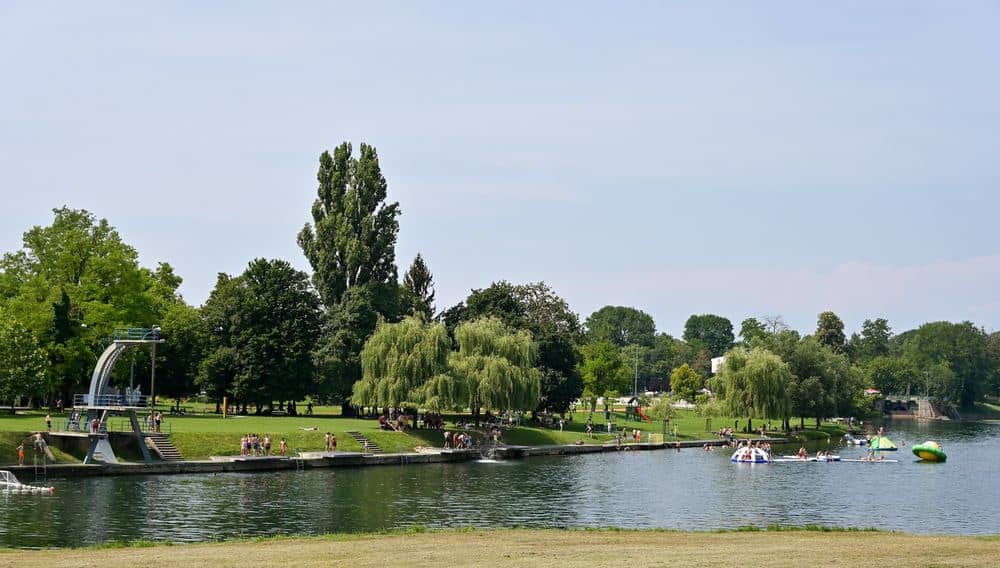
Foginovo Beach
Foginovo is the oldest town river bathing place in Karlovac still in use, laid out on the Korana a 15 minute walk from Zvijezda. The Korana is the clearest of the 4 rivers because it comes from the karst and carries little silt, which is why bathing here has always been tied to it. The site has grassy terraces, concrete platforms, showers, a diving board and a bar, and in season lifeguards are on duty. The water regularly meets bathing standards. It is shallow by the bank and deeper in mid current, where the flow is felt. The best part of the day is late afternoon, when the terraces fill with people from the town.
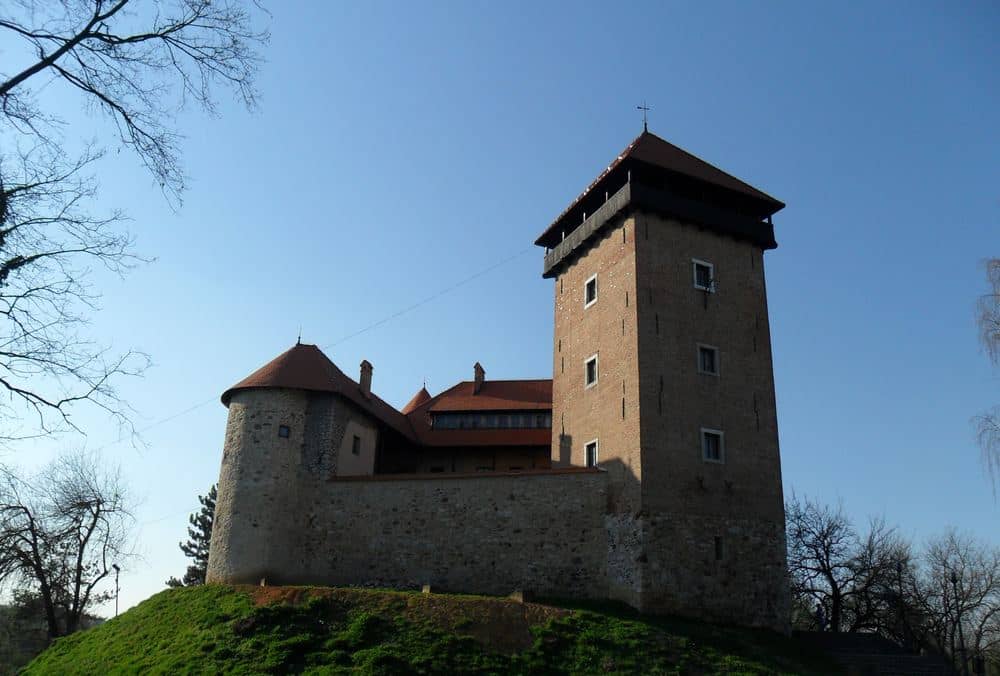
Dubovac Castle
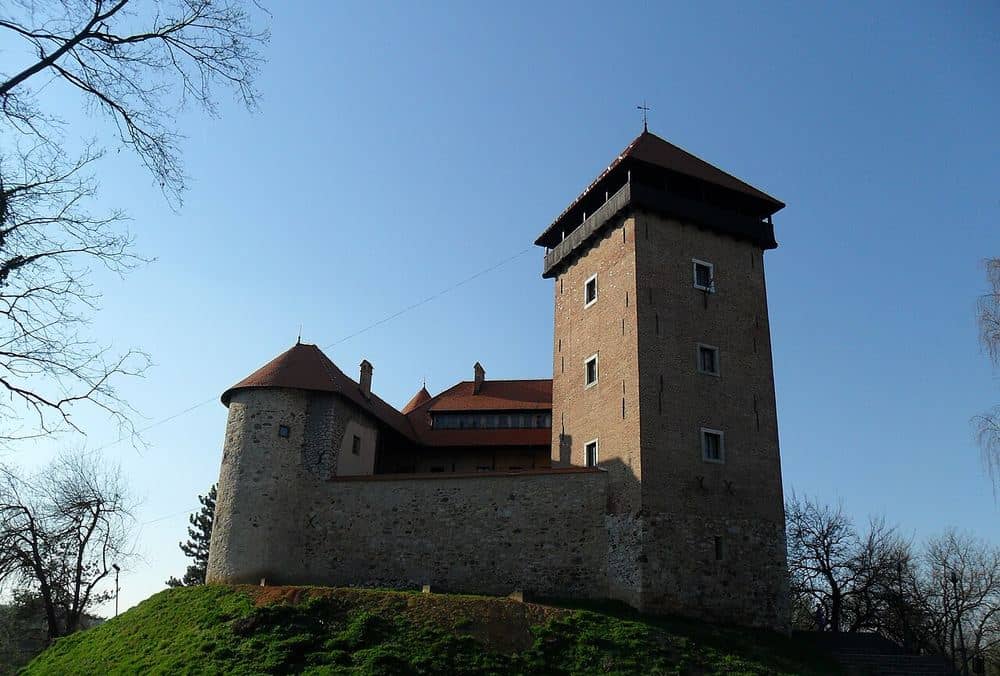
Dubovac stands on a hill west of Zvijezda, 70 m above the Kupa, and is older than the town below. A fortification is recorded here in the 13th century, and the Renaissance form with inner courtyard and square tower dates from the 16th. Frankopan and Zrinski held it, and once the star fortress went up on the plain in 1579 it lost its military role and became a country residence. Part of the town museum is inside. From the lookout you see Zvijezda laid out on the plain, the Kupa skirting it, and on a clear day Žumberak to the north and Petrova gora to the south. The climb ends with a steep flight of steps. The sun sets behind the hills to the west, so go towards evening.
Museum of the Homeland War Turanj
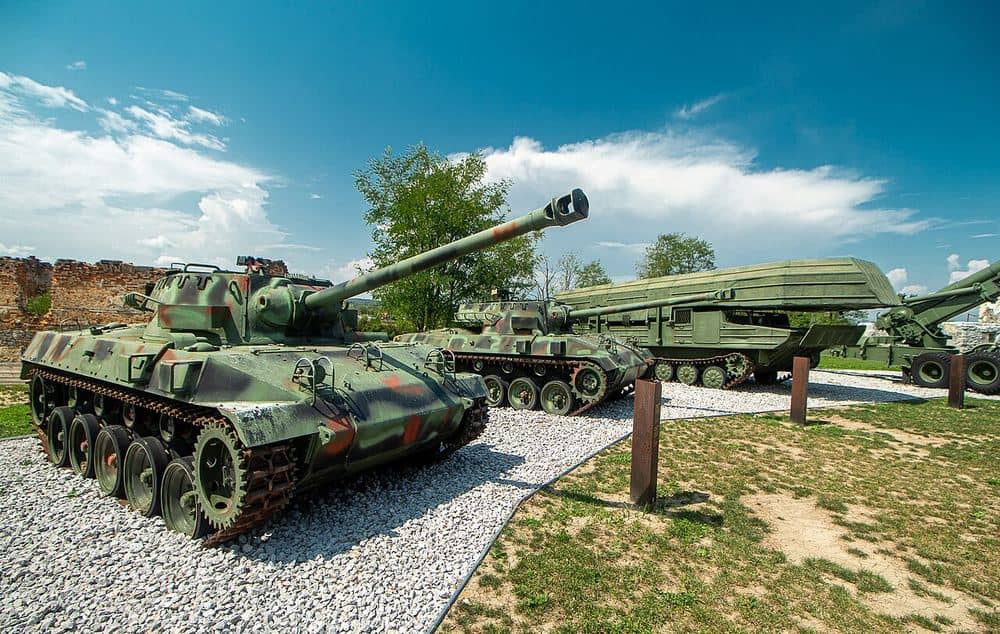
Turanj, 5 km south of the centre on the old road toward Plitvice, was the front line from 1991 to 1995. The suburb lay at the contact of the 2 sides and was almost completely destroyed. The museum is laid out under the open sky along the road, on the ground where the fighting was: armoured vehicles, guns, an aircraft and improvised vehicles, with boards carrying explanations and testimonies. Part of the ruins was left unrestored as part of the display. The name Turanj comes from a tower recorded in the 16th century that watched the Korana crossing for the Ottoman frontier, so 2 layers of border history sit on one spot. Entry is free, it belongs to the town museum, and half an hour is enough.
Frequently asked questions
- Is Karlovac worth stopping at between Zagreb and the coast?
- Yes, for about two hours. The town centre is a Renaissance fortress laid out in 1579 as a six pointed star, and the old ramparts are now a green walking circuit that traces the shape. Add the Dubovac castle terrace above town for the view and, in summer, a swim in the Korana at Foginovo. It is roughly halfway between Zagreb and the start of the coastal road, which makes it a natural break rather than a detour.
- What is there to do in Karlovac with children?
- Aquatika is the obvious answer: a freshwater aquarium built around the fish of the four rivers that meet here, which is a rare format in Europe and takes an hour or more. Beyond that, the Korana river bathing area at Foginovo is free and shallow at the edges, the rampart parks give space to run, and the Nikola Tesla Experience Center is hands on. All four sit within walking distance of the centre.
Share this guide
Questions about your trip?