Ten to fifteen degrees, an evening outdoors in a light jacket, and a Roman old town that belongs to the locals in December. Where the stalls stand and what the stands charge.
Checked: 18 October 2026, 04:10
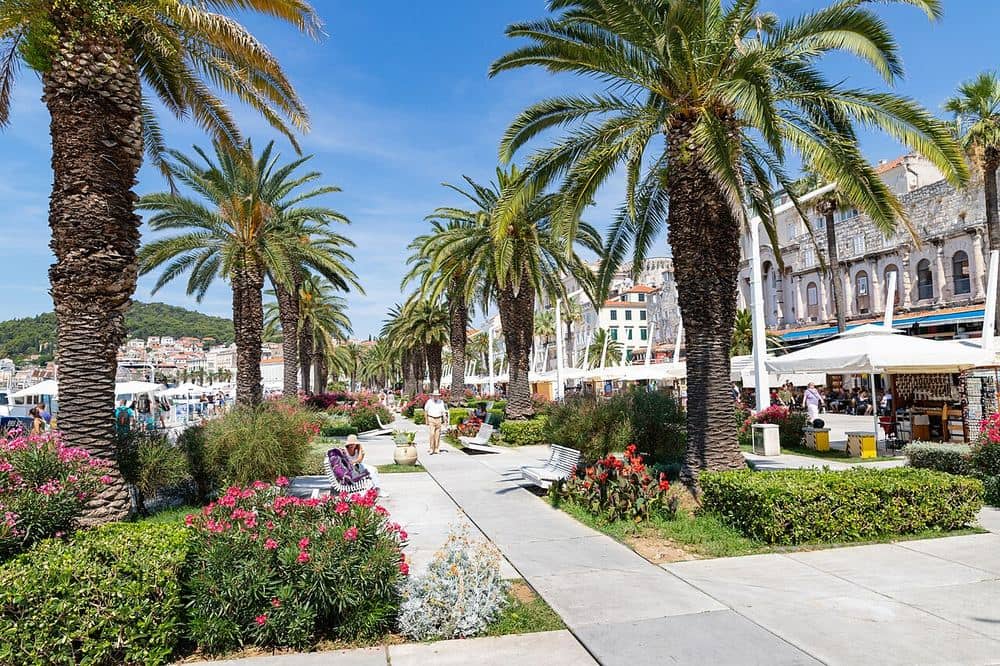
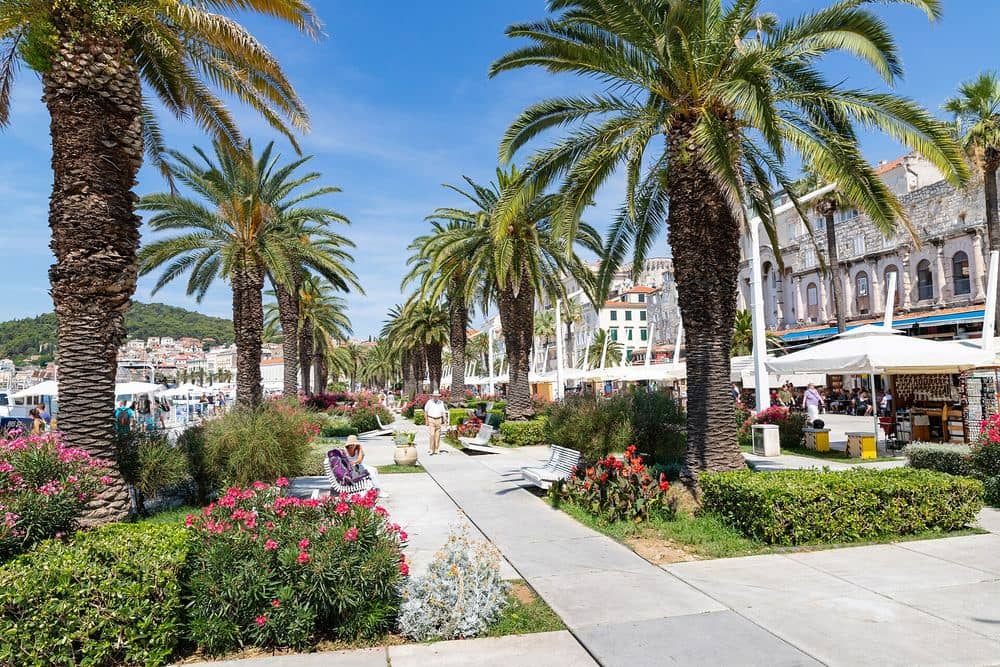
Split celebrates Advent on its seafront. December here sits around ten to fifteen degrees by day, so the market is an evening outdoors in a jacket, along a Riva that stays open to the water. The city turns its own promenade into the stage, and that is the appeal.
Advent in Split 2026 runs from 27 November 2026 to 7 January 2027, according to the Split Tourist Board's call for the ice rink. The rink goes up in Đardin this year, with 900 to 1,000 square metres of ice for the whole event (Split Tourist Board).
Where it was in 2025
- The Riva: the main run of stalls, facing the harbour, busiest between six and nine in the evening.
- The Prokurative, Trg Republike: the concert square, three sides of Venetian arcades around an open stage.
- Đardin, the city park above the Riva: the quieter end, and where families with small children go.
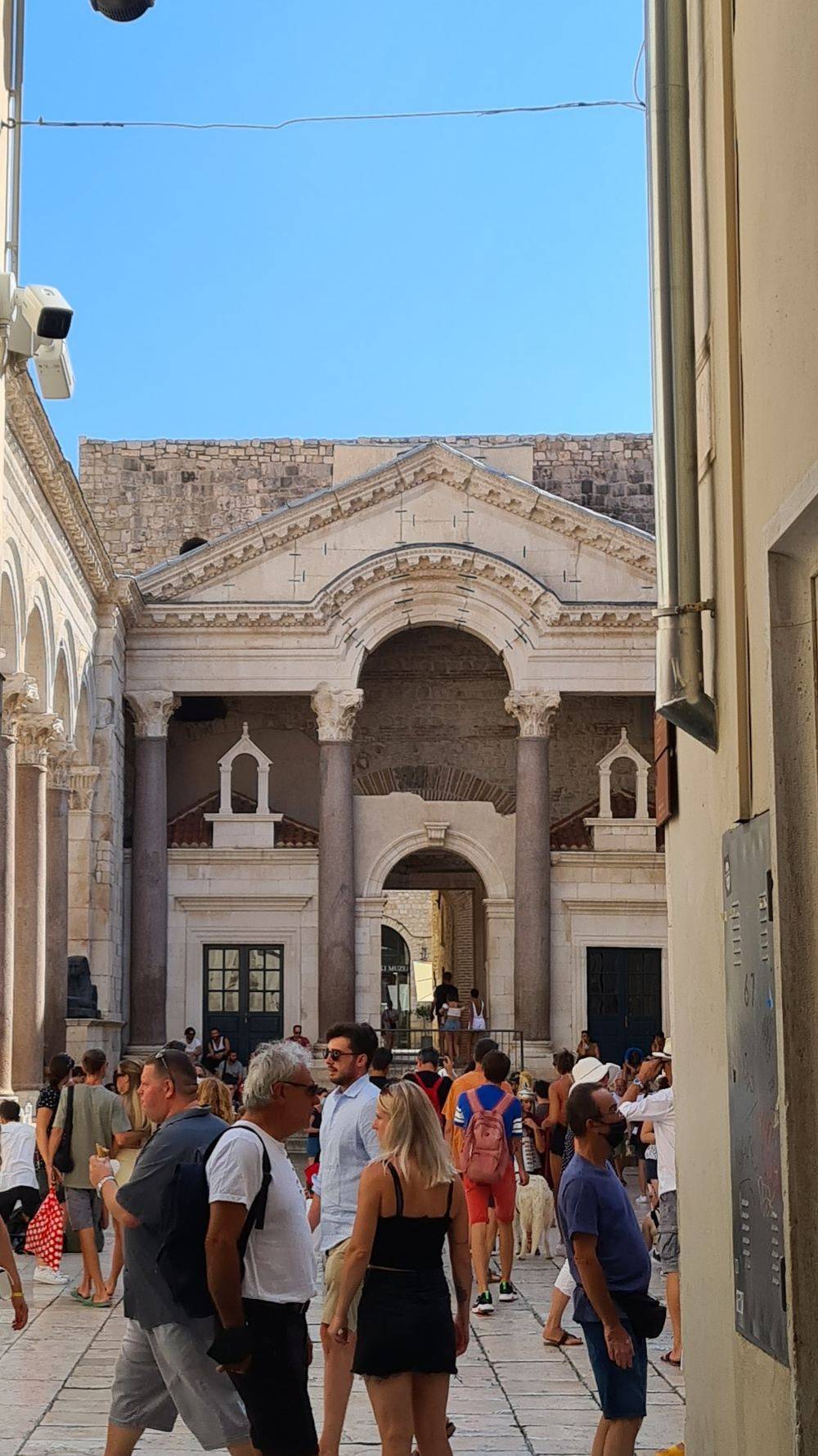
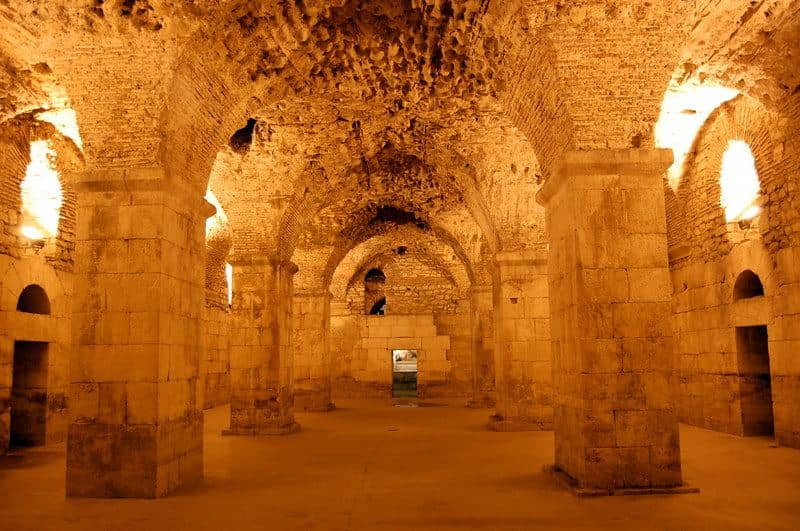
- The palace lanes and the Peristyle: no stalls, but lit and walkable, and empty compared to July.
What it costs, and what it does not
Entry is free, as it is everywhere in Croatia, and the concert programme on the Prokurative is open too. The money goes on food and drink: mulled wine in the region of three to four euros, a portion of fritule three to five, a hot dish at a stall usually under twelve. Restaurants in the palace stay open through the winter and are noticeably cheaper than in season, and unlike July you can walk in without booking on most evenings.
Getting to Split in December
Split airport sits by Kaštela, some 25 km west of the centre. In winter the direct flights from the UK thin out and some stop, and routes from the US, Canada and Australia connect through a European hub, most often Zagreb, Frankfurt, Munich or Vienna. Croatia Airlines keeps the Zagreb link running all year, the fallback when no direct flight exists on your date. The airport shuttle bus reaches the main bus station, next to the ferry port and 10 minutes' walk from the Riva, in about 30 minutes. City bus 37 between Split and Trogir also stops by the airport, cheaper and slower.
Overland, Zagreb is about 410 km away on the A1 motorway, 4 hours by car and around 5 by coach. Coaches arrive at the same station by the port, which makes pairing Zagreb's Advent with Split's simple: 2 nights in the capital, the morning coach south, the Riva by dark. The train takes 6 hours or more with few departures, so almost everyone takes the coach. If you drive, check the road report before you set off: the bura closes the exposed stretches of the A1 a few times each winter.
| From | How | Time |
|---|---|---|
| Split airport | shuttle bus to the main bus station | about 30 minutes |
| Zagreb | coach to the station by the port | about 5 hours |
| Zagreb | car on the A1 | about 4 hours |
| Zadar | car on the A1 | under 2 hours |
| Dubrovnik | coach along the coast | about 4 hours |
| Trogir | bus 37 from Sukoišan | about 60 minutes |
Where to stay in winter
Winter is the easy season for beds. Many of the apartments inside the palace that sell out from May stay open and cost less. Inside the walls you sleep among the stone with the market 2 minutes away, and the price is the stage on the Riva, whose sound carries up the southern lanes until the evening programme ends. Varoš, the old fishermen's quarter below Marjan, is 5 to 10 minutes away and quiet after 22:00, and the streets between the bus station and Bačvice suit a late coach or an early flight. Before you book a stone apartment, ask how it is heated: many rely on the air conditioning unit set to warm, which struggles on a bura night, when the walls hold the cold.
Daylight hours around the market
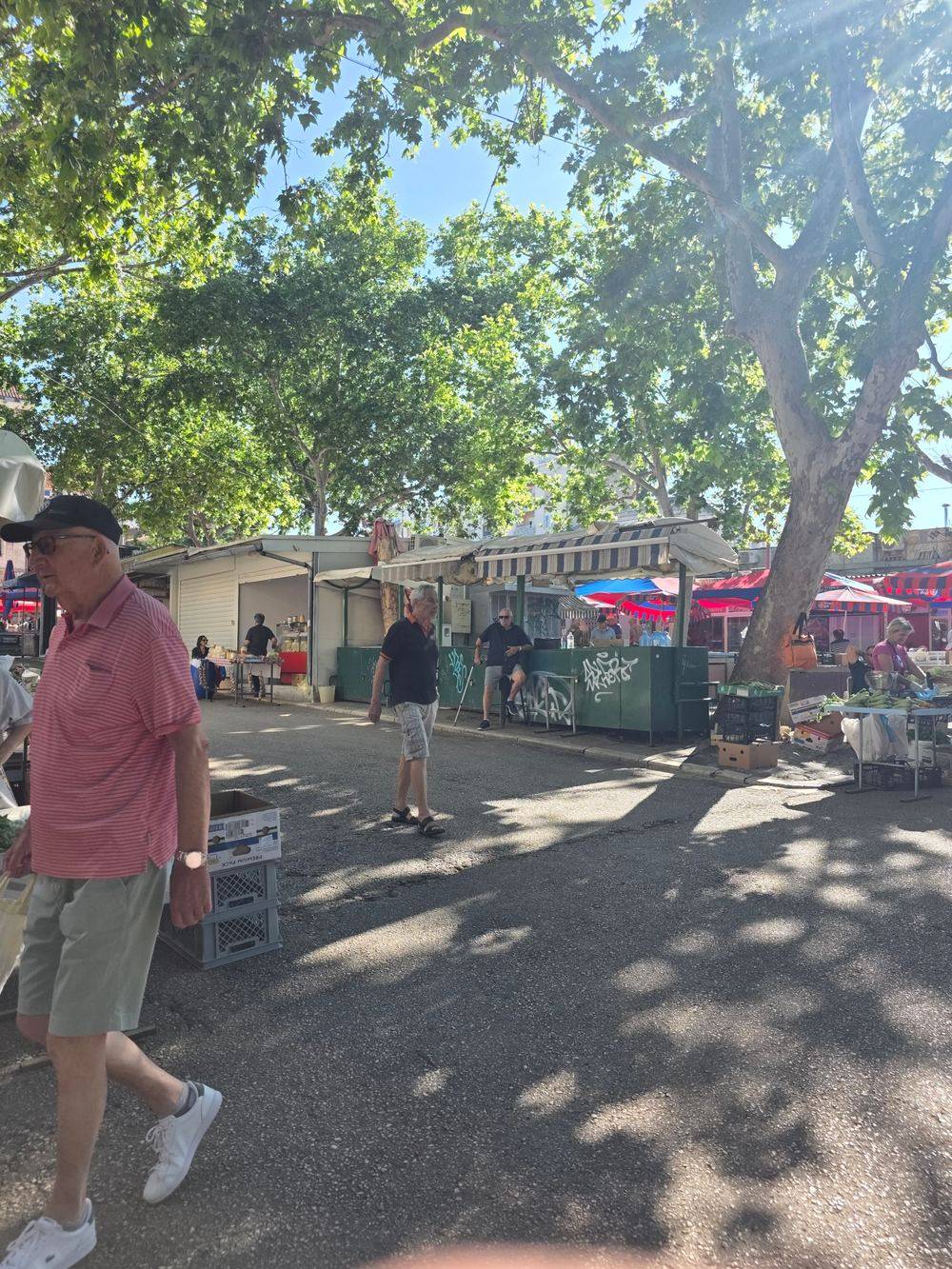
The stalls belong to the evening and the sun sets before 16:30, so the day needs a plan of its own. Start at the Pazar, the green market along the eastern wall, busiest between 07:00 and 11:00, which in December sells mandarins from the Neretva valley, cabbage, dried figs, cheese and prosciutto. Then the Ribarnica by Marmontova, thinnest on a Monday because the boats rest on Sunday. Late morning is the hour for a coffee on the Prokurative, which keeps its sun longer than the lanes, and for the inside of the cathedral: the combined ticket covers the crypt, the treasury and the Temple of Jupiter with its headless sphinx.
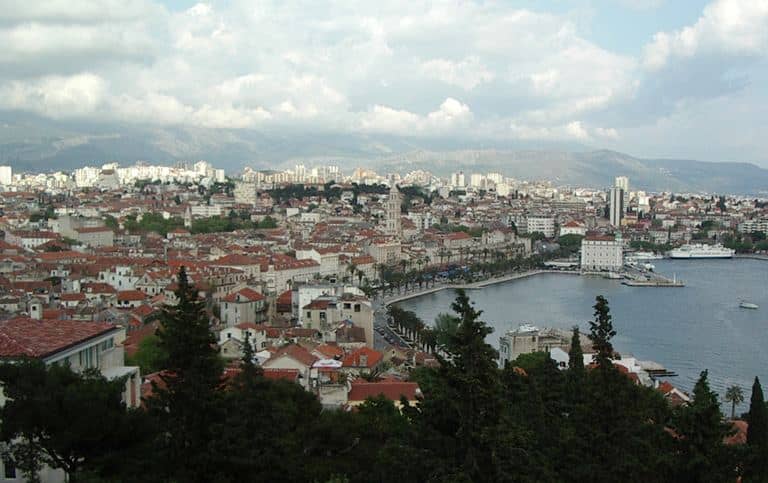
The afternoon goes to Marjan. Senjska street and its steps through Varoš bring you up to Vidilica in about 15 minutes. Vidilica has a café with the harbour below, and the light between 15:00 and 16:00 is the best of a winter day. The path continues to Telegrin, the top of Marjan at 178 m, with Brač and Šolta in view. Come down as the ferries switch on their lights and the stalls open. On a wet day swap the hill for the Gallery of Fine Arts by the Golden Gate, the City Museum in the Papalić palace, or the Ethnographic Museum in the imperial apartments, whose ticket includes the roof terrace above the Vestibule.
Day trips that work in winter
Split keeps its mainland day trips in December. The islands are the exception: ferries run winter timetables from the end of September, the catamarans thin out and a bura day cancels sailings outright, so leave Hvar and Brač for another season unless you like empty harbours. Trogir, Salona and Klis are all within an hour by public bus, cost little or nothing to walk around, and the December light on stone is the clearest of the year. Tickets for the city buses are sold on board or at kiosks.
- Trogir, 27 km: bus 37 from Sukoišan, about an hour along the Kaštela shore, for the island old town and the cathedral of St Lawrence.
- Salona at Solin, 6 km: city bus in 15 minutes to the largest Roman site in Croatia, free to walk, with the amphitheatre.
- Klis fortress, 20 minutes by bus: 3 defensive rings on the pass between Mosor and Kozjak, with all of Split and the islands below.
- Kaštela, 15 km by suburban bus: 7 towns and 7 castles along the bay, with Kaštilac at Kaštel Gomilica on its rock in the sea.
Where to eat
December is the month to eat indoors. The konobas of Varoš and the palace lanes run their winter menus, where Dalmatian cooking is at its strongest: pašticada, beef braised for hours in wine and prunes and served with gnocchi, brudet, the fish stew that changes with the day's catch, and black risotto. On Christmas Eve the whole coast eats bakalar, dried cod, as a stew with potatoes or beaten with olive oil and garlic, and konobas put it on the menu through the week before. Lunch is the cheaper sitting and the one with locals at the next table. The Riva cafés keep their chairs outside all year, with blankets on the colder days.
Practical notes for December
The wind decides your evening. The bura blows from the north-east, cold and dry under a clear sky, and on a bura night the Riva is the most exposed spot in town, so move to the Prokurative or the lanes. The jugo comes from the south, warm, damp and usually with rain: the stalls run on, the mood goes with it. Croatia uses the euro. Cards work in cafés and restaurants, but carry some cash for the stalls. Trading law limits shops to a handful of Sundays a year and which ones they pick varies, so do not count on Sunday shopping. The public holidays are 25 and 26 December, 1 January and 6 January, when the city closes down more than you may expect. Picigin at Bačvice carries on through all of them: the game runs every day of the year, New Year's Day included, in a sea of about 15 degrees.
Frequently asked questions
- How cold is Split in December?
- Daytime highs usually sit around ten to fifteen degrees, with evenings a few degrees lower. A jacket is enough; the wind off the sea matters more than the temperature.
- Is the Diocletian's Palace area open in winter?
- Yes. The palace is a living quarter of the city, not a site that closes, so the lanes and the Peristyle are walkable all year. Individual museums and the cathedral bell tower keep shorter winter hours.
- Zagreb or Split for Advent?
- Zagreb if you want the scale and six weeks of stage programme. Split if you want an evening outdoors without the cold and an old town you can actually walk through.
Official sources
Share this guide
Questions about your trip?