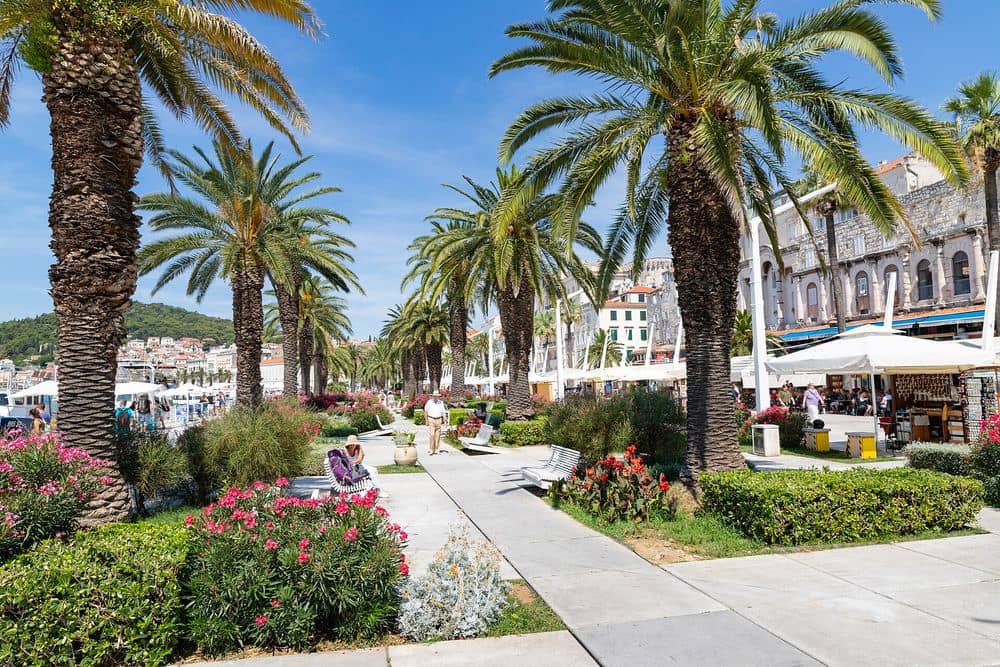
Coffee in the palace, Roman stone, market energy, a Marjan walk and a swim. This is the Split day that feels full without becoming frantic.
Checked: 21 September 2026
Split can look like a quick stop on the way to the islands. Give it one full day and the city changes character. The palace becomes a morning maze, the market gives you the sound of daily life, Marjan adds pine shade and the beaches make the old stone feel less hot. The key is not to separate sights, food and sea into different days. In Split they belong together.
- 07:30Pazar, breakfast at the market
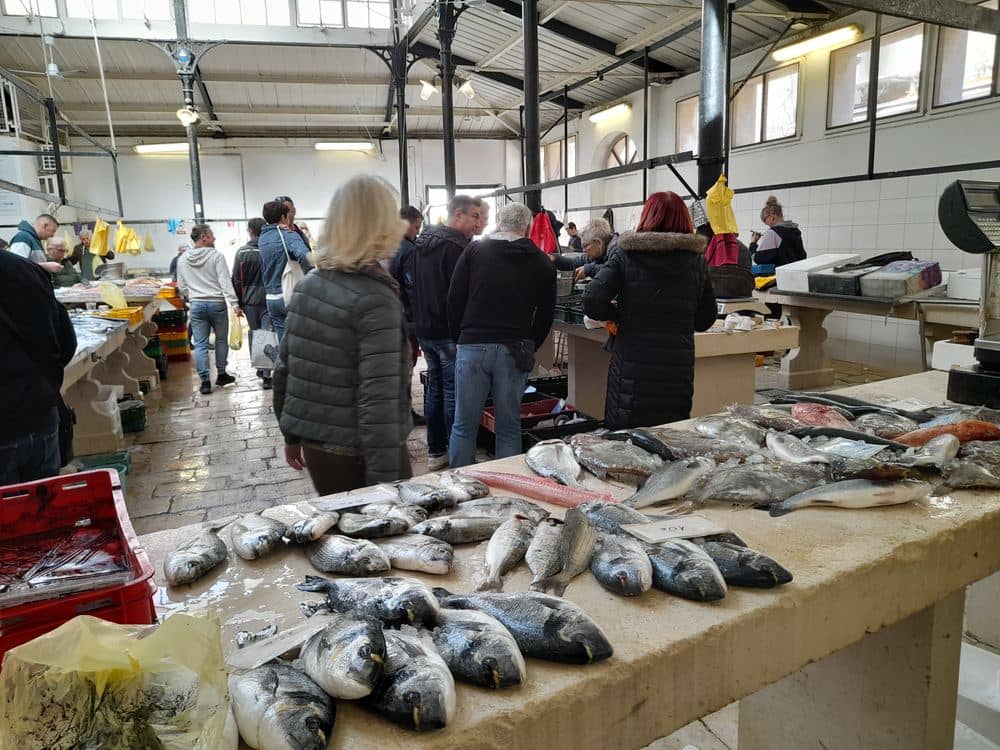
Start east of the palace walls, where Split shops before work: figs, cheese, burek while it is still warm. Our market guide says what to buy and from whom.
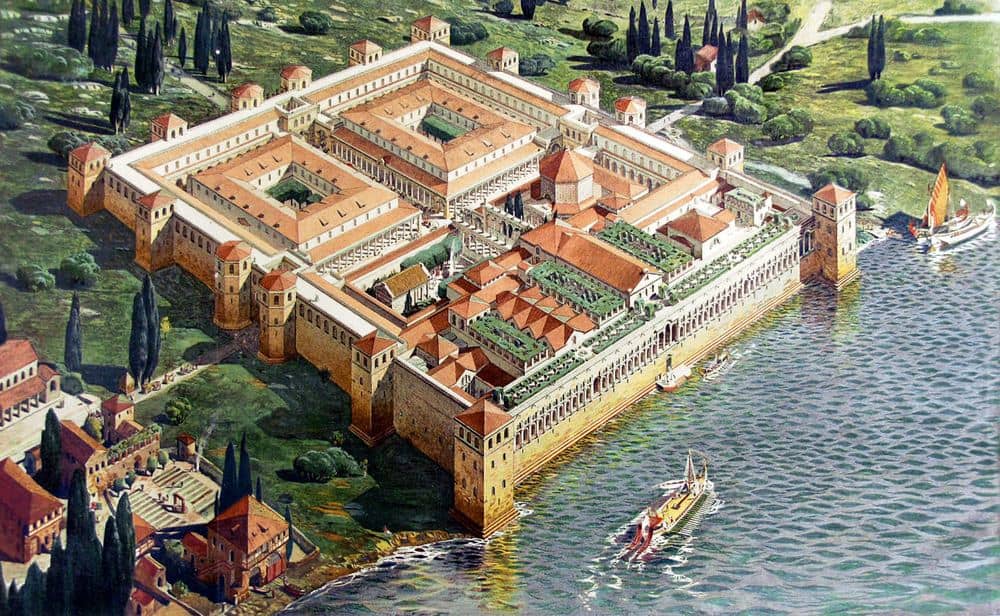
- 08:30The palace before the crowds
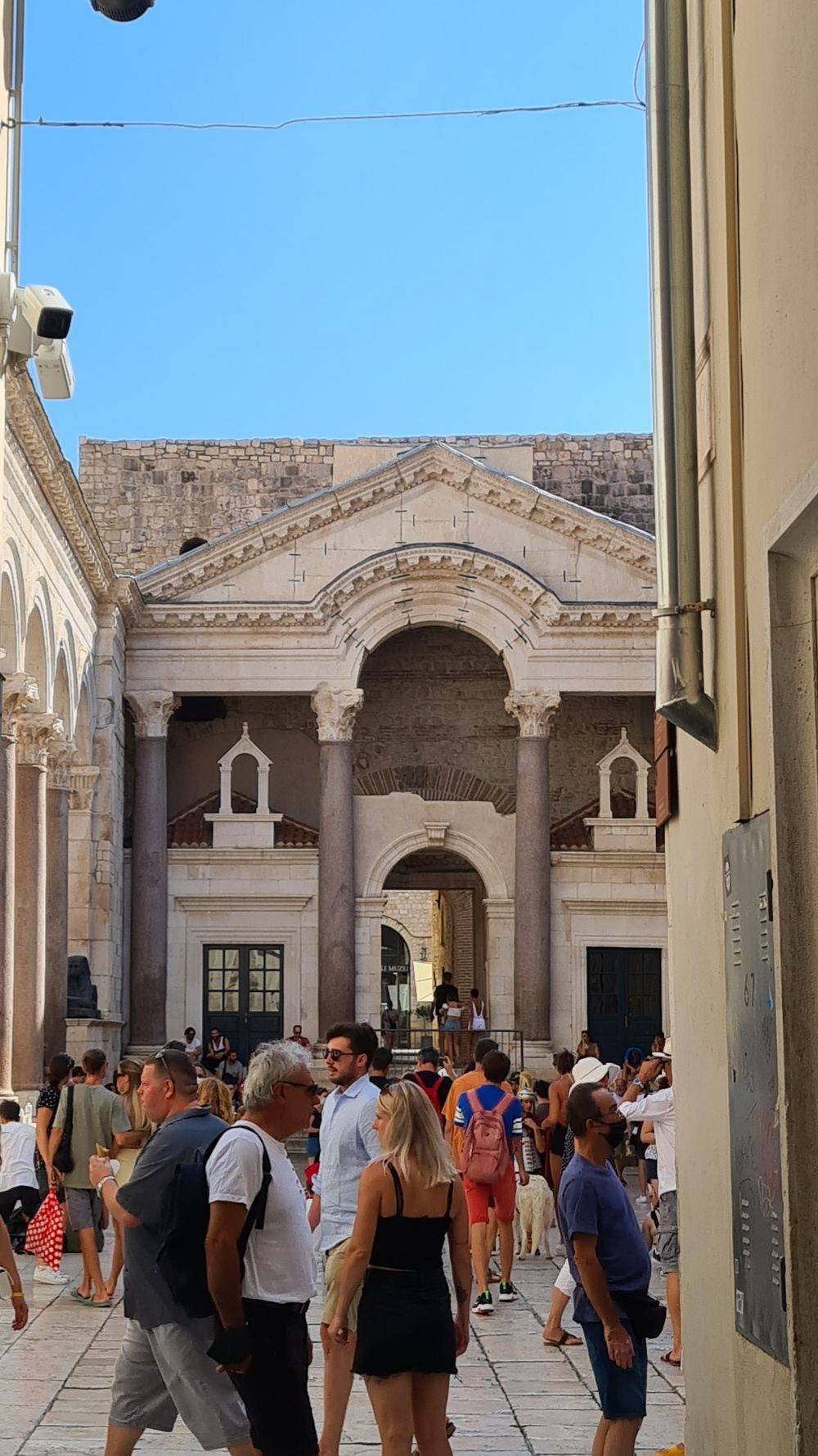
Diocletian built his retirement home around 300 AD and the city moved in for good. Before nine you share the courtyards with delivery bikes, not groups.
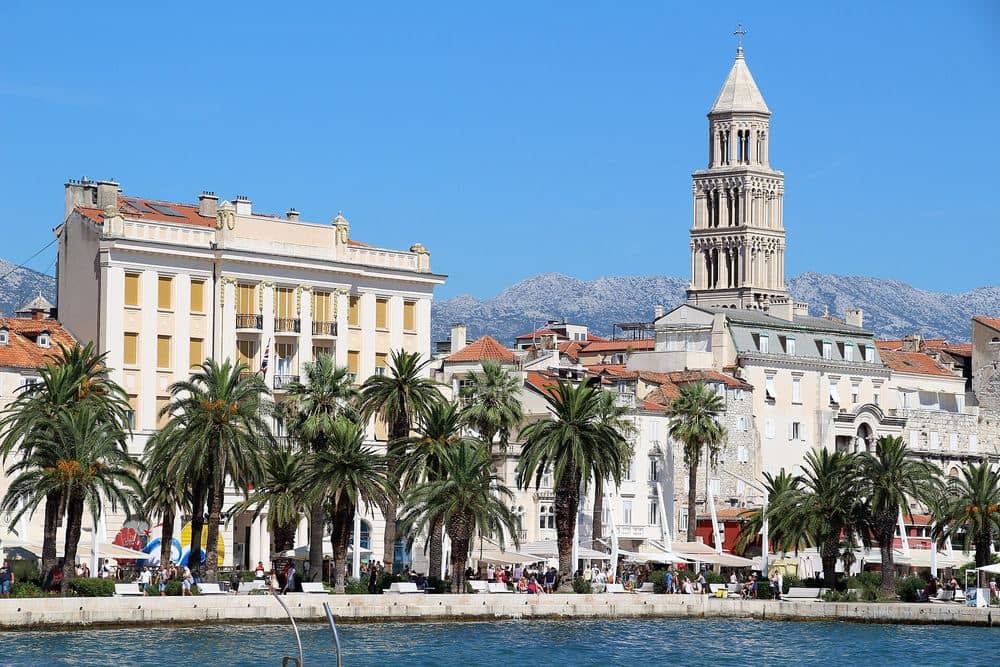
- 09:30Peristyle and the cathedral tower
The emperor's forecourt, then the climb: the bell tower of St Domnius is the best view over the roofs, and the queue doubles by eleven.
- 11:00The corners the groups miss
Substructures, the vestibule when the klapa singers pause, Jupiter's temple: our hidden-corners guide threads them in twenty minutes.
- 13:00Lunch in Varoš, then decide
The old fishermen's quarter west of the Riva keeps its konobas in the shade. Over coffee, pick the afternoon: hill or beach.
- 15:00Marjan, the city forest
Pines, viewpoints and swimming coves fifteen minutes from the Riva. Our walking route does the loop without the steep detours.
- 19:30Riva, then Matejuška with the locals
The evening walk belongs to the Riva; the sunset beer belongs to the Matejuška sea wall, where Split sits on the stone with a bag from the shop.
Timing that keeps Split light
- Do palace interiors before lunch and viewpoints after lunch. The light and the temperature both work better that way.
- Keep one hour unplanned. Split rewards accidental music, a ferry arrival or a sudden swim.
- If you go to Marjan, start before you feel tired. The hill is gentle, but heat changes the climb.
- For dinner, choose either palace atmosphere or waterfront breeze. Trying to get both often means a weaker table.
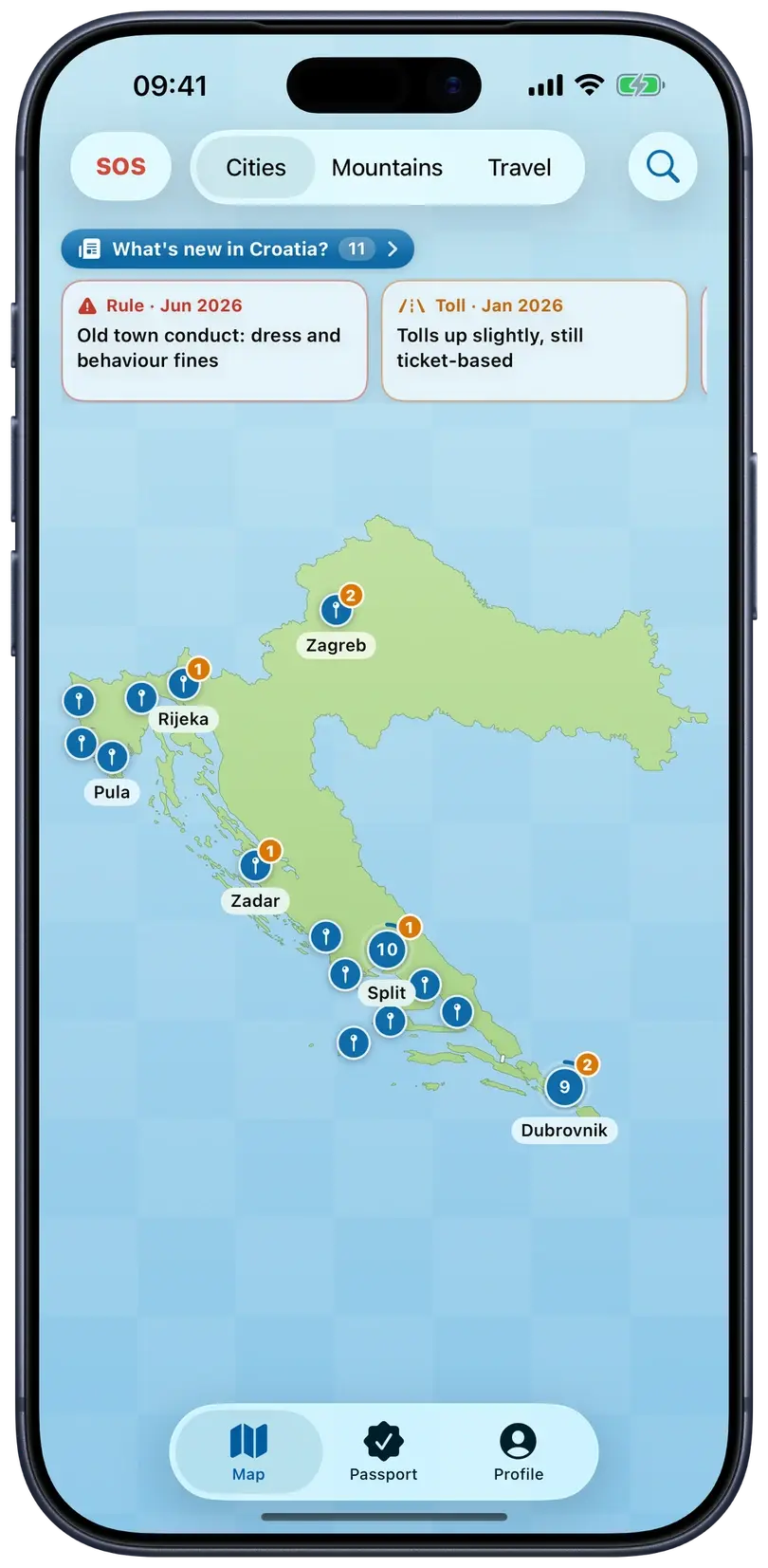
The day should feel like one continuous loop rather than separate sightseeing blocks. Palace stone leads to market food, market food leads to the waterfront, the waterfront leads to shade or sea. Save each stop in the app as you go and the city starts to form a usable mental map, not just a set of pretty fragments.
A better one day Split rhythm
The strongest Split day moves in circles, not lines. Start inside the palace while the stone is cool, widen to the market and Riva when the city wakes up, climb toward Marjan when the center feels dense, then return to the waterfront when the light softens. That loop keeps you close to the city without trapping you in the busiest streets.
Where to place food, beach and viewpoints
- Food belongs between palace and waterfront. The market, bakeries and small konobas make more sense before you are tired.
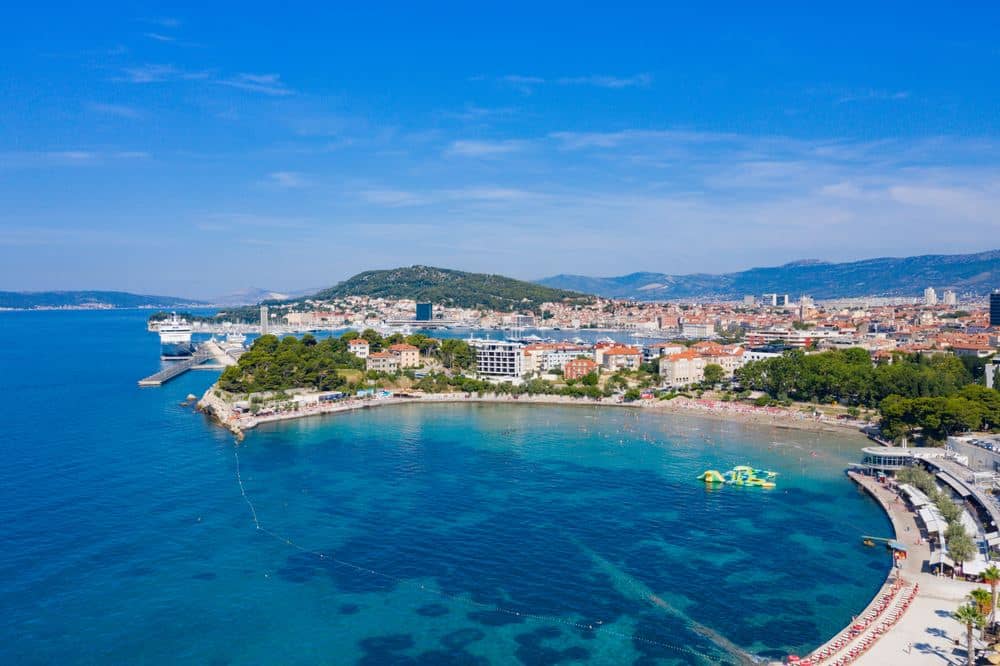
- Beach time belongs after the stone. Bačvice is easy; Firule, Zenta or a Marjan swim feel calmer if you have more time.
- Viewpoints belong late. Marjan is better when it becomes a reward, not a chore squeezed into the hot middle of the day.
If you have only half a day
Cut the day to palace, market, Riva and one edge. Do not attempt Marjan and Bačvice and a full palace loop if you are catching a ferry. Choose the edge based on mood: Marjan for shade and a view, Bačvice for a simple swim, Matejuška for boats and a local pause. Split is forgiving when you choose clearly.
Ferry, beach and weather backup
Split is a city where many travelers are also between boats, buses and islands, so the perfect day needs buffer. If you are catching an afternoon ferry, keep Marjan short and avoid starting a long beach detour after lunch. If you arrive by ferry, reverse the plan: Riva first, palace second, food third, viewpoint last. The route should absorb transport pressure instead of pretending it does not exist.
- Windy day: choose palace, market, museums and waterfront cafes. Swimming can wait; the city still works.
- Very hot day: make the palace early, add a long lunch, then save the viewpoint for the soft light.
- Short stay: palace, Riva, one food stop and Matejuška beat a rushed attempt to see every beach.
The ending matters because Split changes character in the last hour of light. If you have energy, climb only to the first useful Marjan viewpoint instead of chasing the whole park. If you are tired, stay low around Matejuška and the western Riva, where boats, stone benches and returning locals give the day a natural close. A one day guide should not end with exhaustion; it should end with a clear reason to come back for the islands, the beaches or a slower second morning. That promise is stronger than squeezing in one more stop, because it matches the real travel question: how much Split can feel complete without becoming another checklist.
Getting to Split for the day
Split airport lies by Kaštela, about 25 km west of the centre. The shuttle bus reaches the main bus station in about 30 minutes, and the station stands next to the ferry port, 10 minutes on foot from the Riva. City bus 37 between Split and Trogir also stops at the airport, cheaper and slower. Direct flights from the UK run for most of the year and thin out in winter. From the US, Canada and Australia you connect through a European hub, most often Zagreb, Frankfurt, Munich or Vienna. Coaches from Zagreb, Zadar and Dubrovnik arrive at the same station by the port, so the palace is a short walk from the moment you step off.
| From | How | Time |
|---|---|---|
| Split airport | shuttle bus to the bus station by the port | about 30 minutes |
| Split airport | city bus 37, stops on the way | slower, cheaper |
| Zagreb | car on the A1 | about 4 hours |
| Zagreb | coach to the station by the port | about 5 hours |
| Zadar | car on the A1 | under 2 hours |
| Dubrovnik | coach along the coast | about 4 hours |
Getting around without a car
Everything in the one day plan is on foot. The old town is closed to cars, and the Riva, the Pazar, Varoš and Bačvice all lie within 15 minutes of the Peristyle. Buses matter only for the outer beaches. Bus 12 runs along the Marjan coast to Kašjuni and on to Bene, which saves a 40 minute walk in the heat, and bus 8 goes east from the market to Trstenik and Žnjan. Tickets are sold at kiosks and on board. If you come by car, leave it in a car park near the port and forget it until you leave: parking near the centre is scarce and the streets around it are narrow.
Where to eat and drink
The Ribarnica, the fish market in a Secession hall just off Marmontova, is at its best before 09:00, when the waiters of the better konobas pick sardines and squid for the evening. Nobody expects you to buy, and a look tells you what to order later. Coffee belongs on the Pjaca outside the Iron Gate, where one kava can last an hour, or on the Riva on Saturday late morning for špica, when Split dresses up to be seen. In summer the Prokurative, the arcaded square west of the Riva, hosts open air concerts. Restaurants inside the palace need a booking in July and August. Outside the season you can usually walk in.
If you have a second day
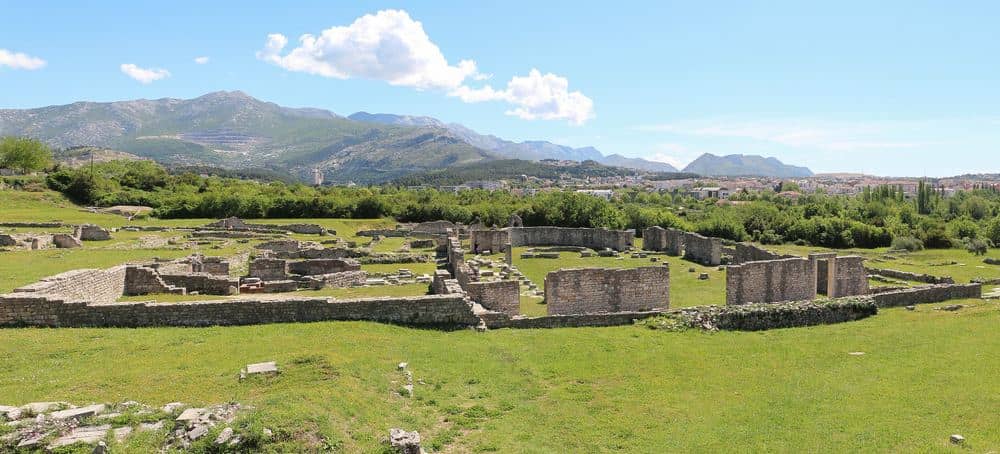
A second day belongs to what Split grew out of. Salona in Solin, the Roman capital of Dalmatia and the birthplace of Diocletian, is a short bus ride north of the centre: a large, half wild site with an amphitheatre, a theatre and early Christian basilicas, so wear proper shoes. The Archaeological Museum north of the old town holds what came out of that ground and makes sense of the ruins. Klis fortress, on the saddle between Mosor and Kozjak above Solin, adds the view over the city and the islands, best at sunset. Closer in, the Meštrović Gallery on the southern slope of Marjan pairs with the nearby Kaštelet chapel and a swim at Kašjuni.
Day trips from Split
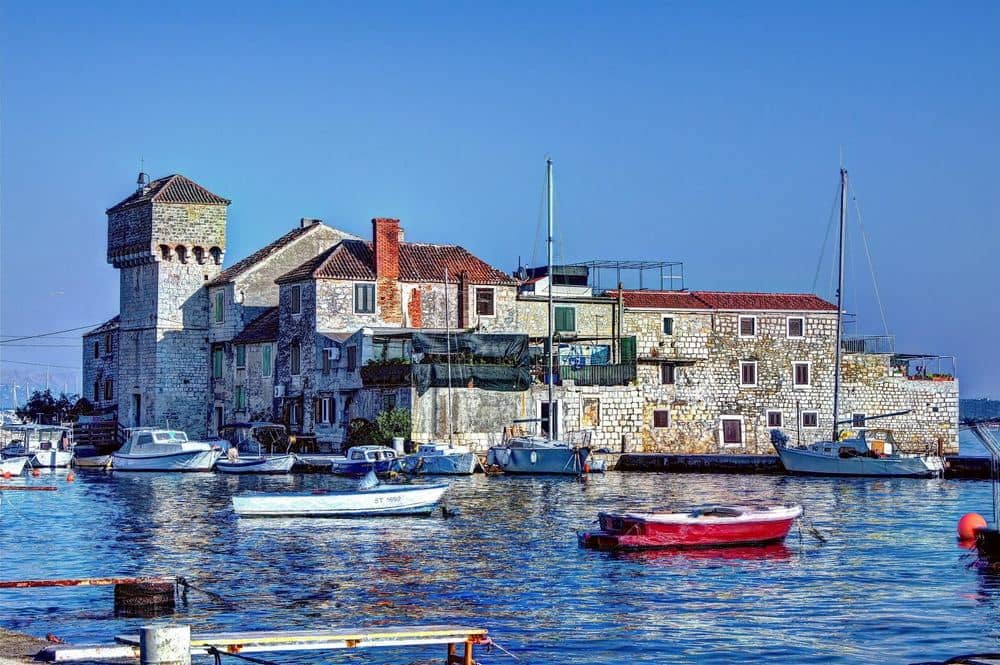
Split is the transport hub of central Dalmatia, so a third day can go outward without changing hotel. Trogir, 27 km west, is a complete medieval town on an islet and costs about 3 euro by local bus. Omiš, 25 km southeast, has the Cetina gorge, 2 fortresses and long beaches. The ferry to Supetar on Brač costs about 8 euro, and Zlatni Rat at Bol is a bus ride across the island. Kaštela, the 7 castle towns toward the airport, includes Kaštel Gomilica, whose Kaštilac fortress stood in for Braavos in Game of Thrones. Boats leave from the port, coaches from the station beside it, and bus 37 for Kaštela and Trogir from the Sukoišan stop north of the centre.
| Place | Distance | How to get there |
|---|---|---|
| Trogir | 27 km | coach from the main station or bus 37 |
| Kaštela | 15 km | bus 37 from Sukoišan |
| Omiš | 25 km | coach along the coast |
| Šolta | 25 km | ferry from the port |
| Brač, Zlatni Rat | 40 km | ferry to Supetar, then bus to Bol |
| Krka NP | 45 km | car or coach, entrance at Skradin or Lozovac |
| Hvar | 60 km | fast catamaran from the port |
When to go
The full plan with the swim works from May to October, with the sea at its warmest from July to September. July and August bring the cruise ships and the coach tours: the palace lanes fill by 10:00 and the early start matters most. June and September give you the same sea with fewer people. In winter the day shrinks to palace, market, Riva and Marjan. December sits around 10 to 15 degrees by day, apartments cost less and the bura wind can stop the ferries for a day. If a boat is part of your plan, check the forecast the evening before and keep the island for a calm day.
Common mistakes on a Split day
Most weak Split days come from a few repeated decisions. The city is small, so one wrong turn costs 20 minutes, and the heat between 12:00 and 16:00 punishes anyone who planned the hill or the coast road for the middle of the day. The errors below are the ones first time visitors make most often. Most of them cost time, a few cost the swim. Each one is easy to avoid once you know the layout of the port, the palace and the hill.
- Driving into the old town: it is closed to cars, and the streets around it are one way with little parking.
- Walking to Kašjuni at 15:00 in August without water: the coast road has little shade before the pines.
- Expecting sand everywhere: only Bačvice and Firule have it, the other beaches are pebble or rock, so pack water shoes.
- Leaving no buffer before a ferry: boats to the islands leave on time, and the port is 10 minutes from the Riva.
- Choosing Bačvice in August by default: Ovčice next door has the same water and half the crowd.
- Booking an apartment in the southern palace lanes without asking about noise: the Riva bars run late in summer.
- Trying Salona and Krka on the same day: they lie in different directions and each needs proper shoes and half a day.
Watch
Split on video
A short official city film to help you picture the place before you go.
It’s joy! It’s Split!
Frequently asked questions
- What is there to see in Split in one day?
- One day in Split covers Diocletian's Palace and the immediate coast. Start inside the palace at the Peristyle, add the Cathedral of Saint Domnius and its bell tower, the substructure cellars and the Temple of Jupiter, then walk out through the Golden Gate to the Grgur Ninski statue. Afternoon belongs to the Riva, the Marjan hill for the view and a swim at Bačvice. That is a full day without rushing.
- Do you need a ticket for Diocletian's Palace?
- No. The palace is not a museum but a living quarter of the city with streets, shops, flats and around three thousand residents, so walking into it is free at any hour. Tickets are only needed for individual sites inside: the cathedral, the bell tower, the Temple of Jupiter and the southern cellars, usually sold as a combined ticket at the cathedral entrance.
- What is the best time of day to visit the palace?
- Early morning, before roughly nine. Cruise groups and day tours arrive mid morning and the palace lanes are narrow enough that the difference is dramatic. The second good window is after seven in the evening, when the day visitors have left and the stone is still warm. Midday is the worst combination of crowds and heat, and it is the right time to be on Marjan or in the water instead.
Share this guide
Questions about your trip?