Most people drive through Omiš on the way elsewhere. Stop half a day and you get two fortresses, a canyon and an old town wedged between rock and river.
Checked: 11 August 2026
Omiš sits in a gap. On one side the Cetina cuts out of the mountains, on the other the Adriatic opens up, and the town fills the narrow strip left in between. That geography is the whole point: everything worth seeing is within walking distance, and the two fortresses above town exist precisely because the gap was easy to defend and easy to raid from. Half a day is enough for the centre, a full day if you go up to both forts or onto the river.
The old town takes twenty minutes, and that is fine
Do not expect a Split or a Dubrovnik. The old core of Omiš is a handful of lanes behind King Tomislav Square, hemmed in so tightly by the cliff that some streets end at bare rock. The Church of St Michael anchors the square, the Franciscan monastery sits at the edge of the centre, and the Church of the Holy Spirit is easy to walk past. The pleasure here is the compression, not the inventory: you are always either looking up at the wall of stone or down toward the river mouth.
Two fortresses, and they are not the same trip
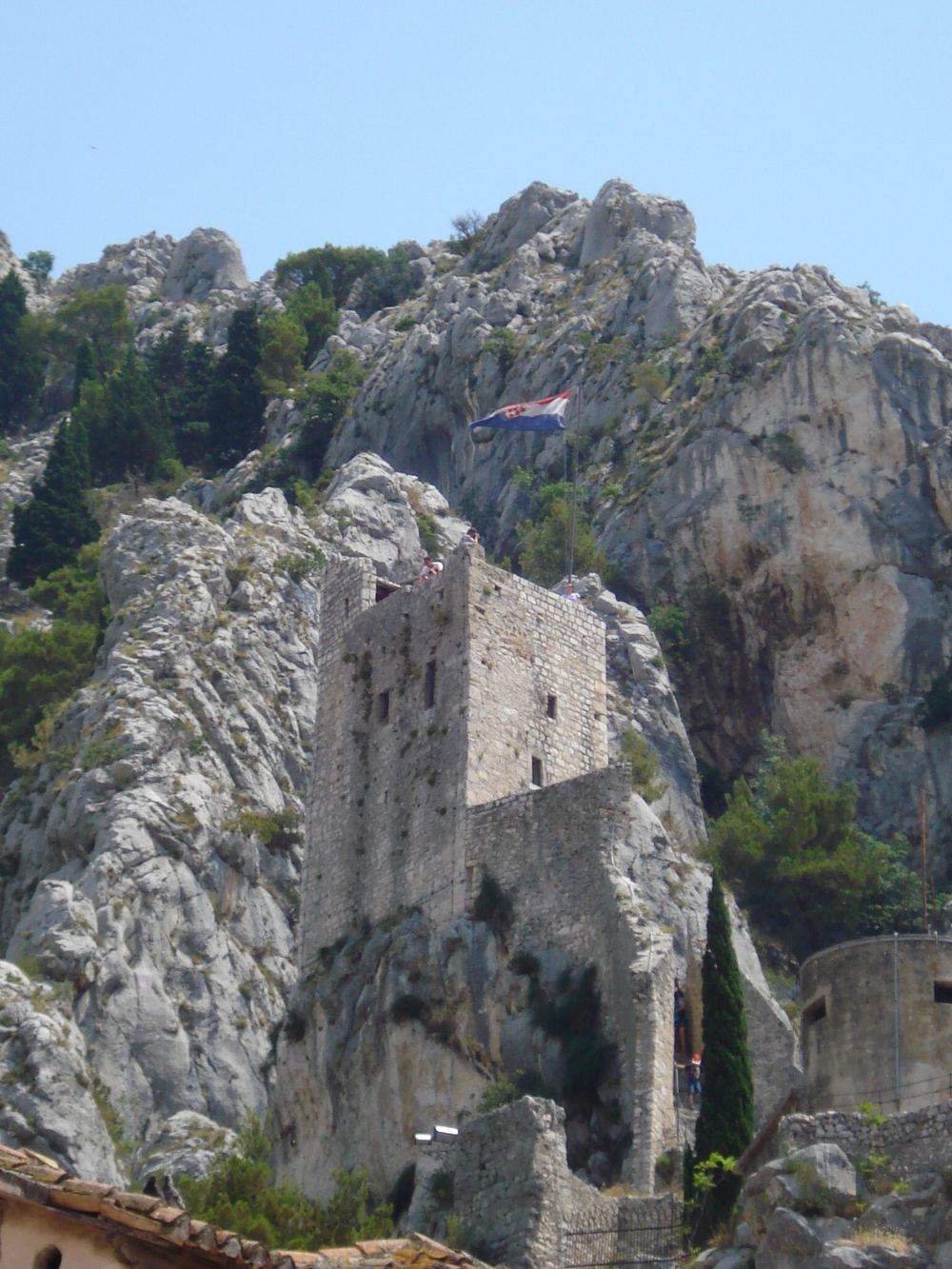
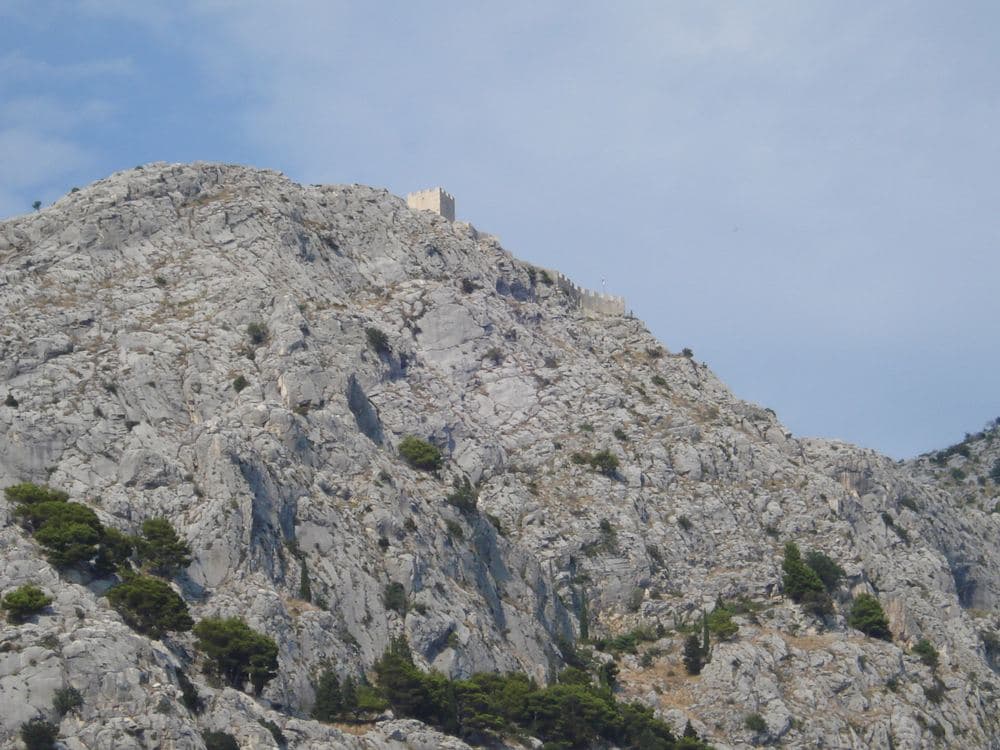
This is where most visitors get it wrong. Mirabela, which locals call Peovica, sits directly above the old town: a short, steep climb straight out of the lanes, and you are looking down on the roofs and the river mouth. Starigrad, known as Fortica, is the other one, much higher on the ridge behind. It is a proper walk uphill, not a detour, and the reward is the wide view along the coast rather than the view down into town. If you have one hour, take Mirabela. If you have a morning and decent shoes, take Fortica.
- Mirabela (Peovica): short and steep, straight from the old town, view over roofs and river mouth.
- Starigrad (Fortica): a real uphill walk on the ridge, wide coastal panorama, plan a morning.
- Both are exposed. In July and August go early or late, not at midday.
The Cetina is the reason to stay longer
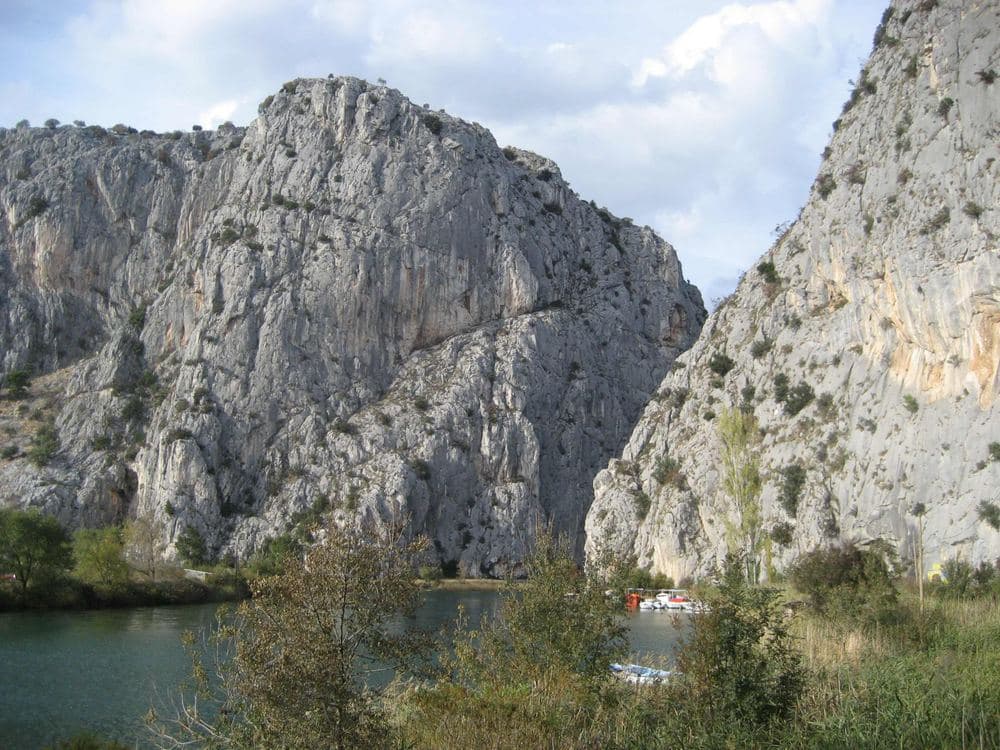
Behind the town the river runs through a canyon, and that canyon is what turns Omiš from a stop into a destination. Rafting on the Cetina is the best known way in, and it is genuinely accessible rather than extreme. Even without getting on the water, walking upriver from the bridge changes the town completely: within minutes the sea is out of sight and you are between rock walls. If you only have an hour, walk in as far as the light holds and turn back.
If you have more than a day
- The Mila Gojsalić statue above the canyon: a local legend of resistance, and a viewpoint in its own right.
- Gata and the Poljica hinterland: the villages inland once governed themselves, and the landscape changes fast.
- The Church of St Peter on Prik: small, old and outside the centre, worth the detour if you like pre-Romanesque stone.
“Omiš was a pirate town before it was a beach town, and the two fortresses are the reason both worked.”
Practically: Omiš works as a half-day stop between Split and Makarska, and as a base if you want the river more than the islands. Parking near the centre is tight in high season, which is another argument for arriving early. And if you want the stops in order with the climbs marked, the routes through town are mapped in the CroVenture app.
Watch
Omiš on video
A short official city film to help you picture the place before you go.
Omiš: try it all or just relax
Frequently asked questions
- Where is Omiš and how do you get there from Split?
- Omiš lies about 25 kilometres south east of Split, where the Cetina river cuts through the coastal mountains and reaches the Adriatic. By car or bus along the coastal road it takes roughly 40 minutes. Local buses run frequently in season, and the town is small enough that everything is walkable once you arrive.
- What is Omiš known for?
- Omiš is known for three things: its pirates, its two fortresses and the Cetina canyon. In the twelfth and thirteenth centuries the town ran a pirate operation that raided Venetian shipping and used the river mouth as a hiding place. The Mirabela fortress above the old town and Starigrad higher up the ridge both date from that period, and the canyon behind the town is now the region's centre for rafting, canyoning and zip lining.
- Is Omiš worth a day trip, and how long do you need?
- Half a day covers the old town and the climb to Mirabela fortress, which takes about twenty minutes up steep steps and gives the view over the river mouth. A full day makes sense if you add the Cetina canyon, either by rafting trip or by driving up the river road to Radmanove Mlinice. With children or in high summer, start early: the fortress path has no shade and the town heats up by midday.
- Is it spelled Omis or Omiš?
- The Croatian spelling is Omiš, with a caron on the s, and it is pronounced roughly "oh-meesh". Outside Croatia the town is almost always written Omis, simply because the caron is missing on most keyboards, and both spellings refer to the same place. Older Italian maps and timetables still use the historic name Almissa. If you are searching for accommodation, buses or rafting trips, it is worth trying both spellings, because operators are not consistent about it either.
Make Croatia Atlas a preferred source
One click and Google shows you our stories more often in Top Stories and in AI answers. It changes your own results only.