Šibenik has two UNESCO sites, four fortresses and a stepped old town that most people skip on the way to Krka. Here is what is actually there.
Šibenik is the odd one out on this coast. It was not founded by Greeks or Romans but by Croats, and the first written mention comes from a Croatian king rather than an imperial administrator. That shows in the town: no Roman grid, no forum, just a slope of stone stairs running down to the water and a cathedral that had to be squeezed into the space that was left.
The cathedral was built without mortar
The Cathedral of St James is on the UNESCO list, and the reason is technical rather than decorative: it is built entirely of stone, with the vaults and dome assembled from interlocking slabs instead of bound with mortar or supported by a wooden frame. Nothing else in Europe was built quite this way. The frieze of seventy-odd carved heads around the outside is the detail everyone photographs, and it is worth walking the full circuit of the building to see them, not just the front.
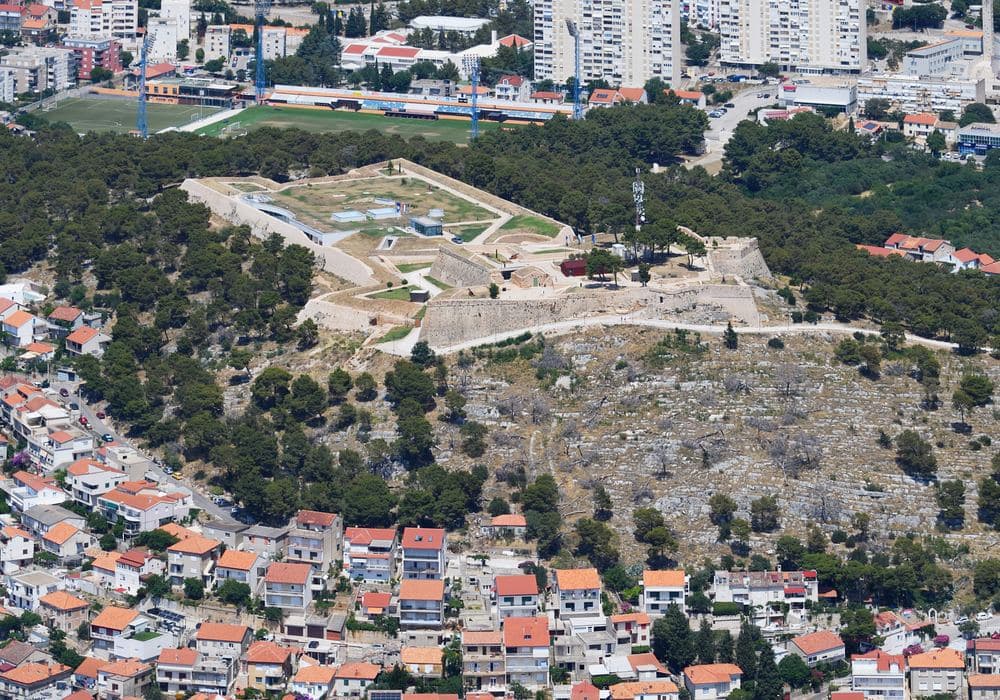
Four fortresses, and only two are a walk
- St Michael's Fortress: directly above the old town, the shortest climb and the one with the view down over the roofs.
- Barone Fortress: higher up the hill, a longer walk, and the wider panorama over the channel.
- St Nicholas Fortress: out in the channel on its own islet, also UNESCO listed, and only reachable by boat.
The old town is stairs, not streets
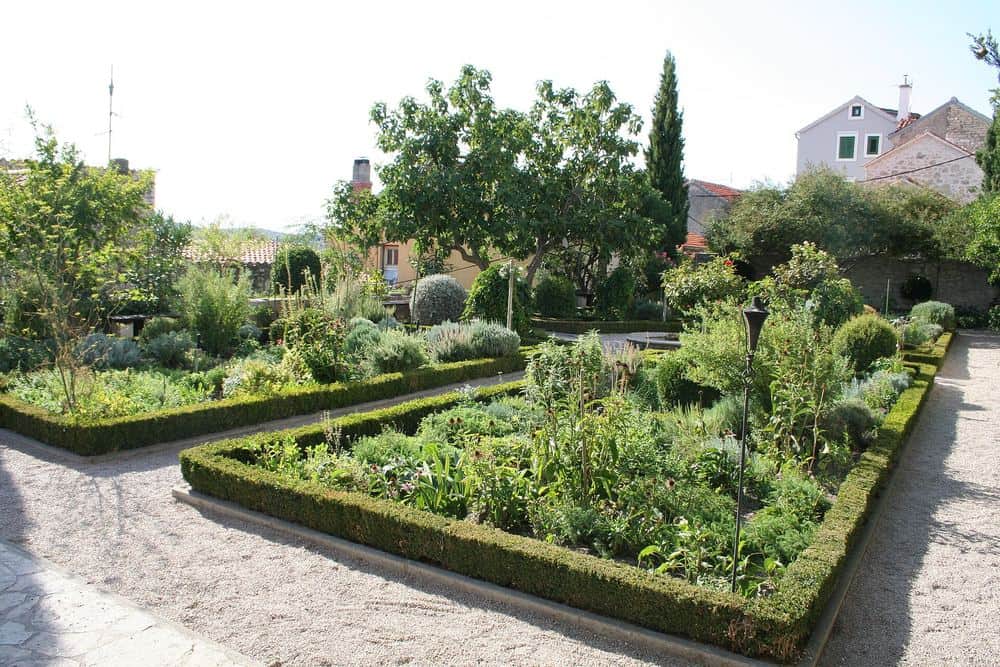
Between the cathedral and St Michael's the town is a network of stepped lanes, and there is no flat route through it. The Medieval Mediterranean Garden of St Lawrence is the one place designed to make you stop: a reconstructed monastery garden that is easy to miss because it sits behind a wall. The Old Town Hall on the cathedral square, the Four Wells and the churches of St Barbara and St John fill the rest of an hour. Wear something you can climb stairs in and do it before midday in summer.
- Krka National Park: the usual reason people are in the area, and Šibenik is the natural base for it.
- St Anthony Channel: the narrow entrance to the bay, walkable along the shore path.
- Banj Beach: the town beach, close enough to combine with the old town in one afternoon.
“Most people use Šibenik as a car park for Krka. The town is the better half of that day.”
Practically: park below and walk up, because the old town is stepped and closed to cars. The cathedral and St Michael's are five minutes apart, Barone is a further climb, and St Nicholas needs a boat and a booking. The stepped route through the centre, with the two walkable fortresses in order, is mapped in the CroVenture app.
Watch
Šibenik on video
A short official city film to help you picture the place before you go.
Šibenik: you are beautiful
Frequently asked questions
- Is it spelled Sibenik or Šibenik?
- The Croatian spelling is Šibenik, with a caron on the S, pronounced roughly "shee-BEH-nik". Outside Croatia you will usually see Sibenik without the caron, simply because the character is missing from most keyboards. The Italian and Venetian name is Sebenico, still used in Italian texts. All three refer to the same city on the mouth of the Krka.
- How much time do you need in Šibenik?
- Half a day covers the old town and the cathedral of St James, whose stone dome was assembled without mortar and is on the UNESCO list. A full day makes sense if you add one of the four fortresses: St Michael's above the old town holds concerts, and St John's higher up gives the wider view over the channel and the islands.
Make Croatia Atlas a preferred source
One click and Google shows you our stories more often in Top Stories and in AI answers. It changes your own results only.