Questa pagina non è ancora disponibile in italiano. Stai leggendo la versione inglese.
Šibenik has two UNESCO sites, four fortresses and a stepped old town that most people skip on the way to Krka. Here is what is actually there.
Verificato: 18 ottobre 2026, 19:11
Šibenik is the odd one out on this coast. Croats founded it, and the first written mention comes from a Croatian king. That shows in the town: a slope of stone stairs running down to the water and a cathedral that had to be squeezed into the space that was left.
The cathedral was built without mortar
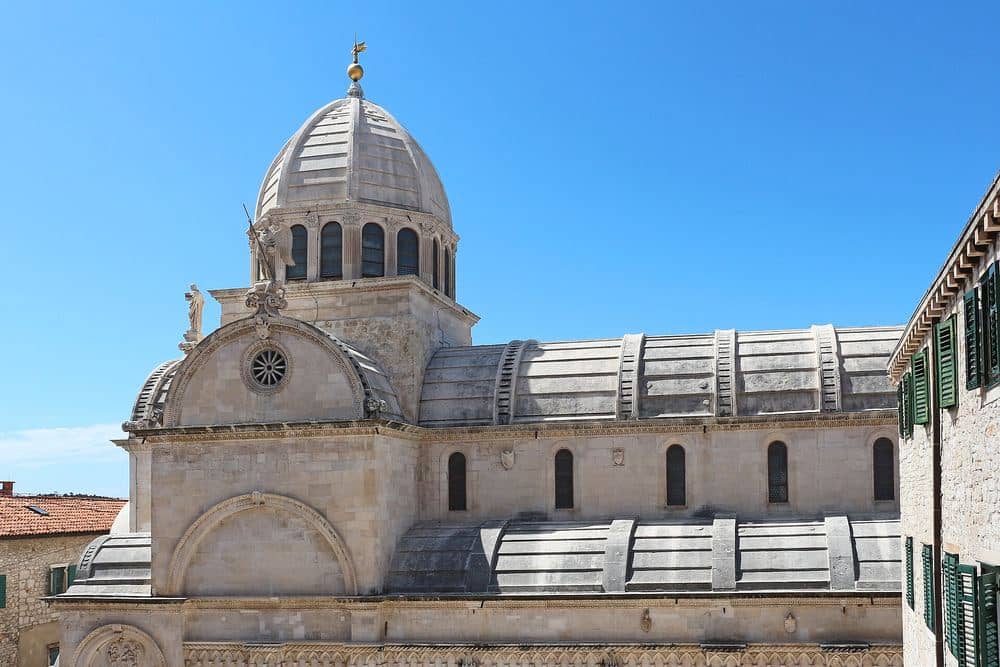
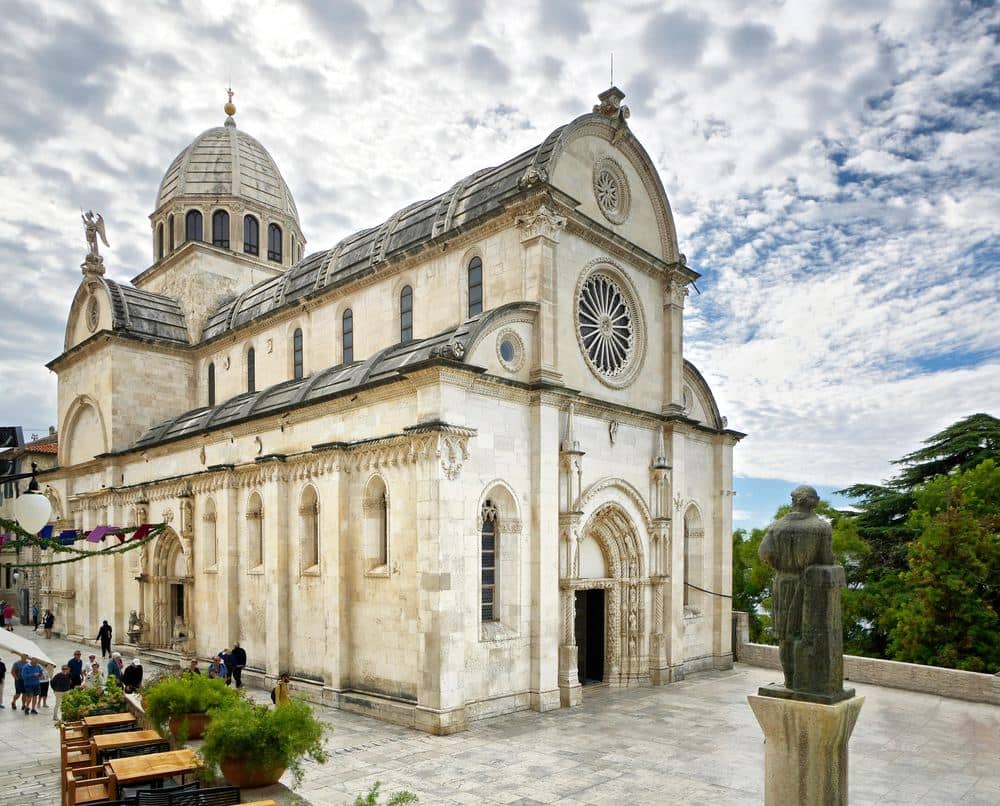
The Cathedral of St James is on the UNESCO list, and the reason is technical rather than decorative: it is built entirely of stone, with the vaults and dome assembled from interlocking slabs instead of bound with mortar or supported by a wooden frame. Nothing else in Europe was built quite this way. The frieze of seventy-odd carved heads around the outside is the detail everyone photographs, and it is worth walking the full circuit of the building to see them, not just the front.
Four fortresses, and only two are a walk
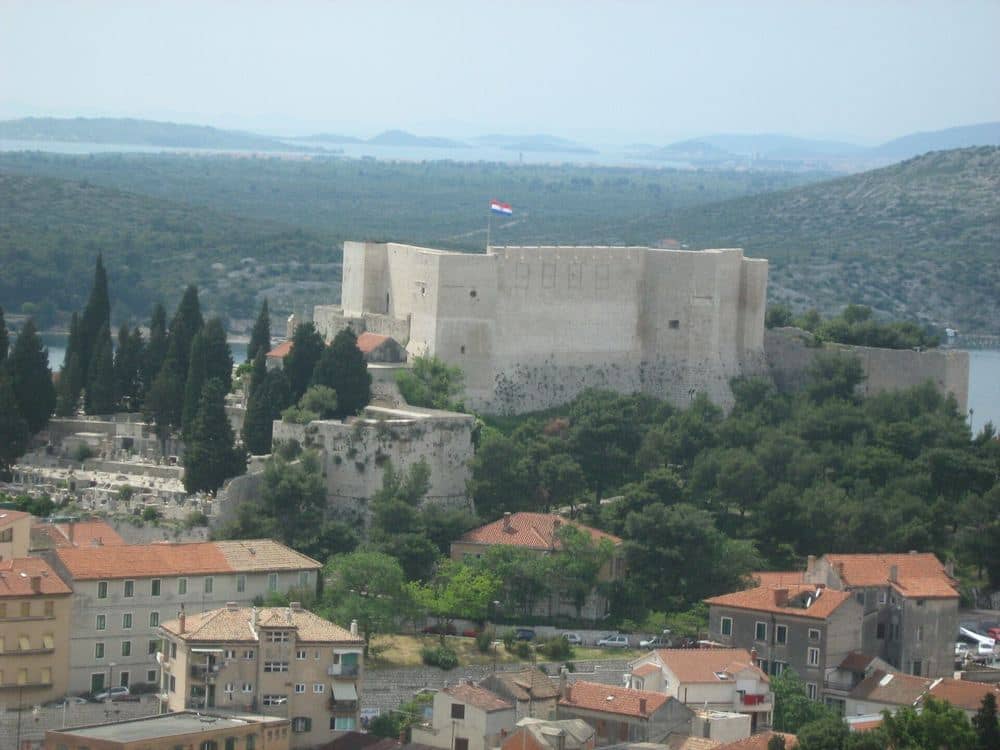
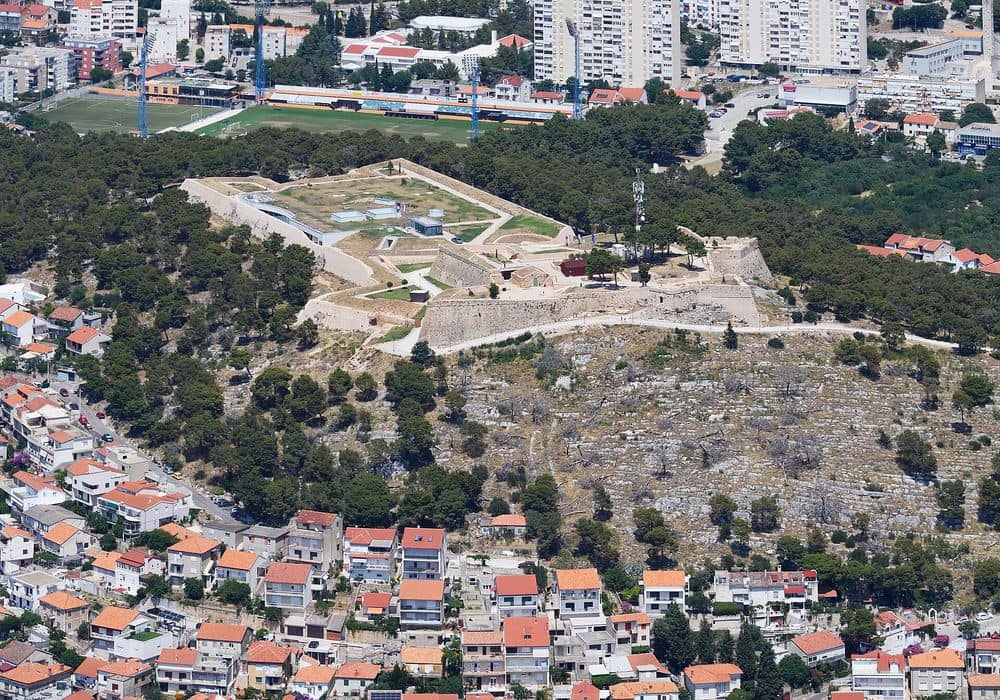
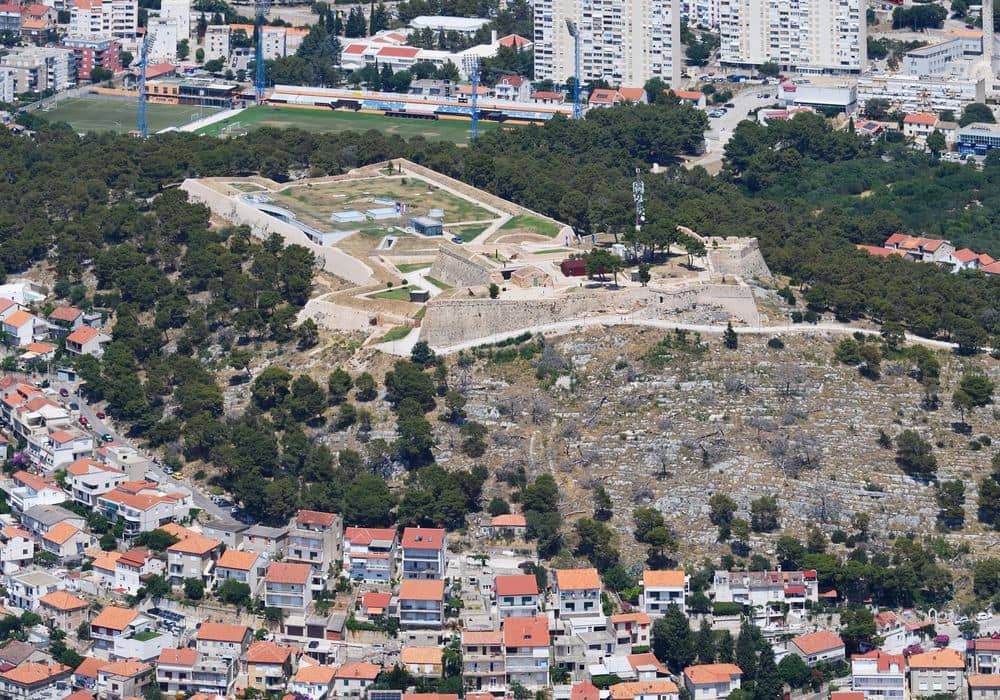
- St Michael's Fortress: directly above the old town, the shortest climb and the one with the view down over the roofs.
- Barone Fortress: higher up the hill, a longer walk, and the wider panorama over the channel.
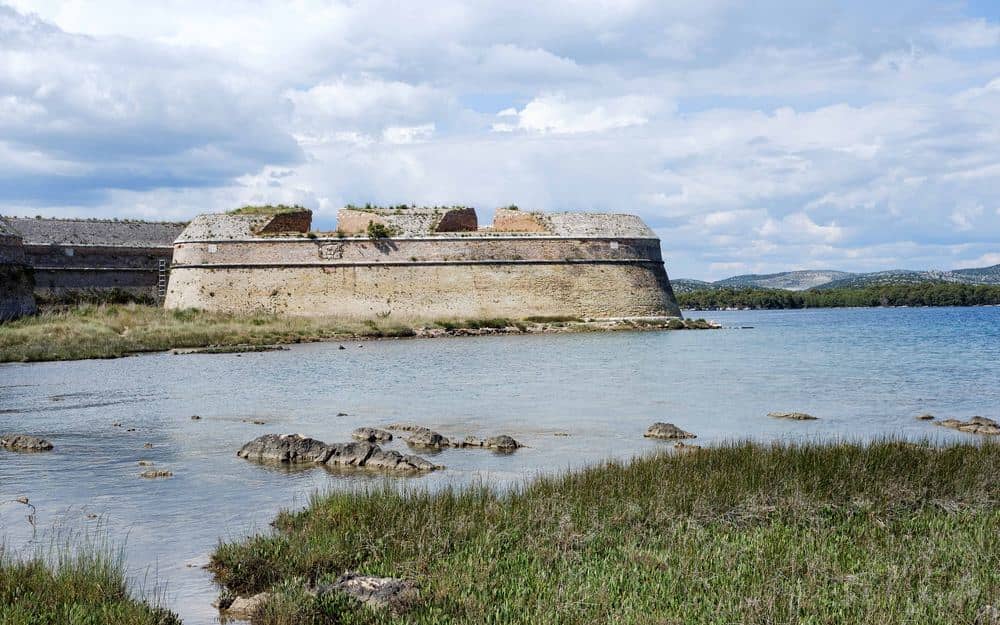
- St Nicholas Fortress: out in the channel on its own islet, also UNESCO listed, and only reachable by boat.
The old town is stairs, not streets
Between the cathedral and St Michael's the town is a network of stepped lanes, and there is no flat route through it. The Medieval Mediterranean Garden of St Lawrence is the one place designed to make you stop: a reconstructed monastery garden that is easy to miss because it sits behind a wall. The Old Town Hall on the cathedral square, the Four Wells and the churches of St Barbara and St John fill the rest of an hour. Wear something you can climb stairs in and do it before midday in summer.
- Krka National Park: the usual reason people are in the area, and Šibenik is the natural base for it.
- St Anthony Channel: the narrow entrance to the bay, walkable along the shore path.
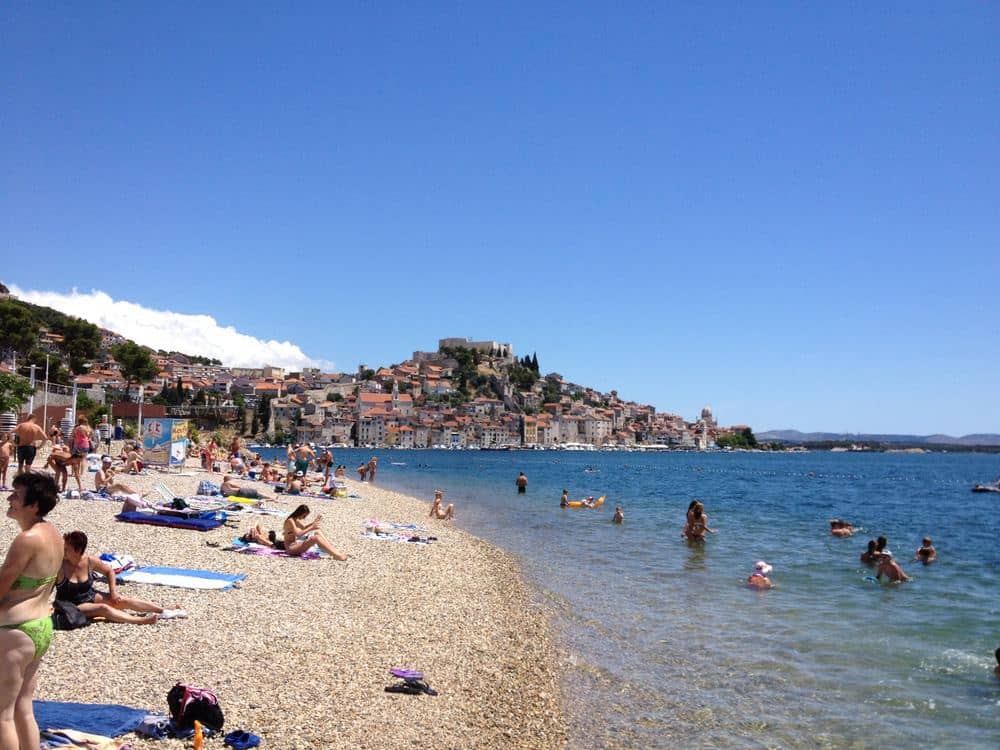
- Banj Beach: the town beach, close enough to combine with the old town in one afternoon.
“Most people use Šibenik as a car park for Krka. The town is the better half of that day.”
Practically: park below and walk up, because the old town is stepped and closed to cars. The cathedral and St Michael's are five minutes apart, Barone is a further climb, and St Nicholas needs a boat and a booking. The stepped route through the centre, with the two walkable fortresses in order, is mapped in the CroVenture app.
Getting to Šibenik
Šibenik has no airport of its own. Split airport at Kaštela is about 50 km to the south-east and Zadar airport about 70 km to the north-west, and both have direct flights from the UK in season. From either you can take a bus to the Šibenik bus station or hire a car and drive the A1 motorway to the Šibenik exit. Coastal buses between Zadar and Split stop in Šibenik all day, and the bus station is a 5-minute walk from the old town. Trains from Zagreb reach Šibenik with a change at Perković, but the bus is faster. There is no international ferry: the boats here are local Jadrolinija passenger lines to the islands, leaving from the waterfront.
| From | Road distance | How to travel |
|---|---|---|
| Split airport (Kaštela) | about 50 km | bus, taxi or hire car |
| Zadar airport | about 70 km | bus via Zadar, taxi or hire car |
| Split | about 85 km | coastal bus or A1 motorway |
| Zadar | about 75 km | coastal bus or A1 motorway |
| Zagreb | about 340 km | A1 motorway, bus, or train via Perković |
| Skradin, Krka entrance | 17 km | car or local bus |
Parking and getting around
Everything in the centre is on foot. The main car parks are along the waterfront and beside the bus station, and both fill by mid-morning in July and August, so arrive early or park further out and walk in. If you stay in an old town apartment, ask the host exactly where to stop: luggage goes up the stairs by hand, and a suitcase on wheels is no use on the lanes. City buses run from the centre to Solaris, Jadrija and Vodice, and in summer boats cross the harbour to Jadrija, quicker and pleasanter than the road. Buses to Skradin and Lozovac, the Krka entrances, leave from the bus station.
Beaches beyond Banj
Banj is the beach you reach on foot. The better swimming is at the mouth of the channel. Jadrija, 7 km out on the northern cape, is the oldest laid-out bathing place on this coast, built in 1921 and still known for its row of wooden cabins along the shore, with the lighthouse at the tip. Late afternoon is the time to go. Solaris, 6 km south-west, is a 2 km run of pebble coves and concrete platforms under planted pines, with shallow water, the Aquapark Dalmatia and an ethno village serving food by region. The St Anthony Channel trail follows the northern shore for 4.5 km from Zablaće to the lighthouse, with rocks to swim from on the way.
Day trips from the town
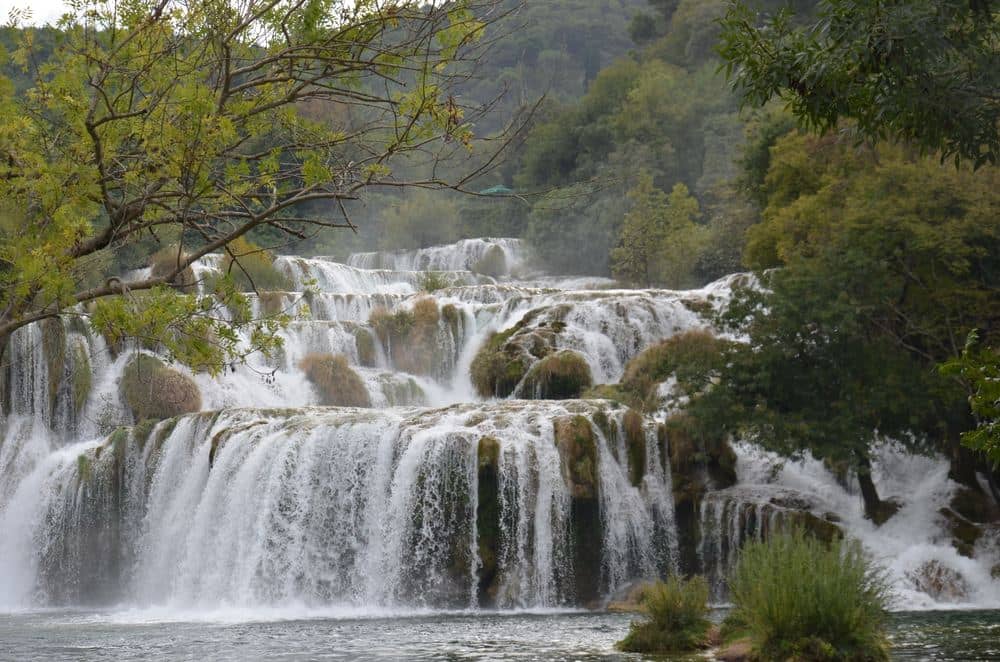
Krka is the obvious one. Skradin, 17 km up the estuary, is the main entrance, and park boats run from there to Skradinski Buk in about 30 minutes. The price changes sharply with the month: the same walk costs 40 euros in July and 7 in January, and outside the season some boats and shuttles stop. Roški Slap and the island monastery of Visovac lie further upriver and need a car or a park excursion. The islands are the quieter choice: Jadrolinija line 505 sails to car-free Zlarin in about 30 minutes and on to Prvić. Check both directions of the timetable before you board, since wind can cancel a sailing.
- Zlarin: no cars, a coral jewellery tradition and the Croatian Coral Center about 15 minutes on foot from the harbour.
- Prvić: Prvić Luka and Šepurine joined by a 1.5 km footpath, with the grave of the inventor Faust Vrančić in Prvić Luka.
- Vodice: 11 km north-west, a wide bay, a long waterfront and the liveliest evenings on this stretch of coast.
- Tribunj: a fishing village on an islet joined to the mainland by a stone bridge, a short hop from Vodice.
- Čavnovka on Promina: the highest point above Drniš at a little over 1100 m, start at first light in summer.
When to go
July and August are hot, full and the months when the stairs are hardest. June and September are the ones to aim for: the sea is still warm, around 23 degrees in mid-September, and there is room on the lanes. September is also the busiest month for events. In 2026 the medieval fair filled the waterfront below the cathedral from 4 to 6 September, and the SHIP festival put about 50 concerts on 6 stages across the town from 10 to 13 September, with St Michael's Fortress as the main one. Book a room early for both. From October to April many apartments close and small museums keep short hours, but the cathedral, the fortresses and Krka stay open, and the park ticket is at its cheapest in winter.
Where to stay
Stay in the old town if you want stone and stairs outside the door and do not mind carrying bags up them: the apartments are small, the car stays below, and the cathedral square is quiet once the day trippers leave. Poljana and the streets around the bus station are flat, closer to the car parks and still 5 minutes from the cathedral. The northern shore by Banj gives you the beach on the doorstep and, from the viewpoint above it, the whole old town in one glance across the harbour, about 20 minutes on foot round the head of the bay. Solaris is the resort choice, Vodice suits anyone who wants a long waterfront and evening crowds, and Skradin works if Krka is the main reason for the trip.
The places, one by one
| Place | What it is | Time needed |
|---|---|---|
| Poljana Square | Main square, level, start of the old core | 15 minutes |
| Church and Monastery of St Francis | 14th century monastery with the Šibenik Prayer | 30 minutes |
| Šibenik Fish Market | Morning fish market below the old town | 20 minutes |
| Republic of Croatia Square | Cathedral square, cafes, Meštrović statue | 15 minutes |
| Cathedral of St James | UNESCO stone cathedral, 1431 to 1536 | 30 minutes |
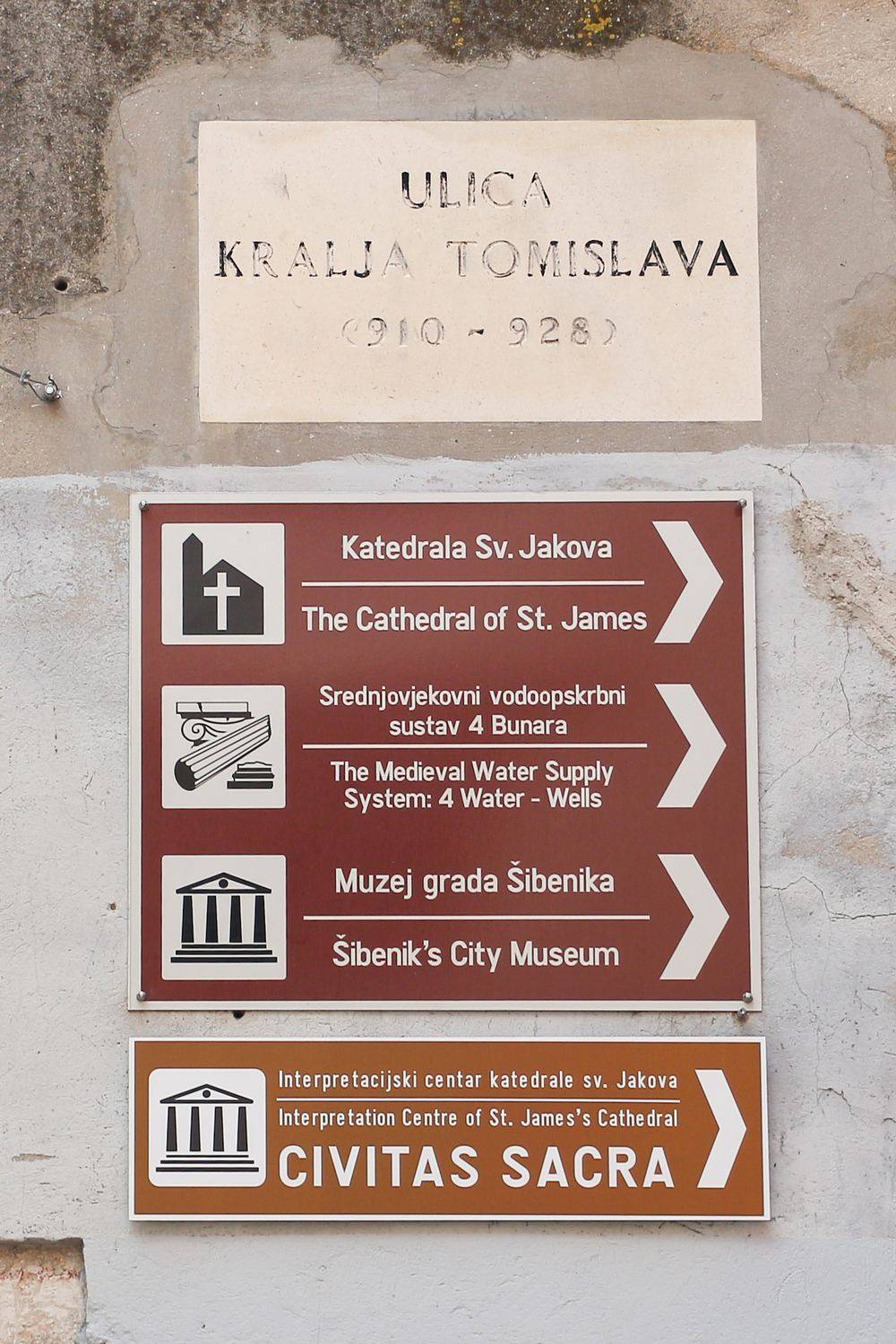
| Civitas Sacra | Exhibition on the town's church heritage | 30 minutes |
| Šibenik City Museum | Town history in the Rector's Palace | 1 hour |
| Four Wells | 15th century underground cistern | 15 minutes |
| Church of St John | Gothic church with an outside stair | 15 minutes |
| St Michael's Fortress | Oldest fortress, 70 m above the old core | 1 hour |
| Barone Fortress | Star fort of 1646 with cafe and viewpoint | 1 hour |
| St John's Fortress | Highest fortress, widest view | 1 to 2 hours |
| St Nicholas Channel View | Rock viewpoint over the channel fortress | 30 minutes |
| Dalmatian Ethno Village | Reconstructed village serving regional food | 2 hours |
Poljana Square
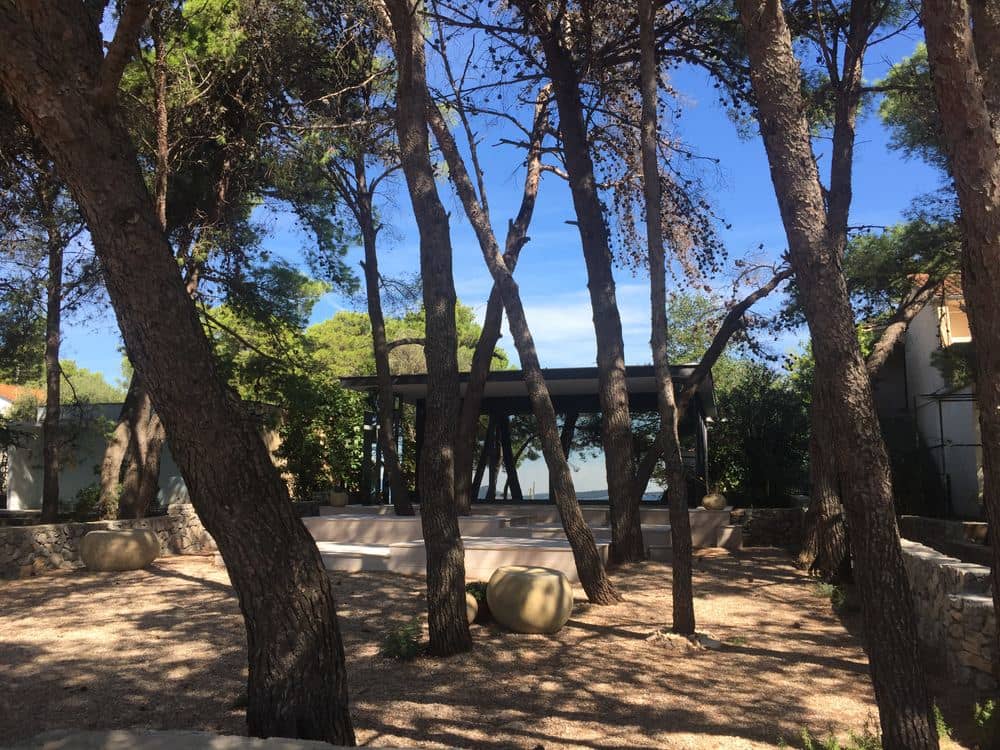
Poljana is the largest square in Šibenik and it is level. It grew up outside the medieval walls, where the livestock fair was held until the 19th century and caravans from the hinterland stopped. Once the town outgrew its walls the space became the civic centre: a theatre went up in 1870, one of the oldest in Dalmatia, with administrative buildings, schools and cafes around it. Today it is pedestrian and paved, ringed by trees, with benches in the shade and a stage for summer concerts and the International Children's Festival. Start here: the old core begins at its edge and the climb to the fortresses starts from it.
Church and Monastery of St Francis
The Franciscan church and monastery stand at the southern edge of the old core, by the sea and beside Poljana, and form the largest monastic complex in town. They date from the 14th century. The church has a painted wooden ceiling of the 17th century, baroque altars and an organ. The library keeps manuscripts and incunabula, among them the Šibenik Prayer, a text of the late 14th century held to be the oldest surviving Croatian poetic text in the Latin alphabet. The cloister is plain, with a cistern and a portico, and in season it is one of the few quiet places in the centre. The church is open by day. The library is seen by arrangement.
Šibenik Fish Market
The fish market sits beside the town market, below the stairway up into the old core, and works every morning except Monday. Fishermen from Zlarin, Prvić and Kaprije bring in the night's catch: sardines and anchovies in the warmer months, sea bream, sea bass, scorpionfish and red mullet all year, squid and cuttlefish when it turns cold. Shellfish come from the beds in Lake Prokljan, where the fresh water of the Krka mixes with the sea and gives them a particular taste. Prices are by the kilogram and the fish is cleaned on request. Go before 09:00 for the best choice. After 11:00 little is left. If your apartment has a grill, this is where to shop.
Republic of Croatia Square
The paved space between the cathedral and the town hall is the Square of the Republic of Croatia, the heart of the old core, where for centuries decisions were proclaimed and rites performed. It exists because older houses were pulled down in the 15th century so that the full front of the cathedral could be seen. From each corner a different side of the building shows, and the slabs are laid to lead you around it. Cafes with summer terraces stand beside the town hall, and in the cathedral's shade is a statue of Juraj Dalmatinac by Ivan Meštrović. The square is open all day. Late afternoon gives the best light for a photograph.
Cathedral of St James
Work began in 1431 and ended in 1536, more than a century for one building. From 1441 the master was Juraj Dalmatinac, who devised the dome and the stone vault, and after his death Nikola Firentinac completed it. The slabs were cut with grooves so that they hold one another, like assembled furniture, which is why no brick, timber or mortar was needed. The 71 heads on the frieze along the apses are portraits of real people of 15th century Šibenik, women and children among them, and bearded men in caps. Inside, go down to the baptistery below the choir, one of the summits of stone carving. The cathedral was inscribed on the UNESCO list in 2000. Allow half an hour.
Civitas Sacra
Civitas Sacra is a small exhibition space in the old core that explains the sacred heritage of the town, material otherwise scattered across churches and monasteries. It links what you then see on the ground: why the cathedral was built of stone alone, who the masters were, how the altars and polyptychs in the surrounding churches came about, and what part the diocese played in the town's life from the 13th century onward. Original objects sit beside digital presentations that take the structure of the cathedral apart piece by piece, which makes the grooved slabs easier to follow. The visit takes half an hour. See it before the churches, and the rest makes more sense.
Šibenik City Museum
The city museum is in the Rector's Palace along the town walls, where the rector sat under Venetian rule, the governor appointed by Venice. The display runs from prehistory to the 20th century: finds from Liburnian hillforts, Roman inscriptions and coins, medieval documents and objects of guild life, then seafaring, crafts and the town's families. A separate section is given to the charter of King Petar Krešimir IV of 1066, the document in which the town is first mentioned. If you want the history behind the stairs and the fan of streets below the fortress, this is where it is told. The visit takes an hour, and the rooms are cool at midday.
Four Wells
Šibenik has neither river nor spring inside its walls, so water was always the weakest point of its defence. The answer was the Four Wells, an underground cistern built in the mid-15th century as a store of drinking water. Rain from the roofs and the surrounding paving ran into a large vaulted chamber, and the well-heads on the square above let people draw it up. That went on for centuries, until the waterworks were built in the 19th century. The chamber has been restored and now holds exhibitions and events, so you may not always get inside, but the well-heads stand in the open at any hour. The square is just below St Michael's, on the way up.
Church of St John
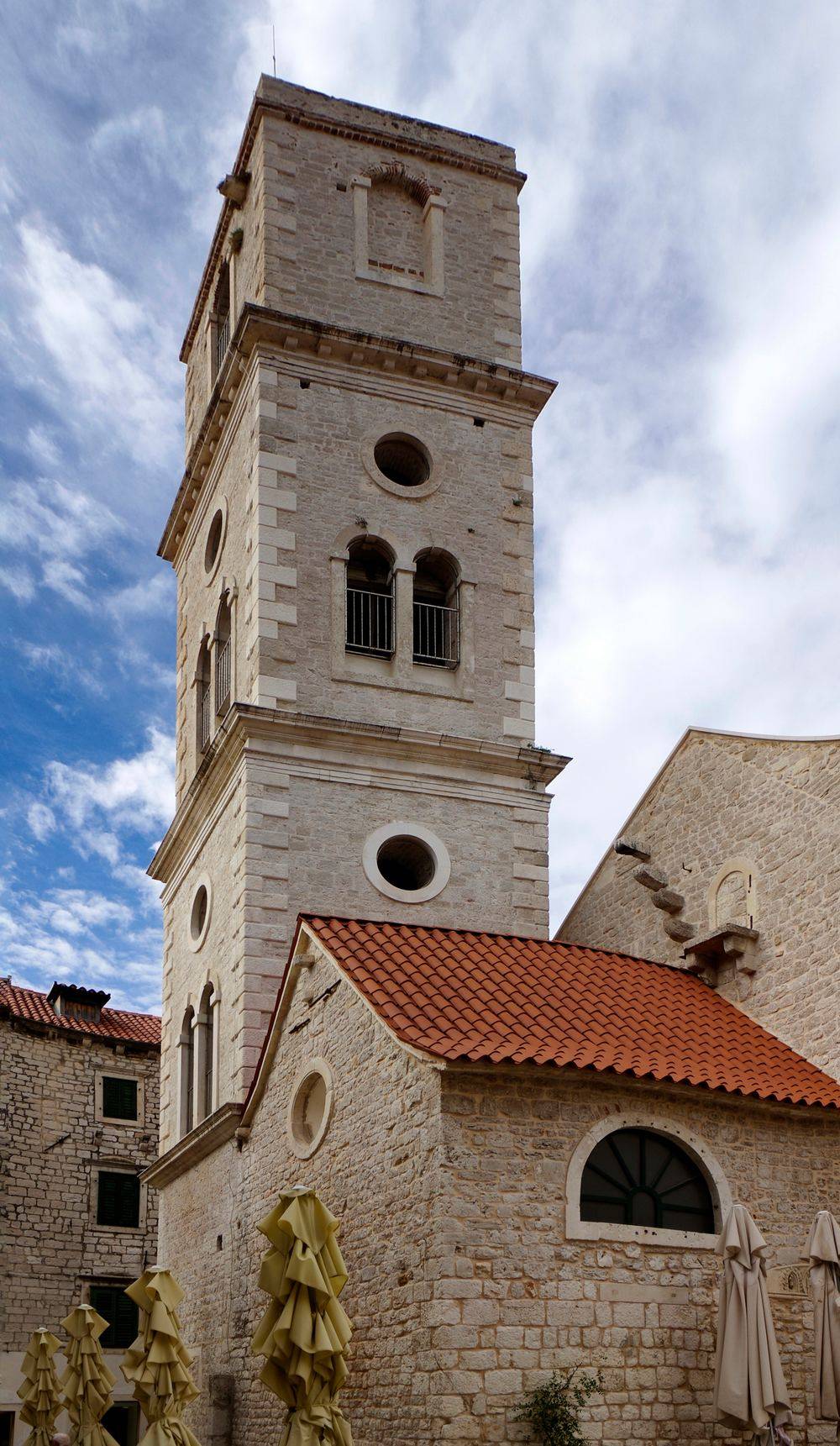
The church of St John was built in the 15th century in the upper part of the old core, below St Michael's, and the masters of the cathedral, Juraj Dalmatinac and Nikola Firentinac, worked on it. What you come for is outside: a stair that climbs in 2 flights along the facade to the choir, with a stone balustrade of small columns. There is nothing comparable on the Dalmatian coast. Beside the church a bell tower carries the town clock of the 18th century, which long told the time for the whole upper town. The interior is plain, with a Gothic vault. The church sits on a small square reached by steep steps from the main street.
St Michael's Fortress
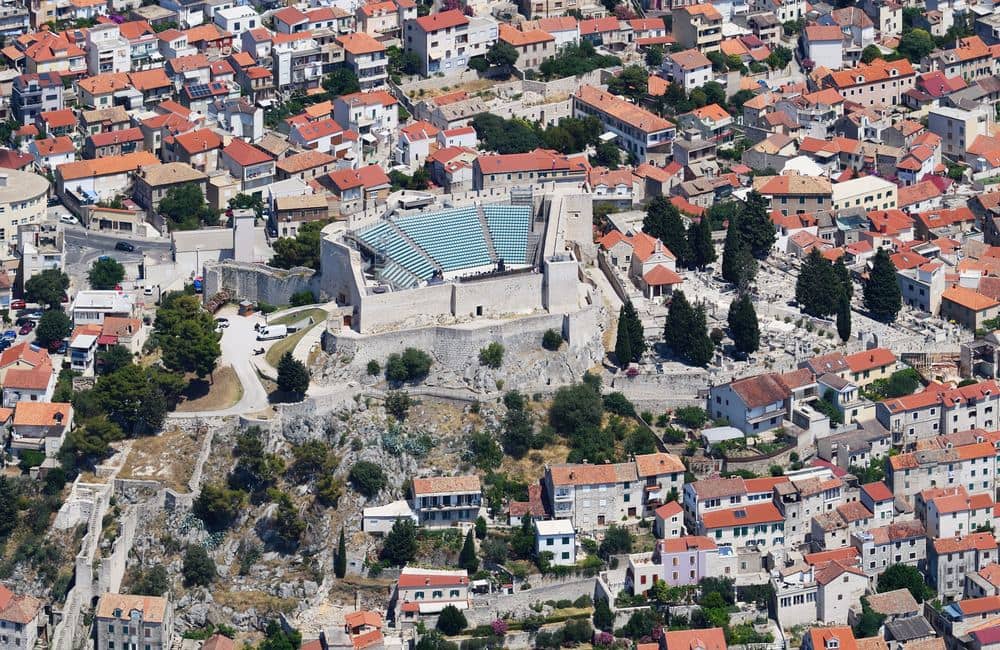
St Michael's stands on a rock 70 m above the old core and is the oldest of the 4 fortresses. A stronghold stood here as early as the 11th century, and the town grew around it, which is why the streets below spread toward the sea like a fan. The Venetians rebuilt it over the centuries, and an explosion of gunpowder in the 17th century brought down part of the walls. After the restoration of 2014 a summer stage with 1000 seats was fitted inside, so on concert evenings the interior is given over to the audience. The climb from the cathedral square takes 15 minutes on narrow steps, and there is no other way up.
Barone Fortress
Barone was raised in 1646 on the hill of Vidakuša, east of the old core, and built in only 2 months while the town prepared for an Ottoman attack in the Candian War. The name comes from Baron Christoph Martin von Degenfeld, the German commander who led the defence. The following year cannon from this position stopped the Ottoman army besieging the town. The walls are low and star-shaped in plan, the form that suited artillery. Inside is a viewpoint with a cafe and an augmented reality display of the siege, so you see what the gunners saw. The platform takes in the whole town, the channel and the island of Zlarin. The climb from town takes some 20 minutes.
St John’s Fortress
St John's went up in 1646, the same year as Barone, on a hill 115 m above the town. It is an irregular star with low walls and earth ramparts that absorbed cannon fire, since tall medieval towers no longer counted against artillery. With Barone and St Michael's it formed the defensive triangle that in 1647 turned back a siege of several weeks. It later lost its military role and decayed, and only in recent years has it been partly restored and opened, so expect fewer facilities than at the other two. From the top is the widest view of the town, the channel and the islands. The climb from the old core takes half an hour.
St Nicholas Channel View
The viewpoint on the southern side of the St Anthony Channel is where the fortress makes sense. You stand on a rise above the passage and look straight down on St Nicholas Fortress and across the full width of the water. From here it is clear why it was set on that reef: the channel is at its narrowest there, and guns on 3 levels could cover the whole width. Wait for a large ship if you can, because only then does the true narrowness register. A gravel track leaves the road toward Zablaće, and the last part is on foot. There is no railing and no benches, so keep back from the edge of the rock.
Dalmatian Ethno Village
Beside the Solaris resort, at the end of the town bus route, stands a reconstruction of a Dalmatian settlement: stone houses with shutters, narrow paved passages, a well on the square, a chapel, an olive mill and a smithy. Each house is devoted to one region of Dalmatia, so the food comes from the Zagora hinterland, the islands and the coast, cooked under the baking bell and on an open hearth in ways restaurants rarely keep up. Old crafts are shown, weaving, net-making and stone carving, and on summer evenings there is klapa singing. Entry is free and you pay for what you eat and drink by the price list. It is liveliest in the evening, so make it dinner after a swim.
Domande frequenti
- Is it spelled Sibenik or Šibenik?
- The Croatian spelling is Šibenik, with a caron on the S, pronounced roughly "shee-BEH-nik". Outside Croatia you will usually see Sibenik without the caron, simply because the character is missing from most keyboards. The Italian and Venetian name is Sebenico, still used in Italian texts. All three refer to the same city on the mouth of the Krka.
- How much time do you need in Šibenik?
- Half a day covers the old town and the cathedral of St James, whose stone dome was assembled without mortar and is on the UNESCO list. A full day makes sense if you add one of the four fortresses: St Michael's above the old town holds concerts, and St John's higher up gives the wider view over the channel and the islands.
Condividi questa guida
Domande sul tuo viaggio?
Luoghi, eventi e video selezionati per Sebenico.
Croatia Atlas tra le fonti preferite
Un clic e Google ti mostra più spesso i nostri articoli nelle notizie principali e nelle risposte AI. Cambia solo i tuoi risultati.