Three countries, three systems: Austria and Slovenia want a vignette, Croatia charges per stretch of motorway. All 2026 prices from ASFINAG, DARS and HAC, with the sums for Munich to Split and Munich to Zadar.
Checked: 21 September 2026
Anyone driving to the Adriatic from Germany or Austria passes through three toll systems. Austria and Slovenia sell vignettes tied to the number plate, Croatia charges per stretch driven at toll plazas. The prices in this article are as of 8 September 2026 from the official ASFINAG, DARS and Croatian Motorways websites; fuel is not included.
Austria: the vignette and two tunnels
- Vignette for a car up to 3.5 t: 1 day 9.60 euros, 10 days 12.80, 2 months 32.00, a year 106.80. Motorcycle: 3.80, 5.10, 12.80 and 42.70 euros.
- The digital vignette is bought on asfinag.at and is valid for the number plate. Online purchases carry an 18-day waiting period unless you expressly waive the right of withdrawal at checkout; then it is valid from the day you choose.
- Two tunnels are charged on top of the vignette: Karawanken (A11) 9.00 euros per passage, Tauern and Katschberg together (A10) 15.00 euros per passage, each on its own 7.50.
Slovenia: an e-vignette even for 40 kilometres
- Car (class 2A): weekly 16.00 euros, monthly 32.00, annual 117.50. Vehicles higher than 1.30 m above the front axle, which means most campervans and vans (class 2B): 32.00, 64.10 and 235.00 euros. Motorcycle: weekly 8.00, half-year 32.00, annual 58.70.
- The e-vignette is bought on evinjeta.dars.si, is tied to the number plate and runs from the date you choose. Cameras check it; driving without one costs 300 to 800 euros.
- You need it even if you are only passing through: the Karawanken to Ljubljana to Obrežje stretch towards Zagreb and the Sežana to Kozina to Starod stretch from Trieste towards Rijeka are both vignette roads. The old roads are free but cost hours.
Croatia: no vignette, tolls per stretch
- Car prices from Zagreb (Lučko) on the A1: Karlovac 2.80 euros, Rijeka 10.10, Zadar 17.60, Šibenik 22.10, Split 26.40, Ploče (Karamatići) 33.70. All including VAT.
- Campervans and vans higher than 1.90 m are group II: Zadar 28.20, Split 41.40 euros. Motorcycles pay less: Zadar 10.80, Split 15.80.
- You pay by card, in cash or with an ENC transponder. An ENC linked to a payment card gives a 21.74 percent discount; how to buy one and when it pays off is in our toll guide.
Two worked examples
- Munich to Split via Salzburg, Villach, the Karawanken tunnel, Ljubljana and Zagreb: Austria 10-day vignette 12.80 + Tauern 15.00 + Karawanken 9.00 = 36.80 euros; Slovenia weekly vignette 16.00; Croatia Lučko to Split 26.40. Total one way 79.20 euros.
- Munich to Zadar the same way: 36.80 + 16.00 + 17.60 = 70.40 euros one way. On the way back the tunnels and the Croatian tolls are paid again, the vignettes only if they have expired: the Austrian one after 10 days, the Slovenian one after 7.
What is easy to miss
Vehicle height decides the price, and at different points: in Slovenia the line is 1.30 m above the front axle, in Croatia 1.90 m overall height. A campervan with a roof box easily crosses both. Both vignettes are valid for the plate, not the vehicle, so a replacement car needs a new one. Coming from Italy you need the Slovenian vignette already for the stretch from Trieste towards Rijeka; coming from Poland or Czechia via Hungary you need the Hungarian e-vignette (nemzetiutdij.hu) and then pay Croatian tolls on the A4 from Goričan. Fuel, ferries and parking are a separate story.
What you need by starting point
The worked examples use the Salzburg and Villach route from Munich. From Vienna the A2 via Graz has no tunnel surcharges, and the Slovenian motorway from Šentilj via Maribor reaches the Croatian A2 at Macelj, tolled to Zagreb like the A1. From Linz the A9 adds the Bosruck and Gleinalm tunnels, charged on top of the vignette like the Tauern. From Italy the Slovenian motorway from Sežana past Kozina to Starod leads to Rijeka and Dalmatia. For Istria you leave it at Koper for the Dragonja crossing, and the Istrian Y motorway beyond has its own tariff from Bina-Istra and takes the same ENC.
| Starting point | Vignettes | Tunnel surcharges | Croatian motorway |
|---|---|---|---|
| Munich, Stuttgart | Austria, Slovenia | Tauern, Karawanken | A1 from Lučko |
| Vienna | Austria, Slovenia | none | A2 from Macelj, then A1 |
| Linz | Austria, Slovenia | Bosruck, Gleinalm | A2 from Macelj, then A1 |
| Venice, Trieste | Slovenia, Italian tolls to the border | none | A7 to Rijeka or the Istrian Y |
| Budapest | Hungary | none | A4 from Goričan, then A1 |
| Zagreb airport hire car | none | none | A1 from Lučko |
Buying the vignettes before you leave
Buy both vignettes before you leave, on the official sites only, and type the plate exactly as printed, with the country of registration. A typo makes the vignette worthless. Both sites take foreign cards and send a confirmation email, keep it on your phone. If you forgot, petrol stations on the German side of the border still sell the 10-day sticker, and petrol stations and motoring clubs near the Karawanken sell the Slovenian e-vignette at the till. The Tauern and Karawanken tolls can be bought in advance on asfinag.at as a digital section toll, which lets you use the video lane at the tunnel and skip the queue.
At the Croatian toll plaza
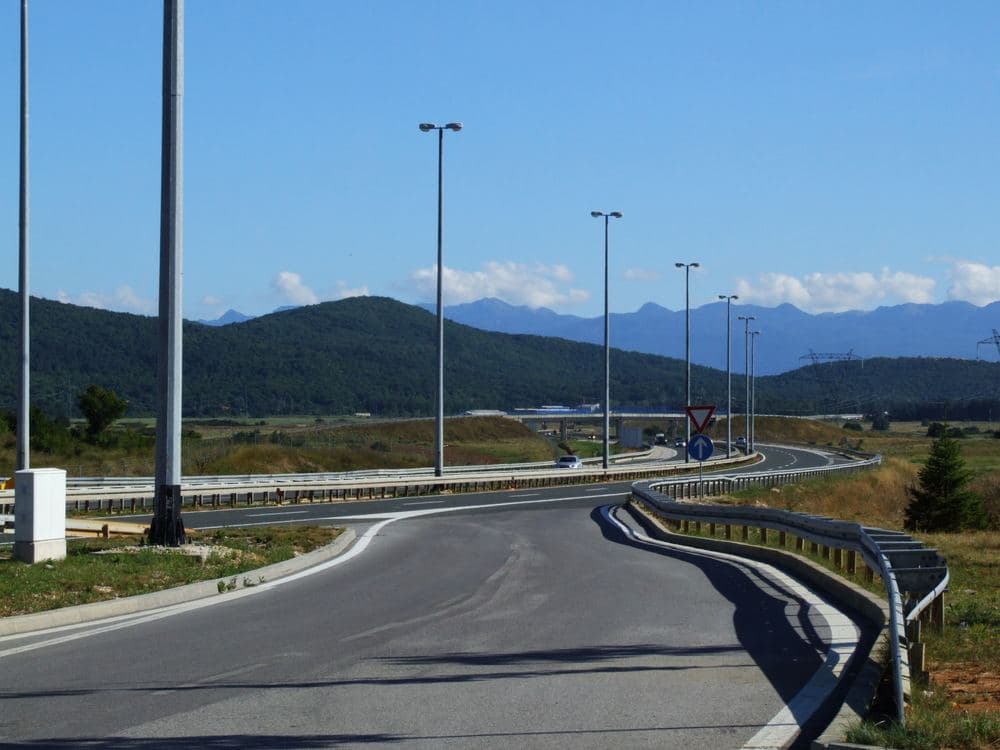
Croatian motorways are a closed system: you take a ticket at the entry barrier and present it at the exit, where the price for that stretch shows on the display. Lanes marked ENC are for transponders only, the rest take cards and cash. Keep the ticket where you can find it, a lost ticket is charged from the farthest entry point. The Zagreb bypass is free, so the ticket for the south is taken at Lučko. On summer Saturdays the queues at Lučko and at Dugopolje, the last plaza before Split, are the longest, and the ENC lanes are the ones that keep moving.
Common mistakes
The wrong Austrian vignette is the usual overspend. For a return within 10 days the 10-day vignette at 12.80 euros covers both crossings. For a longer holiday, 2 separate 1-day vignettes cost 19.20 euros, well under the 2-month vignette at 32.00, because Munich to the Karawanken tunnel fits comfortably in a day. In Slovenia the arithmetic is flat: 2 weekly vignettes cost the same 32.00 as a monthly one, so the monthly only pays if you cross Slovenia 3 times within a month. Set each start date to the day you cross: the Slovenian week counts from that date.
- Driving into an empty ENC lane without a transponder: the barrier stays down and you reverse out in front of the queue.
- Taking the Loibl pass to avoid the 9.00 euro tunnel: it costs an hour, and the Slovenian vignette is still needed once you join the motorway.
- Leaving the A1 at Karlovac to save the toll: the old road via Plitvice to Zadar or Split takes at least 2 hours longer.
- Buying from a reseller site instead of asfinag.at or evinjeta.dars.si: same vignette, often double the price.
- Forgetting the return leg: Munich to Split and back within a week comes to 129.60 euros, 145.60 with a second Slovenian vignette.
Borders and paperwork after Schengen
Croatia joined the Schengen area on 1 January 2023, so the crossings at Obrežje, Macelj, Goričan, Starod and Dragonja are internal borders with the barriers up. Since October 2023 Slovenia has at times run temporary checks on its Croatian border, so keep passports within reach. For US, UK, Canadian and Australian travellers the EES registration happens once, at the airport where you land or at the first external Schengen border, and the drive on to Croatia adds no further scan. The 90 days in 180 run across all 3 countries together, and ETIAS, due in the last quarter of 2026, covers the whole trip with a single authorisation. A UK-registered car needs the UK identifier on the plate or a UK sticker, and its insurance certificate covers the EU without a green card.
Frequently asked questions
- Do I need a Slovenian vignette if I am only passing through?
- Yes. The motorway from the Karawanken tunnel via Ljubljana to Obrežje and the stretch from Trieste via Kozina towards Rijeka are vignette roads. A weekly e-vignette for a car costs 16.00 euros on evinjeta.dars.si.
- Is there a vignette for Croatia?
- No. Croatia charges tolls at toll plazas per stretch driven, by card, in cash or with an ENC transponder. A car from Zagreb to Split pays 26.40 euros.
- How much is the Austrian 10-day vignette in 2026?
- 12.80 euros for a car, 5.10 for a motorcycle. The 1-day one is 9.60, the 2-month one 32.00. The Karawanken (9.00) and Tauern (15.00) tunnels are charged on top.
Official sources
Make Croatia Atlas a preferred source
One click and Google shows you our stories more often in Top Stories and in AI answers. It changes your own results only.