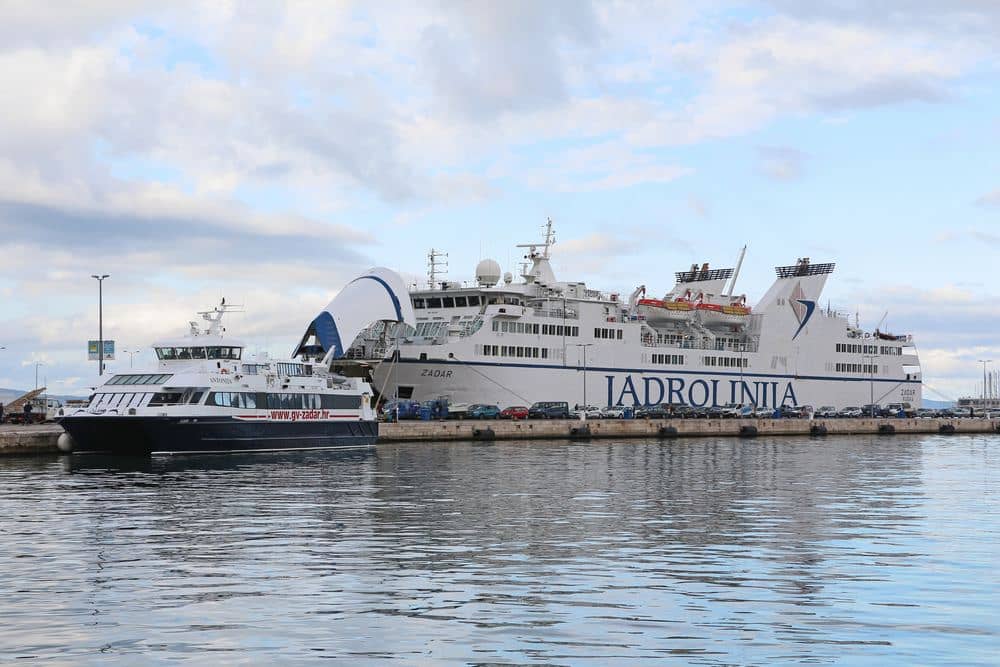
Understand which Croatian ferry tickets reserve a vehicle space, what to prepare when booking and how early to reach the port during summer.
Checked: 20 September 2026
A Croatian island trip with a car begins by choosing the correct type of service. Jadrolinija states that vehicles can travel only on ferry service lines. Ships and high-speed services are intended for foot passengers. The next important distinction is between a route with vehicle reservations and one without them. On a reservation route, the purchased ticket is tied to the selected date and departure time and guarantees a vehicle space on that sailing. Jadrolinija publishes the current list of eligible routes in its official information, so check the live booking result instead of assuming that every car ferry works in the same way.
Know what your ticket actually reserves
On lines without vehicle reservations, selecting a departure during the online purchase does not reserve that particular sailing. The time is not printed as binding on the ticket, and boarding remains subject to available vessel capacity. Jadrolinija says that boarding on these routes follows arrival order and recommends reaching the port one to two hours before the desired departure, with an even earlier arrival possible on certain routes during the busiest summer periods. For routes with reservations, Jadrolinija's dedicated notice advises arriving 60 minutes before departure in summer. These are planning guidelines, so continue checking the official schedule and passenger notices because sailing schedules can change.
- Prepare the vehicle registration certificate before purchasing a vehicle ticket because required vehicle details must be entered. If the car is a rental and you do not yet know its registration number, Jadrolinija instructs customers to enter RENTAL in that field.
- Measure the vehicle as it will arrive at the port. A bicycle on the roof adds height that must be declared. A rear-mounted bicycle can increase total length, and a vehicle longer than five metres requires the corresponding ticket category.
- An electronic ticket does not need to be printed. Save it on the phone and open it before boarding so that a weak connection at the port does not delay presentation.
- Buy through Jadrolinija's website, the mJadrolinija app or an official sales point. Check the route, direction, date, passenger count and vehicle category before payment, then retain the complete ticket.
Use a simple port-day routine
On departure day, check Jadrolinija's schedule and passenger notices again, navigate to the exact port shown for your route and allow time to find the vehicle entrance. Keep the ticket and vehicle document accessible, then follow the instructions of port personnel rather than choosing a boarding lane yourself. A reservation removes uncertainty about vehicle capacity on the booked sailing, but it does not remove the need to arrive within the advised time. On a non-reservation route, an early arrival improves your position in the arrival order but cannot guarantee a particular departure. A careful booking check and realistic port buffer are the two most useful parts of a Croatian car-ferry plan.
Main car ferry crossings by region
Most Croatian car ferries are short shuttles from a mainland port to the nearest island. Several of the long crossings leave from Split, where the city port sits next to the bus and railway stations, 10 minutes on foot from Diocletian's Palace, and the airport shuttle ends at the same spot. From Split the car ferries reach Supetar on Brač, Stari Grad on Hvar, Rogač on Šolta, Vis town and Vela Luka on Korčula. Zadar's car ferries use Gaženica, about 3 km south of the old town. The quay in the old town serves foot passenger catamarans only, so do not drive there with a ticket for a car. Dubrovnik's ferries leave from Gruž, about 3 km from the Old Town. The table gives the crossings most visitors use and a rough crossing time for each.
| Crossing | Reaches | Crossing time |
|---|---|---|
| Split to Supetar | Brač | about 50 minutes |
| Split to Stari Grad | Hvar | about 2 hours |
| Split to Vis | Vis | about 2 hours 20 minutes |
| Orebić to Dominče | Korčula, eastern end | about 15 minutes |
| Ploče to Trpanj | Pelješac | about 1 hour |
| Drvenik to Sućuraj | Hvar, eastern tip | about 35 minutes |
| Prizna to Žigljen | Pag, northern end | about 15 minutes |
| Valbiska to Merag | Cres, from Krk | about 25 minutes |
Islands with a bridge
Several places that look like islands on the map need no ferry. Krk has a toll-free bridge from the mainland south of Rijeka, and Rijeka airport stands on the island. Pag has a bridge at its southern end on the Zadar side, and the ferry from Prizna serves only its northern end. Murter, Vir and Čiovo, the island facing Trogir, are joined to the mainland by short bridges. Pelješac is a peninsula, and since July 2022 the Pelješac Bridge carries the road from Split to Dubrovnik across to it without a border. From Orebić on Pelješac the car ferry to Korčula is a 15-minute hop, which is why many drivers reach Korčula this way instead of taking the long crossing from Split.
Regional differences in practice
Istria's only car ferry leaves from Brestova on its eastern coast for Porozina on Cres, and Brijuni is a foot passenger trip from Fažana with the car left on the mainland. Cres and Lošinj can also be reached from Valbiska on Krk. Kvarner and the Velebit channel are bura country. The northerly wind can close the Krk Bridge to high-sided vehicles and cancel the Prizna to Žigljen sailings, in which case the Pag Bridge in the south is the way onto the island. Around Dubrovnik the Elafiti islands take foot passengers only, and Mljet's car ferry runs from Prapratno on Pelješac to Sobra. Inland Croatia has no ferries, so a plan that pairs Plitvice with an island means a mainland drive to Zadar or Split first.
Rental cars and ferries
Tell the rental desk that the car is going on a ferry. Croatian companies allow it, but many want it written into the contract, and that line settles any insurance question on the island. Ask if the policy names particular islands or lines. Keep the contract with the registration document, because the ticket form and the staff at the ramp need the plate number and the vehicle length. If you book before pickup, use RENTAL in the registration field and check the vehicle category against the car you actually receive. An upgrade to a larger estate or a van can push the length past 5 metres and change the fare. Photograph the car on the vehicle deck as well as at pickup, because the tight parking on board is the most likely place to collect a scratch.
Wind, holidays and the season change
The timetable moves for 3 reasons. The bura and the southerly jugo can cancel sailings on the exposed lines at short notice, so read the passenger notices on the morning of travel and know where you would sleep if the last sailing is lost. Public holidays run the Sunday timetable, which on many lines means fewer departures, and Croatia has 14 of them, none moved when they fall on a weekend. The summer timetable ends at the end of September, line by line. From 28 September 2026 the off-season fares apply: a car to Pag drops from 18.10 to 12.20 euro, and Split to Supetar keeps one price all year but loses 2 sailings a day from 1 October. From 15 November the A1 as far as Maslenica needs winter equipment, which matters if you drive down from Zagreb to catch a ferry.
Common mistakes
- Booking a catamaran with a car in mind. Catamarans and the fast lines carry foot passengers only, which is why their fares look cheaper.
- Driving to the wrong port. Zadar's car ferries use Gaženica, 3 km from the old town, and Hvar's car ferry lands at Stari Grad, 20 km from Hvar town.
- Planning the island day around the last sailing home. On a non-reservation route the last departure fills first, so aim for the one before it.
- Declaring the car as it left the rental lot. A roof box or a rear bike rack changes the category, and the check happens at the ramp.
- Staying in the car during the crossing. Passengers go up to the deck once parked, and the vehicle deck is closed while the ship is under way.
- Parking where you like. Follow the deck crew, leave the car in gear with the handbrake on and take the keys with you.
Frequently asked questions
- Does every Croatian car-ferry ticket reserve a particular departure?
- No. Only designated reservation routes tie a vehicle ticket to the selected departure and guarantee a vehicle space. On routes without reservations, boarding depends on available capacity and follows the order of arrival at the port.
- How early should I arrive with a car in summer?
- For a reservation route, Jadrolinija's official notice advises arriving 60 minutes before departure in summer. For a route without vehicle reservations, its FAQ recommends one to two hours before the desired sailing and possibly earlier on certain routes during peak periods.
- Do I need to print an electronic Jadrolinija ticket?
- No. Jadrolinija accepts the electronic ticket on a mobile device. Prepare and open it before boarding, and keep the vehicle registration certificate available when travelling with a car.
Official sources
Share this guide
Questions about your trip?