The EU's travel authorisation ETIAS is due to start in the last quarter of 2026: 20 euro, valid 3 years, free under 18 and over 70, with a 6-month grace period. What it means for a Croatia trip, how it differs from the EES border system already running, and what to do before you fly.
Checked: 15 September 2026
If you hold a US, UK, Canadian or Australian passport, you have never needed a visa for a holiday in Croatia and you still do not. What changes in 2026 is a pre-travel authorisation called ETIAS, the European Travel Information and Authorisation System. The European Commission expects it to start operating in the last quarter of 2026. It is not a visa: it is an online check, paid once, valid for 3 years, that lets you enter the 30 European countries using it, Croatia included, for stays of up to 90 days in any 180-day period.
The facts in one table
| Question | Answer |
|---|---|
| Who needs it | Visa-free visitors from 59 countries, including the US, UK, Canada and Australia |
| Start | Expected in the last quarter of 2026; the EU announces the exact date a few months ahead |
| Fee | 20 euro, free for travellers under 18 and over 70 |
| Validity | 3 years or until the passport expires, unlimited entries |
| Grace period | 6 months after the start, travel without ETIAS is still tolerated if the other entry conditions are met |
| Where to apply | Only on the official EU site travel-europe.europa.eu/etias or the official app; anything else is a reseller |
| Processing | Most applications in minutes, some up to 4 days, exceptional cases up to 30 days |
ETIAS is not the EES, and Croatia already runs the EES
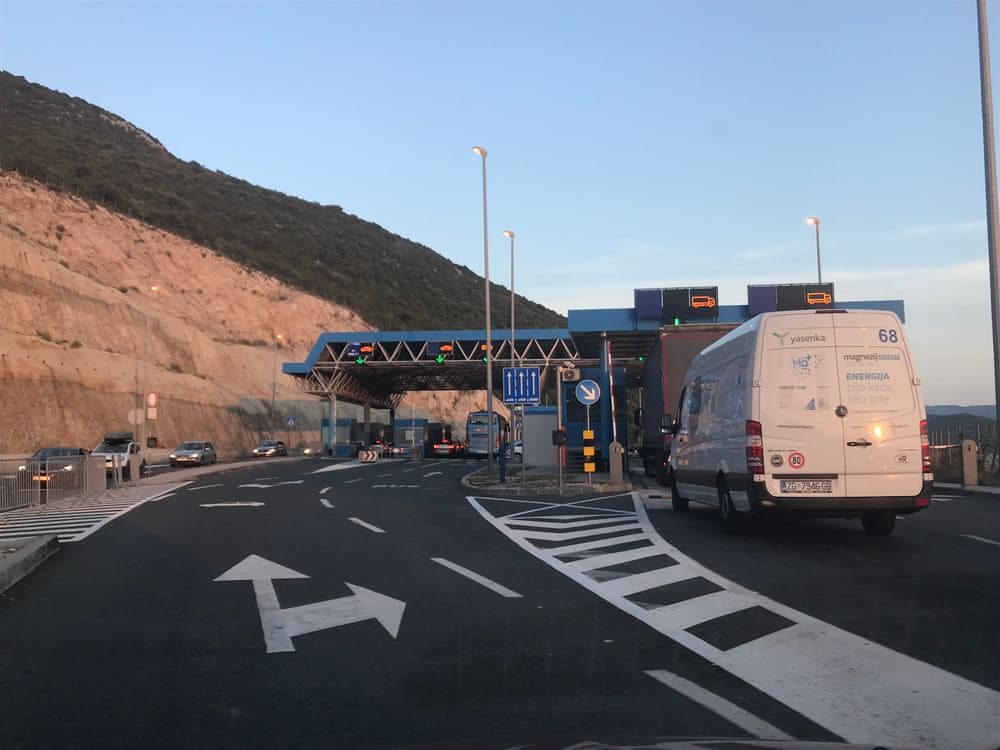
Two systems arrive back to back and travellers mix them up. The Entry/Exit System, EES, is the border database that replaces passport stamps with fingerprints and a facial image; it has been rolling out at Schengen external borders since October 2025 and applies at Croatian airports, seaports and the land borders with Bosnia and Herzegovina, Serbia and Montenegro. You do nothing in advance for the EES, it happens at the booth on first entry and takes a few minutes longer. ETIAS is the second step: the authorisation you obtain before you travel. Croatia joined Schengen on 1 January 2023, so a Croatian entry counts towards your 90 days in the whole Schengen area, not just in Croatia.
What to do before you fly
- Check the passport: it must be valid for at least 3 months beyond your planned departure from the Schengen area and issued within the last 10 years.
- Once the start date is announced, apply on the official site as soon as you have booked; the fee is 20 euro per adult, paid by card, and the authorisation is linked to the passport number.
- A new passport means a new ETIAS, even if the old one was still valid.
- Airlines check ETIAS at check-in once it is mandatory; during the 6-month grace period you can still board without it.
- Coming by car from Bosnia and Herzegovina, Serbia or Montenegro: the same rules apply at the land border, and the EES registration there can take longer in summer.
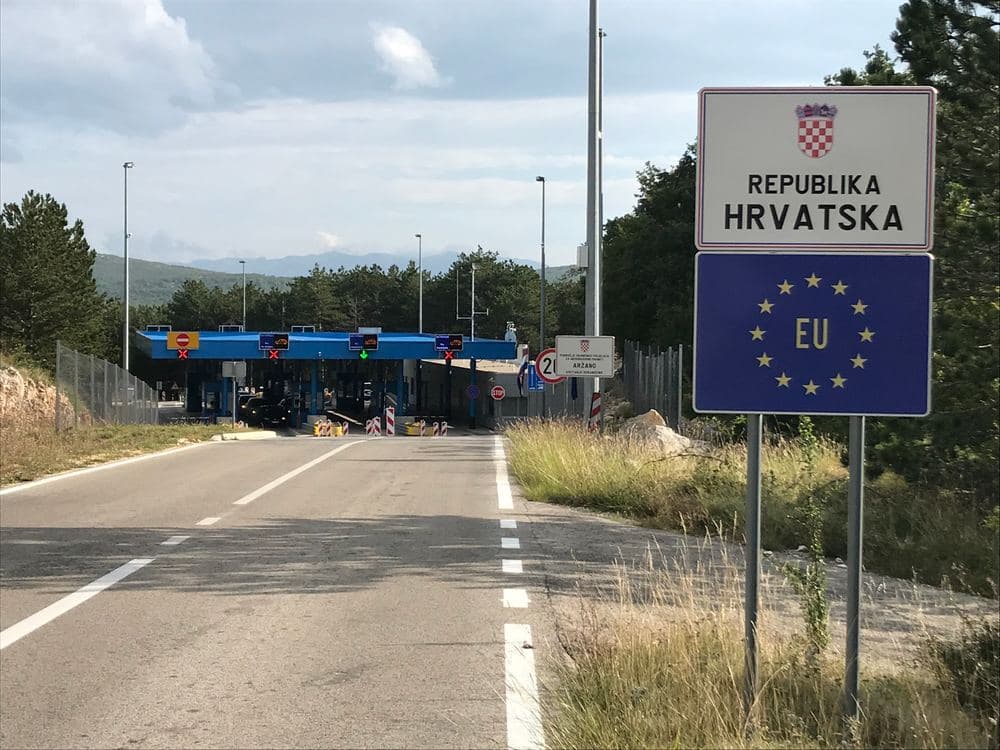
For a typical two-week trip the practical impact is small: 20 euro per adult, 10 minutes online, and one slower passage at the first border. The mistake that costs money is paying a third-party site 50 or 80 euro for the same form. The official application will only ever be on the EU domain.
What actually happens at the border
At Zagreb, Split and Dubrovnik airports the EES registration takes place at self-service kiosks before the passport booth: you scan the passport, look into a camera and place 4 fingers on a reader, then an officer confirms the entry. On the first entry it adds 5 to 10 minutes per person, on later entries the record already exists and the check is quicker. Families do it together, children under 12 skip the fingerprints. Cruise passengers are registered by the port authorities on the ship's manifest, so the check at Gruž is a glance at the passport. The slowest place is the land border with Bosnia and Herzegovina on summer weekends, where every car is processed one by one; leave Mostar by 15:00 to be back at the coast for dinner.
The 90 in 180 rule, with an example
Visa-free visitors may spend 90 days in any rolling 180-day window in the whole Schengen area, and Croatia has counted since 1 January 2023. A US couple who spend 3 weeks in Italy in May and 4 weeks in Croatia in September have used 49 days; a digital nomad who wants 4 months on Hvar cannot do it on ETIAS and needs Croatia's digital nomad residence permit instead. Overstaying is recorded automatically by the EES now, and the penalty is an entry ban of 1 to 5 years rather than a fine at the border. The official Schengen calculator on the EU site does the arithmetic for you.
- Passport validity: 3 months beyond departure and issued within 10 years; a passport renewed in 2016 fails the second test in 2026 even if it looks valid.
- Dual citizens with an EU passport enter on that passport and skip both ETIAS and the EES; use the same passport in and out.
- Travel insurance is not checked at the border but matters: an emergency room visit costs 100 to 300 euro without it, and US plans rarely cover Croatia.
- Keep the accommodation confirmation on your phone; officers may ask where you are staying, and hosts register you with the tourist board within 24 hours anyway.
Frequently asked questions
- Do Americans need a visa for Croatia in 2026?
- No. US citizens stay visa-free for up to 90 days in 180. From the last quarter of 2026 they will need the ETIAS authorisation, 20 euro, applied for online before travel.
- Is ETIAS already required for Croatia?
- Not as of September 2026. The EU plans the start for the last quarter of 2026 and will announce the date in advance, followed by a 6-month grace period.
- Does a UK passport need ETIAS after Brexit?
- Yes, UK citizens are visa-free third-country travellers and will need ETIAS like Americans, Canadians and Australians.
Official sources
Make Croatia Atlas a preferred source
One click and Google shows you our stories more often in Top Stories and in AI answers. It changes your own results only.