A Croatian tourist SIM or eSIM costs about 10 euro for 10 days of unlimited data, sold at any Tisak kiosk. US day passes cost 12 dollars a day, some UK carriers charge 2 to 3 pounds a day, others nothing. Which option wins for a week, two weeks or a month, and the catch for day trips to Bosnia and Montenegro.
Checked: 15 September 2026
Croatia has 3 mobile networks, Hrvatski Telekom, A1 and Telemach, and all three cover the coast, the islands and the motorways with 4G and increasingly 5G. Coverage gaps exist in the mountains of Lika and Gorski kotar and in the deep bays of the outer islands. For a visitor the question is not coverage but price: whether to use the home plan, buy a local tourist package, or load a global eSIM before leaving.
| Provider | Package | Price | Notes |
|---|---|---|---|
| Hrvatski Telekom | unlimited data, 10 days | about 10 euro, 11 as eSIM online | also 120 GB for 90 days at 20 euro |
| A1 | unlimited data plus 100 minutes, 10 days | about 10 euro; 30-day eSIM 29 euro | eSIM available online |
| Telemach | NET2GO PLUS, unlimited, 10 days | about 10 euro | physical SIM only, no eSIM for tourists |
| Global eSIM apps | 5 to 20 GB, 7 to 30 days | 8 to 25 dollars | works before landing, data only, often EU-wide |
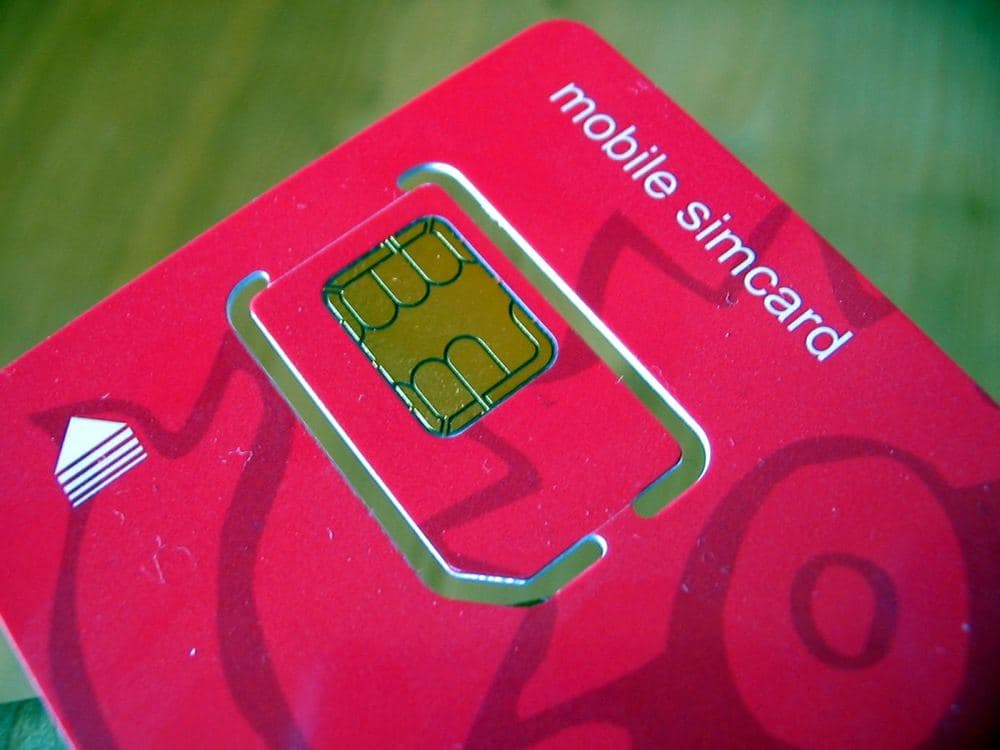
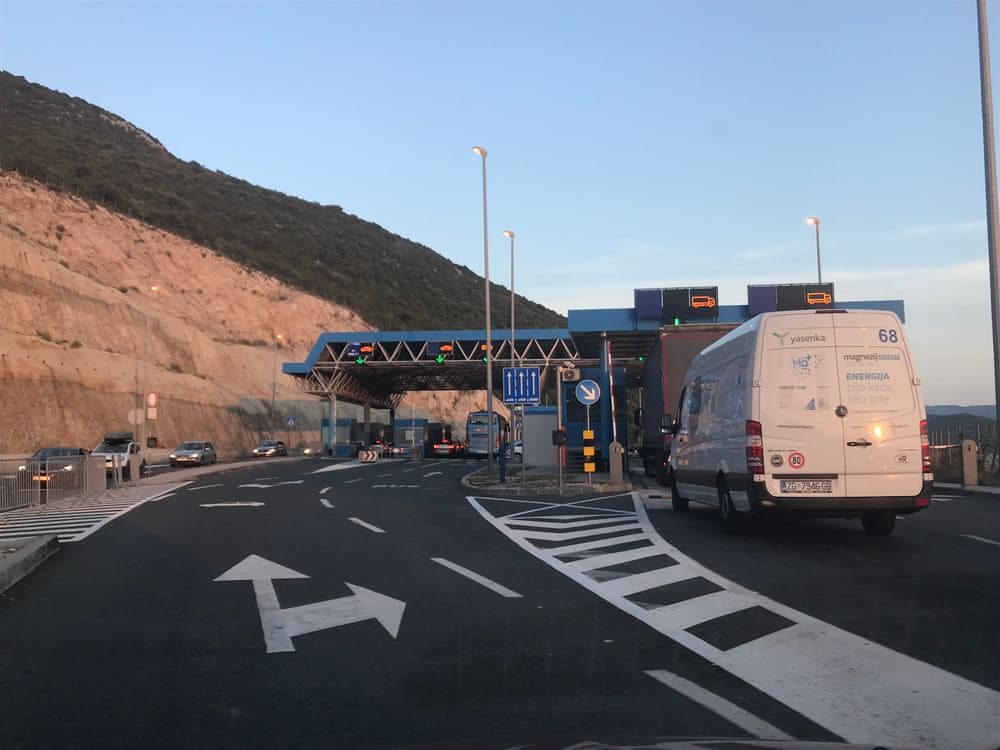
Tourist SIMs are sold at Tisak kiosks, at the carriers' shops in every town and at the airports; registration with a passport is required and takes 5 minutes. The catch is written in small print on all three: EU roaming is not included in the tourist packages. Inside Croatia they are unbeatable, but the moment you cross to Slovenia or Italy they stop, and in Bosnia and Herzegovina or Montenegro, which are outside the EU, your home plan's roaming rates apply to everyone. For a day trip to Mostar or Kotor, switch to a global eSIM that covers the Balkans or turn data off.
From the US: day passes against a 10-euro SIM
AT&T and Verizon sell international day passes at about 12 dollars a day, which is 168 dollars for two weeks; T-Mobile's main plans include slow international data at no charge, enough for maps and messages but not for video calls. A Croatian eSIM for 10 euro covers the same two weeks with unlimited data if you buy two, or one A1 30-day eSIM for 29 euro covers a month. Keep the US line active for calls and two-factor codes and put the Croatian eSIM on data only; every recent iPhone and Android supports both at once.
From the UK: check the roaming clause first
Since Brexit the UK carriers have gone separate ways. O2 still includes EU roaming within a fair-use allowance; EE, Vodafone and Three charge a daily roaming fee of roughly 2 to 3 pounds on most current plans, sometimes waived on older contracts or with a roaming add-on. For a week that is cheaper than a local SIM once you count the hassle; for two weeks or more, or for a family with four phones, the 10-euro Croatian package wins clearly. Whichever you use, turn off automatic data in Bosnia, Montenegro and Serbia, where UK plans charge by the megabyte.
- Free WiFi is standard in accommodation, cafes and on the Jadrolinija ferries; the ferry network is slow but fine for messages.
- 112 is the emergency number and works from any SIM, with or without credit.
- Download the offline map of your region before the islands: Google Maps and Apple Maps both cover Croatia well, and the deep bays lose signal.
Setting up a Croatian eSIM, step by step
- Check that the phone is unlocked and eSIM-capable: iPhone XS and newer, Google Pixel 3 and newer, most Samsung Galaxy from the S20 onwards.
- Buy online on the carrier's site before the trip or at a carrier shop on arrival; the QR code arrives by email within minutes and the passport number is required for registration.
- Install it on WiFi at home or in the hotel, label it Croatia, set it as the data line and keep the home SIM for calls and SMS codes; turn off data roaming on the home line.
- The 10-day clock starts at activation, not at purchase; activate on the morning you land.
- Top-ups and a second package work through the carrier's app, in English, without visiting a shop.
Coverage where you will actually be
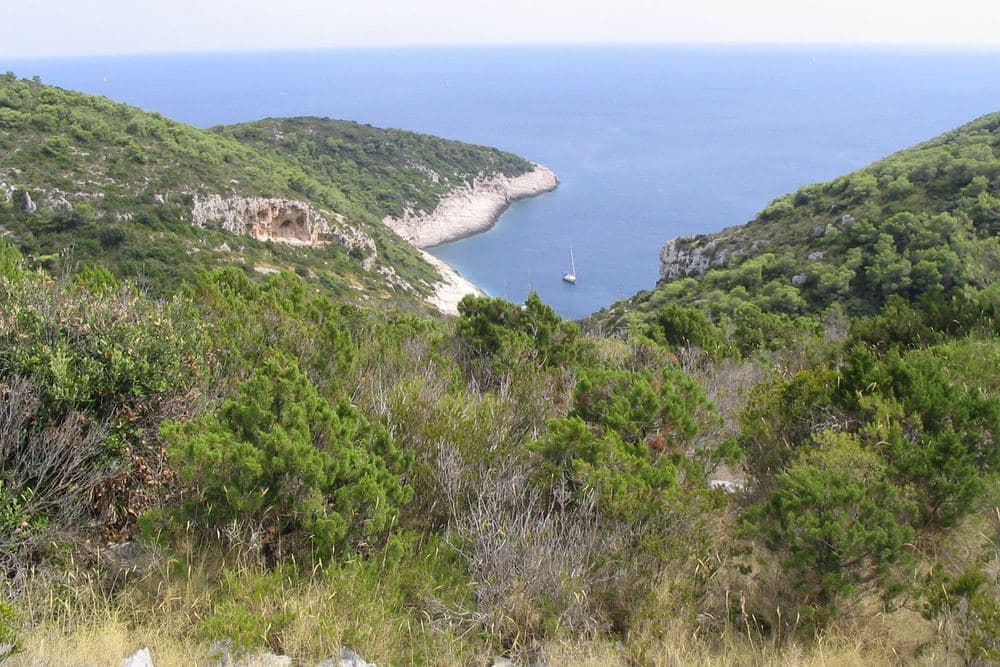
The coast from Umag to Dubrovnik has continuous 4G and 5G in every town, on the motorways and on the ferries within sight of land. The gaps are predictable: the Velebit road above Karlobag, the Plitvice boardwalks between the upper lakes, the interior of Vis and Lastovo, the southern coves of Hvar and Brač, and any bay with a cliff behind it. On the water, signal fades 2 to 3 km out, so a boat day is offline by design. Download the offline map of the region and the ferry tickets as PDF before leaving the apartment WiFi, and expect the Jadrolinija onboard WiFi to be slow but present.
For families the cheapest set-up is one Croatian eSIM on a parent's phone as a hotspot for the children's tablets; the unlimited packages allow tethering, and the 10-day A1 or Hrvatski Telekom package covers a two-week trip if you buy a second one on day 10. Business travellers who need to receive calls on the home number simply keep both lines active; incoming calls on US and UK numbers cost nothing when the phone is on WiFi calling.
Frequently asked questions
- Which SIM card is best for tourists in Croatia?
- Hrvatski Telekom and A1 both sell 10 days of unlimited data for about 10 euro, with eSIM versions online; Telemach's package is physical only.
- Does a Croatian tourist SIM work in Bosnia or Montenegro?
- No. The tourist packages exclude roaming, and both countries are outside the EU. Use a global eSIM with Balkan coverage or switch data off for the day.
- Does my US phone work in Croatia?
- Yes, any unlocked phone works. Day passes cost about 12 dollars a day with AT&T or Verizon; a local eSIM for 10 euro is cheaper from the third day.
Official sources
Make Croatia Atlas a preferred source
One click and Google shows you our stories more often in Top Stories and in AI answers. It changes your own results only.