Greetings, the bill, the beach, the ferry, the pharmacy: the words visitors actually reach for, with pronunciation and a note on why Croatians switch to English the moment they hear an accent. Croatian is spelled the way it sounds, which makes the first sixty words easier than they look.
Checked: 8 September 2026
In tourist places almost everyone speaks English, and on the coast and in Istria often German or Italian too. A visitor who greets in Croatian still gets a different tone: the waiter smiles, the woman at the market stall adds a handful of figs. The good news for learning: Croatian is read exactly as it is written, every letter is always the same sound, and the stress usually sits on the first syllable. Only five characters need learning: č and ć sound like ch, š like sh, ž like the s in measure, đ like the j in juice; c is always ts and j is always like the y in yes.
Greetings and basics
- Dobar dan [DOH-bar dahn] = good day; dobro jutro = good morning; dobra večer [VEH-cher] = good evening.
- Bok [bohk] = hi and bye, informal, like ciao.
- Doviđenja [doh-vee-JEH-nya] = goodbye; laku noć [LAH-koo notch] = good night.
- Molim [MOH-leem] = please, also you're welcome; hvala [HVAH-lah] = thank you; hvala lijepa = thank you very much; nema na čemu [NEH-mah nah CHEH-moo] = you're welcome.
- Da = yes; ne = no; možda [MOZH-dah] = maybe; oprostite [oh-PROS-tee-teh] = excuse me and sorry.
- Govorite li engleski? [go-VO-ree-teh lee EN-gles-kee] = do you speak English?; ne razumijem [neh rah-ZOO-mee-yem] = I don't understand; ne govorim hrvatski = I don't speak Croatian; možete li ponoviti? = could you repeat that?
At the restaurant and the café
- Stol za dvoje, molim = a table for two, please; jelovnik [YEH-lov-neek] = the menu; račun, molim [RAH-choon] = the bill, please. Three sentences that cover a whole meal.
- Voda = water (gazirana = sparkling, negazirana = still); pivo = beer; vino = wine (bijelo = white, crno = red, literally black); kava = coffee; čaj [chai] = tea; sok = juice.
- Riba = fish; meso = meat; piletina = chicken; sir = cheese; kruh = bread; salata = salad; bez mesa = without meat; alergičan sam na [ah-LER-gee-chan sahm nah] = I am allergic to.
- Živjeli! [ZHEE-vyeh-lee] = cheers; dobar tek [DOH-bar tek] = enjoy your meal; konobar = waiter, konobarica = waitress.
At the market and in the shop
- Koliko košta? [KOH-lee-koh KOSH-tah] = how much is it?; kilogram = a kilo; pola kile = half a kilo; još malo [yosh MAH-loh] = a bit more; to je sve = that's all; vrećica [VREH-chee-tsah] = a bag.
- Gotovina ili kartica? = cash or card?; plaćam karticom [PLAH-cham KAR-tee-tsom] = I'll pay by card; imate li sitno? = do you have change?
- Otvoreno = open; zatvoreno = closed; radno vrijeme = opening hours; popust = discount; rasprodaja = sale.
Getting around
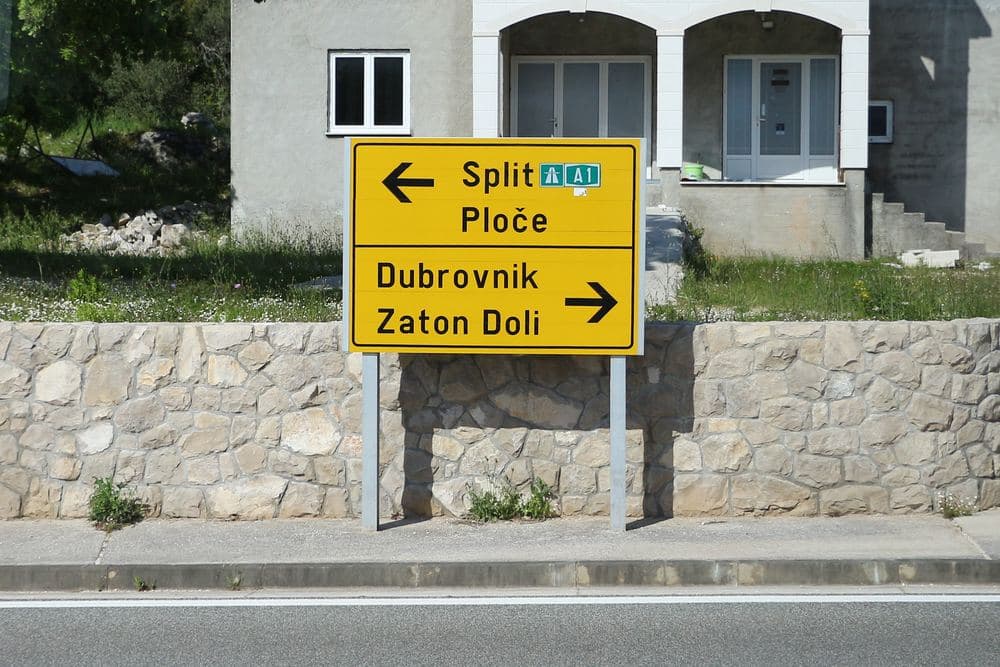
- Gdje je...? [g-DYEH yeh] = where is...?; lijevo [LYEH-voh] = left; desno = right; ravno = straight on; blizu = near; daleko = far.
- Plaža [PLAH-zhah] = beach; more = sea; luka = harbour; trajekt = ferry; autobusni kolodvor = bus station; željeznički kolodvor = railway station; zračna luka = airport; parkiralište = car park; ulaz = entrance; izlaz = exit.
- Karta = ticket, both for entry and for transport; povratna karta = return ticket; u koliko sati? = at what time?; danas = today; sutra = tomorrow; sada = now; kasnije = later.
- Numbers: jedan = 1, dva = 2, tri = 3, četiri [CHEH-tee-ree] = 4, pet = 5, šest [shest] = 6, sedam = 7, osam = 8, devet = 9, deset = 10, dvadeset = 20, sto = 100.
When something goes wrong
- Upomoć! [OO-poh-moch] = help!; hitno = urgent; zovite hitnu pomoć = call an ambulance. The single emergency number is 112.
- Ljekarna [LYEH-kar-nah] = pharmacy; bolnica = hospital; liječnik = doctor; zubar = dentist; policija = police; boli me [BOH-lee meh] = it hurts, my... (glava = head, trbuh = stomach, zub = tooth).
- Izgubio sam (man) / izgubila sam (woman) = I have lost...; putovnica = passport; novčanik [NOV-chah-neek] = wallet; ključ [klyooch] = key; ukradeno = stolen.
- Signs worth recognising: pozor = attention; zabranjeno = forbidden; opasnost = danger; zabranjeno kupanje = no swimming; privatni posjed = private property; naplata = payment or toll.
One last tip: do not worry about the cases. Croatian has seven of them, foreigners get them wrong all the time, and nobody holds it against a visitor. A sentence with every word in its basic form and a smile is more than enough.
Frequently asked questions
- Do Croatians in tourist areas speak English and German?
- Yes. English is close to universal among younger people and in tourism; German is common on the coast and in Istria, Italian in Istria and Kvarner. A few Croatian words still open doors.
- How do you say cheers in Croatian?
- Živjeli! [ZHEE-vyeh-lee], literally may we live. Before a meal you say dobar tek, enjoy your meal.
- Is Croatian hard to learn?
- Pronunciation is easy because the language is read as it is written; the grammar, with seven cases and verb aspects, is hard. For a holiday, pronunciation and a few dozen words are all you need.
Make Croatia Atlas a preferred source
One click and Google shows you our stories more often in Top Stories and in AI answers. It changes your own results only.