The Blue Cave on Biševo costs 18 euro in cash at the pier, 24 in high season, on top of a 120 to 150 euro speedboat day from Split or a 35-euro boat from Komiža. The Blue Lagoon at Krknjaši is a 50 to 75 euro half day from Split or Trogir with no cave. Dubrovnik's Blue Cave is on Koločep, by kayak. All three explained, with the best hour for the light.
Checked: 15 September 2026
Three different places in Croatia are sold under two English names, and the tour desks in Split, Hvar and Dubrovnik are not always precise about which one you are buying. The Blue Cave is a sea cave on the islet of Biševo off Vis, where the morning sun lights the water from below and turns the chamber electric blue: a ticketed natural monument with a queue, an entry fee paid in cash and a weather rule. The Blue Lagoon is a shallow sandy channel between the islets of Krknjaši off Drvenik Veli, an hour from Split by speedboat, with no cave and no ticket. And Dubrovnik's Blue Cave is a swim-in cave on Koločep in the Elafiti islands, reached by kayak or small boat. This guide covers all three with the 2026 prices, what a tour day actually looks like, and when each one is worth it.
| Name | Where | From | Tour price | Extra on the day | Season |
|---|---|---|---|---|---|
| Blue Cave, Modra špilja | Biševo, off Vis | Split 10 h, Hvar 5 h, Komiža 1 h | Split 120 to 150 euro, Hvar 100 to 120, Komiža 25 to 35 | Cave entry 18 euro, 24 euro from 20 June to 10 September, cash | May to October, closed in waves |
| Blue Lagoon, Krknjaši | Drvenik Veli, off Trogir | Split or Trogir, 4 to 5 h | 50 to 75 euro | None | May to October |
| Blue Cave of Koločep | Elafiti, off Dubrovnik | Dubrovnik, 3 to 4 h | 60 to 90 euro, kayak or boat | None | May to October |
The Blue Cave on Biševo: how it works
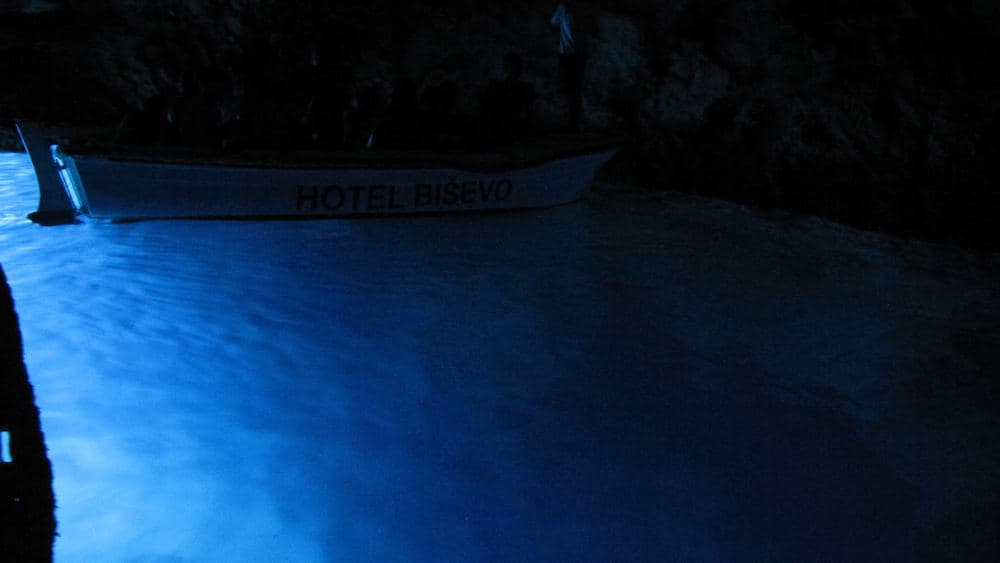
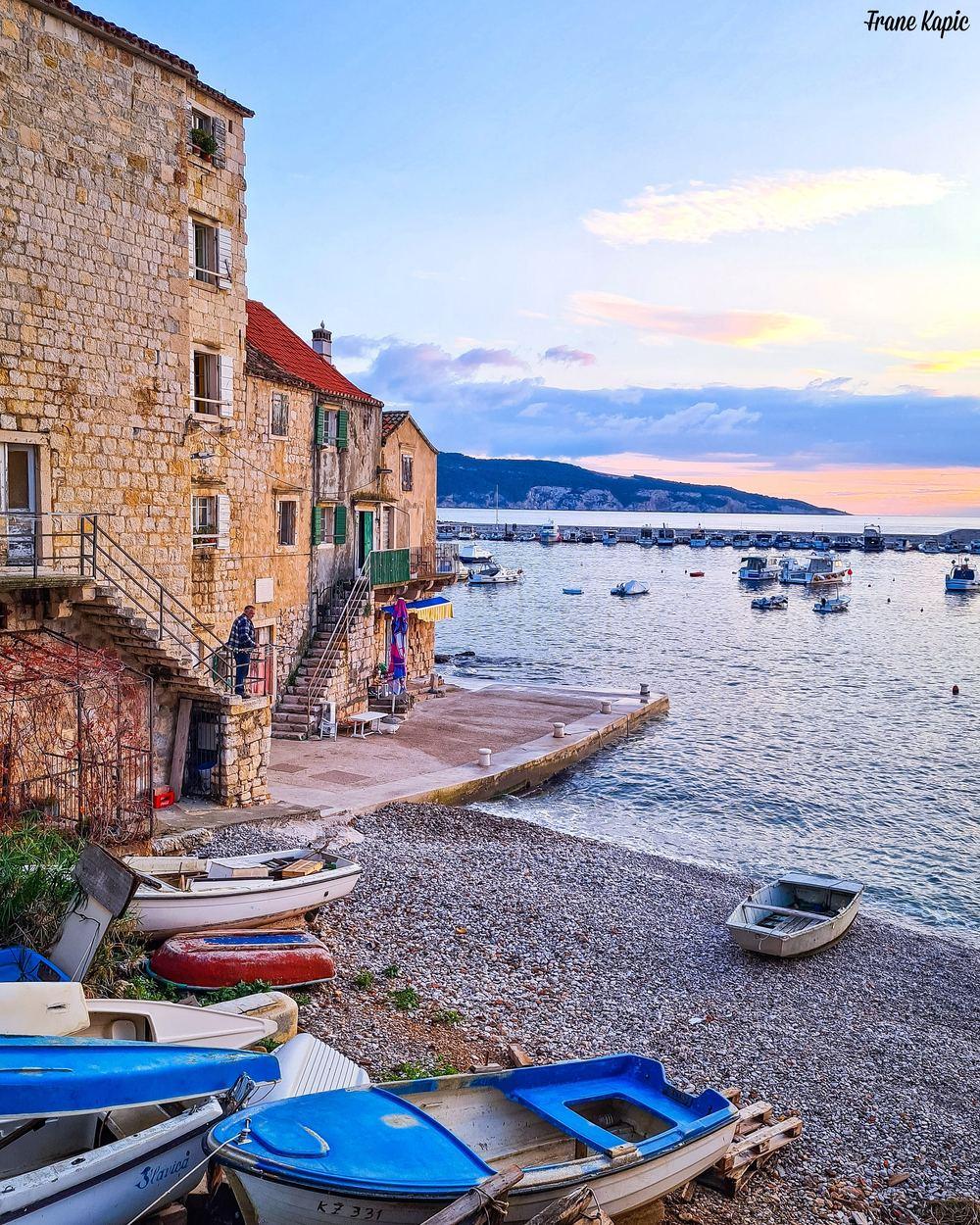
The cave is on the east side of Biševo, a small island five kilometres from Komiža on Vis. Boats cannot enter with their own engines: visitors transfer at the Biševo pier to small rowing boats run by the cave authority, which take twelve people at a time through a metre-high entrance into the chamber, spend five to ten minutes inside and come out. The blue comes from sunlight entering through an underwater opening and reflecting off the white sea floor, and it is strongest between about eleven and one, when the sun is high. Before ten and after three the effect is faint. The entry fee is paid at the pier in cash, 18 euro per adult in the shoulder months and 24 euro from 20 June to 10 September, about half for children, and there is no online ticket and no skip-the-line product, whatever a booking site says. In July and August the wait at the pier can be an hour or more; in June and September it is ten minutes.
The cave closes when the sea is rough, which happens on jugo days and with a strong maestral in the afternoon. Tour companies then substitute the Green Cave on Ravnik and swimming stops, and most refund a part of the price, but not the day. Check the wind forecast the evening before and, if it is south and over 20 knots, move your booking.
Getting to the Blue Cave: three ways and what they cost
- From Split, the five-islands speedboat tour: 10 to 11 hours, 120 to 150 euro, leaves the Riva at seven or eight, one hour at full speed to Biševo, the cave, then Stiniva on Vis, the Blue Lagoon at Budikovac, the Pakleni islands and two hours in Hvar town. Long day, a lot of spray, a lot of sea. Sit at the back in June and September and take a windproof layer.
- From Hvar town: 5 to 6 hours, 100 to 120 euro, the same cave with a shorter crossing and a stop at Vis or Stiniva. The better choice if you are staying on Hvar.
- From Komiža on Vis, the local way: the small boats at the harbour run to the cave in 20 minutes for 25 to 35 euro return, some combine it with Stiniva and the Green Cave for 50 to 70 euro. This is the cheapest and the calmest, and it needs a night on Vis. The Jadrolinija ferry from Split to Vis is 2 hours 20 for about 8 euro, and the bus across to Komiža 20 minutes.
Is the Blue Cave worth it?
Yes, if you go in the right light and the sea is calm, and the five to ten minutes inside are unlike anything else on the coast. It is not worth 150 euro and eleven hours in a speedboat if the cave is the only thing you want, because you get the same five minutes for 35 euro from Komiža after a night on the best island in Dalmatia. The Split tour is a good day for people who want to see five islands at speed and have one day to do it; the cave is its highlight, not its content. Families with children under six should skip the speedboat tours entirely, the crossing to Biševo is rough for a small child.
The Blue Lagoon at Krknjaši: the easy half day
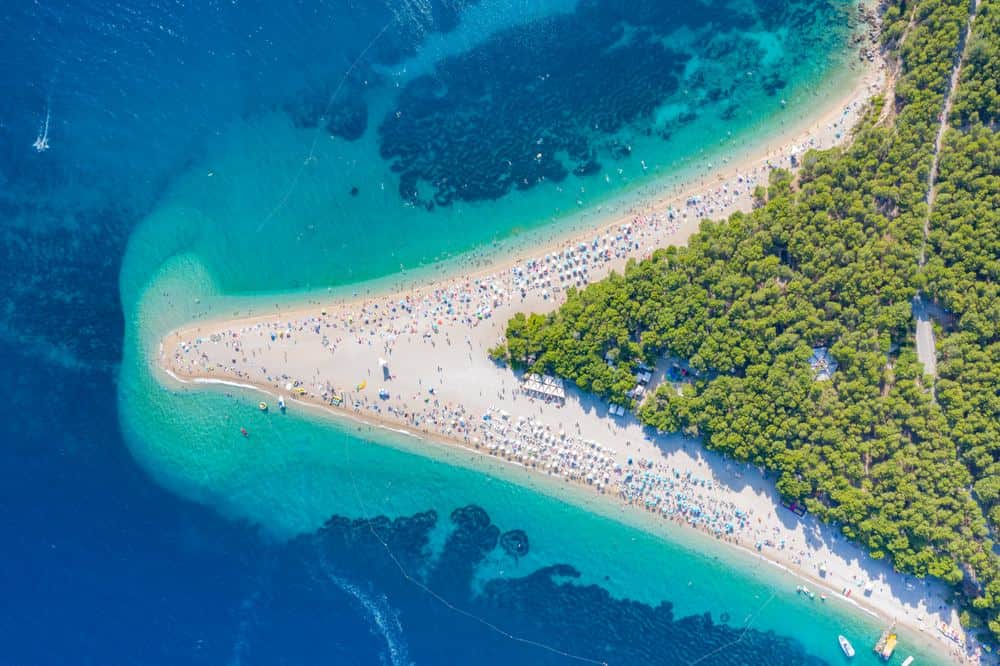
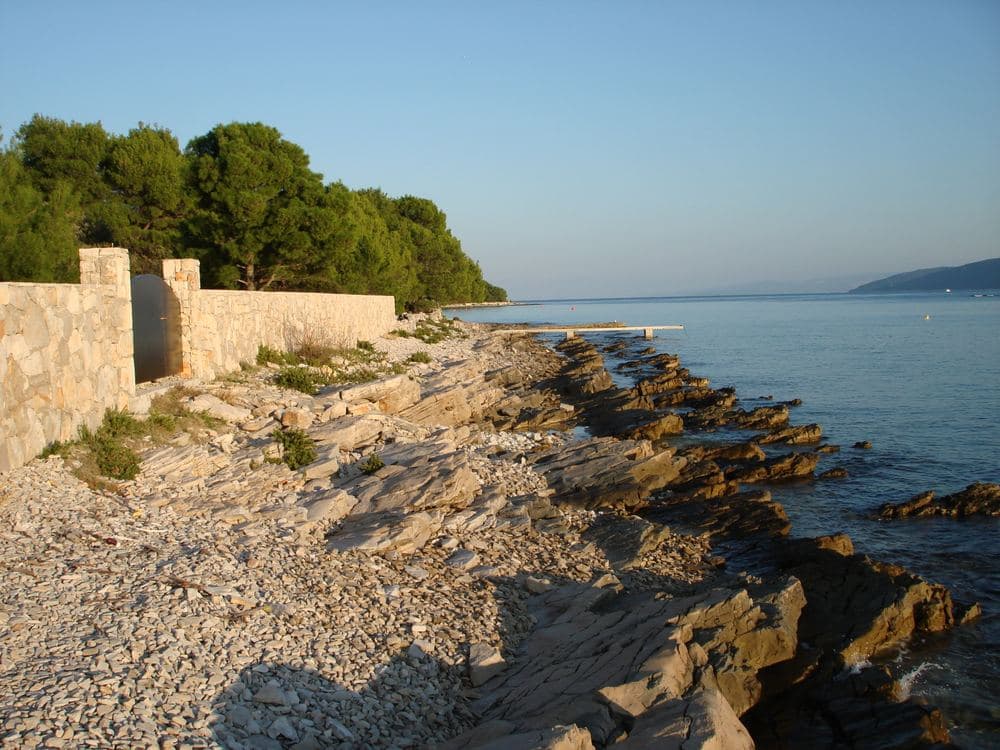
Krknjaši is a pair of islets off the east coast of Drvenik Veli, an island west of Trogir, and the water between them is two metres deep over white sand, which produces the turquoise that gives it the name. It is a swimming and snorkelling stop, with a konoba on the shore of Drvenik and boats moored in a line at midday. The half-day tours from Split and Trogir, 50 to 75 euro, take four to five hours: 45 minutes by speedboat, an hour and a half in the water, a stop at Maslinica on Šolta or at Trogir on the way back. Some run the same route on a slow wooden boat for 40 to 50 euro with lunch, which is the relaxed version. From Trogir the crossing is twenty minutes. The lagoon is at its best before eleven, when the water is still glassy and the boats have not arrived, and in September, when the tour numbers halve.
The other Blue Lagoon: Budikovac near Vis
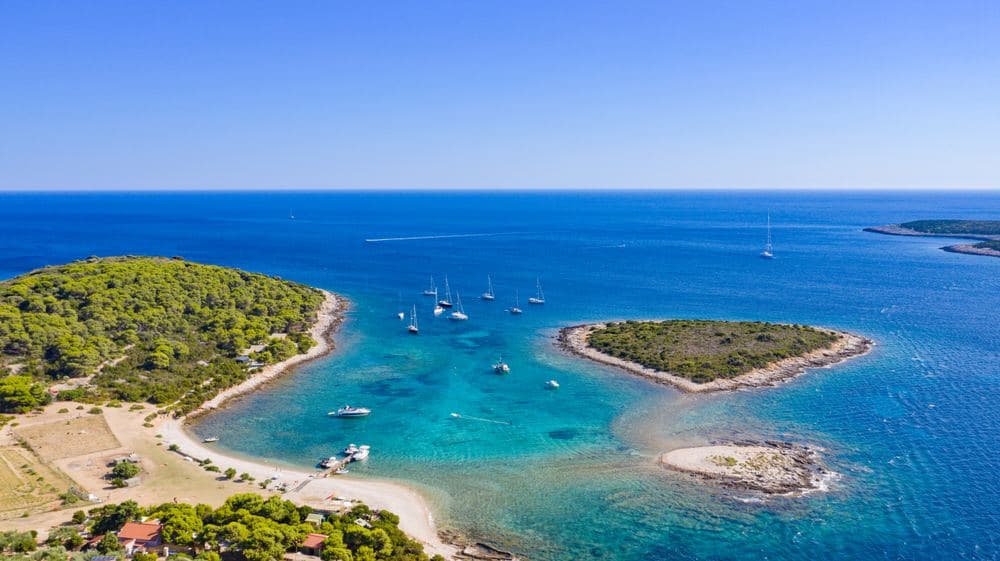
The five-islands tours from Split and Hvar stop at a second Blue Lagoon, the shallow channel between Budikovac and a sandbar off the south-east coast of Vis. It is a swimming stop of 45 minutes with a konoba, quieter than Krknjaši because only the Vis tours reach it, and it is what people mean when they say the Blue Lagoon on a Blue Cave tour. If a tour description promises the Blue Cave and the Blue Lagoon in one day from Split, this is the lagoon.
Dubrovnik's Blue Cave on Koločep
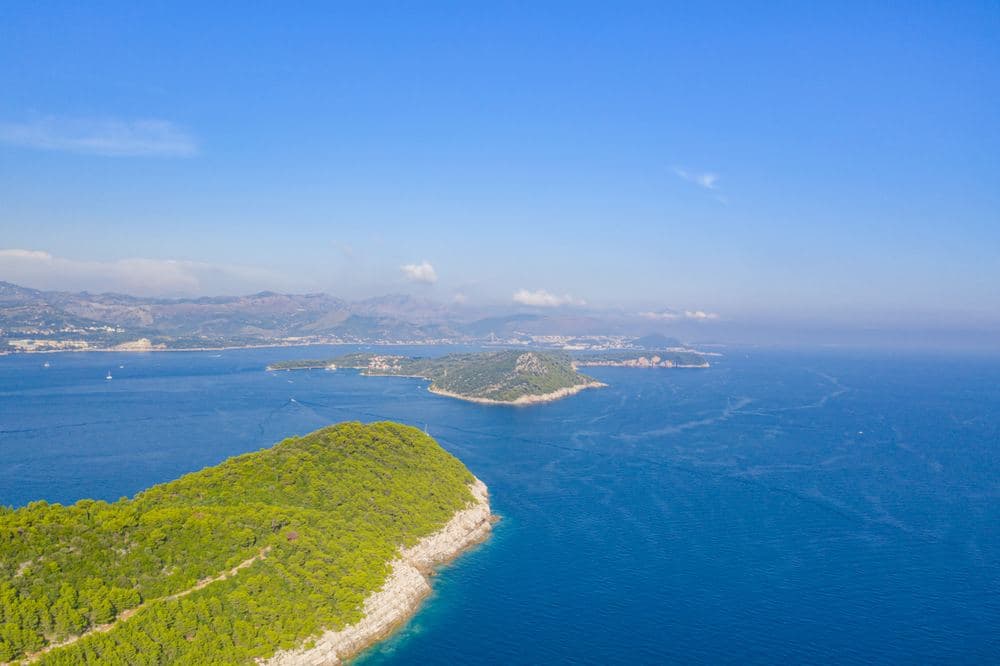
Koločep is the nearest of the Elafiti islands, thirty minutes from Gruž by the Jadrolinija ferry, and its south-western cliffs hold a sea cave that opens at water level and glows blue in the afternoon, when the sun is on that side. Unlike Biševo you swim into it, which is the point of the trips: sea-kayak tours from Dubrovnik of three to four hours for 60 to 90 euro paddle across from the city or start on the island, and small-boat tours do the same at 50 to 70 euro with snorkelling. The cave is free, there is no authority and no queue, and the rules are the sea's: no entry in waves. It is a good half day for anyone who does not want to spend a full day at sea, and the only one of the three that fits into a Dubrovnik stay without an island night.
Booking, weather and what to bring
- Book the Biševo tours two or three days ahead in summer, the day before in June and September. Book kayak tours in Dubrovnik a day ahead.
- Bring cash for the cave entry, 18 or 24 euro per person, and small notes; there is no card machine on Biševo.
- Take a windproof layer even in August, water shoes for the rocky stops, a hat, reef-safe sun cream and a dry bag for the phone.
- Snorkel and mask are usually on board; a towel is not.
- Check the wind the evening before: a south wind over 20 knots closes the cave and cancels kayak tours; a morning maestral is normal and harmless.
- Tours in October run on fewer days and the water is 20 degrees, which is fine for the lagoon and cold for a long snorkel.
Which one for whom
| You want | Go for |
|---|---|
| The cave itself, cheaply, and a real island | Vis for a night, Komiža boat, 35 euro plus entry |
| Five islands in one day from Split, cave included | Five-islands speedboat tour, 120 to 150 euro plus entry |
| A half day of swimming near Split or Trogir | Blue Lagoon at Krknjaši, 50 to 75 euro |
| Staying in Dubrovnik, no full day at sea | Koločep by kayak, 60 to 90 euro |
| Children under six | Krknjaši on a slow boat, or Koločep by boat rather than kayak |
Frequently asked questions
- How much does the Blue Cave in Croatia cost?
- The cave entry on Biševo is 18 euro per adult in the shoulder months and 24 euro from 20 June to 10 September, paid in cash at the pier. On top of that a speedboat tour from Split costs 120 to 150 euro, from Hvar 100 to 120, and a local boat from Komiža on Vis 25 to 35 euro.
- Is the Blue Cave worth it?
- Yes between eleven and one on a calm day, when the light is strongest. The cheapest and calmest way is a night on Vis and the Komiža boat. The speedboat tour from Split is worth it for the five islands, with the cave as the highlight of a long day.
- Where is the Blue Lagoon in Croatia?
- The one sold from Split and Trogir is at Krknjaši off Drvenik Veli, a shallow sandy channel with no cave, 50 to 75 euro for a half day. The five-islands tours from Split stop at a second lagoon at Budikovac near Vis.
- Is there a Blue Cave near Dubrovnik?
- Yes, on Koločep in the Elafiti islands, a swim-in sea cave reached by kayak or small-boat tours of three to four hours for 60 to 90 euro. It is free and best in the afternoon light.
Official sources
Make Croatia Atlas a preferred source
One click and Google shows you our stories more often in Top Stories and in AI answers. It changes your own results only.