The Krilo catamaran takes four and a half hours for 45 to 55 euro until 31 October, the bus three hours 45 for 12 to 30 euro all year with no border since the Pelješac bridge, the car three hours and one 10-euro toll, the flight 55 minutes in the air and three hours door to door. Timetables, prices, luggage rules and a recommendation for each kind of traveller.
Checked: 15 September 2026
Split and Dubrovnik are 230 kilometres apart by road and about 210 by sea, and almost everyone who visits Croatia from abroad travels between them once. There are four real ways to do it: the seasonal catamaran that hops down the islands, the bus over the Pelješac bridge, a car on the same road, and a 55-minute flight that saves less time than it looks. This guide gives the 2026 timetables, prices and journey times for each, the way each one changes in October, and a straight recommendation for the common cases: no car, with a car, with children, with a flight to catch.
| Option | Time door to door | Price per person | Season | Arrives |
|---|---|---|---|---|
| Catamaran, Krilo or TP Line | 4 h 30 to 5 h | 45 to 55 euro | May to 18 or 31 October | Gruž harbour, 3 km from the Old Town |
| Bus, FlixBus, Arriva, Nomago | 3 h 45 to 4 h 30 | 12 to 30 euro | All year, 10 to 15 daily | Bus station in Gruž |
| Car via A1 and the Pelješac bridge | 3 h to 3 h 30 driving | 10 euro tolls, 25 to 35 euro fuel, plus one-way fee | All year | Wherever you park, 4 to 6 euro an hour near the Old Town |
| Flight, Croatia Airlines | 55 min in the air, 3 h door to door | 55 to 130 euro | Summer schedule, a few flights a week | Dubrovnik airport, 20 km south, shuttle 10 euro |
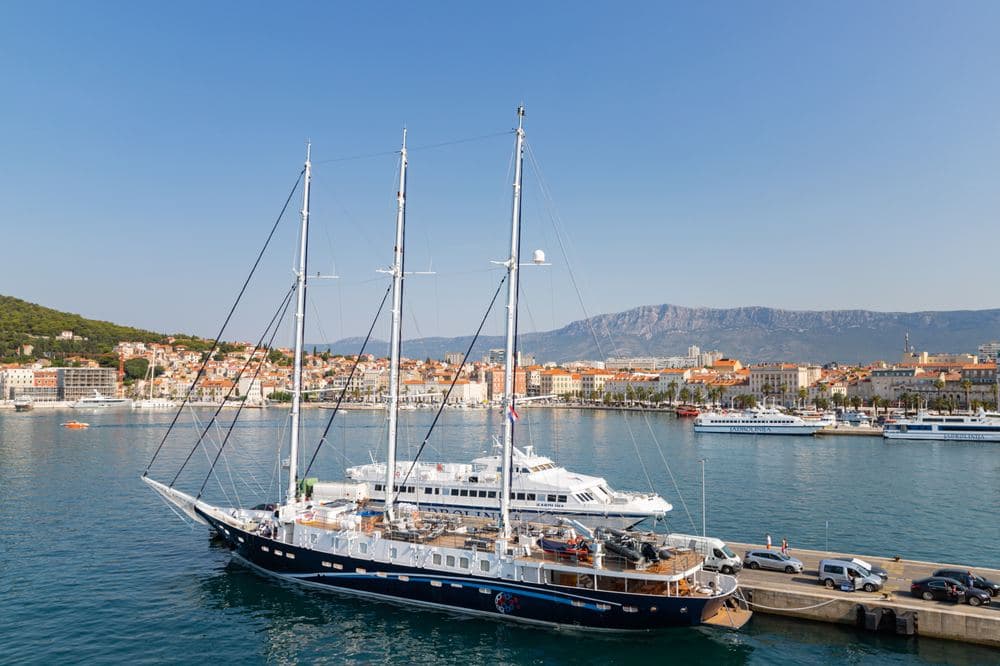
The catamaran: the scenic way, and the one that sells out
Two companies run a foot-passenger catamaran down the coast from Split to Dubrovnik, stopping at Milna on Brač, Hvar town, Korčula and, on some sailings, Mljet. Kapetan Luka's Krilo Star, line 998, leaves Split at 08:00 and reaches Dubrovnik at 12:30, and comes back at 15:30 to arrive in Split at 20:00. TP Line's boat on line 654 runs a similar morning departure. In 2026 TP Line sails until 18 October and Krilo until 31 October; from November to April there is no boat between the two cities at all. The fare is 45 to 55 euro one way, 50 euro on Krilo in high season, and it is the same price in October. Book online: in July and August the boats are full a week ahead, and in September and October three or four days ahead is safe.
What you get for the money is four and a half hours of the best coastline in the Mediterranean, with the option to break the trip on Hvar or Korčula for a night and continue on the next day's sailing, which is the beginning of island hopping. What you do not get is a car, a seat on deck for the whole way on the newer boats, which are enclosed, or a guarantee: a strong jugo cancels the sailing and the company refunds or moves you to the bus. Luggage is one large bag and one hand bag per person, stowed on racks at the entrance. The boat arrives at Gruž, from where buses 1A, 1B, 3 and 8 reach Pile Gate in 15 minutes for 2 euro, and a taxi is 12 to 20 euro.
The bus: cheapest, all year, and faster than most people think
FlixBus, Arriva's Autotrans and Nomago together run 10 to 15 buses a day between Split's bus station, next to the ferry port, and Dubrovnik's in Gruž. Since the Pelješac bridge opened in July 2022 the buses no longer cross the Bosnian corridor at Neum, so there is no border stop and no passport check: the route is the A1 motorway to Ploče, the coast road to the bridge, over the bridge and down the Pelješac peninsula to Ston and on to Dubrovnik. The scheduled time is 3 hours 45 minutes on the direct FlixBus services and up to 4 hours 30 on buses that stop in Makarska and Ploče. Fares are demand-priced, 12 to 30 euro, cheapest on the early morning and late evening buses booked a few days ahead. Luggage is one bag in the hold, sometimes charged 1 to 2 euro by the driver in cash.
The bus is the right answer for most travellers without a car from November to April, for anyone on a budget, and for anyone with a fixed flight, because it does not depend on the sea. Sit on the right-hand side going south for the views of the Makarska Riviera and the bridge. The first departures around six in the morning arrive before ten, in time for the walls before the cruise crowds.
Driving: three hours, one toll, no border
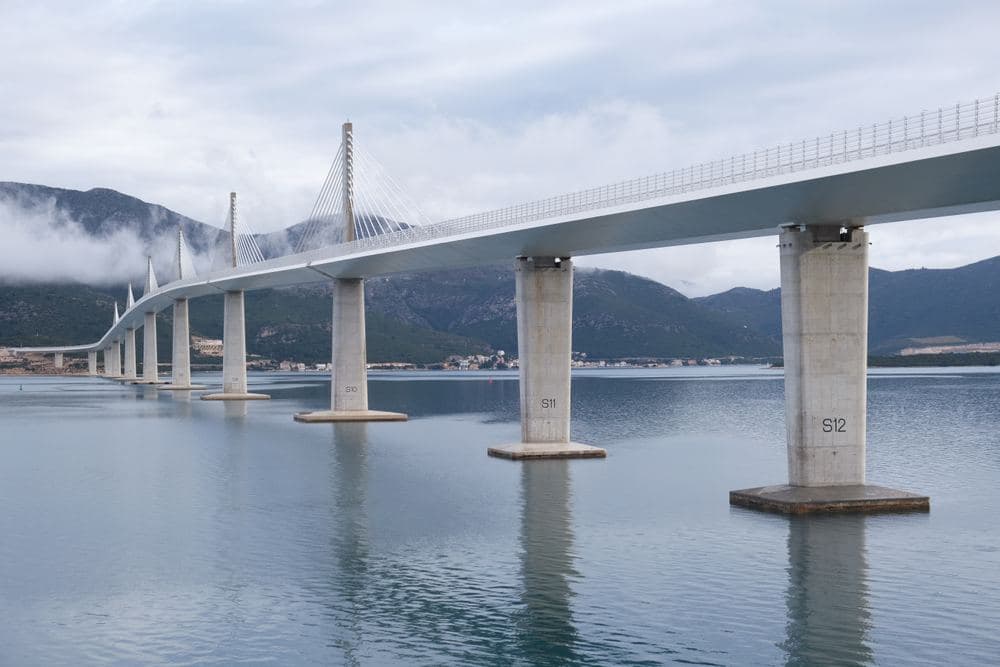
By car the trip is 230 kilometres and three hours without stops: the A1 motorway from Split's Dugopolje junction to its end at Ploče, about 10 euro in tolls paid by card at the exit, then the D8 coast road past the Neretva delta to the Pelješac bridge, which is free, and the new expressway across the peninsula to Ston, then the coast road for the last 50 kilometres into Dubrovnik. The old route through Neum in Bosnia still exists and is 20 minutes shorter on paper, but it means two border crossings, a possible passport queue and a rental-car insurance question, so take the bridge. Stops worth making: the Neretva valley mandarin stalls in October, the walls of Ston, and the oyster konobas of Mali Ston.
The two catches are the one-way rental fee, 50 to 120 euro when you pick up in Split and drop in Dubrovnik, and parking in Dubrovnik itself, where the garage at Ilijina glavica above the Old Town charges 4 to 6 euro an hour and street parking near the walls does not exist. If your Dubrovnik days are all inside the walls, return the car in Split and take the bus.
Flying: 55 minutes in the air, three hours in reality
Croatia Airlines flies between Split and Dubrovnik a few times a week in the summer schedule, 55 minutes in the air, 55 to 130 euro depending on the day. Add 30 minutes to reach Split airport from the city, an hour before departure, and the 20 kilometres from Dubrovnik airport to the Old Town by the Platanus shuttle for 10 euro or a taxi for 45 to 60, and the door-to-door time is three hours, the same as the bus and with the least to see. It makes sense only if you are connecting onwards through Dubrovnik on the same ticket, or if you are travelling in winter and cannot face the bus.
What changes in October and winter
- From 28 September the Jadrolinija ferries switch to the winter timetable and cheaper fares, which matters if you want to island hop instead of going direct.
- TP Line stops on 18 October, Krilo on 31 October. From 1 November the bus and the car are the only ground options.
- Bus frequency drops to six to eight a day in winter, still enough, and fares fall to 12 to 20 euro.
- Rain and the bura wind can slow the coast road; the motorway to Ploče is usually the reliable stretch. The bridge closes to high-sided vehicles in strong bura, buses included, for a few hours at a time.
Which option for whom
| You are | Take |
|---|---|
| No car, May to October, no fixed flight that day | Catamaran, and consider breaking the trip on Hvar or Korčula |
| No car, November to April | Bus, early morning departure |
| Budget under 20 euro | Bus, booked three days ahead |
| With a rental car for the whole trip | Drive, three hours, stop at Ston, park at Ilijina glavica |
| Flight out of Dubrovnik the same day | Bus, never the catamaran |
| Family with small children | Bus or car, the catamaran's four and a half hours is long for a toddler |
| Connecting flight through Dubrovnik | Fly, if it is on one ticket |
Dubrovnik to Split: the same in reverse
The catamaran leaves Dubrovnik at 15:30 and reaches Split at 20:00, which is a lovely evening arrival on the Riva but too late for an onward ferry to the islands that day. Buses run all day from six in the morning until late evening, with the last one after nine. Drivers should fill up before Ston, because the expressway across Pelješac has no fuel station, and should expect the Neretva stretch to be slow behind trucks in the afternoon. If you are ending in Split for a flight, the airport is 25 kilometres west of the city on the Trogir road, 40 minutes by the Platanus shuttle or bus 37.
Frequently asked questions
- What is the best way to get from Split to Dubrovnik?
- Without a car from May to October, the Krilo or TP Line catamaran, four and a half hours for 45 to 55 euro with stops on Hvar and Korčula. All year and on a budget, the bus, 3 hours 45 minutes for 12 to 30 euro. With a car, the A1 and the Pelješac bridge in three hours.
- Is there a ferry from Split to Dubrovnik?
- A foot-passenger catamaran, no car ferry. Krilo Star leaves Split at 08:00 and arrives at 12:30, returning at 15:30, until 31 October 2026. TP Line runs a similar boat until 18 October. There is no boat from November to April.
- Does the bus from Split to Dubrovnik cross Bosnia?
- No. Since the Pelješac bridge opened in 2022 the buses use the bridge and stay in Croatia, so there is no border check and no passport needed.
- How long does it take to drive from Split to Dubrovnik?
- About three hours for 230 kilometres: the A1 motorway to Ploče, about 10 euro in tolls, then the coast road, the free Pelješac bridge and the expressway to Ston. Add 50 to 120 euro if you drop the rental car in a different city.
Official sources
Make Croatia Atlas a preferred source
One click and Google shows you our stories more often in Top Stories and in AI answers. It changes your own results only.