Kotor is 93 kilometres and one border south of Dubrovnik: 13 to 30 euro by bus, 45 to 70 on a coach tour, two hours by car with a ferry shortcut across the bay. Passport rules for US, UK, Canadian and Australian visitors, the 15-euro fortress climb, Perast's church island for 5 euro, where to eat, Lovćen and Budva as add-ons, and the hours to avoid at the border.
Checked: 15 September 2026
Kotor is the day trip that Dubrovnik cannot match in its own country: a walled medieval town at the end of a fjord-like bay, two hours south across a border, with a fortress climbing 260 metres up the mountain behind it and, on the way in, the baroque village of Perast and its two church islands. About a million people do the trip each year, by bus, by tour coach, by hire car and by cruise ship, and the difference between a good day and a long one is almost entirely about the border and the hour. This guide gives every way of getting from Dubrovnik to Kotor in 2026 with prices and times, what the border crossing means for a US, UK, Canadian or Australian passport, what to do in Kotor and Perast in the hours you have, where to eat, and a plan for the day that avoids the two queues that ruin it.
Where Kotor is and why it is worth a border
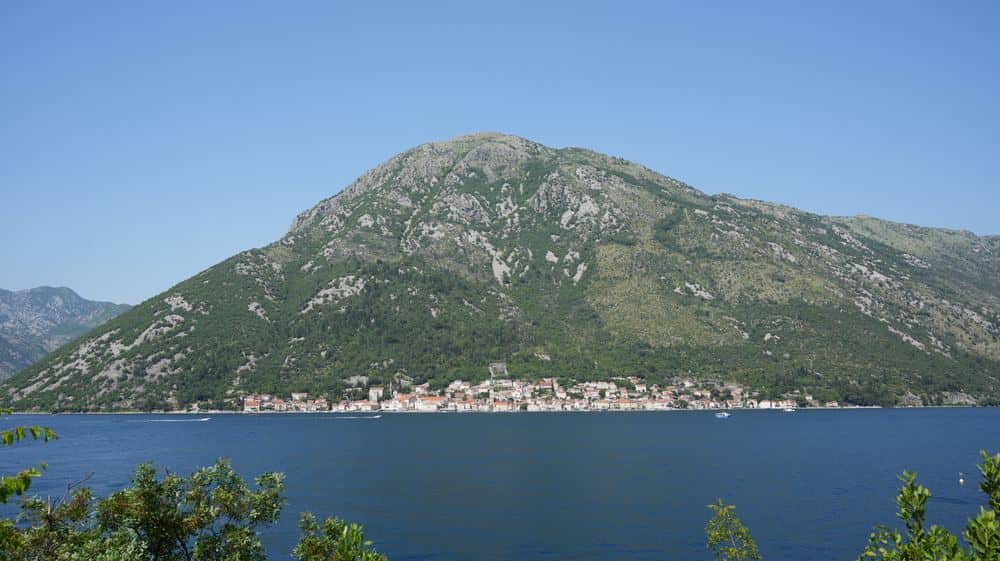
Kotor sits at the innermost end of Boka Kotorska, the Bay of Kotor, a drowned river valley 28 kilometres deep that winds inland from the Adriatic between mountains of 1,000 to 1,700 metres. The old town is a triangle of Venetian stone squeezed between the water and the cliff, listed by UNESCO since 1979, with a cathedral consecrated in 1166, a dozen churches, palaces of the seafaring families and a wall that runs 4.5 kilometres up the mountain to the fortress of San Giovanni. The bay road from the Croatian border passes Herceg Novi, the narrows at Verige where the bay is only 300 metres wide, and Perast, a village of 300 people and 16 palaces that once had a merchant fleet and a naval school. The distance from Dubrovnik to Kotor is 93 kilometres. On a clear October day it is two hours; on an August Saturday it can be four.
Passports, borders and the Schengen count
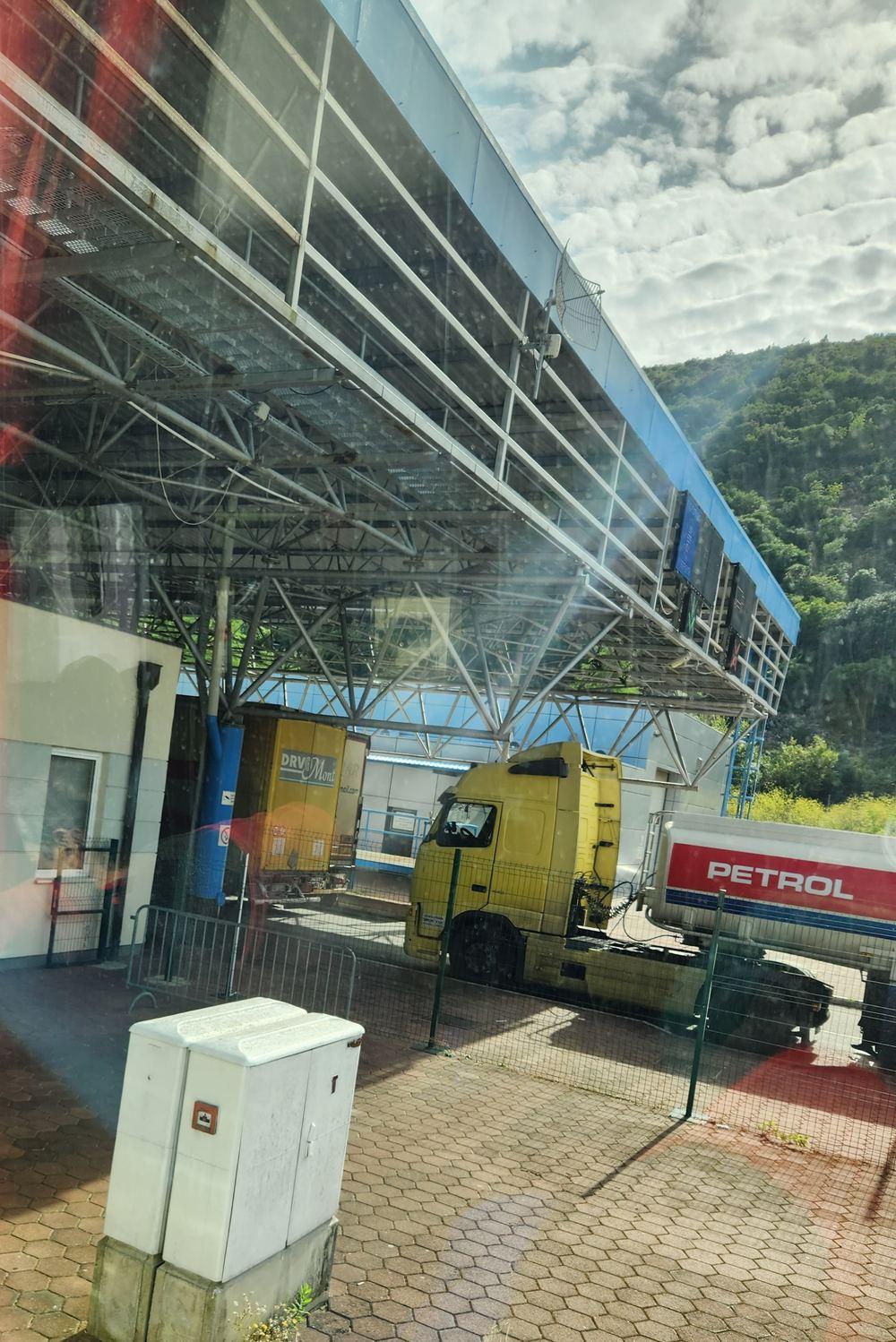
Montenegro is outside the European Union and outside Schengen, so the trip involves leaving Croatia at Karasovići and entering Montenegro at Debeli Brijeg, and the reverse on the way back. You need your passport, not a national identity card and not a photograph of a passport. Citizens of the United States, the United Kingdom, Canada, Australia and the EU need no visa for a day visit. Both border posts stamp, and for anyone counting Schengen days the hours in Montenegro do not count towards the 90 days in 180, though the day of exit and the day of re-entry both do. Since the EU's Entry/Exit System started registering fingerprints and faces at the external borders, the Croatian side of this crossing can be slow for non-EU passports on a first entry; on a day trip your data is already in the system from your arrival at the airport, so it is a scan rather than a registration. Montenegro uses the euro, so there is nothing to change.
Option 1: the public bus
The cheapest way is the scheduled bus from Dubrovnik's bus station in Gruž, 3 kilometres from the Old Town. FlixBus, the Montenegrin company Blue Line and the Kotor company Jadran Ekspres together run about six buses a day to Kotor in summer and three or four in winter, the first at about 07:15, then mid-morning, early afternoon and mid-afternoon, with the last bus back from Kotor between 18:00 and 20:30 depending on the season. The scheduled time is 2 to 2 hours 30, which holds outside July and August. Tickets are 13 to 30 euro one way, demand-priced on FlixBus and fixed at about 25 euro with the local companies, and can be bought online, at the Gruž station or from the driver when there is space. Luggage in the hold is sometimes 1 to 2 euro in cash. The buses stop at the Herceg Novi station and drop you at Kotor's bus station, a ten-minute walk from the old town's Sea Gate.
The catch is the return. The afternoon buses out of Kotor fill in summer with people who all had the same idea, so buy the return seat online as soon as you know your bus, or be at the Kotor station 30 minutes before departure with cash. If the last bus is full, a taxi to Dubrovnik costs 90 to 120 euro. In the shoulder months the bus is the best option on the list: cheap, direct, no queue.
Option 2: the organised tour
A coach tour from Dubrovnik to Kotor costs 45 to 70 euro per person in 2026, with pick-up at the Pile Gate or the hotels between 07:30 and 08:30 and return around 18:00 to 19:00. The standard programme is the bay road with a photo stop at the Verige narrows, an hour to an hour and a half in Perast with the optional boat to Our Lady of the Rocks at 5 to 10 euro, two to three hours in Kotor with a short guided walk, and sometimes a stop in Budva on the way back. The tours use the bus lane at the border and the guide handles the passports as a group, which in July and August saves an hour each way. The price is fair for what you get; the loss is the freedom to stay for the sunset. Small-group versions in a minivan cost 80 to 120 euro and add Lovćen or a wine stop.
Option 3: driving yourself
With a hire car the trip is the E65 south from Dubrovnik past the airport, 40 minutes to the border, then the coast road to Herceg Novi and the bay road along the water through Kamenari, Risan and Perast to Kotor, about 2 hours in all. The bay road is narrow, slow and beautiful, and you can shortcut it with the Kamenari to Lepetane car ferry across the Verige narrows, five minutes and about 5 euro, which cuts 40 kilometres. Two conditions before you go: your rental company must allow Montenegro, which most Croatian companies do for a cross-border fee of 20 to 40 euro and a green card, and some do not; and you must carry the car's registration and the green card, because the Montenegrin border police ask for them. Parking in Kotor is in the paid lots outside the walls at 2 to 3 euro an hour, and they fill by ten in summer. Driving makes sense if you also want Lovćen, the mountain road above Kotor with its 25 hairpins and the Njegoš mausoleum, or Budva's beaches.
| Option | Time each way | Cost per person | Best for |
|---|---|---|---|
| Public bus | 2 to 3 h | 13 to 30 euro | Budget, shoulder season, staying for the evening |
| Coach tour | 2 h with bus lane at border | 45 to 70 euro | July and August, first visit, no planning |
| Small-group tour | 2 h | 80 to 120 euro | Lovćen or wine added, fewer people |
| Hire car | 2 h, less with the Kamenari ferry | fuel 15 euro plus 20 to 40 euro border fee | Lovćen, Budva, freedom |
| Private transfer | 1 h 45 | 150 to 250 euro per car | Families, cruise passengers with a fixed ship time |
Perast and Our Lady of the Rocks
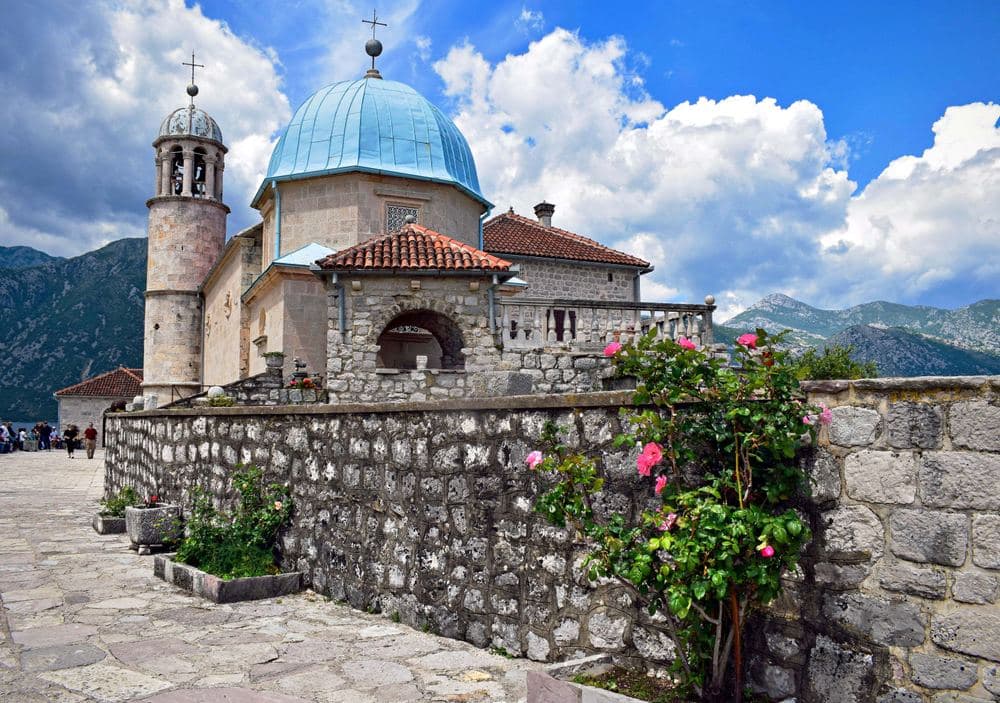
Perast is the stop everyone makes and the one worth the most time. A single row of stone palaces along the water, no cars in the village, a church tower of 55 metres, and two islands 200 metres offshore: Sveti Đorđe, a natural islet with a Benedictine monastery and cypresses, closed to visitors, and Gospa od Škrpjela, Our Lady of the Rocks, an artificial island that the villagers built by sinking old ships and dropping stones on a reef for 200 years, a tradition they still keep on 22 July with a procession of boats. The church on the island holds a museum with 68 paintings by the local baroque painter Tripo Kokolja and a famous embroidery of the Madonna made over 25 years by a woman who used her own hair for the angels. The taxi boats from Perast's waterfront take you across and back for 5 euro, 10 with a wait, and the church museum charges a few euro. Give Perast an hour and a half: the island, a coffee on the water and a walk along the palaces.
Kotor old town in three hours
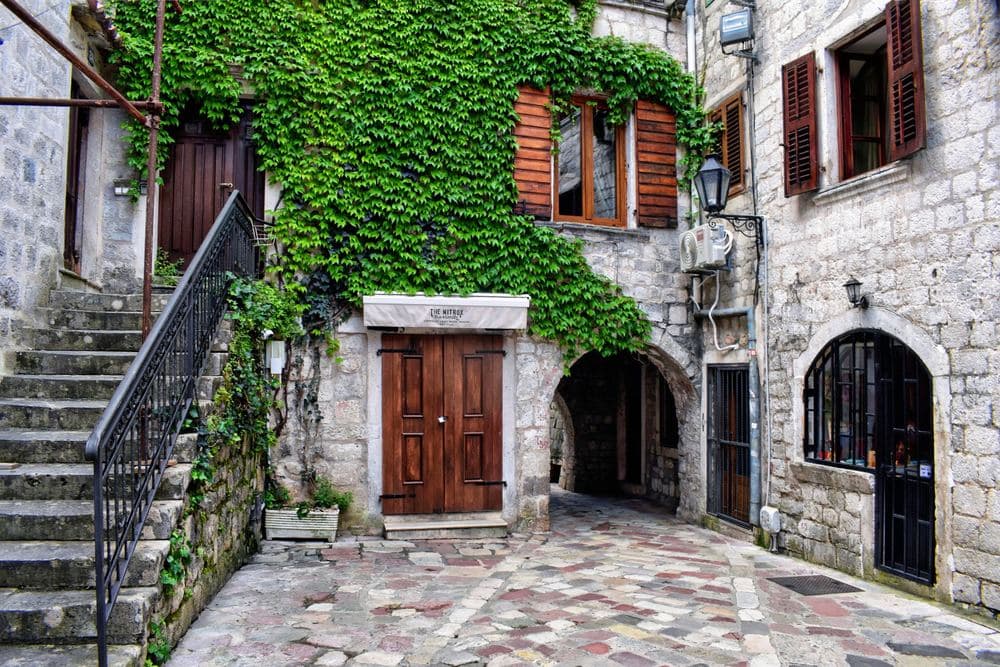
Enter by the Sea Gate on the waterfront, where the Venetian winged lion and a communist-era inscription share the arch, into the Square of Arms with the clock tower of 1602 and the pillory in front of it. The old town is small enough to lose yourself in without getting lost: every lane ends at a square, and every square has a church. St Tryphon's cathedral, two blocks in, is the main sight, Romanesque with twin baroque towers rebuilt after the 1667 earthquake, a gilded altar screen and a treasury upstairs with the saint's relics, entry 4 euro. The Maritime Museum in the Grgurina palace, 5 euro, tells the story of the Boka's fleets with ship models and the captains' portraits. The Orthodox church of St Luke from 1195 and St Nicholas on the same square show the other half of the town. Between them are the cat museum, the cats themselves, which the town has adopted as its symbol, and the lanes of bars under the north wall. Since 2024 the town charges a visitor fee of about 2 euro at the gates in the high season, children free.
The climb to San Giovanni
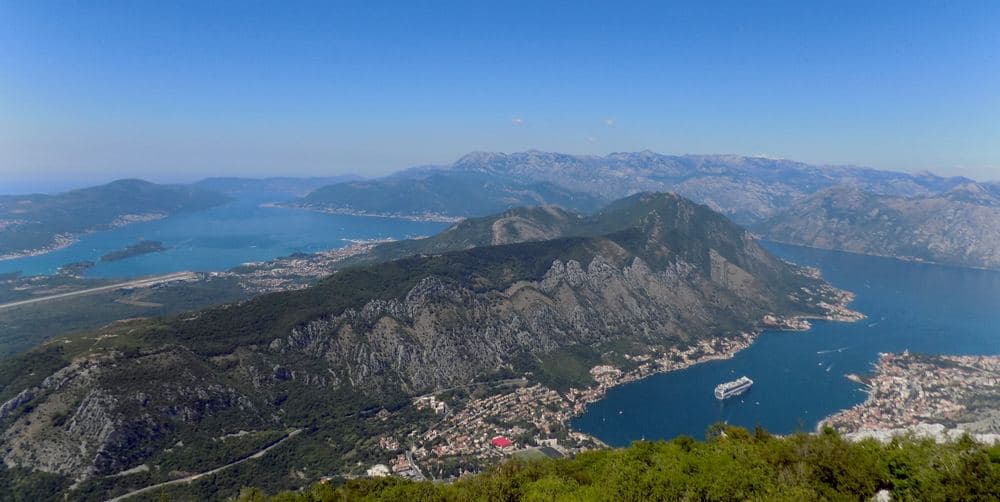
The fortress walk is the thing people remember. From the north-eastern corner of the old town, behind St Mary's church, a stepped path zigzags up the mountain through the fortifications: 1,350 steps and 260 metres of climb to the fortress of San Giovanni, past the chapel of Our Lady of Remedy halfway up, with the bay opening wider at every turn until the whole of the Boka is below you and the cruise ship at the pier looks like a toy. The ticket at the gate is 15 euro in 2026, a rise from 8 the year before, sold from about 08:00 to 20:00 in summer. The climb takes 45 minutes to an hour at a normal pace and 30 minutes down; there is no shade, no water and no toilet on the way, so go before ten or after five in July and August, and carry a litre each. The free alternative is the Ladder of Kotor, the old mule track that starts outside the walls north of the town and climbs in 70 hairpins to a gap in the fortifications above the fortress, from where you can enter the walls from above; it is longer and needs proper shoes.
Where to eat and what it costs
Kotor is cheaper than Dubrovnik by about a third. A coffee in the old town is 2 euro, a beer 3 to 4, a plate of black risotto or grilled squid 12 to 18, a full dinner for two with wine 50 to 70 euro. The konobas in the lanes behind the cathedral are better than the terraces on the main squares, and the fish restaurants along the bay road in Ljuta and Dobrota, ten minutes from the town, are where the locals go for a long lunch, with the water at the table. In Perast the waterfront restaurants charge Dubrovnik prices for the view; the bakery at the north end of the village is the cheap lunch. Cards are accepted almost everywhere, but carry some euro in cash for the island boats and the fortress gate.
Beyond Kotor: Lovćen, Budva, Tivat
With a car and an early start, two additions are worth it. Lovćen national park is the mountain wall behind Kotor: the old Austrian road from the town climbs 25 hairpins to Krstac, then continues to the Njegoš mausoleum on the 1,657-metre Jezerski vrh, a granite temple by Ivan Meštrović reached by 461 steps in a tunnel, entry about 8 euro, with a view over the whole of Montenegro and, on clear days, to Italy. Budva, 25 kilometres south, is the beach resort with a small walled old town and the busiest nightlife on the coast, worth an hour on the way back in spring, not in August. Tivat, across the bay, has the Porto Montenegro marina built on the old naval base, a place for a drink among the superyachts. None of the three fits into a bus day; all three fit into a car day if Kotor gets three hours and Perast one.
The border queue and how to beat it
The Karasovići and Debeli Brijeg crossing is the only one on the coast road, and in July and August it backs up for an hour or more between 08:00 and 11:00 going south and 16:00 and 19:00 coming north, because every tour coach, bus and rental car on the Adriatic is on the same schedule. Three things help. Take the earliest bus or leave by car before seven. Do the trip in reverse, Kotor first at opening and Perast in the afternoon, then cross north after 19:00 when the coaches have passed. Or go in the shoulder months, when the crossing takes ten minutes and the whole trip is what it should be. Cruise passengers on a ship day in Kotor are the fourth factor: check the port's schedule, and if two ships are in, the old town and the fortress are crowded from ten to three.
A day plan that works
- 07:15 bus from Gruž, or a car out of Dubrovnik by 07:00, border in ten minutes.
- 09:15 Perast: taxi boat to Our Lady of the Rocks, the museum, a coffee on the water, the walk along the palaces. Bus passengers get off at the Perast stop on the main road and pick up the next bus, or a local bus, on to Kotor.
- 11:00 Kotor: straight up to San Giovanni before the heat, 45 minutes up, 30 down.
- 12:30 lunch in a lane konoba behind the cathedral, then the cathedral, the Maritime Museum and the cats.
- 15:00 walk the waterfront or drive the bay road to Dobrota for a swim from the stone jetties.
- 17:00 or 18:00 bus back, or drive the Kamenari ferry shortcut and cross the border after the coach wave, dinner in Dubrovnik by nine.
Staying the night in Kotor
If the day feels short, it is because it is: Kotor rewards an evening, when the day-trippers and the cruise passengers have gone and the squares belong to the town. A double in an old-town guesthouse costs 70 to 120 euro in summer, half that in Dobrota along the bay, and the buses to Dubrovnik run in the morning. Two nights in Kotor with a day for Lovćen or the Luštica peninsula and a morning in Perast turn the trip into the best short excursion from Dubrovnik there is.
Practical notes for visitors from the US, UK, Canada and Australia
- Passport, not ID card; no visa for a day visit; both borders stamp.
- Montenegro is not in the EU: mobile data from an EU or a Croatian tourist SIM does not roam free, and US day passes count Montenegro separately. Download offline maps before the border.
- Travel insurance: check that Montenegro is covered; most European policies from the US and UK include it.
- Currency euro, cards widely accepted, cash for boats and the fortress gate.
- Time zone the same as Croatia; power plugs the same; tap water fine.
- Rental cars: cross-border permission and green card required, 20 to 40 euro; some companies exclude Montenegro, ask before you book.
Watch
Dubrovnik on video
A short official city film to help you picture the place before you go.
Dubrovnik and time
Frequently asked questions
- How do I get from Dubrovnik to Kotor?
- By public bus from the Gruž station, about six a day in summer, 2 to 3 hours, 13 to 30 euro one way; by coach tour for 45 to 70 euro with Perast included; or by hire car in about 2 hours with the Kamenari to Lepetane ferry across the bay, if your rental allows Montenegro.
- Do I need a passport to go from Dubrovnik to Kotor?
- Yes. Montenegro is outside the EU and Schengen, so you are stamped out of Croatia and into Montenegro. US, UK, Canadian, Australian and EU citizens need no visa for a day visit. An identity card is not enough.
- How much is the Kotor fortress climb?
- 15 euro per adult in 2026 at the gate behind St Mary's church, 1,350 steps and 260 metres up to San Giovanni, 45 minutes to an hour up. The Ladder of Kotor mule track outside the walls is free.
- Is a Dubrovnik to Kotor day trip worth it?
- Yes, especially from May to June and September to October, when the border takes minutes. In July and August take the earliest bus or a tour that uses the bus lane, and do the fortress before ten. Two nights in Kotor are better than one day.
- How long is the drive from Dubrovnik to Kotor?
- About 2 hours for 93 kilometres outside the peak season: 40 minutes to the border, then the bay road, or the five-minute Kamenari ferry shortcut. In July and August add an hour for the border queue each way.
Official sources
Make Croatia Atlas a preferred source
One click and Google shows you our stories more often in Top Stories and in AI answers. It changes your own results only.