Plan your Lokrum visit around official access, remain on marked paths, observe wildlife without feeding it and leave the protected island exactly as you found it.
Checked: 21 September 2026
A responsible Lokrum visit begins before boarding. This is a protected reserve with an official visitor system, not an island where travellers can set their own access rules. Check the official website on the day of your trip for current boat arrangements, visitor information and operational changes. Carry a valid ticket and follow instructions from reserve staff. The official code states that visitors may not remain before the first official reserve boat arrives or after the last one departs. The island also has a winter closure. Schedules, conditions and prices can change, so current official information is the final authority. Keep your plan flexible enough to return to the departure point with time to spare.
Let the reserve define your route
After arrival, stay on designated footpaths and inside areas intended for visitors. Leaving them is prohibited unless authorised research is being conducted with a valid permit. This protects vegetation and animals and keeps visitors away from terrain not managed for public access. Follow signs even when an unofficial shortcut looks convenient. Do not move or damage signs, information boards or educational equipment. If a section is closed or staff redirect you, turn back instead of searching for another way through. Wildlife encounters should remain observations, not interactions. Never remove, capture or disturb an animal or plant, and do not feed wild animals. If an animal approaches, step back, reduce noise and leave its route open.
- Carry your valid ticket and follow current access instructions from the Lokrum Reserve.
- Remain on marked paths, keep food closed and observe wildlife from a respectful distance.
- Do not smoke, use an open flame or fly a drone without the required authorisation.
- Use marked waste points and carry every item with you until you reach one.
Leave on the reserve's schedule
The final responsible choice is a timely departure. Do not begin an activity so close to the last official boat that a small delay could leave you behind. Return to the official departure point with a reasonable margin, keep your ticket accessible and follow announcements. Before boarding, check every place where you paused for bottles, wrappers, clothing and other belongings. Use only marked disposal points and carry rubbish until one is available. Never try to remain after the last official boat, enter before the first boat or visit during the winter closure. A good Lokrum day is measured by what you experienced and what you did not change: wildlife was not fed, paths were respected, no flame was used and nothing was removed from the reserve.
Getting to the Lokrum boat
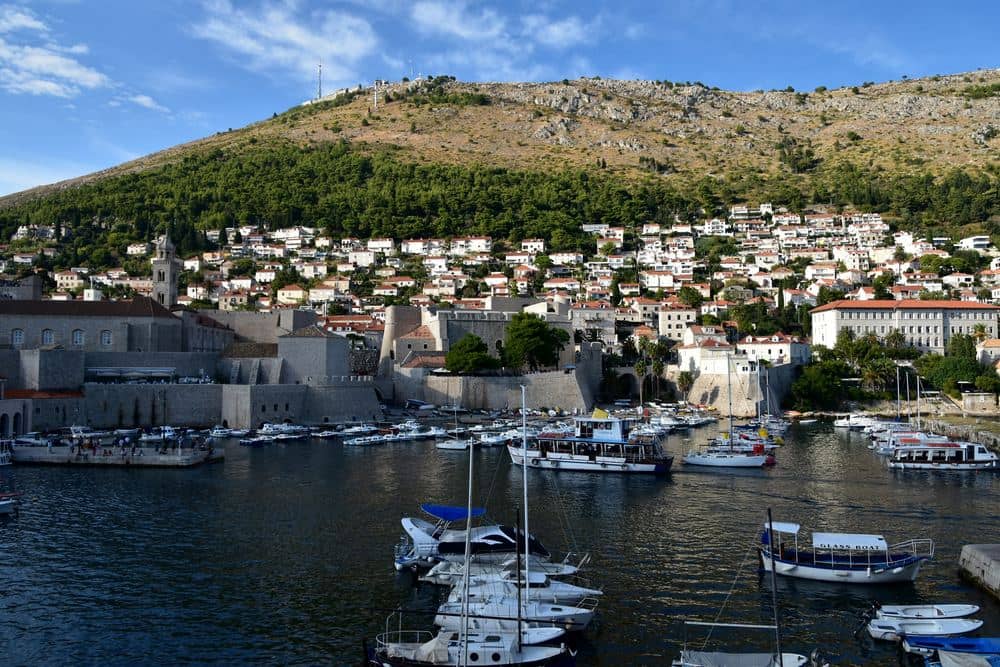
The reserve boat leaves from the Old Port on the eastern side of the walled town, below Fort St John. From Pile Gate walk the 300 metres of Stradun, pass the bell tower and go through the arches by the old arsenals onto the quay. From Ploče Gate the quay is about 5 minutes downhill past the Dominican monastery. The crossing takes about 10 minutes and in season boats sail roughly every half hour through the day. A return ticket with reserve entry costs about 30 euro, and it is checked again for the journey back, so keep it dry. Cruise passengers dock at Gruž, 3 km from the Old Town, so allow the bus or taxi ride and the walk through the town before the sailing you plan to catch. The season runs from spring to the end of October.
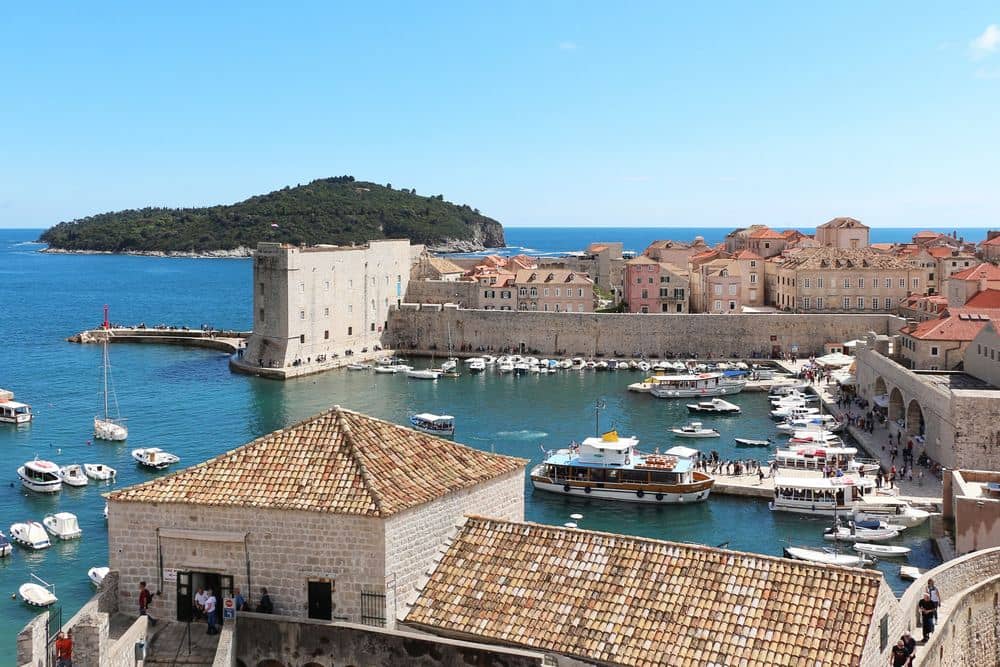
The island in walking times
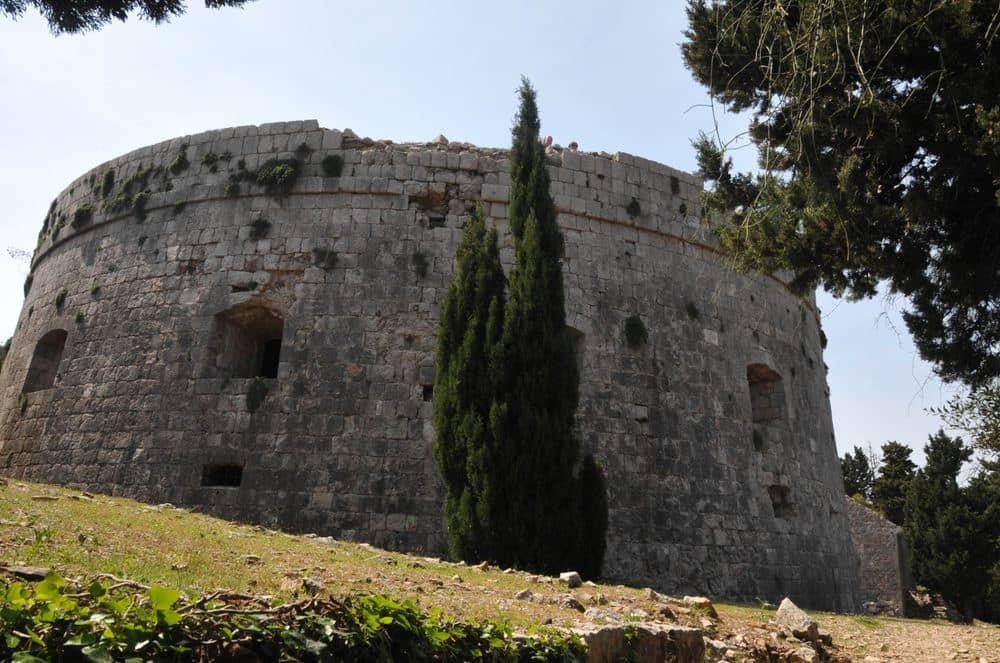
Lokrum is small, under 2 km from end to end, and everything is reached on foot from the single landing. A flat path leads in a few minutes to the former Benedictine monastery, whose cloister dates from the 11th century, and to the botanical garden that Archduke Maximilian planted in 1859. The peacocks live here and walk the paths. Beyond the garden a short path drops to the Dead Sea, a small salt lake linked to the open sea through the rock, warm and shallow. The climb to Fort Royal takes about 20 minutes through pines and cypresses on a marked forest path, and the roof of the tower gives the whole of Dubrovnik in one direction and the Elafiti islands in the other. The fort is open without charge and without staff, so watch the edges. Bathing is from rock slabs with ladders around the shore, and one stretch is traditionally naturist.
| Place | Walk from the landing | Good for |
|---|---|---|
| Monastery and botanical garden | A few minutes on the flat | Shade, the cloister, peacocks |
| Dead Sea | About 10 minutes | Warm shallow water, children |
| Fort Royal | About 20 minutes uphill | The view, an early or late climb |
| Rock coves | 10 to 15 minutes | Deep clear water, ladders |
What to carry on the boat
There is no drinking water on the path to the fort and the catering on the island is modest, so treat Lokrum as a picnic day. Fill bottles at either Onofrio fountain on Stradun before you walk to the quay, the water is cold and drinkable. The morning market on Gundulić Square, open every day except Sunday, sells bread, figs, tomatoes and cheese from Konavle and the Elafiti at lower prices than the shops in the core. Sun is the other factor: the paths have shade under the pines, the rocks and the fort roof have none, and the crossing itself is in full light.
- At least 1.5 litres of water per person in summer, more if you plan the climb to Fort Royal.
- Food for the whole day, bought at the market or a bakery before you board.
- Swim shoes for the rock slabs and the metal ladders, which get hot by midday.
- Firm shoes for the fort path and the unmanaged tower, sandals are enough for the garden.
- A hat, sun cream and a light shirt for the rocks, where there is no shade at all.
- A small dry bag or zip pocket for the return ticket, phone and keys while you swim.
Picking the hour and the month
The first sailing of the morning gives you the paths almost empty and the peacocks at their loudest, and the Dead Sea is warmest in the afternoon after a day of sun. In July and August the boat queue on the quay grows from mid-morning, and the Old Town itself is fullest between 09:00 and 11:00 when cruise groups come through Pile Gate, so an early crossing avoids both. Boats sail from spring until the end of October, and in the first half of October the sea is still around 20 degrees. A strong southerly can stop the crossing for the day, so look at the sea from the Ploče side before you walk down to the quay. The last boats leave toward evening, and the view of the walls from the water on the way back is one of the best in the city.
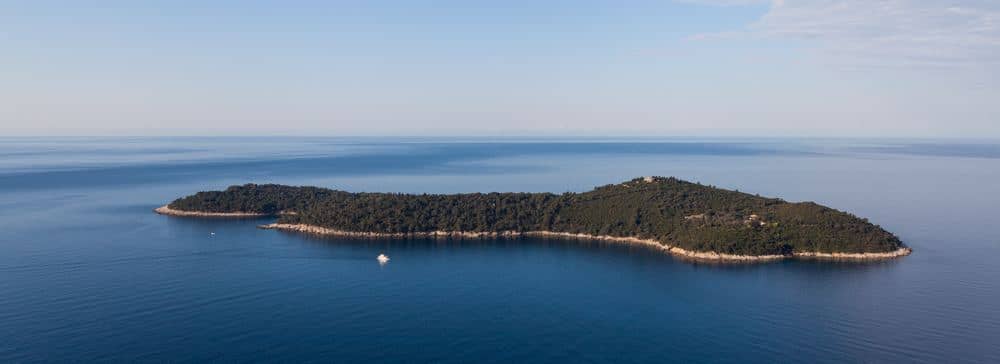
Lokrum with children
The Dead Sea is the reason families choose Lokrum: a shallow, warm salt lake with an easy entry, a few minutes from the garden and out of the swell. The open coves are different, the water is deep from the first step and the way out is up a ladder, so they suit confident swimmers. Do not count on a lifeguard anywhere on the island. Fort Royal is unmanaged, with open edges on the roof, so hold hands and skip it with toddlers. The paths are gravel and uneven, so a carrier is easier than a pushchair. Peacocks come close to anyone with food. Ask children to watch them from a step or two away and to let them pass, chasing a bird counts as disturbing wildlife. The pine shade by the monastery is the best place for a midday rest.
Mistakes that spoil the day
Most bad Lokrum days come from treating the island like a beach with a bus stop. It is a forest reserve reached by boat, and the boat, the heat and the rocks set the rules. Nothing forgotten on the quay can be bought once you are across, and the walk back to the landing takes as long as the walk out. The errors below come up most often, and each one costs an hour, a swim or the whole afternoon. All of them are avoided with 10 minutes of thought before you board.
- Climbing to Fort Royal at midday in July with one small bottle, the path has no water and the roof no shade.
- Arriving at the quay in the late morning on a two-ship cruise day and queuing for more than one sailing.
- Expecting a full lunch on the island and going hungry, the catering is small and simple.
- Jumping from the rocks before finding the ladder and checking the depth below.
- Photographing the naturist stretch of shore, keep the camera away and give people their privacy.
- Walking the forest paths in flip-flops and turning an ankle on the stones.
The places, one by one
| Place | What it is | Time needed |
|---|---|---|
| Stradun | Main street of the old town | 30 minutes |
| Franciscan Monastery | Cloister, old pharmacy and museum | 30 minutes |
| Rector's Palace | Seat of the republic, now a museum | 1 hour |
| Dubrovnik Cathedral | Baroque cathedral with treasury | 30 to 45 minutes |
| Gundulić Square Market | Morning produce market | 30 minutes |
| Buža Gate | Bars on the rocks outside the south walls | 1 hour |
| Fort St John | Aquarium and Maritime Museum at the port | 1 to 2 hours |
| Porporela Pier | Breakwater for swimming and evening sitting | 30 minutes to 1 hour |
| City Walls | Full circuit of the ramparts | 90 minutes to 2 hours |
| Fort Lovrijenac | Fortress on a rock west of the walls | 1 hour |
| Banje Beach | City beach facing the walls and Lokrum | 2 hours to half a day |
| Sveti Jakov Beach | Shingle cove east of Ploče | half a day |
| Mount Srđ | Ridge above the city with fort and museum | 2 to 3 hours |
Stradun
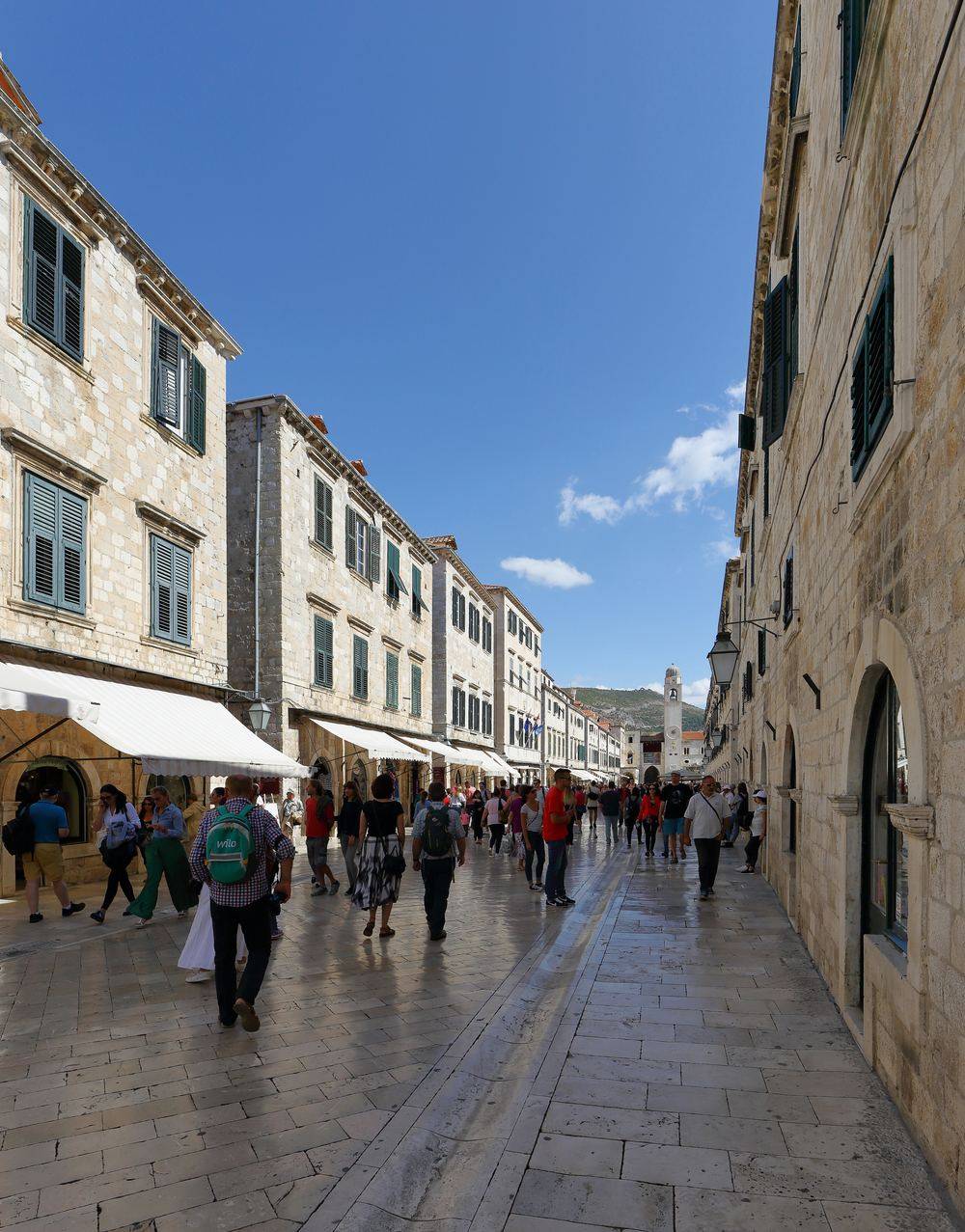
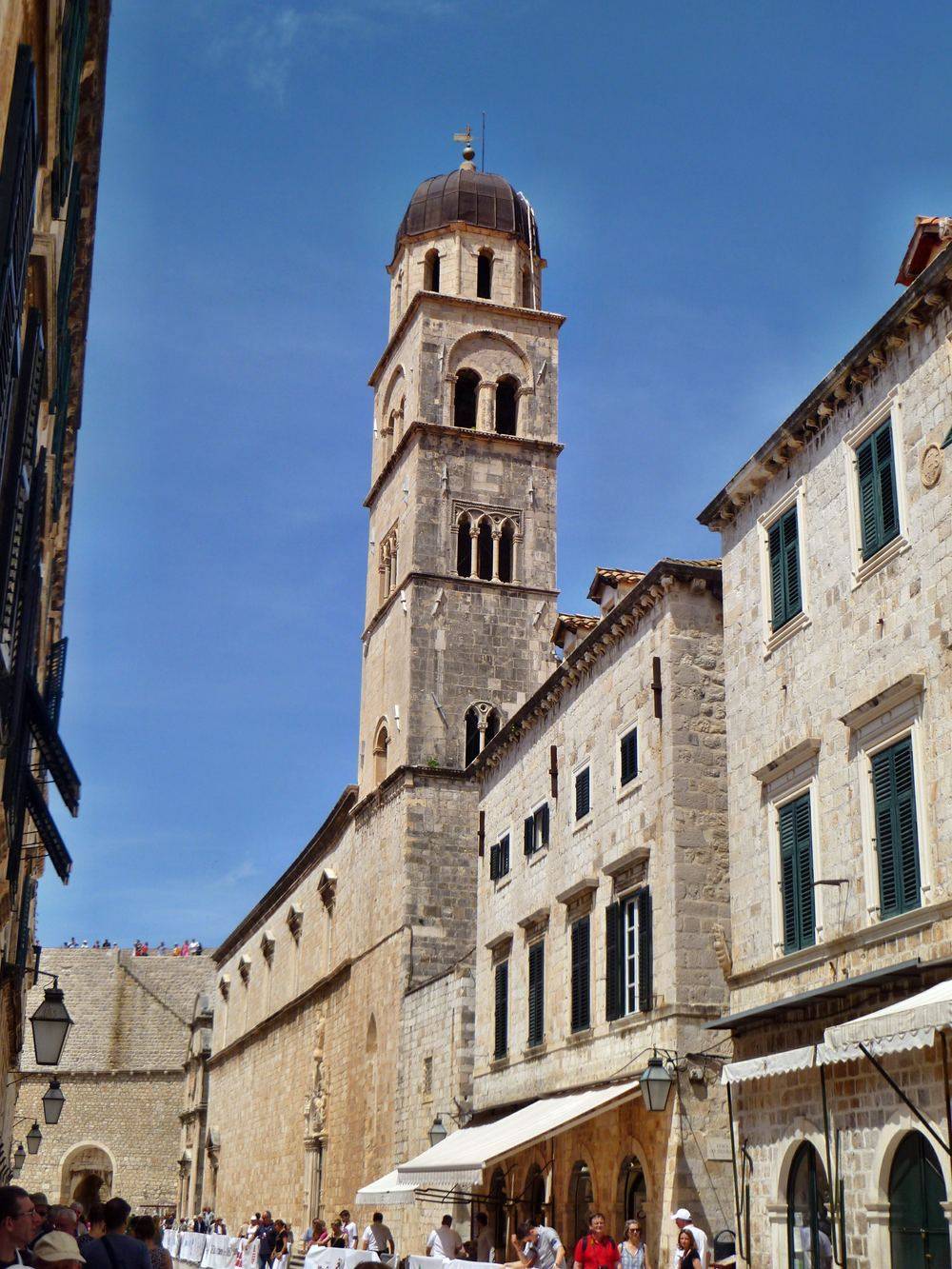
The Stradun began as water, a shallow channel dividing the Roman islet of Ragusa from the Slavic settlement on the shore. It was filled in around the 11th century and became the spine of the joined town. After the earthquake of 1667 flattened the city, the republic rebuilt the whole street in one go: the same height, the same baroque fronts, the same green shutters, shops below and living above. That is why the walk from Pile to the harbour feels like a single building. The limestone paving has been polished by feet into a mirror. Walk it once by day for the shops and once after midnight, when it is empty and echoes.
Franciscan Monastery
The Franciscan monastery at the Pile end of the Stradun holds what many call Europe's oldest working pharmacy. It opened in 1317 and has dispensed medicine without a break since, today as an ordinary city pharmacy with baroque jars from the monastery workshop on the shelves. Next to it is the 14th-century cloister by Mihoje Brajkov of Bar: some 60 double columns, each with a differently carved capital, around a garden of palms and orange trees. The museum shows pharmacy equipment and manuscripts from a library of more than 20,000 volumes. The church was rebuilt after 1667, but the Pietà portal of 1499 survived. A single ticket covers cloister and museum, and the visit takes half an hour.
Rector's Palace
The Rector's Palace was the seat of the Republic of Ragusa. The rector served for 1 month, and in those 30 days he could leave the palace only on official duty. The building is Gothic-Renaissance, with a portico whose capitals show scenes from the crafts and from mythology, and an atrium used for concerts of the Dubrovnik Summer Festival. Today it houses the Cultural-Historical Museum: the rector's rooms, the courtroom, the dungeons on the ground floor, arms, portraits, clocks and furniture. The visit takes about 1 hour, and the ticket also covers other city museums. Come in the morning, when the atrium is empty. Clap once and you will hear why concerts are held here.
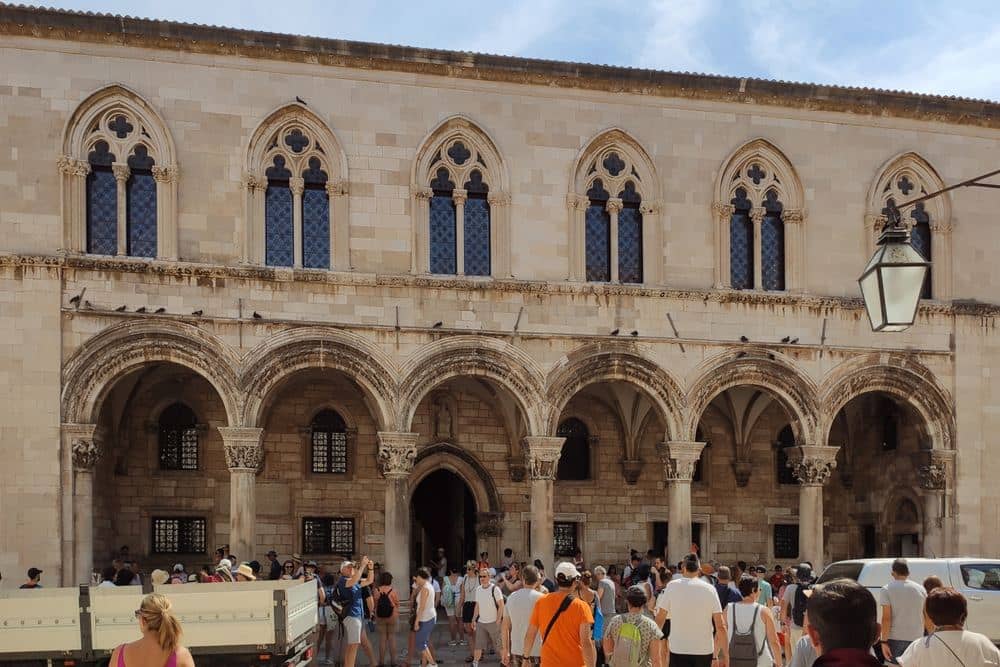
Dubrovnik Cathedral
The Cathedral of the Assumption is the third church on the same spot. Tradition says the first was raised on a vow of the English king Richard the Lionheart after a shipwreck by Lokrum. The Romanesque building fell in the earthquake of 1667, and the present baroque cathedral was finished by 1713. Inside are a dome over the high altar and Titian's 16th-century polyptych of the Assumption, the most valuable painting in the city. The treasury holds over 200 reliquaries, among them the gilded arm, leg and skull of St Blaise in a filigree crown. Entry to the cathedral is free, the treasury is paid separately. It opens 08:00 to 17:00. Cover your shoulders and visit before 12:00, before the groups arrive.
Gundulić Square Market
The stalls on Gundulićeva poljana are set up from 06:30 to 13:00 around the monument to the poet Ivan Gundulić, whose epic Osman is still taught in Croatian schools. Beyond the basics for a Lokrum picnic, the sellers offer mandarins, lavender, honey, olive oil, dried fruit and homemade brandy. Buy from the same people a second time and you will also get advice on what is best that day. The square has baroque facades on all sides and the Jesuit Stairs rising from one corner, and the cafés fill as soon as the market disperses. Come at 08:00 with a cloth bag. A breakfast from the stalls eaten on the steps costs under 10 euros.
Buža Gate
Buža means hole in the Dubrovnik dialect: a narrow opening in the southern walls through which you step out of the city onto the rocks above the open sea. Here 2 bars opened on the rocks and became the city's best known address for a drink. The tables stand on terraces cut into the rock some 20 metres above the water, and nothing breaks the view except Lokrum on the horizon. Prices are touristic and the choice is modest. Jumping into the sea is customary, but the rocks are high and the sea deep, so judge soberly. Ladders are fitted for getting out. The bars work from morning to night, and the best hour is the one before sunset, when the sun drops toward the Elafiti.
Fort St John
The Fortress of St John guards the mouth of the old port. It was built from the 14th to the 16th century and changed shape as artillery changed, ending with the rounded outline and sloped walls that deflected cannonballs. With the Revelin across the water it closed the port at night with a chain drawn tight below the surface. Today it holds 2 museums on a single ticket. On the ground floor is an aquarium with Adriatic species, octopuses, morays and smaller sharks, an hour of shade for children. Upstairs the Maritime Museum uses ship models, instruments, flags and documents to trace how a republic with 200 sailing ships became a sea power. From the terrace you look over the port, Lokrum and the Kaše breakwater.
Porporela Pier
The Porporela is the breakwater at the end of the old port, a stone mole with a balustrade built in the 19th century to shield the harbour from the southerly. Swimmers go out to the buoy in the morning, children jump off the steps in the afternoon, and in the evening people sit on the edge with their feet above the sea and watch the lights come on over Lokrum. The water is deep, clean and colder than in the coves, and you enter over steps with a handrail. There are no facilities, no loungers and no music. It is 5 minutes from the core through the port, and a good swim if the Lokrum crossing is cancelled. Come at 19:00, when the city finishes work.
City Walls
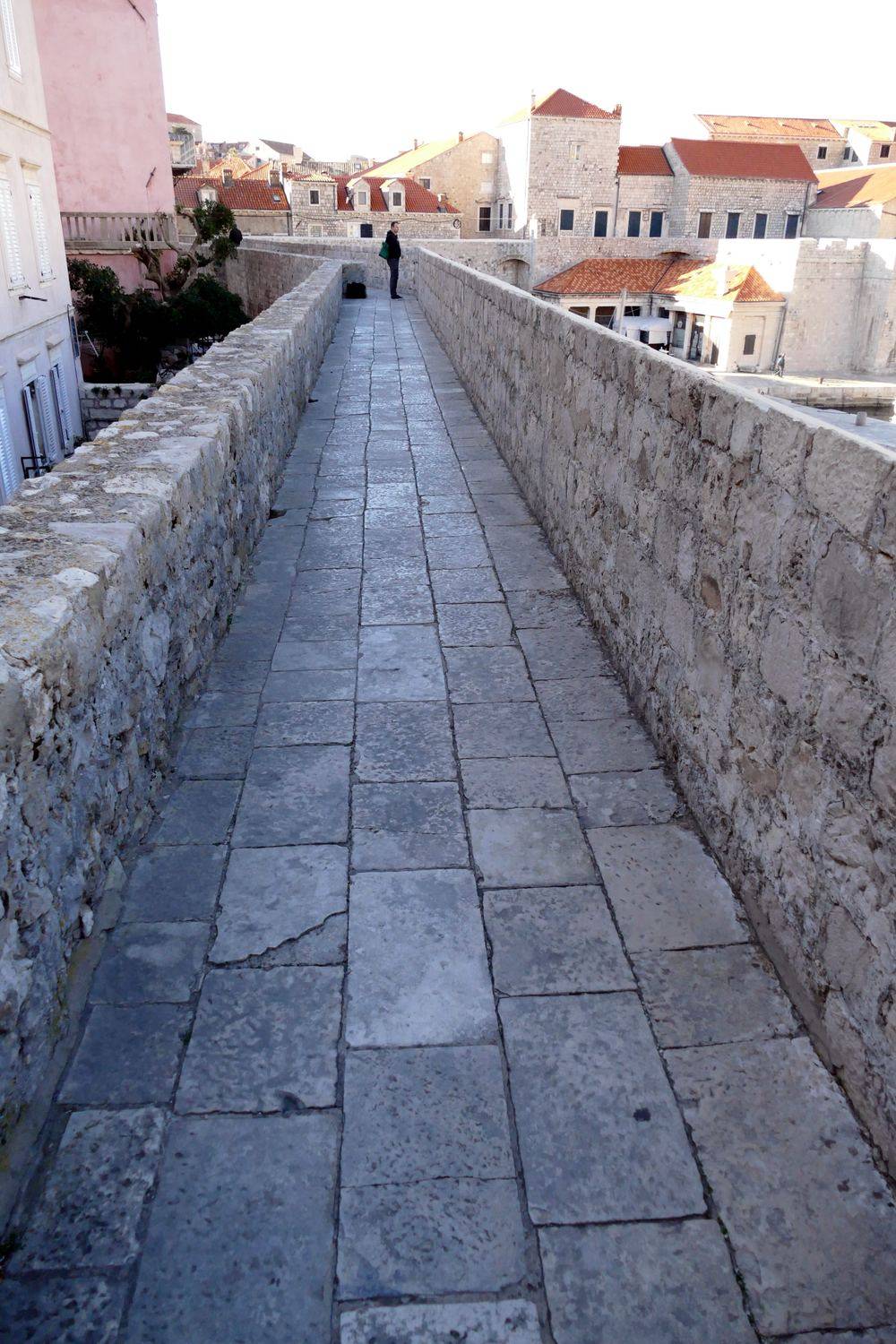
The walls run 1,940 metres around the old town, up to 25 metres high and in places 6 metres thick on the landward side, where the danger came from. Most of what stands today was shaped in the 15th and 16th centuries, when the republic feared the Ottomans. The round Minčeta tower on the north-western corner is the highest point. The full circuit takes about 90 minutes, with the sea on one side and a roofscape on the other, where the split between old and new tiles records the shelling of 1991 and the rebuilding after it. Go at opening time or in the last 2 hours, there is no shade at all. The ticket also covers Lovrijenac.
Fort Lovrijenac
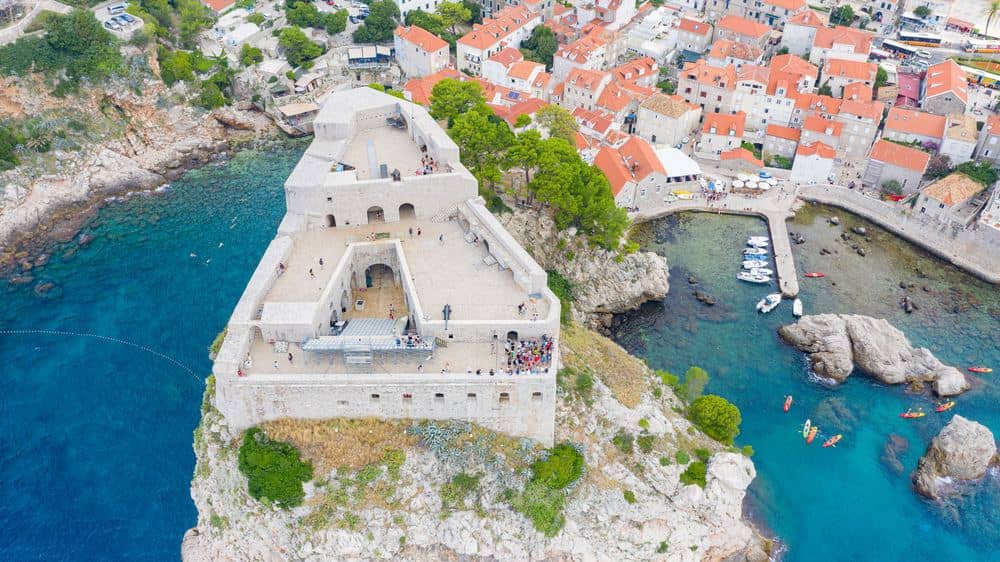
Lovrijenac stands on a 37-metre rock outside the walls to the west of Pile. The walls facing the sea and a possible enemy are up to 12 metres thick, the wall facing the city is 60 centimetres. If a commander ever turned against Dubrovnik, a single cannon shot from the town would open his fortress. Above the gate the republic carved its motto: liberty is not sold for all the gold in the world. Since 1952 the upper terrace has doubled as a stage, and Hamlet played here made the fort famous far beyond Croatia. The climb is steep and the ticket is the one you bought for the walls. The view back onto the walled town is the one the drone shots imitate.
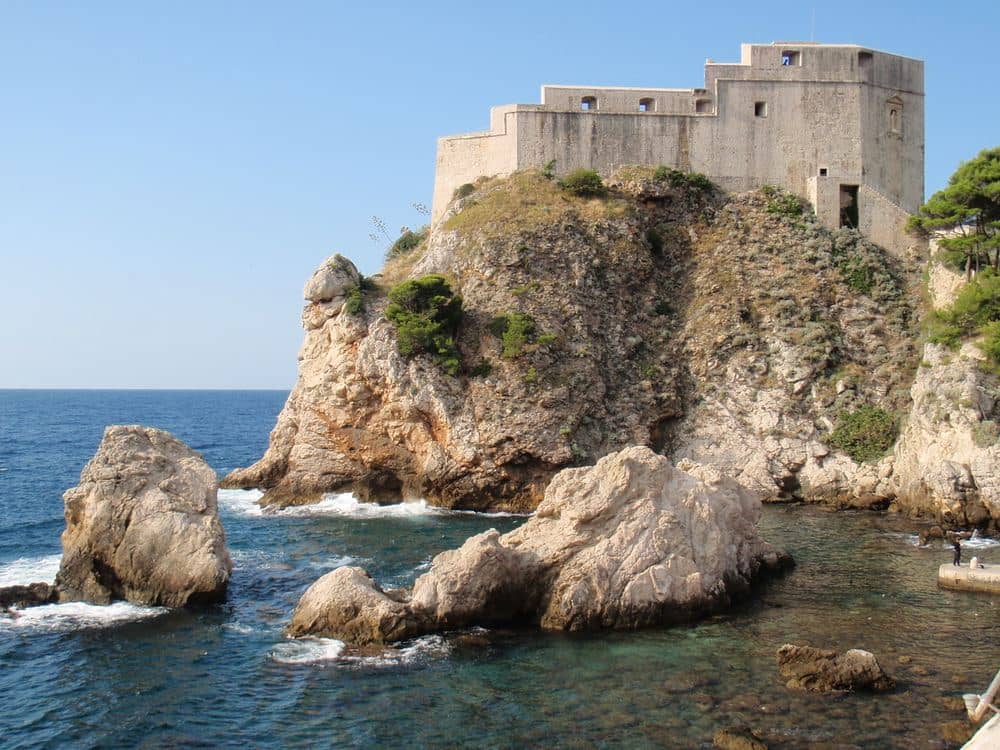
Banje Beach
Banje is the city beach, a shingle strand outside Ploče Gate from which you look straight at the walls, the Fortress of St John and Lokrum across the channel. Part of it is under concession, with loungers, a bar and a beach club, and part is free, with enough shingle for a towel if you come early. The sea is deep close to shore and always clear, because the current through the channel never rests. From the core it is a 5-minute walk, with steps from the road straight onto the strand. The best moments are early morning, when the sun comes from the east and lights the walls, and early evening, when the stone turns golden. On summer afternoons this is the city's greatest crush.
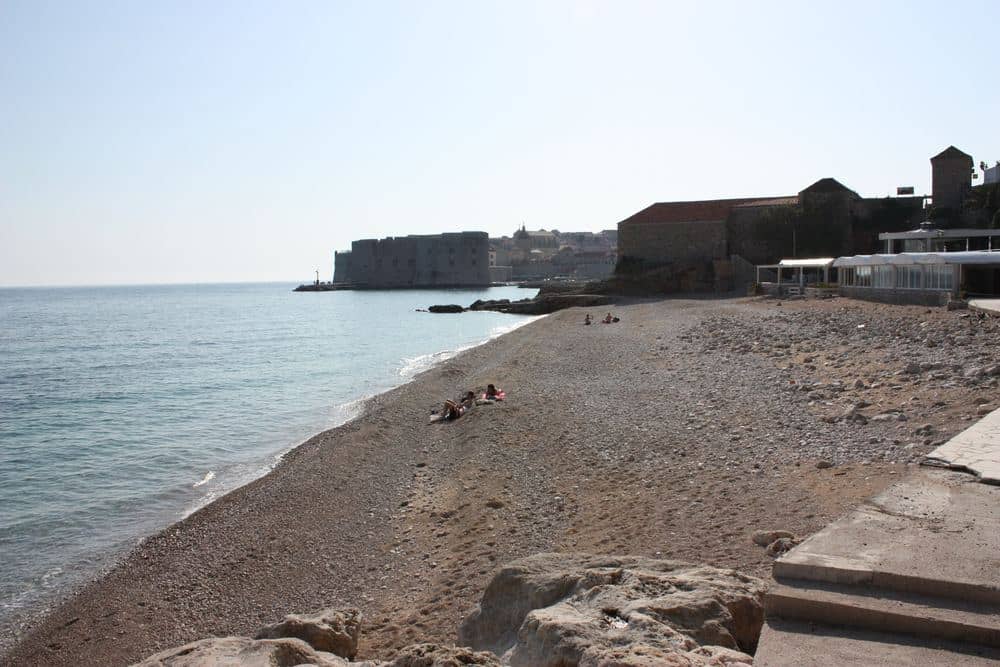
Sveti Jakov Beach
Sveti Jakov is the reward of eastern Dubrovnik: a shingle cove below a steep slope at Ploče, reached by a staircase of nearly 200 steps, so it stays half empty even in season. From here you see the old core whole, with the walls, the Fortress of St John and Lokrum in the same frame. The cove faces south-west and is sheltered, so the sea is calm, deep and clean. A bar and a restaurant work by the beach. You reach it by bus number 8 or on foot from Ploče in about 20 minutes. Above the beach stand the ruins of the 13th-century Benedictine monastery of St Jacob. Stay into the evening: the sun sets behind the Old Town and the climb back is easier once it cools.
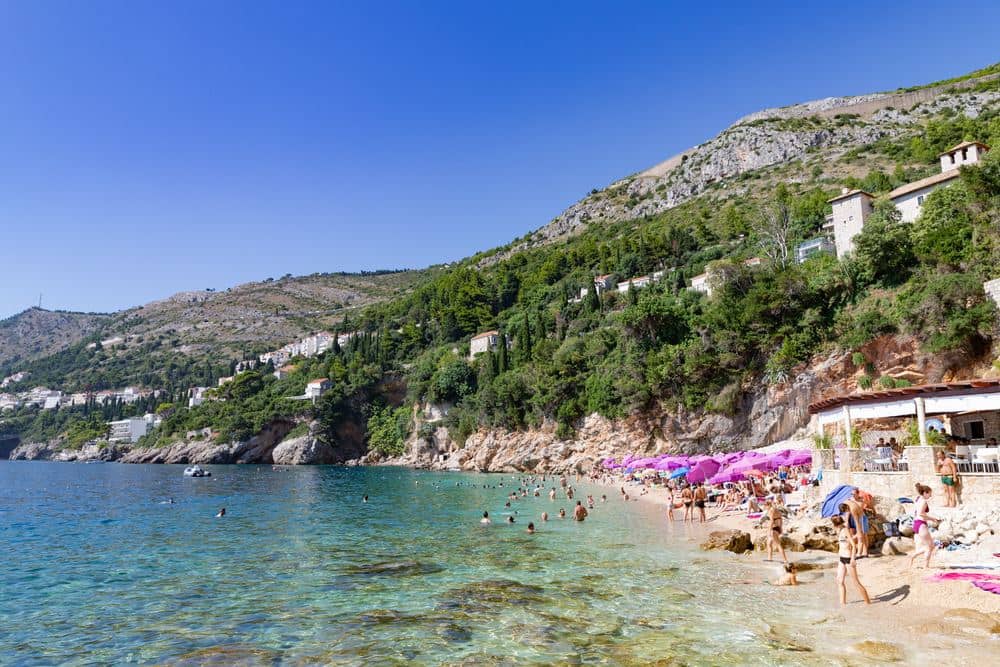
Mount Srđ
Srđ is the bare ridge 412 metres above the old town. Napoleon's army built the Imperial fortress on the summit in 1812. In 1991 a few dozen defenders held that same fort through the siege while the city burned below, and half of it is now a museum of that war, worth an hour. The cable car climbs from the station above the northern walls in under 4 minutes, or you walk the zigzag Way of the Cross path in about an hour without shade. Go up for the hour before sunset: the whole walled city, Lokrum and the Elafiti lie below, and you see the island whole, from the landing to Fort Royal. The walk down as the lights come on beats the ride.
Watch
Dubrovnik on video
A short official city film to help you picture the place before you go.
Dubrovnik and time
Frequently asked questions
- Can visitors leave the marked paths on Lokrum?
- No. Visitors must remain on designated footpaths and inside visitor areas. Leaving them is permitted only for authorised research conducted with a valid permit.
- Can visitors feed animals or use a drone on Lokrum?
- Feeding wild animals is prohibited. Drone operation requires authorisation, so visitors without the necessary permission must not fly one in the reserve.
Official sources
Share this guide
Questions about your trip?