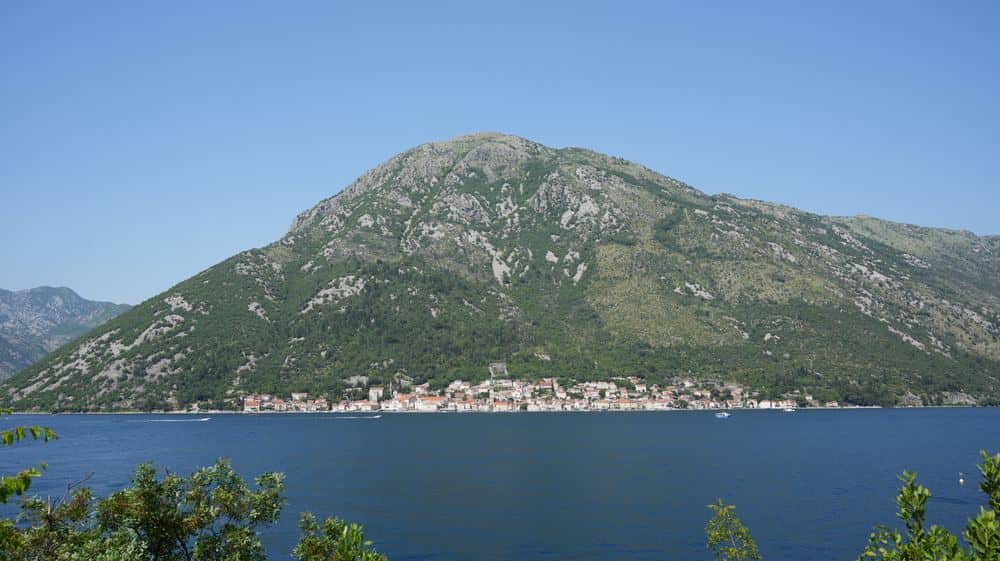
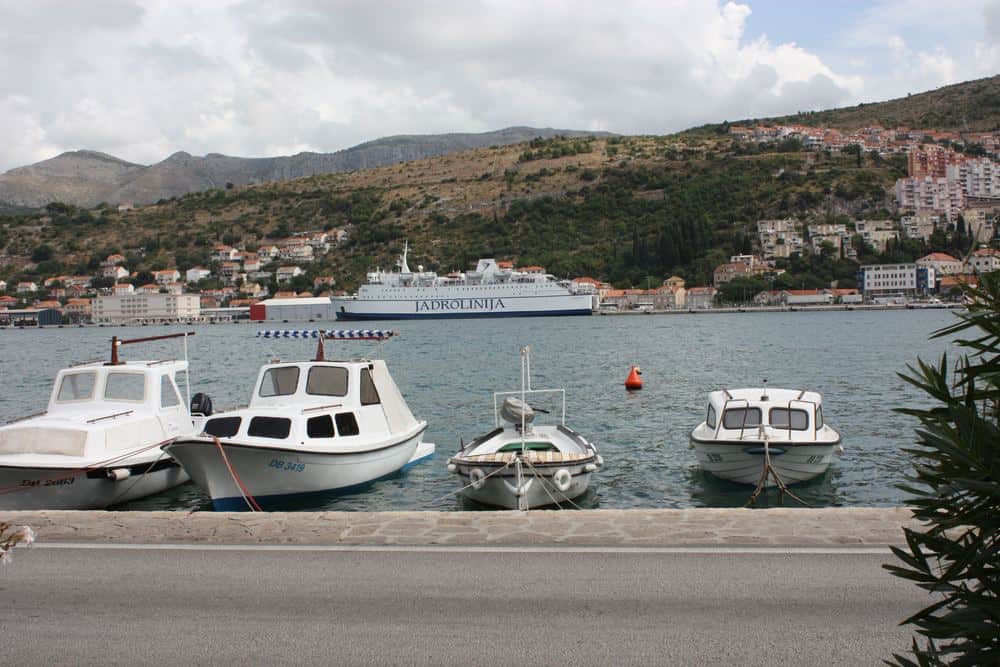
Pebbles under the walls at Banje, rock platforms through a hole in the wall at Buža, a quiet bay at Sveti Jakov, family beaches on Lapad, an island with a salt lake ten minutes away and sand on Lopud by ferry. Eleven beaches in the city and three beyond it, with how to reach each, sunbed prices and the right beach for a cruise day, a family day or a sunset swim.
Checked: 15 September 2026
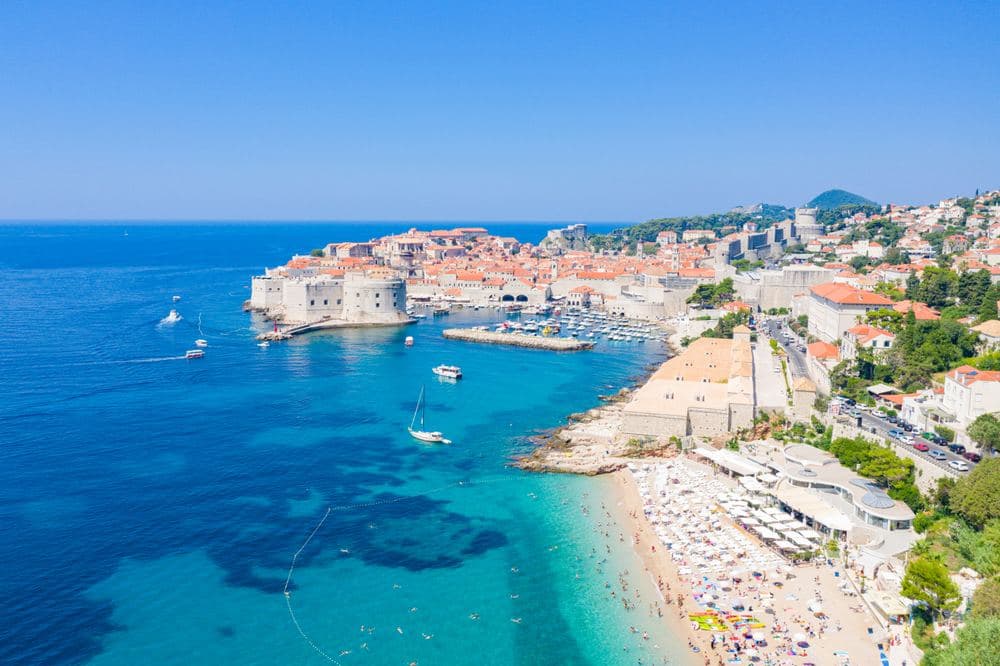
Dubrovnik is a city of walls, and its beaches are where the walls end: a strip of pebbles under the eastern gate with the whole Old Town in the frame, rock platforms below the southern ramparts with bars in the wall, a quiet cove twenty minutes east under a monastery, the family bays of the Lapad peninsula and, ten minutes by boat, an island with coves and a salt lake. None of them is large and none is sandy inside the city limits, and all of them have water so clear that the fish are visible from the walls above. This guide covers the eleven beaches worth knowing in Dubrovnik, plus the three outside it that a bus or a boat reaches, with how to get to each, what they cost, and which one to choose for a cruise day, a family day or a swim at sunset.
The beaches at a glance
| Beach | Type | From Pile Gate | Best for |
|---|---|---|---|
| Banje | Pebble | 10 min on foot via Ploče | The view of the walls, first swim |
| Buža | Rock platforms | 5 min, through the wall | A swim and a drink under the ramparts |
| Šulić | Pebble, small | 5 min west | Cruise-day swim below Lovrijenac |
| Danče | Rock and pebble | 10 min west | Locals, no facilities |
| Sveti Jakov | Pebble, quiet | Bus 5 or 8, 20 min, steps | Afternoon sun, few people |
| Lapad bay, Sunset beach | Pebble, sheltered | Bus 4 or 6, 15 min | Families, facilities, the promenade |
| Copacabana | Pebble and concrete | Bus 6, 25 min | Children, water slides, shallow |
| Cava and Bellevue | Pebble coves | 15 min west of Pile | Cliff-framed coves, hotel beach |
| Lokrum | Rock coves and a salt lake | Boat 10 min, 30 euro with entry | A whole day, naturist coves, the Dead Sea lake |
| Kupari | Pebble | Bus 10, 20 min | Wide beach among the abandoned hotels |
| Šunj on Lopud | Sand | Ferry 55 min plus a walk | The sandy day out |
| Pasjača | Pebble under a cliff | Car, 40 min | The dramatic one, no facilities |
Banje: the postcard swim
Banje is the beach in every photograph of Dubrovnik taken from the sea: a curve of pebbles just outside the Ploče gate with the eastern walls, the Old Port and Lokrum in view. It is five minutes from the Old Town along the Frana Supila road, down a flight of steps by the Lazareti, the old quarantine buildings that are now galleries and a club. The eastern half is a concession with sunbeds at 30 euro and up for two, a restaurant and a bar; the western half, nearest the walls, is free, and that is where the locals swim. The water is deep after a few metres and clean, the pebbles are small enough for bare feet, and there are showers and a kiosk. It is crowded from eleven to five in July and August and nearly empty at eight in the morning, when the light on the walls is best and the sea is flat. Sunset from the water, with the walls turning gold, is the reason to come back in the evening.
Buža: through a hole in the wall
Buža means hole, and the two Buža bars are reached through gaps in the southern city wall, signposted with a painted arrow and the words cold drinks. Beyond the wall is a terrace of rock platforms and steps cut into the cliff, with the open sea below and Lokrum in front. People swim off the rocks and the braver ones jump from the ledges, five to eight metres, and climb back up the iron ladders. There is no sand, no shade and no sunbed, and a beer costs 5 to 6 euro, which pays for the view. Buža I, the larger one, is reached from the street Od Margarite; Buža II from Ilije Sarake. In a jugo swell the swimming is closed by the sea itself. Go for the late afternoon and stay for the sunset.
Šulić and Danče: the west side
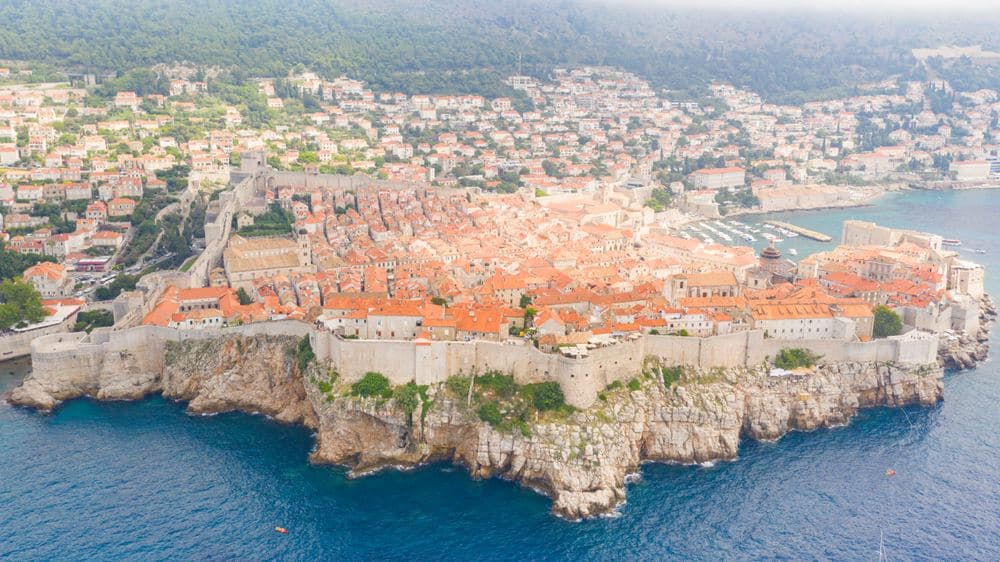
Šulić is the small pebble cove in the inlet between Fort Lovrijenac and the western walls, five minutes from Pile Gate down the steps past the rowing club. It is tiny, sheltered, in shade after three and, on a cruise-ship day when Banje is full, the closest quiet swim to the Old Town. Danče, ten minutes further west along the coast below the Gradac park, is a rock-and-pebble shore in front of a small church and a convent, with a concrete platform, ladders and no facilities at all; it is where the people of the western districts swim, and the water is deep and clean. Neither has a bar. Take water.
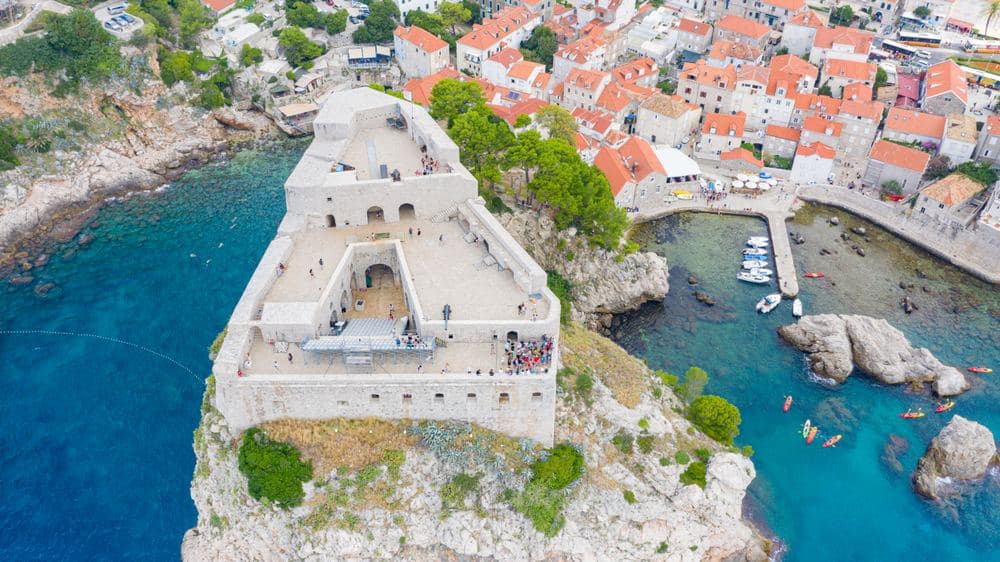
Sveti Jakov: the quiet one
Sveti Jakov is a pebble beach twenty minutes east of the Old Town, below the church of St James and a Benedictine monastery, reached by a long flight of steps from the Vlaha Bukovca road, which is why it has a fraction of Banje's crowd. The bay faces south-west, so it catches the afternoon sun until late, with the walls and Lokrum in the view across the water. There is a small bar with sunbeds at 20 to 25 euro for two, showers and a jetty. Bus 5 or 8 from the Old Town stops at the top of the steps; on foot it is 20 to 25 minutes along the coast road from Ploče. The steps back up in the heat are the price of the peace. It is the best beach in the city for a whole afternoon.
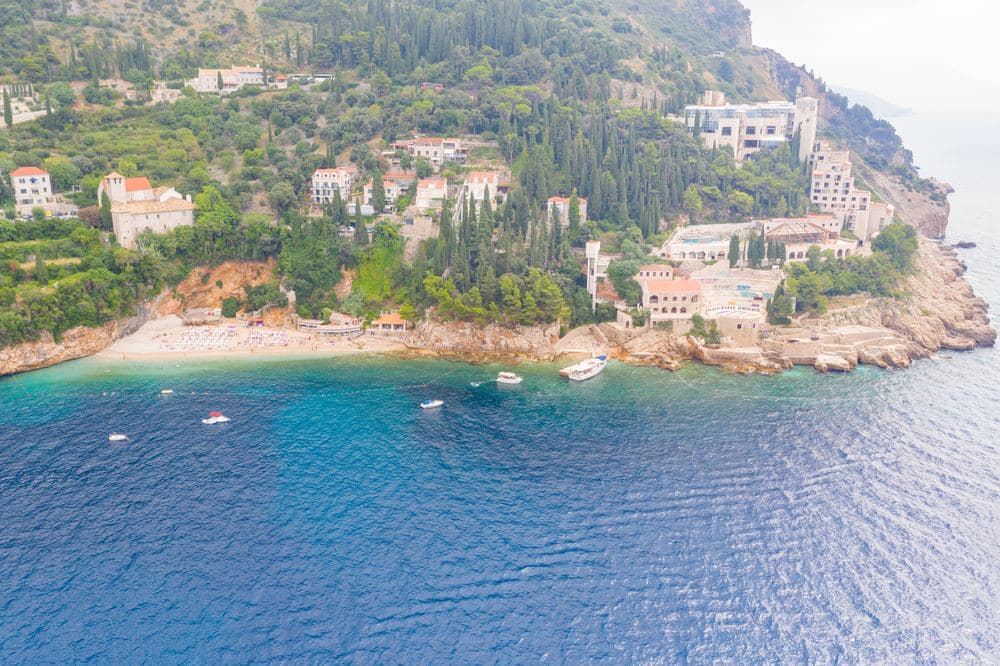
Lapad and Babin kuk: the family peninsula
Lapad is the peninsula 3 kilometres west of the walls where most of Dubrovnik's hotels are, and its beaches are the family beaches. Lapad bay, at the end of the pedestrian promenade of Kralja Tomislava with its cafes and ice cream, is a sheltered pebble beach with shallow water, sunbeds and parasols, hot showers, a lifeguard and the Sunset beach bar; bus 4 or 6 from Pile takes 15 minutes. Around the point on Babin kuk, Copacabana is the children's beach: a long pebble-and-concrete shore with shallow water, inflatable slides and playgrounds in the sea, a restaurant, and the bridge to the Elafiti islands and Gruž in view, on bus 6 in 25 minutes. Between them, the coves of Cava and Bellevue below the hotels of the same names are small pebble beaches framed by cliffs, reached by steps and quieter than either. All of them are the right choice for a family staying in Lapad and the wrong one for a first-time visitor with three hours, who should go to Banje.
Lokrum: the island for a whole day
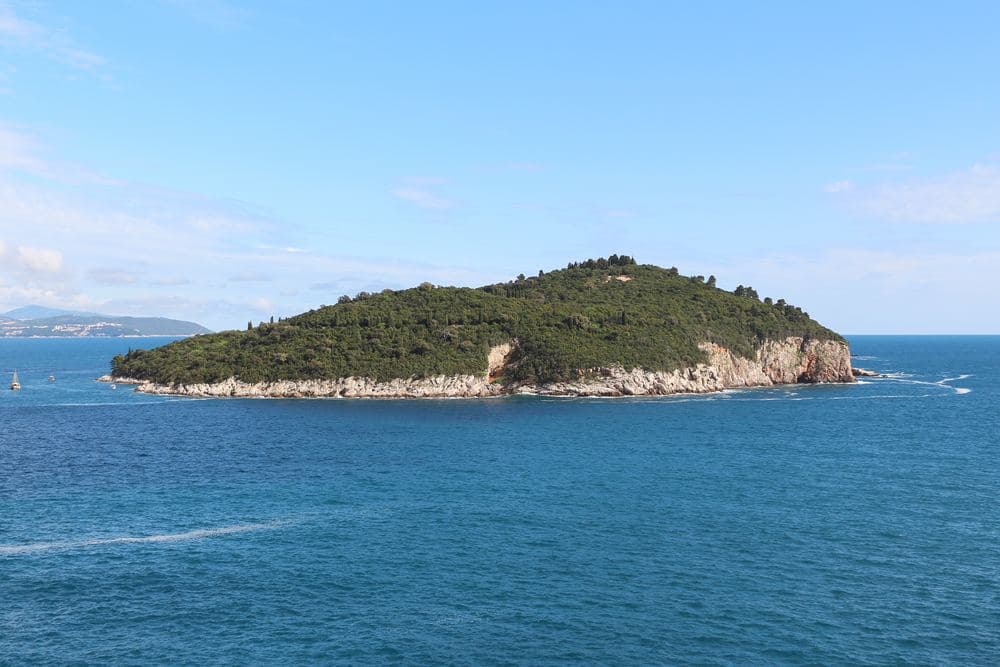
Lokrum is the wooded island ten minutes from the Old Port by the reserve's own boat, every half hour from April to the end of October, 30 euro return for adults including the entry to the nature reserve, 5 euro for children. It has no beaches in the sand sense and the best swimming in the city: rock coves on the south-eastern shore with ladders and flat stones, a naturist section on the eastern point, and the Dead Sea, a small salt lake connected to the sea by underground channels, warm, calm and shallow, which is the place for children and for anyone who dislikes waves. There is a restaurant by the monastery, a botanical garden, peacocks, the Game of Thrones throne replica and a fort on the summit. Take water, a hat and shoes for the rocks; the last boat back leaves at about 19:00 in summer, earlier in October.
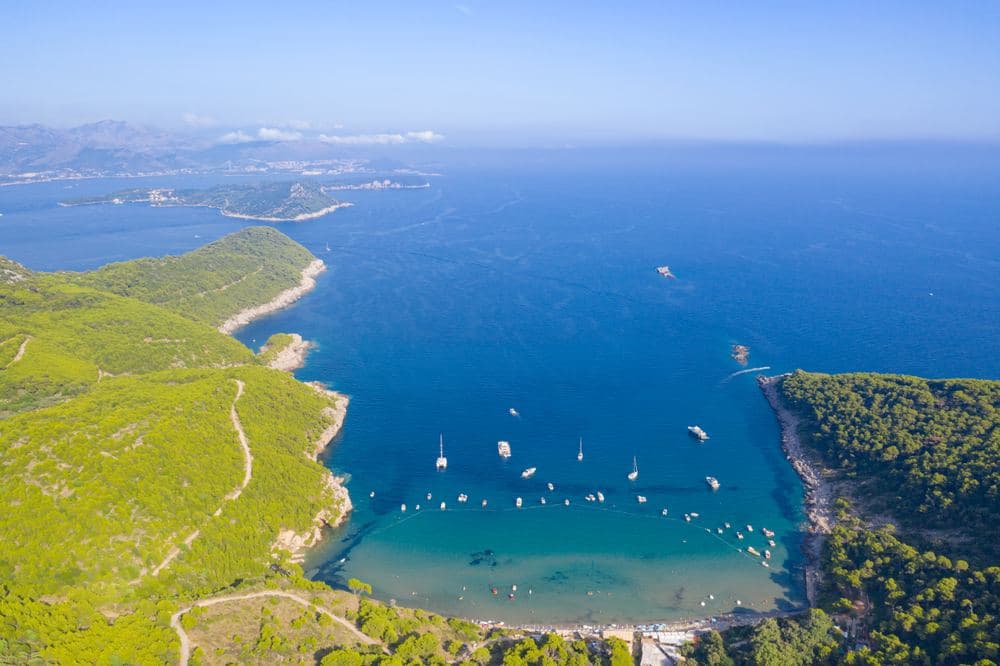
Outside the city: Kupari, Lopud, Pasjača
Three beaches beyond the city limits are worth the trip. Kupari, 8 kilometres south on bus 10 towards Cavtat, is a wide pebble bay in front of the ruins of the Yugoslav army's holiday hotels, abandoned since 1991 and being cleared for a new resort; the beach is public, big, shallow and strange, and the bus takes 20 minutes. Šunj on Lopud is the sandy beach: the Jadrolinija ferry from Gruž to Lopud takes 55 minutes for about 5 euro, and from the village a 25-minute walk or a golf cart crosses the island to a bay of real sand with shallow water and two bars, the best beach day for children within reach of Dubrovnik. Pasjača in Konavle, 40 minutes south by car, is the dramatic one, a small pebble strip under a cliff reached by steps cut into the rock, with no facilities and waves on a south-wind day.
Cruise days: when the beaches fill
Dubrovnik receives up to three cruise ships on a summer day, 6,000 to 9,000 passengers between ten in the morning and four in the afternoon, and Banje is on every ship's map. The port authority publishes the ship calendar, and it is worth a look before you plan a beach morning: on a two-ship day Banje's free section is full by eleven and the sunbed concession sold out by noon, while Sveti Jakov, Šulić, Danče and Lokrum are barely touched, because the ships' passengers do not have the time to reach them. The reverse is also true. On a no-ship day, usually Sunday and some Mondays, Banje at eleven is a pleasure. In October the ships thin out week by week and the calendar matters less.
Beach bars and what a day costs
| Item | Price |
|---|---|
| Two sunbeds and a parasol at Banje | 30 to 60 euro, more in the front row |
| Two sunbeds at Sveti Jakov or Lapad | 20 to 25 euro |
| Beer at Buža | 5 to 6 euro |
| Coffee on the Lapad promenade | 2.50 to 3.50 euro |
| Sandwich or pizza slice at a beach kiosk | 5 to 8 euro |
| Lokrum boat and reserve entry | 30 euro adult, 5 euro child |
| Kayak tour below the walls with a swim stop | 35 to 40 euro |
| Bus ticket | 1.60 euro at kiosks, 2 euro from the driver |
| Elafiti ferry to Lopud, one way | about 5 euro |
The free version of a beach day in Dubrovnik is a towel on the western half of Banje, a swim at Buža with a beer, water from the fountain at Pile and a pizza slice from the bakery on the Stradun: under 15 euro. The comfortable version, sunbeds at Sveti Jakov, lunch at the beach bar and a kayak in the afternoon, is 80 to 100 euro for two.
The beaches month by month
| Month | Sea | What it is like |
|---|---|---|
| May | 19 to 20 °C | Locals swim, Lokrum boats start, Banje empty in the mornings |
| June | 23 °C | Warm sea, long evenings at Buža, the cruise season building |
| July and August | 25 to 27 °C | Full from eleven to five at Banje and Lapad; Sveti Jakov and Lokrum are the escape |
| September | 23 °C | The best month: warm sea, fewer ships, Buža at sunset |
| October | 20 to 21 °C | Swimming until mid-month, Lokrum boats until the end of October |
| November to April | 13 to 17 °C | The winter swimmers at Danče and Banje, nothing else open |
Beaches with a car: south to Cavtat
With a car, or bus 10, the coast south of the city adds a string of beaches within 40 minutes. Kupari's wide bay among the ruined hotels, Srebreno and Mlini with their promenade and pebble coves, Plat below the road, and Cavtat's two beaches on either side of the peninsula, where the town's promenade and its restaurants make the best beach afternoon south of the walls. Beyond Cavtat, the Konavle coast has Pasjača under its cliff and, at the very end of the country, the pebble bays of Molunat with the Montenegrin mountains behind. North of the city, Trsteno's small harbour below the arboretum and the beaches of Slano and Brsečine are the quiet alternative on the road towards Ston.
Which beach on which day
- Three hours between the walls and the cable car: Banje, free half, before eleven or after five.
- Cruise-ship day: Šulić or Sveti Jakov, both empty when Banje is full.
- Sunset with a drink: Buža, then dinner in the Old Town.
- Family staying in Lapad: Lapad bay in the morning, Copacabana for the slides in the afternoon.
- A whole day away from the crowds: Lokrum, the Dead Sea lake and the coves.
- Sand: Lopud by ferry.
- October: Banje, Sveti Jakov and Lokrum have swimmers until the last week; Lokrum's boats stop at the end of the month.
Practical notes
- Sea temperature: 23 degrees in June and September, 25 to 27 in July and August, 20 to 21 in the first half of October.
- Water shoes for Buža, Danče, Lokrum and Sveti Jakov; the pebbles at Banje and Lapad are fine barefoot.
- Sunbeds are concessions on part of the beach; the rest is public by law, and a mat is enough.
- Buses: 4 and 6 to Lapad, 6 to Copacabana, 5 and 8 towards Sveti Jakov, 10 to Kupari; tickets 1.60 euro at kiosks, 2 euro from the driver.
- Lokrum boats run from April to the end of October, every 30 minutes, last return about 19:00 in summer.
- A jugo swell closes the rock swimming at Buža and Danče for a day; the bays at Lapad and Copacabana stay calm.
- No beach in the city has a lifeguard outside June to September; swim within your limits at the rock platforms.
Watch
Dubrovnik on video
A short official city film to help you picture the place before you go.
Dubrovnik and time
Frequently asked questions
- What is the best beach in Dubrovnik?
- Banje for the view of the walls, five minutes from the Ploče gate, with a free western half. Sveti Jakov for quiet and afternoon sun, Lokrum for a whole day of coves and the salt lake, Lapad bay and Copacabana for families.
- Does Dubrovnik have a sandy beach?
- Not in the city. The nearest sand is Šunj on Lopud, a 55-minute Jadrolinija ferry from Gruž for about 5 euro and a 25-minute walk across the island. Bačvice in Split is the other sandy city beach on the coast.
- Is Banje beach free?
- The western half nearest the walls is free; the eastern half is a concession with sunbeds at 30 euro and up for two, a restaurant and a bar. Showers and a kiosk are on the beach.
- Which Dubrovnik beach is best for children?
- Lapad bay for shallow sheltered water and facilities, Copacabana on Babin kuk for slides and playgrounds in the sea, the Dead Sea lake on Lokrum for calm warm water, and Šunj on Lopud for sand.
- Can you swim at Buža?
- Yes, off the rock platforms and ladders below the southern wall, reached through the gaps in the wall marked cold drinks. No sand, no shade, deep clear water, closed by the sea itself on a jugo swell.
Official sources
Make Croatia Atlas a preferred source
One click and Google shows you our stories more often in Top Stories and in AI answers. It changes your own results only.