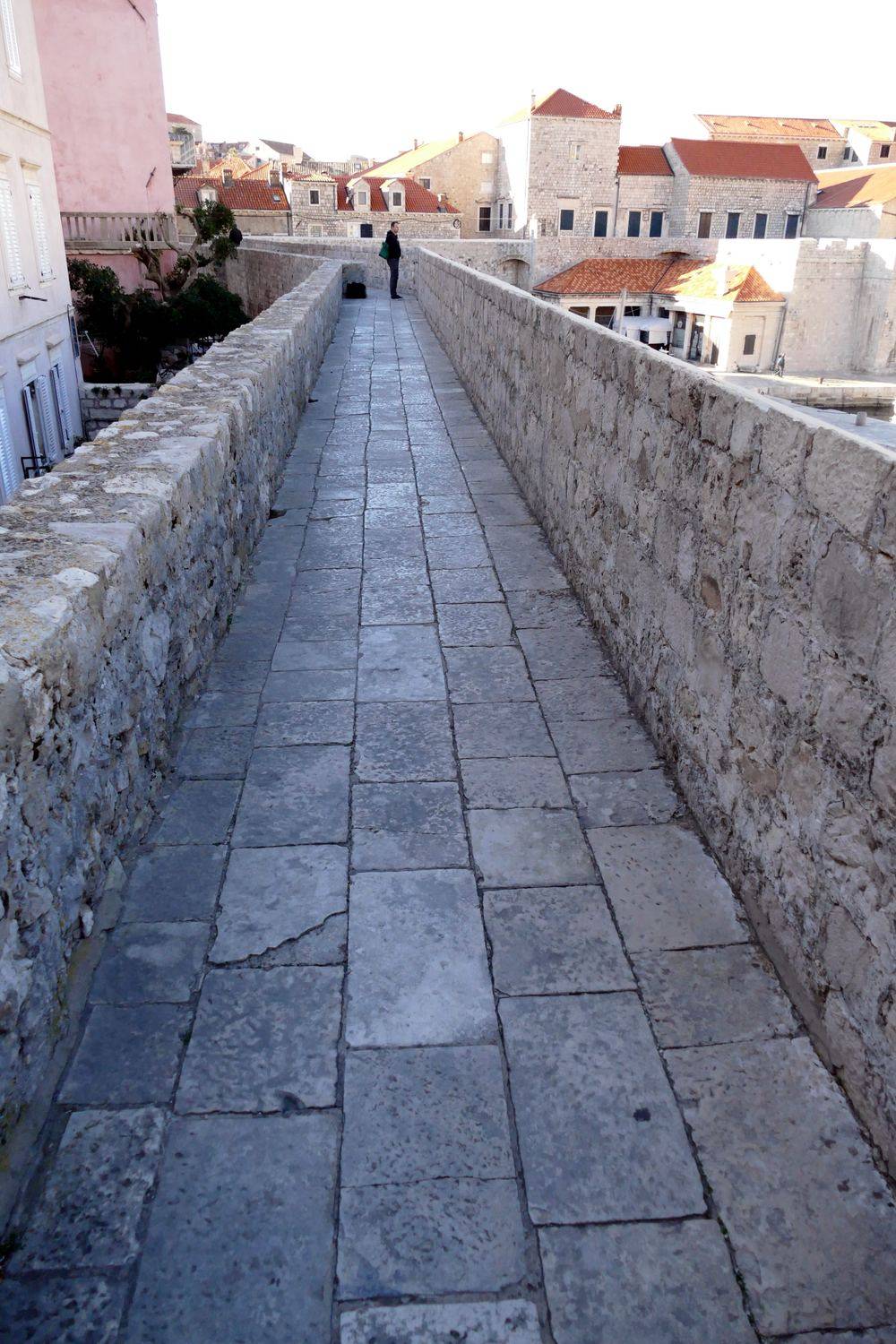
One ticket buys one circuit, so the walk starts with three decisions: which gate you start at, which hour you pick, and how much water you carry.
Checked: 17 October 2026, 22:25
The walls run just under two kilometres around the old town and are walked in one direction only. The rule that shapes everything else is on the ticket itself: it is valid for a single circuit, and once you leave you cannot come back in on it. There is no stepping off for lunch and returning, and no turning back if the queue at a tower looks long.
Hours and the rules that matter
- Open every day except 25 December, with hours that change with the season; from 1 November to 31 March winter hours apply, says the Society of Friends of Dubrovnik Antiquities, which runs the walls.
- One ticket, one circuit. Re-entry is not possible, so plan the whole loop in one go.
- Children have to be accompanied by an adult for the whole walk.
- Residents of Dubrovnik-Neretva County show an identity card at the entrance for the local rate.
Where to start
Three entrances lead up: Pile at the western end of the Stradun, St Luke near Ploče in the east (opposite the Dominican monastery), and the one by the Maritime Museum at the Fort of St John. Pile is the busiest because it sits where the tour groups arrive, so starting at one of the other two puts you ahead of the crowd rather than inside it for the first half. Whichever you choose, the walk finishes where it started, so the choice is about traffic and not about the route.
The hour decides the walk
There is almost no shade up there. Stone underfoot, stone at shoulder height, sun on both. In July and August the wall becomes an oven by ten in the morning, and the only comfortable slots are the first hour after opening and the last hour before closing, when the light on the roofs is better anyway. Between November and March the same walk is a pleasure at midday, and the old town below is genuinely empty.
What the ticket covers
The walls ticket costs 40 euro from March to November 2026 (20 euro in December, January and February) and is sold at each of the 3 entrances. Children pay a reduced rate. The same ticket admits you to Fort Lovrijenac on the rock outside the western walls, so keep it after the circuit and do not leave it at the hotel. It does not cover the Rector's Palace, the Maritime Museum or the other city museums, which sell tickets of their own. If you plan the walls and 2 or 3 museums in the same stay, look at the Dubrovnik Pass, which bundles the walls, the city museums and rides on the Libertas buses for 1, 3 or 7 days. For the walls alone, the gate ticket is the simpler buy.
What you pass on the circuit
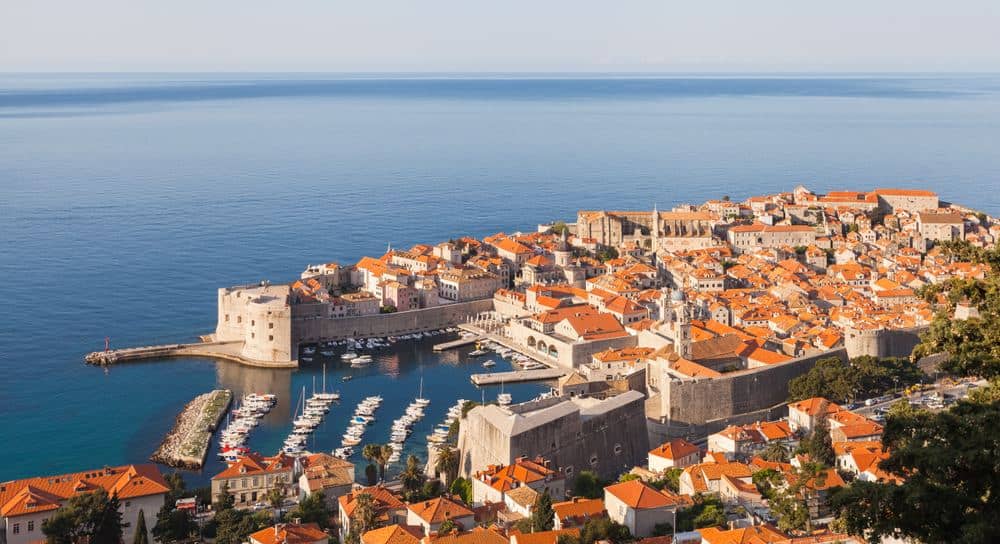
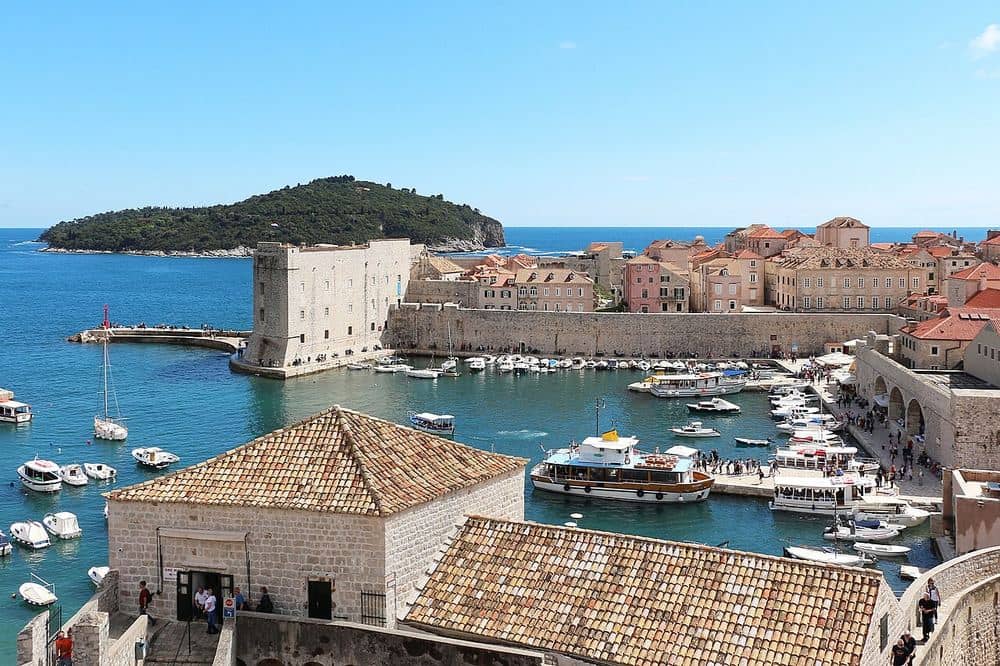
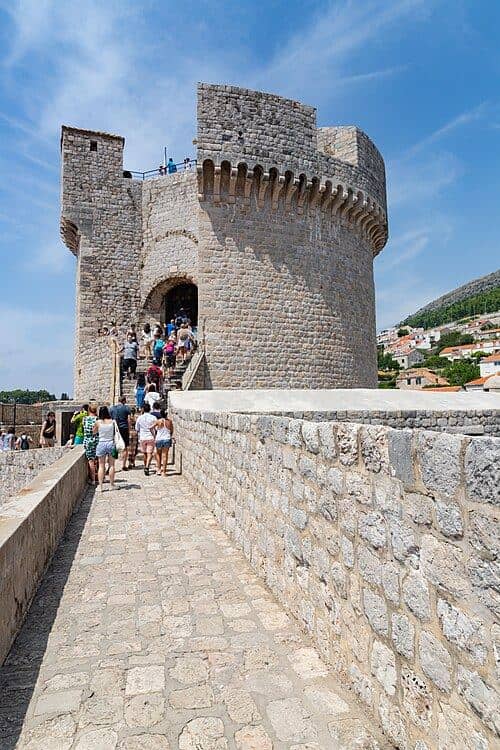
The circuit is 1,940 metres long and passes 3 forts, with a fourth standing beside it. Minčeta, the round tower on the north-west corner, is the highest point and the steepest climb, with walls up to 6 metres thick and the whole roofscape below. Bokar, on the south-west corner, is the oldest casemated fort in this part of Europe and looks straight across the cove to Lovrijenac. The Fort of St John closes the old port, and its aquarium and Maritime Museum are entered from the quay below on a separate ticket, so you cannot drop into them from the wall. Revelin, by the Ploče Gate, stands apart from the walk and is entered from the bridge. Look down as much as out. The roofs are in 2 shades, and the bright new tiles mark the houses hit in the shelling of 1991 and rebuilt after it.
| Fort | Where | What it gives you |
|---|---|---|
| Minčeta | North-west corner | Highest point, steepest stairs, full roofscape |
| Bokar | South-west corner | Cannon ports at sea level, view to Lovrijenac |
| St John | South-east, above the port | Aquarium and Maritime Museum, entered from the quay |
| Revelin | East, by Ploče Gate | Apart from the walk, entered from the bridge |
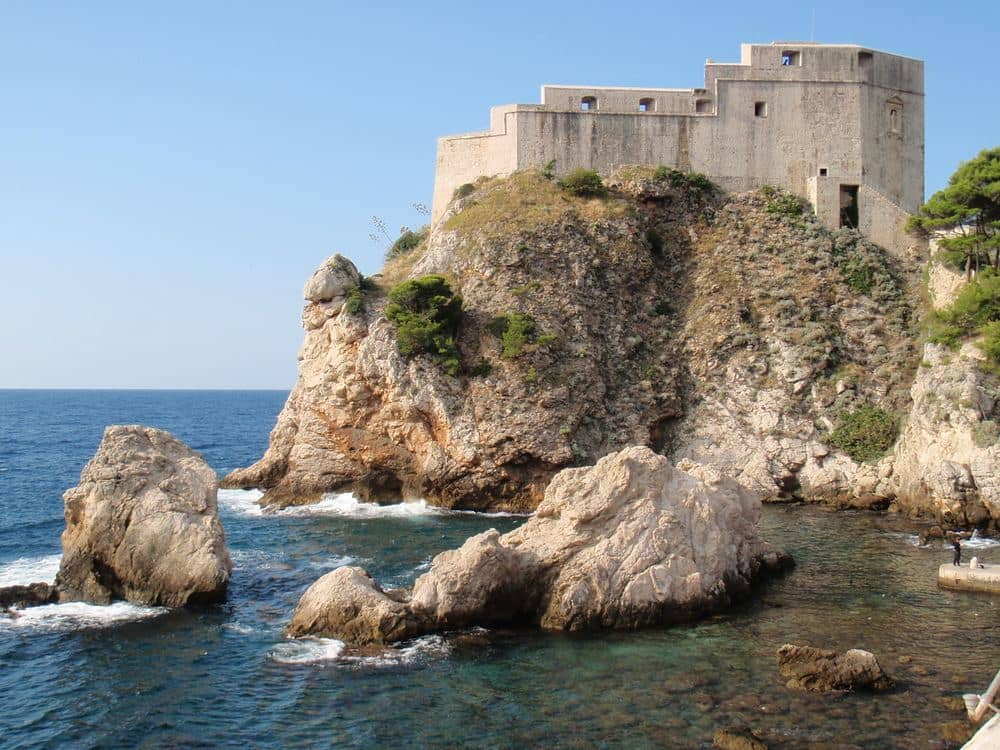
| Lovrijenac | Outside, west of Pile | Same ticket, own gate, 37 metres above Šulić |
Water, shade and footwear
There is no tap on the wall, and the only drinks come from 1 or 2 small kiosks along the circuit at prices that reflect the view. Fill your bottle before you climb: both Onofrio fountains run with cold drinkable water, the large one just inside the Pile Gate and the small one at the other end of the Stradun by Orlando's Column. In summer 1 litre per person is the minimum. The paving is smooth limestone and the steps are worn, so flat shoes with a grip do better than sandals. A hat matters as much as sunscreen, because the stone throws the sun back from below. In winter the same openness turns into wind, and on a bora day the wall is the coldest place in town.
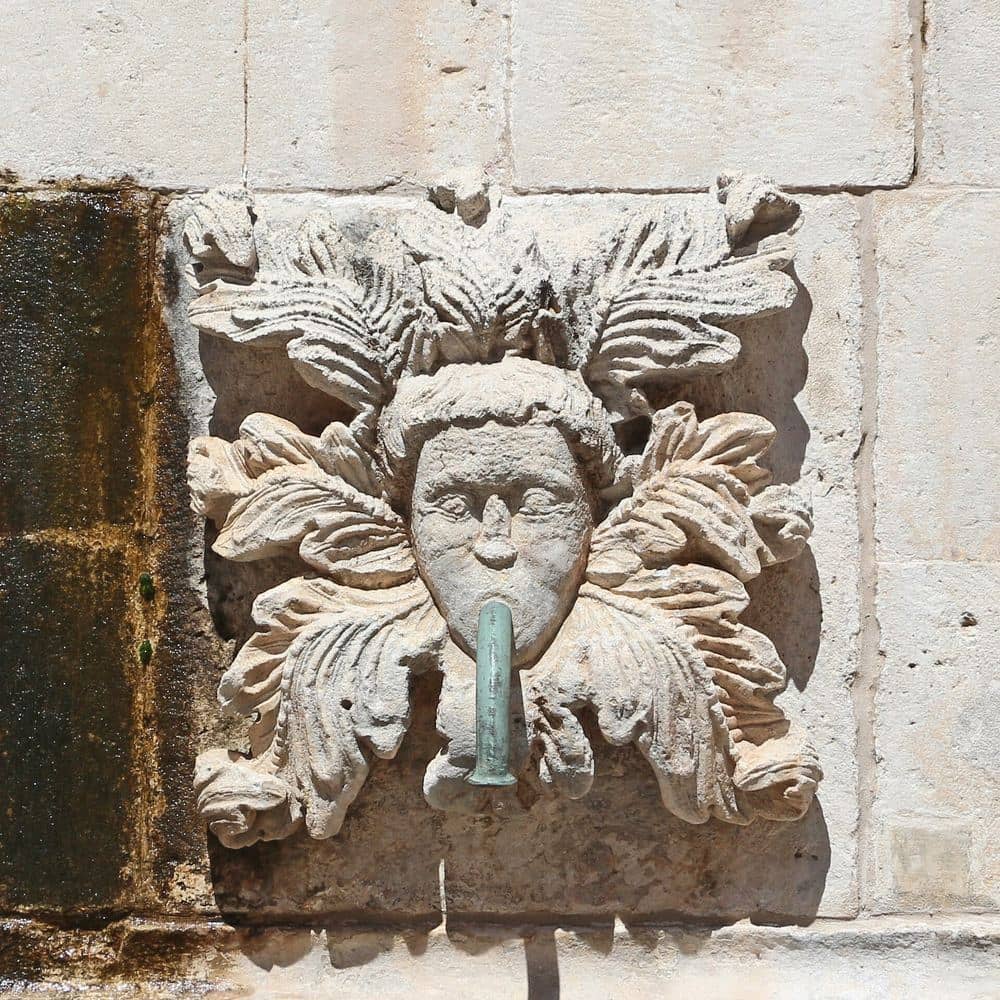
- A full bottle per person, refilled at an Onofrio fountain before the entrance, since there is no tap on the circuit.
- A hat with a brim and sunscreen: the stone reflects the sun from below as well as above.
- Flat shoes with grip for the worn limestone steps, which are polished and steep below Minčeta.
- A light layer between November and March, when the wind on the seaward side never stops.
- A plan for your photographs before you start, since you cannot walk back to a viewpoint you passed.
Lovrijenac on the same ticket
Fort Lovrijenac stands on a 37-metre rock outside the western walls, a few minutes from the Pile Gate along Brsalje and past the steps down to Šulić beach. It has its own gate, so the one-circuit rule does not apply: you can visit before or after the loop on the same ticket. Its walls towards the sea are up to 12 metres thick and the wall towards the city is 60 centimetres, built so that 1 cannon shot from the town could open the fort if a commander ever turned against the republic. Above the gate the motto reads that liberty is not sold for all the gold in the world. The climb is steep and short. Since 1952 the upper terrace has been a Summer Festival stage, best known for Hamlet; in 2026 the Dubrovnik Summer Festival staged Shakespeare's Richard III and Medea here. Do the fort in the evening after a morning circuit and you see the walled town in a second light.
Getting to the gates
No car enters the old town, so every walk on the walls starts at a bus stop or on foot. Dubrovnik airport is about 20 km south near Čilipi, and the airport shuttle stops at the Pile Gate before running on to the bus station. The bus station and the cruise terminal are both in Gruž, 3 km from the walls, with Libertas city buses to Pile from the stops outside. From the hotels on Lapad the bus takes about 15 minutes. Taxis and hotel shuttles drop at Pile too, which is why the square outside the gate is a crush between 09:00 and 11:00. With a hire car, leave it at the hotel or in a garage outside the walls, because parking near the gates is scarce and expensive. For the eastern entrance, the Ploče stop is outside the gate on the road to Banje.
Mistakes that cost the walk
Most bad walks on the walls come from a handful of avoidable decisions, and the cruise schedule is the first thing to check. Ships dock at Gruž and their groups reach Pile between 09:00 and 11:00, and on a day with 2 or more ships in port the wall is at its fullest from mid morning to early afternoon. A start at 08:00 clears all of that. The rest is about heat, footwear and the order of the day. Each item on the list below costs an hour or turns a good walk into a hot one.
- Starting at 11:00 on a cruise day, when the towers have queues and the stone is already hot.
- Trying to step into the Maritime Museum or the aquarium from the wall: both are entered from the quay below.
- Climbing Lovrijenac at midday and saving the circuit for the afternoon, the hottest order possible.
- Planning the walls and the cable car for the same last hour of light. Pick one, the other works at 08:00 the next day.
- Photographing only the sea side. The roofs and the Stradun below are the half of the view you get nowhere else.
Before and after the walk
For an 08:00 start, breakfast comes from the market on Gundulićeva poljana, open every morning except Sunday from 06:00, where figs, bread and fruit from Konavle cost less than in the shops of the core. After the circuit the fastest shade is the Franciscan cloister by the Pile entrance, on its own ticket, or the free portico of the Sponza Palace at the other end of the Stradun, the coolest spot on the street. For a swim, Šulić is 2 minutes from Pile down the steps at Brsalje, Banje is 5 minutes through the Ploče Gate, and the Buža bars sit outside the southern wall on rock terraces with ladders into the sea. Late in the day the Porporela breakwater at the end of the old port is where the town sits with its feet above the water, and it costs nothing.
The places, one by one
| Place | What it is | Time needed |
|---|---|---|
| Stradun | Main street from Pile to the harbour | 20 minutes |
| Franciscan Monastery | Cloister, pharmacy of 1317, museum | 30 minutes |
| War Photo Limited | War photography gallery | 1 hour |
| Church of St Blaise | Baroque church of the city's patron | 15 minutes |
| Rector's Palace | Seat of the republic, city museum | 1 hour |
| Dubrovnik Cathedral | Baroque cathedral with treasury | 30 to 45 minutes |
| Gundulić Square Market | Morning produce market | 30 minutes |
| Jesuit Stairs | Baroque staircase to St Ignatius | 20 minutes |
| Ethnographic Museum Rupe | 16th-century granary, folk collection | 45 minutes |
| Dominican Monastery | Gothic cloister and painting collection | 1 hour |
| Old Port | Harbour, arsenals, boat departures | 30 minutes |
| Lokrum Island | Island reserve with swimming | half a day |
| Mount Srđ | Ridge above the town, fortress and museum | 2 hours |
| Sveti Jakov Beach | Shingle cove below Ploče | half a day |
| Gradac Park | Cliff park and bathing at Danče | 1 to 2 hours |
Stradun
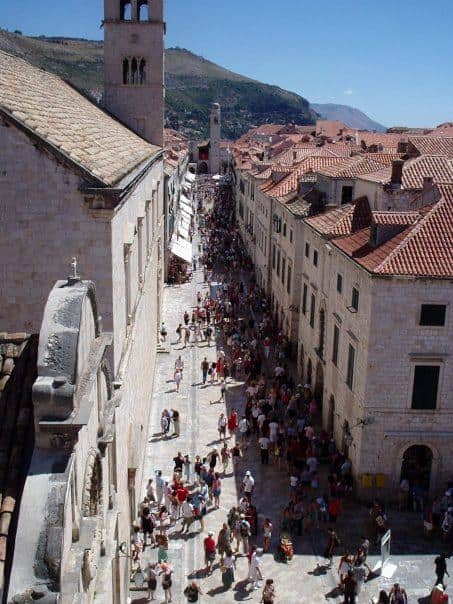
The Stradun was water once, a shallow channel between the Roman islet of Ragusa and the Slavic settlement on the shore. It was filled in around the 11th century and became the spine of the joined town. After the earthquake of 1667 the republic rebuilt the whole street in one go, with the same height, the same baroque fronts and the same green shutters, shops below and homes above, which is why the 300 metres from Pile to the harbour read as one building. The limestone paving has been polished by feet into a mirror and doubles the lamps after rain. Walk it once by day for the shops and once after midnight, when it is empty and echoes.
Franciscan Monastery
At the Pile end of the Stradun the Franciscan monastery keeps what many call the oldest working pharmacy in Europe. It opened in 1317 and still dispenses medicine as an ordinary city pharmacy, with baroque jars from the monastery workshop standing in front of the modern boxes. Beside it is the 14th-century cloister by Mihoje Brajkov of Bar, about 60 double columns with a differently carved capital on each, around a garden of palms and orange trees. The museum shows pharmacy equipment, old recipe books and manuscripts from a library of more than 20,000 volumes. The church was rebuilt in baroque after 1667, but the Pietà portal of 1499 on the south side survived. One ticket covers cloister and museum, and half an hour is enough.
War Photo Limited
War Photo Limited is a 2-storey gallery in Antuninska street, a lane off the Stradun, opened in 2003 by the New Zealand photojournalist Wade Goddard. The permanent display upstairs covers the wars in the former Yugoslavia after 1991, with photographs from Vukovar, Sarajevo and the siege of Dubrovnik itself. The ground floor rotates exhibitions from current conflicts, from Syria to Ukraine. Captions are in Croatian and English, the display is serious and without sensationalism, and it is not for small children. Allow a full hour and go when you are fresh. The gallery works from spring to autumn and the ticket is moderate. Seen the day after the walls, it puts faces to the rebuilt roofs you looked down on from Minčeta.
Church of St Blaise
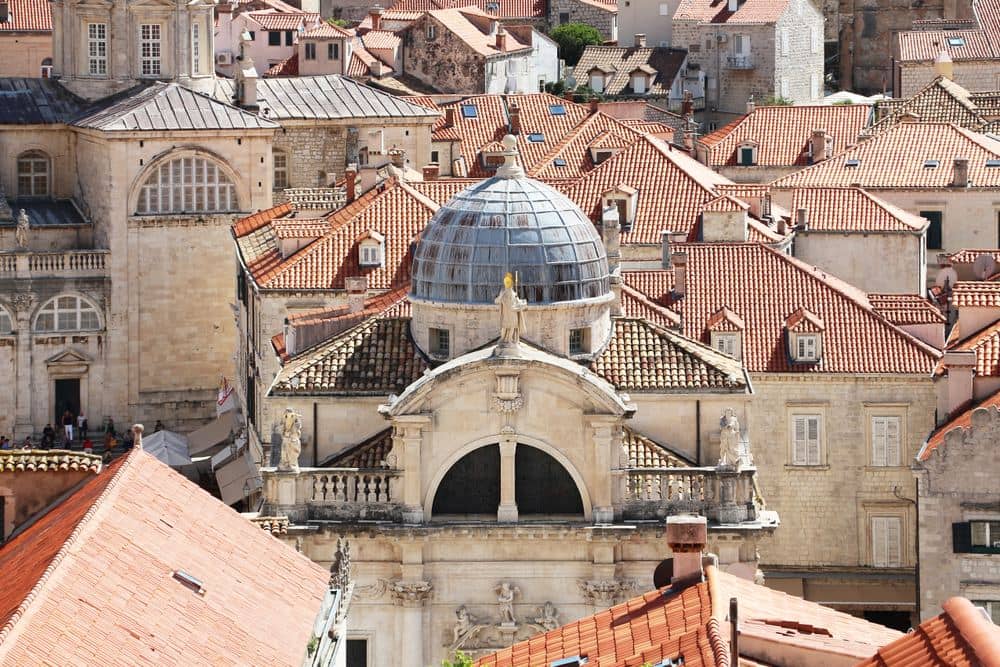
The Church of St Blaise faces straight down the Stradun, a baroque building of 1715 on the site of a Romanesque church lost to fire. St Blaise has been the city's protector since 972, when by tradition he warned a priest that the Venetian fleet lying outside on the pretext of taking on supplies was about to seize the city. On the high altar stands his gilded statue from the 15th century, which survived both earthquake and fire. In his hand is a model of Dubrovnik as it looked before 1667, the oldest picture of the town. Entry is free and the church is always open. On 3 February the whole city celebrates his feast, listed by UNESCO as intangible heritage. In the evening the steps outside are where the town sits.
Rector's Palace
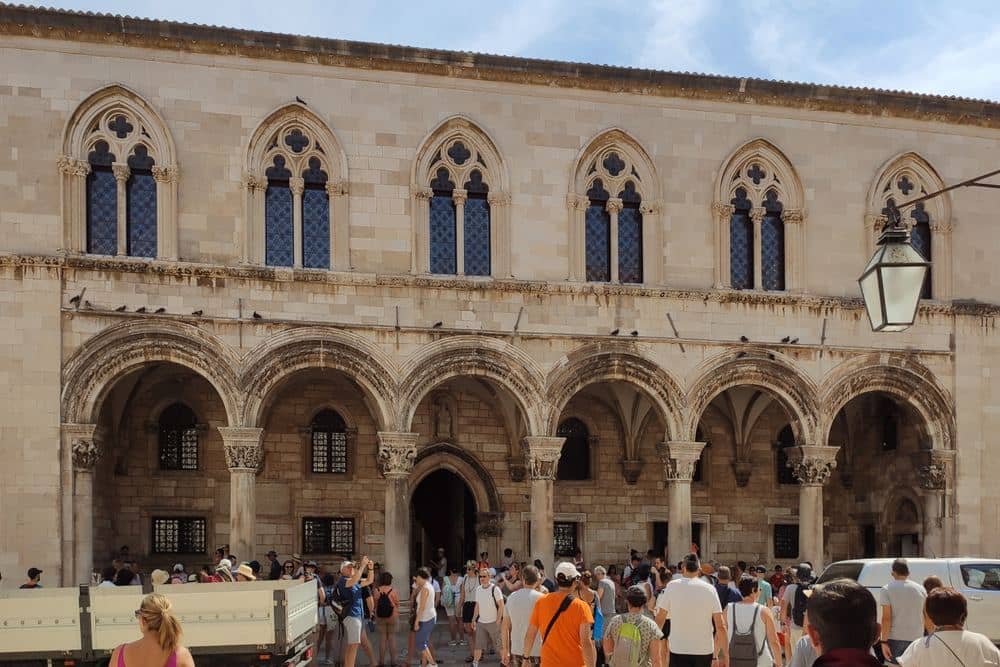
The Rector's Palace was the seat of the Republic of Ragusa, and its rules tell you how the city was run. The rector was elected for 1 month only, and in those 30 days he could not leave the building except on official duty. The palace is Gothic-Renaissance, with a portico whose capitals show crafts and mythology, an atrium used for Summer Festival concerts and a much photographed staircase. Inside is the Cultural-Historical Museum: the rector's rooms, the courtroom, the dungeons on the ground floor, arms, portraits, clocks and furniture, and the original bronze Zelenci of 1478 from the bell tower. The visit takes about an hour; the palace-only ticket costs 15 euro, while the combined Dubrovnik Museums ticket (20 euro, valid for 7 days) also covers the other city museums. Come in the morning, when the atrium is empty and the acoustics are at their best.
Dubrovnik Cathedral
The Cathedral of the Assumption is the third church on the site. Tradition says the first was paid for by a vow of Richard the Lionheart after a shipwreck off Lokrum, the Romanesque building fell in the earthquake of 1667, and the baroque cathedral standing today was finished by 1713 to designs by Roman architects. The interior is bright and calm, with a dome that drops light onto the high altar and Titian's 16th-century polyptych of the Assumption, the most valuable painting in the city. The treasury holds over 200 reliquaries, among them the gilded arm, leg and skull of St Blaise in a filigree crown. Entry to the cathedral is free and it is open from 08:00 to 17:00. The treasury is paid separately. Covered shoulders are required, and the groups arrive around noon.
Gundulić Square Market
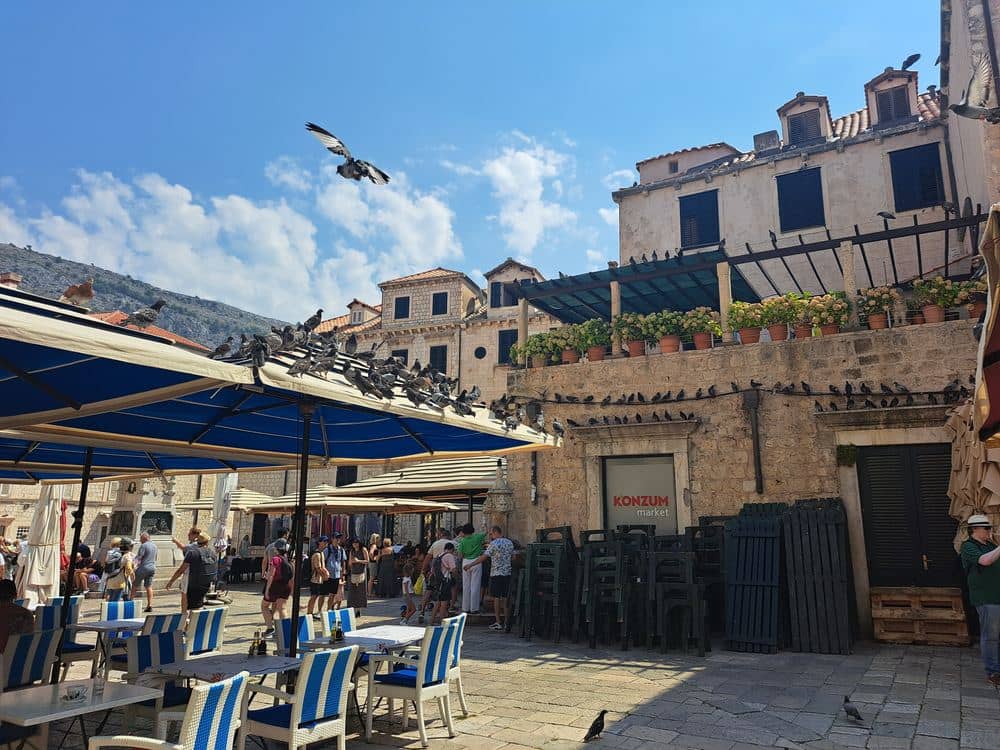
Gundulićeva poljana is the square behind the cathedral, and its morning market is the one part of the old core that still works for the city itself. Stalls stand around the monument to the poet Ivan Gundulić, whose epic Osman is still taught in schools and whose pedestal reliefs show scenes from it. Produce comes from Konavle and the Elaphiti islands: tomatoes, mandarins, lavender, honey, olive oil, dried fruit and homemade brandy. Buy from the same stall twice and you get advice on what is best that day. The stalls run until 13:00, and the cafés fill as soon as they disperse. Bring a cloth bag. A breakfast eaten on the steps here costs under 10 euros, the cheapest good meal in the core.
Jesuit Stairs
From the market square the Jesuit Stairs climb in 2 flights to the church of St Ignatius. They were built in 1738 to the design of the Roman architect Pietro Passalacqua on the model of the Spanish Steps, and they are set so the facade grows above you as you climb. Turn at the top and the whole city sits below in one frame. Beside the church is the Collegium Ragusinum, the Jesuit school where the republic's officials were trained for centuries. Inside are frescoes by Gaetano Garcia and a replica of the Lourdes grotto, often without a single visitor. The steps carried the walk of shame scene in Game of Thrones, so someone is always posing. Come early or in the evening, when the stone is lit and empty, and use the benches at the top as a free terrace.
Ethnographic Museum Rupe
Rupe is the state granary of the 16th century on the height above Gundulićeva poljana, a 10-minute climb from the Stradun, and the building is the main exhibit. In its ground floor 15 pits were cut into the living rock, the holes that gave it its name, holding over 1,200 tonnes of grain. The city imported its food, and in a siege or a barren year the stores meant survival, so the pits were lined and kept a constant temperature. You walk along their edges over a glass floor, the best part of the visit. The upper floors hold the ethnographic collection: costumes from Konavle and the Dubrovnik littoral, textiles, jewellery, tools and objects from village houses. The museum is cool, quiet and rarely full, even in August.
Dominican Monastery
The Dominican monastery stands by the Ploče Gate at the quiet end of the Stradun. When it was built in the 14th century the republic required its walls to serve as part of the eastern rampart, so from outside it looks like a fortress and inside like a garden. The cloister has trefoil arches to a design by Maso di Bartolomeo and orange trees in the middle. The museum holds one of the best collections of the Dubrovnik painting school of the 15th and 16th centuries, with works by Nikola Božidarević and Lovro Dobričević, and Titian's St Mary Magdalene. Above the high altar of the single-naved church hangs a 14th-century crucifix by Paolo Veneziano. The ticket is modest and the crowds rare. If you have an hour for art instead of walls, this is the place.
Old Port
The old port was the engine of the republic. In the 16th century Dubrovnik held a fleet of over 200 sailing ships, one of the largest on the Mediterranean, and they sailed from here to England, the Levant and America. Above the quay are the arsenals, roofed 15th-century shipyards where galleys were built, now cafés and restaurants under the same arches. Boats still leave here: the taxi boat to Lokrum every half hour, excursions to the Elaphiti islands and Cavtat, and panoramic rides around the walls, which give the best view of the city from outside. A walk out along the Kaše breakwater, an artificial island of 1485 built against the southerly wind, takes 10 minutes and ends in the calmest corner of the core. In the evening this is the place for dinner by the water.
Lokrum Island
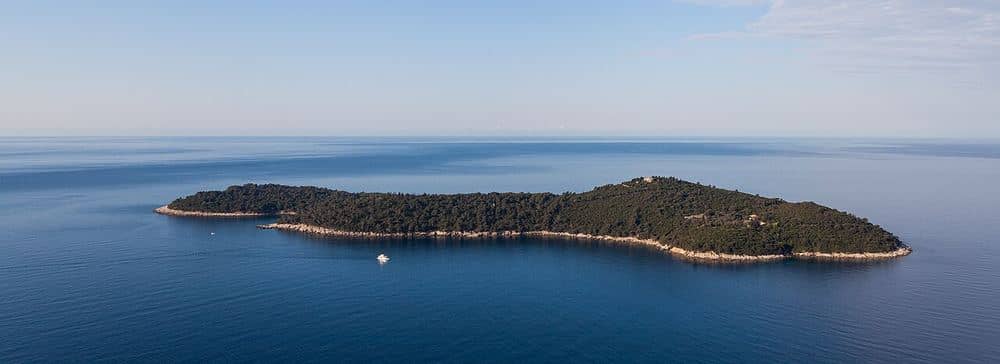
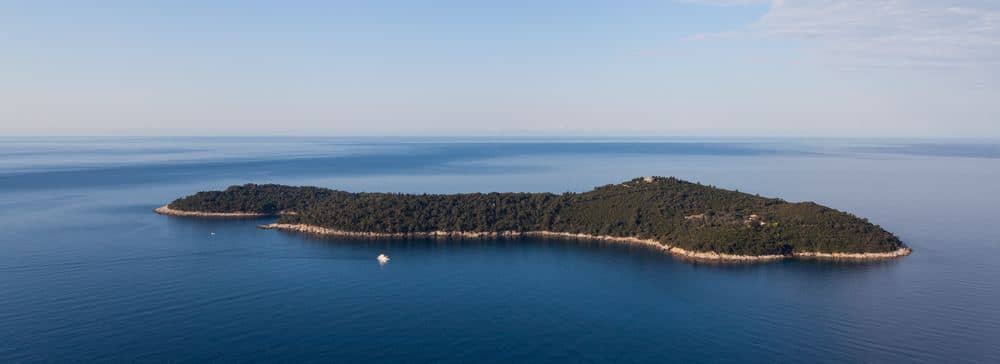
Lokrum is 10 minutes by boat from the old port and a protected reserve of old pines and cypresses. Archduke Maximilian of Habsburg turned the 11th-century Benedictine monastery into a summer residence and planted the botanical garden in 1859, and the peacocks that walk the paths are descended from his. The Dead Sea, a small salt lake linked to the open water, is warm and shallow and suits children. Fort Royal, built by the French in 1806, stands on the top after a 20-minute climb through the woods and looks over the whole city. Bathing is off rocks with ladders, and one stretch of shore is naturist. Nobody may stay the night, and the boats run only until evening. Catering is modest, so carry water and lunch. Take the first boat.
Mount Srđ
Srđ is the bare ridge 412 metres above the old town. Napoleon's army built the Imperial fortress on top in 1812, and in 1991 a few dozen defenders held it through the siege while the city burned below. Half of it is now the Museum of the Homeland War, with attack maps, uniforms and siege footage, seen in about 40 minutes, and the shell holes in the walls are part of the display. The cable car from the station above the Buža Gate climbs 778 metres of line in under 4 minutes. It first ran in 1969, was destroyed in 1991, reopened in 2010, and stops in a strong bora. Ride before 10:00 or after 18:00 to avoid the queue. Beside the fortress stands the 15-metre cross, rebuilt in 2002 in Brač stone. Go up for the hour before sunset.
Sveti Jakov Beach
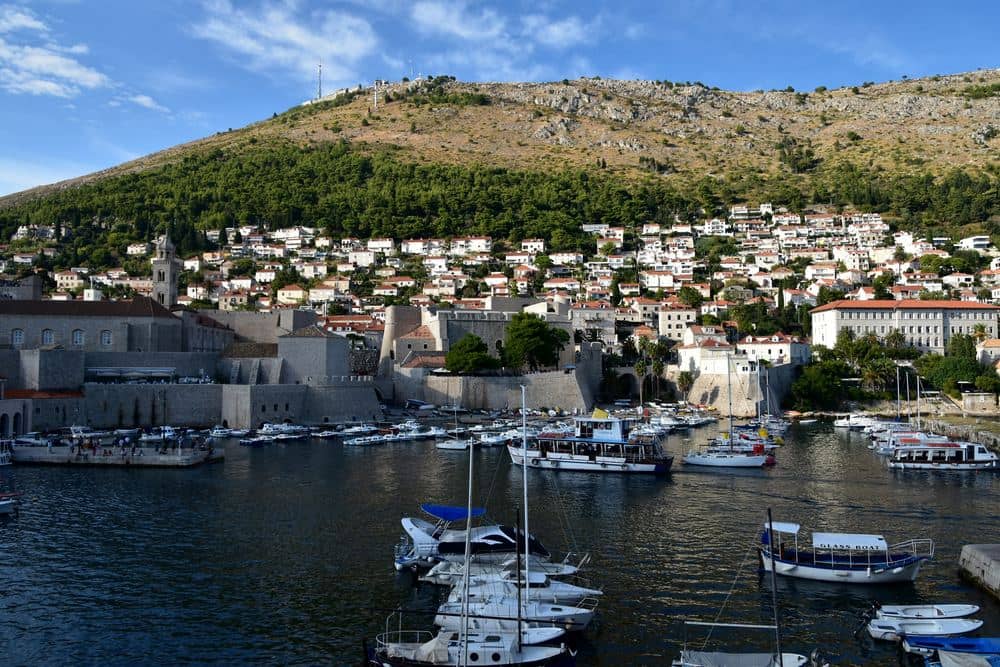
Sveti Jakov is the shingle cove below Ploče, east of the core, reached down a staircase of nearly 200 steps, which is why it stays half empty even in August. From the towel you see the old town whole, with the walls, Fort St John and Lokrum in one frame, from an angle most visitors never get. The cove faces south-west and is sheltered, so the sea is deep, clean and calm and the sun stays until late afternoon. There are a bar, a restaurant, loungers and showers. Above the beach are the ruins of the 13th-century Benedictine monastery of St Jacob, which gave the cove its name. Take bus number 8, or walk from Ploče in about 20 minutes. Save strength and water for the climb back, and stay until the sun sets behind the old town.
Gradac Park
Gradac Park is a green terrace on the cliff west of the walls, above the Danče cove, laid out at the start of the 20th century with pines, cypresses and agaves and benches facing the open sea and the Elaphiti islands. It is a 10-minute walk from Pile across Brsalje, and most visitors never cross the bridge, so the shade is thick and the crowd rare. Tradition says the victims of the 1667 earthquake were buried here, and the park was shelled in 1991. After its first complete renovation in more than 120 years, the park reopened on 16 September 2026. The path leads on to Danče, where locals swim off levelled slabs and ladders into deep water, with one simple bar. For a sunset this is the best free place in the city: the sun drops straight into the sea.
Frequently asked questions
- Can you leave the walls and come back?
- No. The ticket is valid for one tour and re-entry is not possible, so the full circuit has to be walked in one go.
- How long does the walk take?
- The circuit is just under two kilometres. Walked without stopping it takes about an hour; with photographs, the towers and the two forts along the way, most people spend closer to two.
- What is the best time of day?
- In summer, the first hour after opening at 8am or the last hour before closing. There is almost no shade on the wall and it holds the heat from mid morning. From November to March midday is the comfortable slot.
Share this guide
Questions about your trip?