Warm, calm, clear sea, small walkable towns, cheap ferries and dinner at eight with a toddler under the table. Brela and Tučepi for small children, Poreč and the Makarska Riviera for the water parks, Split and Zadar for older ones. Sandy beaches from Rab to Lopud, Aquacolors and Istralandia prices, Plitvice with a six-year-old, apartments against resorts, and a priced week for a family of four.
Checked: 15 September 2026
Croatia is one of the easiest countries in Europe for a holiday with children, for reasons that have little to do with marketing: the sea is warm and clear and rarely has waves, most beaches shelve gently, the towns are small and walkable, the ferries are cheap and run on time, dinner is at eight and nobody minds a toddler under the table, and the whole country speaks enough English to sort out a lost shoe. It is also a country of pebbles rather than sand, of stairs rather than lifts, and of an August that is hot and full. This guide is for families planning a first trip from the United States, the United Kingdom, Canada or Australia: where to base yourselves by the age of your children, the beaches that work for small feet, the water parks, boat days and national parks that fill a week, what it costs in 2026, and the things that go wrong.
The short version
| Children | Base | Why |
|---|---|---|
| Babies and toddlers | Brela or Tučepi, Bol on Brač, Lopar on Rab | Shallow shelving beaches, promenades for buggies, apartments with kitchens |
| 5 to 10 | Poreč or Rovinj, the Makarska Riviera, Zadar and Nin | Water parks, boat trips, sandy or fine-pebble beaches, short drives |
| 10 to 15 | Split, Hvar's Stari Grad, Krk, Zadar | Islands, kayaks, rafting, Roman ruins, national parks, some independence |
| Teenagers | Split, Dubrovnik, Bol | Cities with things to do, windsurfing, the walls, Game of Thrones, boat days |
| Mixed ages | The Makarska Riviera or Istria | Everything within 30 minutes, beach plus day trips, resorts with kids' clubs |
When to go with children
The school calendars decide most of it, and July and August are when Croatia is hottest, fullest and most expensive. If you can travel outside them, do: June has a 23-degree sea, open everything and half the crowd, and the first three weeks of September are the same with warmer water. For families tied to summer holidays, the first half of July is better than August, when the Italian and German holidays add a million cars to the coast road. Easter and May are good for cities and national parks with children over eight, with the sea at 17 to 19 degrees and the beach clubs still closed. Whatever the month, the daily rhythm in summer is the local one: beach until eleven, shade and lunch until four, beach again until seven, dinner at eight.
| Month | Sea | Day temperature | Notes |
|---|---|---|---|
| May | 17 to 19 °C | 22 to 25 °C | Cities, parks, quiet beaches; water parks open from mid-May |
| June | 23 °C | 27 to 29 °C | The best family month: warm sea, everything open, no queues |
| July | 25 °C | 30 to 32 °C | Full and hot; book everything ahead; the first half is calmer |
| August | 26 to 27 °C | 31 to 34 °C | The peak: highest prices, most people, the sea at its warmest |
| September | 23 °C | 26 to 28 °C | Warm sea, school groups gone, prices down a third; water parks close mid-month |
| October | 20 to 21 °C | 20 to 23 °C | Swimming in the first half, national parks at their best, cheap |
Beaches that work for children
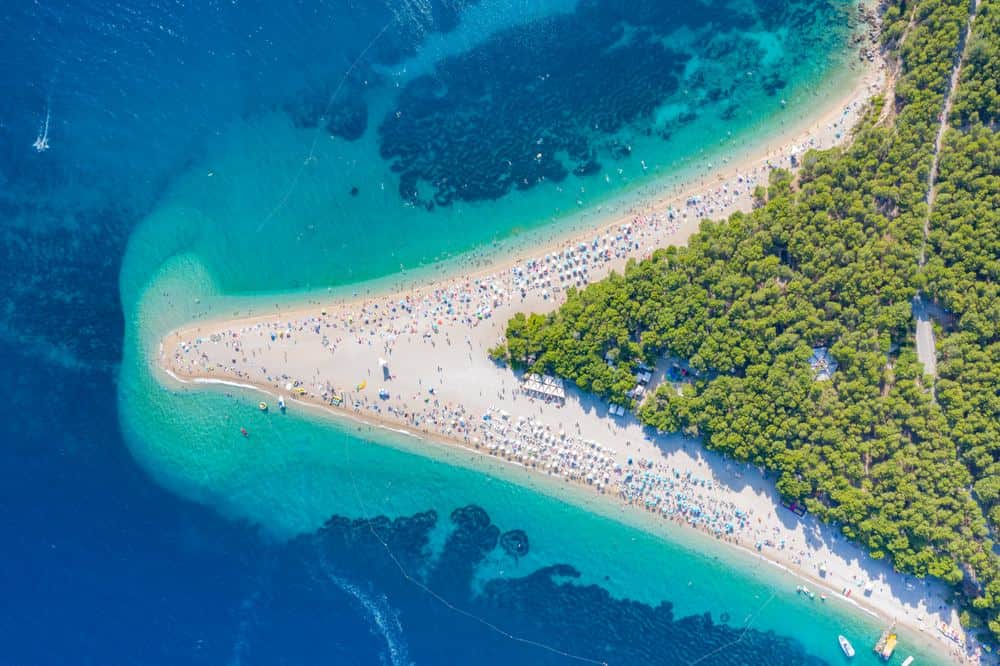
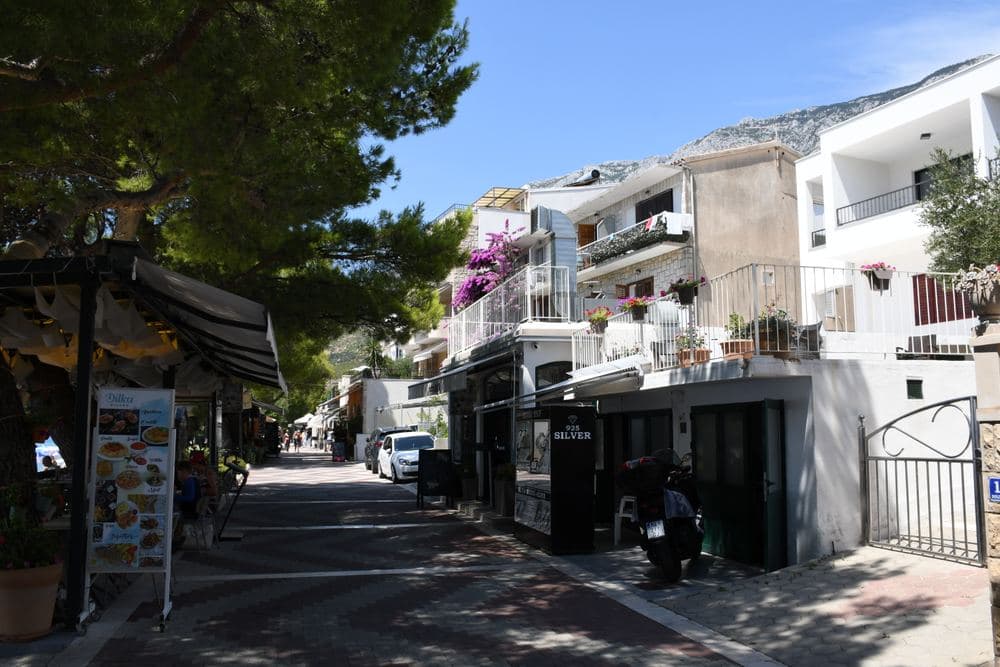
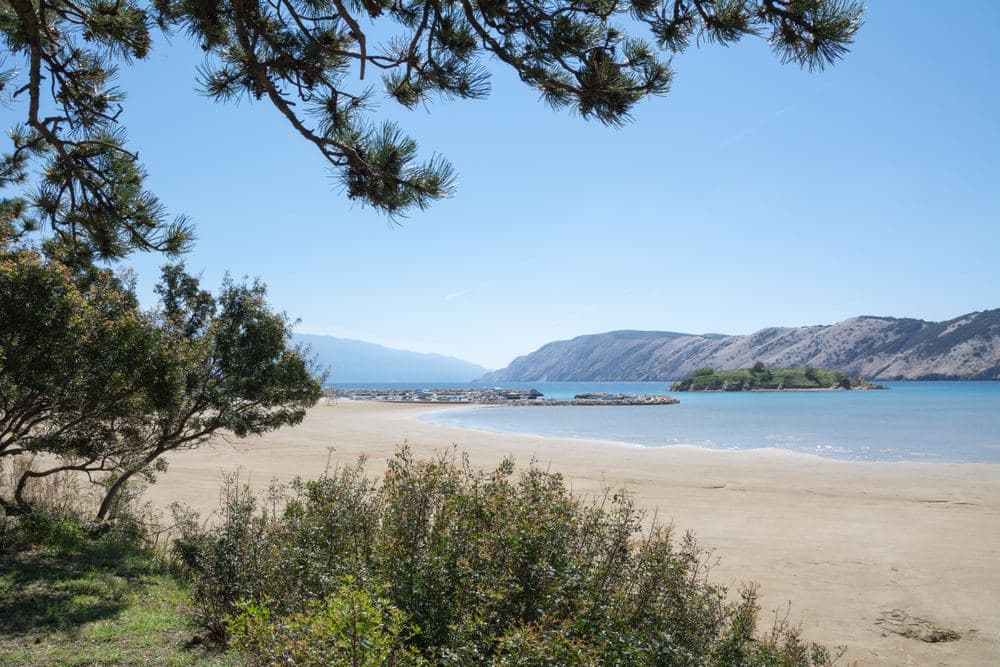
The first thing to know is that almost every Croatian beach is pebble, and the second is that it does not matter, because the water is what children remember. Buy water shoes on the first day, at 5 to 10 euro in any beach shop, and the pebbles disappear as a problem. The beaches to aim for with small children are the ones that shelve slowly and have shade, a promenade and a cafe within a hundred metres. Sand exists, and the places that have it are worth planning around: Rajska plaža at Lopar on Rab, 1.5 kilometres of sand with water knee-deep for fifty metres; Zaton and Nin's Queen's beach north of Zadar, sand and warm shallows; Bačvice in Split, the sandy bay in the city; Šunj on Lopud near Dubrovnik; Lovrečina on Brač; Sakarun on Dugi otok. The Makarska Riviera from Brela to Tučepi is fine pebble with pines to the water's edge and promenades that run for kilometres, which makes it the best mainland stretch for families with a buggy.
| Beach | Where | Type | Facilities |
|---|---|---|---|
| Rajska plaža | Lopar, Rab | Sand, very shallow | Everything, bus from Rab town |
| Punta Rata and the Brela beaches | Brela | Fine pebble, pines | Promenade, cafes, sunbeds, shade |
| Tučepi | Makarska Riviera | Fine pebble, 4 km | Promenade, playgrounds, hotels |
| Zlatni rat and Potočine | Bol, Brač | Pebble and sand | Sunbeds, bars, the tourist train |
| Queen's beach and Zaton | Nin, north of Zadar | Sand, warm shallows | Camps, water sports, mud baths |
| Bačvice | Split | Sand | City beach, cafes, picigin |
| Zelena laguna and Lanterna | Poreč | Pebble and rock, resort | Resort facilities, Aquacolors nearby |
| Šunj | Lopud, Dubrovnik | Sand | Two bars, golf cart from the ferry |
| Copacabana | Dubrovnik | Pebble, concrete | Water slides, playgrounds in the sea |
| Baška | Krk | Pebble, 2 km | Promenade, sunbeds, town at one end |
Water parks and the wet days out
Croatia has four water parks that justify a day. Aquacolors at Poreč is the largest, 100,000 square metres of slides, a lazy river, a wave pool and a children's zone, with 2026 day tickets at 35 to 45 euro for adults and 25 to 35 for children over 100 centimetres, free under that height, open from mid-May to mid-September; the fast-lane online ticket saves the gate queue in August. Istralandia near Novigrad, half an hour north, is a little smaller and a little cheaper at 38 to 45 euro for adults and 28 to 35 for children from 3 to 14, with the highest slide in the country. Aquapark Dalmatia at Solaris near Šibenik serves the middle of the coast, and the Aquapark Čikat on Lošinj the Kvarner islands. All four sell family tickets and two-day passes. Outside the parks, the wet days out are the boat days: a taxi boat to a cove, a glass-bottom boat from any harbour for 15 to 25 euro per person, or a sea kayak tour, which children from about eight enjoy on calm water.
Boat days that children remember
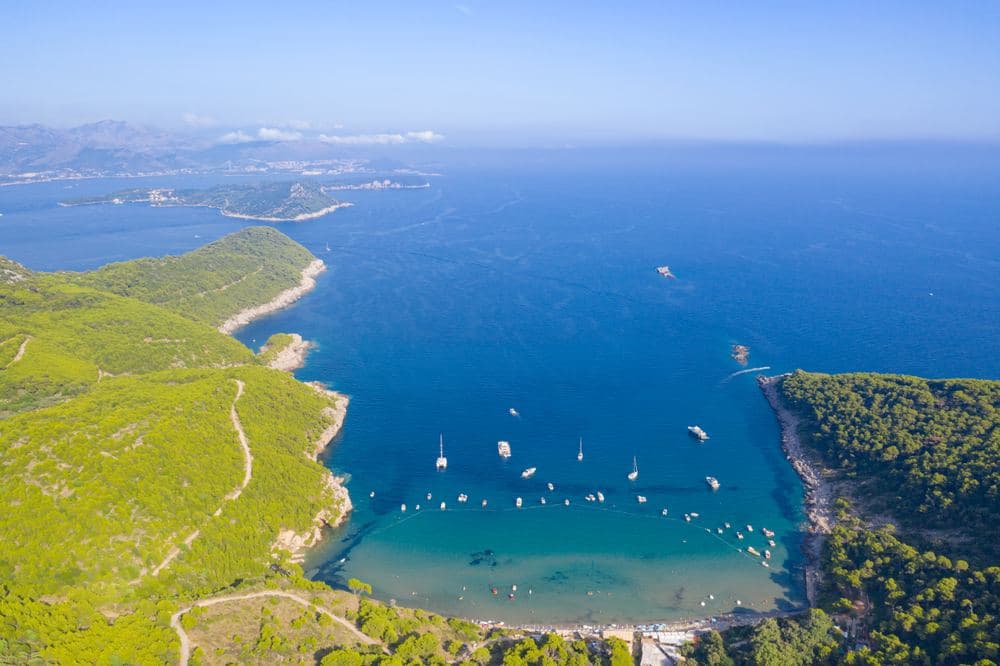
Every harbour on the coast sells boat trips, and the best for families are the slow ones. From Split, the half-day trip to the Blue Lagoon at Krknjaši on a wooden boat with lunch, 40 to 50 euro per adult and half for children, is a swimming day rather than a speedboat day. From Zadar, the Kornati islands boat trip is a full day of islands and a fish picnic. From Dubrovnik, the Elafiti three-island fish picnic at 40 to 60 euro stops for swims at Koločep, Lopud and Šipan. From the Makarska Riviera, the boats to Brač's Zlatni rat and back cost 20 to 30 euro. From Poreč and Rovinj, the Lim fjord boats and the Rovinj archipelago trips are two to three hours. Book the day before at the harbour kiosk, take hats, sun cream, water and something to eat for the moment when lunch is late, and skip the speedboat tours with children under eight: the crossings are rough and the days are eleven hours.
National parks with children
Plitvice Lakes is the one everyone wants, and it works with children from about six who can walk 4 to 6 kilometres on boardwalks: the lower lakes route with the boat across Kozjak and the train back takes three to four hours, the ticket is 40 euro for adults in summer and 23 in October, children 7 to 18 pay a reduced fare and under 7 go free, and buggies are impossible on the boardwalks, so bring a carrier for a toddler. Krka is easier: the Skradinski buk route is a flat two-kilometre loop, the boat from Skradin is included in the ticket, and until 2021 you could swim there, which you no longer can. Brijuni off Pula is a family park in its own right: a national park island with a safari park of animals given to Tito by other heads of state, a small train, Roman villas and bicycles for hire, reached by the park's boat from Fažana for about 30 to 40 euro including entry. Paklenica near Zadar has an easy canyon walk for the first two kilometres and rock climbers to watch. Mljet's lakes have bicycles and a monastery island.
Cities with children: Split, Dubrovnik, Zadar, Pula
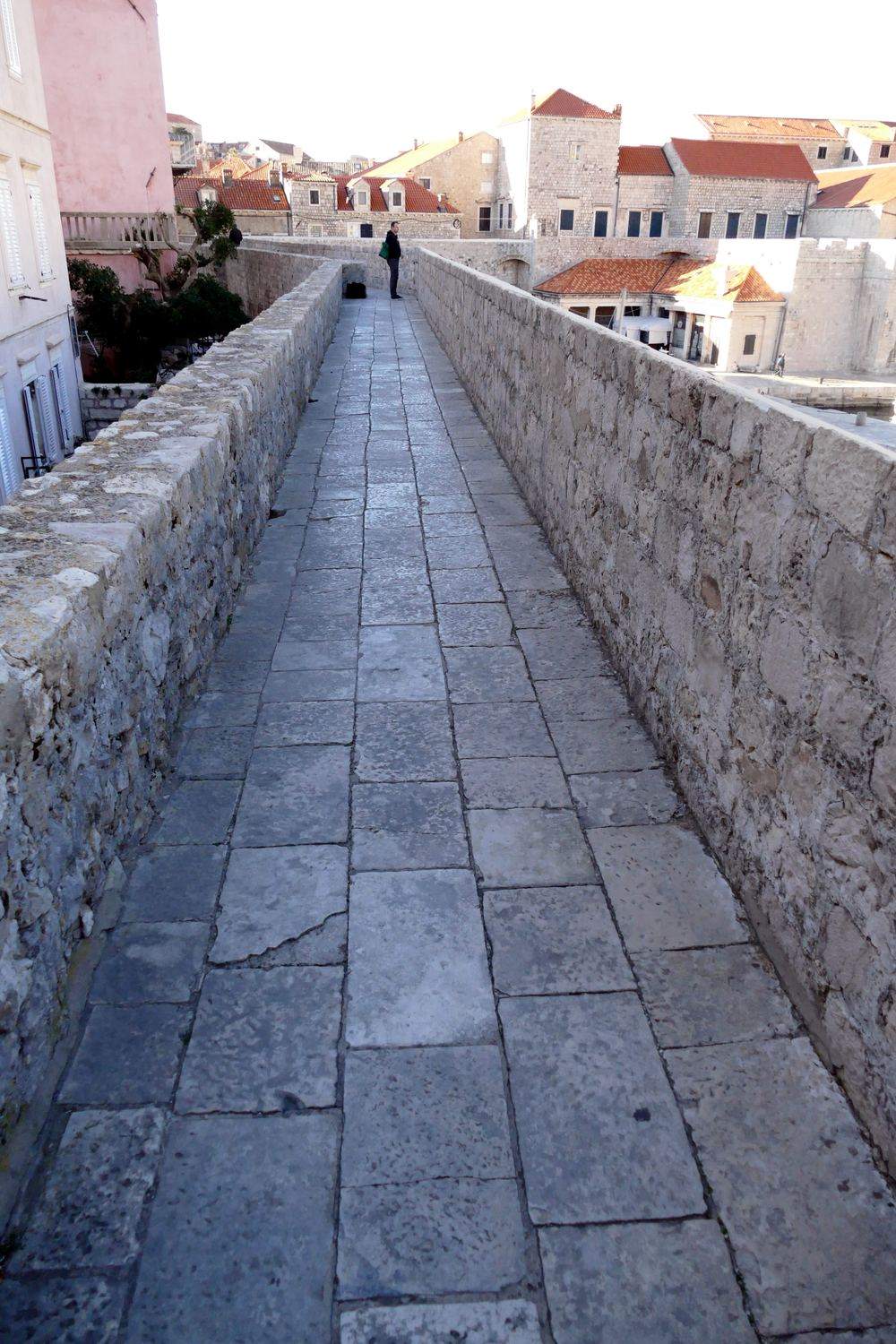
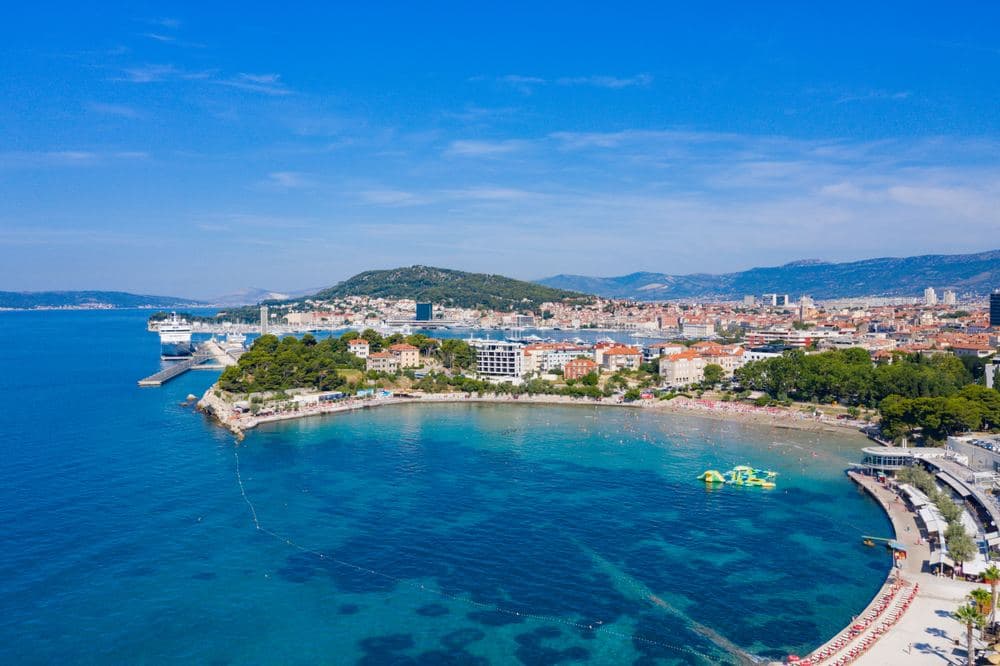
Split is the most child-friendly city on the coast, because it has a beach in it, a promenade with ice cream, a palace whose cellars feel like a castle, a hill with playgrounds in the pines and ferries to three islands from the door. Dubrovnik is harder: the Old Town is stairs and heat and, on cruise days, crowds, but the walls at eight in the morning are an adventure for anyone over five, the cable car is a thrill, the kayak tours take children from about eight, and the Lokrum boat with its peacocks and its warm salt lake is the best afternoon in the city. Zadar has the sea organ and the Greeting to the Sun, which children love at sunset, the Roman forum to climb on and the cheapest ferries to islands in the country. Pula has the Arena, where a child can stand where gladiators stood, the Kamenjak cape with its dinosaur footprints and the Brijuni boat. Zagreb, for a night at the start or the end, has the funicular, the Museum of Illusions and the Technical Museum with a real submarine and a planetarium.
Where to stay: apartments, resorts, camps
Croatian families holiday in apartments, and so should you: two bedrooms, a kitchen, a terrace and a washing machine for 90 to 160 euro a night in June and September and 120 to 220 in August, in a house where the owner lives downstairs and knows where the pharmacy is. The resort hotels are concentrated in Poreč, on the Makarska Riviera at Brela and Tučepi, at Bol and in Dubrovnik's Lapad, and the ones built for families, the Bluesun hotels at Bol, Brela and Tučepi and the Valamar family resorts in Istria, have kids' clubs, pools, half board and children who stay free below a certain age; a family room in July costs 250 to 400 euro a night with half board. Camping is the third Croatian tradition, and the big campsites at Zaton near Zadar, Lanterna near Poreč, Krk and Baška have mobile homes with air conditioning and terraces for 100 to 200 euro a night, pools, water sports and a beach on the doorstep. All-inclusive barely exists and is not needed, because dinner out is 60 euro for a family and the markets sell fruit by the kilo.
Getting around with children
A car is the honest answer for families on the mainland: the distances are short, the motorway is good and the car seats come with the rental for 5 to 10 euro a day, booked ahead. Children under 150 centimetres must be in a seat or a booster by law. On the islands and in the cities the car is a burden and the ferry, the bus and your feet are the answer. The Jadrolinija ferries carry buggies free, children under 3 travel free and 3 to 12 pay half; the coastal catamarans are enclosed and fine for babies, and the fast speedboat tours are not. Buses between the cities take buggies in the hold. The airport shuttles in Split, Dubrovnik and Zadar are coaches with luggage space, and a family of four pays 30 to 40 euro. Taxis and Uber exist in all the cities; car seats in them do not, so a folding booster in your luggage is worth its weight.
Eating with children
Croatian restaurants are used to children and most have a highchair, though few have a children's menu, because the children eat what the adults eat: grilled fish and squid, ćevapi with bread, pasta, risotto, pizza in every town, pancakes with chocolate for dessert. A pizza is 10 to 14 euro, a plate of ćevapi 10 to 12, a children's portion is a matter of asking. The bakeries sell burek, the cheese or meat pastry, for 3 euro, which solves breakfast and the beach lunch. Ice cream is 2 euro a scoop and on every corner. The markets in every town sell peaches, figs, watermelon and tomatoes by the kilo, and the supermarkets carry nappies, formula and everything else at prices similar to the UK and a little below the US. Tap water is safe. Dinner is late; a restaurant at seven is empty and at nine full, and nobody looks twice at a child asleep on two chairs at ten.
What a family week costs in 2026
| Item | Budget | Comfortable |
|---|---|---|
| Apartment or resort, 7 nights | 700 to 1,100 euro apartment in June | 1,800 to 2,800 euro family resort, half board, July |
| Car for a week with seats | 300 to 400 euro | 400 to 550 euro |
| Food, mixed cooking and eating out | 400 to 500 euro | 700 to 900 euro |
| Ferries and boat day | 60 to 100 euro | 150 to 250 euro |
| Water park day | 120 to 160 euro | 140 to 180 euro with fast lane |
| National park | 100 to 130 euro Plitvice in summer | 130 euro plus a tour |
| Ice cream, water shoes, inflatables | 80 euro | 120 euro |
| Total without flights | about 1,800 to 2,500 euro | about 3,500 to 5,000 euro |
Flights are the variable: from the UK a family of four flies to Split or Dubrovnik for 400 to 1,000 pounds depending on the month and how early you book; from the US the direct United flights from Newark to Dubrovnik and Split cost 950 dollars and up per person in summer, and connections through Frankfurt, Munich or London are 800 to 1,400 dollars per person. September cuts every line in the table by a quarter to a third.
Safety, health and the small print
- The sea is safe: no dangerous currents on the beaches, no jellyfish problem, no sharks. Sea urchins on the rocks are the hazard, and water shoes solve them.
- Sun: the July sun at 43 degrees north burns a child in twenty minutes. Hats, rash vests and shade from eleven to four.
- Heat: 32 to 34 degrees in August; the beach at midday is for nobody under ten.
- Pharmacies (ljekarna) are in every town and well stocked; the emergency number is 112 and hospitals in Split, Dubrovnik, Zadar, Rijeka and Pula have children's departments.
- Travel insurance: EU children use the EHIC or GHIC card; US, Canadian and Australian families need a policy that covers Europe, and a doctor's visit paid in cash is 40 to 80 euro.
- Car seats are compulsory under 150 centimetres; the rental company supplies them, check the fit before you leave the lot.
- Stairs: the old towns of Dubrovnik, Hvar, Rovinj and Korčula are stairs; buggies work on the promenades and not in the lanes. A carrier for a toddler is the right tool.
- Fire: the coast burns in summer; no fires on beaches, no cigarettes out of car windows, and obey the signs in burned zones.
Three family itineraries
One week, small children, one base: Brela or Tučepi on the Makarska Riviera. The beach and the promenade every morning, the Biokovo skywalk one afternoon, the boat to Zlatni rat one day, Krka waterfalls one day, Split by bus for the palace and Bačvice one day. Everything within an hour, nothing that needs a ferry timetable.
Ten days, children from six, two bases: Split for four nights with Brač, Trogir and Krka as day trips, then Zadar or Nin for three nights with the sandy beaches, the sea organ and Plitvice, then two nights in Zagreb or a night at Plitvice itself on the way to the airport. A car for the second half.
Two weeks, mixed ages, Istria: Poreč or Rovinj for a week with Aquacolors, the Lim fjord boat, Brijuni and Pula's Arena, then a second week on Krk or at Baška with the Kvarner islands, the Rab sand at Lopar by ferry and the mountain walks of Učka for the teenagers. Direct flights to Pula and Rijeka from the UK; from the US via Venice and the catamaran, which children love.
Frequently asked questions
- Where is the best place in Croatia for a family holiday?
- Brela and Tučepi on the Makarska Riviera for small children, with fine-pebble beaches, promenades and everything within an hour; Poreč in Istria for water parks and resorts; Split for families with older children who want islands and a city; Bol on Brač and Lopar on Rab for the beach itself.
- Does Croatia have sandy beaches for children?
- Yes: Rajska plaža at Lopar on Rab, Queen's beach and Zaton near Nin, Bačvice in Split, Šunj on Lopud, Lovrečina on Brač and Sakarun on Dugi otok. Most other beaches are fine pebble; water shoes at 5 to 10 euro solve them.
- How much does a family holiday in Croatia cost?
- About 1,800 to 2,500 euro for a week for a family of four in an apartment in June or September with a car, food, a boat day and a water park, without flights. A family resort with half board in July is 3,500 to 5,000 euro. Flights from the UK are 400 to 1,000 pounds for four, from the US 800 to 1,400 dollars per person.
- Is Plitvice suitable for children?
- From about six, yes: the lower lakes route with the boat and the train takes three to four hours on boardwalks with no buggy access. Children under 7 enter free, 7 to 18 pay a reduced fare, adults 40 euro in summer and 23 in October. Krka is the easier park for smaller children.
- Are car seats compulsory in Croatia?
- Yes, for children under 150 centimetres, in a seat or booster appropriate to their size. Rental companies supply them for 5 to 10 euro a day when booked ahead; taxis do not, so bring a folding booster if you plan to use them.
Official sources
Make Croatia Atlas a preferred source
One click and Google shows you our stories more often in Top Stories and in AI answers. It changes your own results only.