From 1 June to 20 September a fast catamaran links Venice's San Basilio pier with the four Istrian towns in 2 hours 15 to 3 hours 30 for 79 to 89 euro one way, foot passengers only, different ports on different days. How the timetable works, when it sells out, which town to land in, a morning in Venice before the boat and a week in Istria after it.
Checked: 15 September 2026
Venice and Istria face each other across the top of the Adriatic, 100 nautical miles apart, and for four months a year a catamaran joins them: three and a half hours from the San Basilio pier in Venice to the harbour of Pula, with stops at Umag, Poreč and Rovinj on different days. It is the only sea link between Italy and Croatia that runs to a daily rhythm, the only one that lands in the middle of an old town rather than an industrial port, and one of the more pleasant ways of moving from an Italian city break to a Croatian beach week without an airport in between. It is also seasonal, foot-passenger only and sold out in August. This guide gives the 2026 timetable, the prices, what the crossing is like, what to do on either side, and the alternatives when the boat is not running.
The ferry at a glance
| Item | Detail |
|---|---|
| Operator | Adriatic Lines under the Kompas brand, Venezia Lines on some sailings |
| Ports in Croatia | Pula, Rovinj, Poreč, Umag |
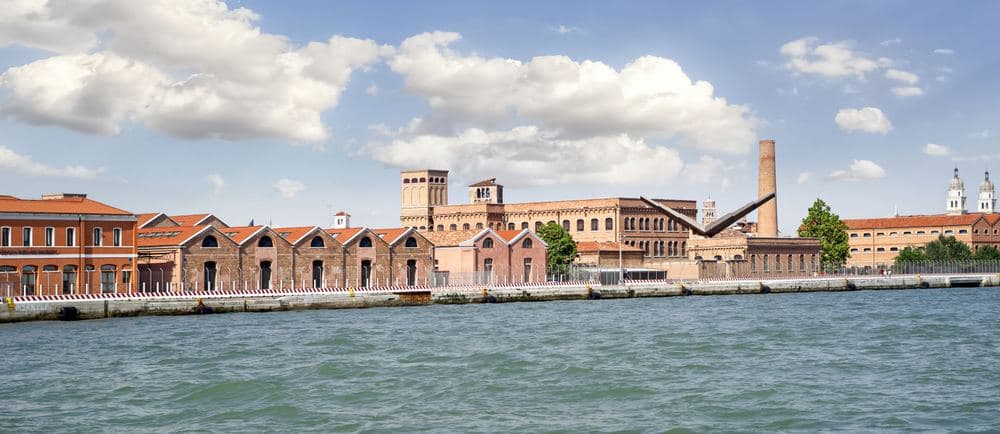
| Pier in Venice | San Basilio, Zattere, 15 minutes on foot from Piazzale Roma |
| Season 2026 | 1 June to 20 September, extra Saturday sailings 15 June to 13 September |
| Crossing time | 3 hours 30 to Pula, 2 hours 45 to Rovinj, 2 hours 30 to Poreč, 2 hours 15 to Umag |
| Frequency in high season | 5 sailings a week from Venice, different ports on different days |
| Fare, adult one way | 79 to 89 euro, return 130 to 160 euro |
| Children | under 2 free, 2 to 11 half price |
| Cars and bikes | No cars; bicycles carried for a fee on most sailings |
| Luggage | One suitcase and one hand bag per person |
Timetable and how the days work
The catamaran leaves Venice in the morning, usually at 17:00 or 17:30 on the days it comes back and at 08:00 to 09:00 outbound, and it does not serve all four Croatian ports on the same day. In a typical high-season week the Monday, Wednesday and Friday boats run to Poreč and Rovinj, the Tuesday and Thursday boats to Pula, with Umag on selected days, and the Saturday extra sailings from mid-June to mid-September go to Rovinj or Poreč. The return sailings leave Croatia in the late afternoon and reach Venice around 20:30 to 21:00. The company publishes the exact calendar each spring, usually in March, and the pattern shifts by a day from year to year, so look at the day you want before you plan the hotel. Outside 1 June to 20 September the boat does not run at all.
Because the boat sells out, book early. July and August sailings are full two to three weeks ahead, and the Friday and Sunday boats in June and September fill a week ahead. Booking is on the operator's site or through the ferry agencies, which add a fee of 5 to 10 euro but sometimes have seats when the direct site shows none. Check-in at San Basilio opens 90 minutes before departure and closes 30 minutes before; passports are checked on boarding, because Croatia joined Schengen in 2023 and the crossing is now an internal Schengen journey, so the check is a formality, but the boat will not take you without a valid document.
The crossing itself
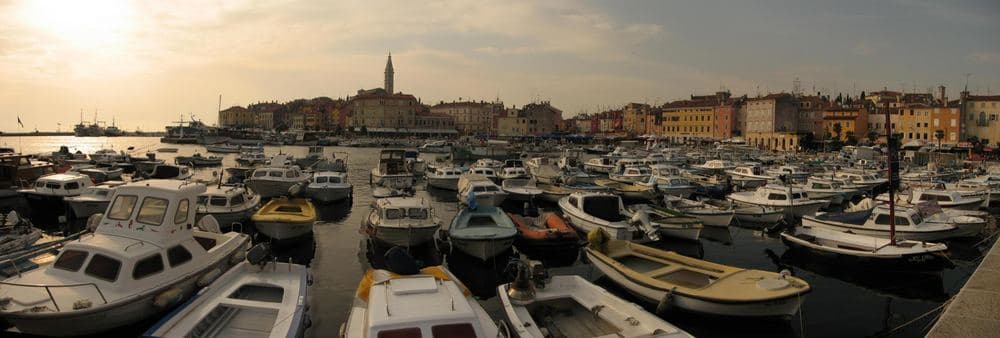
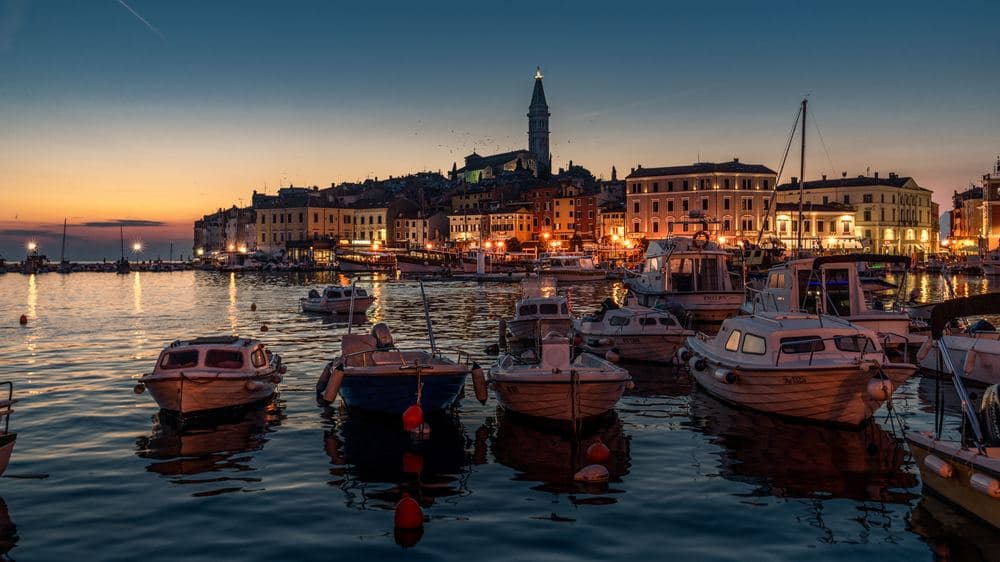
The boats are fast catamarans with airline seats in a closed cabin, a bar selling coffee, sandwiches and beer, and a small open deck at the stern. The route runs out of the Venice lagoon past the Lido, crosses the open gulf and closes on the Istrian coast about an hour before landing, which is the moment to go outside: Rovinj's church tower rising out of the sea is the finest arrival in Croatia. The gulf is calm in summer, and seasickness is rare; on a bora day in June or September the crossing can be lumpy and the company cancels only in real storms, with a refund or a rebooking. Take a jacket for the deck and something to read. In Pula the boat docks on the Riva in front of the old town, five minutes from the Arena; in Rovinj at the main pier below the church; in Poreč at the town quay; in Umag at the harbour.
Which Croatian port to choose
| Port | For | Onward |
|---|---|---|
| Pula | The Arena and the Roman city, the airport, buses to all of Croatia | Buses to Rijeka, Zagreb, Zadar, Split; Kamenjak and Brijuni close by |
| Rovinj | The prettiest town, a base for the west coast | Buses to Pula and Poreč; Lim fjord and the Rovinj archipelago |
| Poreč | The Euphrasian basilica, family resorts, the biggest hotel zone | Buses along the coast; inland Istria by car |
| Umag | Tennis, golf, the closest to Slovenia and Trieste | Buses to Novigrad and Poreč; the Slovenian coast by car |
Pula is the practical choice for anyone continuing into Croatia: its bus station has direct coaches to Rijeka, Zagreb, Zadar and Split, and its airport has flights across Europe. Rovinj is the choice for the town itself and for a week on the west coast. Poreč suits families heading to the resort hotels along the Lanterna and Zelena laguna coast. Umag is the answer for the golf and tennis resorts of the north and for anyone with a car waiting on the Slovenian side.
Prices and what they include
A single adult fare is 79 to 89 euro in 2026 depending on the date, and a return 130 to 160 euro. Children under 2 travel free on a lap, children from 2 to 11 pay half, and there are small reductions for groups and for the early-booking fares released in spring. The fare includes one suitcase and one piece of hand luggage; a second suitcase costs about 10 euro, a bicycle 15 to 20 euro and must be booked. There are no cabins, no cars and no pets other than assistance dogs. For a family of four the crossing costs 240 to 270 euro one way, which is more than a car ferry and less than four flights with luggage.
Is it worth it against flying or driving?
Flying from Venice to Pula is impossible without a change, and the drive from Venice to Pula via Trieste and the Slovenian corner is 290 kilometres, three and a half hours of motorway with two tolls and the Slovenian vignette at about 16 euro for a week, plus the queue at the Slovenian and Croatian borders in July, which no longer involves passport control since Croatia joined Schengen but still involves a wait. The catamaran wins for anyone without a car: it is the same three and a half hours, it lands in the town and there is no border. The car wins for anyone who needs the car on the other side. The train and bus alternative, Venice to Trieste by train and Trieste to Pula by FlixBus, takes six to seven hours and costs 30 to 50 euro, which is the budget answer and the only answer from October to May.
Venice for a day before the boat
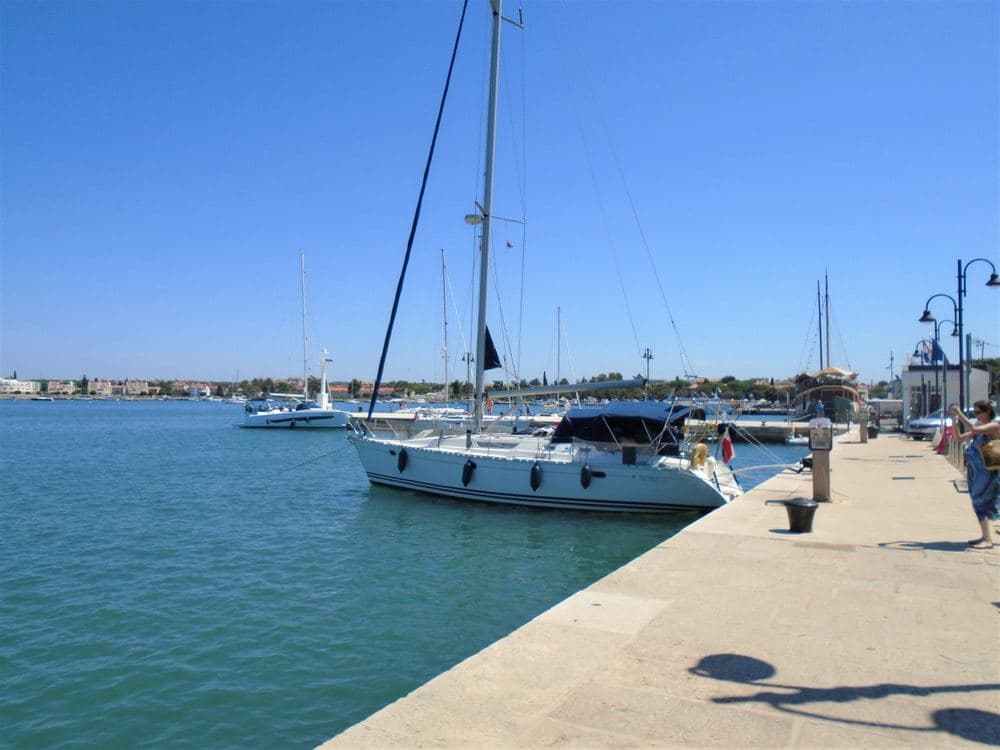
The San Basilio pier is in Dorsoduro, the quiet quarter of Venice, and the boat's afternoon departure leaves a morning for the city. From Piazzale Roma or the railway station it is 15 minutes on foot along the Zattere, or one stop on the vaporetto line 6 to San Basilio. The Accademia gallery is ten minutes east, the Peggy Guggenheim collection fifteen, and the Zattere waterfront has cafes with tables on the water where you can wait with a spritz and your luggage. If you have a suitcase to lose for the morning, the left-luggage office at the station takes it for 6 euro. Do not attempt San Marco with a boat to catch at five; the vaporetto back takes longer than you think.
Istria after the boat: a week planned
Land in Rovinj on a Monday, spend two nights in the old town with a day on the archipelago's boats, take the bus to Pula for two nights with the Arena, Kamenjak and a day trip to the Brijuni islands, hire a car for two days in the interior at Motovun and Grožnjan for the truffles and the wine, and return to Poreč or Rovinj for the boat back. Seven nights, one car for two days, and the whole of Istria in one loop. The buses along the west coast run every hour or two in summer, 5 to 8 euro a leg. Each town has its own guide on Croatia Atlas, linked below.
Booking step by step
The operator's site opens the season's calendar in March, and the cheapest early fares go first. Choose the direction and the date, and the site shows only the ports served that day, which is how most people discover that Tuesday is a Pula day and Wednesday a Rovinj day. Enter the passengers with ages, add a bicycle or a second suitcase if you need them, and pay by card; the ticket arrives by email as a PDF with a QR code, which is scanned at the pier, so a phone screen is enough. A return booked together is 20 to 30 euro cheaper than two singles. Changes are possible up to 48 hours before departure for a fee, and a cancellation refunds about half; the agencies that resell the tickets have their own, usually stricter, rules. If the site shows the sailing as full, try again 48 hours before departure, when unpaid reservations are released.
If you miss the boat, or it is cancelled
A missed sailing is not refunded, and the next boat to the same port may be two days later, so the fallback from Venice is the land route: a regional train from Venezia Santa Lucia to Trieste in two hours for 10 to 15 euro, then the FlixBus or Arriva coach from Trieste's bus station to Pula in three to four hours for 15 to 25 euro, passing Koper in Slovenia and the Croatian border at Kaštel without a passport check since 2023. In the other direction the same chain runs from Pula to Venice with a change in Trieste. A cancellation by the company for weather is refunded in full or rebooked on the next sailing; the company tells passengers by email and text the evening before, so keep the phone on.
The Istrian coast from the water
The last hour of the crossing is a lesson in the coast. The catamaran closes on Istria at the tip of Cape Kamenjak on a Pula day, with the lighthouse of Porer standing alone in the sea and the low green coast of Premantura behind it, then rounds into the bay of Pula past the Brijuni islands, which were Tito's summer residence and are now a national park with Roman villas and a safari park. On a Rovinj day the boat runs up the west coast past the Lim fjord, a drowned valley 10 kilometres deep with mussel farms across its mouth, before the church of St Euphemia on its hill comes into view, the tallest tower on the coast at 60 metres. On a Poreč day the resort coast of Zelena laguna and the Sveti Nikola island in front of the town are the landmarks, and on an Umag day the flat coast of the north with the golf courses and the lighthouse at Savudrija, the oldest working one on the Adriatic, built in 1818.
What to eat when you land
Istria is the food region of Croatia, and the first meal after the boat should reflect it. In Pula, the konobas around the market sell fuži, the hand-rolled pasta, with truffle or with game sauce for 14 to 20 euro, and the fish restaurants along the Riva grill the day's catch by weight. Rovinj's restaurants in the old town lanes are the most expensive on the coast and the best for scampi and shellfish; the bakery on the main square is the cheap lunch. Poreč and Umag do the same things at lower prices. Everywhere, the wine to ask for is Malvazija, the white of Istria, and the olive oil on the table is from the hills behind the town. A dinner for two with wine runs 60 to 90 euro in Rovinj and 45 to 70 elsewhere.
The other Italy crossings
The catamaran is the only boat to Istria; the other Italy to Croatia routes are car ferries from further down the coast. Jadrolinija's Ancona to Split, Ancona to Zadar and Bari to Dubrovnik lines are overnight car ferries, and in 2026 all three were cancelled from 8 September to 21 October because of a fault on the ship Dalmacija. SNAV runs a seasonal fast ferry from Ancona to Split in summer. None of them serves Venice or Istria, so for the Italian north the catamaran or the road are the two answers.
Practical notes
- Passport or EU identity card: the crossing is within Schengen since 2023, but the boat checks documents at boarding.
- Arrive 90 minutes before departure at San Basilio; the pier has no shade and little seating, and the queue forms early in August.
- Sea conditions: the company cancels only in storms; on a windy day sit at the back of the cabin and go on deck.
- Luggage: one suitcase each in the fare; a second is 10 euro; bicycles must be booked.
- Food: the bar is basic; buy a sandwich on the Zattere or in the Croatian town before boarding.
- Money: Croatia uses the euro, so nothing to change; cards work on board.
- Timing: the last outbound sailing of the season is on 20 September; plan the return before that or take the bus via Trieste.
Frequently asked questions
- Is there a ferry from Venice to Pula?
- Yes, a foot-passenger catamaran run by Adriatic Lines under the Kompas brand from 1 June to 20 September 2026, 3 hours 30 minutes from the San Basilio pier for 79 to 89 euro one way. It also serves Rovinj, Poreč and Umag on other days of the week.
- How much is the Venice to Croatia ferry?
- 79 to 89 euro one way for an adult, 130 to 160 euro return, children 2 to 11 half price, under 2 free. One suitcase is included; a bicycle costs 15 to 20 euro and must be booked.
- Can I take a car on the Venice to Pula ferry?
- No. The boat is a passenger catamaran. With a car, drive via Trieste and the Slovenian corner, 290 kilometres and about 3 hours 30 with a Slovenian vignette.
- How do I get from Venice to Croatia in winter?
- The catamaran does not run from late September to May. Take the train from Venice to Trieste and a FlixBus from Trieste to Pula or Rijeka, 6 to 7 hours in all for 30 to 50 euro, or fly with a change.
- Which Istrian port should I choose?
- Pula for onward buses and the airport, Rovinj for the town and the west coast, Poreč for the family resorts, Umag for golf and the north. The boat serves them on different days, so check the calendar first.
Make Croatia Atlas a preferred source
One click and Google shows you our stories more often in Top Stories and in AI answers. It changes your own results only.