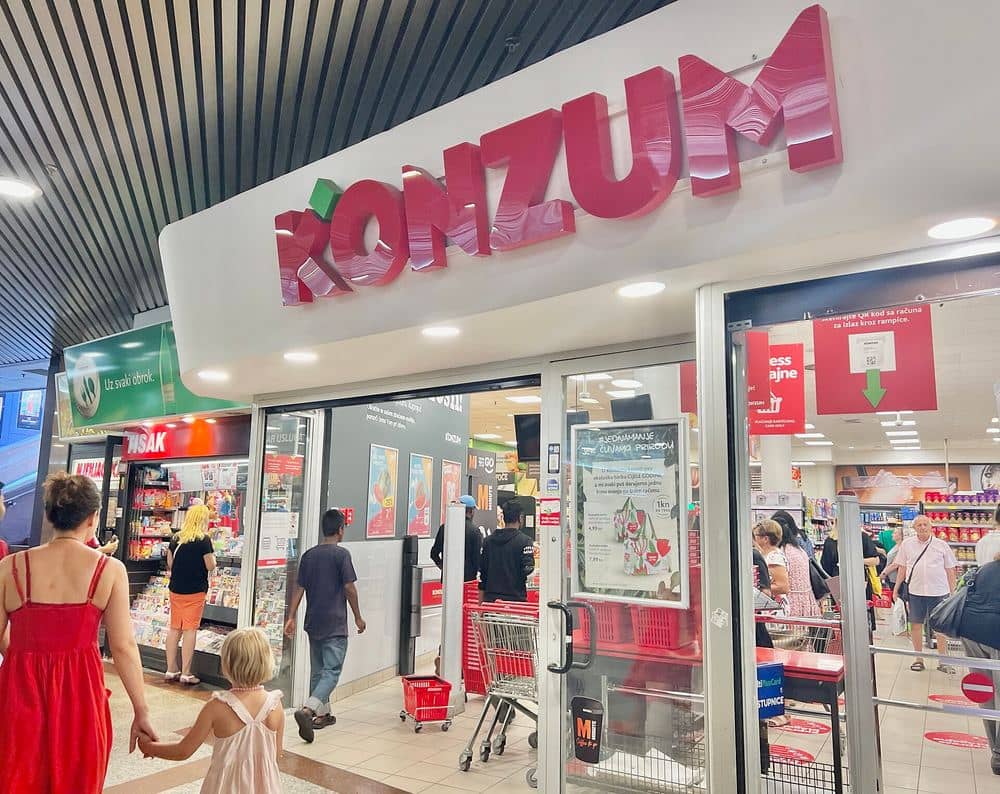
Shops in Croatia have not been allowed to sell energy drinks to under-18s since June. Now the health ministry is preparing a separate law with a caffeine limit, a school advertising ban and a register.
Checked: 28 October 2026, 16:21
If you travel to Croatia with teenagers, one rule has applied since the summer: from 17 June 2026, shops may no longer sell energy drinks to anyone under 18. On 28 October the Ministry of Health in Zagreb went a step further and started work on a separate law. It is meant to define what counts as an energy drink, ban advertising aimed at children and introduce a mandatory register (HINA, Glas Istre, Index.hr).
The sales ban is part of the amended Trade Act, published in the official gazette Narodne novine 59/2026 (NN 59/2026). It covers all retail, from supermarkets to kiosks. Age checks are also required at self-checkouts. Anyone ordering energy drinks or alcohol online has to prove they are an adult through the state portal e-Građani. Retailers and platforms had 90 days to build in this check.
Advertisement
What applies where
| Where | Status on 28 October 2026 |
|---|---|
| Supermarket, kiosk, shop | Sale to under-18s banned since 17 June 2026 |
| Self-checkout | Age check required |
| Online order | Proof of age via e-Građani |
| Café, bar, restaurant | Ban planned, Hospitality Act before the Sabor for second reading |
| Advertising, schools | Ban planned in the new law, text not yet published |
What the new law is meant to change
Under the draft, any drink with more than 150 milligrams of caffeine per litre counts as an energy drink, whatever the source of the caffeine. Products based on coffee, tea and cocoa are exempt. Minors will also be barred from buying products that match an energy drink in composition or effect, in whatever form they are sold.
Advertising may no longer target minors, and in schools and other institutions for children, advertising and display are to be banned outright. The Croatian Institute of Public Health (HZJZ) is to keep a register that everyone placing such products on the market must join, and it will be able to propose a temporary ban on individual products. The ministry cites HZJZ surveys showing that energy drinks are widespread among pupils, with some drinking 750 millilitres or more in one go.
Advertisement
What it means for visitors
- Bring ID: if staff think a teenager is under 18 and no ID is shown, they must refuse the sale. Anyone aged 18 or 19 who looks younger avoids an argument at the till by carrying ID.
- Fines hit the seller: companies face 5,000 to 39,810 euros for selling to a minor, sole traders 5,000 to 13,270 euros and the responsible person 2,000 to 6,630 euros. On top of that, the inspector bans the shop from trading by oral decision.
- Coffee and tea stay allowed: according to the draft, canned iced coffee or iced tea is not meant to fall under the definition.
- A clue on the can: in the EU, drinks with more than 150 mg of caffeine per litre already carry the mandatory warning "High caffeine content" (Regulation (EU) 1169/2011, Annex III). If the can shows it, the drink is above the planned limit.
- Cafés come with the next law: for cafés, bars and restaurants, the ban is part of the Hospitality Act, which is before the Sabor for its second reading.
What happens next
The draft text has not been published yet. According to the ministry, a public consultation comes next, and the bill is due to enter the government procedure by the end of 2026, after which the Sabor decides. We will update this article once the draft is out and the Hospitality Act is passed.
Advertisement
The same Trade Act amendment allows municipalities to ban alcohol sales in shops between 21:00 and 06:00. Opening hours on Sundays and public holidays are in our guide to shops in Croatia on Sundays and holidays. Tips for holidays with children are in our family guide to Croatia.
Frequently asked questions
- Can teenagers buy energy drinks in Croatia?
- No. Since 17 June 2026, shops may not sell energy drinks to anyone under 18, including at self-checkouts. If staff think the buyer is under 18 and no ID is shown, they must refuse the sale.
- What counts as an energy drink under the new Croatian law?
- Under the draft announced by the Ministry of Health on 28 October 2026, any drink with more than 150 mg of caffeine per litre, whatever the source. Products based on coffee, tea and cocoa are exempt.
- What are the fines for selling energy drinks to minors in Croatia?
- Companies face 5,000 to 39,810 euros, sole traders 5,000 to 13,270 euros and the responsible person 2,000 to 6,630 euros. The inspector also bans the shop from trading by oral decision.
Sources
Share this guide
Questions about your trip?
Make Croatia Atlas a preferred source
One click and Google shows you our stories more often in Top Stories and in AI answers. It changes your own results only.