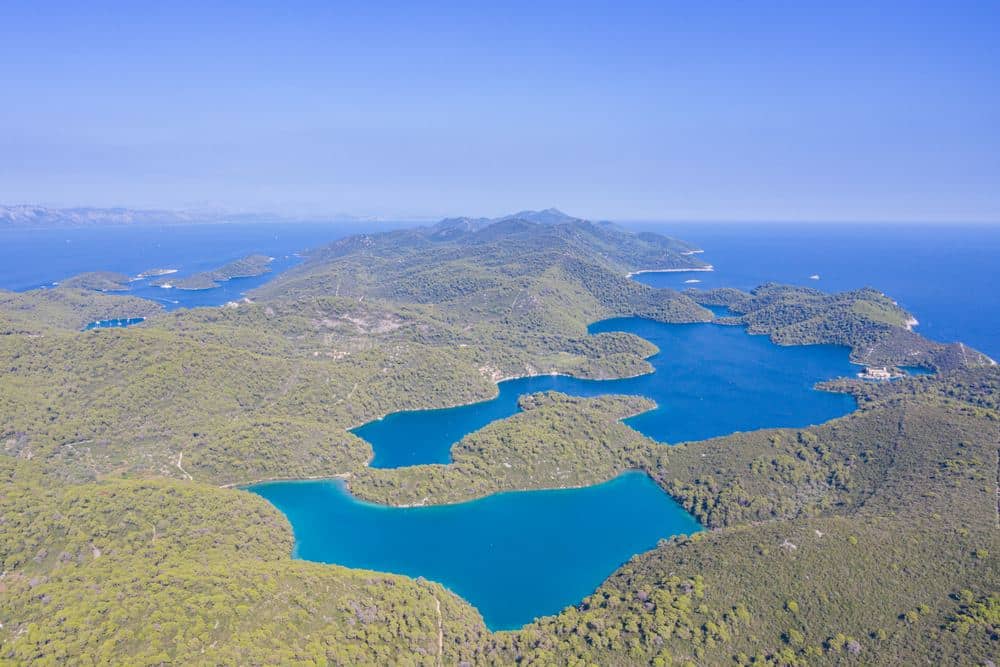
A third of the island is national park, with two salt lakes and a twelfth-century monastery on an islet inside one of them. Prices, ferries and trails.
Checked: 17 October 2026, 20:00
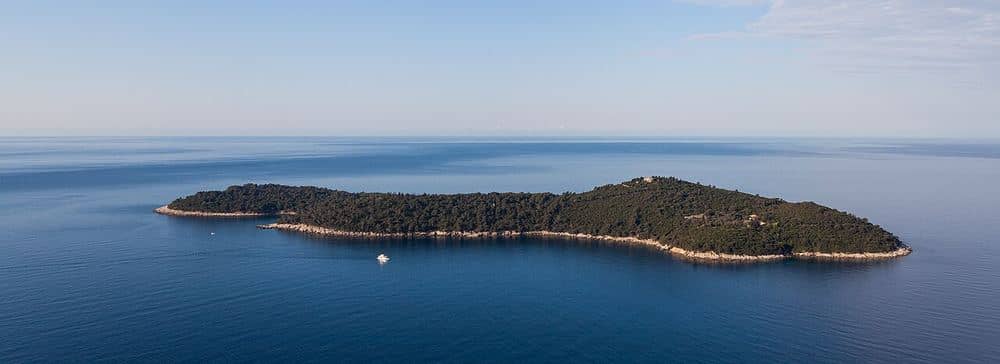
Mljet is the southernmost of the larger south Dalmatian islands, about 37 kilometres long and rarely more than three wide. Its western third has been a national park since 1960, which makes it one of the oldest protected areas on the Adriatic. Inside it lie two connected salt lakes, Veliko jezero and Malo jezero, joined to the open sea by a narrow channel. The water is seawater, and because it moves through the channels slowly it warms up earlier in the year than the sea outside.
What the park costs in 2026
| Ticket | 1.1. – 31.5. | 1.6. – 30.9. | 1.10. – 31.12. |
|---|---|---|---|
| Adults | 20,00 € | 30,00 € | 20,00 € |
| Children 7 to 18 | 5,00 € | 8,00 € | 5,00 € |
| Students | 8,00 € | 20,00 € | 8,00 € |
| Children under 7 | free | free | free |
| Hiking ticket | 15,00 € | 20,00 € | 15,00 € |
The ticket already includes one return trip on the solar boat to the islet of St Mary in Veliko jezero, one visit to every site on land, the marked walking trails around both lakes, parking at Vrbovica and a ride on the electric train in season. In 2026 the train ran from 4 May to 27 September. A second return boat trip to the islet costs five euro. Adult, child and student tickets bought at the park for visits after four in the afternoon are 25 percent cheaper, which is worth knowing if you arrive on a late catamaran. From the start of November to the end of April the park admits visitors only with prior notice.
How to get there
- Car ferry Prapratno on the Pelješac peninsula to Sobra, 40 minutes, run by Jadrolinija all year. This is the only way to bring a car.
- Catamaran from Dubrovnik, passengers only. It stops at Polače from late May to late September and at Sobra all year. Polače is the better stop for the park; Sobra sits in the middle of the island, some thirty kilometres away.
- Timetables change several times a season. Check the operator's schedule for the exact day you travel, not the one printed in spring.
Inside the park
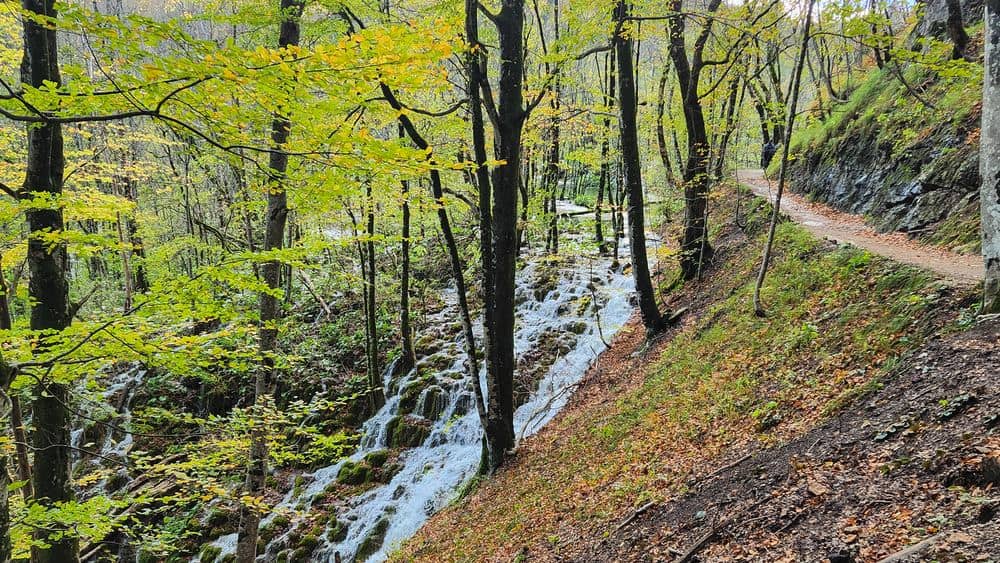
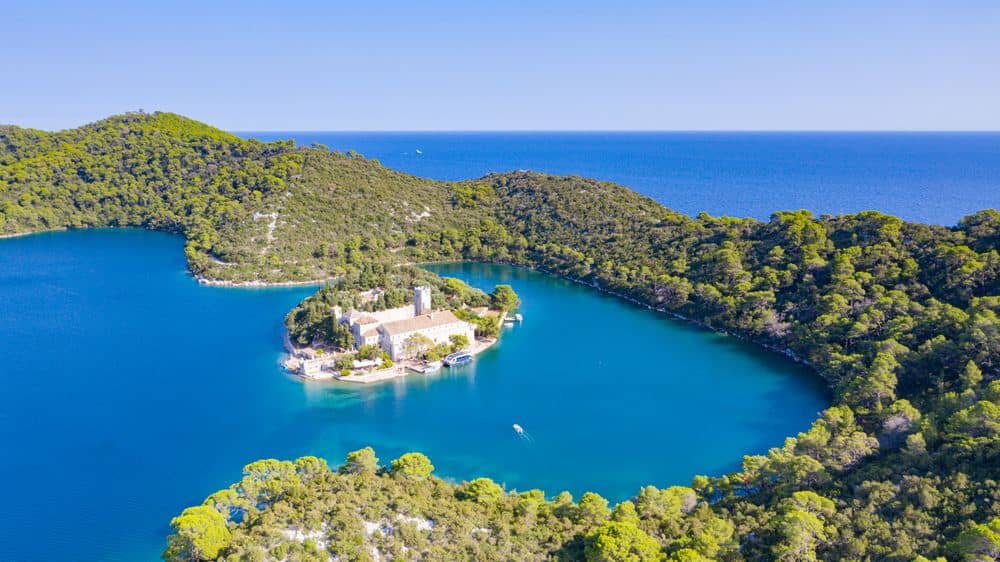
The islet in Veliko jezero carries a Benedictine monastery begun in the twelfth century, and the solar boat that goes there is part of the ticket. Around the lakes runs a level path of about nine kilometres, popular with cyclists and easy on foot in either direction. For height there are two marked climbs, one to the Montokuc viewpoint and one to Veliki gradac, and further trails lead from Malo jezero to Pomena and from Vrbovica to Polače. Most of what you walk through is Aleppo pine and holm oak, which is why the island is often called the greenest in the Adriatic.
The rest of the island
East of the park the island stays quiet. Saplunara at the far end has the only real sand beaches, shallow and backed by pines. Near Babino Polje, the largest village, a set of steps drops to Odysseus's cave, a sea cave that local tradition ties to the seven years Homer's hero is said to have spent with Calypso. And you will probably meet a mongoose: the animals were released here in 1910 to deal with the horned viper, they dealt with a good deal more, and their descendants now cross the roads in daylight.
The best months are May, June and September. In July and August the park fills up between eleven and three, when the day boats from Dubrovnik are in; before and after that the lake path is largely yours. Bring water, there is little shade on the climbs, and the two villages inside the park, Pomena and Polače, have only a handful of places to eat.
Getting around the island
A single road runs the length of Mljet along its spine, from Saplunara in the east through Babino Polje and Sobra to Polače and Pomena in the west. A local bus links Sobra with both park villages and is timed to the ferries and catamarans in season, so look for it the moment you land rather than counting on a later departure. Taxis wait at Sobra when the car ferry comes in. From the Polače pier a marked trail leads to the shore of Veliko jezero in about 30 minutes on foot. Pomena is closer still: the path to Malo jezero starts behind the hotel and takes 10 minutes.
Inside the park the lake path is closed to cars, so you walk, cycle or, in season, ride the electric train. Bicycles are hired by the hour or the day in Pomena, in Polače and at stands on the lake shore, and the path is level enough for anyone who can ride. The same villages hire scooters and a few small cars for the rest of the island, and kayaks and canoes go out on Malo jezero. Whatever you hire, bring it back before dark: the road has no lighting outside the villages.
- Local bus: Sobra to Polače and Pomena, timed to ferry and catamaran arrivals in season, ask at the pier where it stops.
- Bicycle: the standard way round the lakes, hired in Pomena, Polače and on the lake shore, bring a lock if you plan to swim.
- On foot: Pomena to Malo jezero 10 minutes, Polače to Veliko jezero about 30 minutes, the full lake circuit 2 to 3 hours.
- Electric train: included in the ticket, runs in season between the park entrances and the lake shore for anyone who does not want to walk. In 2026 it ran from 4 May to 27 September.
- Kayak or canoe: hired on Malo jezero, the calmest water in the park, an hour is enough to paddle to Mali most and back.
- Taxi or hire car: for Saplunara and Odysseus's cave, both far from the park along the single island road.
A day trip from Dubrovnik
From late May to late September the morning catamaran from Dubrovnik reaches Polače in about 2 hours and the return sails in the late afternoon, which leaves you 5 to 7 hours on the island. From late September to late May the catamaran sails only to Sobra and leaves Dubrovnik in the afternoon. Walk from the pier to the park office at the edge of the village, buy the ticket, follow the trail down to Veliko jezero and board the boat to the islet first, before the tour groups arrive. Then cycle or walk the shore path west to Mali most, swim, eat what you carried and go back to Polače the way you came. In July and August buy the catamaran ticket for both directions before you leave Dubrovnik. The afternoon sailing back is the one that fills, and the alternative is a night on the island you did not plan for.
| Step | Time to allow | Note |
|---|---|---|
| Pier to park office and lake shore | 30 minutes | Marked trail, some shade |
| Boat to the islet and monastery | 1 hour | Included in the ticket, go first |
| Lake path to Mali most | 1 hour on foot, 20 minutes by bicycle | Level, pines most of the way |
| Swim and lunch at Mali most | 1 to 2 hours | Rocks and ladders, warmest water |
| Back to Polače | 1 hour | Be at the pier 20 minutes before the boat |
Swimming in the lakes and the sea
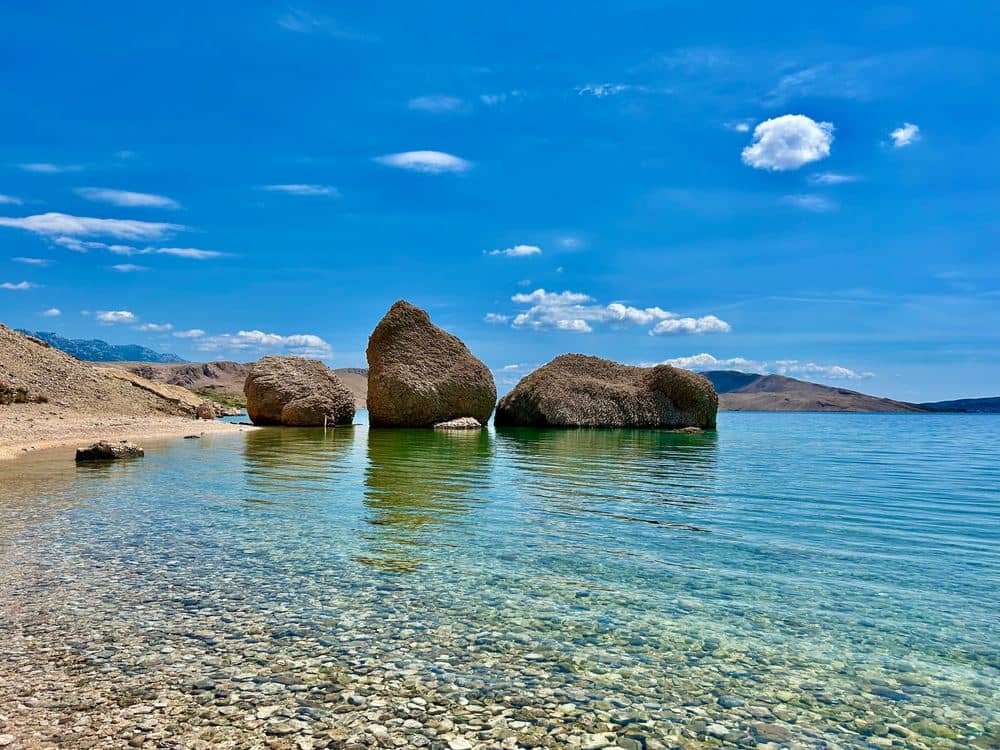
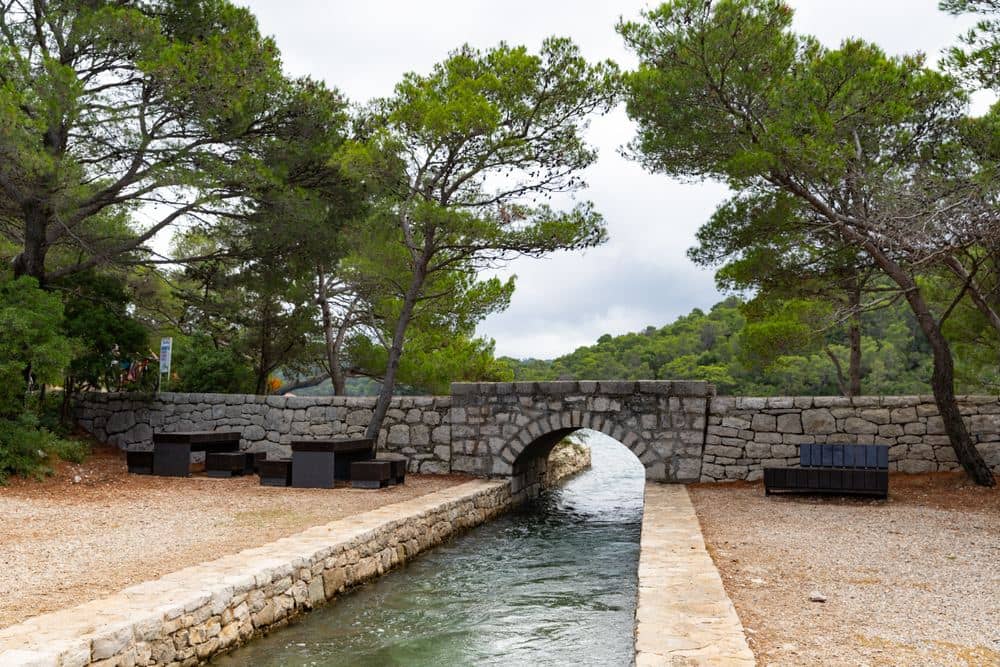
Both lakes are open for swimming and the water is calmer and warmer than the sea outside. Mali most, the stone bridge at the channel between Malo jezero and Veliko jezero, is where most people go in: flat rocks, ladders and a strip of pines behind for shade. Malo jezero is the shallower and warmer lake and suits children. Veliko jezero is deep and cold a metre down even in August. At Soline, where Veliko jezero meets the open sea, the tide runs through the narrow channel with a pull you can feel, so keep to the shore there and watch children. Outside the park the coast is rock and pebble: the coves around Pomena, Sutmiholjska below Babino Polje on the south side and the harbour villages of Okuklje and Prožura on the north. Beside Saplunara the Blace lagoon is a shallow sandy inlet that warms like a bath by June.
Where to stay
Mljet has a single hotel, in Pomena, and everything else is private rooms and apartments, booked online or on arrival outside the peak weeks. Beds are few for an island this size and July and August sell out months ahead, so book those weeks early. Where you sleep decides your days. Both park villages put the lakes on your doorstep. Sobra and Babino Polje suit a car and a lower budget. Saplunara is for the sand at the far end and for doing very little, and the north coast bays of Okuklje and Prožura are for people who want a harbour, a konoba and no traffic at all.
| Area | Best for | Keep in mind |
|---|---|---|
| Pomena | The lakes, no car, the hotel | 10 minutes from Malo jezero, busy harbour at dinner |
| Polače | Catamaran arrivals, a quiet bay, late Roman ruins | 30 minutes on foot to the lake, few restaurants |
| Sobra | Car ferry, late arrivals, a base for the whole island | About 40 minutes by road to the park |
| Babino Polje | Self catering, the cheapest beds, Odysseus's cave | Inland, you need a car or a bicycle |
| Saplunara | Sand, small children, doing nothing | The far end of the island, a long drive to the park |
| Okuklje and Prožura | Quiet, boats, rocky swimming | Very few beds, bring supplies |
Eating and supplies
Restaurants cluster on the harbour front at Pomena, where the yachts tie up for the night, and around the bay at Polače, with a few more at Sobra, Saplunara and the north coast bays. Menus are grilled fish and squid, black risotto, lamb or octopus under the peka ordered a few hours ahead, goat cheese and the island's own wine from the vines around Babino Polje. Lobster is the Pomena speciality and is sold by weight, so ask the price of the one you are shown before it goes on the grill. Book a table in July and August, the evening trade from the yachts fills the good places early. For self catering there are small grocery shops in Pomena, Polače, Sobra and Babino Polje with short hours and limited fresh stock, so bring what you need for a week from Dubrovnik or Pelješac, and carry cash: the smaller konobas do not all take cards.
Common mistakes
- Landing at Sobra without a car and expecting to walk to the park: it is about 30 km away, take the bus or, from late May to late September, the Polače catamaran.
- Buying only the outward catamaran ticket in August: the late afternoon return from Polače and Sobra sells out first.
- Arriving with an empty tank: the island's only fuel station is at Sobra, fill up on Pelješac before Prapratno.
- Feeding the mongooses or leaving food out: they are wild, they bite and they will empty a picnic bag in minutes.
- Lighting anything in the forest: the park is Aleppo pine and burns, open fires and barbecues are banned everywhere inside it.
- Flying a drone over the lakes: filming from the air needs a permit from the park authority and rangers do stop people.
- Relying on your phone for the map: signal drops on the lake path and the climbs, download the trails before you leave the village.
Frequently asked questions
- Can you visit Mljet as a day trip from Dubrovnik?
- Yes. From late May to late September the passenger catamaran leaves Dubrovnik in the morning and returns from Polače and Sobra in the late afternoon, which gives you 5 to 7 hours. The rest of the year it sails only to Sobra and leaves Dubrovnik in the afternoon. Get off at Polače, the lake is a walk of 30 minutes from the pier. Book both legs in advance in July and August, the return sailing sells out.
- Do you need a car on Mljet?
- You can do the park without one. Pomena and Polače are reached by bus, from late May to late September Polače also by catamaran. Inside the park you walk, cycle or, in season, take the electric train. A car helps for Saplunara, Odysseus's cave and the north coast villages, which sit far along the single island road. Bring it on the Prapratno ferry, only a few cars and scooters are hired on the island.
- Can you swim in the lakes of Mljet National Park?
- Yes, swimming is allowed in both lakes and the water is warmer than the open sea from May on. Mali most at the channel between the lakes is the main spot, with rocks and ladders. Malo jezero is shallow and calm, Veliko jezero is deep. Avoid the channel at Soline where the tide runs out to sea.
- Pomena or Polače: which is the better base?
- Pomena for the lakes: Malo jezero is 10 minutes on foot, the hotel and most restaurants are there, and it is livelier in the evening. Polače for the catamaran, a quieter bay and the ruins of a late Roman palace by the shore, with a walk of 30 minutes to Veliko jezero. Both villages lie inside the park.
- Is Mljet good for children?
- Yes for children who can walk a few kilometres or ride a bicycle. The lake path is flat and shaded, Malo jezero is shallow and warm, the boat to the islet and, in season, the electric train are treats, and the mongooses cross the road in daylight. Pushchairs manage the lake path, the climbs to the viewpoints and the steps to Odysseus's cave do not suit small legs.
- How many days do you need on Mljet?
- A day covers the lakes, the islet and a swim. A second day adds the climb to Montokuc and a proper evening in Pomena or Polače. A third day lets you drive east to Saplunara and Odysseus's cave and still keep a lazy afternoon at Mali most. Longer stays suit people who want to read, swim and do little else.
Official sources
Share this guide
Questions about your trip?