Mild days around 10 to 12 degrees on the south coast, frost and snow inland, a sea of 12 to 13 degrees and Plitvice at 10 euros. January weather by region from DHMZ data, what is open, winter ferries and where to go.
Checked: 25 October 2026, 02:20
January is the quietest month of the Croatian year. The Christmas season ends with Epiphany on 6 January, a public holiday, most island hotels and beach bars are shut, and the coast belongs to the people who live there. What is left is a mild, often sunny southern coast with afternoons around 10 to 12 degrees, a cold and sometimes snowy interior, Plitvice Lakes at the lowest ticket price of the year and cities that keep their museums, markets and cafés open as usual. This guide covers the January weather region by region, what is open and what is not, how ferries and roads work in deep winter, and where a January trip makes sense.
The figures below are the climate normals for 1971 to 2000 published by the Croatian Meteorological and Hydrological Service, DHMZ, in its station tables (DHMZ climate normals). They are long-term averages, rounded to whole degrees, so a single January can be noticeably warmer or colder. For the week of your trip, the DHMZ forecast and its current sea temperatures say more than any average.
Advertisement
January weather by region: the table
| Place (DHMZ station) | Day high | Night low | Sea | Rainfall | Rain days (1 mm or more) | Sunshine per day | Nights below 0 °C |
|---|---|---|---|---|---|---|---|
| Dubrovnik | 12 °C | 7 °C | 13 °C | 98 mm | 9 | 4.2 h | 1 |
| Split (Marjan) | 10 °C | 6 °C | 12 °C | 74 mm | 8 | 4.3 h | 2 |
| Zadar | 11 °C | 4 °C | - | 73 mm | 8 | 3.7 h | 3 |
| Rijeka | 9 °C | 3 °C | - | 129 mm | 9 | 3.6 h | 6 |
| Zagreb (Maksimir) | 4 °C | −3 °C | - | 43 mm | 6 | 1.8 h | 23 |
| Gospić (Lika, near Plitvice) | 3 °C | −5 °C | - | 102 mm | 10 | 2.2 h | 23 |
The south is the mild end. Dubrovnik averages 12 degrees in the afternoon and 7 at night, with frost on about one night in the month and snow on the ground almost never. Split is two degrees cooler by day and gets the most sunshine of the stations in the table, a little over four hours a day. Zadar is similar by day but colder at night, with about three frosty nights. Rijeka, at the head of the Kvarner Gulf, is the wettest station on the list with 129 millimetres, and frost there is no longer rare. Rain falls on 8 or 9 days at the coastal stations, so a January week usually brings two or three grey, wet days between dry ones.
Inland, January is real winter. Zagreb averages 4 degrees by day and minus 3 at night, with 23 nights below freezing, snow cover on about ten days and less than two hours of sunshine a day, the lowest figure in the table. Gospić in Lika, the nearest station to Plitvice in the DHMZ normals tables, is colder still: 3 degrees by day, minus 5 at night and snow on the ground on about 16 days. If you drive from Zagreb to Split or Zadar in January, you cross both climates in a few hours, and the mountain section is the one that decides your plans.
Advertisement
The sea in January
The Adriatic is at its coldest in late winter. DHMZ gives a January mean of about 13 degrees at Dubrovnik and 12 at Split, roughly four degrees below the November values. That is water for a short winter dip, not for swimming as most visitors understand it. If you want to try, pick a calm, sunny afternoon and a sheltered beach, and keep it brief. Our sea temperature page shows the latest DHMZ readings from the coastal stations.
What is open in January and what is not
- Open as usual: the cities. Zagreb, Split, Zadar, Rijeka and Dubrovnik keep their museums, markets, cafés and most restaurants running all winter, with shorter hours in some places.
- Open, at the lowest price of the year: Plitvice Lakes. The 2026 price list charges adults 10 euros for a day ticket from 1 January to 31 March (the same as from 1 November to 31 December) and 15 euros for two days; the 2027 list was not yet published when this guide was written.
- Mostly closed: island and beach resorts. Many hotels, campsites, beach bars and excursion boats on the islands and the smaller coastal towns pause between the end of autumn and spring, so check that your accommodation and at least one restaurant are open before you book.
- Public holidays under the Croatian holidays act: 1 January (New Year's Day) and 6 January (Epiphany). Shops and many cafés close or open late on both days.
Advertisement
Ferries and roads in January
The state ferry and catamaran lines run all year, on winter timetables with fewer sailings than in summer. The coastal shipping agency publishes the 2026 timetables and fares for every state line (2026 timetables). The main car ferries visitors use in winter, such as Split to Supetar on Brač (line 631), Orebić to Korčula (line 634) and Valbiska on Krk to Merag on Cres (line 332), all appear there. Jadrolinija publishes the daily departures and any cancellations on its own site (Jadrolinija), and our Jadrolinija winter guide explains the seasons line by line.
In January, wind matters more than rain. A strong bura from the north-east or jugo from the south-east can keep catamarans in port and, in the worst cases, stop car ferries too, so leave a spare day before a flight if your plan depends on a crossing. On the road, the coastal and motorway sections are usually clear, but the climbs through Gorski kotar and Lika can have snow and ice, and bura can close exposed bridges and stretches of motorway for some vehicles. Drive with winter equipment, check the Croatian Auto Club (HAK) road reports before you set off, and do not trust a navigation app that sends you over a minor mountain road. Our winter guide covers the rules for the whole season.
Advertisement
Where to go in January
- Dubrovnik for the mildest weather: the highest afternoon and night temperatures in the table, almost no frost, and an old town without cruise crowds.
- Split for sun and city life: the sunniest station on the list, a palace that people live in, and ferries to Brač that run all winter.
- Zagreb for museums, cafés and a proper winter: cold and often grey, but busy indoors, with snow in a normal year.
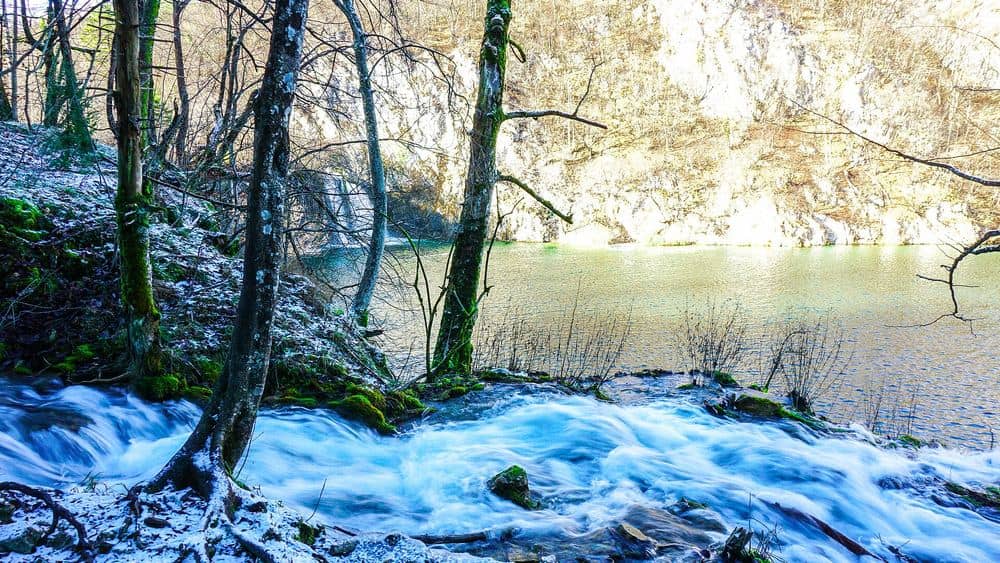
- Plitvice for frozen waterfalls, as a day trip from Zagreb or Zadar: the lowest ticket price of the year, snow in about half the days, short daylight and paths that can be icy, so arrive at opening and pick a short route.
Our Plitvice day trip guide covers buses, driving times and tickets. If you are coming for New Year's Eve and staying into January, our New Year guide covers the concerts and fireworks on 31 December.
Advertisement
Practical tips: costs, timing and packing
January is one of the cheapest months for Plitvice tickets. Accommodation is easy to find in the cities, but the choice on islands and in small resorts is thin, because so much is closed. Days are short, so plan sights, crossings and mountain drives for the morning and early afternoon. Avoid relying on 1 and 6 January for errands, and keep a flexible day for weather. Pack for wind and rain on the coast, which means a waterproof jacket with a hood, a warm layer and shoes with grip for old-town stone. For Zagreb, Plitvice and anywhere inland, add a winter coat, gloves and a hat.
Is January a good month to visit Croatia?
For a beach holiday or island hopping, no. For a quiet city break, a food trip, a winter visit to Plitvice or a road trip with a flexible day, January works well: prices are low, the old towns belong to their residents, and the south coast stays mild. Base yourself in Dubrovnik, Split or Zagreb rather than on a small island, plan around wind and short days, and check the ferry timetable for the exact week you travel. If November suits you better, see our Croatia in November guide.
Advertisement
Frequently asked questions
- How cold is Croatia in January?
- It depends on the region. DHMZ averages for 1971 to 2000 give Dubrovnik 12 degrees by day and 7 at night, Split 10 and 6, Zadar 11 and 4, Rijeka 9 and 3. Inland it is much colder: Zagreb averages 4 degrees by day and minus 3 at night, and Gospić in Lika 3 and minus 5.
- Does it snow in Croatia in January?
- Inland, often. DHMZ counts snow cover of at least 1 cm on about 10 January days in Zagreb and 16 in Gospić near Plitvice. On the coast snow is rare: Split and Dubrovnik average well under one day with snow on the ground.
- Can you swim in Croatia in January?
- Only as a short winter dip. The DHMZ January mean sea temperature is about 13 degrees at Dubrovnik and 12 at Split, so most visitors will find it far too cold for normal swimming.
- Do ferries run in Croatia in January?
- Yes. The state ferry and catamaran lines run all year on winter timetables with fewer sailings, published by the coastal shipping agency. Strong bura or jugo can cancel catamarans and sometimes ferries, so check Jadrolinija on the day.
- Is Plitvice open in January?
- Yes. The park is open all year, and January falls in the lowest price band: under the 2026 price list an adult day ticket costs 10 euros from 1 January to 31 March. Expect snow, ice on the paths and short daylight.
Sources
- DHMZ: climate normals by station (1961-1990, 1971-2000)
- DHMZ: climate normals, Dubrovnik station (PDF)
- DHMZ: climate normals, Zagreb Maksimir station (PDF)
- DHMZ: climate normals, Gospić station (PDF)
- Coastal shipping agency: 2026 timetables and fares
- Jadrolinija: timetables and sailing notices
- Plitvice Lakes National Park: 2026 price list
- Narodne novine 110/2019: holidays act
- HAK: road conditions
Share this guide
Questions about your trip?
Make Croatia Atlas a preferred source
One click and Google shows you our stories more often in Top Stories and in AI answers. It changes your own results only.