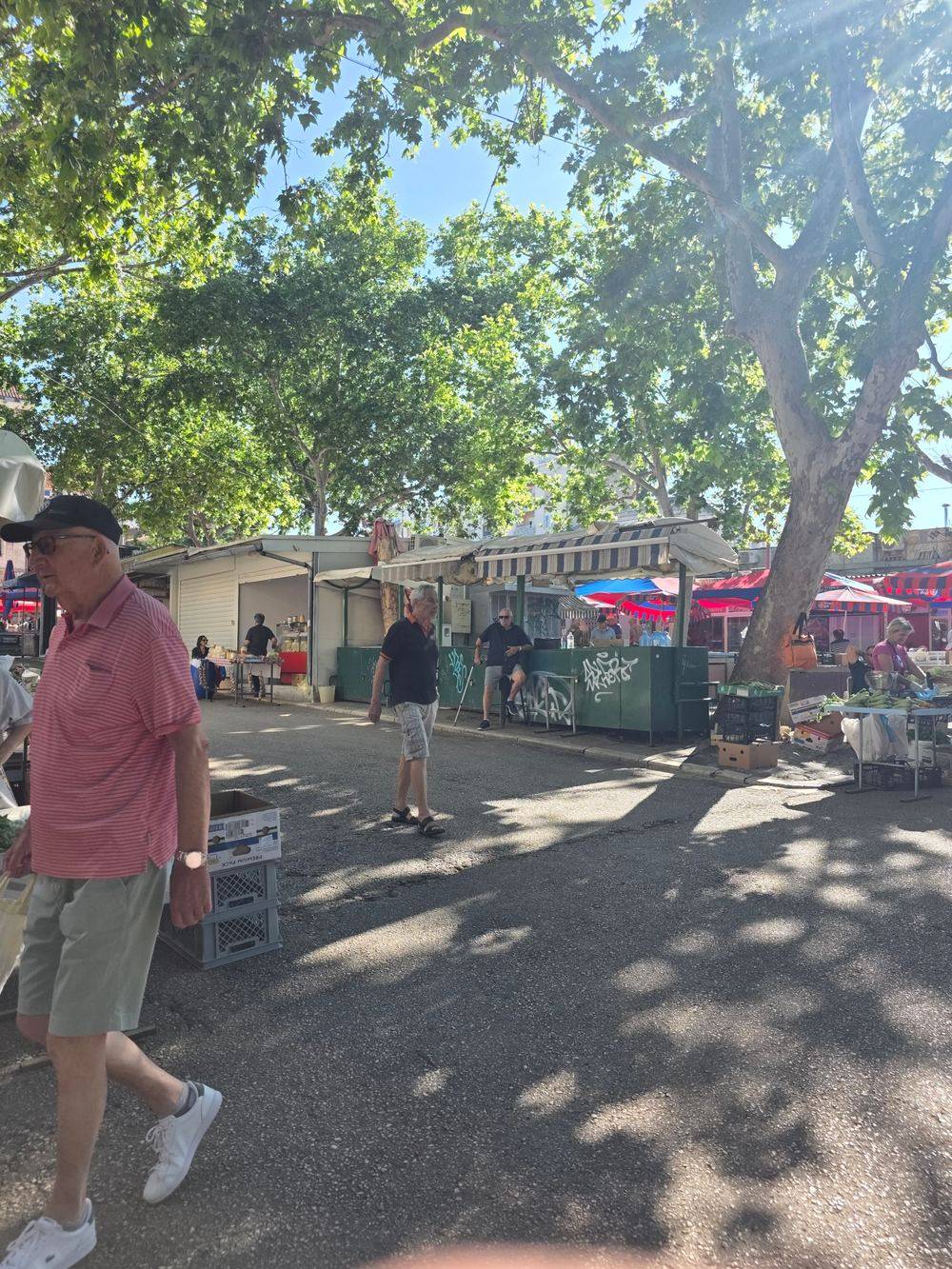
From Tuesday 17 November 2026 shops, cafés, restaurants and hairdressers in Croatia show the base price of 10 September next to today's. Inspectors will issue warnings, not fines, at first.
Quick answer
The base price (bazna cijena) appears next to every price in Croatia from Tuesday 17 November 2026: the price of 10 September 2026, or of 2 May 2025 for food, drinks, cosmetics and household goods. Status 14 Nov: inspectors only warn at first.
Checked: 14 November 2026, 18:50
Status of the reports: Saturday 14 November 2026, 18:00. The obligation starts as planned on Tuesday 17 November 2026, now under the name "bazna cijena", the base price, and based on two new rulebooks (Croatian government). At the start the State Inspectorate will only issue warnings, not fines, says Economy Minister Ante Šušnjar; according to him most businesses, especially large retailers, are ready (Croatian government). Until then the rule from May 2025 continues: food, drinks, cosmetics, cleaning products and household goods in shops carry the price of 2 May 2025 next to today's (Glas Istre).
From 17 November 2026 a new rule applies to almost every price you see in Croatia. Shops, market stalls, cafés, restaurants, hairdressers, repair services and online shops must show, next to the current price, the price the same product or service had on 10 September 2026. Croatians call it the "sidrena cijena", the anchor price; the official term was "dodatna cijena", the additional price, and from 17 November it is "bazna cijena", the base price. The government introduced it as a direct price-control measure so that customers can see at a glance whether a price has gone up. For food, drinks, cosmetics, cleaning products, toiletries and household goods, which have carried such a second price since 2 May 2025, nothing changes: their reference date stays 2 May 2025.
| Point | Rule |
|---|---|
| Applies from | Tuesday 17 November 2026 (first set for 1 October) |
| Who must show it | Every retailer and service provider selling to consumers: shops, markets, cafés, restaurants, hairdressers, repair and telecom services, online shops, pharmacies for non-prescription products |
| Reference date | 10 September 2026 for all services and for goods covered for the first time |
| Food, drinks, cosmetics, cleaning, toiletries, household goods | Keep the reference date 2 May 2025 |
| Not covered | Accommodation prices in own booking systems or on booking platforms; third-party offers on platforms; loyalty apps and member prices |
| How it is shown | On the same tag or price list, clearly and legibly; recommended wording: "Cijena na 10.09.2026." |
| Price lists online | Everyone with their own website, updated with every price change; content and format set by the rulebook on publishing price lists |
| Checks and fines | State Inspectorate; warnings instead of fines at the start (status 14 Nov 2026) |
| Legal basis | Pravilnik o isticanju bazne cijene proizvoda and Pravilnik o načinu objave cjenika proizvoda under the Consumer Protection Act; the government repealed the decisions in Narodne novine 101/2026 on 14 Nov 2026 |
Advertisement
New rulebooks from 17 November: what is settled
At its session on 14 November the government repealed the three decisions on which the obligation had rested so far, including the one from May 2025 (Index.hr/HINA). They are replaced by two rulebooks under the Consumer Protection Act: the rulebook on displaying the base price (Pravilnik o isticanju bazne cijene proizvoda) and the rulebook on publishing price lists (Pravilnik o načinu objave cjenika proizvoda). Both enter into force on Tuesday 17 November (Croatian government). Economy Minister Ante Šušnjar calls them a permanent framework; the decisions under the Law on Exceptional Price Control Measures were meant as a temporary measure. The reference dates stay the same: 2 May 2025 for food, drinks, cosmetics, cleaning products, toiletries and household goods, and 10 September 2026 for all other goods and for services (TEB).
The draft rulebooks left out prices that change several times an hour, such as airline tickets; services priced under their own laws, such as taxis, utility services, lawyers and architects; and products made individually to a customer's order, such as a florist's arrangement (Glas Istre). State Secretary Ivan Rakocija confirmed the exemption for dynamic prices. Whether every exemption made it into the final text will show once the rulebooks appear in the official gazette Narodne novine.
Advertisement
What you will see on price tags and menus
The second price must stand in the same place as the current one: on the same shelf label, on the same menu or price list. A separate sheet with old prices is not allowed. Businesses may choose the font size and whether the anchor price sits above, below or next to the current price, but it has to be clear and legible for an average customer. The Ministry of Economy recommends writing only the reference date next to it, for example "Cijena na 10.09.2026.", without the words "sidrena" or "dodatna cijena", so on most tags and menus you will see a date rather than a label.
The anchor price has to be shown even when nothing has changed. A coffee that cost the same on 10 September and today carries the same amount twice, once as today's price and once with the date 10 September 2026. Products and services first offered after 10 September show the price from the day they were first put on sale, with that date. A new internal code or a new name for the same product does not make it new, and a product that was temporarily out of stock on 10 September keeps the price recorded in the system for that day.
Advertisement
Sales: three prices on one tag
During a sale or promotion the anchor price comes on top of the rule that already existed: the tag then shows the reduced price, the lowest price of the last 30 days and the anchor price, and the unit price may be left out. If a product happened to be on promotion on 10 September, its anchor price is the regular price before the promotion, not the reduced one. Prices for particular groups, such as cash discounts, pensioner discounts, loyalty apps and member programmes, are not used as anchor prices.
What changes for travellers
- Cafés, bars and restaurants: menus and drinks lists must show both prices for every item, on the same list.
- Hairdressers, repair shops, telecom operators and other services: the price list shows the price valid on 10 September 2026 next to the current one.
- Holiday apartments and hotels: accommodation prices shown in the host's own booking system or on booking platforms are exempt.
- Booking and delivery platforms: dishes, rooms or tickets sold for third parties are exempt; only the platform's own charges, such as a delivery or service fee, a platform ticket or a cloakroom fee, must show the anchor price.
- Pharmacies: the rule covers non-prescription products such as sun cream, vitamins, supplements and pastilles.
- Services priced by demand, route or algorithm: the anchor price applies to the individual price components that were valid on 10 September 2026.
- Adverts: flyers, posters, in-store screens and websites must include the anchor price; TV, radio and loyalty-programme adverts are exempt, and flyers printed once the rule applies must carry it.
Advertisement
Price lists online
From 17 November this is governed by the rulebook on publishing price lists, which sets their content and format (TEB). Anyone with their own website publishes the valid price lists there and updates them with every price change (Index.hr/HINA). The details below come from the September decision that the rulebook replaces. It extended a rule that until then applied only to large supermarkets. Every retailer and service provider with its own website, even a simple presentation page, must publish its price list there as a machine-readable .csv or .xml file. Shops update it every working day by 8:00, service providers by 8:00 on the day a price changes, and older lists stay online for at least 30 days. For goods the list also shows whether an item is in stock in that particular shop. A social-media profile does not count as a website. Price-comparison sites and apps can read these files automatically, which is the point of the format.
Checks and fines
The State Inspectorate (Državni inspektorat) supervises the rules. The start comes with a transition period: according to Economy Minister Ante Šušnjar, inspectors will warn businesses and show them how the display should look instead of fining them; penalties are mainly meant for repeat offenders (Croatian government). He did not say how long the period lasts. Until the decisions were repealed, the amounts in Article 20 of the Law on Exceptional Price Control Measures applied: 3,000 to 30,000 euros for companies, 1,000 to 4,000 euros for the responsible person, 1,000 to 20,000 euros for craftsmen and self-employed people and 1,000 to 6,000 euros for traders who are natural persons. The new rulebooks are based on the Consumer Protection Act (Index.hr/HINA).
Advertisement
How to use the two prices
- Compare the two amounts: if today's price is higher than the one dated 10 September, it has gone up since then; for food and household goods the comparison goes back to 2 May 2025.
- If a tag, menu or price list shows only one price after 17 November, ask for the full price list: both prices have to be on the same list.
- Missing or unclear prices can be reported to the State Inspectorate, which supervises the rule (dirh.gov.hr).
- Before a big shop, check the supermarkets' online price lists or a comparison app built on them.
Why Croatia is doing this
The two decisions were adopted at the 201st session of the Croatian government as part of its eleventh package of measures to protect households and businesses from rising prices, and were published in the Official Gazette, Narodne novine no. 101/2026, on 11 September 2026. They rest on the Law on Exceptional Price Control Measures of March 2025. According to the Ministry of Economy, the aim is to ease inflationary pressure, make prices more transparent, follow the effect of price changes and help consumers make informed decisions. The first version of the rule, in force since 2 May 2025, covered only everyday goods such as food and drinks and only large store formats for the online price lists; from 17 November it covers all products and all services. On 14 November the government repealed these decisions and the one from May 2025 and moved the obligation into two rulebooks under the Consumer Protection Act, which have no end date (Croatian government).
Advertisement
Advertisement
Frequently asked questions
- From when must prices in Croatia be shown twice?
- From Tuesday 17 November 2026. On that day the rulebook on displaying the base price and the rulebook on publishing price lists enter into force. Retailers and service providers then show the price of 10 September 2026 next to the current price, or the price of 2 May 2025 for food, drinks, cosmetics, cleaning products, toiletries and household goods. The start was first set for 1 October 2026.
- How is the base price shown on a price tag?
- It stands on the same shelf label, menu or price list as the current price, with a date, for example "Cijena na 10.09.2026.". Products added after 10 September 2026 show the price of their first day on sale with that date. During sales the tag shows three prices: the reduced one, the lowest of the last 30 days and the base price.
- What does "bazna cijena" mean on Croatian price tags?
- It is the base price: the price a product or service had on the reference date, 10 September 2026, or 2 May 2025 for food, drinks, cosmetics, cleaning products, toiletries and household goods. Until 14 November its official name was "dodatna cijena", and people call it "sidrena cijena", the anchor price. It must be shown even when it equals today's price.
- Does the rule apply to restaurants and cafés?
- Yes. All services are covered, including hospitality. Menus and drinks lists must show both prices for each item on the same list; a separate list with old prices is not allowed.
- Do holiday apartments and hotels have to show two prices?
- Not for accommodation prices shown in their own booking systems or on booking platforms: the Ministry of Economy exempts them explicitly. Other services they sell directly, for example in a hotel bar, follow the general rule.
- Will there be fines from 17 November if the base price is missing?
- Not at the start. On 14 November Economy Minister Ante Šušnjar said the State Inspectorate will warn and explain during a transition period instead of fining; penalties are mainly meant for repeat offenders. He did not say how long the transition period lasts.
Sources
- Croatian government: base prices from 17 November, warnings first (14 Nov 2026)
- Index.hr/HINA: government repeals the three decisions, rulebooks from 17 November
- TEB: base prices and price lists from 17 November 2026
- Narodne novine 101/2026: Decision on displaying the additional price
- Narodne novine 101/2026: Decision on publishing price lists
- Narodne novine 110/2026: additional price moved to 17 November
- Narodne novine 110/2026: online price lists moved to 17 November
- RRiF: application of the anchor price decisions postponed
- Glas Istre: planned exemptions from the anchor price (17 October 2026)
- Ministry of Economy: explanations for application from 1 October 2026 (PDF)
- Law on Exceptional Price Control Measures, NN 40/25
- Ministry of Agriculture advisory service: additional price and price lists
- State Inspectorate of the Republic of Croatia
Share
Questions about your trip?
Make Croatia Atlas a preferred source
One click and Google shows you our stories more often in Top Stories and in AI answers. It changes your own results only.