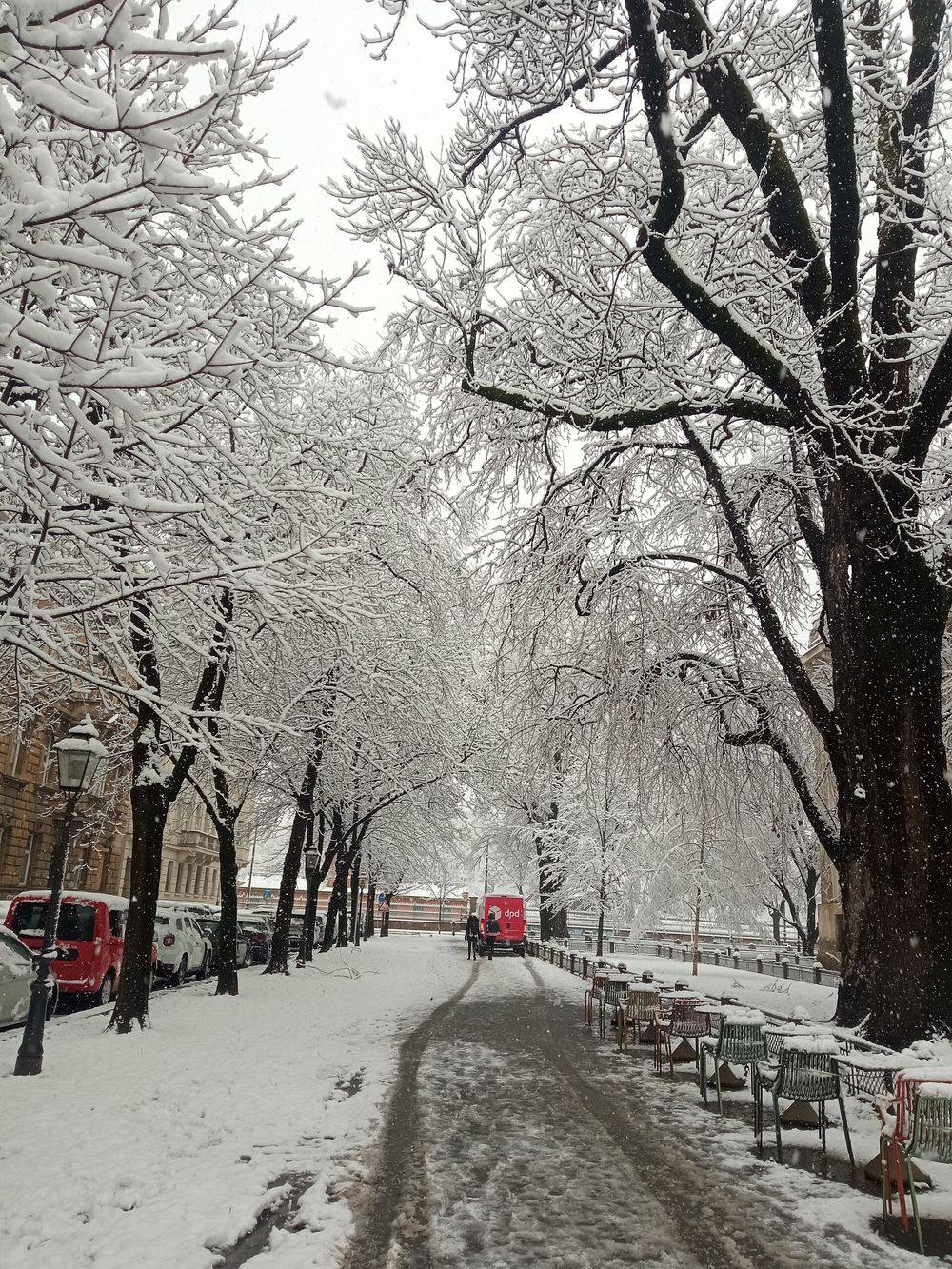
Zagreb averages 1.7 °C in December, Dubrovnik 10.6 °C. DHMZ climate data, the 25 and 26 December holidays, what stays open, ferries and roads, and how to plan a week.
Checked: 13 October 2026
December splits Croatia in two. Inland, Zagreb is cold, foggy and short on daylight, but it is also the month of its Advent, the busiest weeks of the city's winter. On the coast, Split and Dubrovnik stay mild and quiet, with more rain than in any summer month and hardly any frost. This guide covers the month as a whole: what the weather data says, which days are public holidays, what keeps running and what does not, how ferries and roads behave, and how to plan a week around it. For the Christmas markets themselves, see the separate Advent guides linked below.
December weather: coast and interior
The figures below are long-term December values published by the Croatian Meteorological and Hydrological Service (DHMZ) for three main stations: Zagreb Maksimir (1949 to 2024), Split Marjan (1948 to 2024) and Dubrovnik (1961 to 2024). They are averages, not a forecast, but they show clearly how different the two halves of the country are in the same week.
| Station | Mean temp. | Sunshine | Rain | Rainy days | Nights below 0 °C |
|---|---|---|---|---|---|
| Zagreb Maksimir | 1.7 °C | 49.6 h | 63.8 mm | 10 | 20 |
| Split Marjan | 9.4 °C | 120.8 h | 103.7 mm | 12 | 1 |
| Dubrovnik | 10.6 °C | 119.9 h | 138.8 mm | 13 | 0 |
Zagreb averages 1.7 °C for the month, with 20 nights below freezing, 5 days that stay below zero all day, about 4 days with snow and 9 with fog. Sunshine is the real shortage: under 50 hours in the whole month, the lowest of the year. Pack a warm coat, gloves and shoes that cope with wet pavements, and plan indoor stops for the afternoons. The coast is a different season. Split averages 9.4 °C and Dubrovnik 10.6 °C, both get around 120 hours of sun, more than twice Zagreb's, and frost is close to unknown. The catch is rain: December is one of the wettest months on the southern coast, with 12 to 13 rainy days and 103.7 mm in Split and 138.8 mm in Dubrovnik. A week by the sea will usually include several dry, bright days and a few grey, wet ones, so keep the outdoor plans flexible.
Two more DHMZ numbers explain how December feels in each place. Zagreb has 9 foggy days on average, the most of any month, and only 2 fully clear days, so grey, still mornings are normal and the sun often appears only around midday, if at all. Split averages 7 clear days and Dubrovnik 8, and fog is practically absent on both. In other words, the coast is where to look for light, and the capital is where to look for atmosphere, lights and indoor life. Many visitors combine the two for exactly that reason.
Public holidays: 25 and 26 December
Croatia's holiday law lists two December public holidays: 25 December, Christmas (Božić), and 26 December, St Stephen's Day (Sveti Stjepan). Christmas Eve, 24 December, is not on the list, so it is a normal working day on paper, although in practice many families finish early. The same law makes 1 January (New Year) and 6 January (Epiphany) public holidays, which means a trip over the turn of the year runs into four holidays within two weeks. Plan the 25th and 26th as quiet days: many shops, offices and smaller restaurants close, and it is the wrong moment for errands or a car service. Check bus, tram and ferry times for both days in advance, book restaurant tables for those evenings and confirm the opening times of anything you really want to see directly with the venue.
What is open in December
The cities keep working; the summer economy does not. Zagreb is at its busiest of the winter: Advent Zagreb runs from 28 November 2026 to 7 January 2027, so museums, cafés and restaurants in the centre are open and evenings are lively, and hotel prices for Advent weekends tend to rise. Split, Zadar, Rijeka and Dubrovnik also keep a year-round life, with their own smaller December programmes, but many beach bars, island restaurants, campsites and seasonal apartments close after the autumn and reopen in spring. Small islands and resort villages are the places most likely to feel shut. If a specific excursion, boat trip or restaurant is the reason for your trip, confirm that it operates in December before booking anything around it rather than assuming the summer offer applies.
Ferries, roads and getting around
Jadrolinija, the state-owned ferry operator, runs island lines all year, but the December timetable is not the summer one, and departures can be cancelled when strong wind blows on the Adriatic. Before you fix an island day, look up the exact date in the timetable on jadrolinija.hr, check the line again on the morning of travel, and keep a spare day in case the boat does not sail. Treat Christmas Day and New Year's Day separately, because holiday timetables can differ from the normal weekday plan. On the roads, inland Croatia gets frost on most December nights and some snow, so a hire car should come with winter equipment; our guide to the winter tyre rule from 15 November explains what is required. The motorways between Zagreb and the coast cross high ground where conditions change faster than in the cities, so check the forecast before a long drive and allow extra time.
How to plan a week in December
- Early December, city and coast: two or three nights in Zagreb for the Advent weekend of 5 and 6 December, then on to Split for mild days in the old town and a ferry trip if the weather allows.
- Mid-December, quiet coast: Dubrovnik or Split with the old towns at their emptiest, museum visits on rainy days and walks on the dry ones, before the holiday rush.
- Christmas week: arrive by the 23rd, do shopping and travel before the 25th, keep the 25th and 26th for walks and booked meals, and move on again from the 27th.
- End of the year: combine the last days of December with New Year's Eve, which has its own guide, and remember that 1 January is another public holiday.
Costs and practical tips
December is low season on the coast and high season in Zagreb, and prices follow. Outside Advent weekends and the days around New Year, accommodation by the sea is usually far cheaper than in summer, while central Zagreb hotels can book up on Advent Friday and Saturday nights; book those early. Daylight is short in the north, so start sightseeing in the morning and keep the dark afternoons for museums, cafés and the Advent lights. Bring layers rather than one heavy coat if you move between Zagreb and the coast, because the gap between the two is around eight degrees on average. An umbrella and waterproof shoes matter more in Split and Dubrovnik than a scarf. Finally, keep at least one flexible day in any itinerary that depends on a ferry or a mountain road.
For the markets themselves, read Advent in Zagreb and the overview of Advent on the coast. For the wider winter picture, including January and February, see Croatia in winter.
Frequently asked questions
- Is December a good time to visit Croatia?
- For city breaks, yes. Zagreb has Advent from 28 November 2026 to 7 January 2027, and Split and Dubrovnik are mild and uncrowded. It is not a month for swimming, island hopping or resort villages, many of which close until spring.
- How cold is Croatia in December?
- According to DHMZ long-term values, the December mean is 1.7 °C in Zagreb, 9.4 °C in Split and 10.6 °C in Dubrovnik. Zagreb averages 20 nights below freezing; Split one and Dubrovnik none.
- Are 25 and 26 December public holidays in Croatia?
- Yes. Christmas on 25 December and St Stephen's Day on 26 December are public holidays under Croatian law. 24 December is not. Expect many shops and smaller restaurants to close on both days, and check bus, tram and ferry times in advance.
- Do ferries run in December?
- Yes, Jadrolinija serves the islands all year, but on a winter timetable, and strong wind can cancel departures. Check the exact date on jadrolinija.hr, recheck on the morning of travel and keep a spare day.
- Does it snow in Croatia in December?
- Inland it can: DHMZ records about 4 snow days in an average December in Zagreb. On the coast snow is rare; Split and Dubrovnik average 12 to 13 rainy days instead.
Official sources
Share this guide
Questions about your trip?