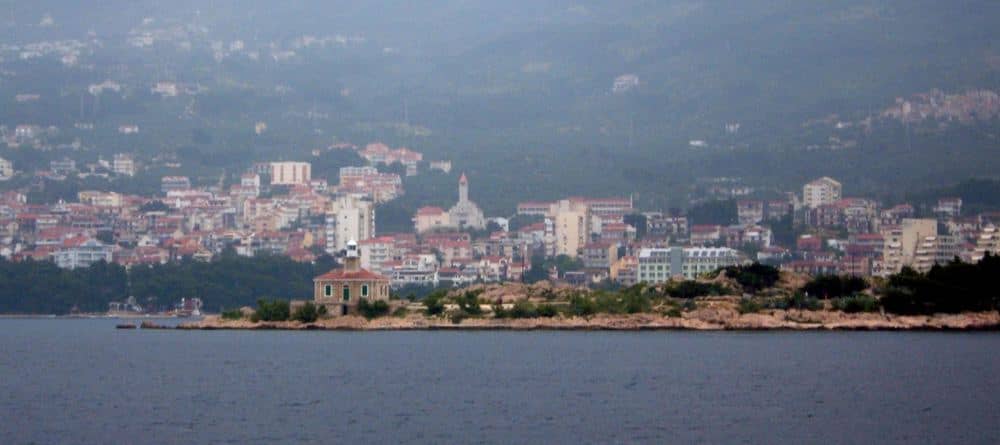
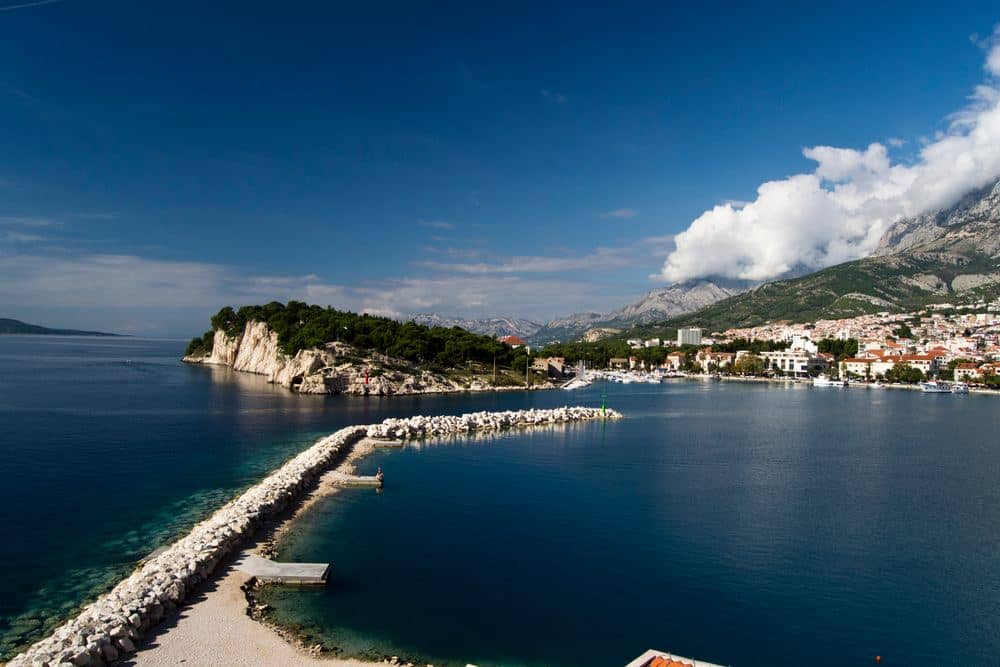
Makarska sits in a bay closed off by two wooded headlands, with a 1762 metre mountain directly behind it. The town is the base, the mountain is the reason to stay a second day.
Checked: 21 September 2026
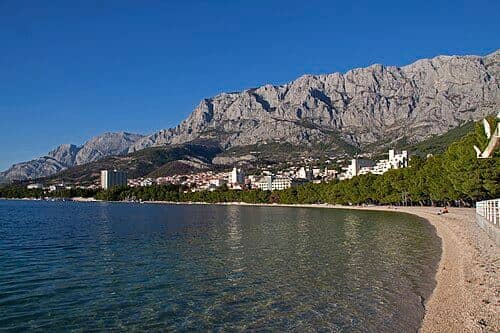
Makarska has a geography that does most of the work. The bay is closed on both sides by the wooded peninsulas of Sveti Petar and Osejava, so the waterfront is a horseshoe rather than a strip, and the Biokovo massif rises straight out of the town to 1762 metres at Sveti Jure. That vertical distance in barely five kilometres is what makes the place unusual: you can be on a beach at nine and above the treeline by eleven. Most visitors never leave the horseshoe, which is why the town feels crowded and the mountain does not.
The old town is small and worth forty minutes
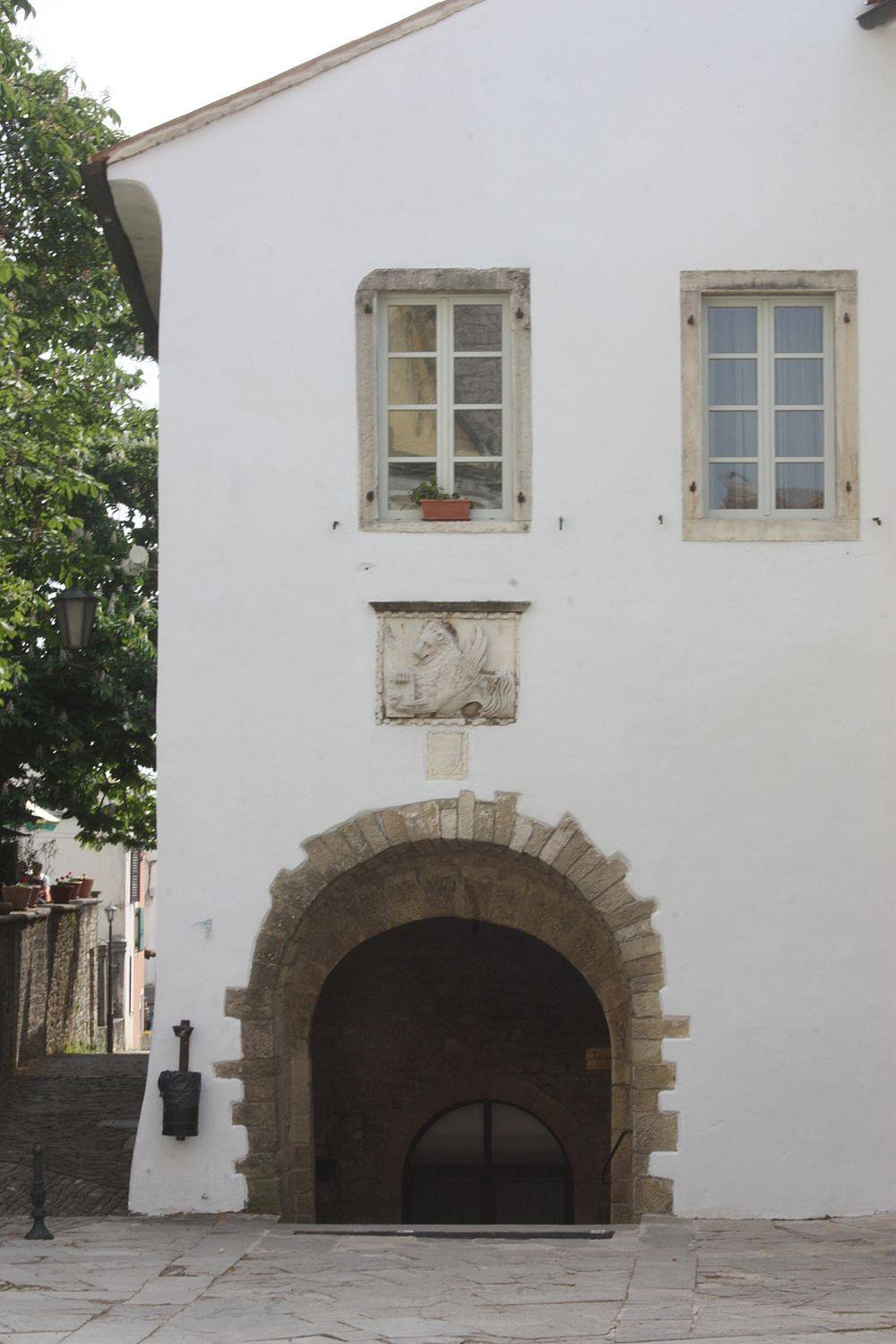
Kačić Square is the centre, with the eighteenth century church of Saint Mark on one side and the Venetian fountain in the middle. The piece most people miss is inside the Franciscan monastery at the eastern end of the bay: a malacological museum with one of the larger shell collections in Europe, assembled by a friar over decades. It costs little and takes half an hour. From there the seaside path continues around Osejava, which is the natural way to leave the built up part of town on foot.
- The Biokovo park road is narrow, steep and one way in places, with a vehicle limit and timed entry. Book the slot online before driving up.
- Nugal beach is reached only on foot, about twenty five minutes along the coastal path from Osejava. There is no shade, no bar and no water, and it is a naturist beach.
- Temperature on Biokovo runs roughly ten degrees below the coast and the wind is stronger. Take a layer even when the town is at thirty five.
- Makarska is the base for the whole Riviera. Brela, Baška Voda, Tučepi and Podgora are all within fifteen minutes by road or boat.
Biokovo and the glass platform
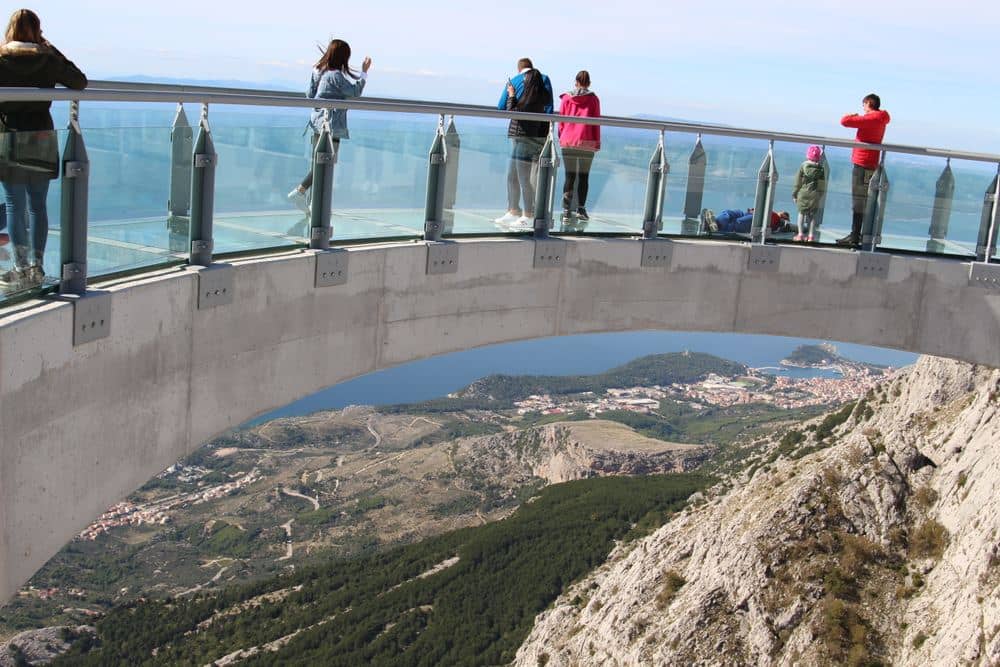
The Skywalk opened in 2020 at 1228 metres: two glass horseshoes cantilevered over the drop, with the Riviera directly below and the islands of Brač and Hvar beyond. On a clear day you can see as far as the Italian coast. It is the headline, but the park is worth more than the platform. The botanical garden at Kotišina sits on the lower slopes and protects the mountain's own flora in a walled section of cliff, and the road itself passes abandoned stone hamlets that were farmed until the middle of the last century.
“Everyone photographs Makarska from the water. The town only explains itself from eight hundred metres up, where you see that it had nowhere else to go.”
Two days is the right length. Day one for the old town, the monastery museum and the walk around Sveti Petar and Osejava, with the afternoon on the beach. Day two for Biokovo, starting early because the timed entry fills and the light is better before the haze builds. If you have a third day, take the boat to Brač and see the Riviera from the other side.
Getting there and parking
The nearest airport is Split, at Kaštela beyond the city, about 90 km away. The coast road through Omiš is slow in summer, the A1 motorway is quicker: leave it at Zagvozd and take the Sveti Ilija tunnel under Biokovo to Baška Voda, 10 km from Makarska. Dubrovnik airport is about 150 km to the south. Coaches run from Split along the coast several times a day and the bus station is 10 minutes on foot from the Riva. The car ferry to Sumartin on Brač leaves from the harbour. If you drive, expect street parking near the waterfront to be paid and gone by mid morning in July and August, so use the larger car parks above the centre and walk down.
The other beaches and coves
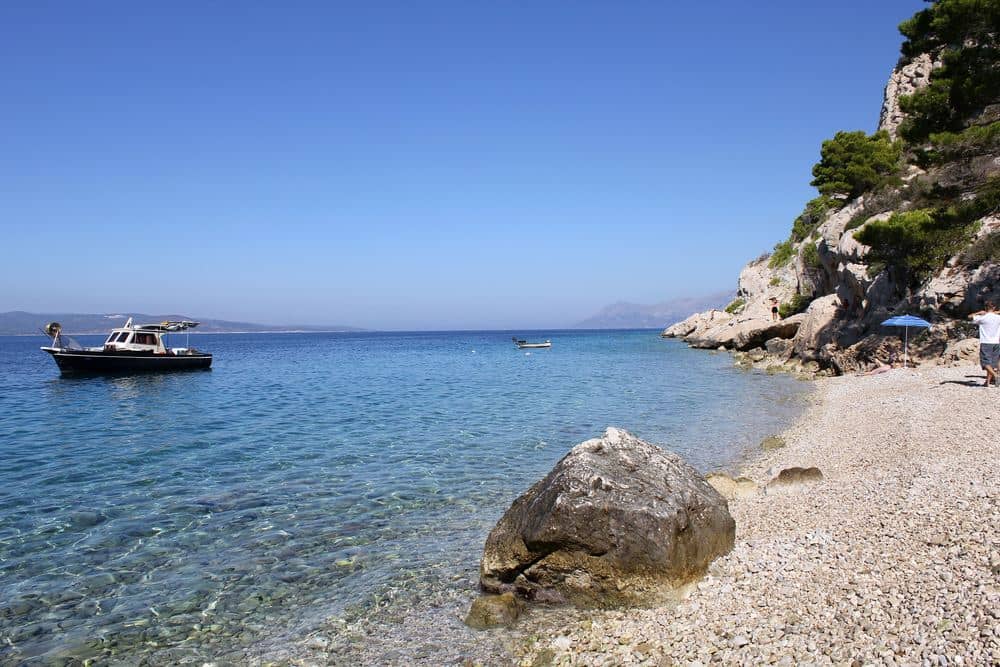
West of the main beach the shore continues as a chain of shingle coves under pines all the way to Tučepi, joined by a coastal path, so walk west until the towels thin out and stop there. Water shoes help everywhere, the entry is stony. Ramova is the cove most people miss because it cannot be seen from the road: steps lead down from the promenade to a small strand with pines to the edge. Garma is on the other side of town along the Osejava path, a bathing spot with flat rock slabs, ladders into the sea and cliff shade for most of the day.
| Beach | Where | Entry | Shade |
|---|---|---|---|
| Ratac | Western end of the bay | Shallow, gentle | Pines above, facilities on site |
| Buba | 15 minutes on foot west of the centre | Deepens quickly | Pines |
| Cvitačka | Towards Tučepi | Moderate | Pines to the water, all afternoon |
| Ramova | Below the road towards Tučepi | Stony, open to the west | Pines to the edge |
| Garma | Osejava path, east of the harbour | Rock slabs and ladders | Cliff, most of the day |
Sights beyond the square
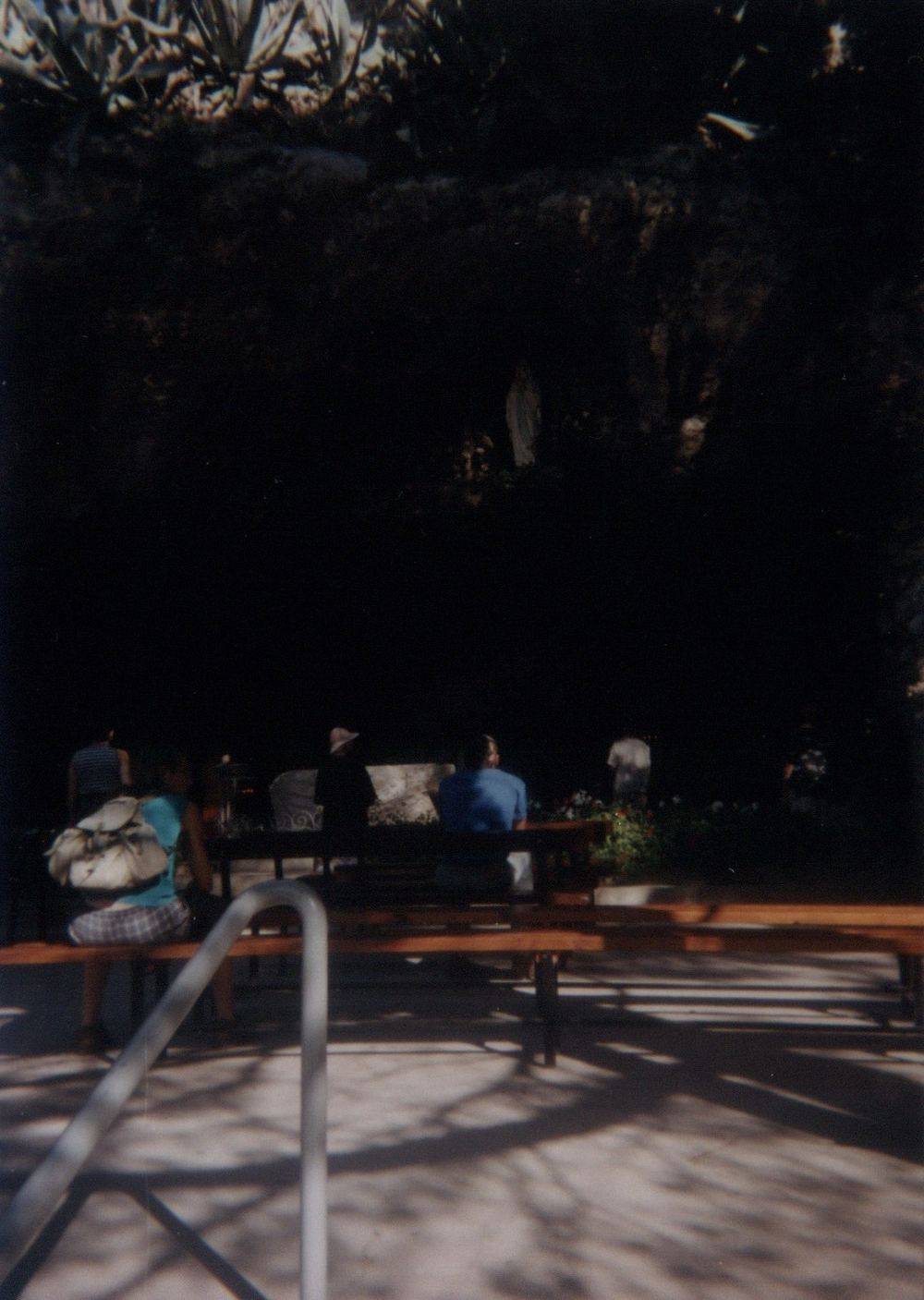
The square is 18th century. Four places nearby cover the rest. Veliki kaštel is the remnant of the fortress the Ottomans built when they held Makarska from the 16th century until 1646, on rough ground that needs firm shoes. Above the village of Kotišina a second fortress leans against the Biokovo cliff and uses caves and overhangs as walls: the walk up is steep, go before the heat. The city museum, in a baroque palace on the waterfront, puts the whole story in order in about 40 minutes. Vepric, 3 km from town at the foot of the mountain, is a cave shrine arranged in 1908 on the model of Lourdes, calmest early in the day.
Evenings at Grotta and the observatory
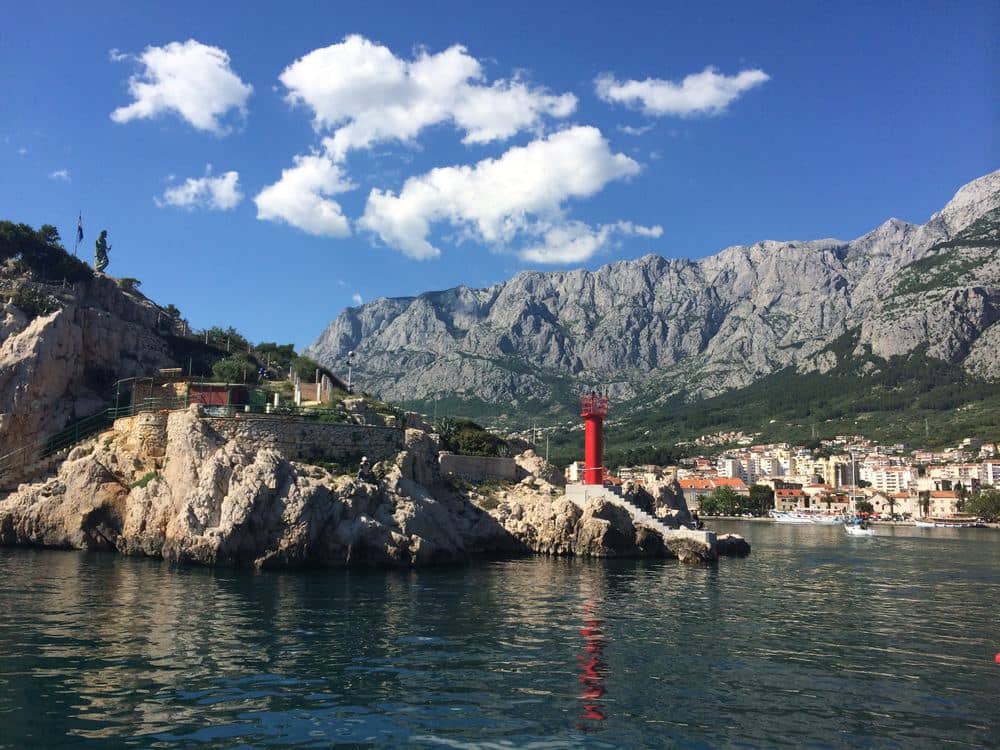
The bay opens towards the islands, so the sun goes down behind them in front of the town and the Biokovo wall turns red for a few minutes afterwards. Grotta, a bar cut into the rocks of the Sveti Petar peninsula with tables on rock ledges above the water, is the obvious place to watch from: arrive early in the evening, the lower terraces fill first. The free alternative is the breakwater, a stone mole on the western side of the harbour with the ferry coming in under the last light. Later, the observatory on the rise above town opens in evening slots with a guide, and the Astro Park beside it has models of the solar system and a sundial.
When to go and where to stay
April and May: the Biokovo road reopens, the slopes above Kotišina are in flower, the sea is still cold and the town is quiet. June: warm enough to swim, room on the beaches, easy Biokovo bookings. July and August: the hottest and fullest weeks, the main beach is packed by late morning, parking goes early and mountain slots are taken days ahead. September: the best month for sea and mountain together, the water keeps its warmth, the crowds go home and the park gate opens at 07:00. October: the park closes at the end of the month and restaurants along the Riviera begin to shut. November to March: the mountain is closed, the bura wind blows hard and much of the town closes with it.
- Old town and Riva: everything on foot and no car needed, with noise from the square and the harbour front until late in July and August.
- The belt along the main beach: flat and shaded, the family choice, with the shallow water at Ratac at the far end and the Tommy supermarket there.
- The eastern end by the monastery: the quietest address in the centre, with the Franciscan seaside path and the Osejava paths at your door.
- Supplies: Konzum a few steps from Kačić Square, and the Merces shopping centre with a supermarket and a pharmacy under one air conditioned roof for a bad weather day.
The places, one by one
| Place | What it is | Time needed |
|---|---|---|
| Kačić Square | Main square with the poet's statue | 20 minutes |
| St Mark's Co-Cathedral | Baroque church of the 18th century | 20 minutes |
| Church of St Philip Neri | Small baroque church, concerts | 10 minutes |
| Makarska City Museum | Town history in a waterfront palace | 40 minutes |
| Makarska Harbour | Ferry and excursion boats | 30 minutes, or a day trip |
| Sveti Petar Peninsula | Pine circuit, chapel, lighthouse | 30 minutes to 1 hour |
| Grotta Cave Bar | Bar and bathing spot in the rocks | 1 to 2 hours |
| Makarska Main Beach | Blue flag shingle beach | half a day |
| Franciscan Monastery & Malacological Museum | 16th century monastery, shell collection | 1 hour |
| Osejava Viewpoint | Public terrace over the harbour | 15 minutes |
| Osejava Forest Park | Protected pine wood with paths | 40 minutes to 1 hour |
| Vepric Shrine | Open air cave shrine | 30 minutes to 1 hour |
| Kotišina Botanical Garden | Fenced mountainside with fortress | 1 to 2 hours |
| Biokovo Nature Park Entrance | Start of the summit road | half a day |
Kačić Square
Start here. The square is a pedestrian rectangle closed by baroque facades, with the statue of Andrija Kačić Miošić in the middle. Kačić was a Franciscan and poet from Brist, further down the coast, and his Pleasant Conversation of the Slavic People, printed in 1756, was for centuries the most read Croatian book: songs about heroes and battles that people learnt by heart and sang to the gusle. The statue is the easiest meeting point in town. The square links the waterfront on one side with the market on the other, and the climb towards Biokovo begins behind the church. In summer it hosts concerts and festivals, in winter the advent market. The best hour is late afternoon under the plane trees, before the waterfront fills.
St Mark's Co-Cathedral
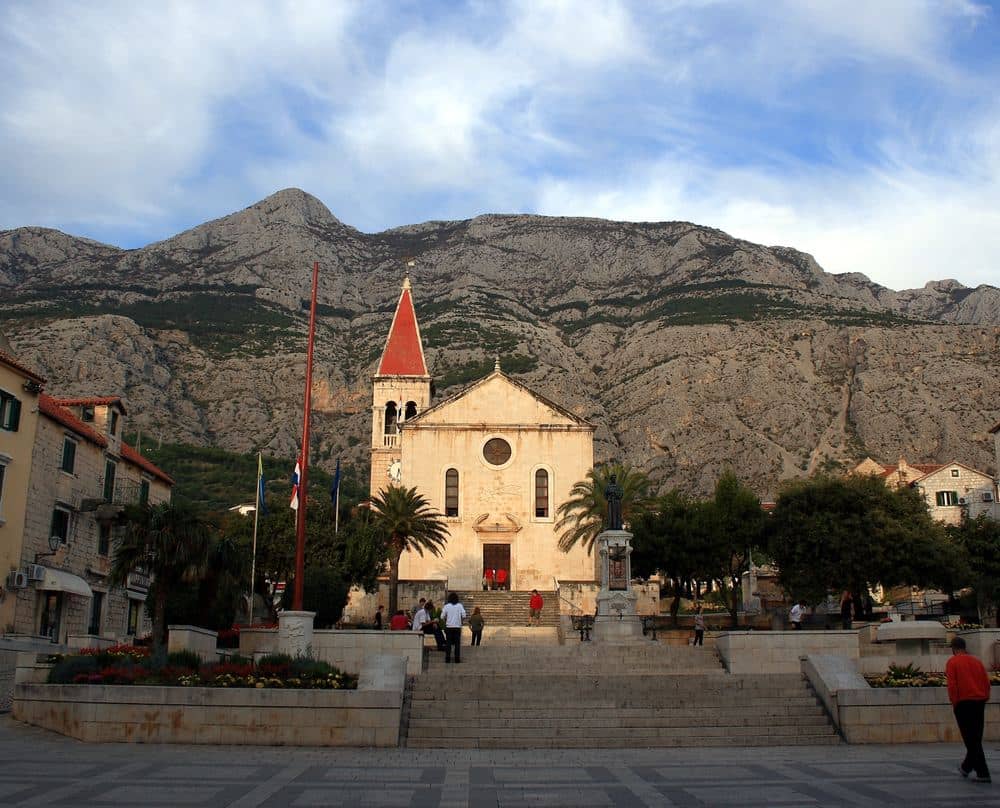
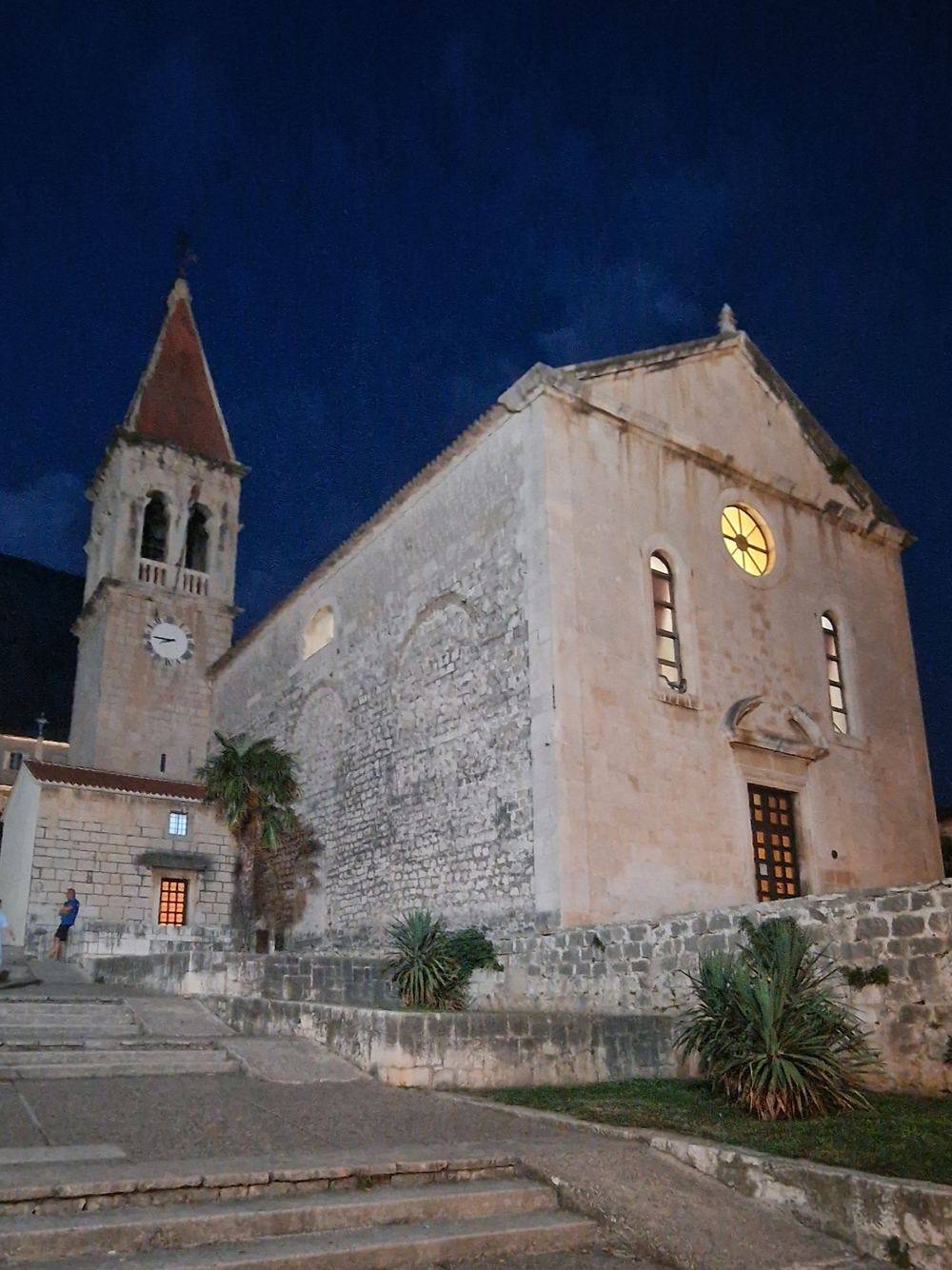
The church that closes the square was raised in the middle of the 18th century from pale Brač stone, and its bell tower is the first thing you see of Makarska from the sea. Makarska was for centuries the seat of a diocese, which is why a town of this size holds a co-cathedral and why the interior is richer than you expect: marble altars, a pulpit, an organ, a painting of St Mark and several works from the Venetian circle. Entry is free and visits work around the masses. Come in the morning, when light through the southern windows turns the stone almost white.
Church of St Philip Neri
The church stands 2 minutes from the square and belongs to the same 18th century building boom that followed the Ottoman withdrawal. It is a single nave of pale stone, with a facade that closes a short street and an interior plainer than the co-cathedral's but of the same order. The patron is unusual for a Dalmatian town: Philip Neri was a 16th century Roman priest known for his work with the young, and the church was built beside a former school, which explains the choice. Today it is used for masses and for occasional chamber music concerts, because the acoustics suit them. Entry is free when it is open, usually around the services. Look for it on the way back from the waterfront towards the mountain.
Makarska City Museum
The display runs from prehistoric finds on Biokovo and Roman fragments, through the Ottoman period when Makarska was a border stronghold, to Venetian rule and the 19th century. The part worth slowing down for covers seafaring and fishing: ship models, navigation instruments, fishing tackle and photographs of the town before tourism, when the waterfront was still a workplace. A separate collection records the earthquake of 1962, which destroyed much of the town, and the rebuilding that gave Makarska its present shape. The ticket is modest and the rooms are air conditioned, which makes it a sensible stop in the early afternoon when the beach is at its hottest. Because it stands on the waterfront, it fits into any walk without a detour.
Makarska Harbour
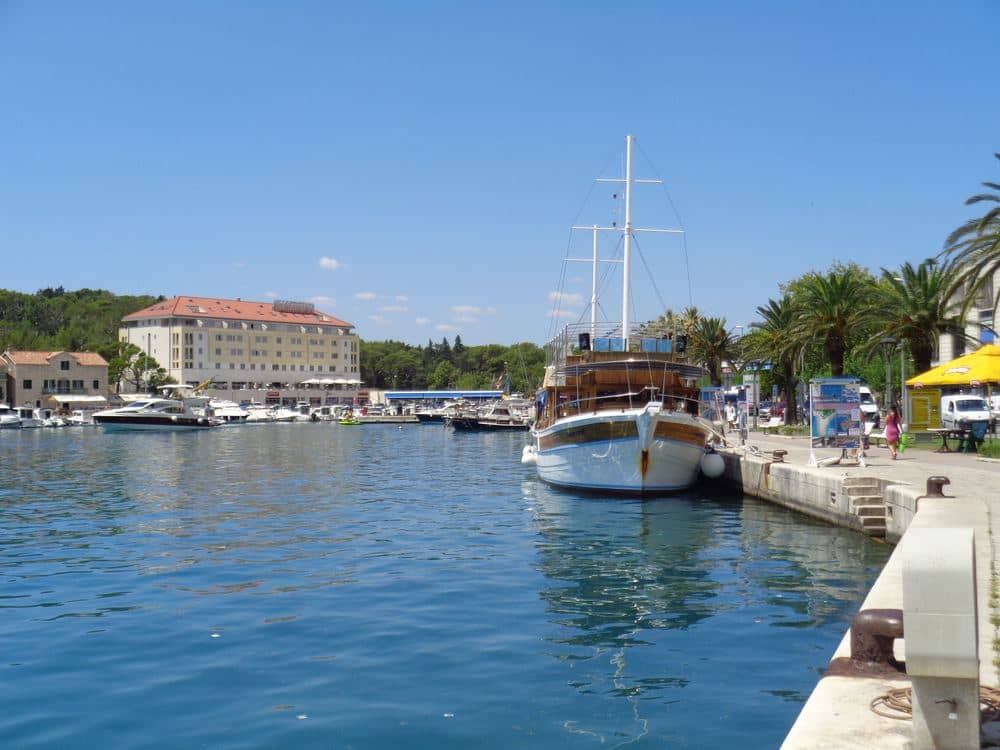
The bay is sheltered from every wind except the southerly, which is why a town grew here at all. Today fishing boats, excursion boats and yachts share the moles, and the ferry terminal keeps the link with Sumartin on Brač, an hour's sailing away. For you the harbour is the starting point of anything done at sea: trips to Brač and Hvar, boats to the coves of the Riviera, full day cruises with lunch on board, boat rental and diving tours. Tickets are sold at the stands by the mole and most departures are in the morning, so walk along the evening before, compare the boards and book. At 07:00 the harbour is still a workplace, with fishermen unloading as the cafés open.
Sveti Petar Peninsula
The western arm of the harbour is a low point under pine wood with a circular path by the sea, and the circuit takes 20 minutes entirely in shade. The peninsula is named after the church of St Peter that stood here until the earthquake of 1962 destroyed it, and a small chapel now marks the spot, with a bronze statue of the saint and the lighthouse at the tip. Benches line the path and the view changes every 50 metres: town and mountain on one side, open sea towards Brač on the other. Ladders lead into the sea from the rocks. The sun sets exactly between the tip and Brač, so come half an hour early and take a bench facing west.
Grotta Cave Bar
You reach it on the circular path, 10 minutes from the waterfront through pinewood, and enter through a cleft in the rock, which is where the name comes from. By day it works as a bathing spot with a drink in the shade, and ladders lead straight from the ledges into deep water, so bring swimming things as well as a wallet. Prices are higher than on the waterfront and the choice is short, and nobody minds, because the reason to come is the stone, the sea and the light. The descent to the terrace is over bare rock, so wear shoes with a proper sole. In summer it stays open until late at night and in season the terrace can be full before the sun is down.
Makarska Main Beach
The town beach runs west from the waterfront as a white shingle arc about 2.5 km long, with a pine wood above it and the mountain behind. It carries a blue flag, and the water stays clean despite the numbers because the bay is open and the current never stops. It is one of the best equipped stretches on the Riviera: showers, cabins, loungers, a lifeguard service, volleyball courts, slides and a row of bars and restaurants along the promenade. The western part has the gentlest entry and suits families, the eastern part near the waterfront deepens sooner and suits swimmers. In July and August come before 10:00 or after 17:00, and in the afternoon retreat into the pine shade behind the shingle.
Franciscan Monastery & Malacological Museum
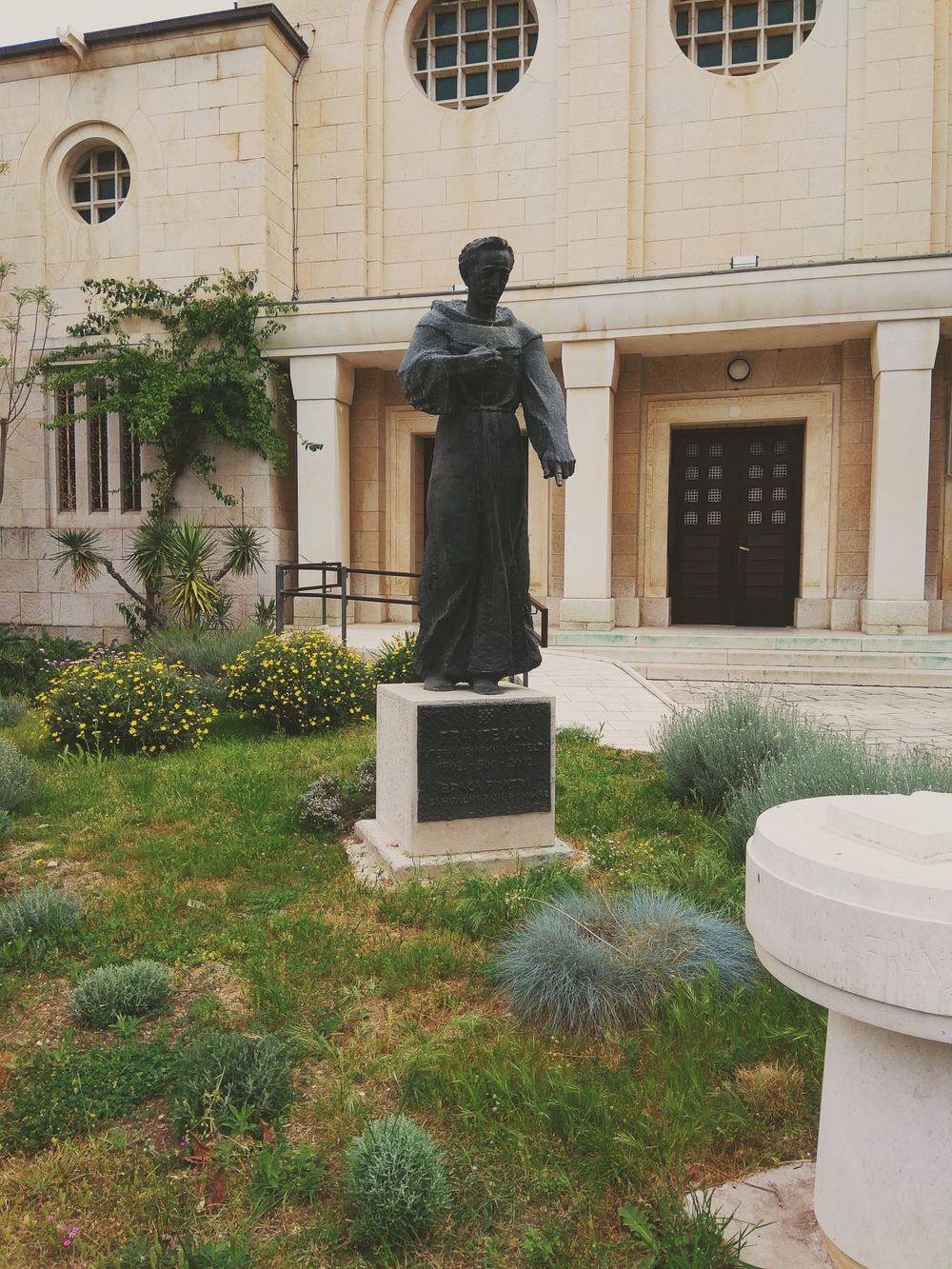
The monastery itself dates from the 16th century, with a cloister, the church of the Assumption and a garden that descends towards the water. The shell collection was begun after 1950 by Friar Jure Radić, a monk and naturalist, and grew to several thousand shells and snails from all the world's seas, many brought back by seamen from distant voyages. Beside it the monastery keeps a library, a herbarium and a geological collection of Biokovo, and in the church there is a large mosaic by a contemporary artist. Allow about an hour for the whole complex. The rooms are cool and quiet in the middle of the town's busiest quarter, which makes this the best choice for a rainy hour or an overheated one.
Osejava Viewpoint
At the eastern end of the waterfront, where the town passes into the Osejava peninsula, a terrace beside the Hotel Osejava gives the view photographers use: the whole semicircle of the harbour, the palms, the bell tower of the co-cathedral and the wall of Biokovo above it all in one frame, with the sea in the foreground and nothing in the way. The lookout is public and is not tied to the hotel. From the Riva it is a 5 minute walk, and the benches by the railing are free. Come in early evening, when the sun drops behind Brač and side light turns the rock of the mountain orange. That moment is short. From here the path continues into the Osejava wood and on towards Nugal.
Osejava Forest Park
The pine cap on the eastern peninsula is several dozen hectares of Aleppo pine, planted at the end of the 19th century and protected today as a forest park. In summer the shade under the trees is several degrees cooler than the waterfront, which is why the paths fill with locals running and walking in the morning and with everyone else escaping the heat in the afternoon. Fitted into the rock are remains of Austro-Hungarian military structures, still passable and useful as shaded resting places. Along the way are benches, lookouts and descents to bathing spots without sand or crowds, where you swim off flat slabs into deep water. A full circuit takes about 40 minutes.
Vepric Shrine
It was Bishop Juraj Carić who had the cave arranged, with a statue of the Virgin in a niche, an altar under the open sky and benches set out in the pine wood. The space was deliberately left as it was: there is no basilica and no concrete platform, only paths, a stream, a small lake and the rock, so the grounds suit pilgrims and people who simply want shade and quiet. Masses are said in the open. The largest gatherings are on the Assumption in August and on the Nativity of Mary in September, when thousands come. Entry is free and the grounds are open all day. From town it is 5 minutes by car or about 30 minutes on foot along the road.
Kotišina Botanical Garden
Founded in 1984 by Friar Jure Radić, the Franciscan behind the shell collection in town, the garden works on a different idea from most botanical gardens: instead of bringing plants into beds, a piece of the mountain above the village of Kotišina was fenced where the plants already grow. Several hundred species grow inside, among them endemics found nowhere else, and boards along the paths and steps explain what you are looking at. The 17th century Kotišina Kaštel, a refuge fortress cut into the cliff, stands within the grounds and is part of the same visit. The climb up is steep and takes about half an hour, so bring water and firm shoes. Spring is the time to come, while the slopes are still green.
Biokovo Nature Park Entrance
The park gate is above Podgora, a few kilometres from Makarska, and from there the road climbs some 23 km in hairpins to the summit of Sveti Jure. The landscape changes every few hundred metres: maquis and pinewood first, then bare karst, then mountain pasture near the top. The ticket is paid at the barrier and the drive to the summit takes about an hour, longer if you stop at the lookouts and mountain huts along the way, and the path to the Skywalk branches off partway up. Buses are barred and your brakes need to be in good order, because this is no road for a nervous driver or a tired car. Go up early, when visibility is best before the midday haze.
Where next
- 08:00The whole day, hour by hour
Everything above, arranged as an actual plan: which side of the bay at which hour, where the shade is at midday, and the walk to the hidden bay of Nugal.
- 1228 mThe glass platform above the town
Thirteen kilometres of hairpins, twenty cars per hour, and Makarska directly under the glass. Times, prices and the two slots worth booking.
Frequently asked questions
- How do you get to the Biokovo Skywalk and does it cost anything?
- By car up the Biokovo Nature Park road, which starts just above Makarska and takes about 45 minutes to the platform at 1228 metres. Park entry is ticketed and slots are timed, with a cap on vehicles per hour, so book online in advance in summer. The Skywalk itself is included in the park ticket. The road is narrow, steep and partly single lane, and campervans and trailers are not permitted.
- Which beach in Makarska is best?
- It depends what you want. The main town beach below the promenade is long, pebbly and has everything within reach, which also makes it the busiest. Buba and Cvitačka sit further west and are quieter with the same water. Nugal, twenty five minutes on foot beyond Osejava, is the most striking, set under cliffs with no facilities at all, and it is a naturist beach. For families the shallow entry at the town beach or Ratac is the practical choice.
Share this guide
Questions about your trip?