A glass horseshoe at 1228 metres with Makarska directly beneath it. The view is the easy part: the road takes thirty minutes of hairpins, entry is capped at twenty cars per hour, and the whole park shuts from November. Here is the plan that works.
Checked: 20 September 2026
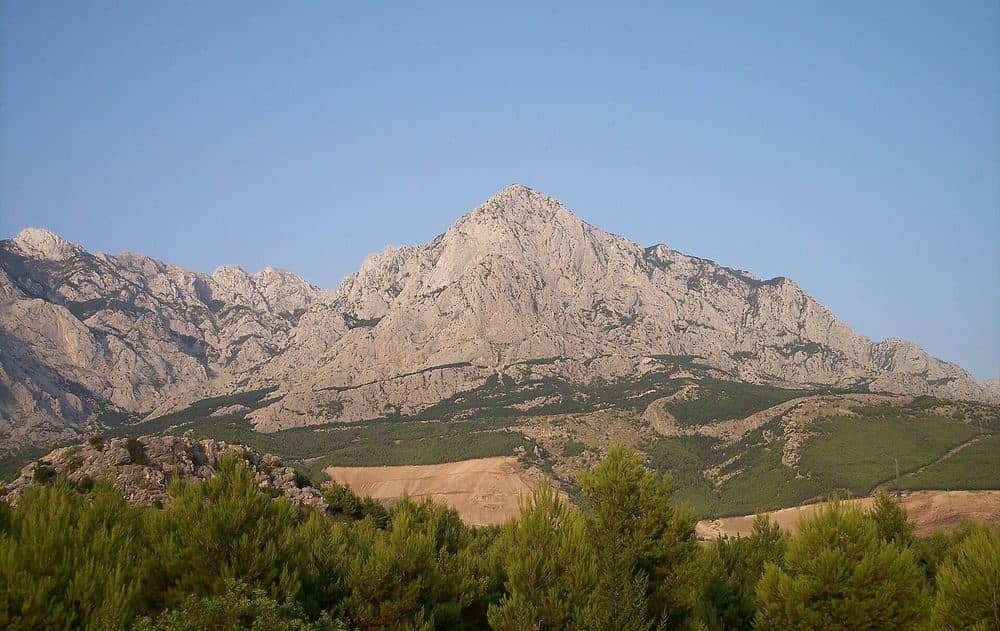
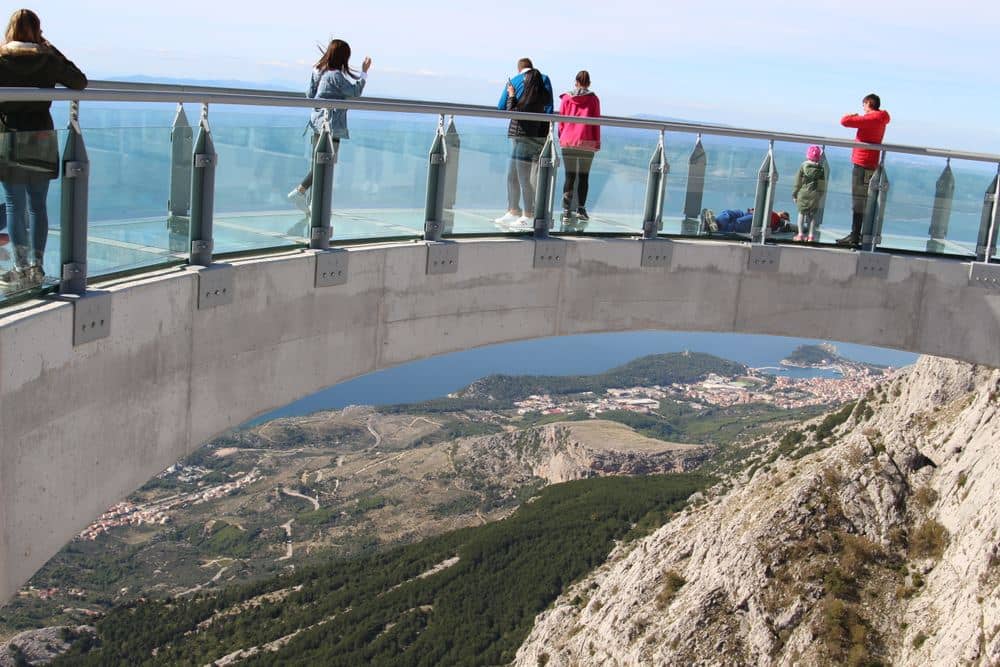
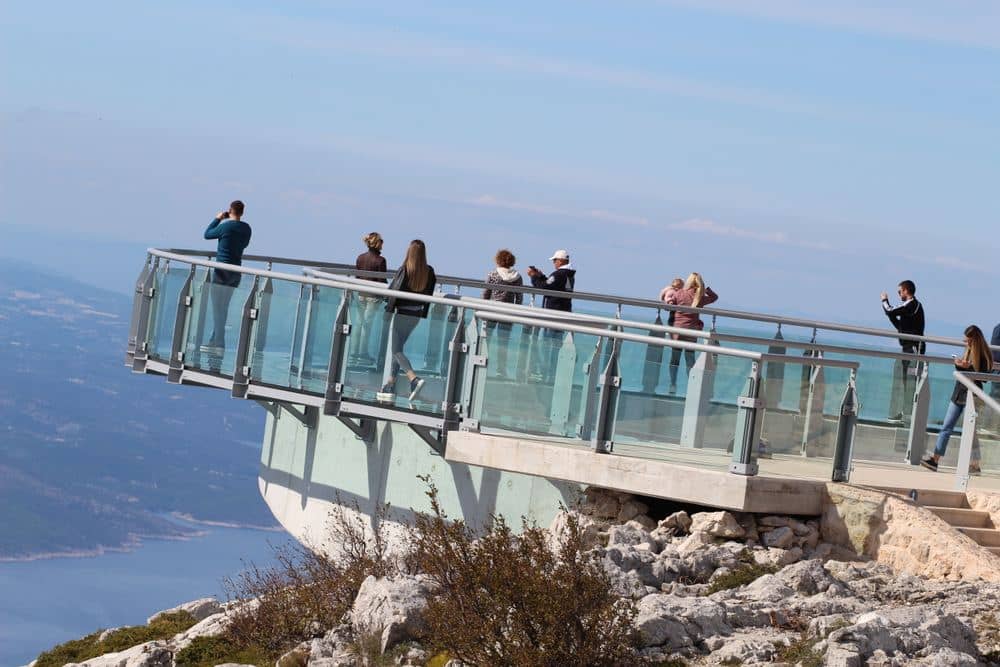
The Skywalk is two glass horseshoes cantilevered off the edge of the Biokovo massif at 1228 metres. Under your feet: nothing for a very long way, then the Makarska Riviera, then the channel with Brač and Hvar in it. It is the single most photographed thing on this coast and also the one most people get wrong, because the platform is free with the park ticket while everything around it is rationed. Read the road part before the view part.
The road is the actual attraction
The park gate sits about six kilometres east of Makarska, off the coastal road. From there it is thirteen kilometres of narrow two-way mountain road to the Skywalk, roughly thirty minutes if nothing comes the other way. There are stretches where two cars pass slowly and deliberately. It is not dangerous, it is simply not a road you drive while talking.
- Entry is limited to twenty vehicles per full hour. Book the slot, not just the day.
- Tickets are sold online only, through the park's own shop. There is no counter to queue at.
- Season: April to October. From November to March the park is closed to visitors.
- Prices 2026: 15 euro per adult in June to September, 10 euro in April, May and October. Children up to seven are free.
- On the platform: thirty people at a time, ten minutes each. Cycling shoes are not allowed on the glass.
When to book the slot
- 07:00First entry, and the only empty platform
In high summer the gate opens at six, in April and September at seven. The first two slots are the ones where the glass is yours and the air is still clear enough to pick out Hvar behind Brač. It is also the only time the road is genuinely quiet.
- 11:00The hours to avoid
Late morning to mid afternoon is when the coach tours and every rental car arrive at once. The twenty-per-hour cap means you will not sit in a jam, but the platform runs at capacity and the haze over the channel flattens the islands into grey outlines.
- 17:00Late slot, long light, and a deadline
The other good window. From five the wall goes warm and the shadows of the ridges reach out over the sea. Watch the last entry time: nineteen hundred in high summer, eighteen in April and September, seventeen in October. Coming down takes the same thirty minutes and you want to do it in daylight.
What to bring, and what nobody tells you
- A jacket. It is regularly ten degrees colder up here than on the Riva, with wind on top.
- Water and something to eat. There is no shop at the top and the drive back is not short.
- Brakes you trust. Use a low gear on the way down instead of riding the pedal for thirteen kilometres.
- No fear of heights required, but the glass floor is genuinely see-through. Children usually love it and adults usually hesitate.
Getting to Makarska and the gate
Makarska is the base and the park gate is a short drive east of it. The nearest airport is Split, about 90 km away. With a hire car the quickest route is the A1 motorway to the Zagvozd exit and the Sveti Ilija tunnel down to Baška Voda, 10 km short of town. Buses from Split run along the coastal road all day in summer and stop a short walk uphill from the Riva. From Dubrovnik the coastal road passes through Neum, a short stretch of Bosnia and Herzegovina, so carry your passport, or cross the Pelješac bridge to stay in Croatia.
| From | How | Roughly |
|---|---|---|
| Split airport | Hire car, A1 and the tunnel to Baška Voda | 90 km, 1 hour 30 minutes |
| Split bus station | Coastal bus, frequent in summer | 60 km, about 1 hour 30 minutes |
| Dubrovnik | Car along the coast, via Neum or the Pelješac bridge | 150 km, 2 hours 30 minutes |
| Sumartin on Brač | Car ferry into Makarska harbour | Crossing about 1 hour |
Without a car
No bus goes up the park road and the vehicle cap applies to taxis too. The excursion agencies along the Riva sell minibus and jeep tours to the Skywalk and on to Sveti Jure with the slot included, the simplest answer if you came by bus. A taxi will take you up, but agree the waiting time first. Walkers still buy a park ticket but need no vehicle slot: the marked trail from the village of Makar climbs to Vošac, a rock viewpoint at 1421 metres directly over the town, in about 3 hours. It is steep and without shade, so start at first light.
Month by month
Haze over the channel and cloud on the wall decide the day up there. Haze is a summer problem that builds through the morning. Cloud is a mountain problem that can sit on the ridge while the Riva is in full sun. Look up before you leave town. If the top of Biokovo is hidden, the glass is inside that cloud and you will see the railings and nothing else. Spring and early autumn give the clearest air, the middle of summer gives the fullest slots.
| Month | What to expect | Note |
|---|---|---|
| April | Road opens, snow can still lie on the higher ground | Kotišina flora at its best |
| May and June | Clearest air of the year, slopes still green | Best months for the first slot |
| July and August | Heat haze by late morning, full slots | Book before you travel |
| September | Air clears again, sea still warm | Fewer coaches on the road |
| October | Changeable, first bura winds, short days | Proper jacket, descend early |
Where to stay for an early start
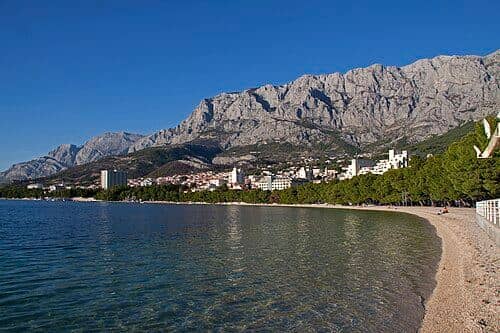
For the first slot it barely matters where on the Riviera you sleep: Brela, Baška Voda, Tučepi and Podgora are all within 15 minutes of Makarska by road. In town the choice is between the old core and the Riva, where you walk to everything and park almost nowhere, and the western belt along the main beach toward Cvitačka and Ratac, where apartments more often have parking, the sea entry is shallow for children and the Tommy supermarket at Ratac covers supplies. Ask about parking before you book. The trip depends on a car and the old town has very few spaces for one.
Eating around the slot
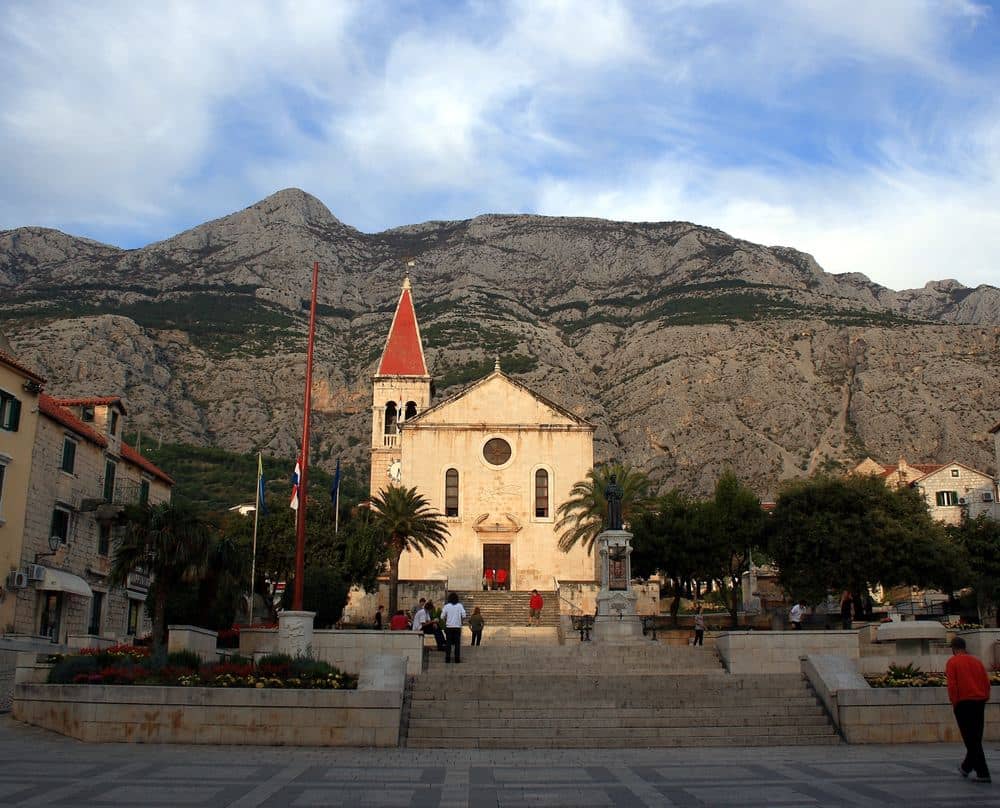
For a 07:00 entry you leave town before most cafés have put out their chairs. The bakeries open earlier, so pick up bread or burek on the way to the car, and buy water at the Konzum a few steps from Kačić Square the evening before. Back down by 09:00 you get the square at its best hour: coffee under the bell tower of St Mark's, the wall you just stood on filling the sky behind it. After the late slot the natural end is the Grotta on the Sveti Petar peninsula, a bar on rock ledges a few metres above the water, entered through a cleft in the stone. The lower terraces fill first, so go straight there.
Mistakes that cost the slot
The road causes fewer problems than the planning done on the coast the evening before. The cap is checked at the barrier against the booking, so arrive inside the hour you paid for: in July the next free slot may be hours away. Fill the tank in Makarska: there is no fuel on the mountain and 13 km of hairpins in low gear use more than the distance suggests. Save the ticket to your phone before you leave town so the barrier does not depend on a signal.
- Arriving outside the booked hour. The barrier checks the time on the ticket, and a late car waits for a gap that may not come until evening.
- Driving up in the campervan. Vans and trailers are banned from the park road. Leave it on the coast and go up by car or tour.
- Going up into cloud. If the ridge is hidden from the Riva the platform is inside it. Move the booking if you can.
- Flip flops on the rock. The paths around the platform are loose limestone and the wind is strong. Closed shoes with grip.
The places, one by one
| Place | What it is | Time needed |
|---|---|---|
| St Mark's Co-Cathedral | Baroque main church on Kačić Square | 20 minutes |
| Veliki kaštel | Ottoman fortress remains in the old core | 15 minutes |
| Makarska City Museum | Town history in a waterfront palace | 40 minutes |
| Makarska Harbour | Excursion boats and the ferry to Brač | 30 minutes |
| Lukobran Breakwater | Stone mole with the classic harbour view | 20 minutes |
| Monument of St Peter | Statue and lighthouse at the peninsula tip | 30 minutes |
| Franciscan Monastery & Malacological Museum | Shell collection by the sea | 1 hour |
| Osejava Viewpoint | Terrace over harbour and Biokovo | 15 minutes |
| Osejava Forest Park | Pine wood with paths and rock bathing | 40 minutes |
| Nugal Beach | Shingle cove between cliffs, on foot only | half a day |
| Astro Park | Scale solar system beside the observatory | 1 hour |
| Vepric Shrine | Cave shrine 3 km from town | 1 hour |
| Kotišina Botanical Garden | Fenced mountainside with a 17th century refuge | 2 to 3 hours |
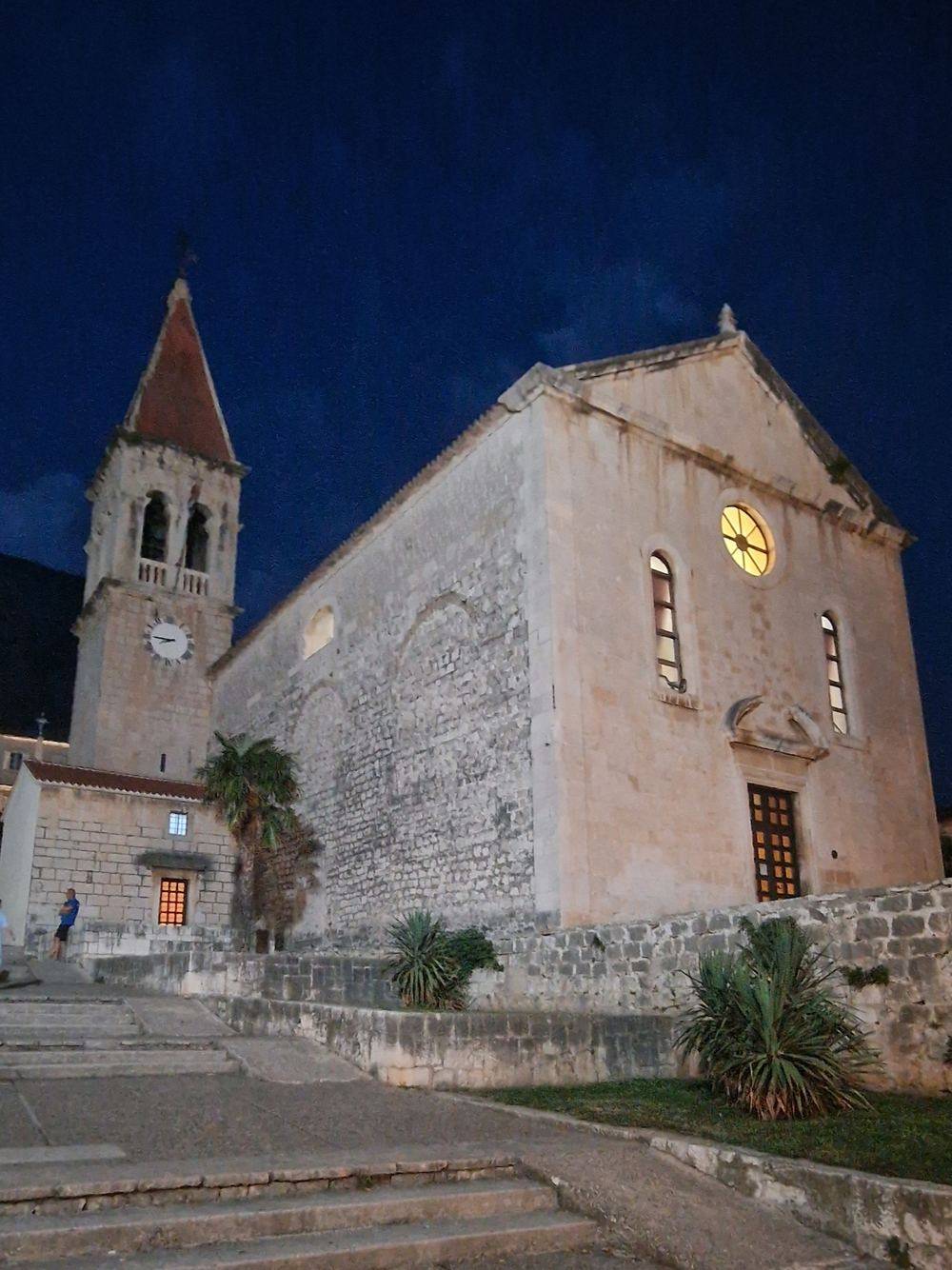
St Mark's Co-Cathedral
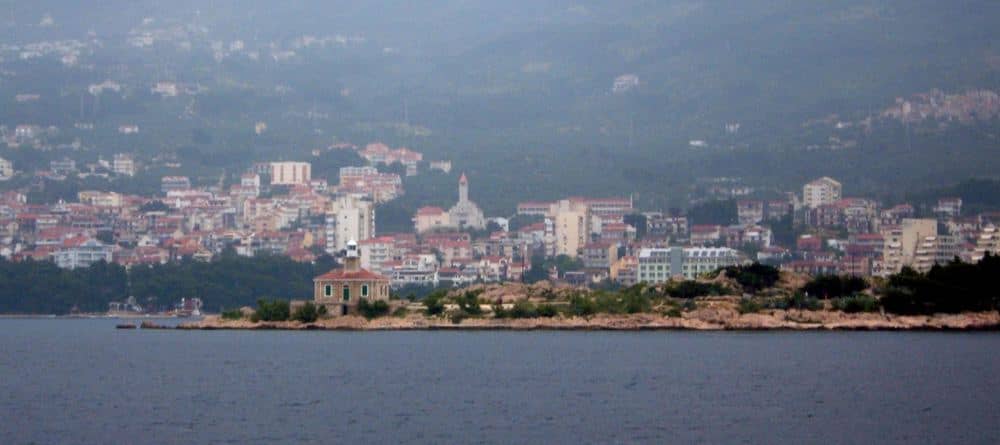
The church that closes Kačić Square was built in the middle of the 18th century from pale Brač stone, and its bell tower is the first thing you see of Makarska from the water. The town was the seat of a diocese for centuries, which is why a parish church of this size carries the title of co-cathedral and why the interior is richer than you expect: marble altars, a pulpit, an organ, a painting of St Mark and several works from the Venetian circle. Entry is free and the church fits visits around the masses. Go in the morning, when light through the southern windows turns the stone almost white. The climb toward the Biokovo starts directly behind it.
Veliki kaštel
Most visitors walk past this without noticing it, which is the point. The Ottomans took Makarska in the 16th century and held it until 1646, and in that time they built a fortress to watch the harbour and the approaches from the sea. When the Venetians took over, the fortress lost its purpose and was dismantled piece by piece, so today only part of the walls and a tower remain, fitted among the houses of the old core. An explanatory board stands beside the remains. It takes 15 minutes and it is the only visible trace of the century and a half when this was an Ottoman border town, a chapter the baroque squares erased everywhere else. The ground is rough, so wear firm shoes.
Makarska City Museum
The museum sits in a baroque palace on the waterfront and tells the story of a town that lived for centuries between the mountain and the sea. The display runs from prehistoric finds on the Biokovo and Roman fragments, through the Ottoman period when Makarska was a border stronghold, to Venetian rule and the 19th century. The best part covers seafaring and fishing: ship models, navigation instruments, fishing tackle and photographs of the waterfront from the years before tourism. A separate section records the earthquake of 1962 and the rebuilding that shaped the town you see today. You need about 40 minutes, the ticket is modest and the rooms are air-conditioned, which makes it a sensible stop at midday in July.
Makarska Harbour
The bay is a semicircle closed by the Sveti Petar and Osejava peninsulas, sheltered from every wind except the southerly, and that shape is why a town grew here at all. Today fishing boats, excursion boats and yachts tie up at the moles, and the ferry terminal keeps the link with Sumartin on Brač, 1 hour away by sea. Everything you do on the water starts here: trips to Brač, Hvar and the coves of the Riviera, full-day cruises with lunch, boat hire and diving tours. Tickets are sold at the stands by the mole and departures are in the morning. Come at 07:00 if you want to see the harbour working: fishermen unload, cafés open and the first boats fill up.
Lukobran Breakwater
From the harbour walk out along the stone mole that closes the bay on the western side. It reaches some 100 m into the sea, with a small light at the end and benches along the way, and the excursion boats tie up here before their morning departures. The reason to come is the frame: from the end of the mole the whole semicircle of the waterfront fits into one picture with the Biokovo behind it, and on the other side the open water toward Brač. Anglers use it at dusk. The best moment is just before sunset, when the mountain glows above the town and the ferry comes in with the last light, and the water inside the mole lies flat as a mirror.
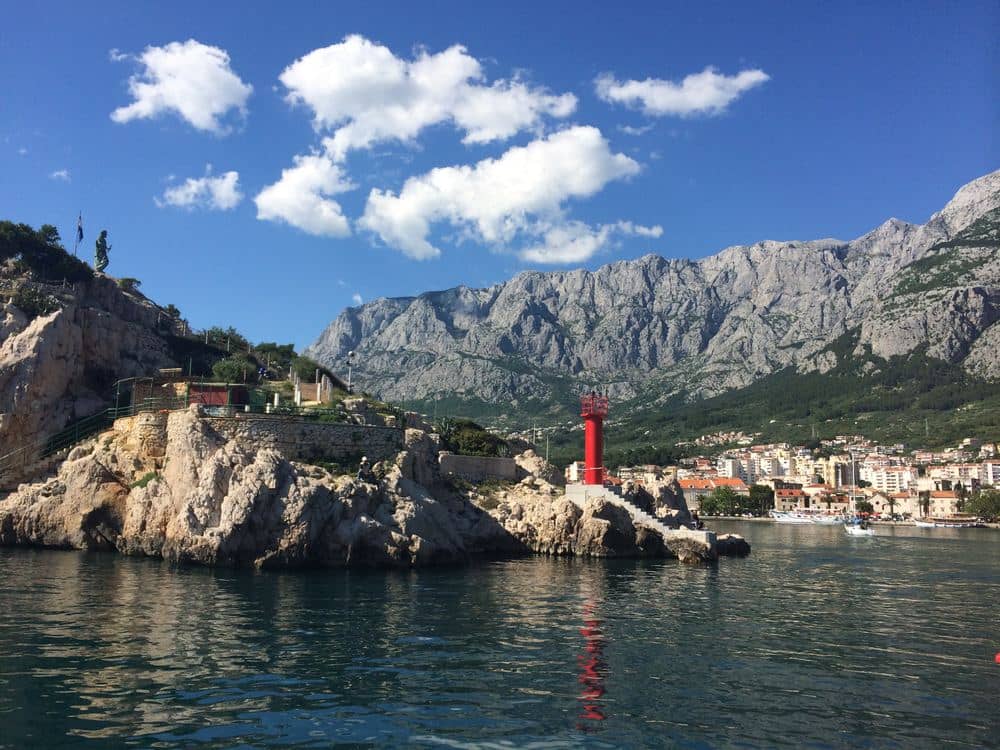
Monument of St Peter
Follow the circular path around the Sveti Petar peninsula, 10 minutes from the waterfront through pinewood, to the tip where the church of St Peter stood until the earthquake of 1962 brought it down. In its place the town set a bronze figure of the saint holding a key, turned toward the sea, in memory of the church and as a sign to ships entering the harbour. Beside it stands the small white lighthouse that marks the harbour entrance. The tip is laid out as a lookout with benches and a board explaining the history. An audience gathers for sunset, because the sun drops into the sea exactly between the peninsula and Brač. Take a rock below the statue 30 minutes early and stay for the blue hour.
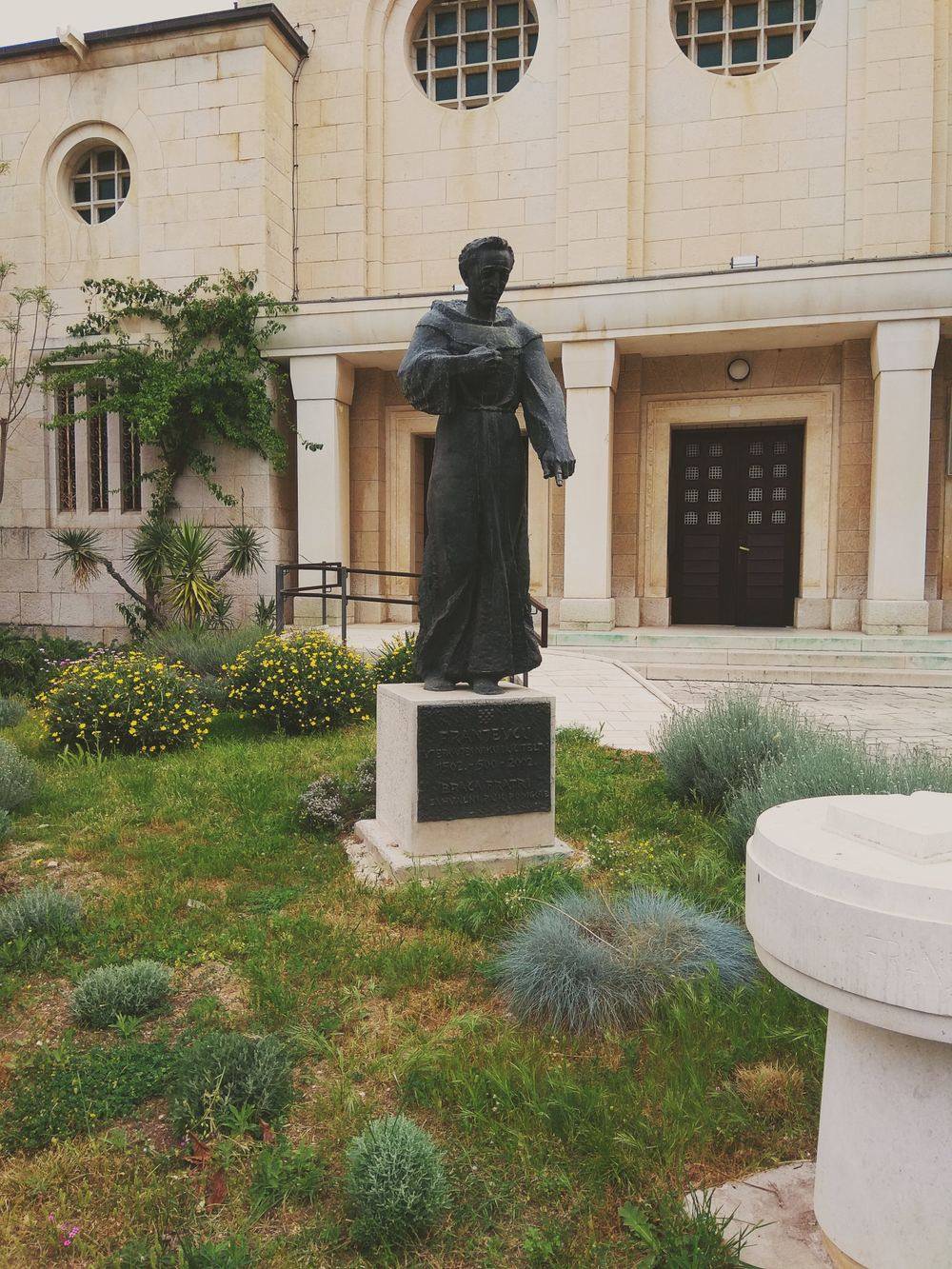
Franciscan Monastery & Malacological Museum
At the eastern end of the bay, the Franciscan monastery of the 16th century holds a collection that draws people with no interest in monasteries: several thousand shells and snails from every sea in the world, gathered after 1950 by Friar Jure Radić, a monk and naturalist. Seamen brought specimens back from distant voyages, and the result is one of the most important collections of its kind in Europe. Alongside it the monastery keeps a library, a herbarium and a geological collection of the Biokovo, and the church of the Assumption contains a large modern mosaic. The ticket is modest, the visit takes 1 hour, and the cloister is cool and quiet in the middle of the busiest part of town. Save it for a rainy or overheated afternoon.
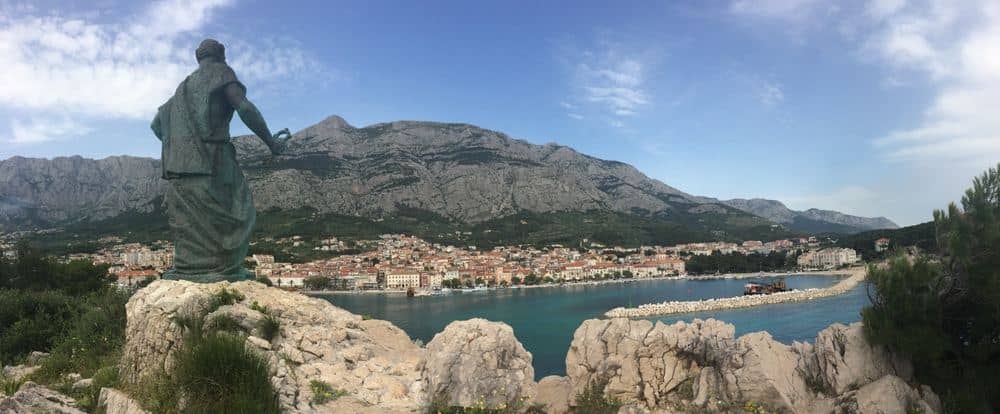
Osejava Viewpoint
Where the waterfront runs out and the Osejava peninsula begins, a terrace beside the Osejava hotel gives the view photographers use for the town: the full semicircle of the harbour, the palms along the shore, the bell tower of the co-cathedral and the wall of the Biokovo above all of it, with the sea in the foreground and nothing in the way. The terrace is public and has nothing to do with the hotel, 5 minutes on foot from the waterfront, with free benches by the railing. Come in the early evening, when the sun goes down behind Brač and slanting light turns the rock of the mountain orange. That hour is short. From the railing the path continues into the Osejava wood and on toward Nugal.
Osejava Forest Park
The pine cap on the peninsula east of the harbour is several dozen hectares of Aleppo pine, planted at the end of the 19th century and protected today as a forest park. Inside it the temperature drops by several degrees, which matters in August. A network of paths climbs the slope, drops to the rocks and leads on toward Nugal, with benches, lookouts and descents to swimming spots where you go from flat slabs straight into deep water, with no sand and no crowd. Set into the rock are military structures from the Austro-Hungarian period, passable today and used as shaded resting places. A circuit takes about 40 minutes. In the morning it is the locals' running route, in the afternoon a place to survive the heat without air-conditioning.
Nugal Beach
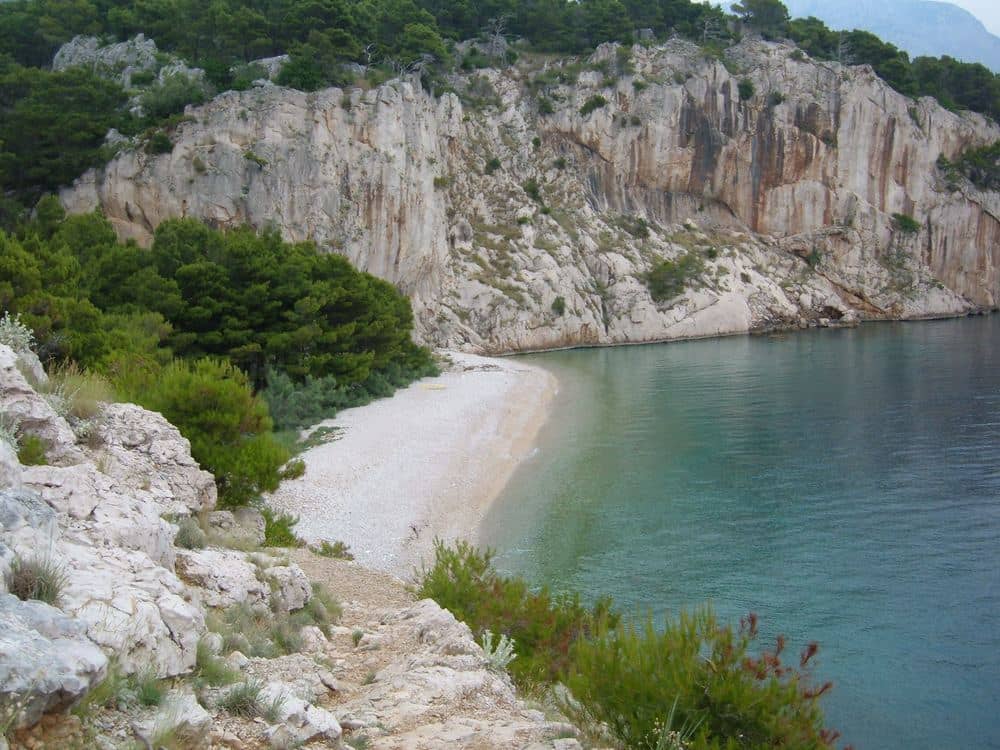
Nugal is the one beach on the Riviera you cannot drive to, which keeps it half empty in August. The only way in is the marked path through the Osejava pinewood, about 20 minutes on foot from the last houses, stony enough to need firm shoes. At the end a shingle cove opens between vertical cliffs on 3 sides, with white stones, clear water and no building in the frame. It has traditionally been a naturist beach and is mixed today. There are no facilities: no showers, no bar, and shade only along the edge, so bring water, food and a parasol. Plan it as half a day: the walk through the pines, a swim in the cleanest sea in the area, and the walk back before the afternoon heat.
Astro Park
On a rise above the town, beside the observatory, the Astro Park is the daytime half of the programme: you tour the park by day to learn, and come back to the observatory by night to look. Along a path stand models of the planets placed to scale, so walking from the Sun to Neptune you cover distances that are hard to picture. There is a sundial, observing instruments and boards that explain the scale of the universe in terms children follow, with benches, shade and a view over the sea and the Biokovo. Entry is free or a token charge as part of an observatory visit, and the grounds are open by day. The evening observatory slots depend on weather and season, so arrange those in advance.
Vepric Shrine
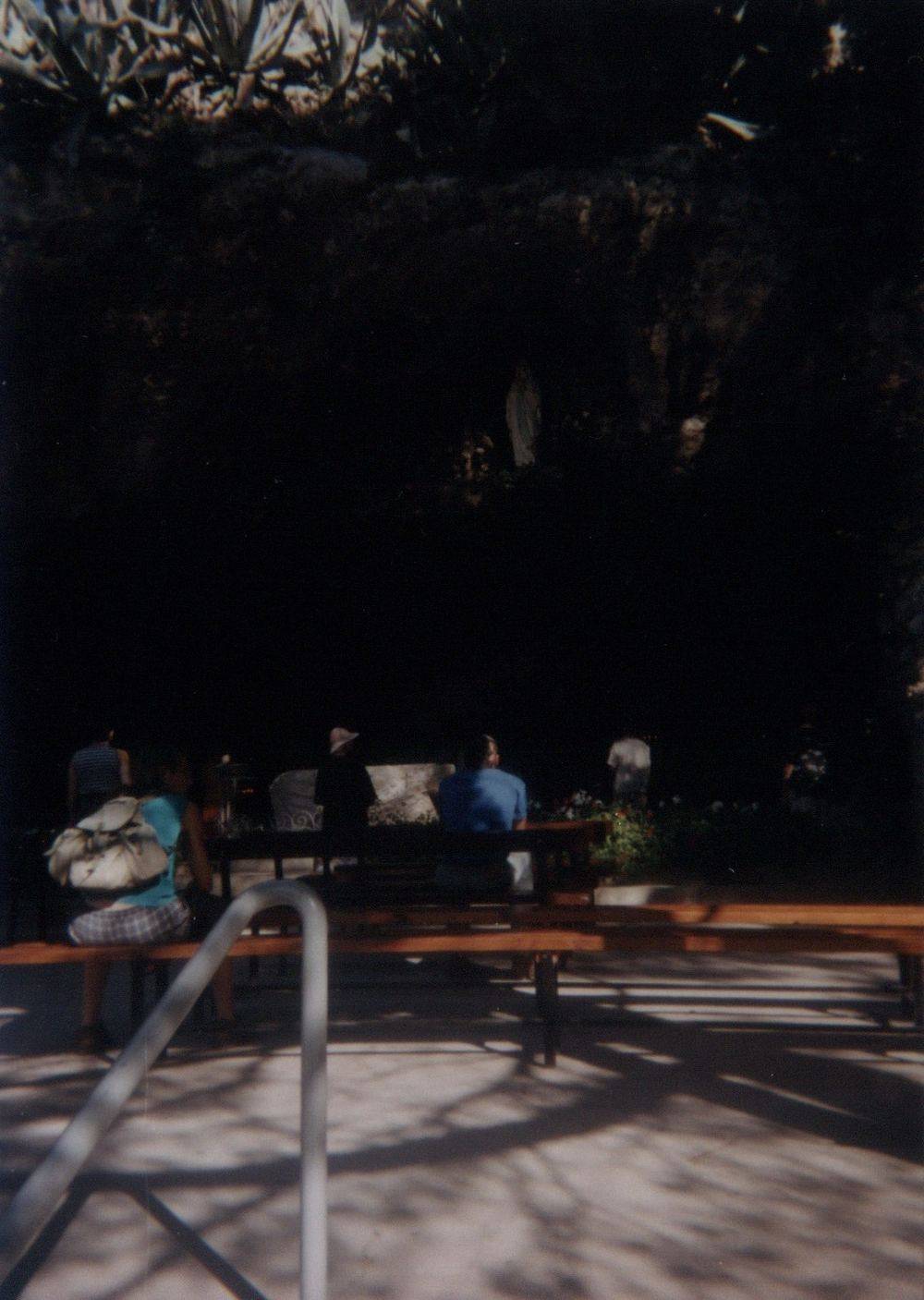
The shrine lies 3 km from Makarska at the foot of the Biokovo: a natural cave that Bishop Juraj Carić arranged in 1908 on the model of Lourdes, with a statue of the Virgin in a niche, an altar under the open sky and benches among the pines. The site was deliberately left natural, with no basilica and no concrete platform, only paths, a stream, a small lake and the rock, so people with no religious reason come for the shade. Masses are said outdoors, and the largest gatherings fall on the Assumption in August and the Nativity of Mary in September, when thousands arrive. Entry is free and the grounds are open all day. It is 5 minutes by car or about 30 on foot. Go early.
Kotišina Botanical Garden
Above the village of Kotišina, a piece of the mountain itself has been fenced off and called a garden. Friar Jure Radić, the same Franciscan who built the shell collection, founded it in 1984 with a different idea from the usual botanical garden: he enclosed several dozen hectares of cliff where the plants already grow, several hundred species including endemics found nowhere else. Paths and steps run along the rock with boards naming the species, and inside the fence stands the Kotišina Kaštel, a 17th century refuge built against the cliff during the Venetian-Ottoman wars, where villagers withdrew with their livestock when an attack was coming. The climb is steep and takes about 30 minutes without shade. Start early, carry water and wear firm shoes.
Where next
- 08:00Down to the town you just looked at
An early slot leaves the whole day free below: the square, the shell museum, the breakwater, and the hidden bay of Nugal that you can pick out from up here as a pale notch in the cliffs.
- 6 kmThe park gate itself
Where the road leaves the coast and starts climbing. Worth knowing before you set off, because the turn is easy to miss and there is nowhere to stop and reconsider on the state road.
- 35 minOmiš, the other way to be above the sea
If the Skywalk gave you a taste for height, the fortress climb above Omiš is the same idea done with your own legs, half an hour north along the coast.
Frequently asked questions
- Can you visit the Skywalk without a car?
- Yes, though there is no public bus up the park road. Agencies on the Makarska Riva sell minibus and jeep tours with the entry slot included, a taxi will take you up if you agree the waiting time, and walkers can climb the marked trail from Makar to Vošac with a park ticket and no vehicle slot.
- How far is Makarska from Split airport?
- About 90 km. By hire car the fastest route is the A1 motorway to the Zagvozd exit and the Sveti Ilija tunnel down to Baška Voda, around 1 hour 30 minutes in normal traffic. Buses from Split bus station follow the coastal road and take about the same, with frequent departures in summer.
- Is the Skywalk worth it when the mountain is in cloud?
- No. The platform sits at 1228 metres and when cloud covers the ridge above Makarska the glass is inside it. Look at the wall from the Riva before you leave: if the top is hidden, the view is gone for that slot. Clear mornings in May, June and September give the best chance.
- Can you drive on to Sveti Jure with the same ticket?
- Yes. The park ticket covers the whole road, and from the Skywalk it continues about 10 km to the summit at 1762 metres, with a transmitter mast and a small chapel on top. The upper section is narrower and colder than the road to the platform. Allow 1 hour extra for the return and do it in daylight.
- Is the Skywalk suitable for children?
- Yes. The glass floor is the draw for most children and the 10 minute rotation means no long wait on the platform. The hairpins are the harder part: anyone prone to car sickness should sit in front with a window open. Afterwards the Astro Park by the Makarska observatory, with models of the solar system and a sundial, rounds off the day.
- Are campervans allowed on the Biokovo park road?
- No. Campervans and vehicles towing a trailer are not permitted on the narrow park road. Leave the van at the campsite on the coast and go up in a car, a taxi or on an agency tour from Makarska. The tour is the simplest option because the entry slot is included.
Share this guide
Questions about your trip?