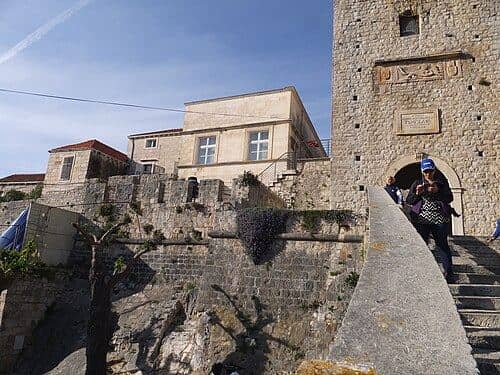
The old town sits on a small peninsula with its streets laid out like a fishbone, angled to catch the breeze and block the wind. It also has a sword dance performed nowhere else, and a tower that claims Marco Polo.
Checked: 21 September 2026
Korčula's old town is built on a peninsula the size of a few city blocks, and its plan is the reason to look up: the side streets run at an angle off the spine, open to the west so the summer breeze comes through, closed to the northeast so the bura does not. Medieval town planning you can feel on your skin. Everything below fits into one day on foot.
- 09:00Up the stairs, through the Revelin tower
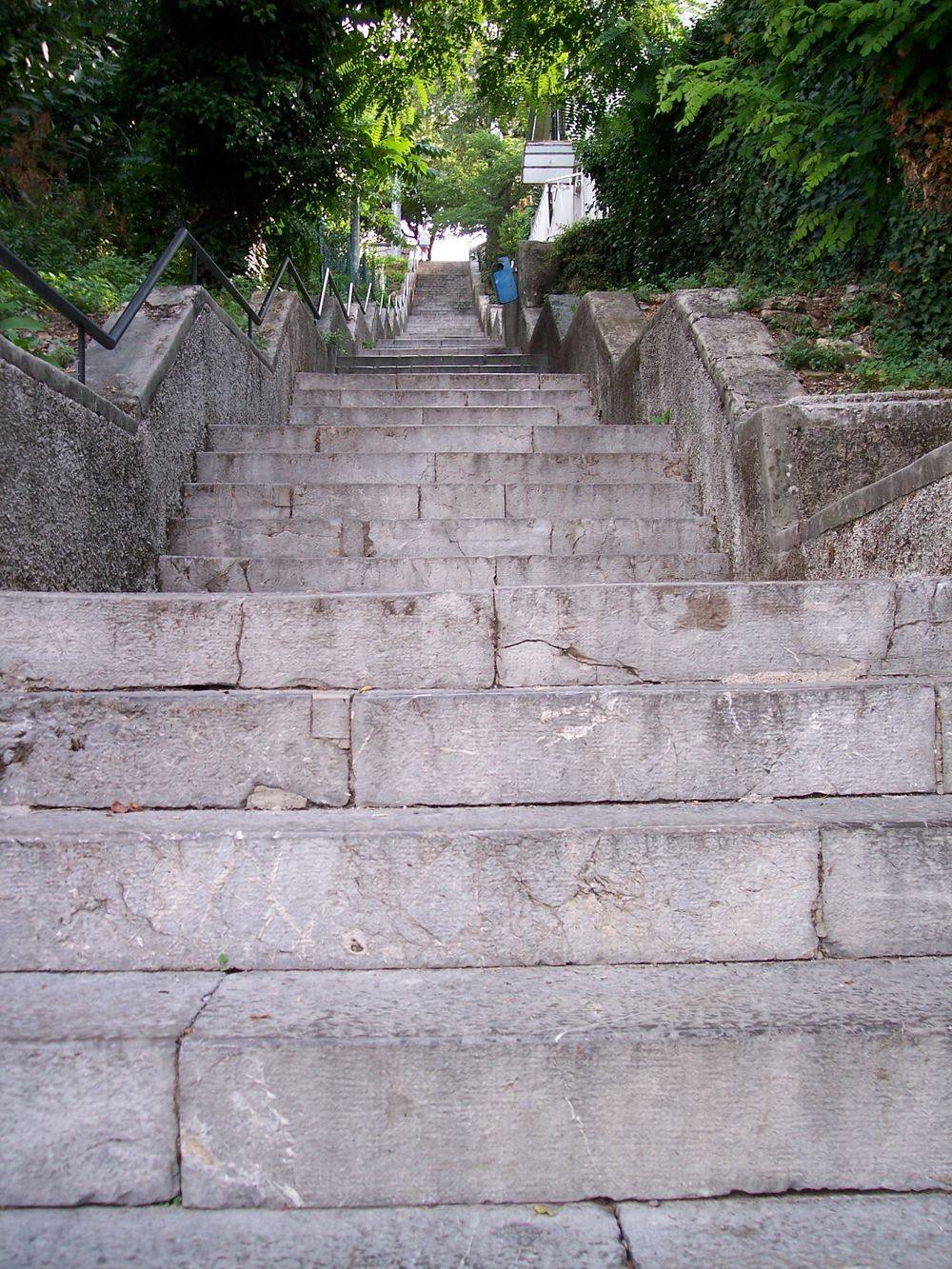
A broad stone staircase sweeps up to the land gate, set into the Veliki Revelin tower that has guarded the town since the fourteenth century. Climb the tower first: the postcard view of the peninsula is from up there, and it is better before the day boats arrive.
- 10:00Saint Mark's, and the stone animals
At the highest point of the town the cathedral's carved portal is flanked by strange stone beasts. Inside hangs an altarpiece attributed to Tintoretto. The bell tower is worth the climb for how small the peninsula looks from it.
- 11:00The Marco Polo tower
Korčula insists Marco Polo was born here in 1254, and a narrow stone tower marks the supposed spot. The claim is disputed and the steps are steep; the small roof terrace at the top is the actual reward.
- 14:00Badija, twenty minutes by taxi boat
A short crossing puts you on a green islet where a fifteenth-century Franciscan monastery stands among the pines. Swim from the rocky coves, and expect to share the paths with the deer that live there.
- 21:00The Moreška, if it is a performance night
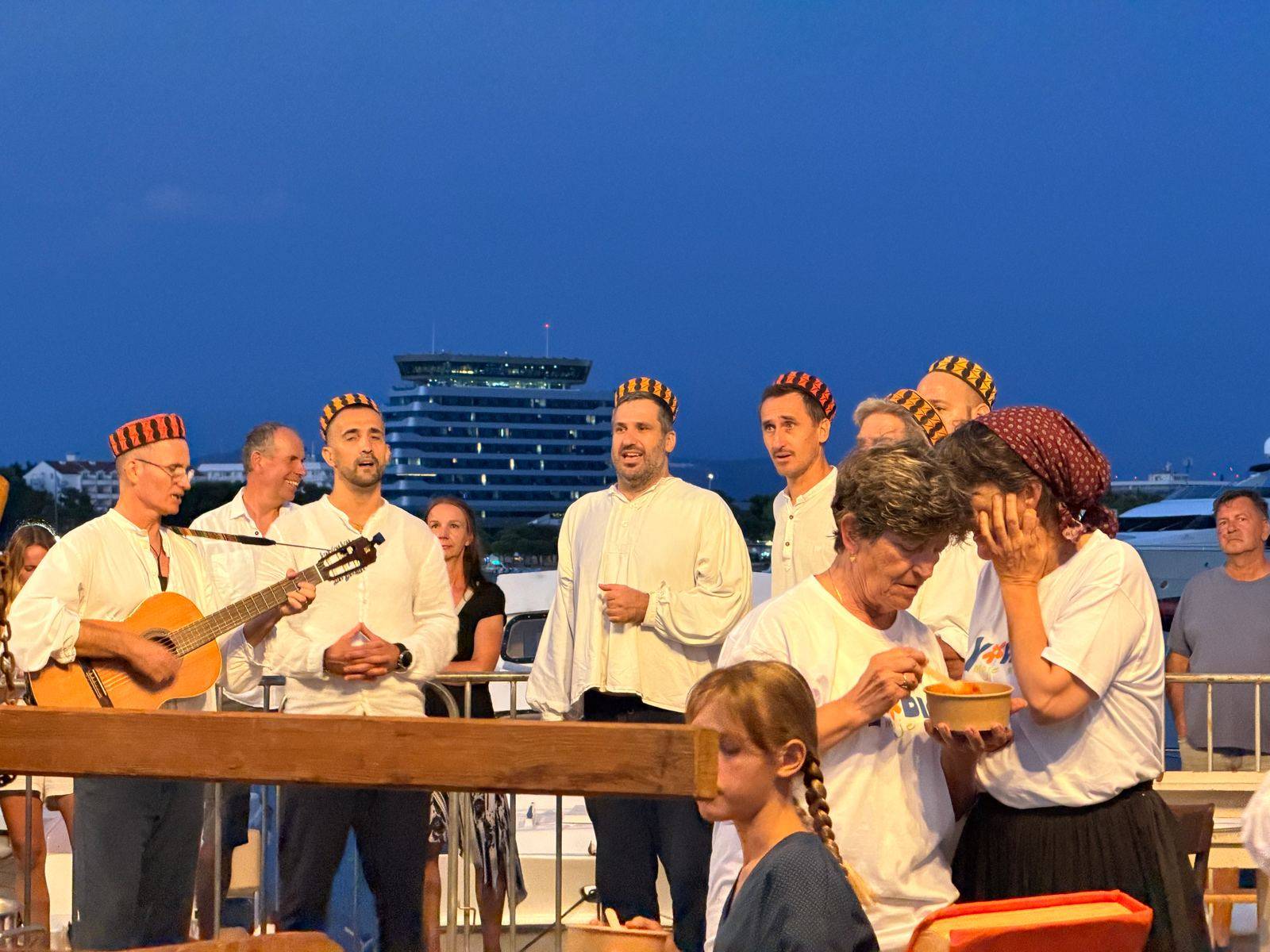
Two armies, the Black King and the White, cross blades in seven figures to win back an abducted bride. The dance survives only in Korčula. Summer performances are regular but not nightly, so check the date before you plan the evening around it.
Getting to Korčula town
Boats reach Korčula town at different places, 3 km apart, so check which port your ticket names. Passenger catamarans from Split and from Dubrovnik dock on the town waterfront just west of the walls, within sight of the land gate. They run once or twice a day depending on season, carry no cars and sell out in July and August, so book ahead. The car ferry from Orebić on the Pelješac peninsula lands at Dominče, 3 km east of the old town, in about 15 minutes, and in summer runs almost hourly. Since the Pelješac bridge opened, the drive from Dubrovnik to Orebić avoids the Bosnian border at Neum, and from Split the road comes down through Ploče and along the peninsula.
The car ferry from Split to Vela Luka lands at the far western end of the island, roughly 45 km and about 60 minutes by road from the town. Take it if you want the western villages or Vela Spila cave first, and avoid it if you only want the old town. With a car on any route in July and August, join the queue at least 60 minutes before departure. Foot passengers can walk on without the wait. The Dominče line fills fast and the next boat is the only alternative.
| Route | Lands at | Notes |
|---|---|---|
| Catamaran from Split | Town waterfront, west of the walls | Foot passengers only, once or twice a day |
| Catamaran from Dubrovnik | Town waterfront, west of the walls | Foot passengers only, once or twice a day |
| Car ferry from Orebić | Dominče, 3 km east of the old town | About 15 minutes, near hourly in summer |
| Car ferry from Split | Vela Luka, western end of the island | Then roughly 45 km by road to the town |
Where to eat and drink
The town market sets up west of the land gate, below the walls, from early morning until about noon. The stalls carry what grows in the gardens of Žrnovo and Lumbarda: tomatoes, chard, figs, olive oil from family mills, honey, almonds and, in August and September, Pošip and Grk grapes. Ask where things come from: the answer is usually the seller's own land, and prices are lower than inside the core. Beside it a small covered fish market opens early and closes when the night's catch is sold, in practice by about 10:00. Sardine, sea bream, scorpionfish and squid from the Pelješac channel are the usual choice, the sellers will clean them on request, and on Mondays there is less because the boats stay in on Sundays.
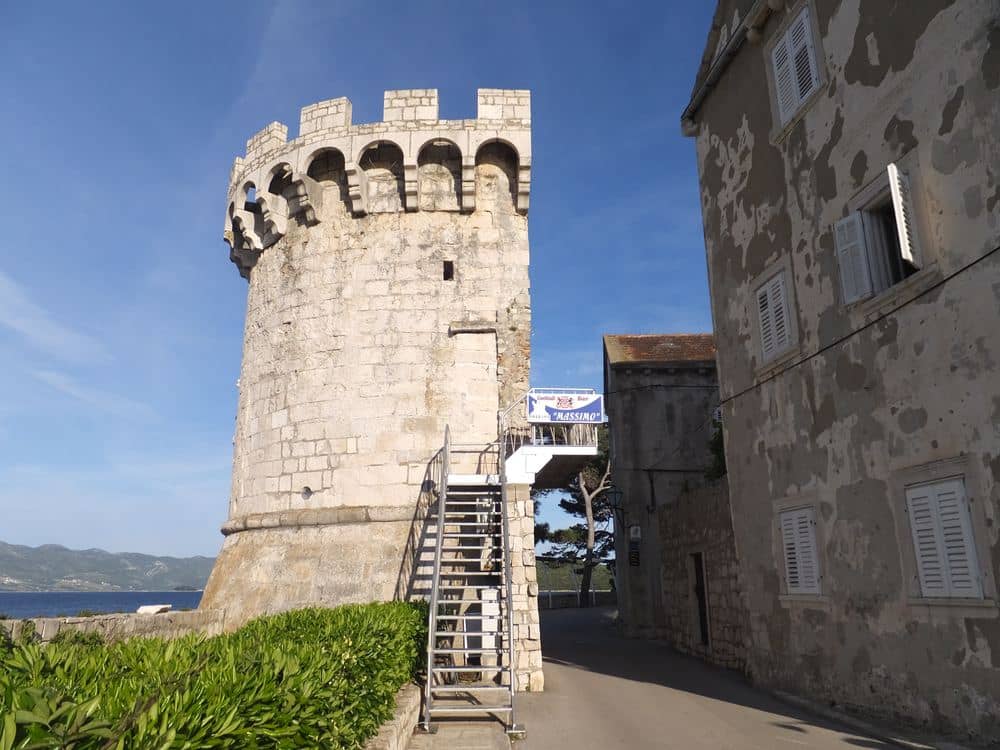
The island has its own white wines. Pošip comes from Čara and Smokvica in the middle of the island, and Grk grows in the sandy vineyards around Lumbarda and is rarely exported. Family cellars in Smokvica and Lumbarda sell straight from the producer, and in September Grk is on the Lumbarda market stalls too. For a plate found nowhere else, go 3 km up to Žrnovo, where several taverns serve žrnovski makaruni, a pasta rolled by hand around a thin rod and eaten with beef goulash. For a drink with a view, the Zakerjan tower at the north-western corner of the walls runs an open-air bar on its crenellated top in summer, and the drinks come up by block and tackle.
If you have a second day
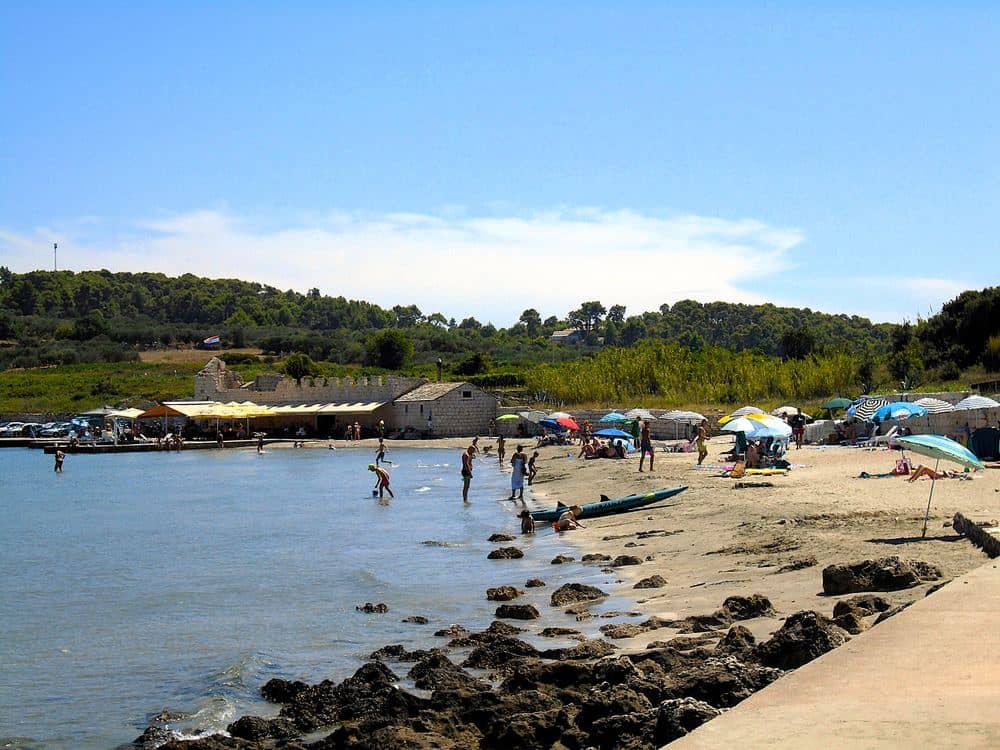
A single day covers the peninsula. A second lets you swim properly and see the island behind the town. The obvious start is Lumbarda, 5 km east on the bus route, where Bilin Žal on the sheltered north side is real sand with water shallow enough to wade far out, and Vela Pržina on the open south side gets waves when the sirocco blows. For the rest of the island you need a car or a scooter, hired in town, or a boat from the harbour. Do the beaches in the morning, when the car parks are empty and the sea is clearest, and keep the museum and the church for the middle of the day, when the streets are too hot.
- A boat day round the Škoji: Vrnik with its abandoned white quarries, the shallow sandy passage between the Stupe islets, lunch on Vela Stupa.
- The town museum in the Gabrielis palace opposite the cathedral: stone, ships and wine in about 40 minutes.
- All Saints church in the south of the core, with its Cretan icons and a confraternity that has used it since the 14th century.
- Pupnatska Luka, 12 km south over the ridge: white shingle, pines to the water, a tiny car park. Be there by 10:00.
- Vaja bay west of Račišće on the north coast, white shingle and a fresher afternoon when the south side is hot.
- The walk around the foot of the walls at dusk, when the towers and the Pelješac coast take the last light.
Across the channel to Orebić
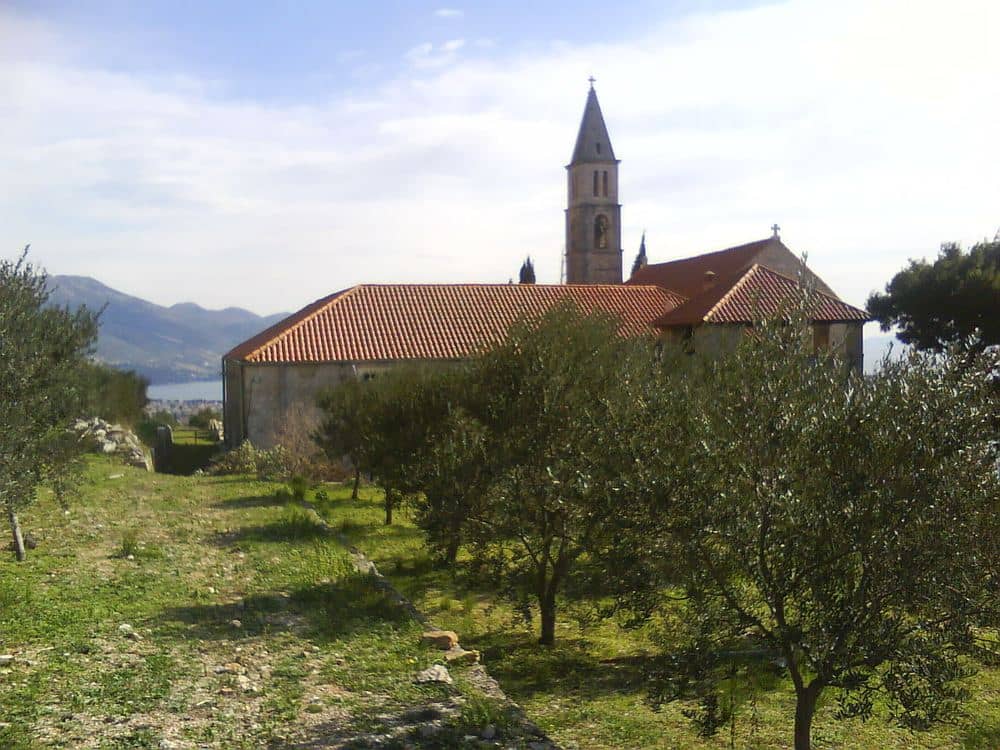
The Orebić ferry also makes the easiest day trip, and most visitors use it only as a way in or out. In the second half of the 19th century the village opposite was the seat of one of the largest sailing-ship companies on the Adriatic, and its maritime museum keeps the models, charts, logs, porcelain and carved furniture the captains brought home. Give it 30 minutes. Above the village a road and a footpath climb about 150 m to the Franciscan monastery of Our Lady of the Angels, a 30-minute walk. Ships once sounded their horns to it as they passed, and its terrace gives the best view there is of the Korčula peninsula, the fishbone plan legible from above. Cover shoulders and knees. Allow 3 to 4 hours, ferry and the 3 km to Dominče included.
When to come
July and August bring the Moreška several times a week, full catamarans and an old town without shade from late morning. The stone holds heat, so the walls, the towers and the museum belong before 11:00 or after 17:00, with the sea in between. Late June and September are easier: the water is warm, the boats still run and there is room at the market. The traditional Moreška date is 29 July, the feast of St Theodore, and the Grk harvest around Lumbarda comes at the end of August. Watch the wind too: when the sirocco blows the south coast beaches take a swell and the north coast bays such as Vaja stay calm. Out of season the Zakerjan bar, the beach bars, the taxi boats and the galleries in the towers close. Only the Vela Luka market, at the far end of the island, works right through the winter.
Common mistakes
Most errors here come from treating the town as the whole island, or from summer timing. The core is small and quick to see, and everything beyond the walls depends on a ferry, a bus or a boat with a schedule of its own, so a missed departure costs half a day. The other trap is heat. The lanes catch the breeze, but the squares, the tower terraces and the stairways are bare stone with nothing over them. Sun cream, a hat and a bottle of water are the whole kit. The list below is what goes wrong most often.
- Arriving at Dominče with a car at departure time in August. The queue forms 60 minutes before and the boat leaves full.
- Turning up at the land gate stage on a Moreška night without a ticket. Tickets are sold in advance and the performance lasts about 60 minutes.
- Climbing the Revelin and the bell tower at midday. Both staircases are narrow and hot, and the view is better in the first or last hour of light.
- Driving to Pupnatska Luka after 11:00. The car park is tiny, fills before noon, and there is nowhere on the hairpins to leave a car.
- Going to Bačva, Vaja or Istruga without water, food and a parasol. None of them has a bar, a shower or dependable shade.
- Wearing sandals on the wall towers and the St Blaise fortification at the western end. The ground is rough and the edges need care.
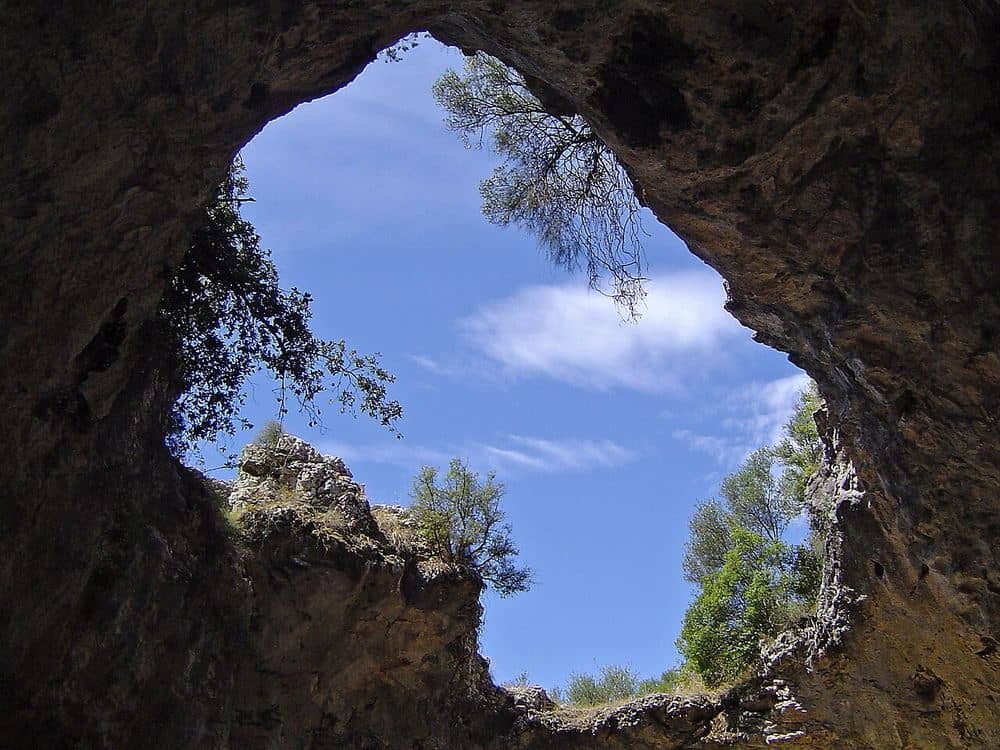
- Landing at Vela Luka on the Split car ferry without checking the map, then finding the old town is 60 minutes away by road.
Where next
Frequently asked questions
- How do I get from Split to Korčula town without a car?
- Take the catamaran, which runs once or twice a day depending on season and docks on the town waterfront just west of the walls. It sells out in July and August, so book ahead. The car ferry from Split lands at Vela Luka instead, at the far western end of the island, roughly 45 km from the town by road.
- Is a single day enough for Korčula?
- For the old town, yes. The core is small, and the walls, the cathedral, the towers and a swim off the rocks fit into a day on foot. A second day is for the Lumbarda sand beaches, the Škoji islets by boat or Pupnatska Luka on the south coast, all of which need transport of their own.
- Do I need a car on Korčula?
- The town, Lumbarda and Žrnovo are covered on foot and by local bus. A car or a scooter is needed for the south coast beaches such as Pupnatska Luka, Žitna and Bačva, and for the western villages of Smokvica, Blato and Vela Luka. Hire in town, and expect the road down to Pupnatska Luka to be narrow with hairpins.
- Can I visit Korčula from Dubrovnik in a day?
- Yes, but it is a long one. By road it is about 2 hours each way with the Orebić ferry, and the catamaran runs once or twice a day, so the timetable sets your hours on the island. You get the old town, the towers and a swim. Staying a night is better, because the peninsula is at its best in the evening after the day boats leave.
- Which beach is best near Korčula town?
- For sand and shallow water, Bilin Žal at Lumbarda, 5 km east and on the bus route. For waves, Vela Pržina on the south side of the same peninsula. For the photograph everybody takes, Pupnatska Luka, 12 km away, with a car park that fills before noon. Below the walls you swim off the rocks on the eastern side.
Share this guide
Questions about your trip?