Zagreb is two medieval hills, a 19th century grid and a chain of parks laid out as a horseshoe. This guide sorts the upper town, the lower town and the two outings that repay the tram ride: Mirogoj and Maksimir.
Checked: 26 September 2026
Zagreb's old town sits on two hills. Kaptol holds the cathedral and has housed the church for centuries, while Gradec next door hosts the politics, with parliament and government around St Mark's Church. Between them lies Dolac market, and below them the lower town spreads out as a 19th century grid threaded by a chain of parks known as the Lenuci Horseshoe. Once you see that pattern you no longer need a map: history above, museums and parks below, and the funicular between them covers the height difference in 64 seconds.
The upper town: everything within ten minutes
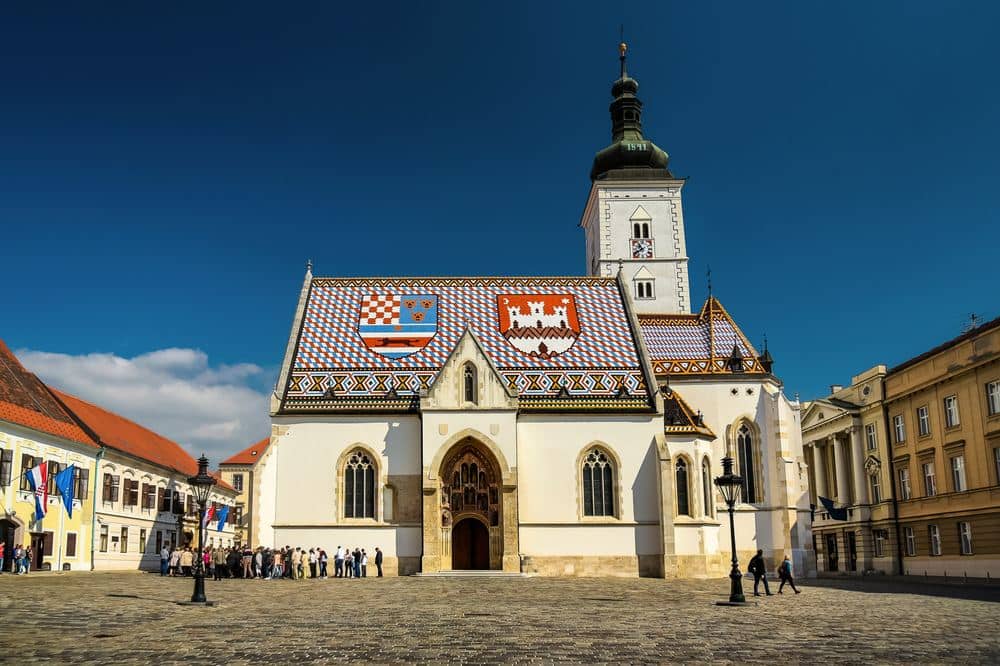
From Jelačić Square the route climbs past Dolac, whose red umbrellas shade the fruit and vegetable stalls every morning, up to the Stone Gate. Candles burn in the archway before a painting of Mary that survived the city fire of 1731, and people pause here in the middle of the passage. Beyond it opens St Mark's Square with the coat-of-arms roof of St Mark's Church, the parliament and the Ban's residence. St Catherine's Church and its terrace sit two lanes away, as do the Museum of Broken Relationships and the studio of sculptor Ivan Meštrović. At noon the cannon in Lotrščak Tower fires its midday shot, and half the city has set its watches by it since 1877. For the way down take the Strossmayer Promenade under the chestnut trees, or the Grič Tunnel, a Second World War air-raid shelter that now runs as a cool passage beneath the hill.
- Mirogoj lies a ten minute bus ride behind the cathedral and ranks among Europe's most beautiful cemeteries: ivy-covered arcades by Hermann Bollé sheltering all of the city's faiths side by side. Free to enter.
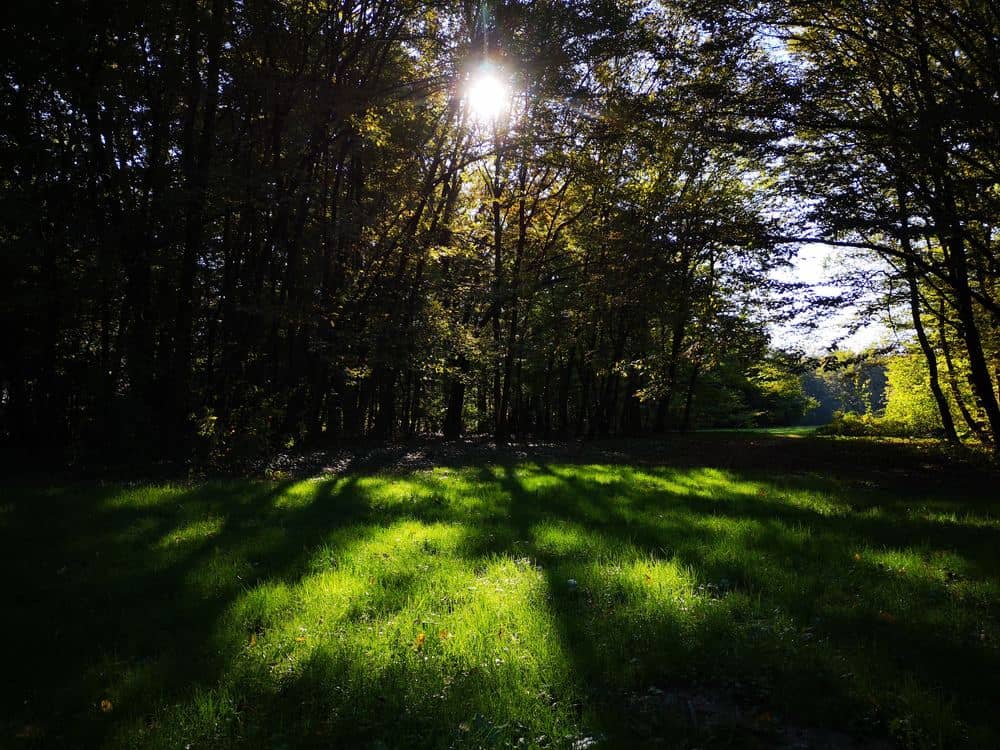
- Maksimir Park opened in 1794 as one of Europe's first public parks. Five lakes, meadows, the Vidikovac belvedere and the Echo Pavilion sit along one tram line, with Dinamo's stadium across the road.
- For rainy days: the Nikola Tesla Technical Museum with live demonstrations in its Tesla cabinet, the Museum of Naive Art with the Hlebine painters, and the Museum of Illusions for families.
- In summer the city moves to Jarun lake, with gravel beaches, a loop path and lakeside stages, and to Bundek in Novi Zagreb. Both are a tram ride away, swimwear is all you need.
The lower town: walking the green horseshoe
The lower town is best walked as a sequence of parks. From Jelačić Square it is two minutes to Zrinjevac with its plane trees, music pavilion and museum facades all around. Strossmayer Square and Tomislav Square follow, with the Art Pavilion and the equestrian statue in front of the main station, then the horseshoe turns towards the Botanical Garden. Along the way sit the Archaeological Museum, the canary-yellow National Theatre and the Ethnographic Museum. If the evening still has room, take the Oktogon passage to Ilica and finish on Cvjetni trg, the flower square, where the city sits over coffee until the lights come on.
“Zagreb's best single attraction is the walk itself: two hills, a green horseshoe, and in between a city that sits over coffee and has time.”
Practically, Zagreb is easy: the airport is half an hour by bus, trams run on tight headways, and the upper town is entirely walkable. The cathedral is still being restored after the 2020 earthquake, its scaffolded towers standing over Kaptol. The city also works as a base for Plitvice, with the lakes a good two hours south by bus. And if you come in Advent, the horseshoe and the promenade host the Christmas market that made Zagreb Europe's best Advent city three years in a row.
Getting there and getting around
Franjo Tuđman Airport lies about 15 km south-east of the centre near Velika Gorica, and the airport bus ends at the main bus station on Avenija Marina Držića, about 1.5 km east of the railway station. Coaches from the coast use the same bus station, and the tram outside reaches Ban Jelačić Square in about 10 minutes. Trains from Ljubljana, Vienna and Budapest arrive at the main station at the foot of the horseshoe, a short walk from most central hotels. Tram tickets come from Tisak kiosks or the driver and must be stamped on board. Leave the car in a garage: the central streets are zoned for paid parking.
| From | How | Time |
|---|---|---|
| Ljubljana | train or bus | about 2 hours 30 minutes |
| Rijeka | bus | about 2 hours 30 minutes |
| Zadar | bus | about 3 hours |
| Split | bus | about 5 hours |
| Vienna | direct train | about 6 hours 30 minutes |
| Budapest | direct train | about 6 hours |
Where to eat and drink
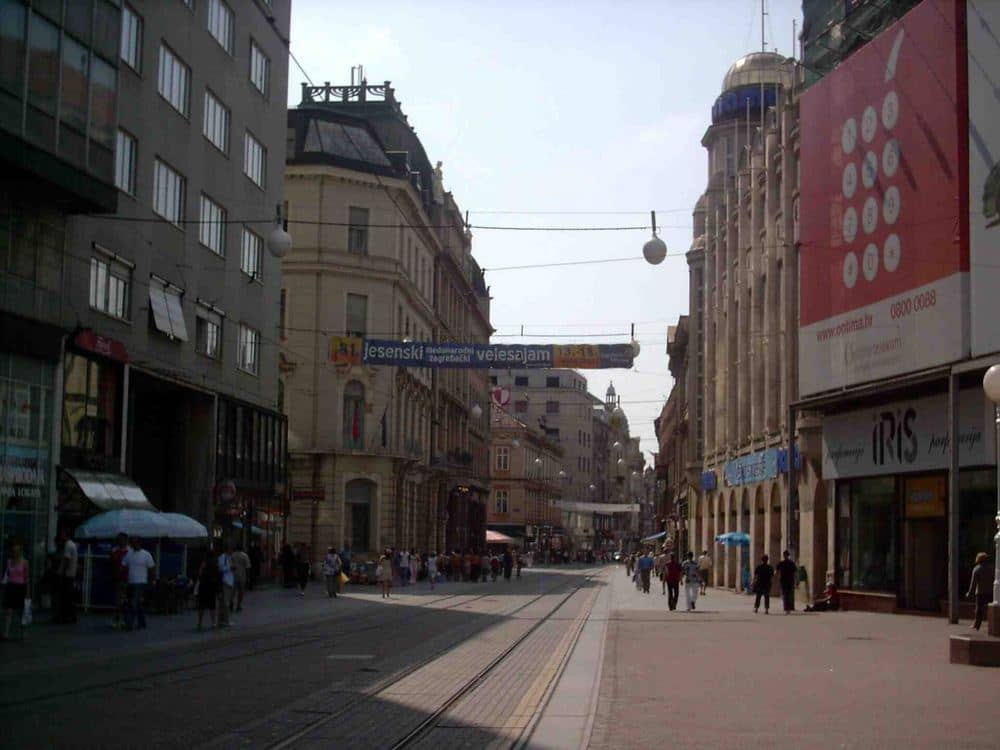
The market feeds the best kitchens. Bistro Pod Zidom sits beneath the wall of Dolac and cooks what the chef bought there that morning, so reserve ahead. Amfora, a plain canteen by the fish hall, serves fried small fish with a glass of white from 08:00. In the upper town, Trilogija by the Stone Gate has one of the better wine lists in the city, and Noel holds Zagreb's first Michelin star, a tasting menu that books up far in advance. For beer, Mali Medo on Tkalčićeva and the Medvedgrad brewpub on Savska pour their own lagers beside plates of grilled meat. For coffee, Cogito on Varšavska roasts its own beans a few steps from Flower Square. Štrukli, the local cheese pastry, is most famous at the Esplanade by the station.
When to go
Zagreb has a continental climate: snow is possible in winter and summer days often pass 30 degrees. April to June is the easiest time, with terraces open and the parks at their greenest. In July and August many residents leave for the coast, so the centre is quieter and some small restaurants close for holidays. September and October carry the fullest calendar. In 2026 the Burger Festival runs on Trg dr. Franje Tuđmana from 12 to 22 September, the Zagreb Marathon starts and finishes on Ban Jelačić Square on 11 October, and Open House Zagreb opens 36 buildings that are normally closed, for free, from 9 to 11 October. November is grey but has Interliber, the book fair, from 10 to 15 November and the Zagreb Film Festival from 9 to 15 November. Advent 2026 runs from 28 November to 7 January 2027.
Where to stay
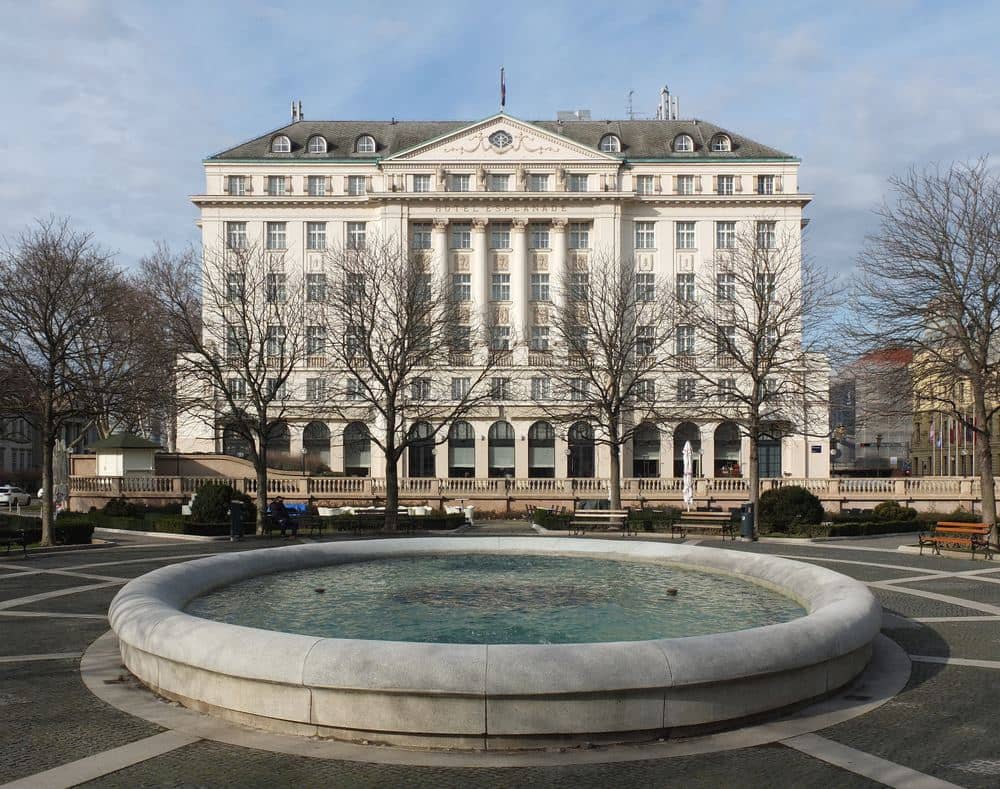
For a first visit stay in the lower town within 10 minutes' walk of Ban Jelačić Square: you can walk to the old town and the horseshoe from there and the trams pass the door. The streets around the main station suit anyone arriving by train, with the Esplanade as the grand option. The upper town is silent after dark, but remember the stairs and the funicular's last run at 22:00 when you carry luggage. Rooms on Tkalčićeva sit above the bars and are loud on Friday and Saturday nights. Novi Zagreb, across the Sava, has cheaper flats and the Arena, and a tram ride for every outing. Book early for December and for big concerts at the Arena or the hippodrome.
Day trips from the city
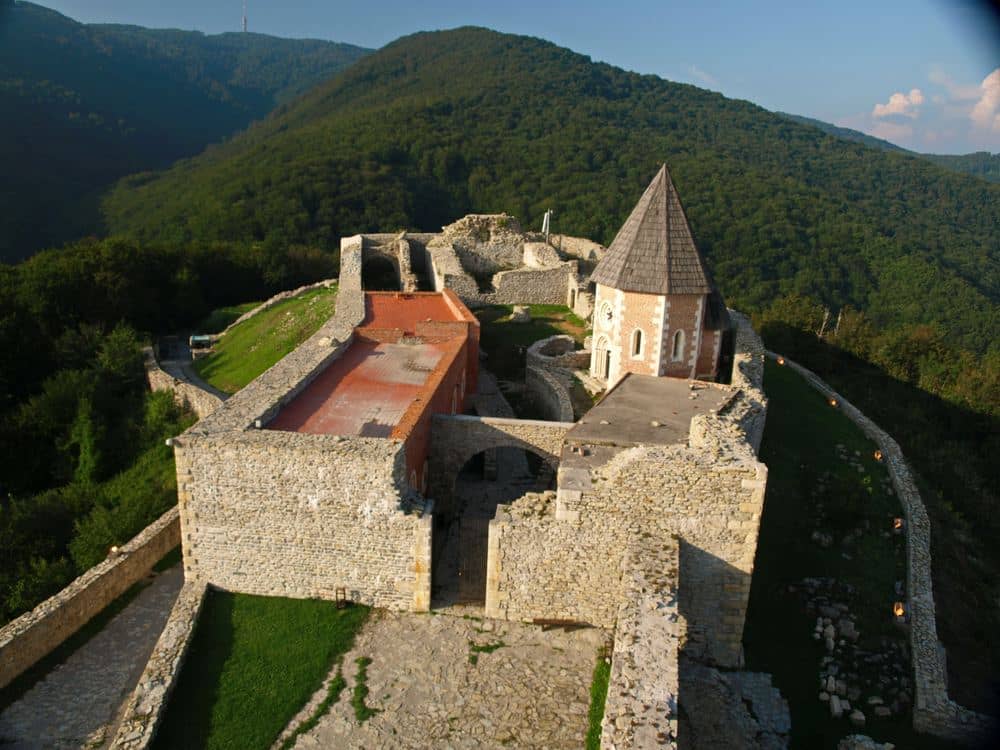
Plitvice takes a full day with the bus. The others below fit a half day or an easy day. Medvednica needs only a tram and a bus: the cable car climbs to Sljeme at 1,033 m, the mountain huts serve bean stew and štrukli, and Medvedgrad fortress sits on a spur below, its walls best in late afternoon light. Samobor, a short bus ride west, is the classic Sunday outing for its kremšnita custard slice. Varaždin and Trakošćan pair in one day by car through the Zagorje hills, and Varaždin also has direct trains and buses.
| Destination | Distance | What is there |
|---|---|---|
| Medvednica and Medvedgrad | 15 km | cable car to Sljeme, trails, mountain huts, medieval fortress |
| Samobor | 20 km | small town on a brook, castle ruin, kremšnita |
| Trakošćan | 75 km | white castle above a lake, walk around the shore |
| Varaždin | 80 km | baroque old town, pastel palaces, white castle, few tourists |
| Plitvice Lakes | 130 km | 16 lakes and waterfalls on wooden walkways, start very early |
Common mistakes
- Arriving at Dolac after lunch: the stalls pack up by 15:00, so go before 10:00 for the full market.
- Expecting to enter St Mark's Church: the interior opens only for mass, so photograph the roof early before the square fills.
- Planning museums for a Monday: most state museums close that day, and the Strossmayer Gallery shuts at 16:00 on the others.
- Riding a tram with an unstamped ticket: inspectors board without warning and fine on the spot.
- Shopping on a Sunday: since 2023 shops in Croatia open on only 16 Sundays a year, malls included, while cafés and restaurants trade as usual.
- Carrying only cards: Croatia uses the euro and cards work almost everywhere, but the stalls at Dolac and Britanac want cash.
The places, one by one
| Place | What it is | Time needed |
|---|---|---|
| Ban Jelačić Square | Main square with the 1866 statue and the Manduševac well | 15 minutes |
| Tkalčićeva Street | Pedestrian street of cafés on a filled-in stream | 30 minutes to 1 hour |
| Ribnjak Park | Shady park behind the cathedral | 20 minutes |
| Zagreb City Museum | City history in a former convent | 1 to 2 hours |
| Meštrović Atelier | The sculptor's house, studio and garden | 45 minutes |
| Museum of Arts and Crafts | Furniture, glass and design from the Gothic to today | 1 to 2 hours |
| Velvet Café | Design café on Dežmanova | 30 minutes |
| British Square (Britanac) | Morning market, antiques fair on Sunday | 1 hour |
| Tuškanac & Dubravkin Put | Forest promenade above the Upper Town | 30 minutes to 1 hour |
| Cmrok Meadow | Meadow with a city view, sledging in winter | 1 hour |
| Zagreb Zoo | 2,000 animals inside Maksimir Park | 2 hours |
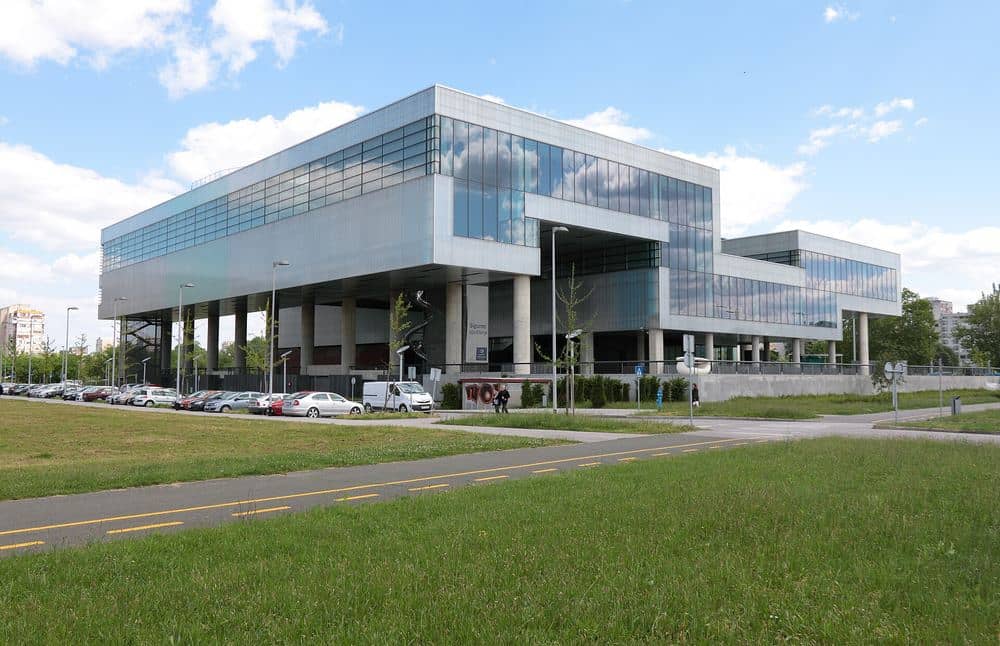
| Museum of Contemporary Art | Croatia's largest contemporary museum, with a slide | 2 hours |
| Sava Embankment | 10 km flat path along the river | 1 to 2 hours |
Ban Jelačić Square
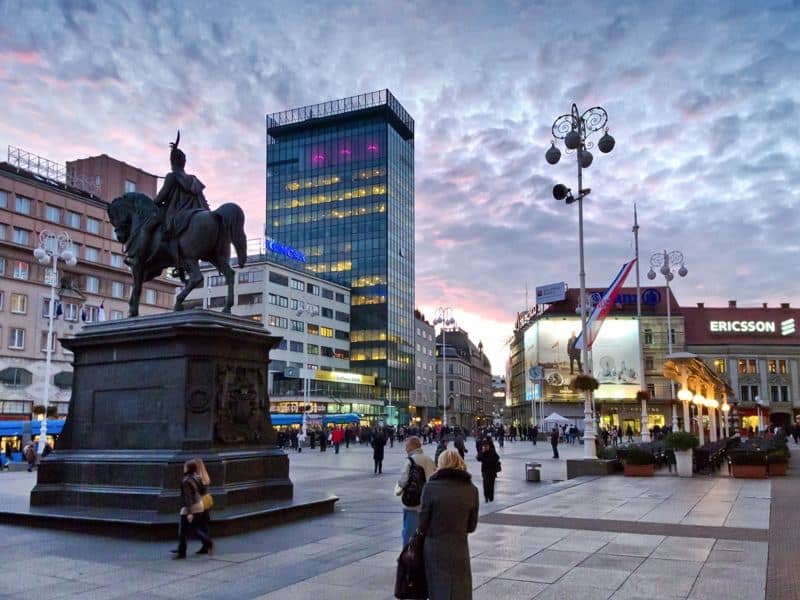
The main square began in the 17th century as a fairground outside the town walls and took its present shape in the 19th century, when classicist and Secession buildings rose around it. In the middle rides Ban Josip Jelačić, cast by the Viennese sculptor Anton Dominik Fernkorn in 1866. The statue was removed in 1947 and returned in 1990. On the southern side is the Manduševac well, the spring from which, by tradition, the city takes its name. The square is pedestrian and open all day, and steps and passages lead up from it to Dolac and the Upper Town. Locals arrange to meet under the horse's tail, and you can do the same.
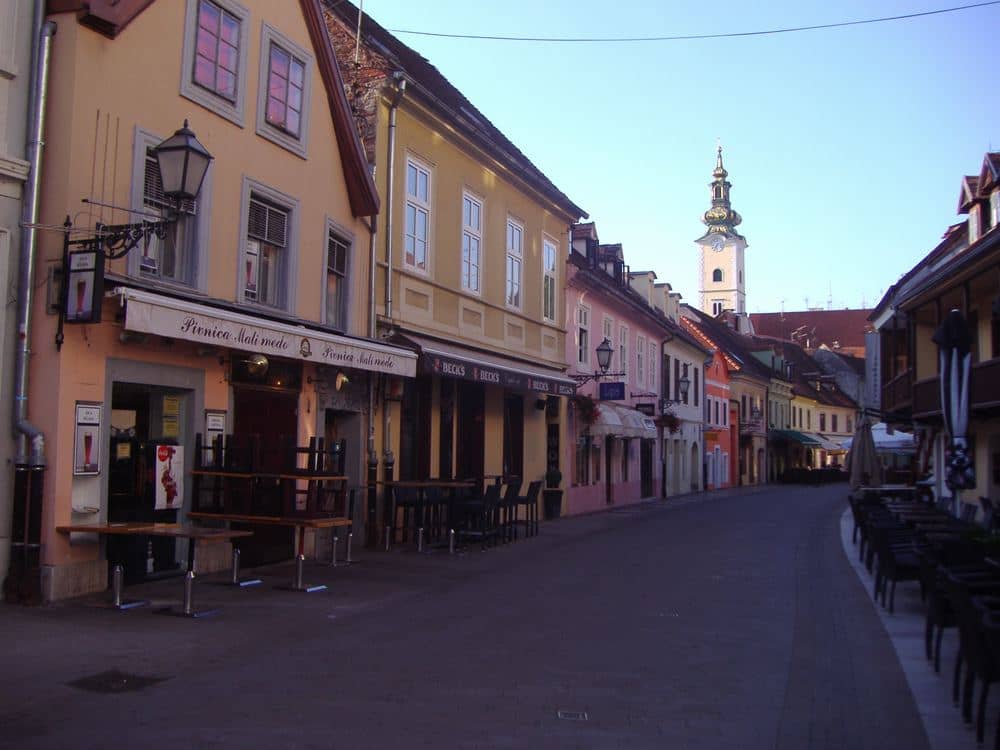
Tkalčićeva Street
Tkalčićeva runs along the bed of the Medveščak stream, which for centuries divided Gradec on the hill from Kaptol under the bishop. The water drove mills and forges, and it was also the border over which Gradec and Kaptol quarrelled, at times with weapons. At the end of the 19th century the stream was diverted and filled in, and the low houses that had stood beside it became a street. Today it is pedestrian and lined with cafés and restaurants whose terraces take up most of the roadway. You reach it from Dolac or from Radićeva Street, and it is busiest in the evening. Step through any open gateway: the courtyards behind the facades hold the quietest tables on the street.
Ribnjak Park
Ribnjak lies in a hollow behind the cathedral, along the line of the former bishop's walls. The name means fishpond: for centuries the church estate kept fish here for fast days. When the ponds were drained in the 19th century the ground became a public park with winding paths, lines of trees and benches, and a fountain and sculptures came later. Because it sits below the level of the surrounding streets it stays cooler than they are and in shade for most of the day. Concerts are held here in summer. Entry is free and the park never closes. Use it for a rest between the cathedral and Tkalčićeva before you climb to the Upper Town.
Zagreb City Museum
The City Museum occupies the former convent of the Poor Clares, a 17th century building on Opatička Street at the northern end of the Upper Town. The permanent display follows the city from prehistoric settlements and medieval Gradec to the 20th century through models, documents, furniture and clothing, including the fires, the earthquake of 1880 and the building of the Lower Town. In the basement you can see the archaeological layers beneath the building. Allow about 90 minutes. Hours are listed as 10:00 to 19:00, but the museum has been under restoration since the 2020 earthquake, so check before you climb up. Go early in your stay: the models make sense of every alley you walk afterwards.
Meštrović Atelier
Ivan Meštrović, the best-known Croatian sculptor of the 20th century, lived and worked in this house in the Upper Town from 1922 to 1942. He rebuilt it himself, joining several old buildings and adding a studio with a skylight, a courtyard and a garden for his sculptures. He exhibited in Vienna, Rome and New York, taught at American universities and gave the house and the works in it to the Croatian people. The display holds sculpture in stone, wood and bronze, drawings and furniture he designed himself. The museum has been open since 1963, and the visit takes about 40 minutes. Go through to the back courtyard: the sculptures among the greenery are the best part and often empty.
Museum of Arts and Crafts
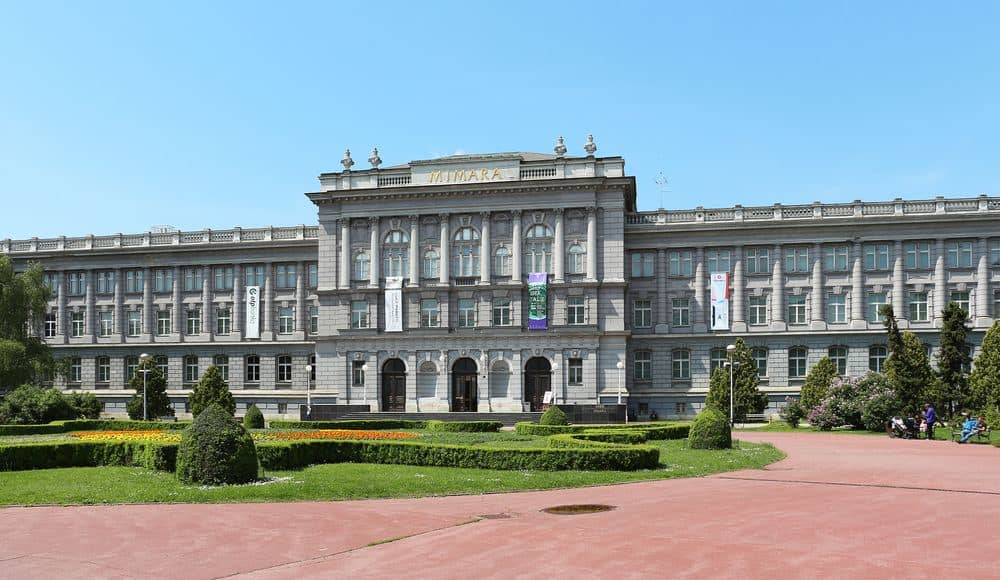
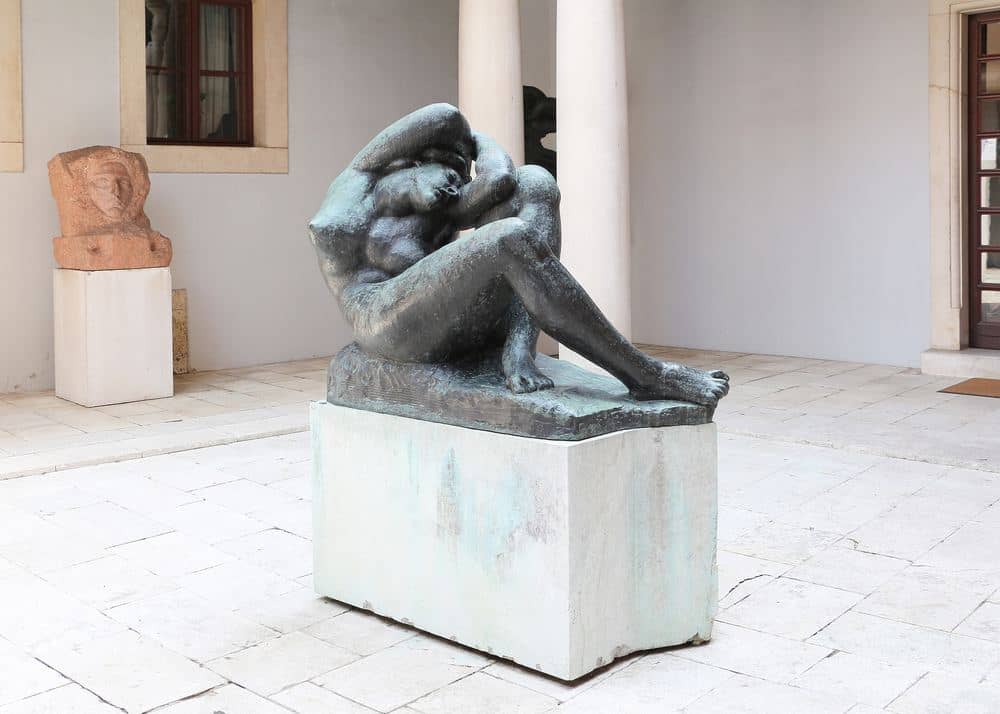
The Museum of Arts and Crafts was founded in 1880 to show craftsmen and schools good models, when Europe was trying to save its crafts from factory production. Hermann Bollé designed the building in 1888, and it stands on Trg Republike Hrvatske facing the National Theatre. The collection runs to more than 100,000 objects from the Gothic period to the 20th century: furniture, clocks, glass, ceramics, textiles, photography, posters and 150 years of everyday design. The rooms are arranged in date order, so you watch taste change as you walk through. Allow about 90 minutes. It opens from 10:00 to 19:00 and pairs easily with the theatre and Meštrović's bronze Well of Life in front of it.
Velvet Café
Velvet sits on Dežmanova, a short quiet street off Ilica a few minutes west of the funicular. It is a design café: flowers, candles and small objects fill every surface of a single room, and it has a following among the city's creative crowd. Come for a slow coffee and a slice of cake. It opens at 08:30 and closes at 21:00, and prices sit in the middle range for the city. The room is small, so mid-morning on a weekday is the quiet time, before the regulars arrive. It works well as the pause between the museums of the lower town and the walk up Dubravkin put, which begins at the top of the same street.
British Square (Britanac)
Britanac, officially British Square, lies on Ilica west of the centre, a few tram stops from Ban Jelačić Square. Every morning it is a small food market with fruit, vegetables, cheese and flowers from the villages around the city. On Sunday the same space becomes an antiques fair: old clocks, postcards, records, coins, books, crockery and furniture laid out on tables, with collectors and the merely curious moving between them. The fair has run for decades and is one of the few places in the city where prices are still bargained over, so make an offer, gently. Around the square are cafés with terraces that work all day. Come in the morning, since the stalls are packed up by early afternoon.
Tuškanac & Dubravkin Put
Just above the Upper Town the city stops and the forest begins. Tuškanac and Dubravkin put were laid out in the 19th century as promenades for the citizens, with winding paths, benches and lines of trees. Dubravkin put follows a stream through a narrow gully and joins the centre with Tuškanac, so it is the quickest way from the bustle into the woods: about 10 minutes on foot, with 12 panels along the way explaining the plants and animals. Tuškanac also has a summer cinema that has shown films in the open air for around 60 years. The paths are walkable all year but can be slippery in winter, so wear shoes with grip.
Cmrok Meadow
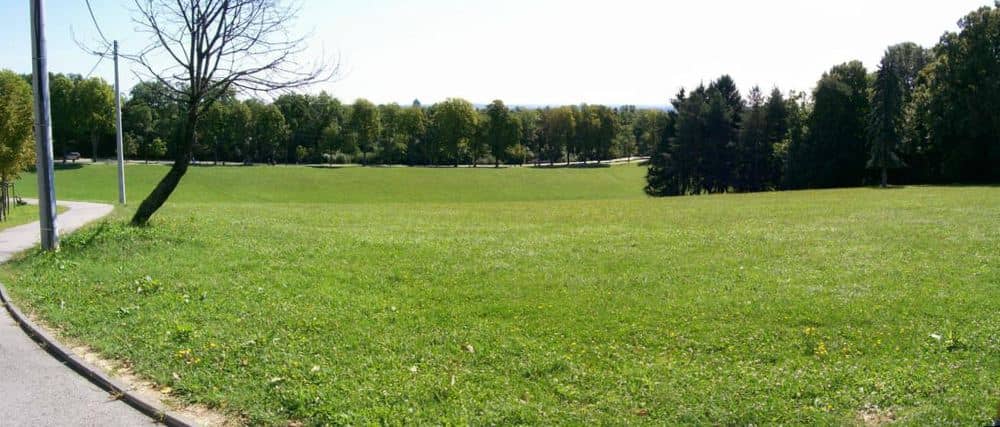
Keep climbing past the end of Dubravkin put and the trees open onto Cmrok, a broad meadow on the slope above Tuškanac where the forest starts its rise toward Medvednica. From the Upper Town it is a 20 minute walk uphill. In summer people sit on the grass, play football and fly kites, and from the top edge you see the city laid out below as far as the Sava and the flat country beyond. When snow falls the whole slope turns into a sledging hill, the nearest one to the centre, and families come from across the city with their children. A few benches line the edge and a kiosk opens in season. Bring a blanket and come for sunset.
Zagreb Zoo
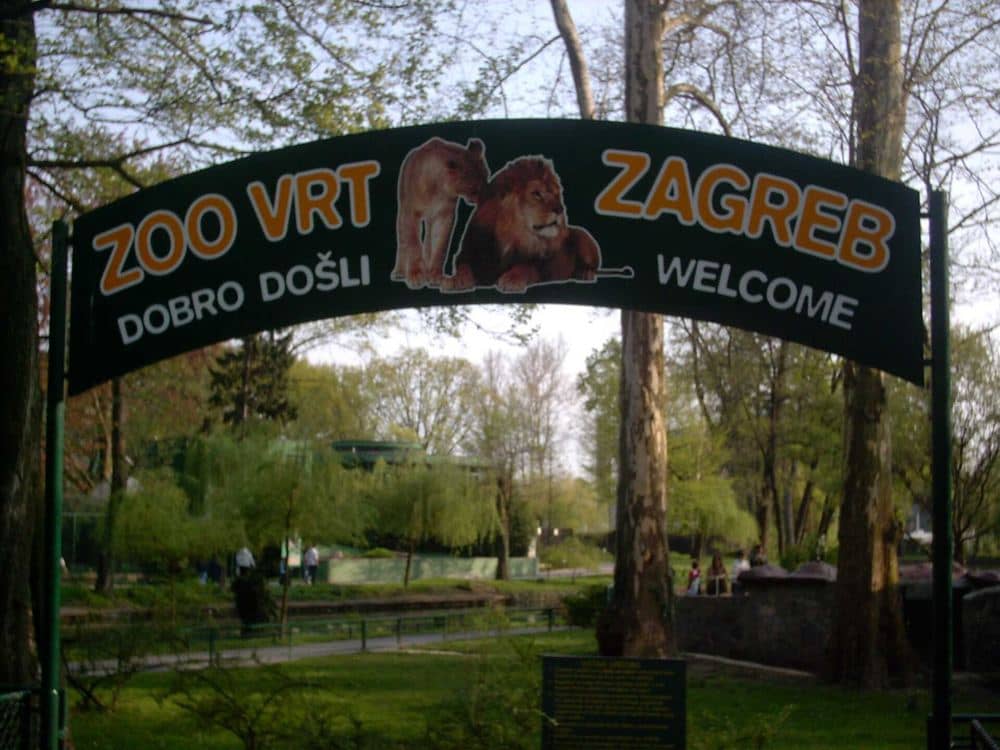
Zagreb's zoo opened in 1925 inside Maksimir Park and started with 3 foxes, 3 owls and a badger given to the city by Mijo Filipović. Today about 2,000 animals of nearly 300 species live on 7 hectares, and the old enclosures are being rebuilt into larger spaces that suit the animals better. The zoo takes part in European breeding programmes for endangered species. A children's section keeps domestic animals that may be fed. It opens all year from 09:00 to 19:00, tickets are cheap, and you reach the entrance on foot through the park, so the walk under the oaks is part of the visit. Allow 2 hours for the zoo and half a day with the park.
Museum of Contemporary Art
Across the Sava in Novi Zagreb, the Museum of Contemporary Art opened in 2009 in a building by the architect Igor Franić and is the largest museum of its kind in Croatia. The collection holds several thousand works made after 1950, mostly Croatian art of the second half of the 20th century, including the Gorgona group and Exat 51, plus new media and installations. Through the building runs a slide by the artist Carsten Höller: you ride it down from the upper floors, and it is the only museum slide of its kind in this part of Europe. It opens from 11:00 to 18:00, the visit takes about 2 hours, and a tram from the centre stops outside.
Sava Embankment
The embankments along both banks of the Sava were built to keep the river out of the city after centuries of floods, the last severe one in 1964, when the water drowned whole districts. After that they were raised and strengthened, and over time the path on top became the longest unbroken sports route in Zagreb: some 10 km through the city, level, free of traffic and open to anyone. Locals run, cycle and walk their dogs here, with the river and its bridges on one side and meadows on the other where people lie out in summer. Rent a bike and ride east or west as far as you like, then turn round. It costs nothing.
Watch
Zagreb on video
A short official city film to help you picture the place before you go.
Zagreb: all inclusive
Frequently asked questions
- How many days do you need for Zagreb?
- The upper town and the green horseshoe fit comfortably into one full day. A second day is worth it for Mirogoj in the morning and Maksimir or the museums in the afternoon. Using Zagreb as a base, add a day trip to the Plitvice Lakes, a good two hours away by bus.
- What can you see in Zagreb for free?
- A great deal: the Stone Gate, St Mark's Square, the Strossmayer Promenade, the noon cannon at Lotrščak Tower, every park of the horseshoe, Dolac market, Mirogoj and Maksimir. What costs money, essentially, are the museums and the climb up the tower.
Share this guide
Questions about your trip?