The walls at 08:00 for 40 euro, the cable car for 30 or the zigzag path for free, Lovrijenac on the same ticket, a pharmacy open since 1317, a swim through a hole in the wall, Lokrum's peacocks and Dead Sea, kayaks under the walls, the market before nine, two museums that explain the new roofs, eight day trips, the cruise-day trick and what a day costs.
Checked: 15 September 2026
Dubrovnik is a small city with a long list. The walled Old Town measures 300 metres across, and inside it and on the hills and islands around it are two dozen things worth a morning or an afternoon: a wall walk with the sea on one side and roofs on the other, a fortress that was built with one wall deliberately thin, a pharmacy that has been open since 1317, a bar reached through a hole in the wall, an island of peacocks ten minutes away and a cable car to a fort that held out through a siege. This guide lists 25 of them in the order a visitor with two or three days would sensibly take them, with the 2026 prices, the hours that matter, the way to avoid the cruise crowds and the day trips that turn a city break into a week.
The short version
| Days | What fits | Skip |
|---|---|---|
| 1 day | Walls at 08:00, Stradun and the palaces, Buža swim, cable car at sunset | Lokrum, day trips, museums beyond the Rector's Palace |
| 2 days | Add Lovrijenac, Lokrum for an afternoon, the Old Port and Porporela at dusk, Sveti Jakov beach | Day trips |
| 3 days | Add a day trip: Elafiti islands, Cavtat and Konavle, or Ston and Pelješac | Nothing, this is the right length |
| 4 to 5 days | Add Kotor or Mostar as a long day, Mljet by catamaran, a kayak morning, the beaches of Lapad | Nothing |
1. Walk the city walls at eight in the morning
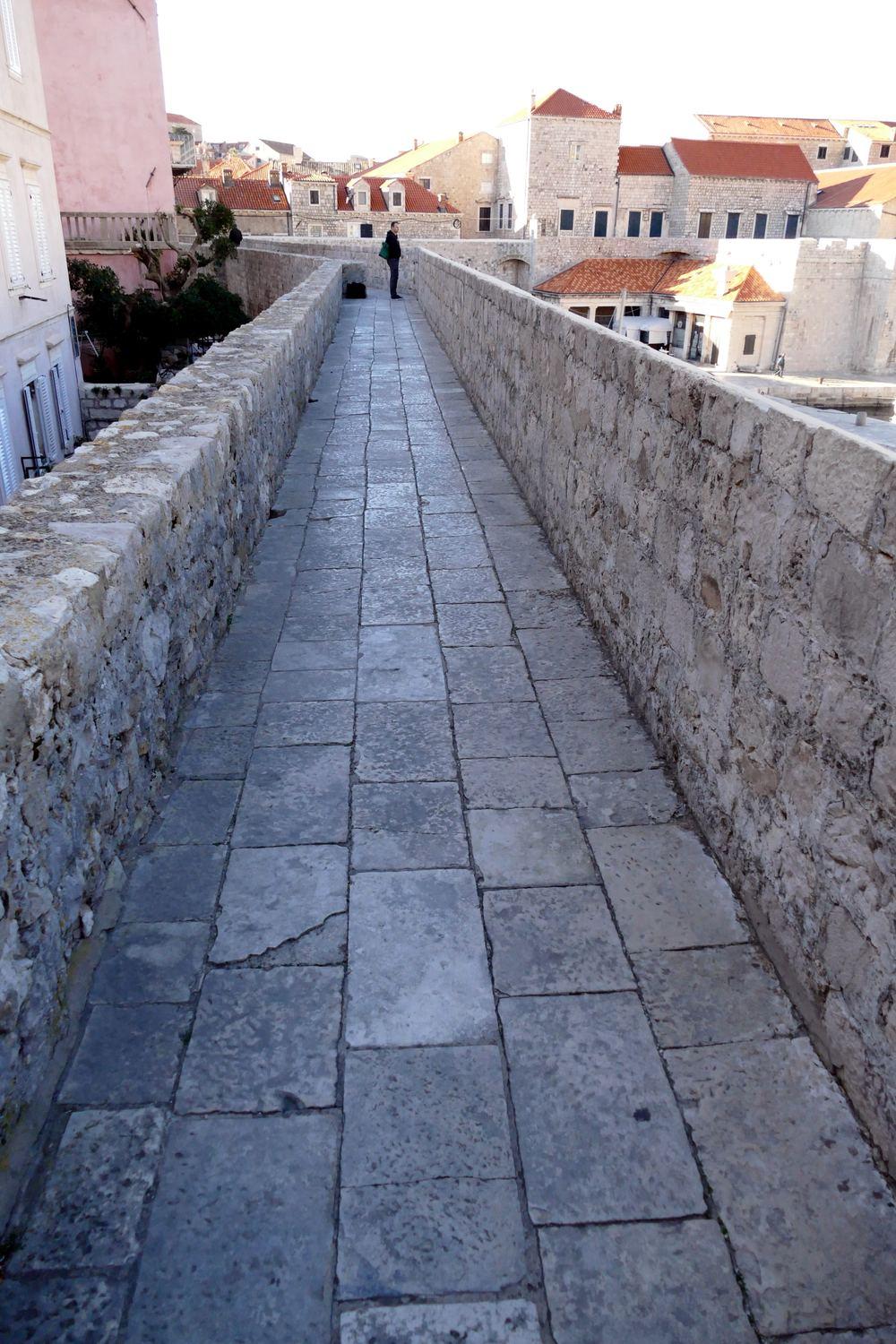
The walls are the reason Dubrovnik exists as it does: 1,940 metres without a gap, up to 25 metres high and 6 metres thick towards the land, shaped in the 15th and 16th centuries when the republic feared the Ottomans. The full circuit takes 90 minutes at a walking pace with stops, and the ticket in 2026 costs 40 euro for adults, valid 72 hours, one circuit only, with Fort Lovrijenac included. The ticket office at Pile opens at 08:00 in summer, and the first hour is the one to book: the stone is cool, the light comes from the side, and the cruise groups have not reached the gate. Walk anticlockwise from Pile, so that the climb to the Minčeta tower comes at the end with the view of the whole town below. Carry water, there is one cafe on the circuit and it charges for the view. In July and August avoid 11:00 to 15:00 entirely: the walkway is exposed, the heat on the stone reaches 40 degrees and the queue at the Pile entrance is 30 minutes.
2. Ride the cable car to Srđ, or walk the zigzag path
Srđ is the bare ridge 412 metres straight above the Old Town, and the cable car reaches the top in under 4 minutes for 30 euro return or 17 euro one way in 2026. The terrace at the top shows the whole town, Lokrum and the Elafiti islands in one frame, and at sunset in summer the queue for the cabin is 30 to 40 minutes, because the online ticket skips only the ticket window. The one-way ticket is the smart buy: walk up the zigzag Way of the Cross path from the Old Town in the cool of the morning, about 50 minutes, and ride down, or ride up for the sunset and walk down with a torch. On top, Napoleon's army built the Imperial fort in 1812, and in 1991 a few dozen defenders held it through the siege while the city burned below. Half of it is now the Museum of the Croatian War of Independence, 5 euro and an hour of photographs, weapons and film that explain the new roofs you will have seen from the walls.
3. Climb Fort Lovrijenac
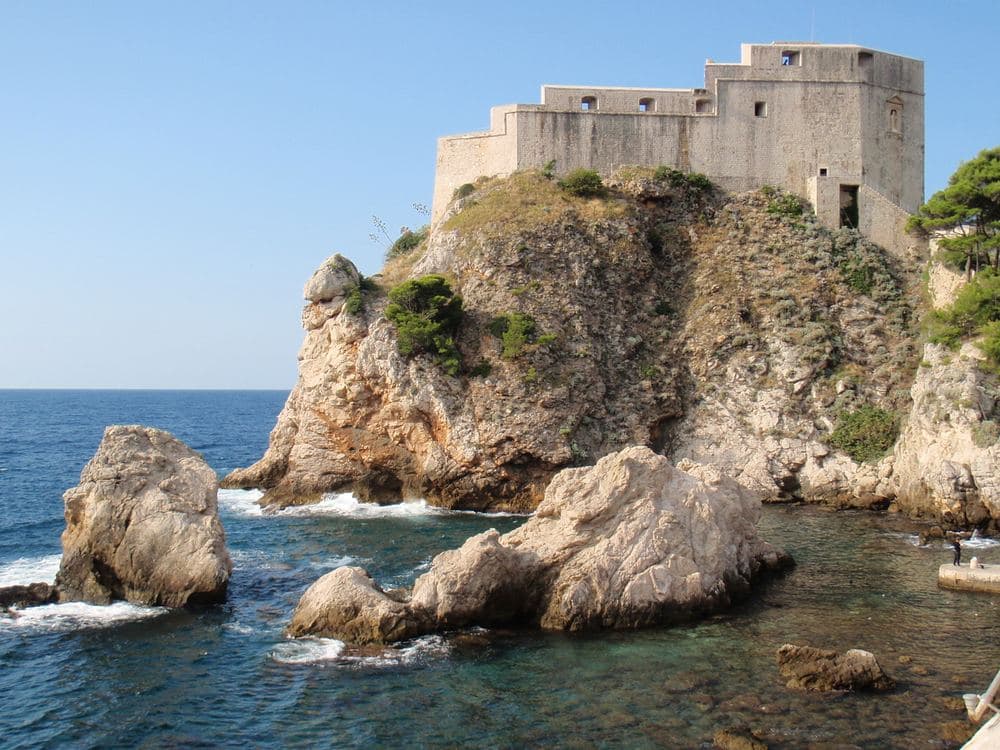
Lovrijenac stands on a 37-metre rock outside the walls to the west, and its proportions tell the republic's whole political philosophy: the walls facing the sea and a possible enemy are up to 12 metres thick, the wall facing the city is 60 centimetres. If a commander had ever turned against Dubrovnik, one cannon shot from the town would have opened his fortress like an egg. Above the gate the republic carved its motto, that freedom is not sold for all the gold in the world. Your walls ticket covers the entry within 72 hours, so keep it. The terraces give the best view of the walls themselves, from outside, with the sea below, and in July and August the fort is the stage for Hamlet during the Summer Festival. Game of Thrones used it as the Red Keep, which is why guided groups arrive from 10:00; come at 08:30 after the walls or at 17:00 when the light turns.
4. Walk the Stradun early and late
The Stradun was a channel of water once, dividing the Roman islet of Ragusa from the Slavic settlement on the shore, filled in around the 11th century to make one town. After the earthquake of 1667 flattened the city, the republic rebuilt the whole street in one go, same height, same baroque fronts, same green shutters, and the result is the most orderly main street on the Adriatic, 300 metres of limestone polished by feet to the shine of marble. At its western end stands Onofrio's great fountain of 1438, 16 spouts that still carry drinking water from a spring 12 kilometres away, at the eastern end Orlando's column of 1418, the bell tower and the church of St Blaise. The street belongs to the cruise groups from 10:00 to 14:00. Walk it at 07:30 with the delivery carts and the cats, and again after 21:00, when the stone gives back the heat of the day and the whole town is out.
5. The Rector's Palace and the Sponza Palace
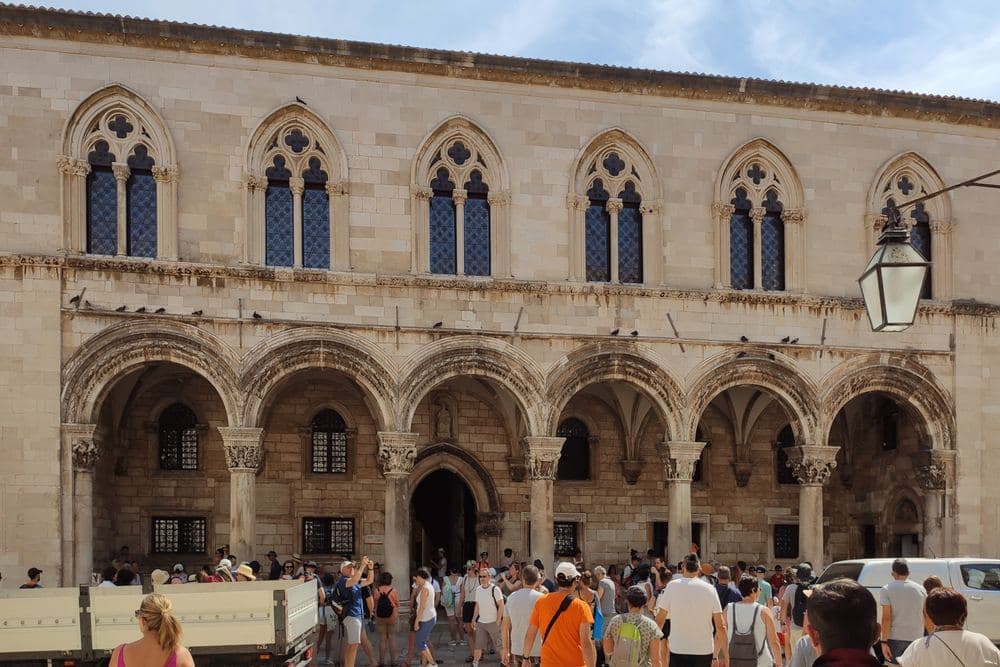
The Rector's Palace was the heart of the Republic of Ragusa. The rector was elected for a single month, so that nobody could gather too much power, and in those 30 days he could not leave the palace except on official duty. Above the entrance the inscription reminds him to forget private interest and attend to public matters. The Gothic and Renaissance building holds the Cultural History Museum, a courtyard used for concerts in summer and the rooms in which the republic ran itself for five centuries. The Sponza Palace at the other end of the Stradun is the one building on the street that survived 1667 almost untouched: a Gothic and Renaissance customs house of 1522, with a portico on the ground floor and the state archive above. The courtyard is free and holds the memorial room of the young defenders who died in 1991, which is the quietest ten minutes in the Old Town.
6. The Franciscan pharmacy and the Dominican cloister
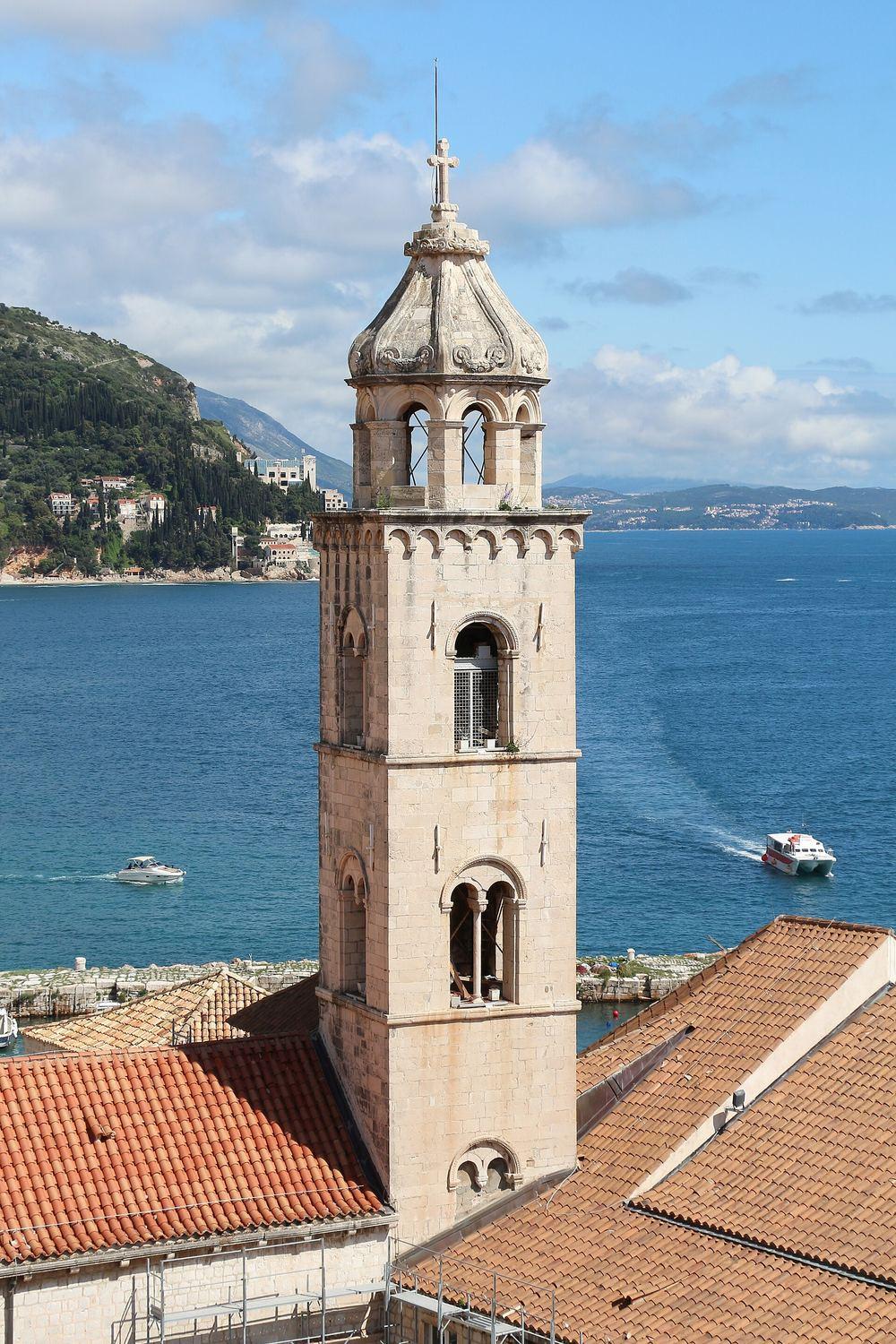
The Franciscan monastery at the western end of the Stradun hides what many call Europe's oldest pharmacy still working: it opened in 1317 and has dispensed medicine without interruption since, today as an ordinary city pharmacy in which, before shelves of modern boxes, stand the baroque jars of the monastery workshop. Beside it is the 14th-century cloister, a masterpiece of Romanesque and Gothic building with 120 columns, each capital carved differently, and a small museum with the old pharmacy's instruments. At the opposite end of town, by the Ploče gate, the Dominican monastery was built in the 14th century strong enough to serve as part of the eastern rampart, so from outside it looks like a fortress and inside like a garden. The cloister is a Gothic masterpiece with orange trees in the middle, the art collection upstairs is better than the Franciscans', and it is quieter, because most visitors never walk that far up the Stradun.
7. The cathedral and the Jesuit stairs
The Cathedral of the Assumption is the third church on its spot and a story of two earthquakes: the first, tradition says, was raised by a vow of Richard the Lionheart after a shipwreck by Lokrum, the Romanesque building came down in 1667, and today's baroque cathedral was finished by 1713 to the designs of Roman architects. The treasury holds relics in gold and silver, including those of St Blaise, the city's protector, whose feast on 3 February is the one day of the year when Dubrovnik belongs entirely to its own people. Two minutes south, from the market square of Gundulićeva poljana, the Jesuit stairs climb in two baroque flights to the church of St Ignatius, built in 1738 by the Roman architect Pietro Passalacqua on the model of the Spanish Steps. Climb them, step into the church for the frescoes and the Lourdes grotto, and you will usually have both to yourself. The stairs were the Walk of Shame in Game of Thrones, which is the only reason anyone queues on them.
8. Swim at Buža, through a hole in the wall
Buža means hole in the Dubrovnik dialect, and the two Buža bars are reached through holes in the southern walls, signposted with nothing more than a painted board reading cold drinks. Beyond the wall is a terrace of rock platforms and steps cut into the cliff, with the open sea below and Lokrum in front. There is no sand, no shade and no sunbed, a beer costs 5 to 6 euro and pays for the view, and the swim is the best in the Old Town: ladders into deep, clear water, and in the afternoon the cliff shades the rocks. Come at 10:00 for a quiet swim or at 19:00 for the sunset with the town's own people. Rough southerly weather closes the platforms, and the steps are slippery when wet, so this is a place for swimmers rather than paddlers.
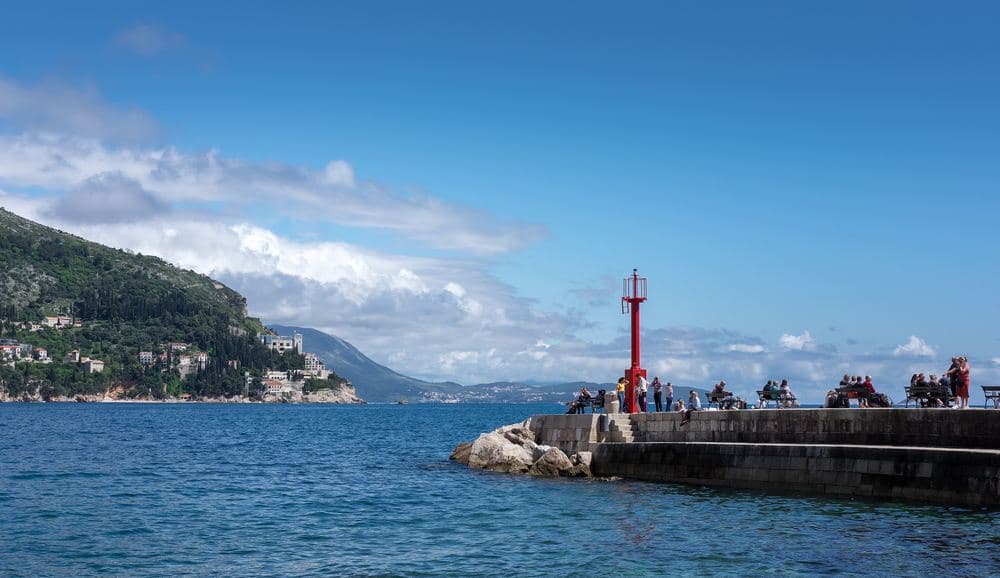
9. Banje and the other beaches
Banje is the city beach, 10 minutes east of the Ploče gate, and it has the postcard view: the walls, the fortress of St John and Lokrum in one frame from the water. The eastern half is a concession with sunbeds at 30 euro and up for two, a restaurant and a bar; the western half, nearest the walls, is free, and that is where the locals swim. West of the walls, Šulić is a tiny pebble cove under Lovrijenac and Danče a rock bathing place below Gradac park. Sveti Jakov, 20 minutes east along the Ploče road and down nearly 200 steps, is the beach with the view of the whole Old Town from the side, half empty even in August because of the stairs. Lapad and Babin Kuk, 3 to 5 kilometres west, have the family beaches, Copacabana with water slides and Lapad bay with a cafe promenade. Our beaches guide has all 14 with buses and walking times.
10. Lokrum for an afternoon
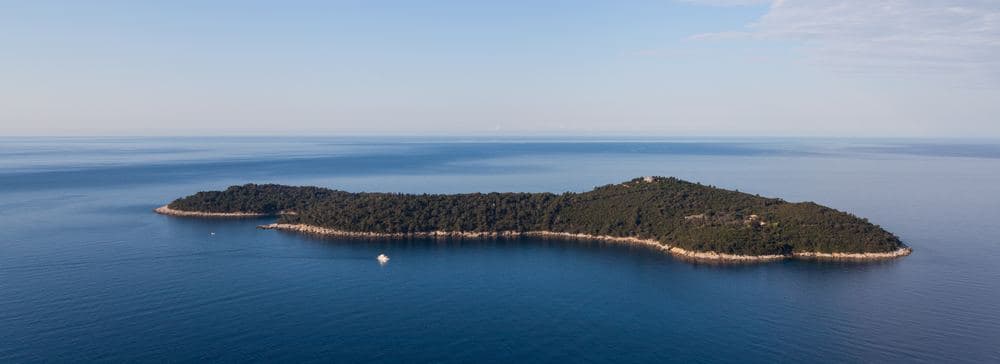
Lokrum is the wooded island 10 minutes from the Old Port by the reserve's own boat, every half hour from April to the end of October, 30 euro return for adults including the entry to the nature reserve. It is a protected reserve of century-old pines and cypresses with a botanical garden planted in 1859 by Archduke Maximilian of Habsburg, who turned the 11th-century Benedictine monastery into a summer residence, and the peacocks that walk the paths descend from his garden. Swim in the Dead Sea, a salt lake in the rock warmer than the open sea, walk to Fort Royal on the summit for the view of the walls, and sit on the Iron Throne in the monastery, which is the original prop from the series. Take the 10:00 boat with water, hat and shoes for the rocks, and check the last boat back, which changes with the season; the island has one restaurant and no beds, because staying overnight is forbidden.
11. Kayak around the walls
The sea kayak tours leave from the cove below Pile gate, paddle along the outside of the walls under Bokar and Lovrijenac, cross to Lokrum and stop for a swim and a snorkel in the Betina cave before coming back, about 3 hours for 35 to 45 euro per person with the guide, the kayak and the dry bag. It is the only way to see the walls from sea level, and the sunset departures, with the walls turning orange and the town lights coming on, are the best-value sunset in Dubrovnik. Children from about 8 manage the double kayaks on calm days. Book the day before in summer, wear a swimsuit under a T-shirt and leave the phone in the dry bag.
12. The Old Port and the Porporela at dusk
The Old Port was the engine of the republic: from it sailed ships that carried the Dubrovnik flag to England, the Levant and America, and in the 16th century the republic held a fleet of over 200 vessels, one of the largest in the Mediterranean. Today it holds the Lokrum boats, the Cavtat boats, the glass-bottom boats and the fishermen, protected by the fortress of St John and the Porporela, the 19th-century breakwater with a balustrade that the town has taken as its promenade. Whole generations come down here: in the morning swimmers who go to the buoy and back, in the afternoon children with fishing lines, in the evening everyone. Sit on the wall at 20:00 with an ice cream from the port and watch Lokrum go dark. It costs nothing and it is the most local half hour in the city.
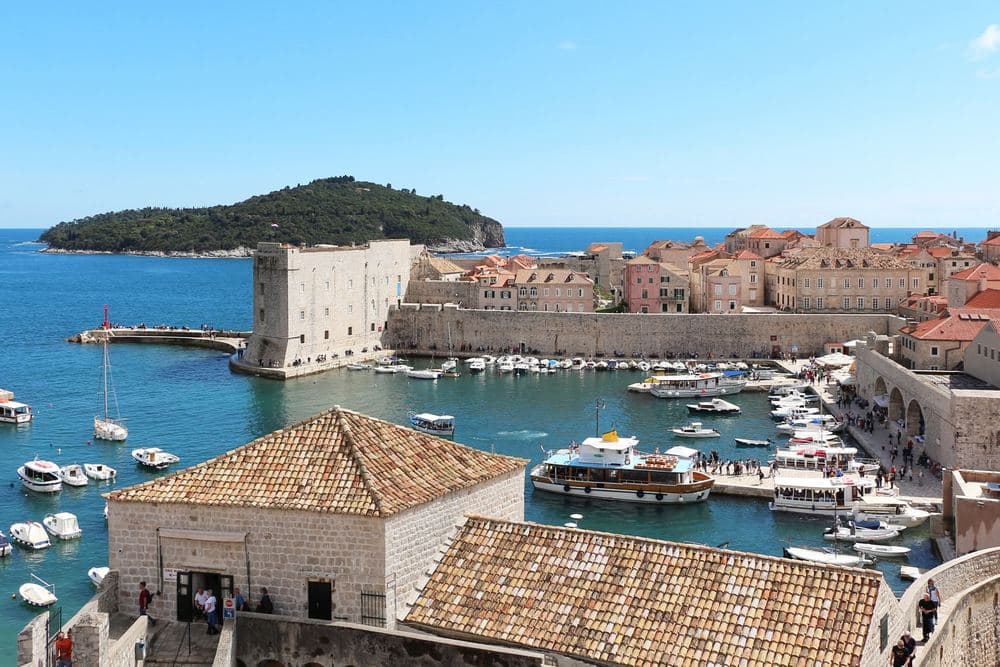
13. Gundulić market in the morning
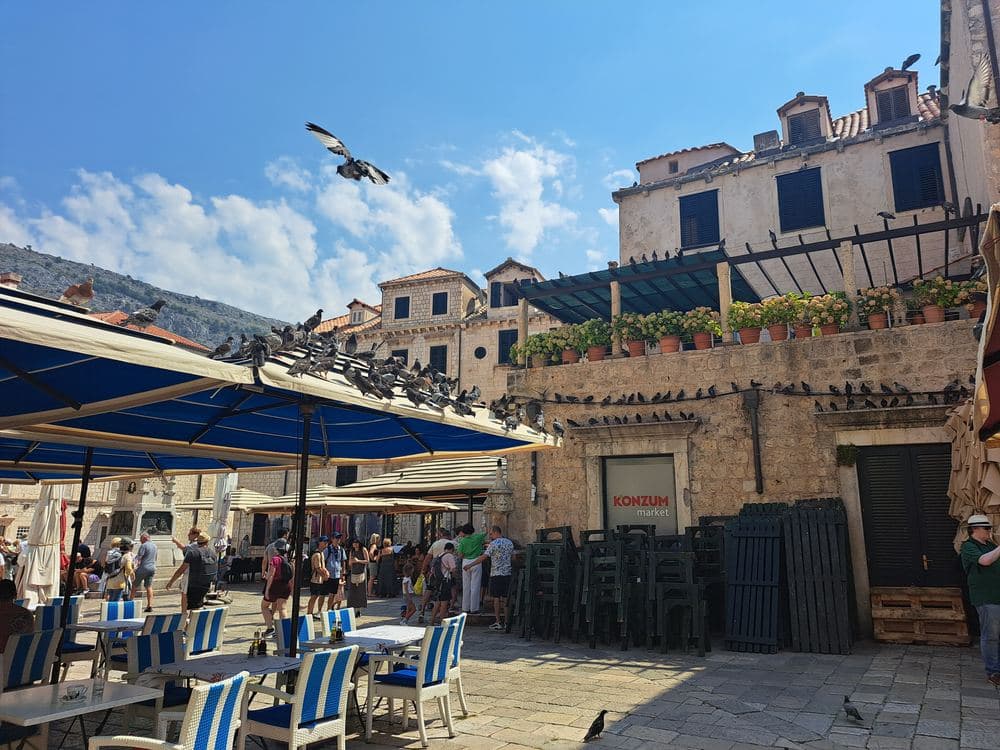
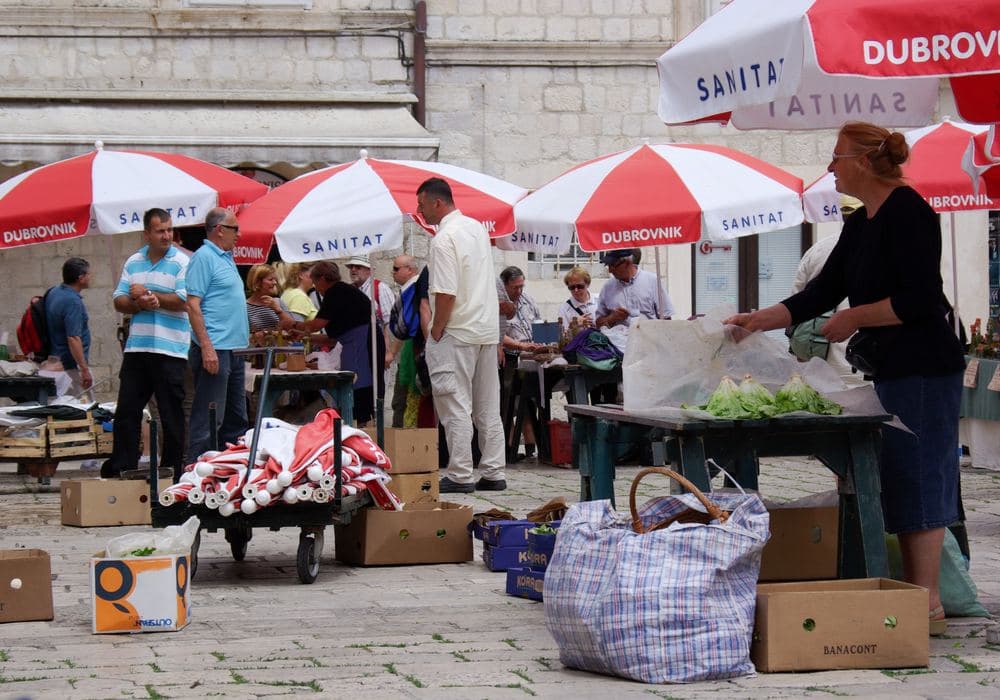
The market on Gundulićeva poljana is the only part of the old core that works for the city and not for visitors: every morning except Sunday, from about 06:30 to noon, the stalls go up around the monument to the poet Ivan Gundulić and sell what has come in from Konavle and the Elafiti islands, tomatoes, figs, mandarins in autumn, lavender, honey, olive oil, dried figs, candied orange peel and homemade brandy. Prices are lower than in the shops on the Stradun and the sellers are the producers. Buy fruit for the beach and a bag of candied orange for the flight home, and be there before 09:00, because by 11:00 the best of it has gone and the stalls start packing.
14. Two museums that explain the new roofs
Look down from the walls and you will see that most of the roofs are new, bright orange against a few old ones in faded brown: the tiles were replaced after the siege of 1991 and 1992, when more than two thirds of the buildings in the Old Town were hit. Two places explain it. War Photo Limited in Antuninska street, a two-storey gallery opened in 2003 by the New Zealand photojournalist Wade Goddard, shows the wars in former Yugoslavia upstairs and a changing exhibition of conflict photography downstairs, and it needs a full hour when you are fresh, because it is a document and not an ornament. The Museum of the Croatian War of Independence in the Imperial fort on Srđ, 5 euro, tells the defence of the city from the fort itself, with the shell holes still in the walls. Between them, the Sponza memorial room with the photographs of the defenders who died completes the picture in ten minutes.
15. Game of Thrones, without a tour
Dubrovnik was King's Landing from the second season, and the locations are inside a 2-kilometre walk that needs no guide: Lovrijenac as the Red Keep, the Jesuit stairs as the Walk of Shame, Minčeta as the House of the Undying, the Pile gate and the Bokar fort for the Blackwater scenes, the Gradac park for the Purple Wedding, and the Iron Throne on Lokrum. Guided tours cost 25 to 40 euro per person and walk the same streets, and the value they add is the anecdotes and the photographs of the set. The Trsteno arboretum, 20 kilometres north by bus 12, 15 or 35 from Pile, was the Tyrell garden and is a fine 16th-century garden in its own right, with a 500-year-old plane tree at the village bus stop. Our self-guided walk has the locations in order with the scenes.
16. Gradac park and the west side
Gradac park is a green terrace above the sea just west of the walls, a garden of pines, cypresses and agaves on the cliff above the Danče cove, laid out at the start of the 20th century, with benches that face west over the open sea and the Elafiti islands. It is the best answer to where to go when the Old Town is overfull: the shade is thick and the crowd rare, because most visitors do not cross the bridge at Pile and turn left. From the park, steps lead down to Danče for a swim from the rocks and along to the Šulić cove under Lovrijenac. Come at sunset with something from the market and you will often have the whole terrace to yourself, with Lovrijenac lit up on your left.
17. Sveti Jakov: the beach with the view
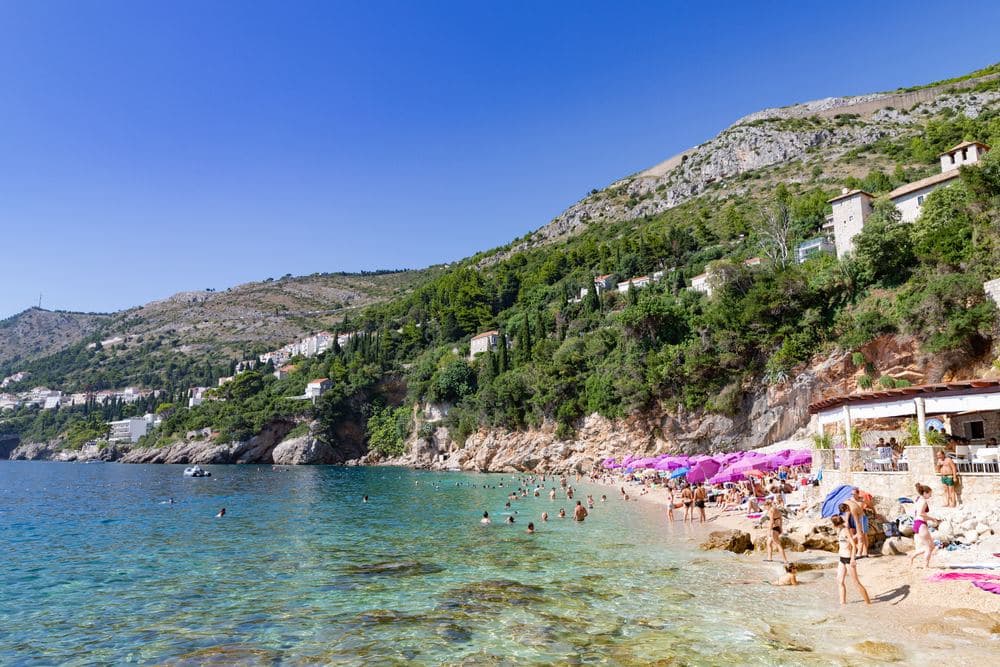
Sveti Jakov is the hidden reward of eastern Dubrovnik: a shingle cove beneath a steep slope at Ploče, reached by a staircase of nearly 200 steps, which is why it is half empty even at the peak of the season. The reward for the descent is a view no other beach has: the old core seen whole, with the walls, the fortress of St John and Lokrum in the same frame, and the sun setting behind the town in the evening. There is a small bar with sunbeds at 20 to 25 euro for two, showers and a jetty for the taxi boats. Walk 20 minutes east from Ploče gate along the Frana Supila road past the villas, or take bus 5 or 8 to the Sveti Jakov stop, and stay into the evening, because the climb back up is easier once it cools.
18. Lapad, Gruž and the Red History Museum
Half of Dubrovnik's visitors sleep in Lapad and Babin Kuk, the peninsula 3 to 5 kilometres west of the walls, and it has its own things to do: the Lapad bay promenade with its cafes, the Petka forest park above it with shaded paths and sea glimpses, the Copacabana beach with slides and playgrounds in the sea, and the sunset walk around Babin Kuk. Gruž, the port district by the bus station and the cruise terminal, has the fish and vegetable market in the morning and the Red History Museum, the only museum in Croatia devoted to everyday life in socialist Yugoslavia, a ground-floor hall of original flats, appliances, posters and school desks from 1945 to 1991, told without nostalgia and without a verdict. Buses 4 and 6 link Lapad with Pile in 15 to 20 minutes, 2 euro from the driver.
19. The Summer Festival and the other dates
The Dubrovnik Summer Festival runs every year from 10 July to 25 August and turns the forts, palaces and cloisters into stages: drama at Lovrijenac and Gradac, chamber music in the Sponza atrium and the Rector's Palace, folklore at Lazareti outside the Ploče gate, and an opening ceremony on 10 July on Luža square that needs no ticket. The Feast of St Blaise on 3 February, with its procession of relics and banners, is the day the city celebrates itself. In November and December the Winter Festival brings an Advent market to the Stradun, and the cruise ships are gone. Our festival guide explains how to pick a night and where to sit.
20. Day trips that need a boat or a bus
| Where | How | Time | Cost per person |
|---|---|---|---|
| Cavtat | Boat from the Old Port or bus 10 | 30 to 40 minutes | Boat about 10 to 15 euro each way, bus 2 to 3 euro |
| Elafiti islands (Koločep, Lopud, Šipan) | Fish picnic boat from Gruž or the Old Port, or the Jadrolinija ferry | Full day | 40 to 60 euro with lunch, ferry about 5 euro |
| Lokrum | Reserve boat from the Old Port | Half day | 30 euro return with entry |
| Ston and Pelješac | Car or bus, 55 km | Full day | Walls ticket plus oysters, about 30 to 50 euro |
| Mljet national park | Catamaran from Gruž in summer | Full day | Catamaran plus park entry, about 50 to 70 euro |
| Korčula | Catamaran from Gruž in summer | Full day | About 40 to 60 euro return |
| Kotor, Montenegro | Bus, tour or hire car, 90 km, border | Long day | Tour 50 to 80 euro, bus about 20 euro each way |
| Mostar, Bosnia and Herzegovina | Tour or hire car, 140 km, border | Long day | Tour 50 to 80 euro |
Cavtat is the easy one: half an hour by boat to a quiet waterfront with Bukovac's house and Meštrović's mausoleum on the hill, and boats back into the evening. The Elafiti fish picnic is a swimming day with lunch on board; the sandy Šunj bay on Lopud is the best beach for children in reach of Dubrovnik. Ston has the 5.5-kilometre walls, the longest in Europe, and oysters from the Mali Ston bay at the tables by the water. Kotor and Mostar are 11-hour days with a border each way, worth it once, and our separate guides cover the bus against the tour against the car for both.
21. The cruise days, and how to work around them
Dubrovnik is a cruise port, and on a day with two or three ships in Gruž the Old Town takes 8,000 to 10,000 extra people between 10:00 and 15:00. The port publishes the ship schedule online, and a glance at it the night before decides your day: on a cruise day, do the walls at 08:00, leave the Old Town by 10:30 for Lokrum, the beaches or a day trip, and come back at 17:00 when the ships have sailed. On a day without ships the Old Town is a different city, and even August afternoons are bearable. The Stradun is worst; the streets uphill on both sides, Prijeko's side lanes to the north and the lanes below the Jesuit church to the south, are quiet 50 metres from the crowd. Outside the cruise season, from November to March, the town belongs to the 1,500 people who still live inside the walls.
22. When to go
| Month | Day temperature | Sea | Notes |
|---|---|---|---|
| April to May | 18 to 23 °C | 16 to 19 °C | Walls without queues, Lokrum boats from April, first cruise ships |
| June | 27 °C | 23 °C | The best month: warm sea, long days, before the July prices |
| July to August | 31 to 33 °C | 25 to 26 °C | Festival, full beaches, cruise peaks, walls at 08:00 only |
| September | 27 °C | 24 °C | Warm sea, thinner crowds, prices down |
| October | 21 to 23 °C | 20 to 21 °C | Swimming in the first half, walls until 18:00, cruise ships thinning |
| November to March | 12 to 15 °C | 14 to 16 °C | Empty, cheap, some restaurants shut, St Blaise on 3 February |
23. What a day in Dubrovnik costs
| Item | Price |
|---|---|
| City walls with Lovrijenac, 72 hours | 40 euro |
| Cable car return / one way | 30 / 17 euro |
| Lokrum boat with reserve entry | 30 euro return |
| War museum on Srđ | 5 euro |
| City bus ticket from the driver | 2 euro |
| Sunbeds for two at Banje | 30 euro and up |
| Beer at Buža | 5 to 6 euro |
| Lunch on the Stradun / two lanes up | 30 to 40 euro / 15 to 25 euro |
| Kayak tour, 3 hours | 35 to 45 euro |
| Toilet in the Old Town | 1 euro |
A full day with the walls, the cable car one way, Lokrum, a swim at Buža and dinner in a side lane comes to about 110 to 130 euro per person. The free day, the Stradun at dawn, Gradac park, a swim at Danče, the market, the Porporela at dusk and pizza from the bakery, is under 20 euro. Check whether the Dubrovnik Pass, which bundles the walls, the city museums and the buses for 1, 3 or 7 days, works out cheaper for your plan; for a single day with the walls and two museums it usually does.
24. Where to eat without paying for the address
Lunch on the Stradun costs 30 to 40 euro a head for average food, because you are paying for the street. Two lanes up, on the side alleys off Prijeko and around the Rupe granary museum, the same money buys a proper plate of grilled squid, black risotto or fish from the morning market. The bakeries on the Stradun and by the Pile gate sell burek and pizza slices for 3 to 5 euro, the Gundulić market sells the fruit, and the fountain at Pile gives drinking water. Dinner is late: restaurants are empty at 19:00 and full at 21:00, so book the terraces in July and August. In Gruž, the market cafes and the restaurants by the port feed the town at town prices, and in Lapad the promenade has pizza and grills for families.
25. Practical notes
- Getting in: the airport is at Čilipi, 20 km south-east; the airport shuttle bus meets flights and runs to Pile and the Gruž bus station in 30 to 40 minutes for about 10 euro, a taxi is 35 to 45 euro.
- Cars cannot enter the Old Town and parking near the walls is scarce and expensive; leave the car at the accommodation and use buses 1A, 1B, 3, 4 or 6 to Pile.
- The Old Town is stairs: the lanes north and south of the Stradun climb steeply, and a buggy works on the Stradun and nowhere else.
- Card payments work everywhere; carry 2 euro coins for the bus and 1 euro for the toilets.
- Water from the Onofrio fountains and the Pile fountain is drinking water; refill rather than buy.
- Heat: from 11:00 to 15:00 in July and August the walls and the Stradun are for nobody; plan the sea, the museums or a siesta for those hours.
- The last Lokrum boat and the last Cavtat boat change with the season; photograph the board at the pier when you first pass it.
- Sunday: the Gundulić market does not run, the Franciscan pharmacy is closed and the buses are thinner.
- Dress in churches: shoulders and knees covered for the cathedral, the Franciscan and the Dominican cloisters.
Frequently asked questions
- How many days do you need in Dubrovnik?
- Two full days cover the Old Town, the walls, the cable car, Lokrum and a beach; three days add one day trip, the Elafiti islands or Cavtat and Konavle; four or five days add Kotor or Mostar as a long day and Mljet by catamaran. One day is enough for the walls at 08:00, the Stradun and the palaces, a swim at Buža and the cable car at sunset.
- How much does it cost to walk the walls of Dubrovnik?
- 40 euro for adults in 2026, valid for 72 hours and one circuit, with Fort Lovrijenac included. The ticket office at Pile opens at 08:00 in summer, and the first hour is the coolest and emptiest. Check whether the Dubrovnik Pass with the museums and the buses works out cheaper for your stay.
- Is Dubrovnik worth visiting on a cruise day?
- Yes, with a plan: the port publishes the ship schedule, so do the walls at 08:00, leave the Old Town by 10:30 for Lokrum, a beach or a day trip, and come back after 17:00 when the ships have sailed. Between 10:00 and 15:00 with two or three ships in port the Stradun is a queue.
- Can you swim in Dubrovnik's Old Town?
- Yes: the Buža bars outside the southern walls have ladders into deep, clear water, Banje beach is 10 minutes east of the Ploče gate, Danče and Šulić are the coves west of Lovrijenac, and the Porporela breakwater at the Old Port is where the town swims. Sveti Jakov, 20 minutes east and 200 steps down, has the best view.
- What is the best free thing to do in Dubrovnik?
- The Stradun at 07:30 and again after 21:00, Gradac park at sunset, the Sponza courtyard with the memorial room, a swim at Danče, the Gundulić market before 09:00 and the Porporela at dusk. The zigzag path up Srđ costs nothing and gives the same view as the cable car.
- How do you get from Dubrovnik airport to the Old Town?
- The airport shuttle bus meets arriving flights and runs to the Pile gate and the Gruž bus station in 30 to 40 minutes for about 10 euro. A taxi is 35 to 45 euro. The airport is at Čilipi, 20 km south-east, closer to Cavtat than to the city.
Official sources
Make Croatia Atlas a preferred source
One click and Google shows you our stories more often in Top Stories and in AI answers. It changes your own results only.